
15 3 Winds Objectives D Explain the relationship
15. 3 Winds
Objectives D Explain the relationship between air pressure and wind direction. D Describe global wind patterns. D Explain the causes of local wind patterns.
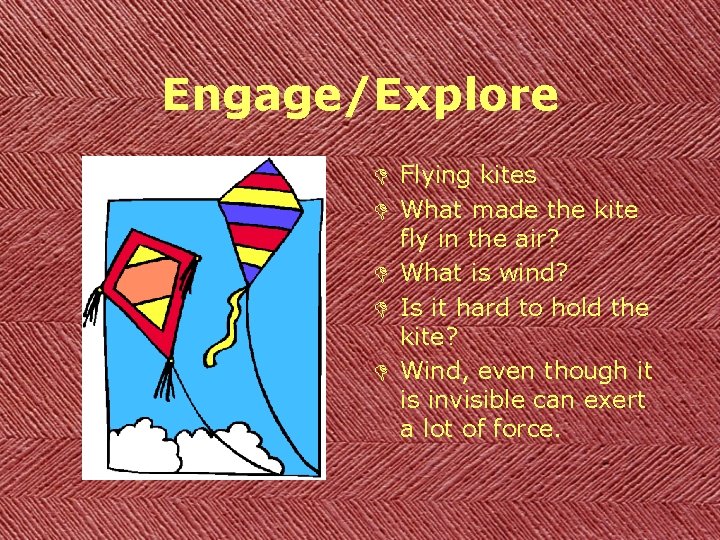
Engage/Explore D Flying kites D What made the kite fly in the air? D What is wind? D Is it hard to hold the kite? D Wind, even though it is invisible can exert a lot of force.
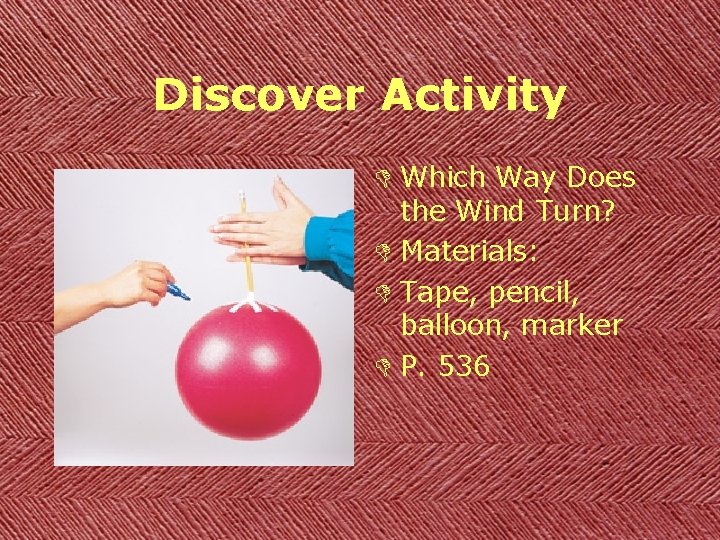
Discover Activity D Which Way Does the Wind Turn? D Materials: D Tape, pencil, balloon, marker D P. 536
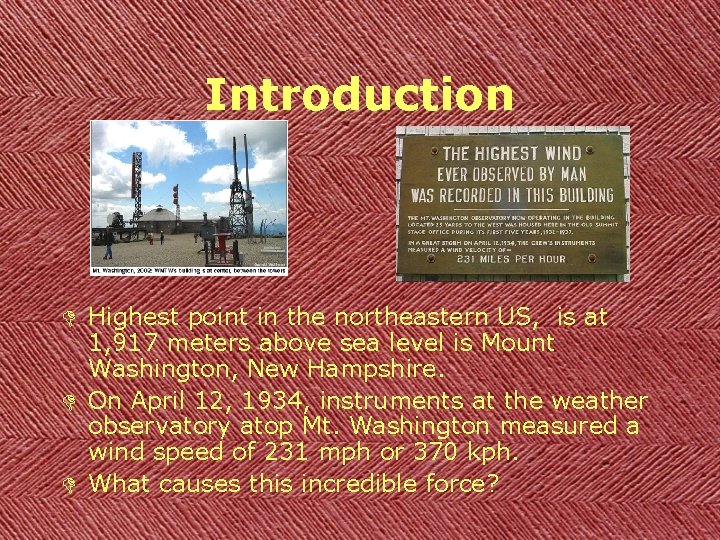
Introduction D Highest point in the northeastern US, is at 1, 917 meters above sea level is Mount Washington, New Hampshire. D On April 12, 1934, instruments at the weather observatory atop Mt. Washington measured a wind speed of 231 mph or 370 kph. D What causes this incredible force?
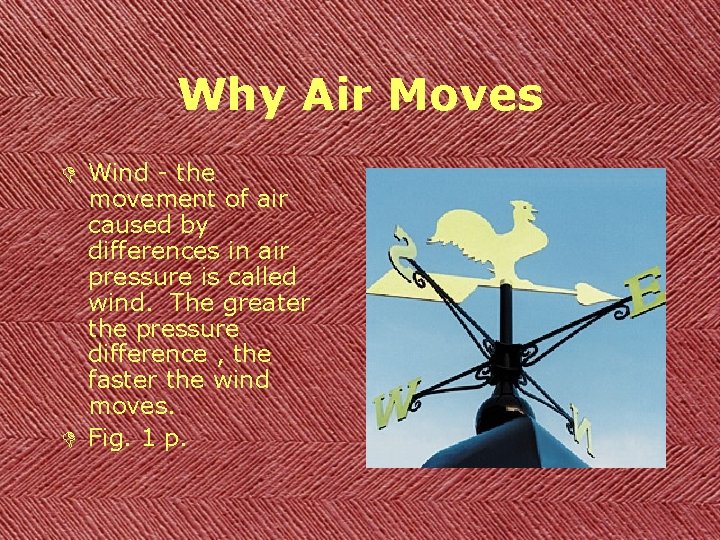
Why Air Moves D Wind - the movement of air caused by differences in air pressure is called wind. The greater the pressure difference , the faster the wind moves. D Fig. 1 p.
Why Air Moves D All winds are caused by differences in air pressure. D These differences in air pressure are caused by unequal heating of the atmosphere. D The equator receives more direct solar energy than other latitudes, so the equatori is warmer and less dense than the surrounding air.

Measuring Wind D Winds are described by their direction and speed. D Wind direction is determined with a wind vane. D The end that points is in the direction of the wind.

Measuring Wind D Wind Speed is measured with an anemometer. D An anemometer has three or four cups mounted at the ends of spokes that spen on an axle. D The wind turns the cups. A speedometer shows the wind speed that is attached to the axle.
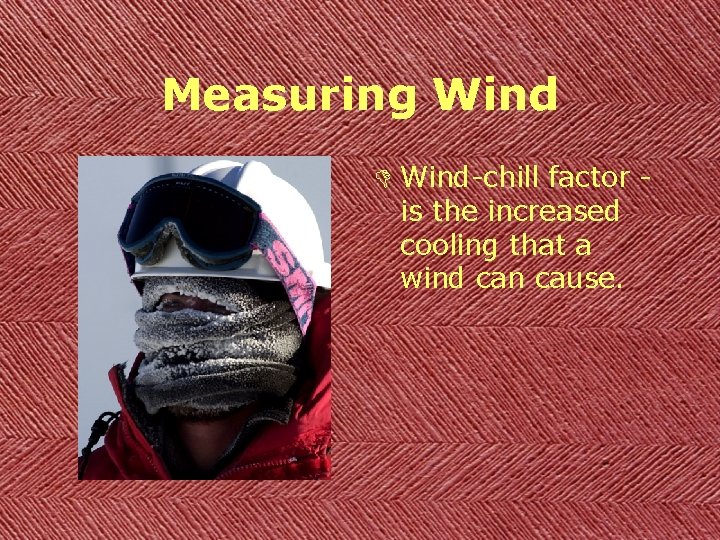
Measuring Wind D Wind-chill factor is the increased cooling that a wind can cause.
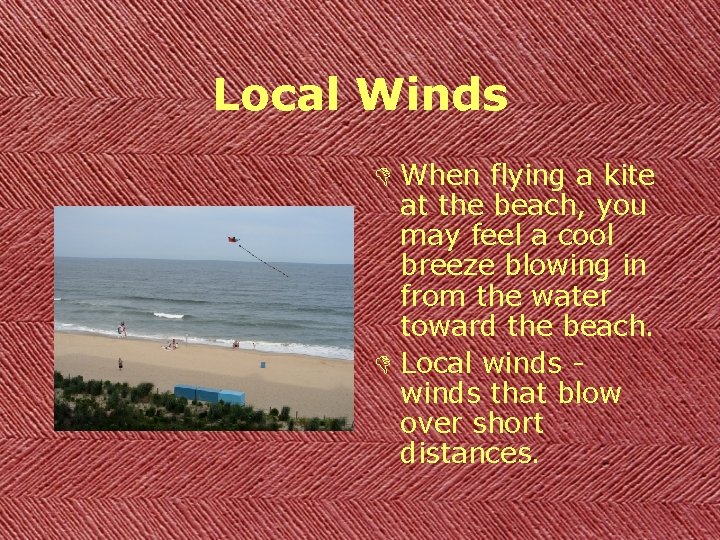
Local Winds D When flying a kite at the beach, you may feel a cool breeze blowing in from the water toward the beach. D Local winds that blow over short distances.
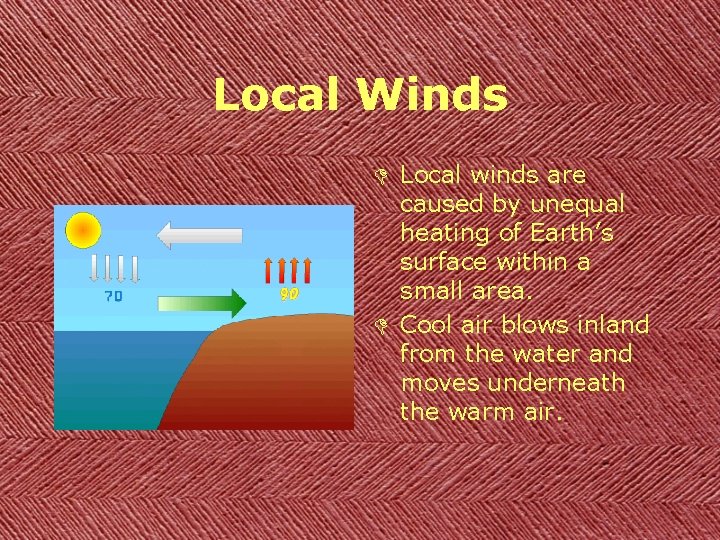
Local Winds D Local winds are caused by unequal heating of Earth’s surface within a small area. D Cool air blows inland from the water and moves underneath the warm air.
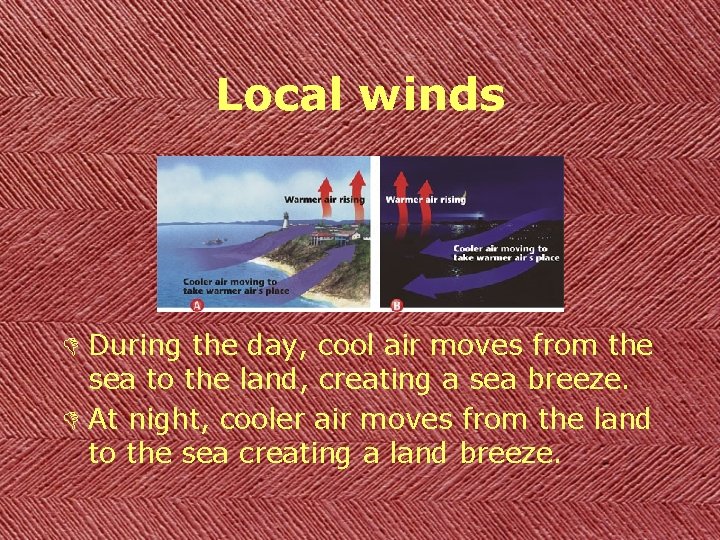
Local winds D During the day, cool air moves from the sea to the land, creating a sea breeze. D At night, cooler air moves from the land to the sea creating a land breeze.
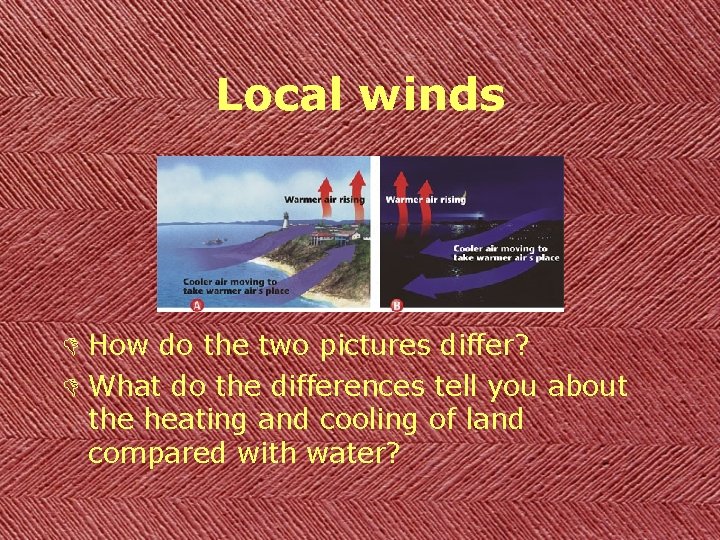
Local winds D How do the two pictures differ? D What do the differences tell you about the heating and cooling of land compared with water?
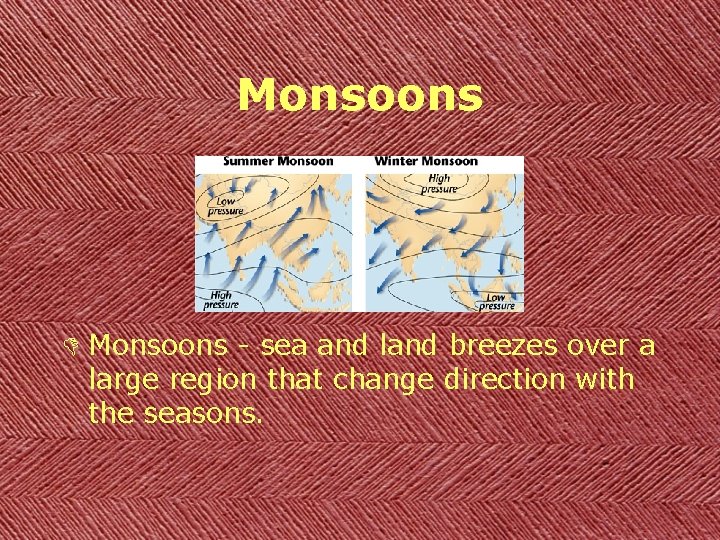
Monsoons D Monsoons - sea and land breezes over a large region that change direction with the seasons.
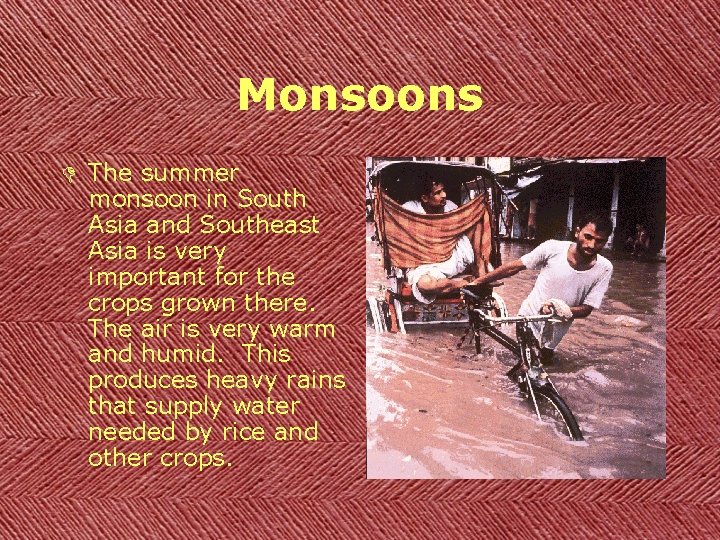
Monsoons D The summer monsoon in South Asia and Southeast Asia is very important for the crops grown there. The air is very warm and humid. This produces heavy rains that supply water needed by rice and other crops.
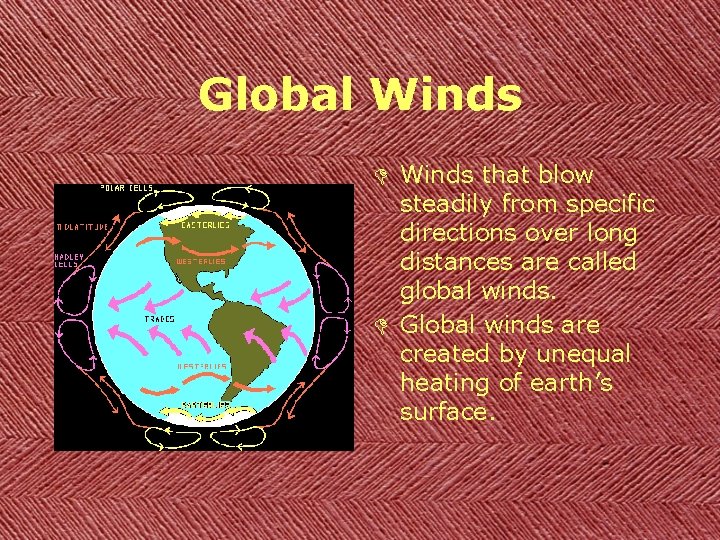
Global Winds D Winds that blow steadily from specific directions over long distances are called global winds. D Global winds are created by unequal heating of earth’s surface.
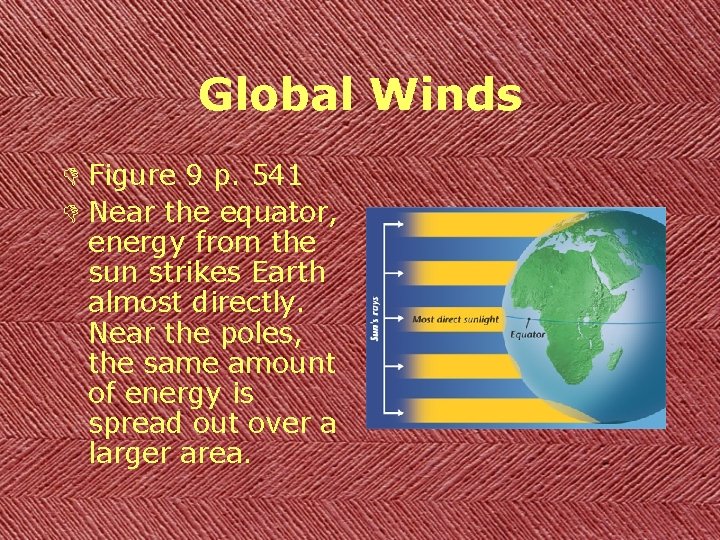
Global Winds D Figure 9 p. 541 D Near the equator, energy from the sun strikes Earth almost directly. Near the poles, the same amount of energy is spread out over a larger area.
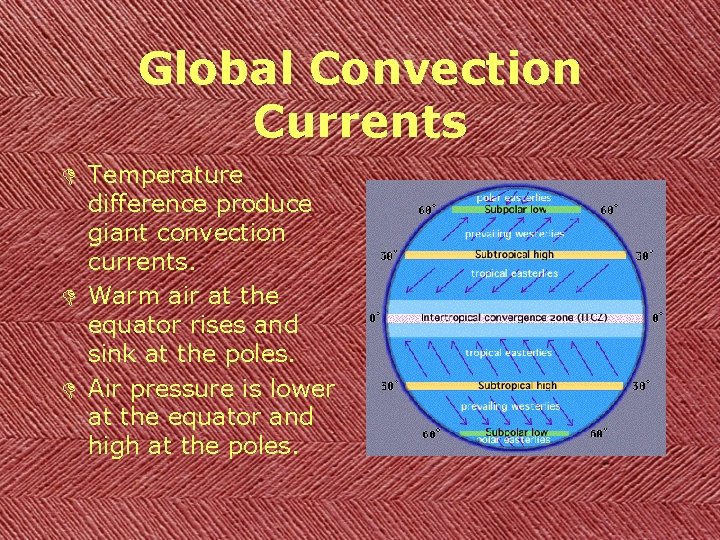
Global Convection Currents D Temperature difference produce giant convection currents. D Warm air at the equator rises and sink at the poles. D Air pressure is lower at the equator and high at the poles.
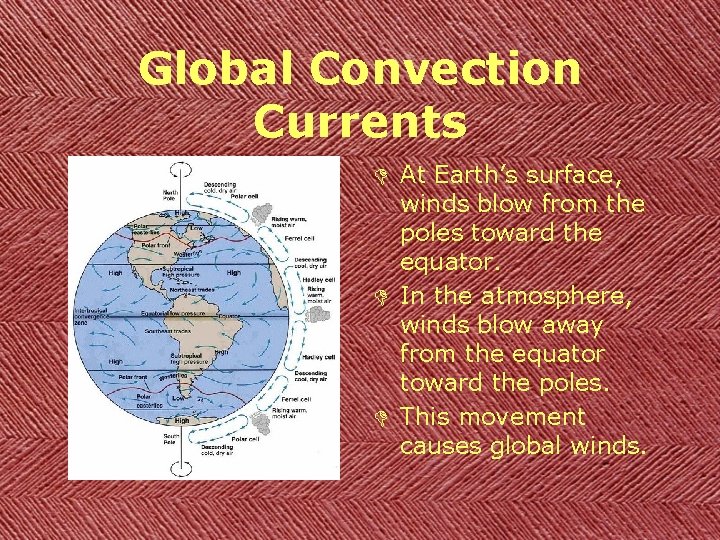
Global Convection Currents D At Earth’s surface, winds blow from the poles toward the equator. D In the atmosphere, winds blow away from the equator toward the poles. D This movement causes global winds.
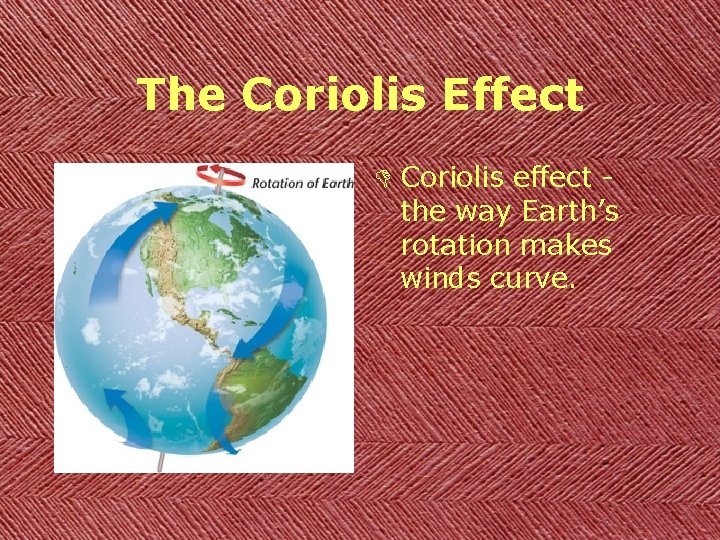
The Coriolis Effect D Coriolis effect the way Earth’s rotation makes winds curve.
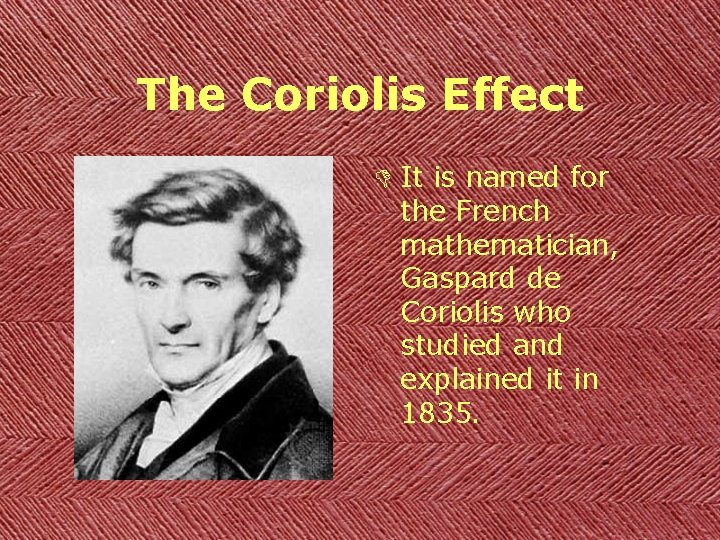
The Coriolis Effect D It is named for the French mathematician, Gaspard de Coriolis who studied and explained it in 1835.
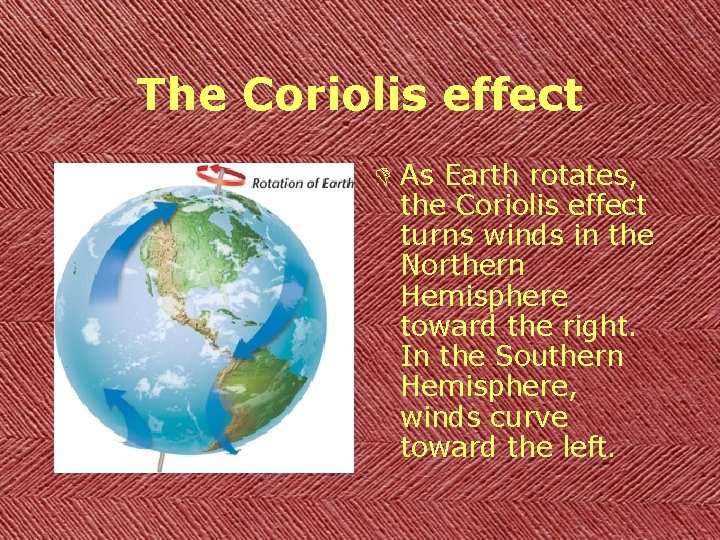
The Coriolis effect D As Earth rotates, the Coriolis effect turns winds in the Northern Hemisphere toward the right. In the Southern Hemisphere, winds curve toward the left.
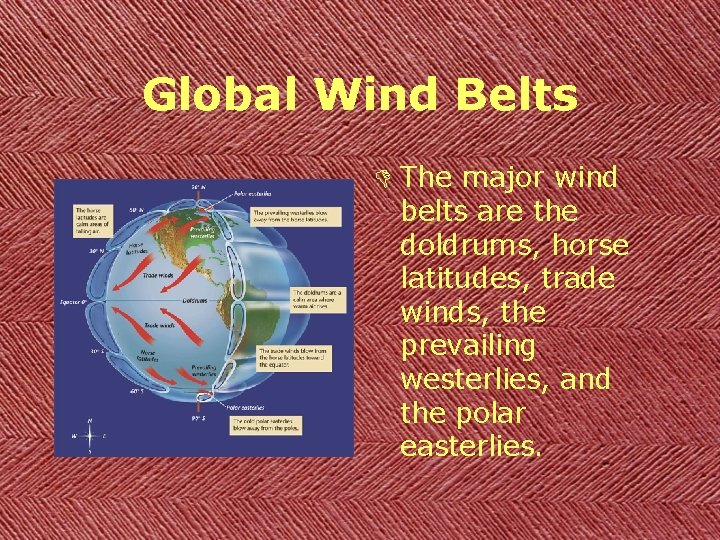
Global Wind Belts D The major wind belts are the doldrums, horse latitudes, trade winds, the prevailing westerlies, and the polar easterlies.
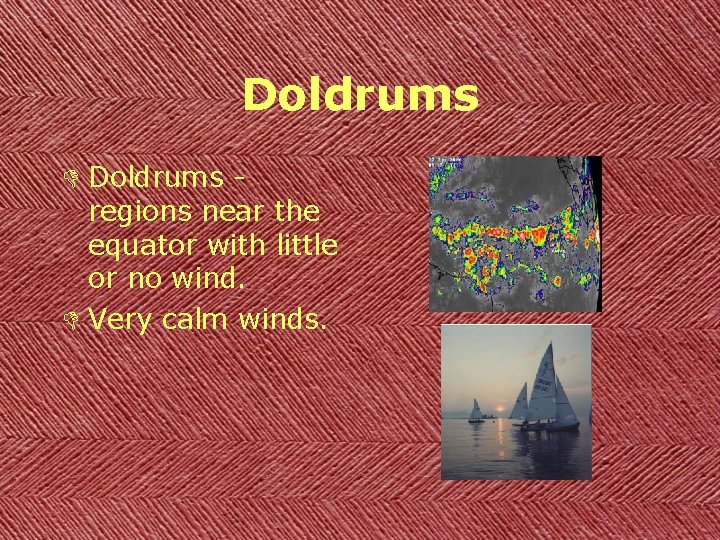
Doldrums D Doldrums regions near the equator with little or no wind. D Very calm winds.
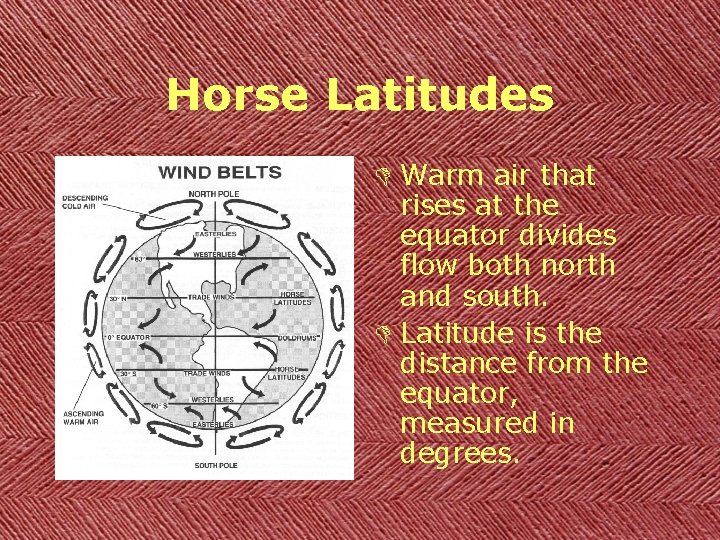
Horse Latitudes D Warm air that rises at the equator divides flow both north and south. D Latitude is the distance from the equator, measured in degrees.
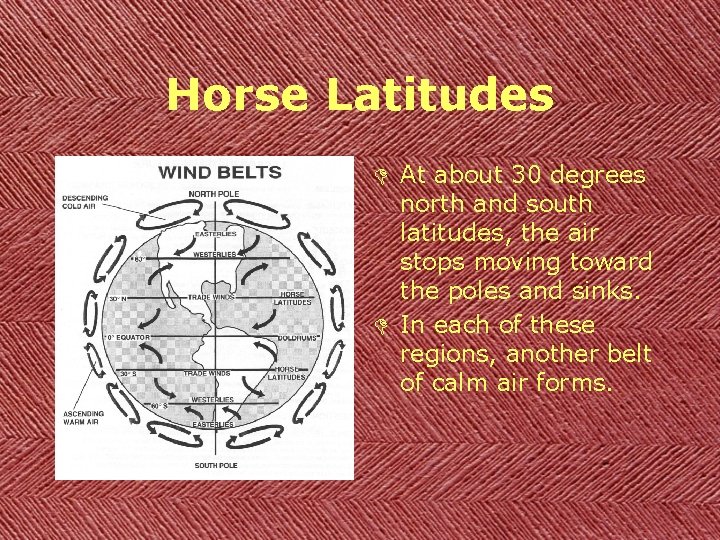
Horse Latitudes D At about 30 degrees north and south latitudes, the air stops moving toward the poles and sinks. D In each of these regions, another belt of calm air forms.
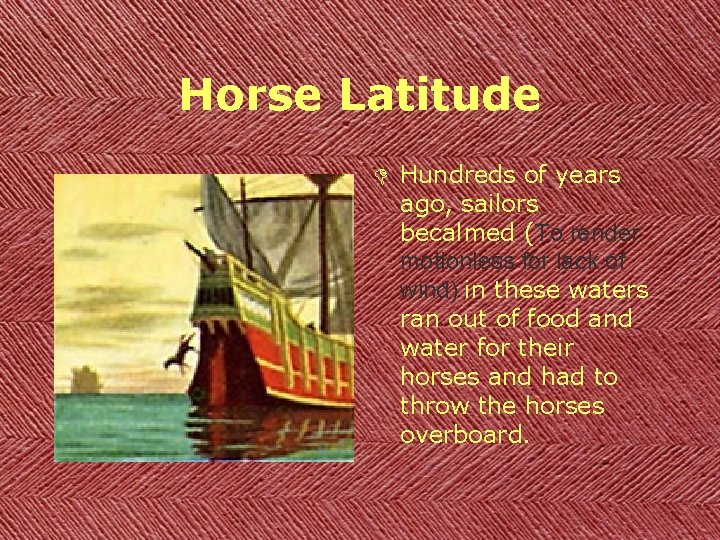
Horse Latitude D Hundreds of years ago, sailors becalmed (To render motionless for lack of wind) in these waters ran out of food and water for their horses and had to throw the horses overboard.
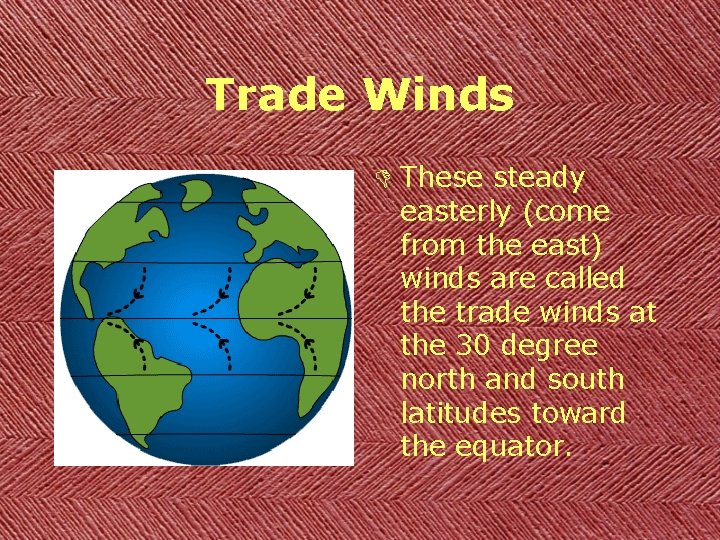
Trade Winds D These steady easterly (come from the east) winds are called the trade winds at the 30 degree north and south latitudes toward the equator.
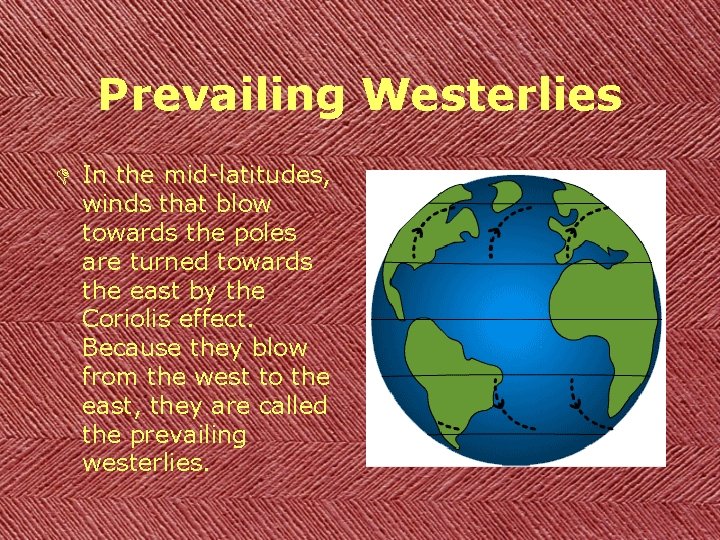
Prevailing Westerlies D In the mid-latitudes, winds that blow towards the poles are turned towards the east by the Coriolis effect. Because they blow from the west to the east, they are called the prevailing westerlies.
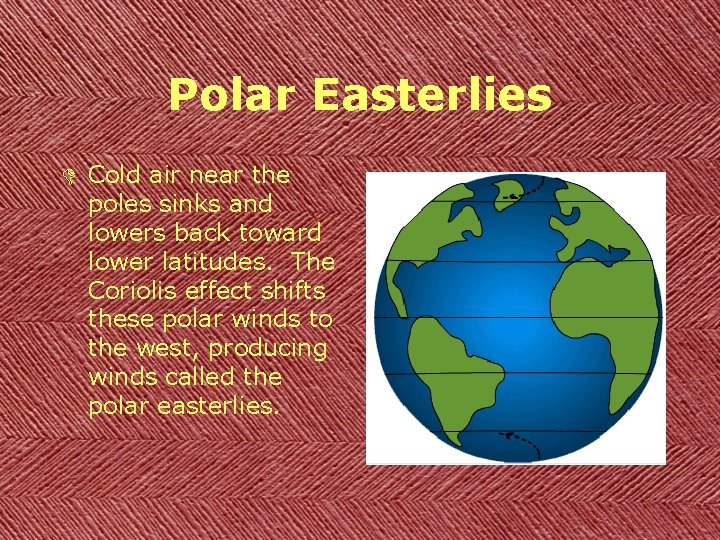
Polar Easterlies D Cold air near the poles sinks and lowers back toward lower latitudes. The Coriolis effect shifts these polar winds to the west, producing winds called the polar easterlies.
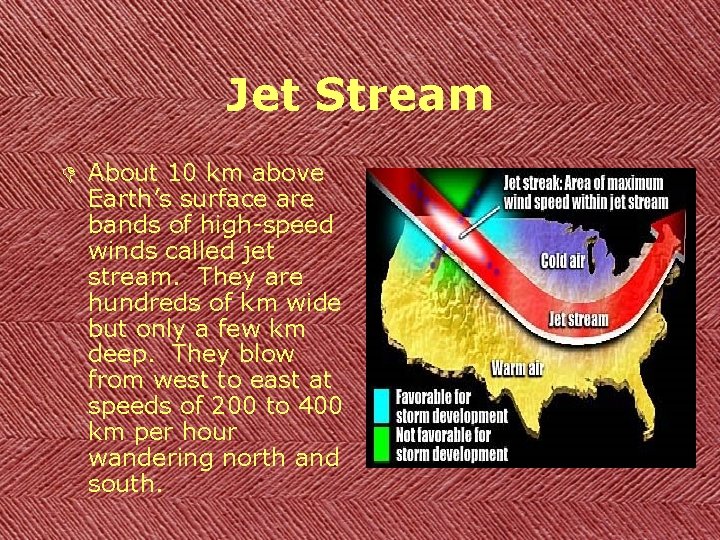
Jet Stream D About 10 km above Earth’s surface are bands of high-speed winds called jet stream. They are hundreds of km wide but only a few km deep. They blow from west to east at speeds of 200 to 400 km per hour wandering north and south.
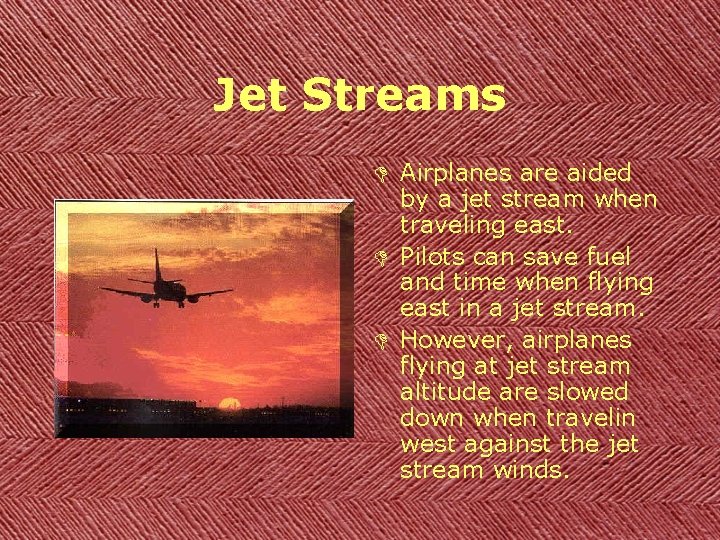
Jet Streams D Airplanes are aided by a jet stream when traveling east. D Pilots can save fuel and time when flying east in a jet stream. D However, airplanes flying at jet stream altitude are slowed down when travelin west against the jet stream winds.
- Slides: 33