
15 1 What Is Respiration RESPIRATION The process

- Slides: 30
15 -1
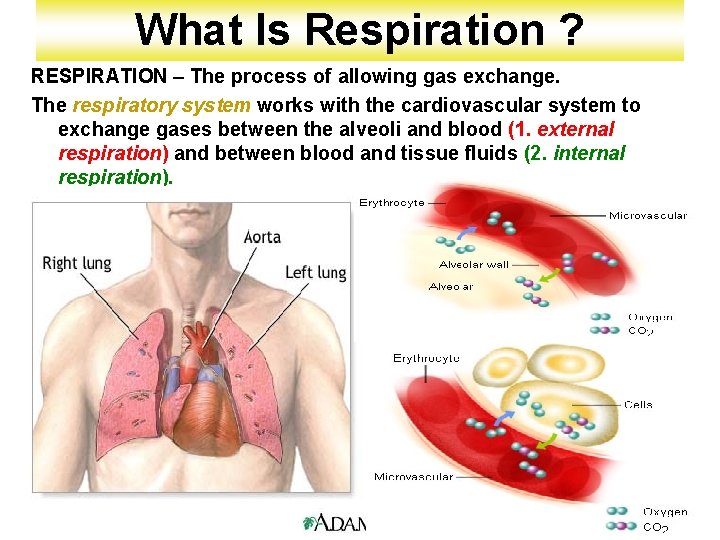
What Is Respiration ? RESPIRATION – The process of allowing gas exchange. The respiratory system works with the cardiovascular system to exchange gases between the alveoli and blood (1. external respiration) and between blood and tissue fluids (2. internal respiration). 15 -2
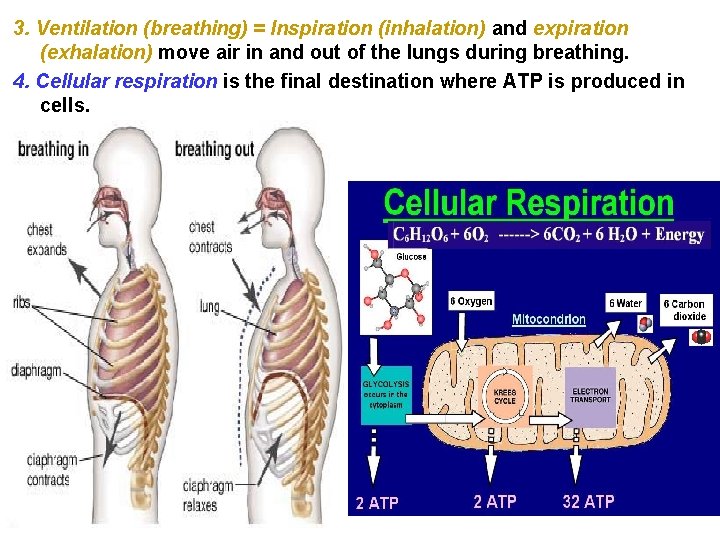
3. Ventilation (breathing) = Inspiration (inhalation) and expiration (exhalation) move air in and out of the lungs during breathing. 4. Cellular respiration is the final destination where ATP is produced in cells. 15 -3
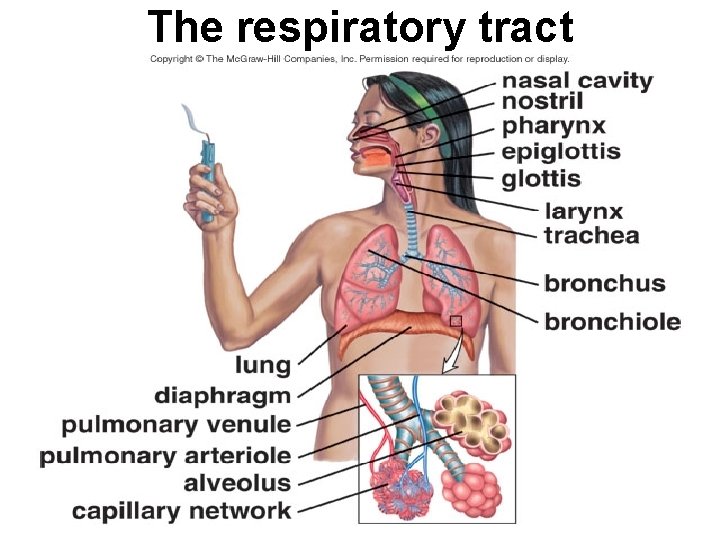
The respiratory tract 15 -4
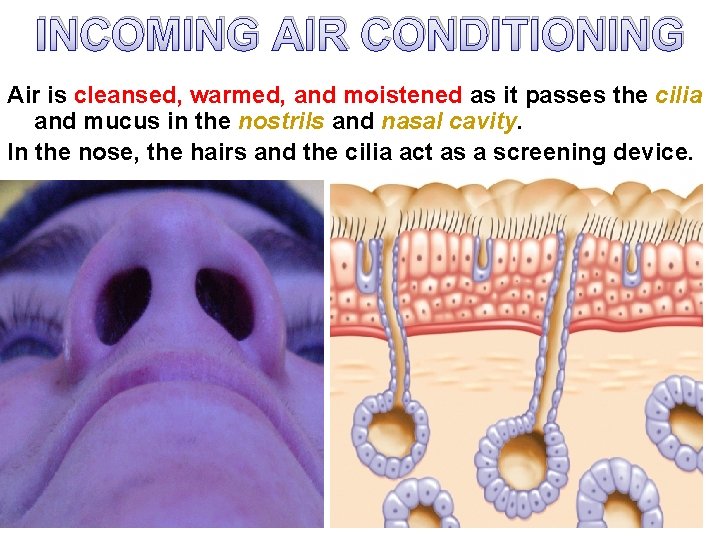
INCOMING AIR CONDITIONING Air is cleansed, warmed, and moistened as it passes the cilia and mucus in the nostrils and nasal cavity. In the nose, the hairs and the cilia act as a screening device. 15 -5
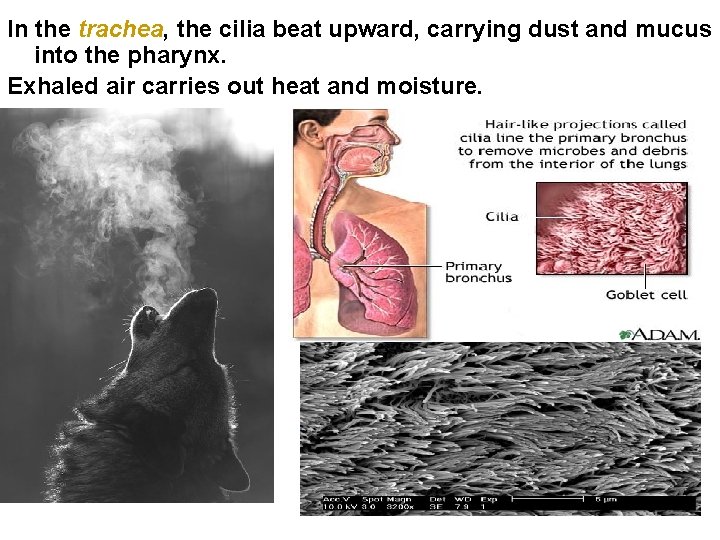
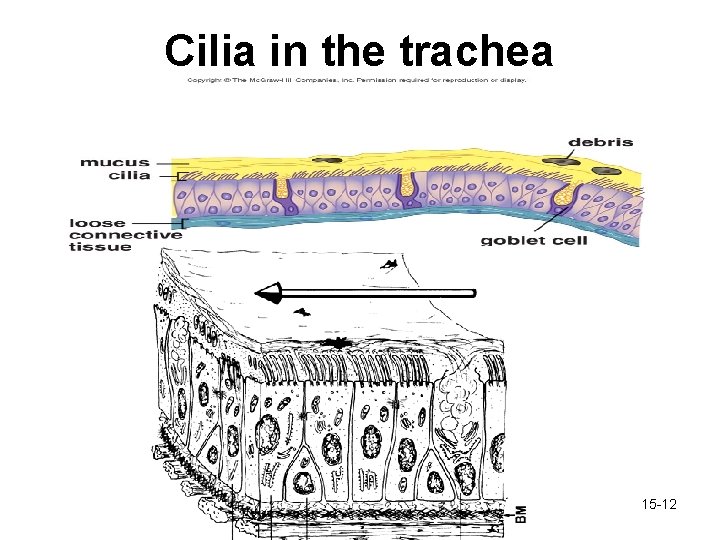
In the trachea, the cilia beat upward, carrying dust and mucus into the pharynx. Exhaled air carries out heat and moisture. 15 -6
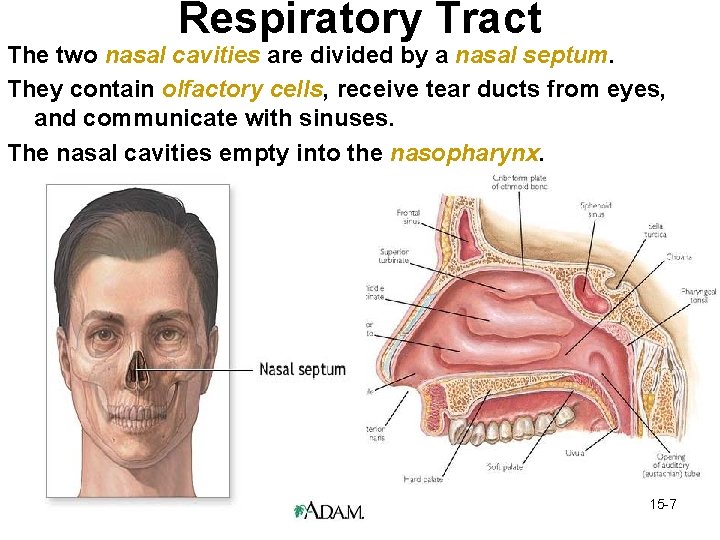
Respiratory Tract The two nasal cavities are divided by a nasal septum. They contain olfactory cells, receive tear ducts from eyes, and communicate with sinuses. The nasal cavities empty into the nasopharynx. 15 -7
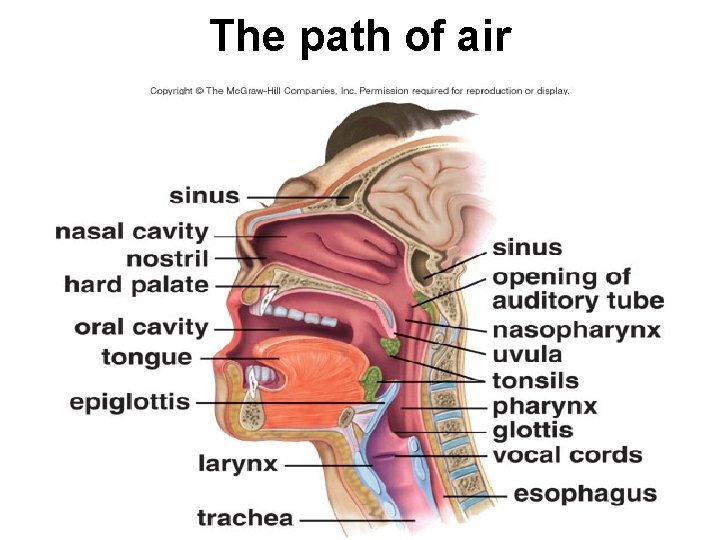
The path of air 15 -8
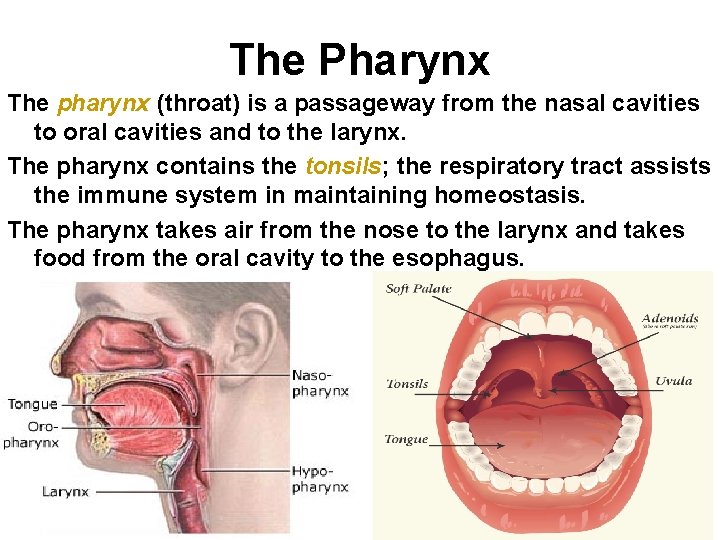
The Pharynx The pharynx (throat) is a passageway from the nasal cavities to oral cavities and to the larynx. The pharynx contains the tonsils; the respiratory tract assists the immune system in maintaining homeostasis. The pharynx takes air from the nose to the larynx and takes food from the oral cavity to the esophagus. 15 -9
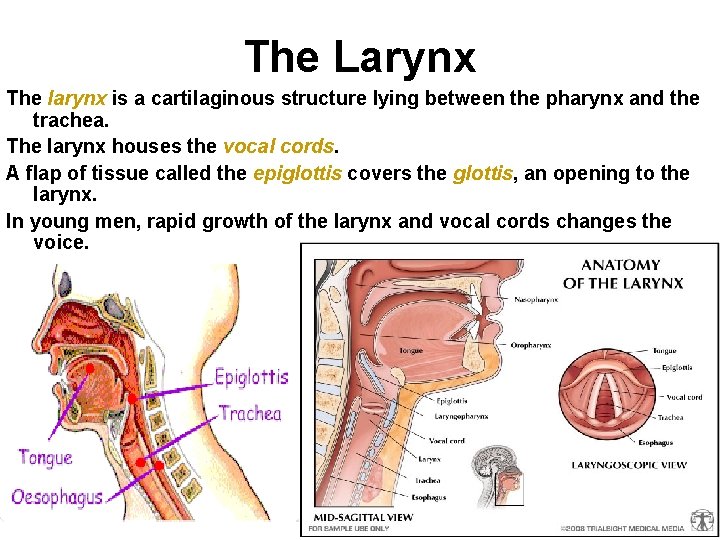
The Larynx The larynx is a cartilaginous structure lying between the pharynx and the trachea. The larynx houses the vocal cords. A flap of tissue called the epiglottis covers the glottis, an opening to the larynx. In young men, rapid growth of the larynx and vocal cords changes the voice. 15 -10
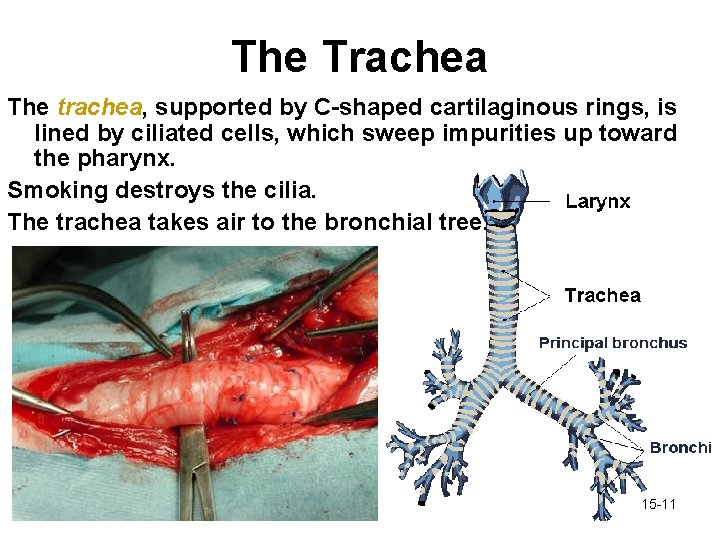
The Trachea The trachea, supported by C-shaped cartilaginous rings, is lined by ciliated cells, which sweep impurities up toward the pharynx. Smoking destroys the cilia. The trachea takes air to the bronchial tree. 15 -11
Cilia in the trachea 15 -12
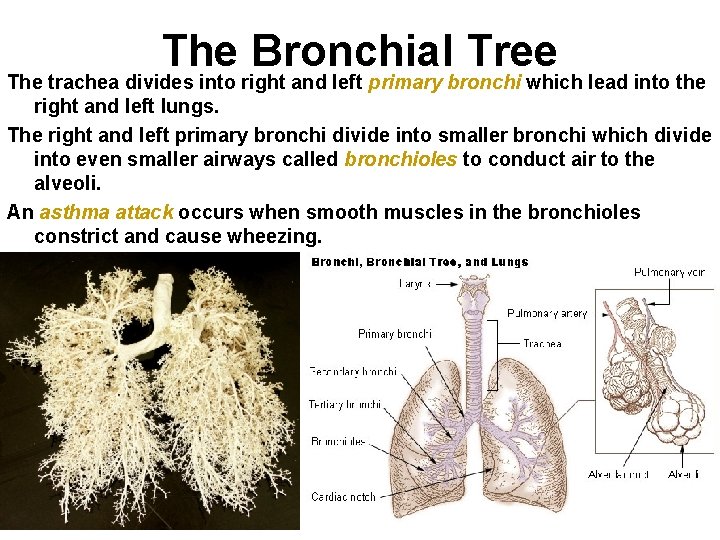
The Bronchial Tree The trachea divides into right and left primary bronchi which lead into the right and left lungs. The right and left primary bronchi divide into smaller bronchi which divide into even smaller airways called bronchioles to conduct air to the alveoli. An asthma attack occurs when smooth muscles in the bronchioles constrict and cause wheezing. 15 -13
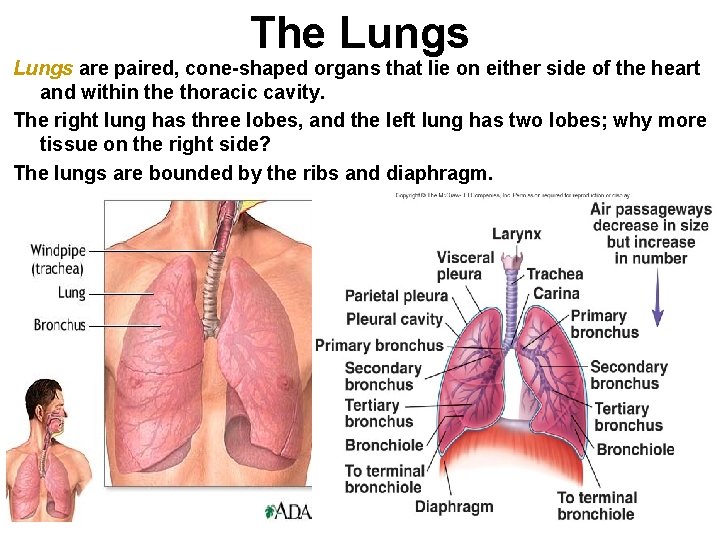
The Lungs are paired, cone-shaped organs that lie on either side of the heart and within the thoracic cavity. The right lung has three lobes, and the left lung has two lobes; why more tissue on the right side? The lungs are bounded by the ribs and diaphragm. 15 -14
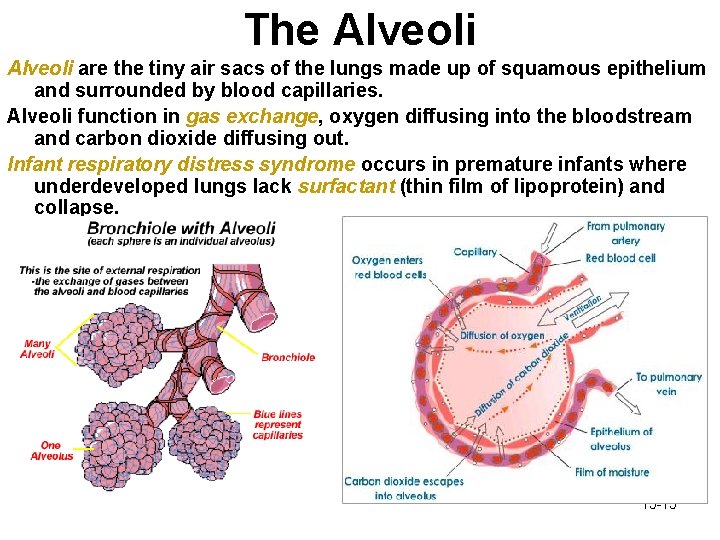
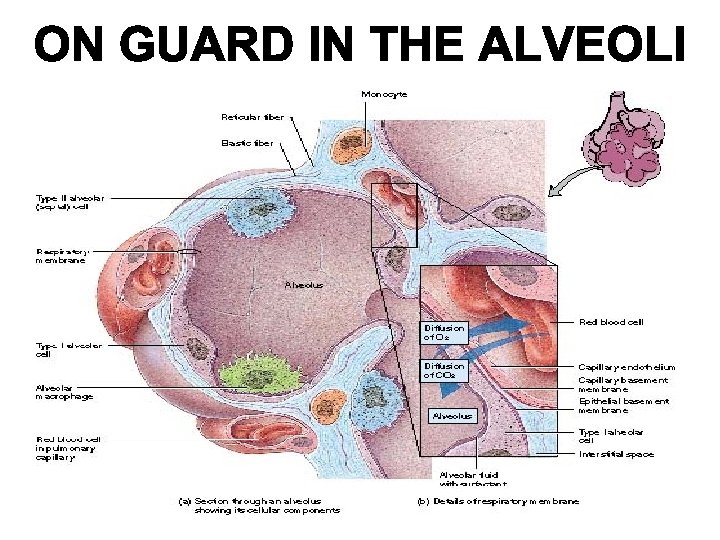
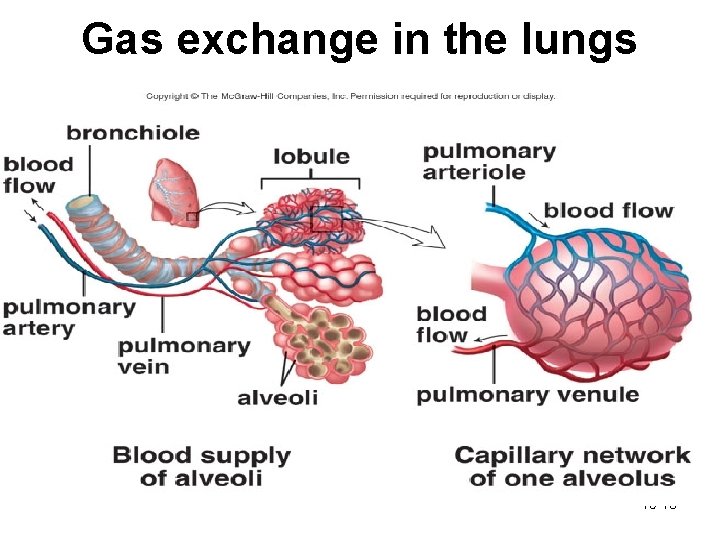
The Alveoli are the tiny air sacs of the lungs made up of squamous epithelium and surrounded by blood capillaries. Alveoli function in gas exchange, oxygen diffusing into the bloodstream and carbon dioxide diffusing out. Infant respiratory distress syndrome occurs in premature infants where underdeveloped lungs lack surfactant (thin film of lipoprotein) and collapse. 15 -15
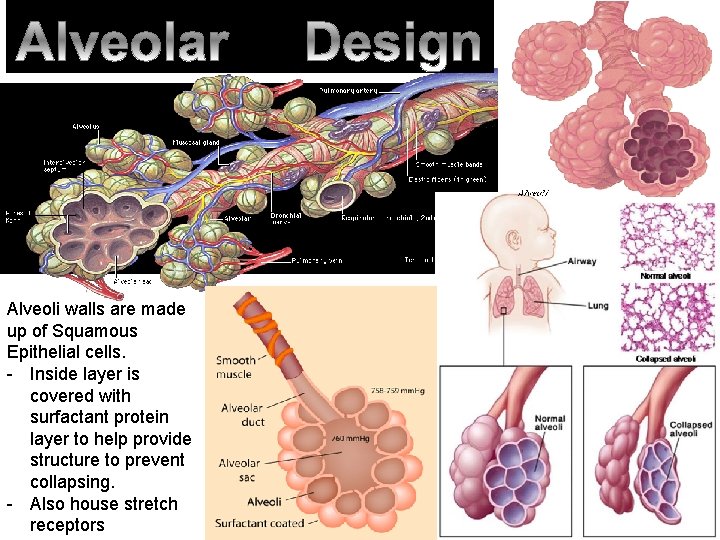
Alveoli walls are made up of Squamous Epithelial cells. - Inside layer is covered with surfactant protein layer to help provide structure to prevent collapsing. - Also house stretch receptors 15 -16
15 -17
Gas exchange in the lungs 15 -18
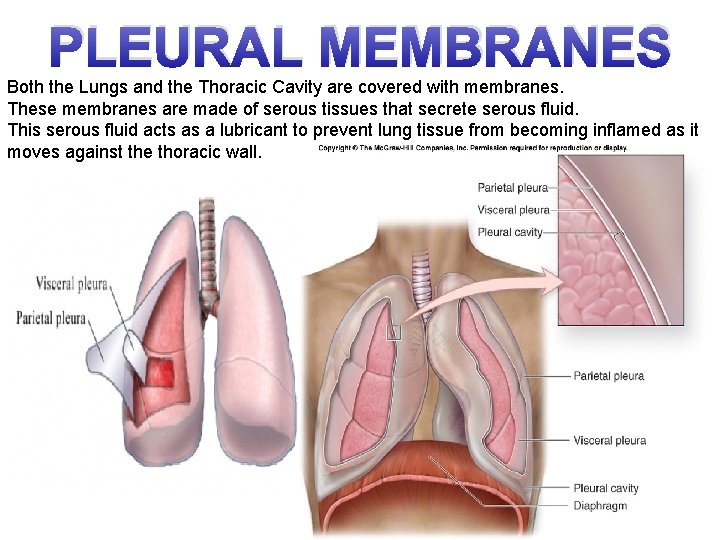
PLEURAL MEMBRANES Both the Lungs and the Thoracic Cavity are covered with membranes. These membranes are made of serous tissues that secrete serous fluid. This serous fluid acts as a lubricant to prevent lung tissue from becoming inflamed as it moves against the thoracic wall. 15 -19
Show Video Now 15 -20
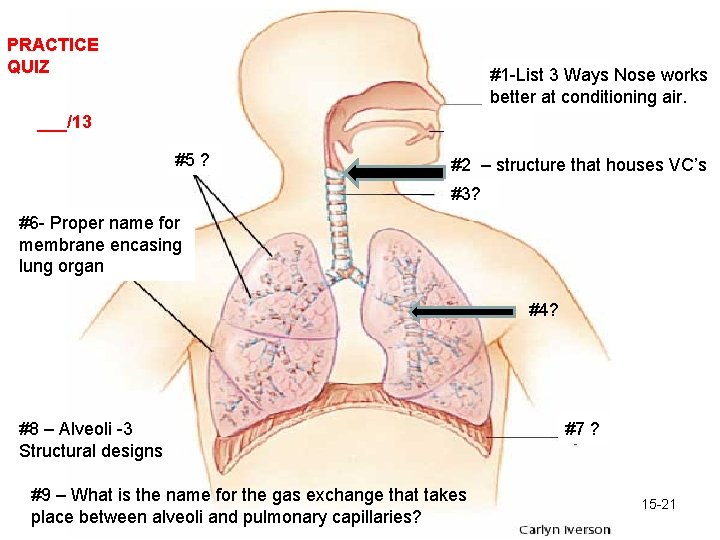
PRACTICE QUIZ #1 -List 3 Ways Nose works better at conditioning air. ___/13 #5 ? #2 – structure that houses VC’s #3? #6 - Proper name for membrane encasing lung organ #4? #8 – Alveoli -3 Structural designs #9 – What is the name for the gas exchange that takes place between alveoli and pulmonary capillaries? #7 ? 15 -21
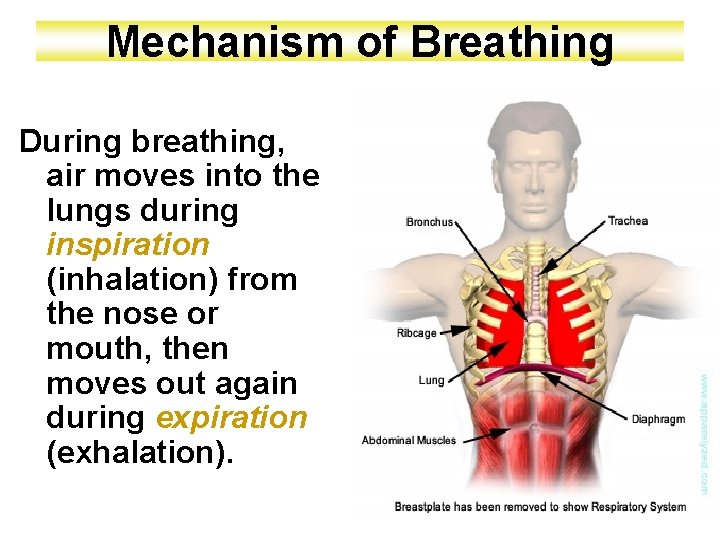
Mechanism of Breathing During breathing, air moves into the lungs during inspiration (inhalation) from the nose or mouth, then moves out again during expiration (exhalation). 15 -22
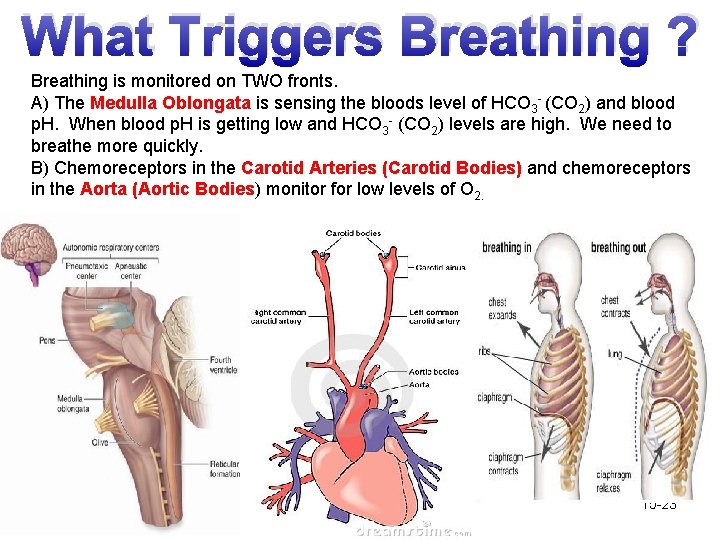
What Triggers Breathing ? Breathing is monitored on TWO fronts. A) The Medulla Oblongata is sensing the bloods level of HCO 3 - (CO 2) and blood p. H. When blood p. H is getting low and HCO 3 - (CO 2) levels are high. We need to breathe more quickly. B) Chemoreceptors in the Carotid Arteries (Carotid Bodies) and chemoreceptors in the Aorta (Aortic Bodies) monitor for low levels of O 2. 15 -23
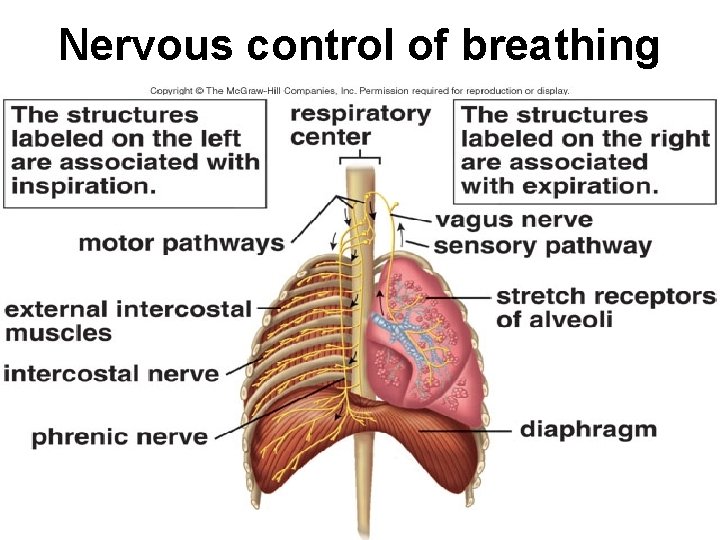
Nervous control of breathing 15 -24
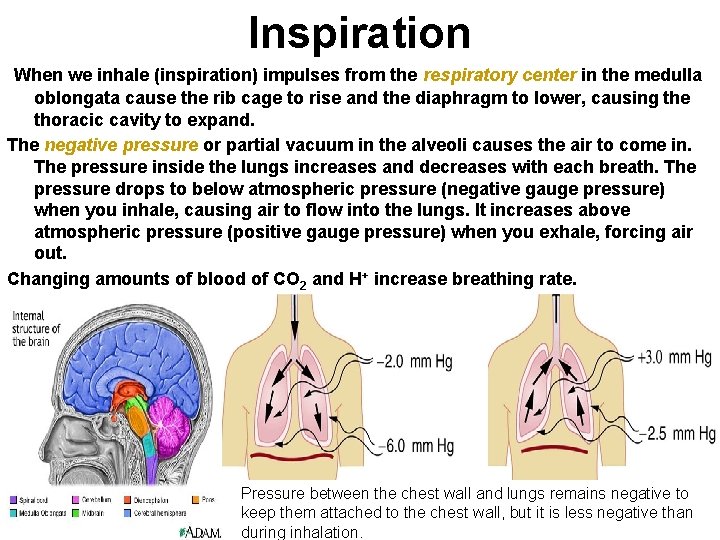
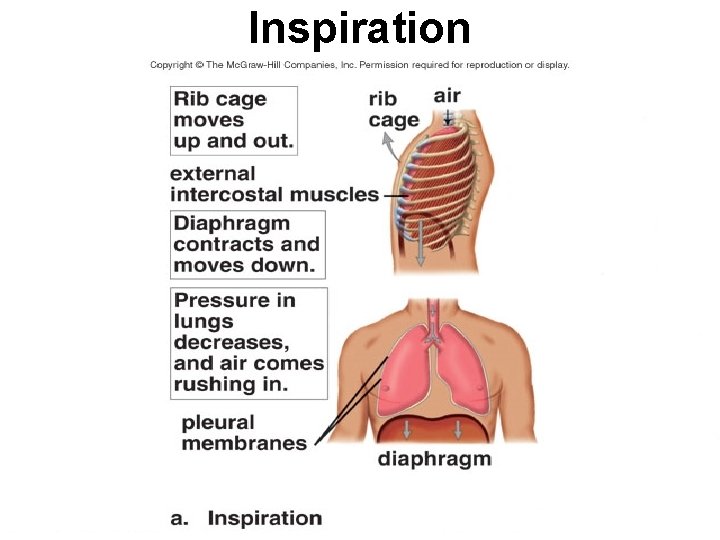
Inspiration When we inhale (inspiration) impulses from the respiratory center in the medulla oblongata cause the rib cage to rise and the diaphragm to lower, causing the thoracic cavity to expand. The negative pressure or partial vacuum in the alveoli causes the air to come in. The pressure inside the lungs increases and decreases with each breath. The pressure drops to below atmospheric pressure (negative gauge pressure) when you inhale, causing air to flow into the lungs. It increases above atmospheric pressure (positive gauge pressure) when you exhale, forcing air out. Changing amounts of blood of CO 2 and H+ increase breathing rate. Pressure between the chest wall and lungs remains negative to 15 -25 keep them attached to the chest wall, but it is less negative than during inhalation.
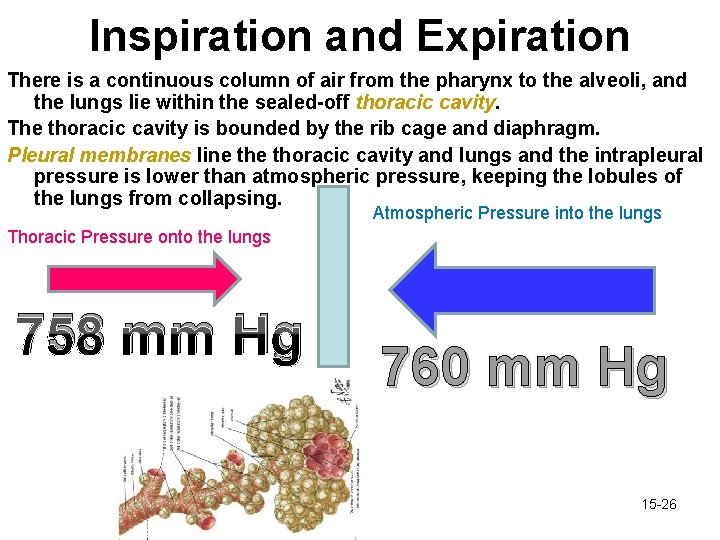
Inspiration and Expiration There is a continuous column of air from the pharynx to the alveoli, and the lungs lie within the sealed-off thoracic cavity. The thoracic cavity is bounded by the rib cage and diaphragm. Pleural membranes line thoracic cavity and lungs and the intrapleural pressure is lower than atmospheric pressure, keeping the lobules of the lungs from collapsing. Atmospheric Pressure into the lungs Thoracic Pressure onto the lungs 758 mm Hg 760 mm Hg 15 -26
Inspiration 15 -27
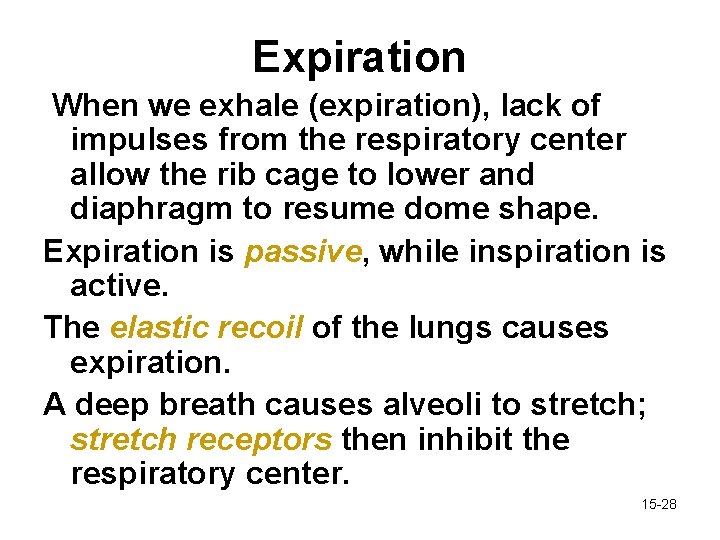
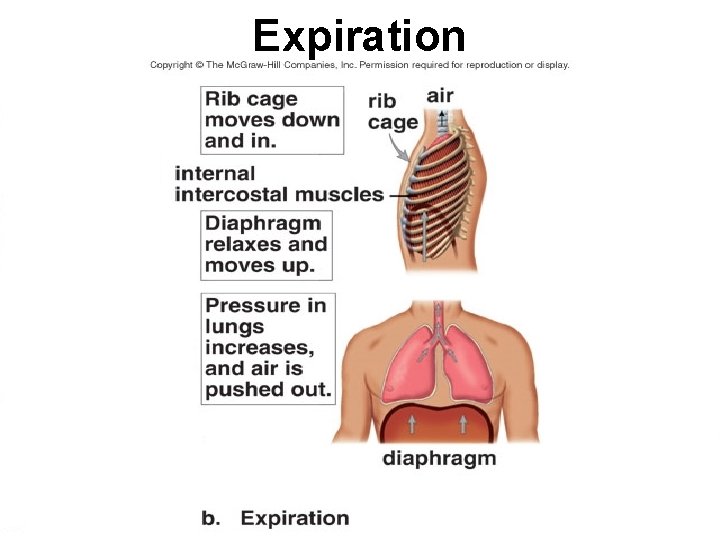
Expiration When we exhale (expiration), lack of impulses from the respiratory center allow the rib cage to lower and diaphragm to resume dome shape. Expiration is passive, while inspiration is active. The elastic recoil of the lungs causes expiration. A deep breath causes alveoli to stretch; stretch receptors then inhibit the respiratory center. 15 -28
Expiration 15 -29
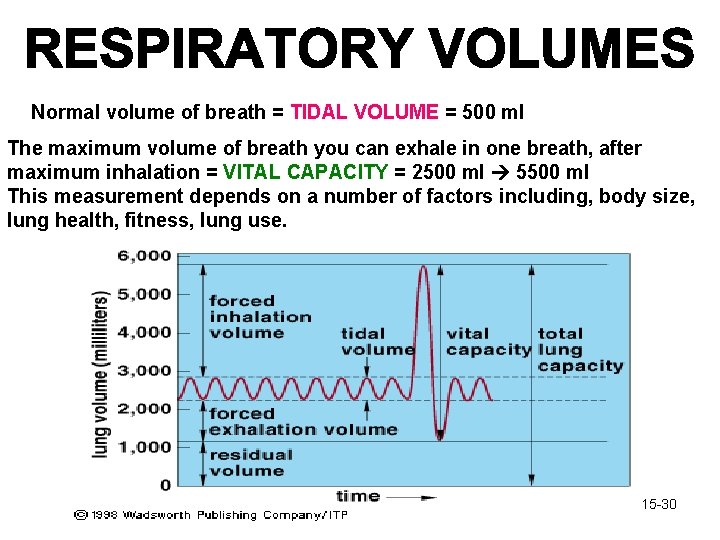
Normal volume of breath = TIDAL VOLUME = 500 ml The maximum volume of breath you can exhale in one breath, after maximum inhalation = VITAL CAPACITY = 2500 ml 5500 ml This measurement depends on a number of factors including, body size, lung health, fitness, lung use. 15 -30