
15 1 North Central African Societies Decisions What
- Slides: 20
15 -1 “North & Central African Societies”
Decisions… • What are the rules in your household? • What happens if you break them? • How do you know what the rules are • Who is in charge?
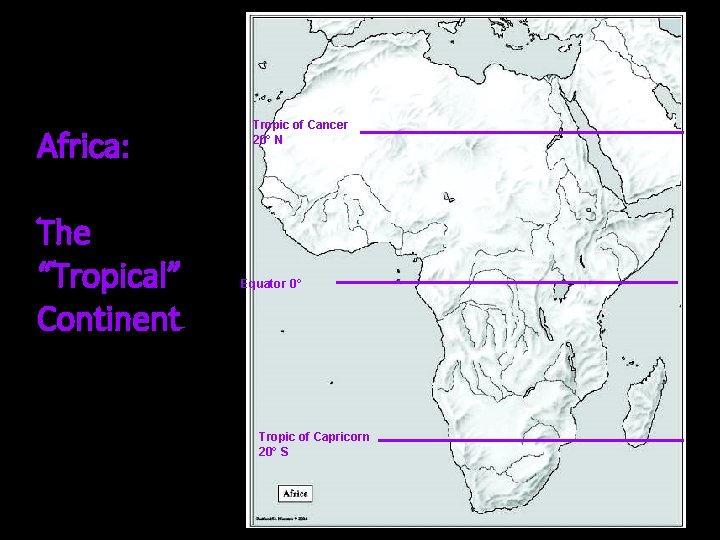
Setting the Stage • Peoples of Africa organized to by way of political, economic, and/or social needs • Climate & topography influences how communities develop
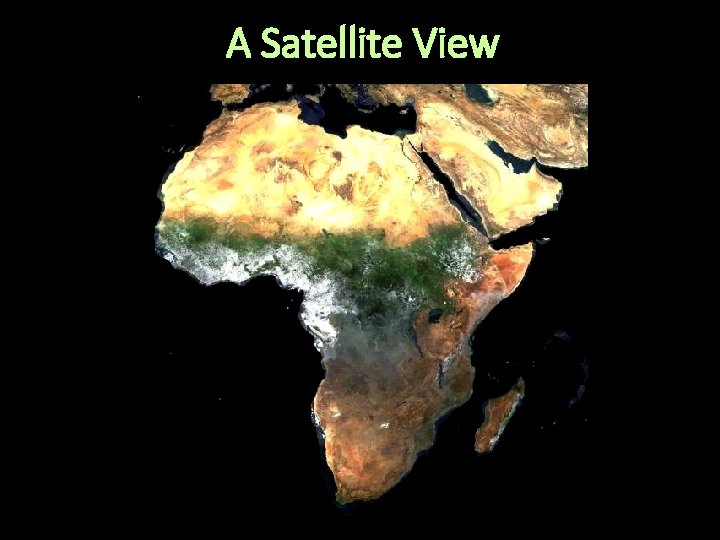
A Satellite View
Africa: The “Tropical” Continent Tropic of Cancer 20° N Equator 0° Tropic of Capricorn 20° S
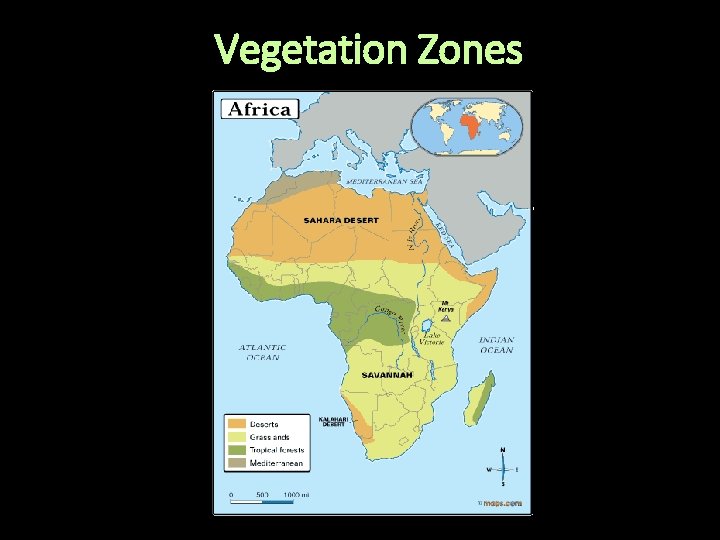
Vegetation Zones
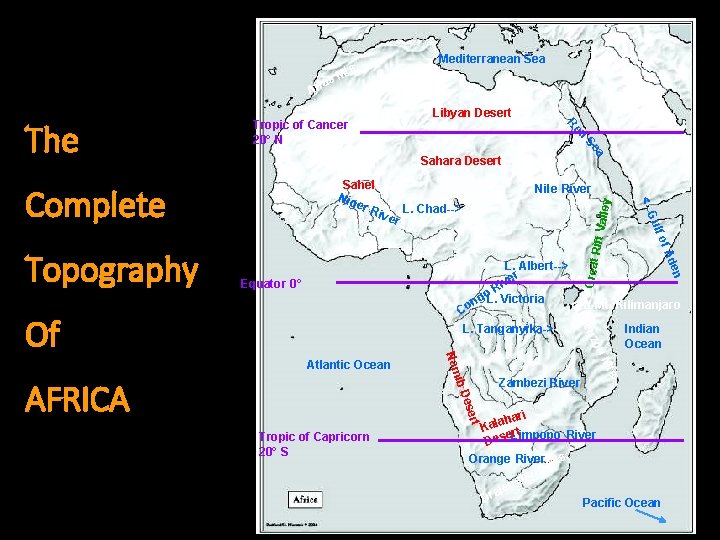
as Atl a Se Sahara Desert Sahel Nig er Riv L. Chad--> er Great of A ulf Rift V alley Nile River <--G Complete L. Albert--> r Δ Mt. Kenya ve i R o ng L. Victoria Δ Mt. Kilimanjaro Equator 0° ori ese hari Kala rt e. Limpopo River Des Orange River Mts. rg bu s n aje Dr Pacific Ocean rt Tropic of Capricorn 20° S Zambezi River Indian Ocean s. Mt ib D AFRICA Nam Atlantic Ocean nz L. Tanganyika-> we Of Ru Co den Topography Libyan Desert d Tropic of Cancer 20° N Mediterranean Sea Re The s. Mt
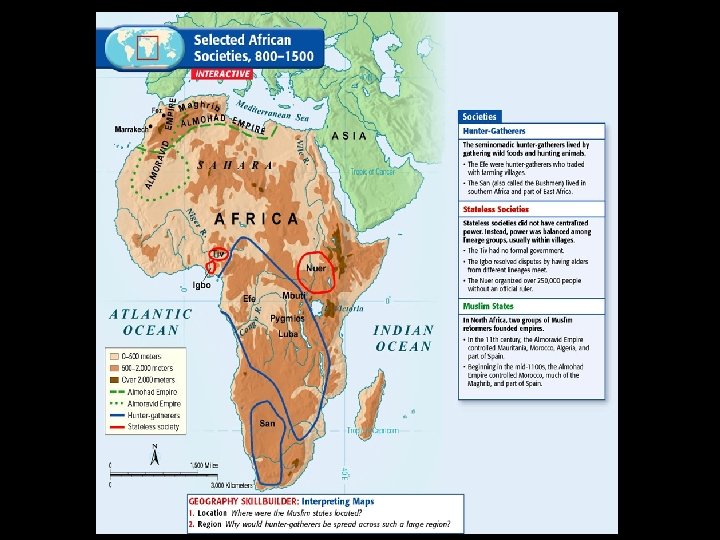
HOME Key Idea South of the Sahara, African peoples form hunting-gathering societies and stateless societies. In North Africa groups of Muslim reformers form two successive Muslim states, the Almoravid and Almohad empires.
HOME TERMS & NAMES Overview • lineage • stateless societies MAIN IDEA WHY IT MATTERS NOW • patrilineal North and central Africa developed hunting-gathering societies, stateless societies, and Muslim states. Modern African nations often must find ways to include these various peoples and traditions in one society. • matrilineal • Maghrib • Almoravids • Almohads
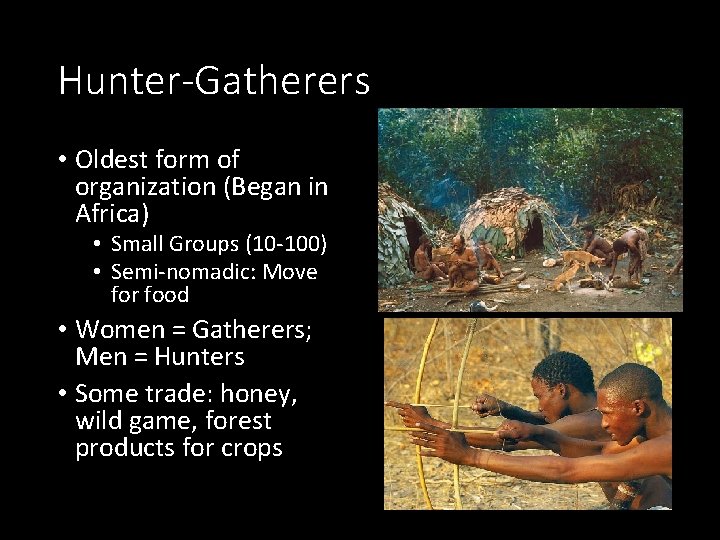
Hunter-Gatherers • Oldest form of organization (Began in Africa) • Small Groups (10 -100) • Semi-nomadic: Move for food • Women = Gatherers; Men = Hunters • Some trade: honey, wild game, forest products for crops
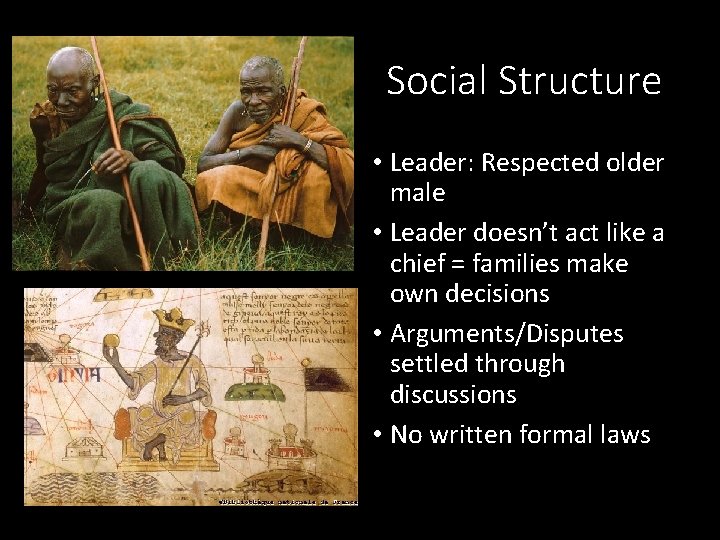
Social Structure • Leader: Respected older male • Leader doesn’t act like a chief = families make own decisions • Arguments/Disputes settled through discussions • No written formal laws
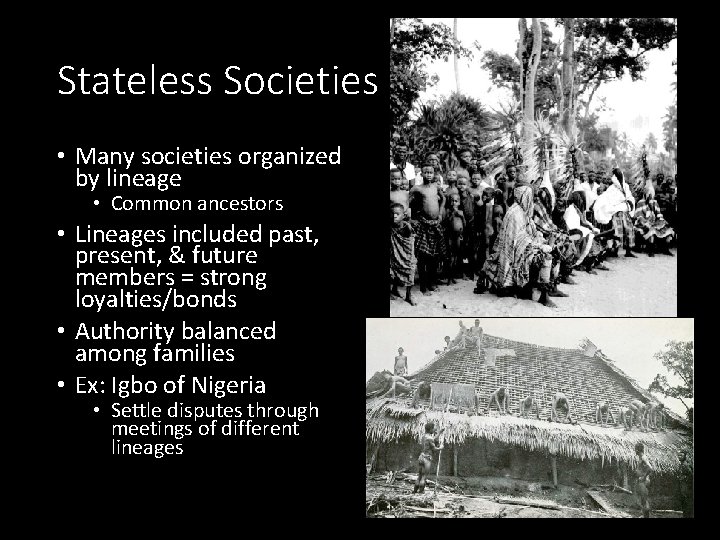
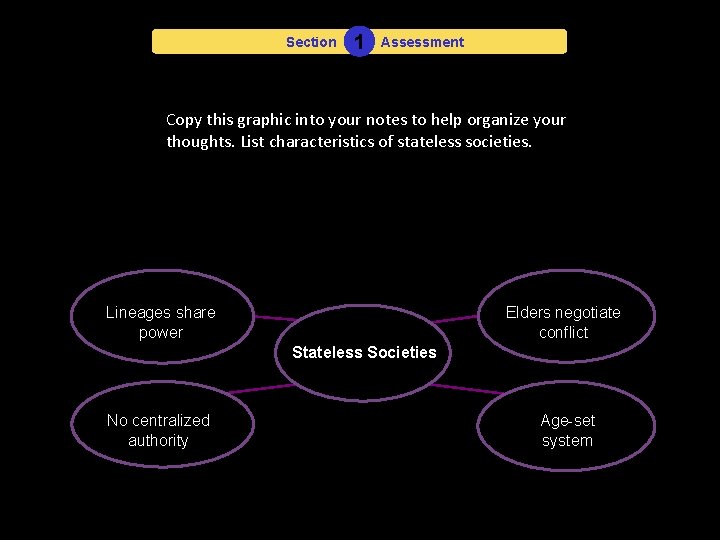
Stateless Societies • Many societies organized by lineage • Common ancestors • Lineages included past, present, & future members = strong loyalties/bonds • Authority balanced among families • Ex: Igbo of Nigeria • Settle disputes through meetings of different lineages
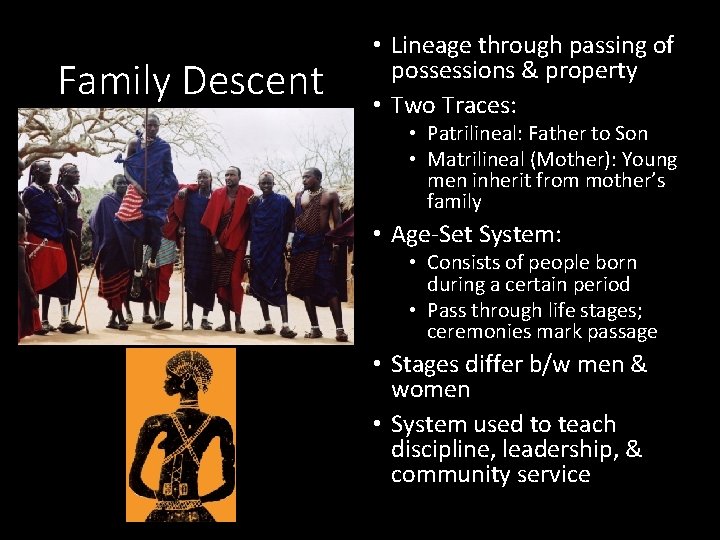
Family Descent • Lineage through passing of possessions & property • Two Traces: • Patrilineal: Father to Son • Matrilineal (Mother): Young men inherit from mother’s family • Age-Set System: • Consists of people born during a certain period • Pass through life stages; ceremonies mark passage • Stages differ b/w men & women • System used to teach discipline, leadership, & community service
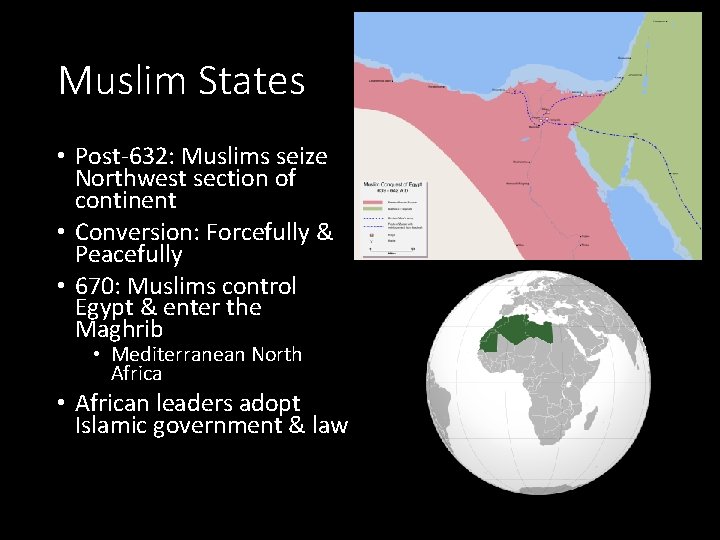
Muslim States • Post-632: Muslims seize Northwest section of continent • Conversion: Forcefully & Peacefully • 670: Muslims control Egypt & enter the Maghrib • Mediterranean North Africa • African leaders adopt Islamic government & law
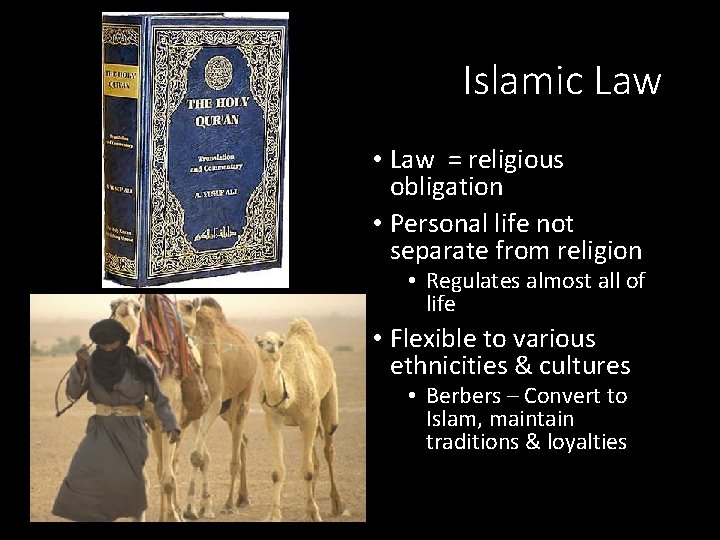
Islamic Law • Law = religious obligation • Personal life not separate from religion • Regulates almost all of life • Flexible to various ethnicities & cultures • Berbers – Convert to Islam, maintain traditions & loyalties
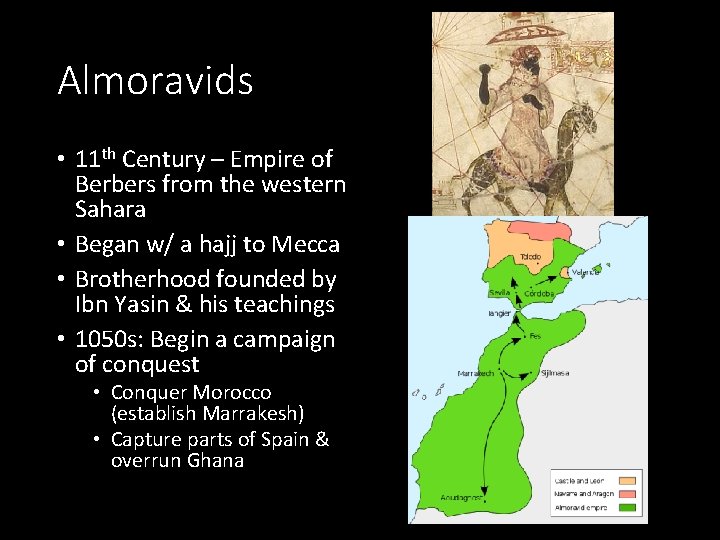
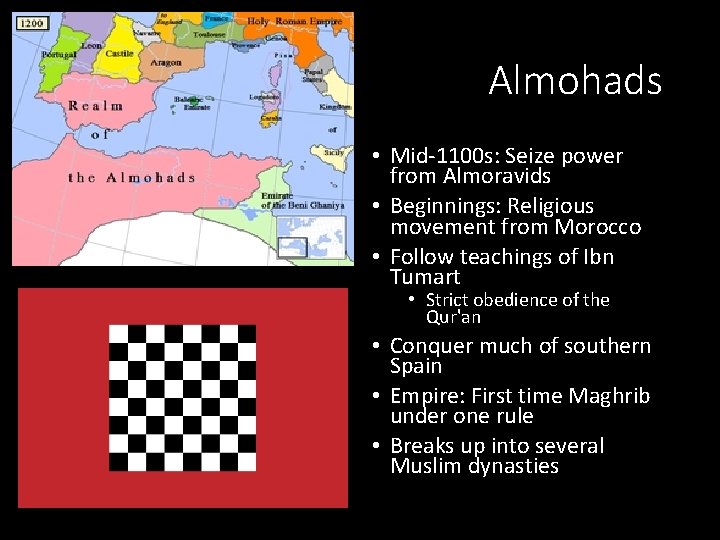
Almoravids • 11 th Century – Empire of Berbers from the western Sahara • Began w/ a hajj to Mecca • Brotherhood founded by Ibn Yasin & his teachings • 1050 s: Begin a campaign of conquest • Conquer Morocco (establish Marrakesh) • Capture parts of Spain & overrun Ghana
Almohads • Mid-1100 s: Seize power from Almoravids • Beginnings: Religious movement from Morocco • Follow teachings of Ibn Tumart • Strict obedience of the Qur'an • Conquer much of southern Spain • Empire: First time Maghrib under one rule • Breaks up into several Muslim dynasties
Section 1 HOME Assessment Copy this graphic into your notes to help organize your thoughts. List characteristics of stateless societies. Lineages share power Elders negotiate conflict Stateless Societies No centralized authority Age-set system
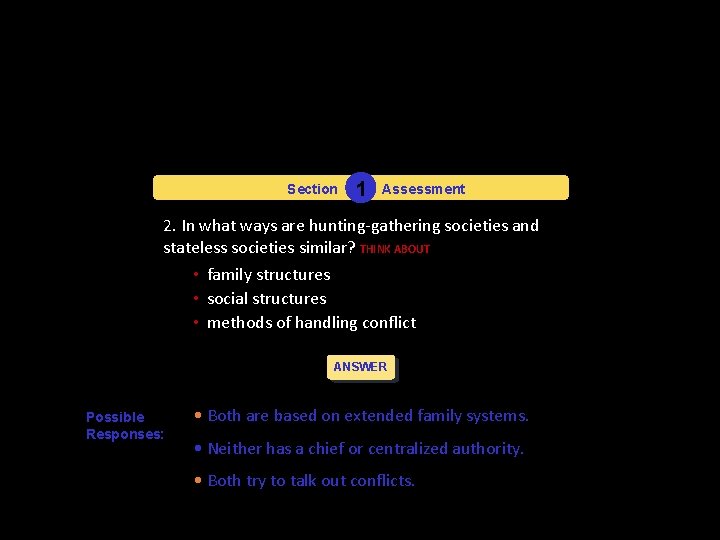
HOME Section 1 Assessment 2. In what ways are hunting-gathering societies and stateless societies similar? THINK ABOUT • family structures • social structures • methods of handling conflict ANSWER Possible Responses: • Both are based on extended family systems. • Neither has a chief or centralized authority. • Both try to talk out conflicts.