
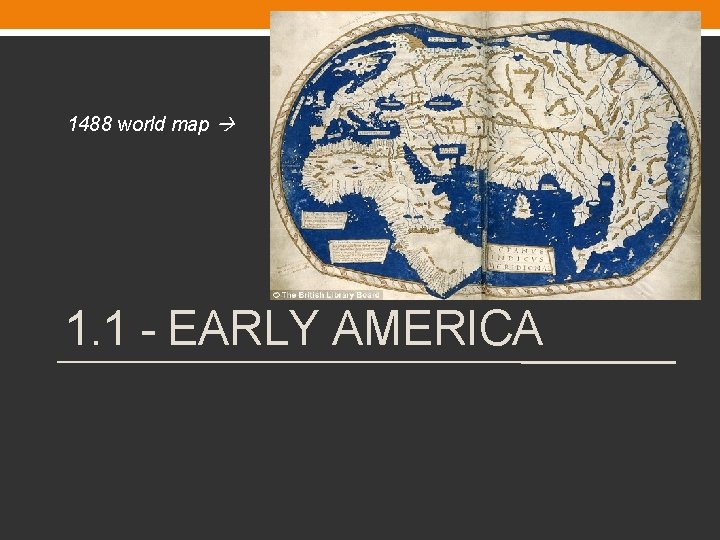
1488 world map 1 1 EARLY AMERICA Populating
- Slides: 14
1488 world map 1. 1 - EARLY AMERICA
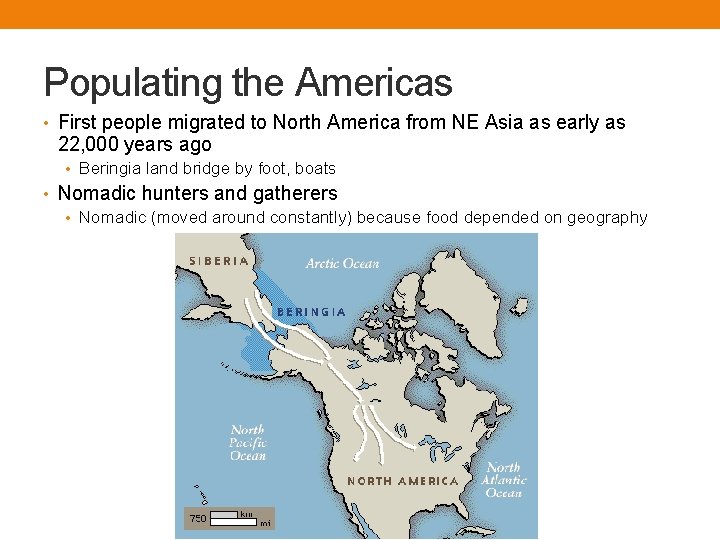
Populating the Americas • First people migrated to North America from NE Asia as early as 22, 000 years ago • Beringia land bridge by foot, boats • Nomadic hunters and gatherers • Nomadic (moved around constantly) because food depended on geography
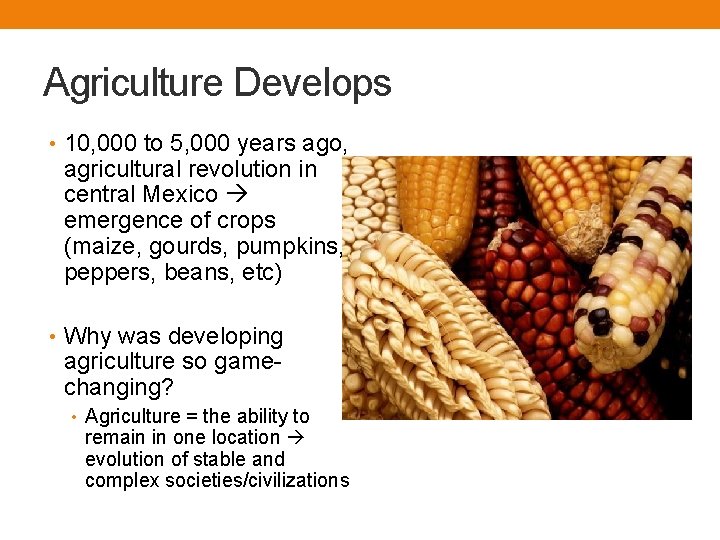
Agriculture Develops • 10, 000 to 5, 000 years ago, agricultural revolution in central Mexico emergence of crops (maize, gourds, pumpkins, peppers, beans, etc) • Why was developing agriculture so gamechanging? • Agriculture = the ability to remain in one location evolution of stable and complex societies/civilizations
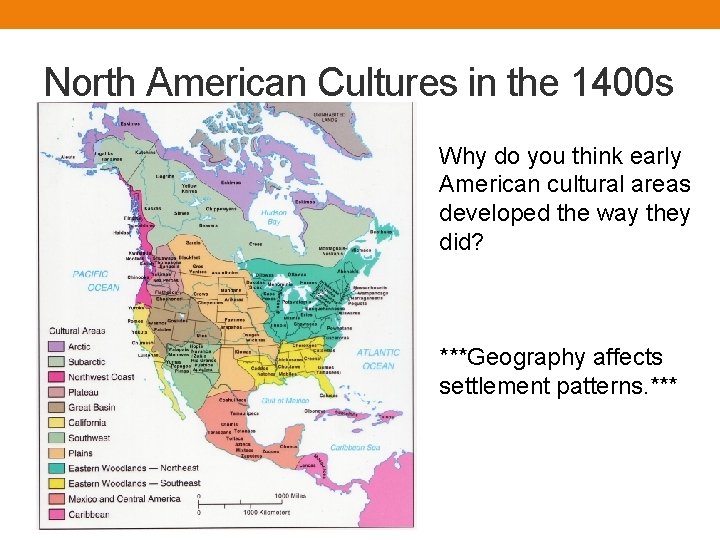
North American Cultures in the 1400 s Why do you think early American cultural areas developed the way they did? ***Geography affects settlement patterns. ***
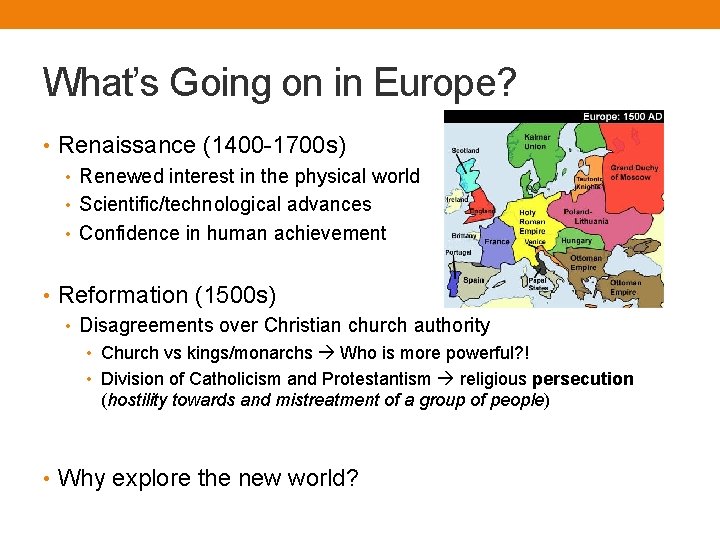
What’s Going on in Europe? • Renaissance (1400 -1700 s) • Renewed interest in the physical world • Scientific/technological advances • Confidence in human achievement • Reformation (1500 s) • Disagreements over Christian church authority • Church vs kings/monarchs Who is more powerful? ! • Division of Catholicism and Protestantism religious persecution (hostility towards and mistreatment of a group of people) • Why explore the new world?
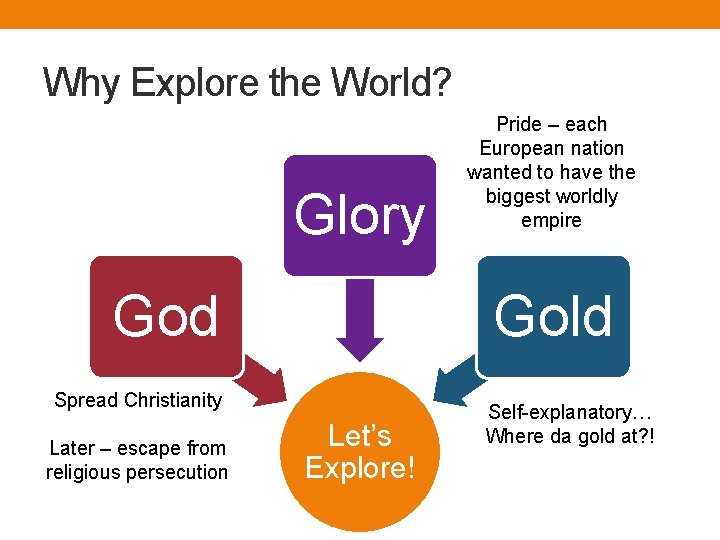
Why Explore the World? Glory God Gold Spread Christianity Later – escape from religious persecution Pride – each European nation wanted to have the biggest worldly empire Let’s Explore! Self-explanatory… Where da gold at? !
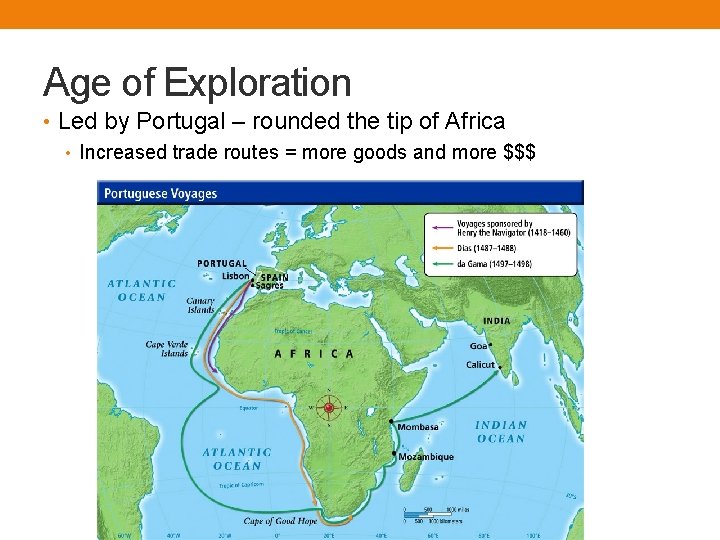
Age of Exploration • Led by Portugal – rounded the tip of Africa • Increased trade routes = more goods and more $$$
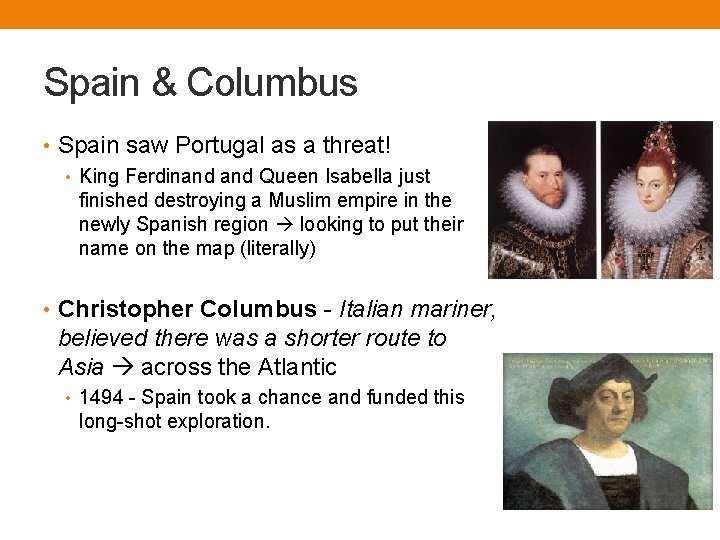
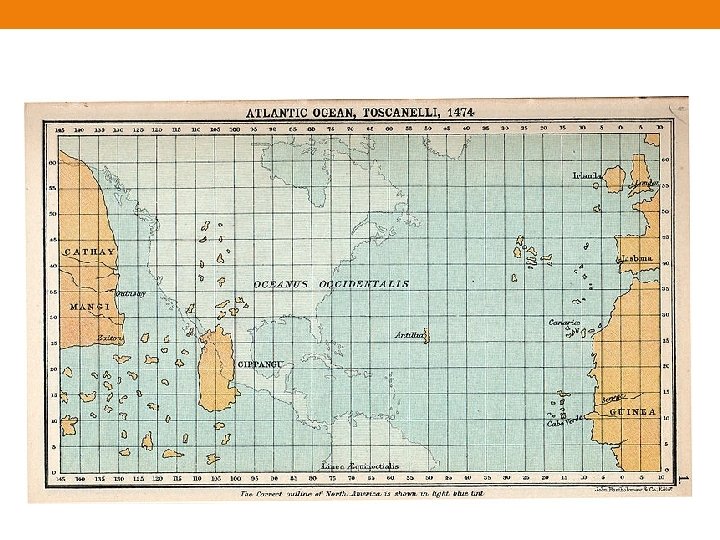
Spain & Columbus • Spain saw Portugal as a threat! • King Ferdinand Queen Isabella just finished destroying a Muslim empire in the newly Spanish region looking to put their name on the map (literally) • Christopher Columbus - Italian mariner, believed there was a shorter route to Asia across the Atlantic • 1494 - Spain took a chance and funded this long-shot exploration.
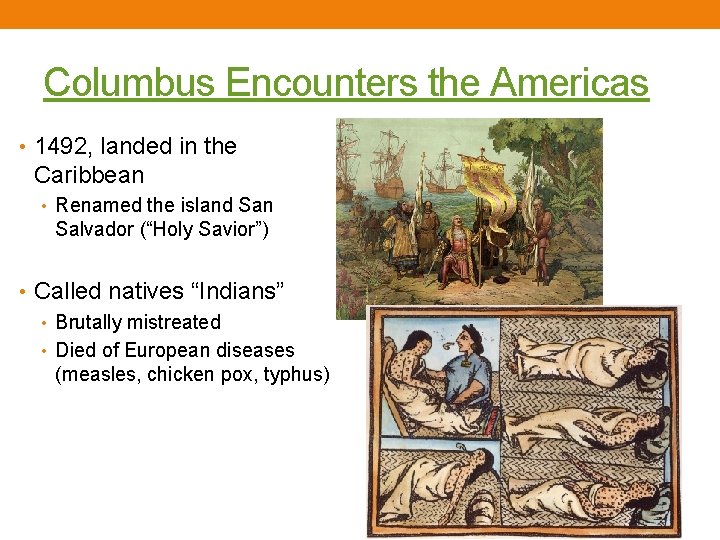
Columbus Encounters the Americas • 1492, landed in the Caribbean • Renamed the island San Salvador (“Holy Savior”) • Called natives “Indians” • Brutally mistreated • Died of European diseases (measles, chicken pox, typhus)
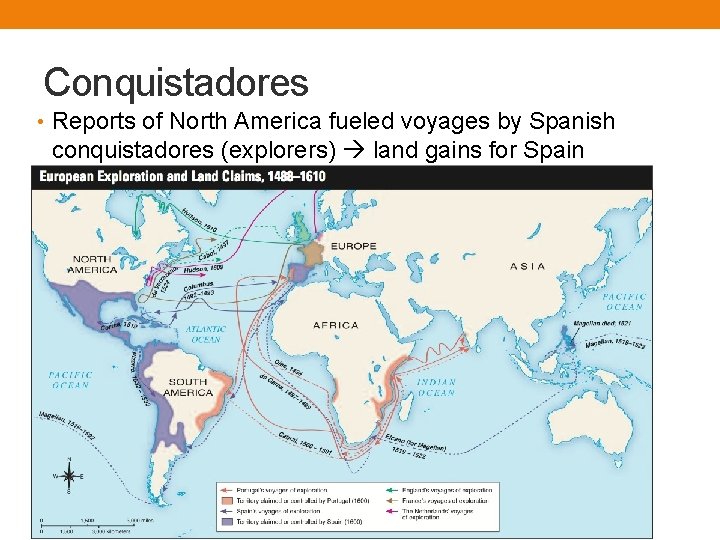
Conquistadores • Reports of North America fueled voyages by Spanish conquistadores (explorers) land gains for Spain
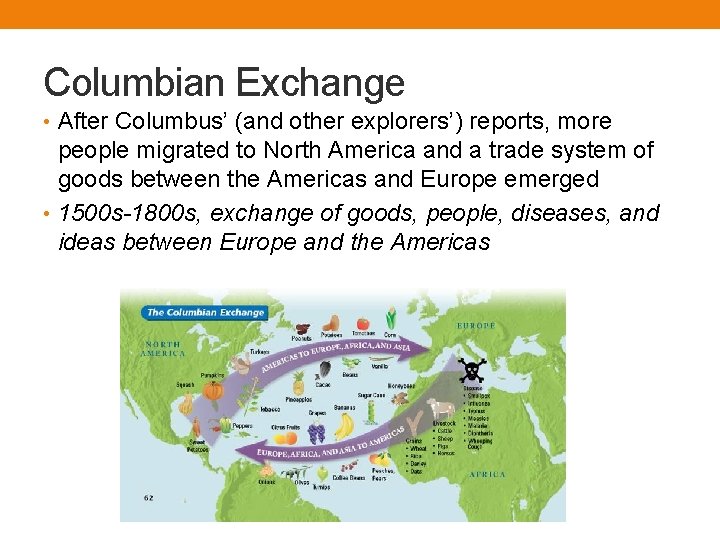
Columbian Exchange • After Columbus’ (and other explorers’) reports, more people migrated to North America and a trade system of goods between the Americas and Europe emerged • 1500 s-1800 s, exchange of goods, people, diseases, and ideas between Europe and the Americas
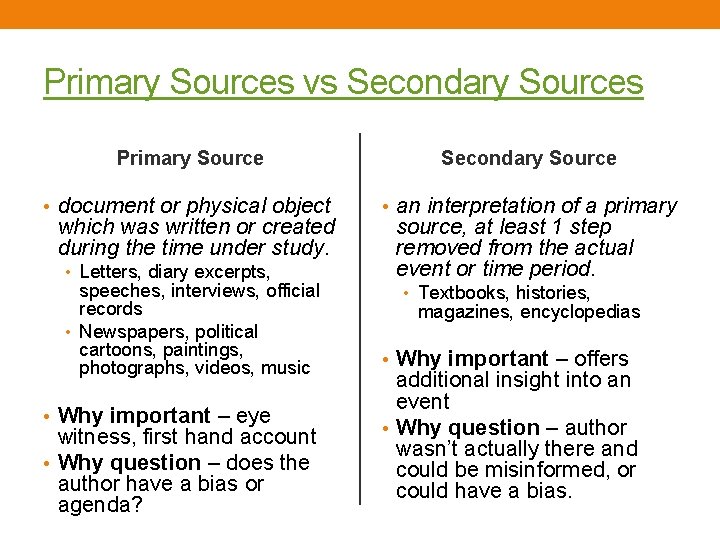
Primary Sources vs Secondary Sources Primary Source Secondary Source • document or physical object • an interpretation of a primary which was written or created during the time under study. • Letters, diary excerpts, speeches, interviews, official records • Newspapers, political cartoons, paintings, photographs, videos, music • Why important – eye witness, first hand account • Why question – does the author have a bias or agenda? source, at least 1 step removed from the actual event or time period. • Textbooks, histories, magazines, encyclopedias • Why important – offers additional insight into an event • Why question – author wasn’t actually there and could be misinformed, or could have a bias.
Columbus’ Journal • We will read Columbus’ Journal excerpt on Actively Learn. • Answer the questions as you read • We will analyze the diary excerpt as a class at the end.