
140 MIC Microbiology Microbial cell structure Domains of
140 MIC: Microbiology . . ﺍﻟﺸﻌﺒﺔ Microbial cell structure • Domains of living cells • Principles of microbial cell structure • Elements of Microbial cell Structure • Eukaryotes • Prokaryotes & chemistry of cellular components
Domains of living cells PHYLOGENY OF LIVING CELLS
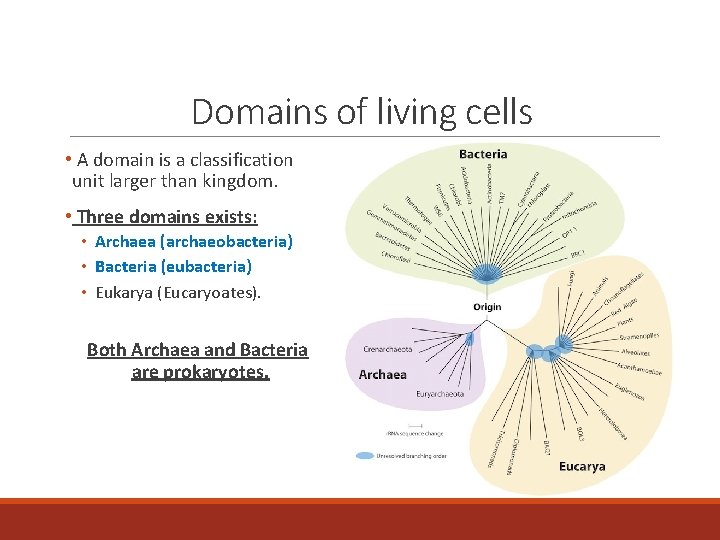
Domains of living cells • A domain is a classification unit larger than kingdom. • Three domains exists: • Archaea (archaeobacteria) • Bacteria (eubacteria) • Eukarya (Eucaryoates). Both Archaea and Bacteria are prokaryotes.
Principles of microbial cell structure ELEMENTS OF MICROBIAL STRUCTURE
Principles of microbial cell structure All cells have the following in common: ◦ ◦ Cytoplasmic membrane Cytoplasm Ribosomes Genetic materials Eukaryotic vs. Prokaryotic Cells Eukaryotes DNA enclosed in a membrane-bound nucleus Cells are generally larger and more complex Contain organelles Prokaryotes No membrane-enclosed organelles, no nucleus Generally smaller than eukaryotic cells
Principles of microbial cell structure Eukaryotes
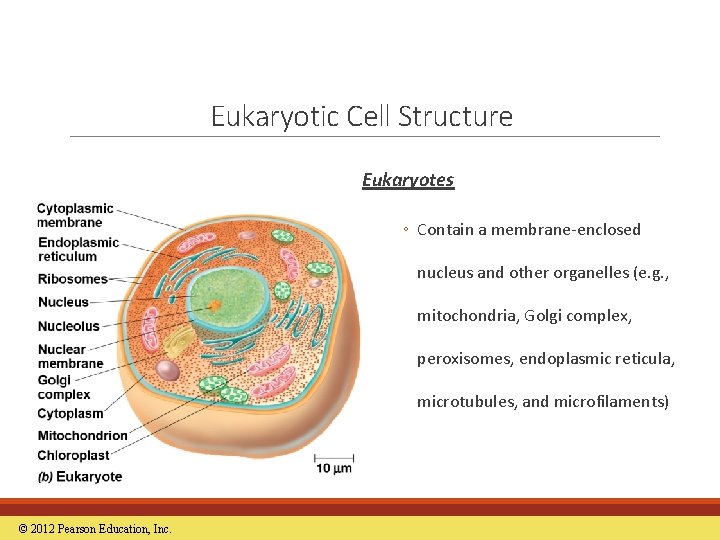
Eukaryotic Cell Structure Eukaryotes ◦ Contain a membrane-enclosed nucleus and other organelles (e. g. , mitochondria, Golgi complex, peroxisomes, endoplasmic reticula, microtubules, and microfilaments) © 2012 Pearson Education, Inc.
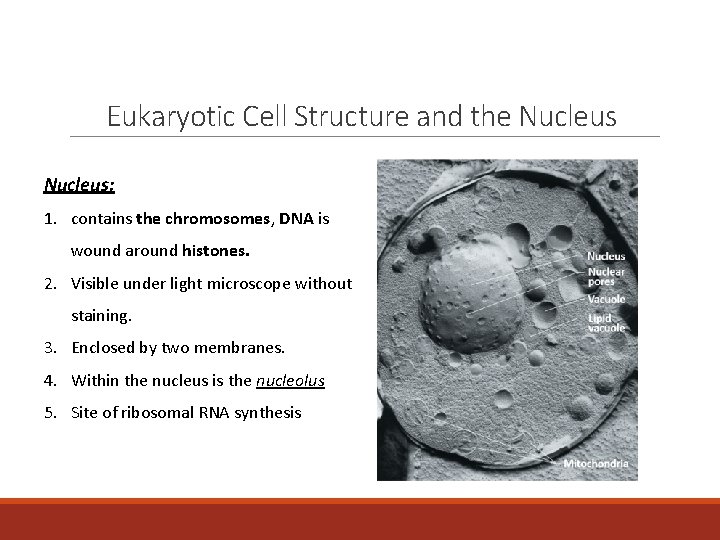
Eukaryotic Cell Structure and the Nucleus: 1. contains the chromosomes, DNA is wound around histones. 2. Visible under light microscope without staining. 3. Enclosed by two membranes. 4. Within the nucleus is the nucleolus 5. Site of ribosomal RNA synthesis
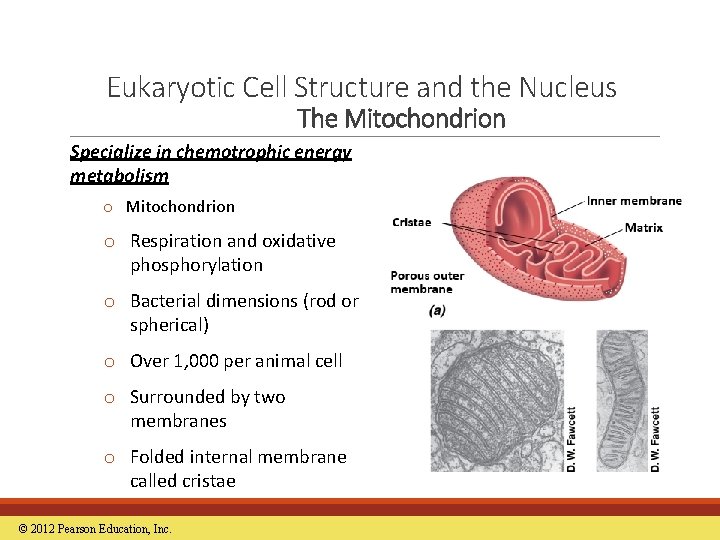
Eukaryotic Cell Structure and the Nucleus The Mitochondrion Specialize in chemotrophic energy metabolism o Mitochondrion o Respiration and oxidative phosphorylation o Bacterial dimensions (rod or spherical) o Over 1, 000 per animal cell o Surrounded by two membranes o Folded internal membrane called cristae © 2012 Pearson Education, Inc.
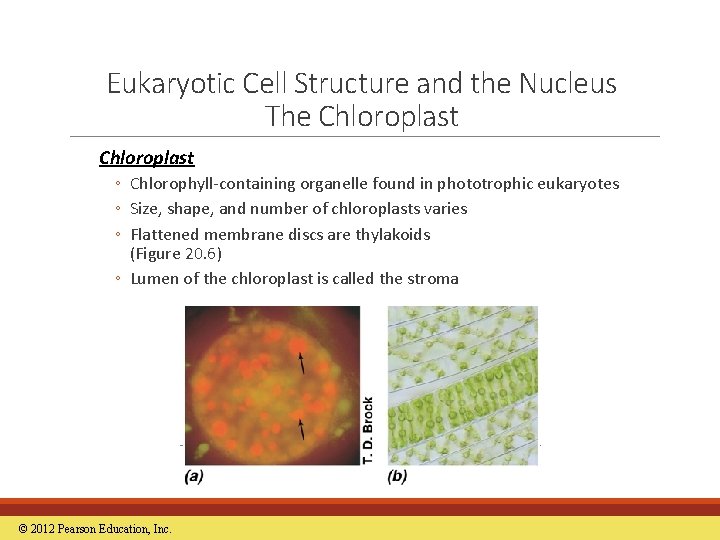
Eukaryotic Cell Structure and the Nucleus The Chloroplast ◦ Chlorophyll-containing organelle found in phototrophic eukaryotes ◦ Size, shape, and number of chloroplasts varies ◦ Flattened membrane discs are thylakoids (Figure 20. 6) ◦ Lumen of the chloroplast is called the stroma © 2012 Pearson Education, Inc.
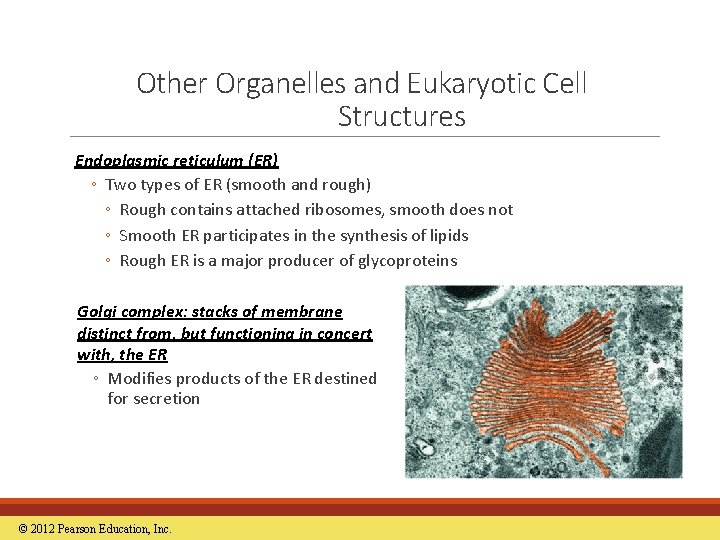
Other Organelles and Eukaryotic Cell Structures Endoplasmic reticulum (ER) ◦ Two types of ER (smooth and rough) ◦ Rough contains attached ribosomes, smooth does not ◦ Smooth ER participates in the synthesis of lipids ◦ Rough ER is a major producer of glycoproteins Golgi complex: stacks of membrane distinct from, but functioning in concert with, the ER ◦ Modifies products of the ER destined for secretion © 2012 Pearson Education, Inc.

140 MIC: Microbiology . . ﺍﻟﺸﻌﺒﺔ Microbial cell structure • Domains of living cells • Principles of microbial cell structure • Elements of Microbial cell Structure • Eukaryotes • Prokaryotes & chemistry of cellular components
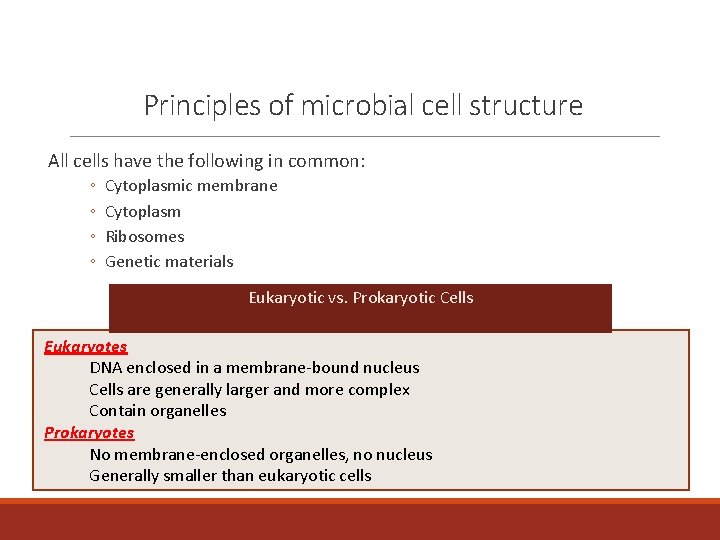
Principles of microbial cell structure All cells have the following in common: ◦ ◦ Cytoplasmic membrane Cytoplasm Ribosomes Genetic materials Eukaryotic vs. Prokaryotic Cells Eukaryotes DNA enclosed in a membrane-bound nucleus Cells are generally larger and more complex Contain organelles Prokaryotes No membrane-enclosed organelles, no nucleus Generally smaller than eukaryotic cells
Principles of microbial cell structure Prokaryotes
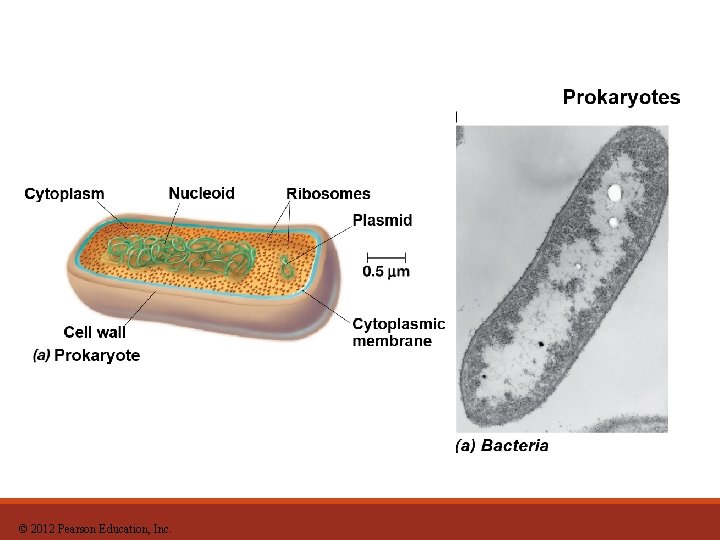
© 2012 Pearson Education, Inc.
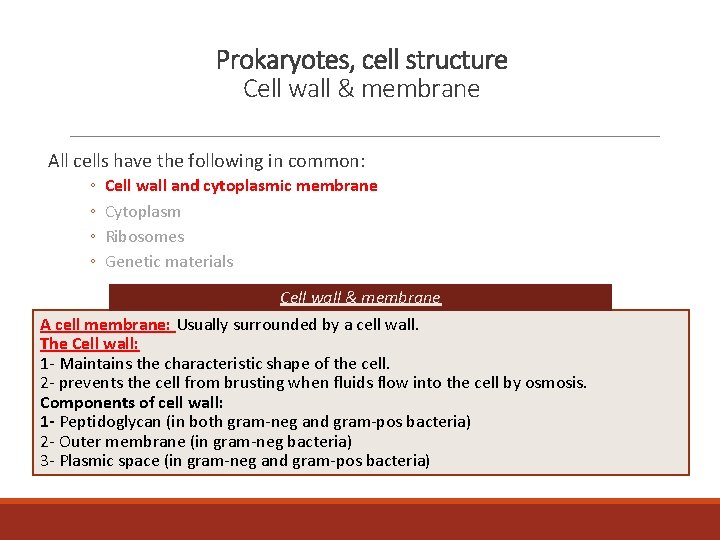
Prokaryotes, cell structure Cell wall & membrane All cells have the following in common: ◦ ◦ Cell wall and cytoplasmic membrane Cytoplasm Ribosomes Genetic materials Cell wall & membrane A cell membrane: Usually surrounded by a cell wall. The Cell wall: 1 - Maintains the characteristic shape of the cell. 2 - prevents the cell from brusting when fluids flow into the cell by osmosis. Components of cell wall: 1 - Peptidoglycan (in both gram-neg and gram-pos bacteria) 2 - Outer membrane (in gram-neg bacteria) 3 - Plasmic space (in gram-neg and gram-pos bacteria)
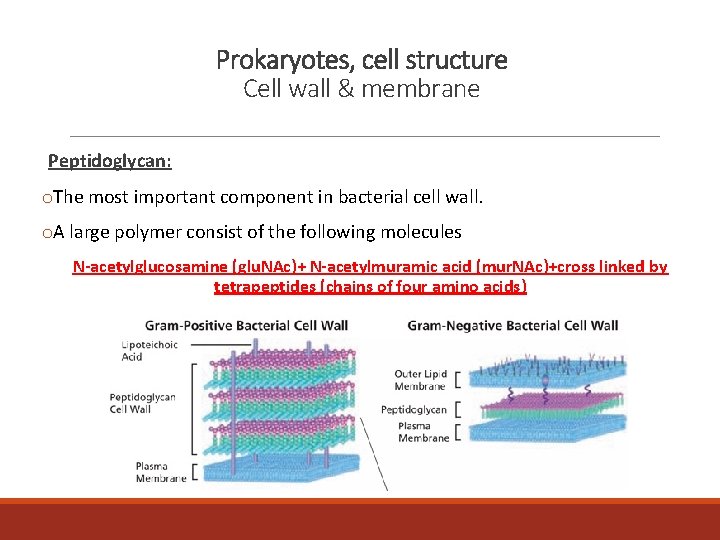
Prokaryotes, cell structure Cell wall & membrane Peptidoglycan: o. The most important component in bacterial cell wall. o. A large polymer consist of the following molecules N-acetylglucosamine (glu. NAc)+ N-acetylmuramic acid (mur. NAc)+cross linked by tetrapeptides (chains of four amino acids)
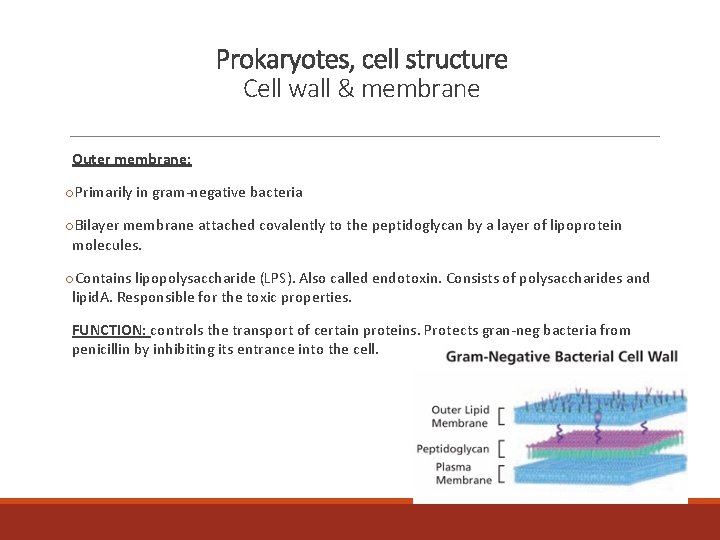
Prokaryotes, cell structure Cell wall & membrane Outer membrane: o. Primarily in gram-negative bacteria o. Bilayer membrane attached covalently to the peptidoglycan by a layer of lipoprotein molecules. o. Contains lipopolysaccharide (LPS). Also called endotoxin. Consists of polysaccharides and lipid. A. Responsible for the toxic properties. FUNCTION: controls the transport of certain proteins. Protects gran-neg bacteria from penicillin by inhibiting its entrance into the cell.
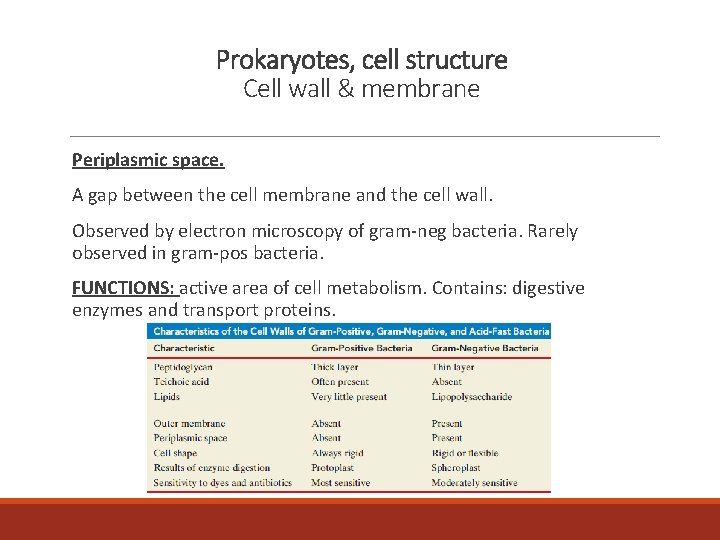
Prokaryotes, cell structure Cell wall & membrane Periplasmic space. A gap between the cell membrane and the cell wall. Observed by electron microscopy of gram-neg bacteria. Rarely observed in gram-pos bacteria. FUNCTIONS: active area of cell metabolism. Contains: digestive enzymes and transport proteins.
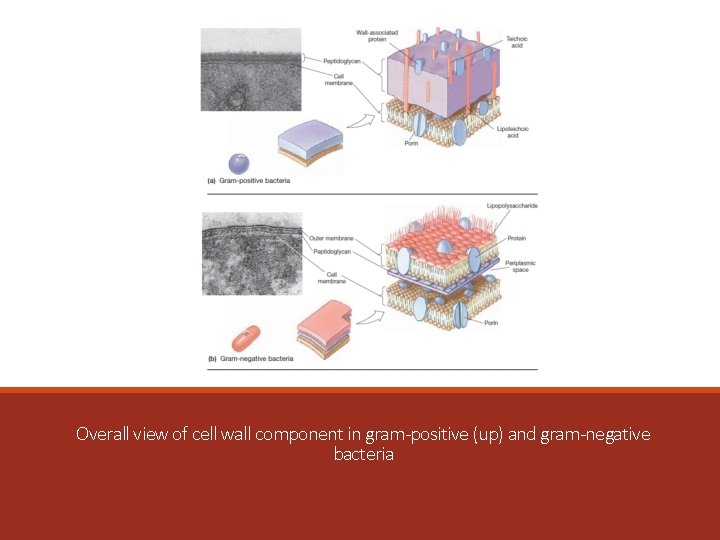
Overall view of cell wall component in gram-positive (up) and gram-negative bacteria
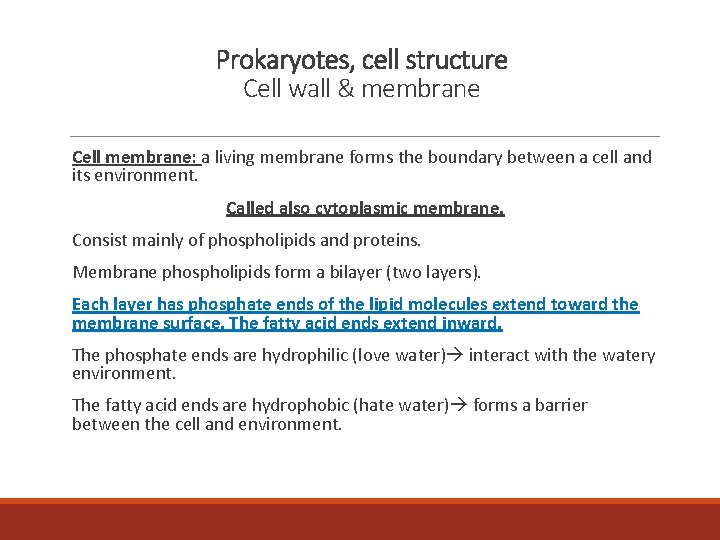
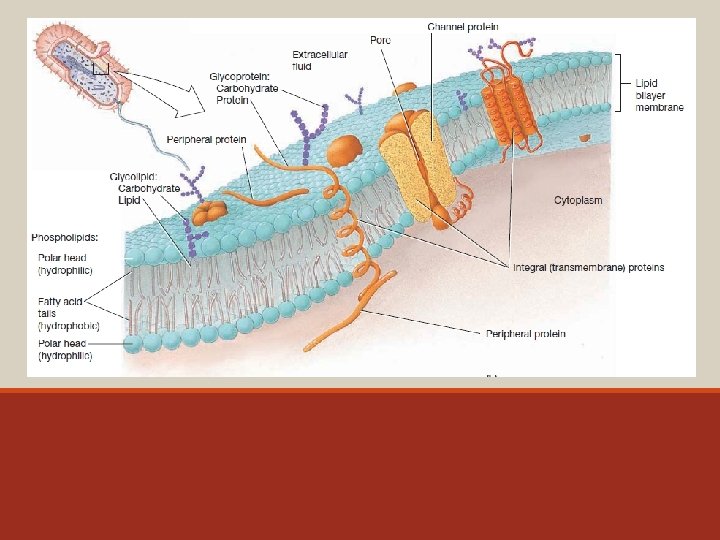
Prokaryotes, cell structure Cell wall & membrane Cell membrane: a living membrane forms the boundary between a cell and its environment. Called also cytoplasmic membrane. Consist mainly of phospholipids and proteins. Membrane phospholipids form a bilayer (two layers). Each layer has phosphate ends of the lipid molecules extend toward the membrane surface. The fatty acid ends extend inward. The phosphate ends are hydrophilic (love water) interact with the watery environment. The fatty acid ends are hydrophobic (hate water) forms a barrier between the cell and environment.

140 MIC: Microbiology . . ﺍﻟﺸﻌﺒﺔ Microbial cell structure • Domains of living cells • Principles of microbial cell structure • Elements of Microbial cell Structure • Eukaryotes • Prokaryotes & chemistry of cellular components
Prokaryotes, cell structure Cytoplasm All cells have the following in common: ◦ ◦ Cell wall and cytoplasmic membrane Cytoplasm Ribosomes Genetic materials Cytoplasm: o semifluid substance inside the cell membrane. o 4/5 of the cytoplasm is water. The remaining 1/5 substances dissolved or suspended in the water (e. g. enzymes, proteins, carbohydrate, lipids and inorganic ions) o Many chemical reactions occur in the cytoplasm
Prokaryotes, cell structure Ribosomes All cells have the following in common: ◦ ◦ Cell wall and cytoplasmic membrane Cytoplasm Ribosomes Genetic materials Ribosomes: o Consist of RNA and Protein. o Abundant in the cytoplasm of prokaryotes. o Polyribosomes= chains of ribosomes in one cell o Nearly spherical, stain densely. o It contains a large subunit and small subunit. o Site for protein synthesis. o The size is determine by measuring their sedimentation rates o Expressed in terms of Svedberg unit (S) unit.
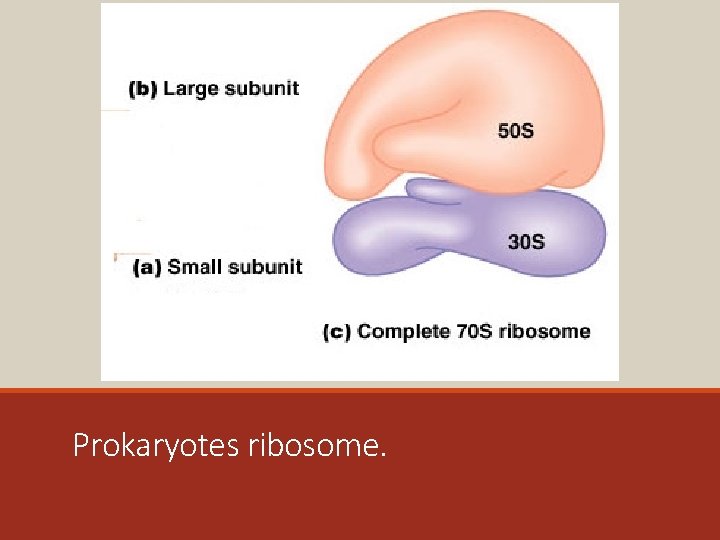
Prokaryotes ribosome.
Prokaryotes, cell structure Genetic materials (Nuclear region and plasmids) All cells have the following in common: ◦ ◦ Cell wall and cytoplasmic membrane Cytoplasm Ribosomes Genetic materials Nuclear region. o Nucleoid of nuclear region consists of DNA, has some RNA and protein associated with it. o The DNA is one circular chromosome. However, some bacteria contain two circular chromosomes (e. g. Rhodobacter sphaeriodes and Vibrio cholerae). Plasmids o are small circular molecules of DNA.
Prokaryotes, cell structure Additional internal structures All cells have the following in common: ◦ ◦ Cell wall and cytoplasmic membrane Cytoplasm Ribosomes Genetic materials NOTE: Other internal and external structures may exist Additional internal structures Internal membrane systems: o In photosynthetic bacteria. Called chromatophores. Contain the pigments used in photosynthesis Inclusions: o Such as Granules (contain glycogen or polyphosphate), Vesicles (gas-filled vacuoles) Endospores: vegetative cells of some bacteria produce resting stages called endospores. Examples are Bacillus and Clostridium. Bacteria produce one endospore while fungi produce high number of spores (usually external).
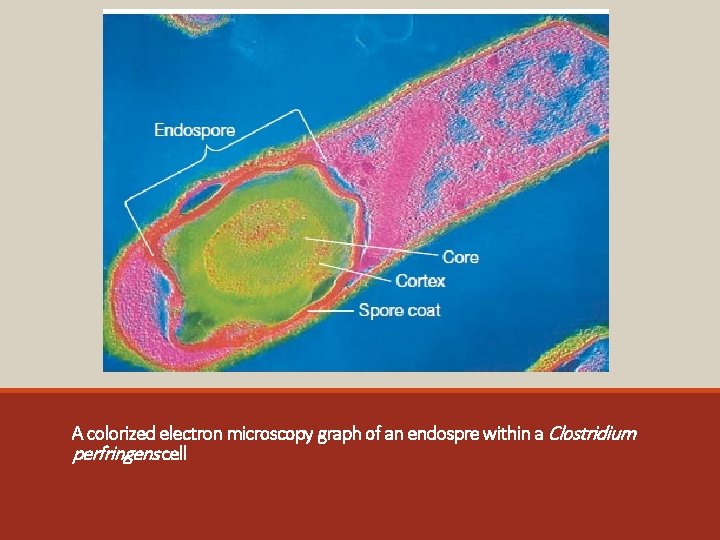
A colorized electron microscopy graph of an endospre within a Clostridium perfringens cell

Prokaryotes SIZE, SHAPE AND ARRANGEMENT
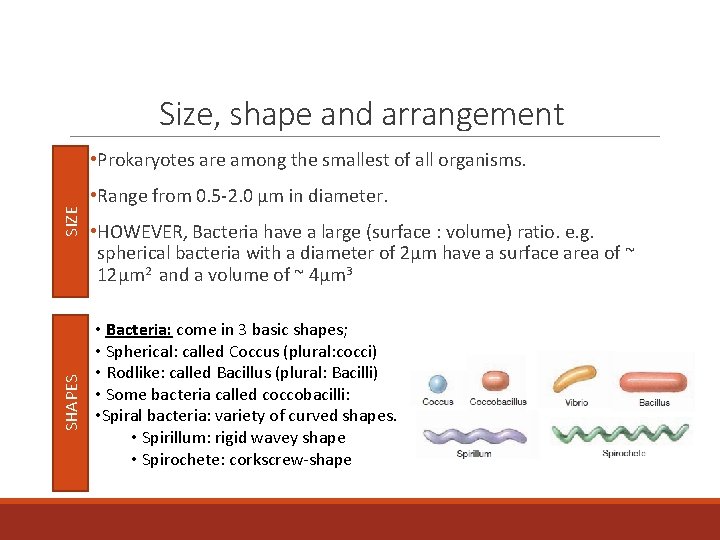
Size, shape and arrangement SHAPES SIZE • Prokaryotes are among the smallest of all organisms. • Range from 0. 5 -2. 0 µm in diameter. • HOWEVER, Bacteria have a large (surface : volume) ratio. e. g. spherical bacteria with a diameter of 2µm have a surface area of ~ 12µm 2 and a volume of ~ 4µm 3 • Bacteria: come in 3 basic shapes; • Spherical: called Coccus (plural: cocci) • Rodlike: called Bacillus (plural: Bacilli) • Some bacteria called coccobacilli: • Spiral bacteria: variety of curved shapes. • Spirillum: rigid wavey shape • Spirochete: corkscrew-shape
SHAPES Size, shape and arrangement • NOTES 1. Some bacteria do not fit in any of the previous categories. 2. Even bacteria of the same kind may vary in size and shape depending on the nutrients and environmental conditions. 3. Some bacteria vary widely in form even within a single culture. Known as pleomorphism
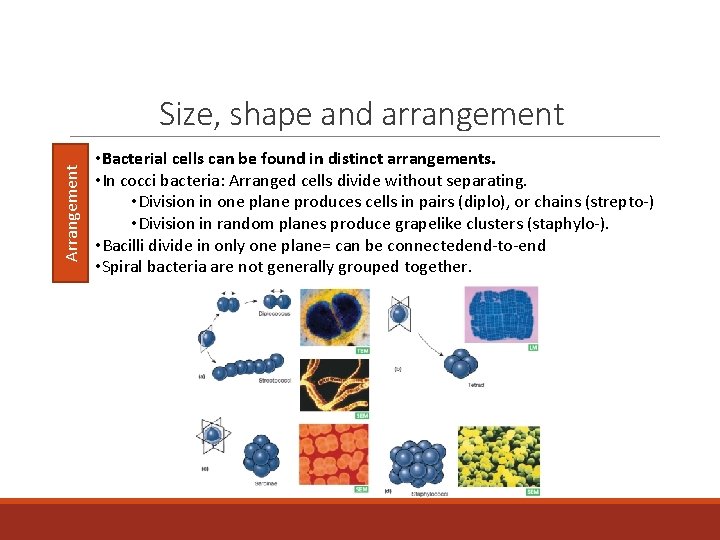
Arrangement Size, shape and arrangement • Bacterial cells can be found in distinct arrangements. • In cocci bacteria: Arranged cells divide without separating. • Division in one plane produces cells in pairs (diplo), or chains (strepto-) • Division in random planes produce grapelike clusters (staphylo-). • Bacilli divide in only one plane= can be connectedend-to-end • Spiral bacteria are not generally grouped together.
Principles of microbial cell structure All cells have the following in common: ◦ ◦ Cytoplasmic membrane Cytoplasm Ribosomes Genetic materials = Genome A cell’s full complement of genes Eukaryotic DNA is linear and found within the nucleus • Associated with proteins that help in folding of the DNA • Usually more than one chromosome • Typically two copies of each chromosome • During cell division, nucleus divides by mitosis • During sexual reproduction, the genome is halved by meiosis

140 MIC: Microbiology Nutrition and Cell Chemistry • Definitions • Macronutrients • Micronutrients . . ﺍﻟﺸﻌﺒﺔ
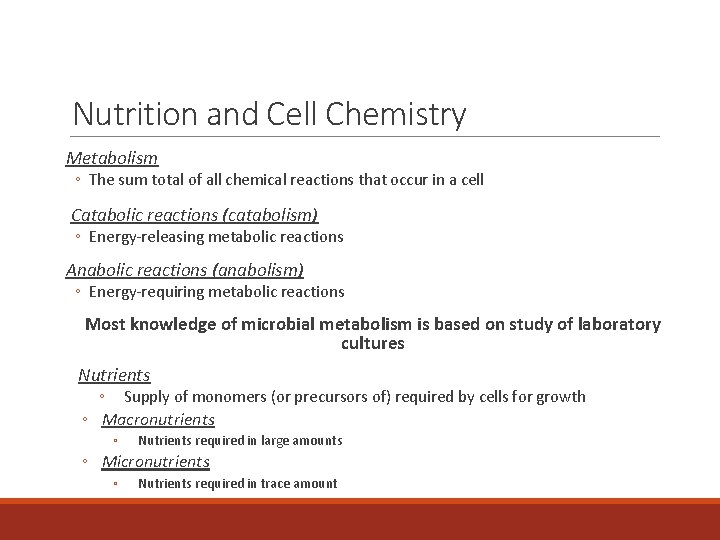
Nutrition and Cell Chemistry Metabolism ◦ The sum total of all chemical reactions that occur in a cell Catabolic reactions (catabolism) ◦ Energy-releasing metabolic reactions Anabolic reactions (anabolism) ◦ Energy-requiring metabolic reactions Most knowledge of microbial metabolism is based on study of laboratory cultures Nutrients ◦ Supply of monomers (or precursors of) required by cells for growth ◦ Macronutrients ◦ Nutrients required in large amounts ◦ Micronutrients ◦ Nutrients required in trace amount
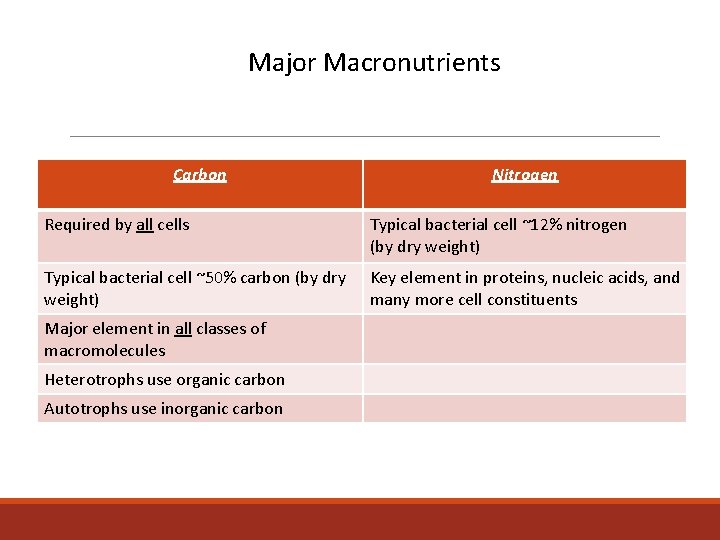
Major Macronutrients Carbon Nitrogen Required by all cells Typical bacterial cell ~12% nitrogen (by dry weight) Typical bacterial cell ~50% carbon (by dry weight) Key element in proteins, nucleic acids, and many more cell constituents Major element in all classes of macromolecules Heterotrophs use organic carbon Autotrophs use inorganic carbon
Other Macronutrients Iron ◦ Key component of cytochromes and Fe. S proteins involved in electron transport ◦ Under anoxic conditions, generally ferrous (Fe 2+) form; soluble ◦ Under oxic conditions: generally ferric (Fe 3+) form; exists as insoluble minerals ◦ Cells produce siderophores (iron-binding agents) to obtain iron from insoluble mineral form
Other Macronutrients ◦ Phosphorus (P) ◦ Synthesis of nucleic acids and phospholipids ◦ Sulfur (S) ◦ ◦ Sulfur-containing amino acids (cysteine and methionine) Vitamins (e. g. , thiamine, biotin, lipoic acid) and coenzyme A ◦ Potassium (K) ◦ Required by enzymes for activity ◦ Magnesium (Mg) ◦ Stabilizes ribosomes, membranes, and nucleic acids ◦ Also required for many enzymes ◦ Calcium (Ca) ◦ Helps stabilize cell walls in microbes ◦ Plays key role in heat stability of endospores ◦ Sodium (Na) ◦ Required by some microbes (e. g. , marine microbes)
Growth Factors ◦ Organic compounds required in small amounts by certain organisms ◦ Examples: vitamins, amino acids, purines, pyrimidines ◦ Vitamins ◦ Most commonly required growth factors ◦ Most function as co-enyzmes

- Slides: 48