
140 MIC Microbiology 24511 Lecture2 Principles of microbiology
140 MIC: Microbiology 24511 ﺍﻟﺸﻌﺒﺔ Lecture-2 Principles of microbiology ﺍﻟﺪﻛﺘﻮﺭﺓ ﺃﺴﻤﺎﺀ ﺍﻟﺼﺎﻟﺢ 5 T 201 ﺭﻗﻢ ﺍﻟﻤﻜﺘﺐ http: //fac. ksu. edu. sa/asmalsaleh : ﺍﻟﻤﻮﻗﻊ asmalsaleh@KSU. EDU. SA ﺇﻳﻤﻴﻞ
140 MIC: Microbiology 24511 ﺍﻟﺸﻌﺒﺔ Principles of Microbiology Content 1. 1 Microbiology and Microorganisms ◦ The importance of microorganisms 1. 2 Microbial Cells ◦ Cell chemistry and key structure ◦ Characteristics of living systems ◦ Cell functions: coding and metabolism. 1. 3 Microorganisms and Their Environments ◦ Microbial interaction 1. 4 The Impact of Microorganisms on Humans ◦ ◦ ◦ Microorganisms as disease agents Microorganisms and agriculture Microorganisms and food Microorganisms, energy and there environment Microorganisms and their genetic resources Microbiology as a career
140 MIC: Microbiology 24511 ﺍﻟﺸﻌﺒﺔ 1. 1 Microbiology and Microorganisms The science of microbiology revolves around two themes: 1. Understanding basic life processes (basic biological science). ◦ Microbes are excellent models for understanding cellular processes in unicellular and multicellular organisms 2. Applying that knowledge to the benefit of humans (applied biological science) ◦ Microbes play important roles in medicine, agriculture, and industry
140 MIC: Microbiology 1. 1 Microbiology and Microorganisms The importance of microorganisms ◦ Oldest and smallest form of life ◦ Largest mass of living material on Earth ◦ Carry out major processes for biogeochemical cycles ◦ Can live in places unsuitable for other organisms ◦ Other life forms require microbes to survive 24511 ﺍﻟﺸﻌﺒﺔ
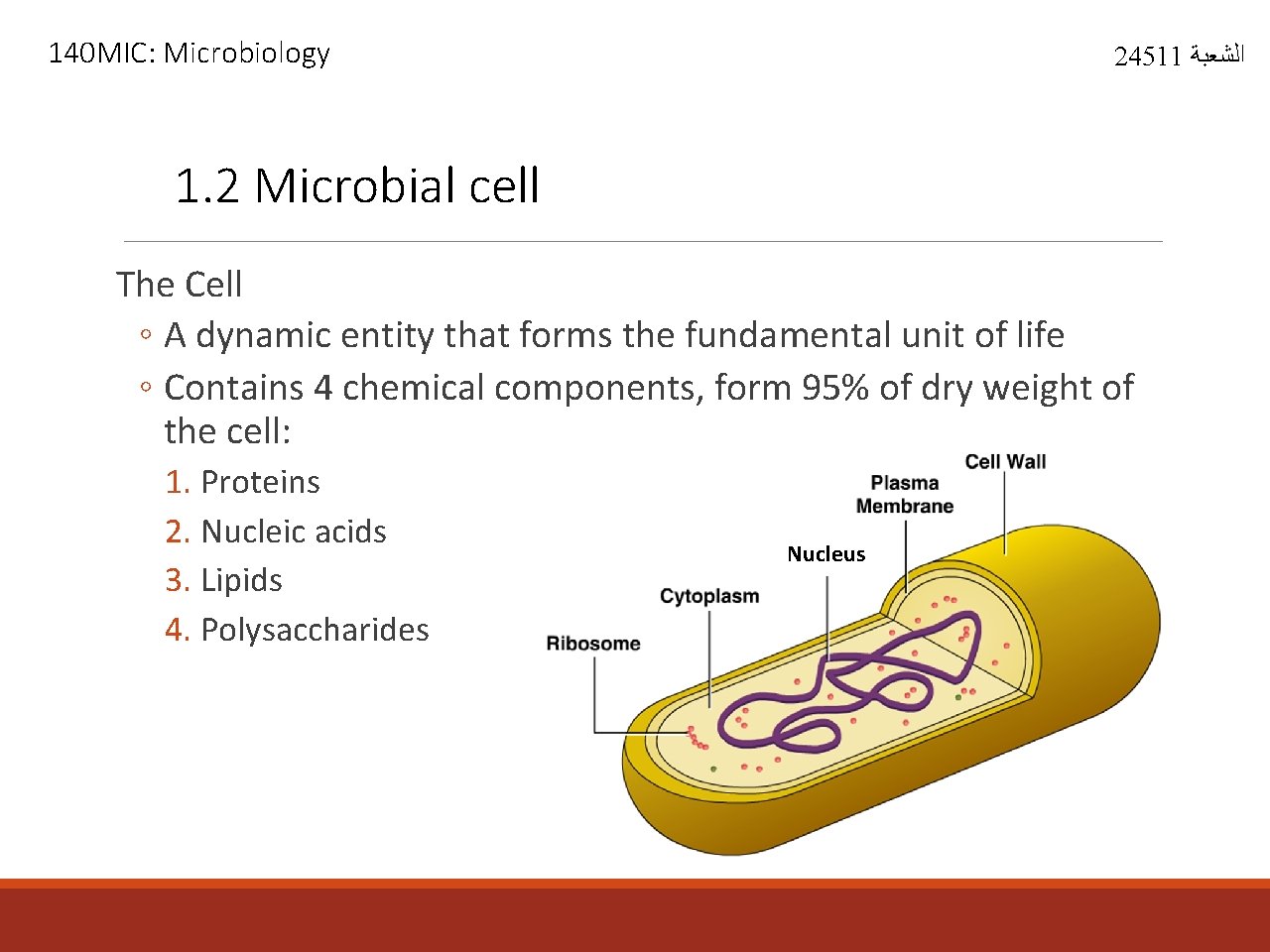
140 MIC: Microbiology 24511 ﺍﻟﺸﻌﺒﺔ 1. 2 Microbial cell The Cell ◦ A dynamic entity that forms the fundamental unit of life ◦ Contains 4 chemical components, form 95% of dry weight of the cell: 1. Proteins 2. Nucleic acids 3. Lipids 4. Polysaccharides Nucleus
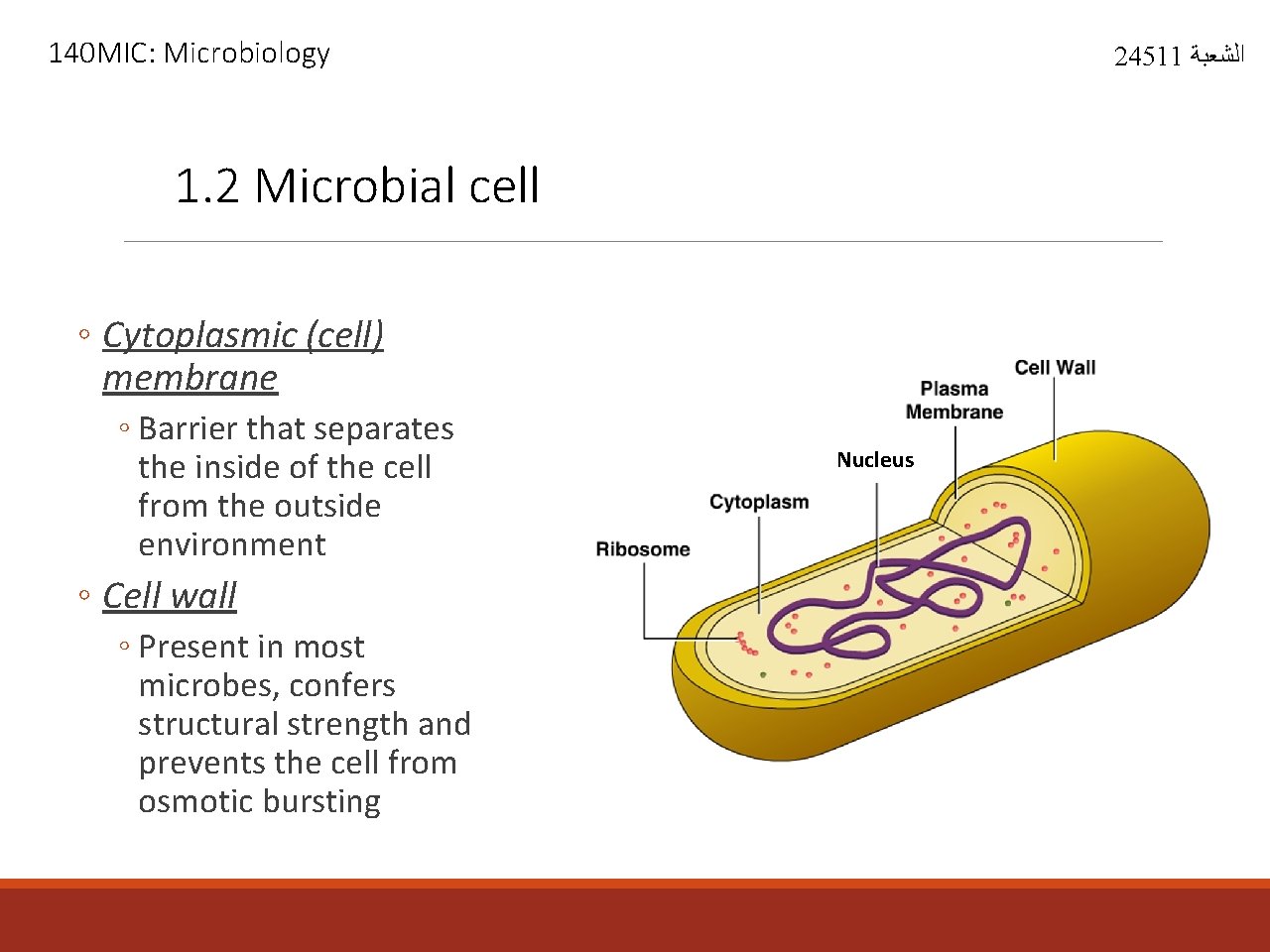
140 MIC: Microbiology 24511 ﺍﻟﺸﻌﺒﺔ 1. 2 Microbial cell ◦ Cytoplasmic (cell) membrane ◦ Barrier that separates the inside of the cell from the outside environment ◦ Cell wall ◦ Present in most microbes, confers structural strength and prevents the cell from osmotic bursting Nucleus
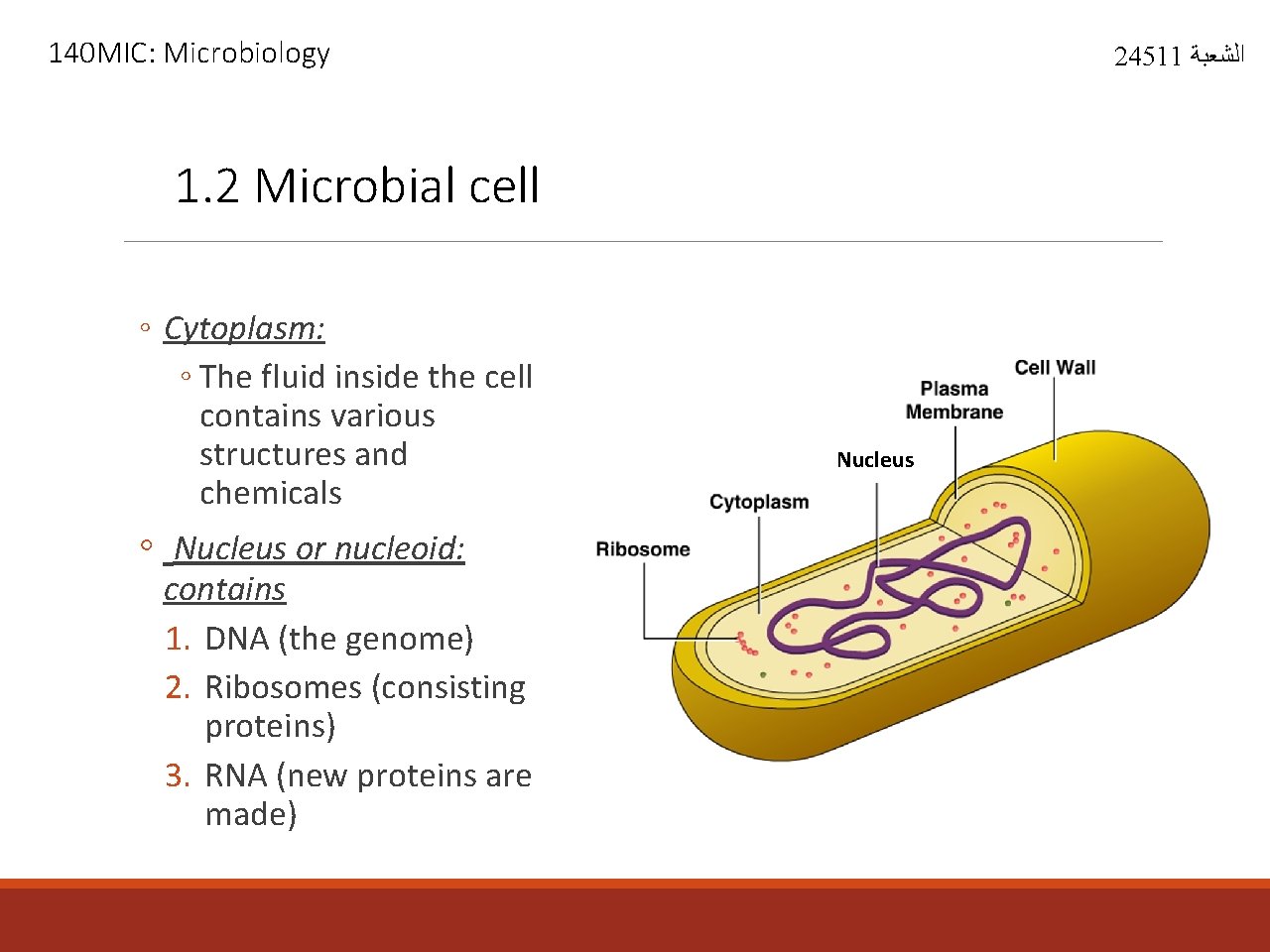
140 MIC: Microbiology 24511 ﺍﻟﺸﻌﺒﺔ 1. 2 Microbial cell ◦ Cytoplasm: ◦ The fluid inside the cell contains various structures and chemicals ◦ Nucleus or nucleoid: contains 1. DNA (the genome) 2. Ribosomes (consisting proteins) 3. RNA (new proteins are made) Nucleus
140 MIC: Microbiology 1. 2 Microbial cell 24511 ﺍﻟﺸﻌﺒﺔ
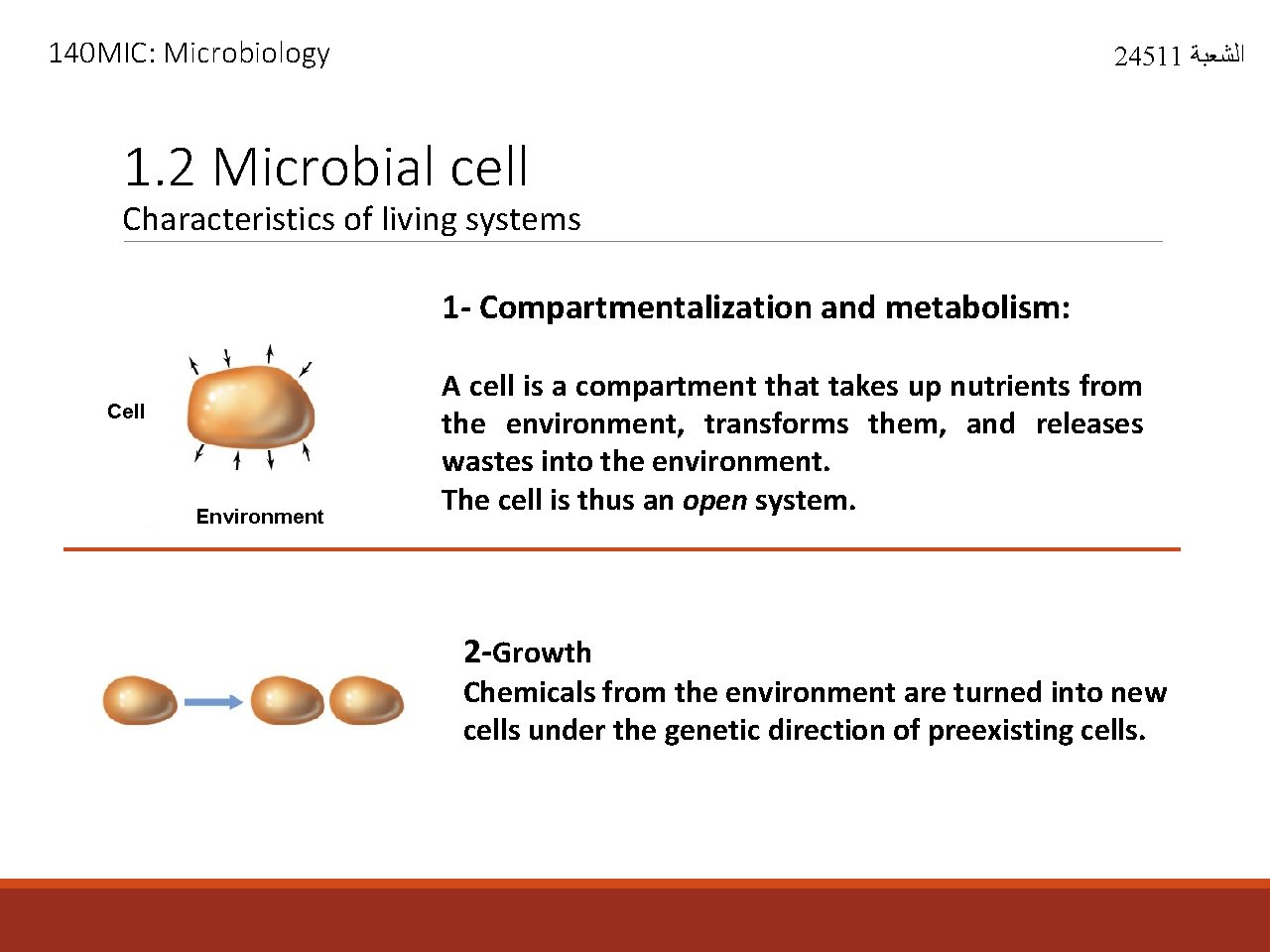
140 MIC: Microbiology 24511 ﺍﻟﺸﻌﺒﺔ 1. 2 Microbial cell Characteristics of living systems 1 - Compartmentalization and metabolism: Cell Environment A cell is a compartment that takes up nutrients from the environment, transforms them, and releases wastes into the environment. The cell is thus an open system. 2 -Growth Chemicals from the environment are turned into new cells under the genetic direction of preexisting cells.
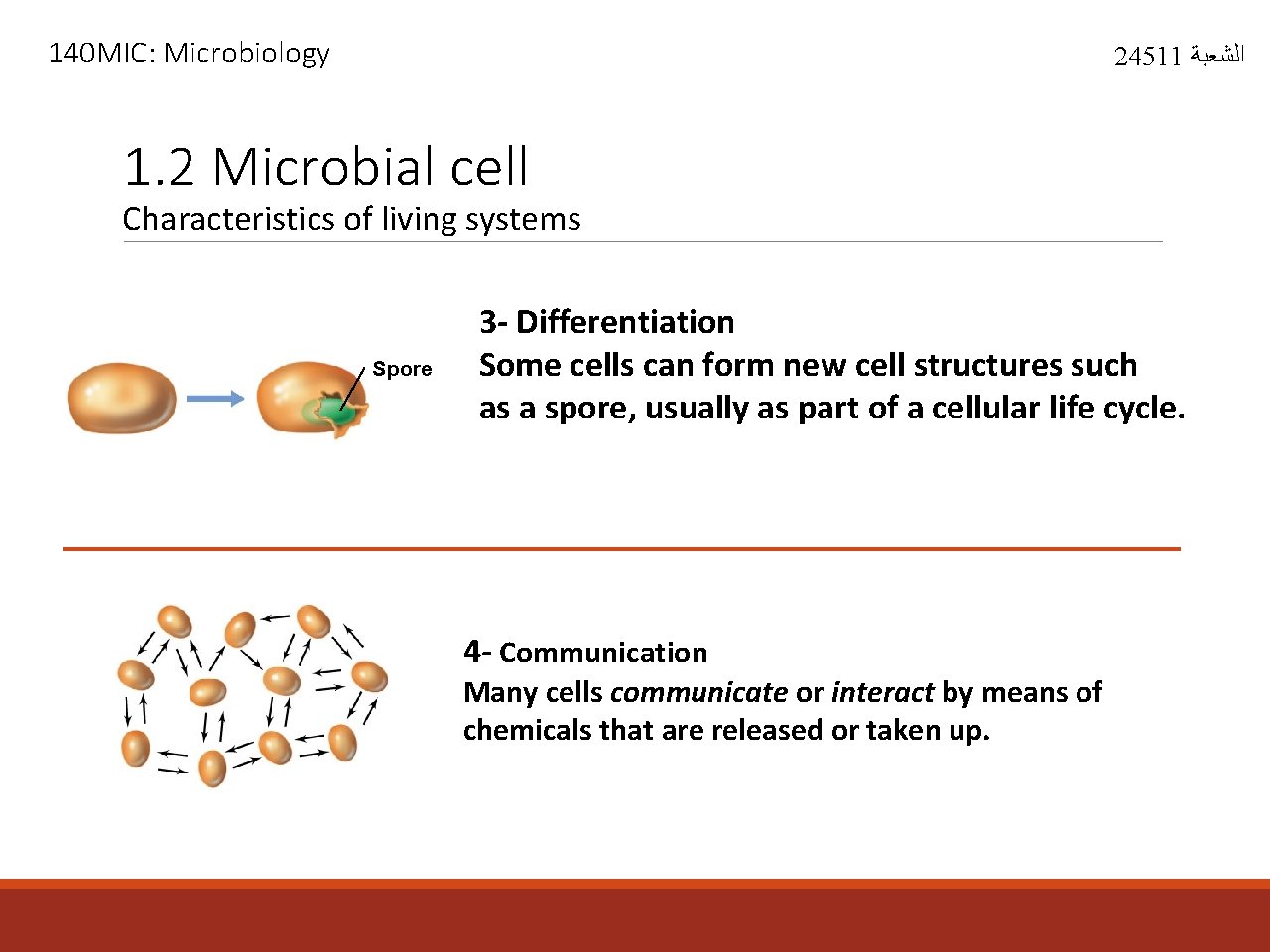
140 MIC: Microbiology 24511 ﺍﻟﺸﻌﺒﺔ 1. 2 Microbial cell Characteristics of living systems Spore 3 - Differentiation Some cells can form new cell structures such as a spore, usually as part of a cellular life cycle. 4 - Communication Many cells communicate or interact by means of chemicals that are released or taken up.
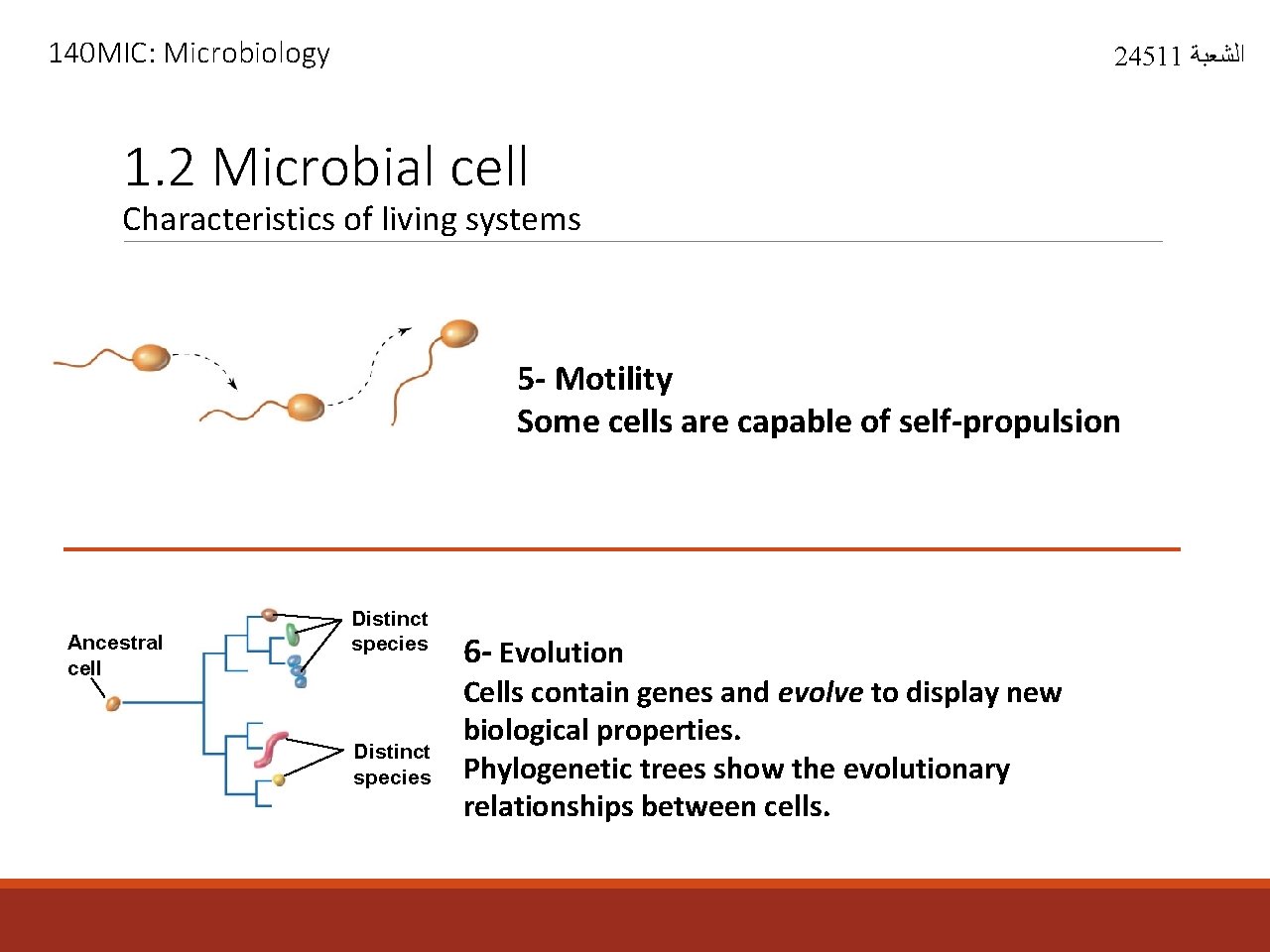
140 MIC: Microbiology 24511 ﺍﻟﺸﻌﺒﺔ 1. 2 Microbial cell Characteristics of living systems 5 - Motility Some cells are capable of self-propulsion Ancestral cell Distinct species 6 - Evolution Cells contain genes and evolve to display new biological properties. Phylogenetic trees show the evolutionary relationships between cells.
140 MIC: Microbiology 24511 ﺍﻟﺸﻌﺒﺔ 1. 2 Microbial cell Cells as Catalysts and as Coding Devices 1. Cells carry out chemical reactions ◦ Enzymes: protein catalysts of the cell that accelerate chemical reactions 2. Cells store and process information that is eventually passed on to offspring during reproduction through DNA (deoxyribonucleic acid) and evolution. ◦ Transcription: DNA produces RNA ◦ Translation: RNA makes protein
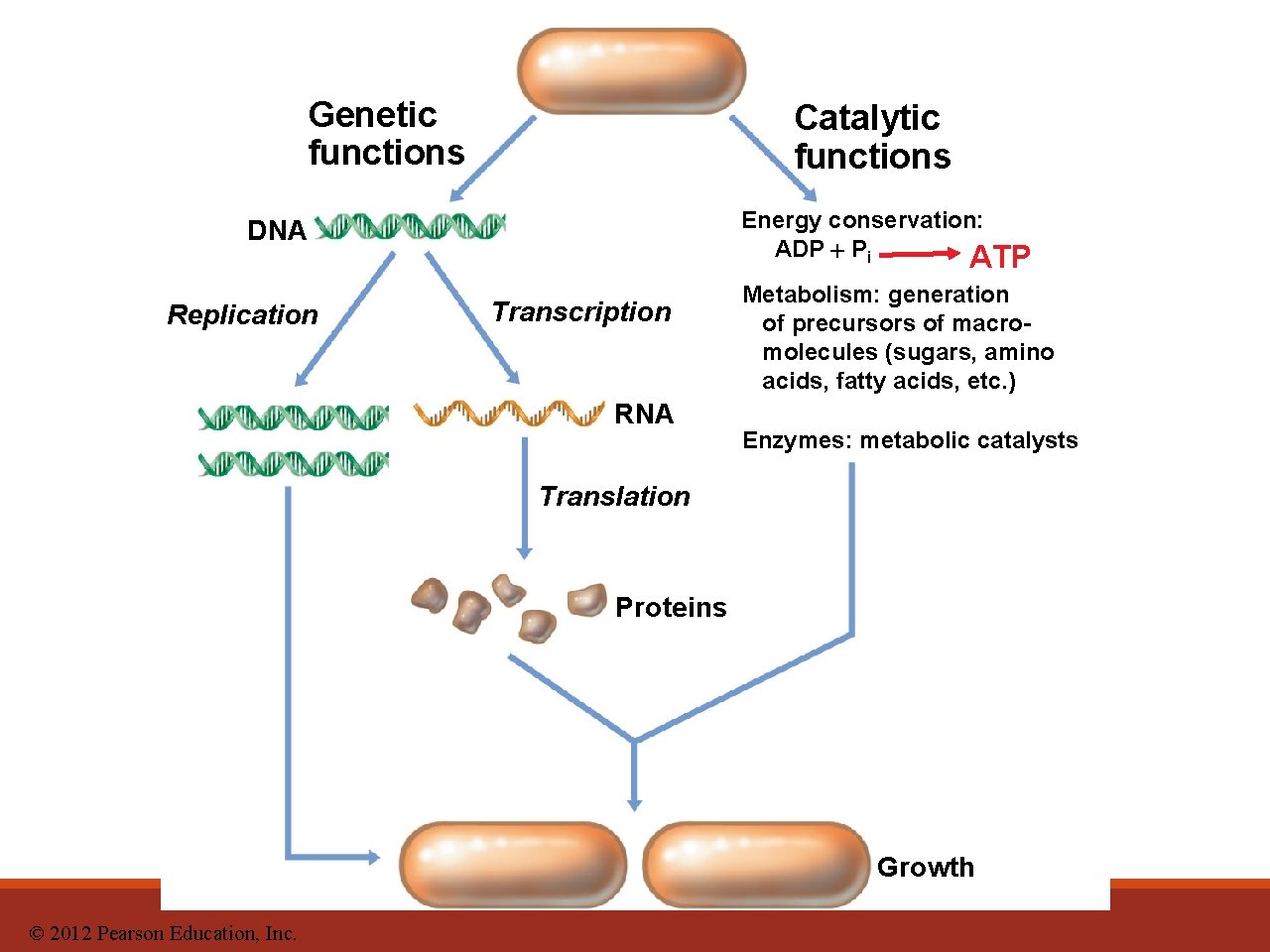
Genetic functions Catalytic functions Energy conservation: ADP Pi ATP DNA Replication Transcription RNA Metabolism: generation of precursors of macromolecules (sugars, amino acids, fatty acids, etc. ) Enzymes: metabolic catalysts Translation Proteins Growth © 2012 Pearson Education, Inc.
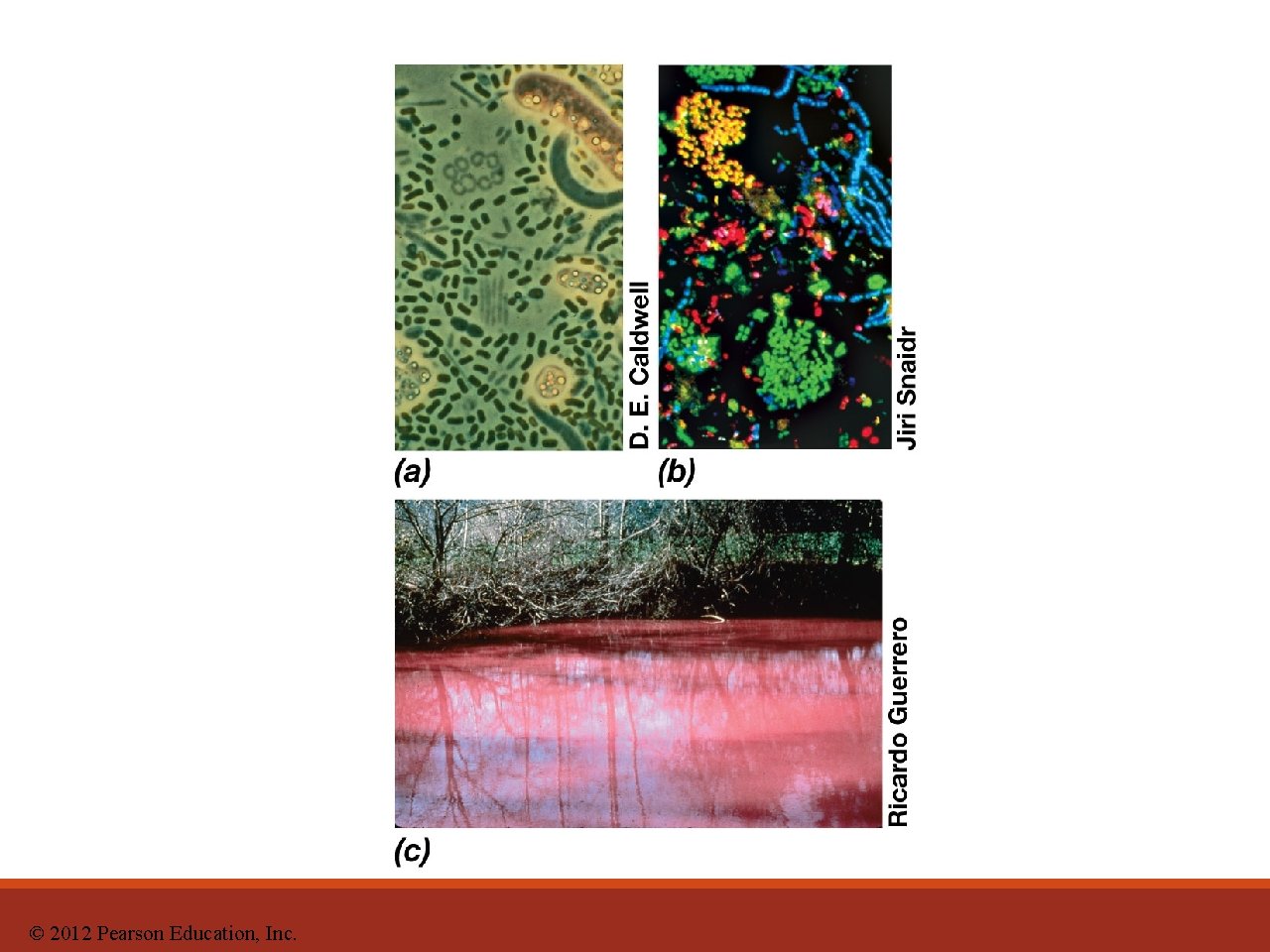
140 MIC: Microbiology 24511 ﺍﻟﺸﻌﺒﺔ 1. 3 Microorganisms and Their Environments 1. Microorganisms exist in nature in populations of interacting assemblages called microbial communities. 2. The environment in which a microbial population lives is its habitat 3. Ecosystem refers to all living organisms plus physical and chemical constituents of their environment 4. Microbial ecology is the study of microbes in their natural environment
© 2012 Pearson Education, Inc.
© 2012 Pearson Education, Inc.
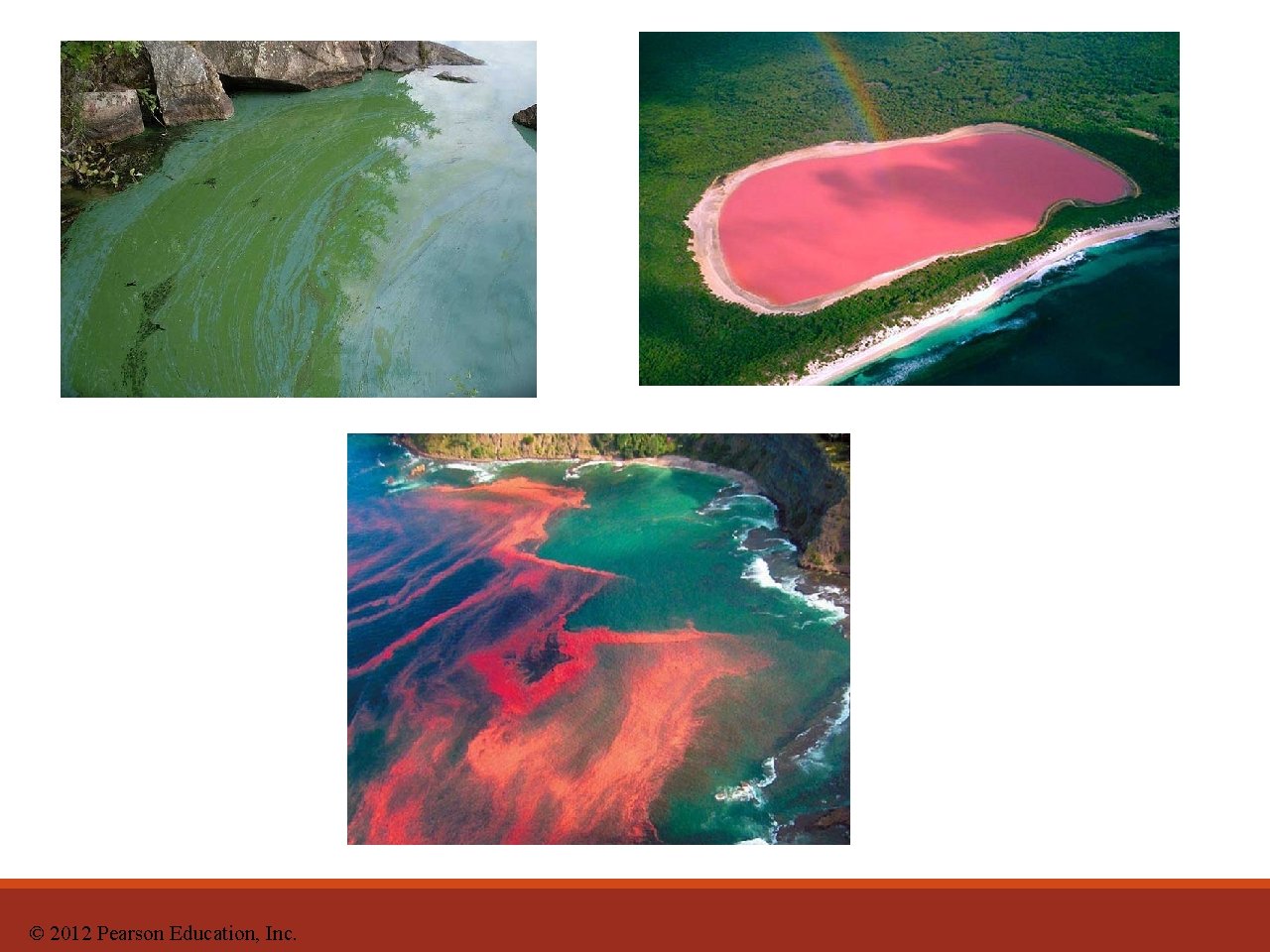
140 MIC: Microbiology 24511 ﺍﻟﺸﻌﺒﺔ 1. 3 Microorganisms and Their Environments 1. Diversity and abundances of microbes are controlled by resources (nutrients) and environmental conditions (e. g. , temp, p. H, O 2) 2. The activities of microbial communities can affect the chemical and physical properties of their habitats
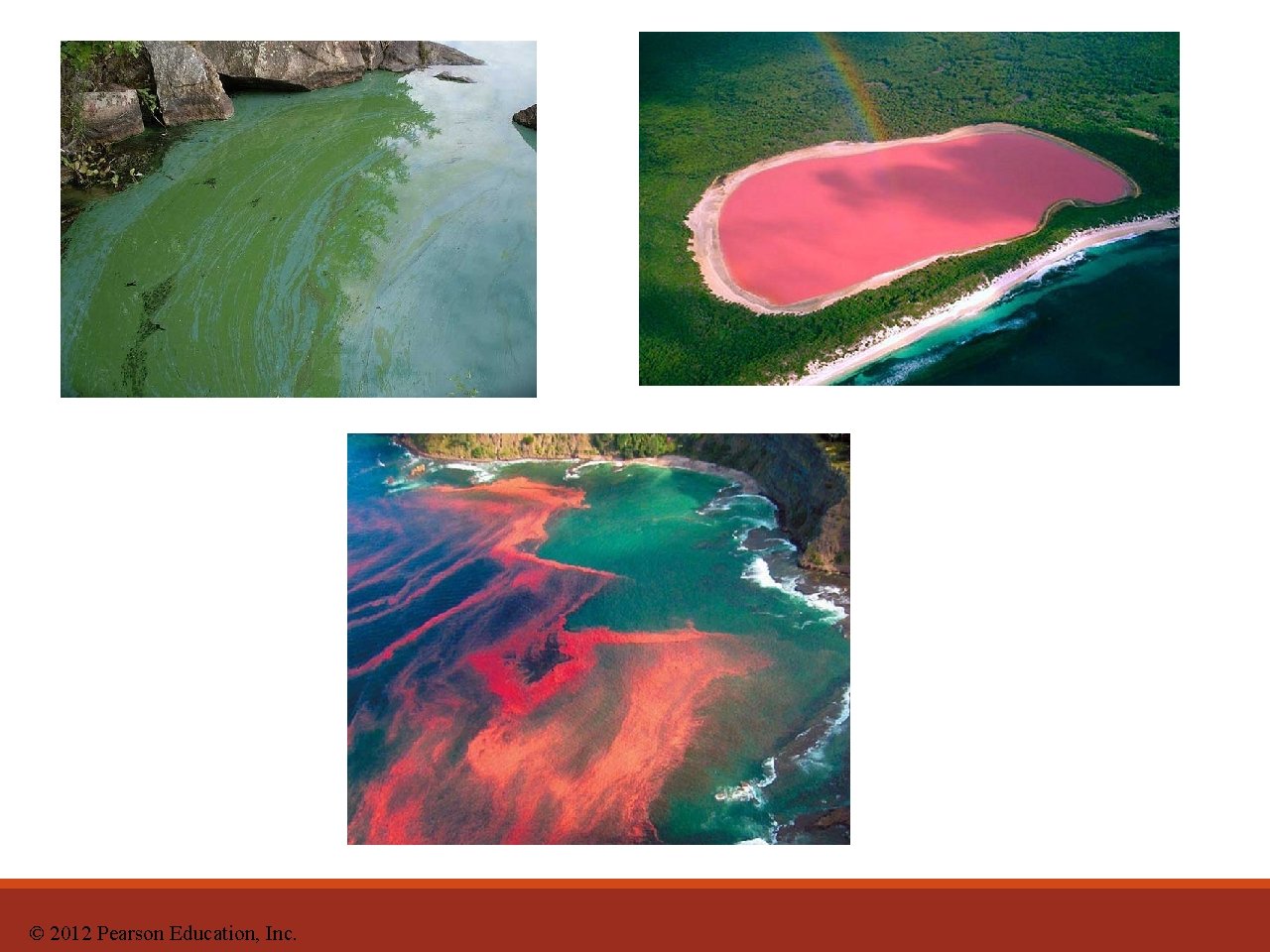
140 MIC: Microbiology 24511 ﺍﻟﺸﻌﺒﺔ 1. 3 Microorganisms and Their Environments Microbes also interact with their physical and chemical environment ◦ Ecosystems greatly influenced (if not controlled) by microbial activities ◦ Microorganisms change the chemical and physical properties of their habitats through their activities ◦ For example, removal of nutrients from the environment and the excretion of waste products
© 2012 Pearson Education, Inc.

ANY QUESTIONS?
24511 ﺍﻟﺸﻌﺒﺔ 140 MIC: Microbiology ﺍﻷﺤﻴﺎﺀ ﺍﻟﺪﻗﻴﻘﺔ ﻋﻠﻢ : ﺣﺪﻕ 140 Recommended websites: http: //www. microbiologyonline. org. uk/ http: //schaechter. asmblog. org/schaechter/ (small things considered) http: //www. simhq. org/ (society of industrial microbiology and biotechnology) http: //www. asm. org/ (American society of microbiology) http: //www. theasm. org. au/ (The Australian society of microbiology) http: //www. pearsonhighered. com/microbiologyplace/learn. html#lectures Recommended text books: Brock’s biology of microorganisms 12 th edition (Madigan et al. 2009) Microbiology principles and explorations (Black 2008)
- Slides: 21