
14 Demonstrate mastery of concepts and skills related



- Slides: 25
14) Demonstrate mastery of concepts and skills related to asepsis, Universal Precautions, sanitation, disinfection, and sterilization for patient/client care settings citing the rationale for each concept/skill using standards and guidelines from the Centers for Disease Control and Prevention (CDC) and the Occupational Safety and Health Administration (OSHA) in a lab/clinical setting. At the conclusion of class today I CAN: REMEMBER TO LOOK FOR THE OWL! Raise your hand when you find him! There are two in this ppt
INJECTIONS
Lets Review the Rights ◦ Right Patient ◦ Right Medication ◦ Right Route ◦ Right Dose ◦ Right Time ◦ Right Documentation
Why would we use injections over oral medication? Give some examples.
Parental Drug Administration ◦ Administering a drug by any non-oral route ◦ Commonly referred to as an injection ◦ Bypasses the protective effects of the skin and mucous membranes ◦ Intravenous, intramuscular and subcutaneous routes are most common
Advantages of Parenteral Routes ◦ Drugs can be administered to unconscious, uncooperative, or nauseous patients ◦ Drugs that are poorly absorbed or inactive when taken orally can be effectively administered ◦ Quicker onset of action
What are some disadvantages to injections?
Disadvantages of Parenteral Administration ◦ Strict adherence to aseptic technique is required ◦ Some degree of pain is inevitable ◦ Drug effects are difficult to reverse ◦ Inconvenient method if frequent dosing is required
Selection and Assessment of Injection Site ◦ Select site (SQ, IM or intradermal) of healthy tissue; avoid areas of tissue or muscle atrophy ◦ ◦ Consider pt age, weight, and previous injections ◦ Consider type of medication being administered ◦ Assess pain associated with injection – EMLA cream, lidocaine mixtures
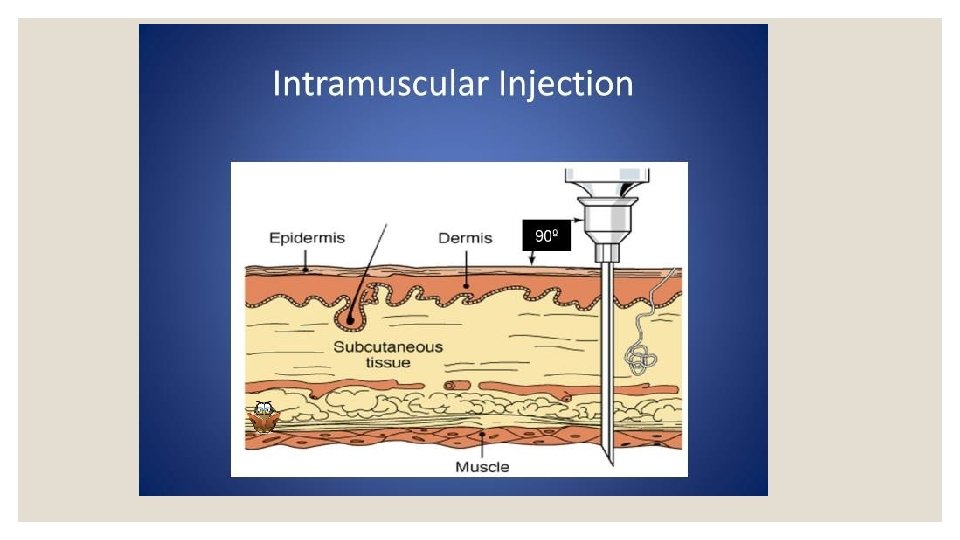
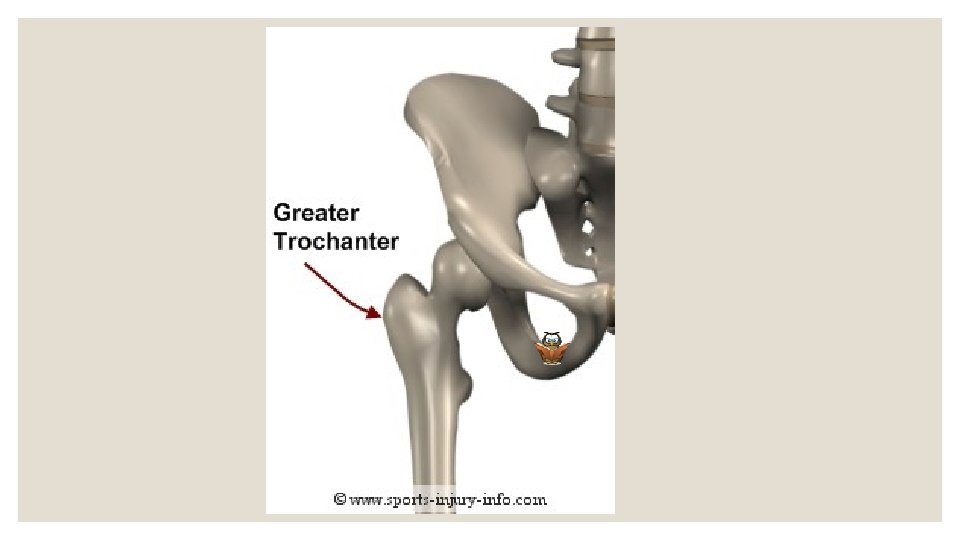
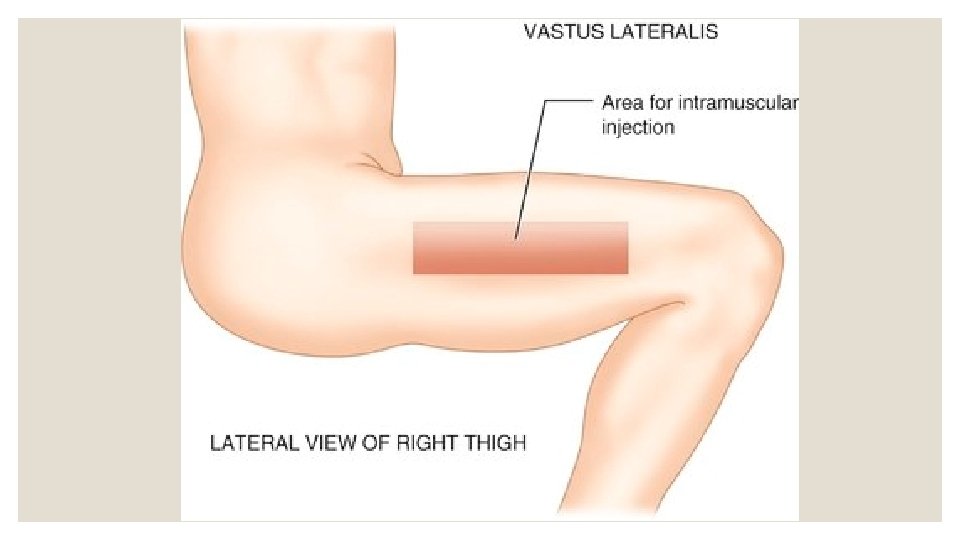
IM Injections ◦ 90 degree angle ◦ Administered deep into skeletal muscles away from major nerves and blood vessels ◦ Produce a longer onset of action than IV infusion but faster than SQ injection ◦ Can inject more volume than SQ or intradermal injection
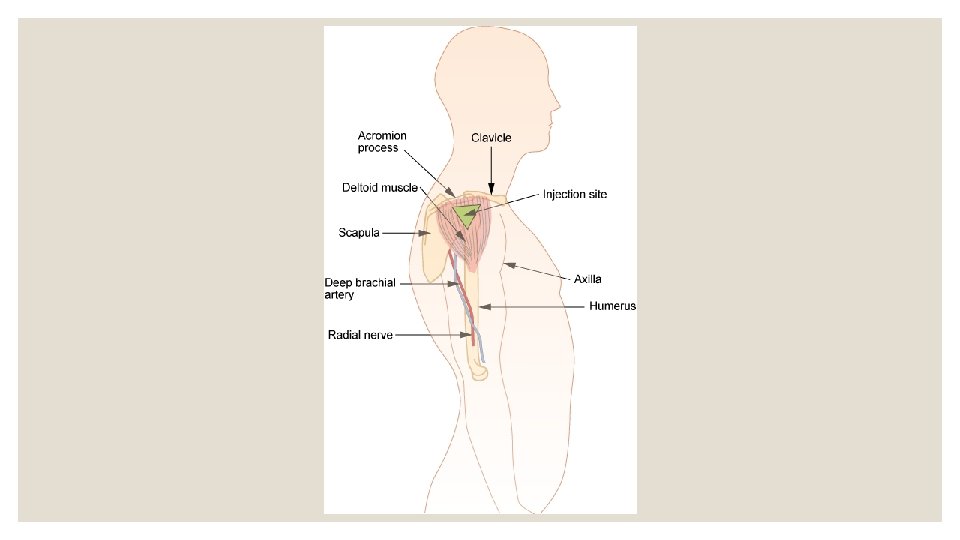
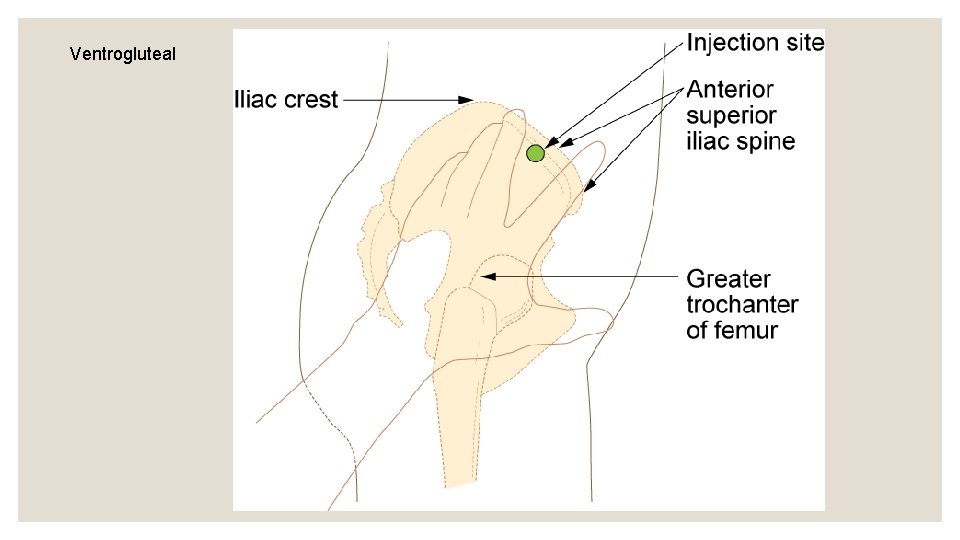
IM Injection Administration ◦ Select appropriate gauge needle; prepackaged gauge and length not always appropriate ◦ Ventrogluteal site is safer and preferred ◦ Dart quickly but inject medication slowly ◦ Maximum 2 ml for deltoid
Ventrogluteal
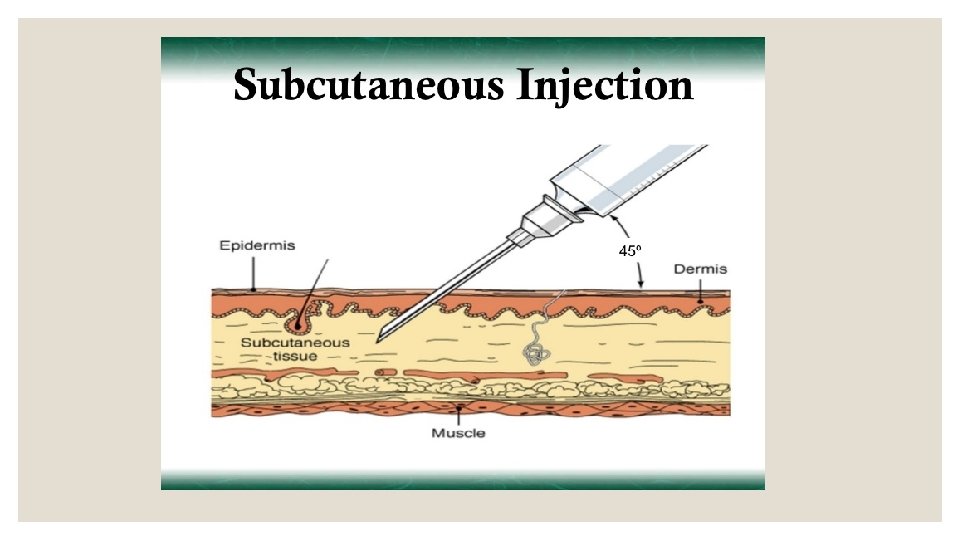
SQ Injections ◦ 45 degree angle ◦ Smaller volumes - Maximum 1 ml ◦ DO NOT massage insulin or heparin injection sites because this slows absorption and promotes tissue irritation ◦ Injection Map for SQ injections that need to be given frequently
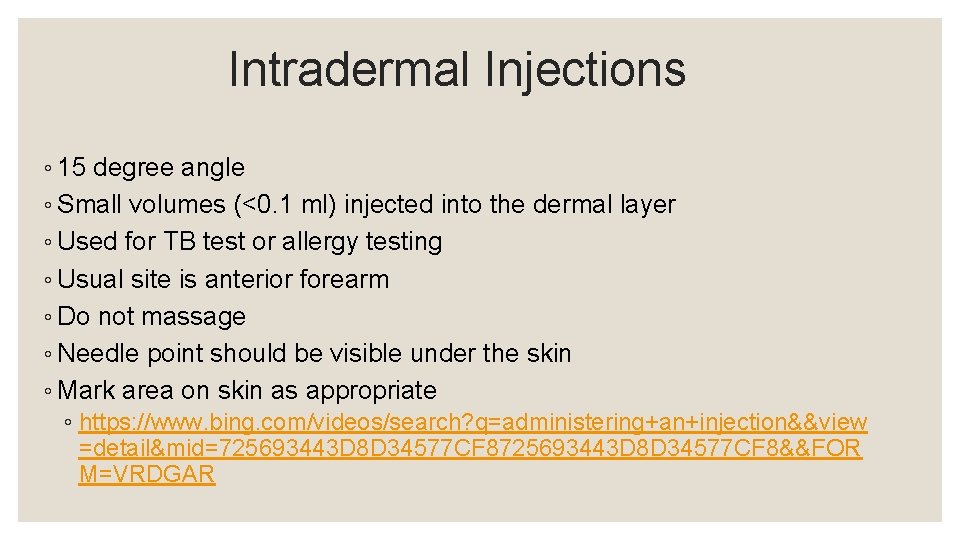
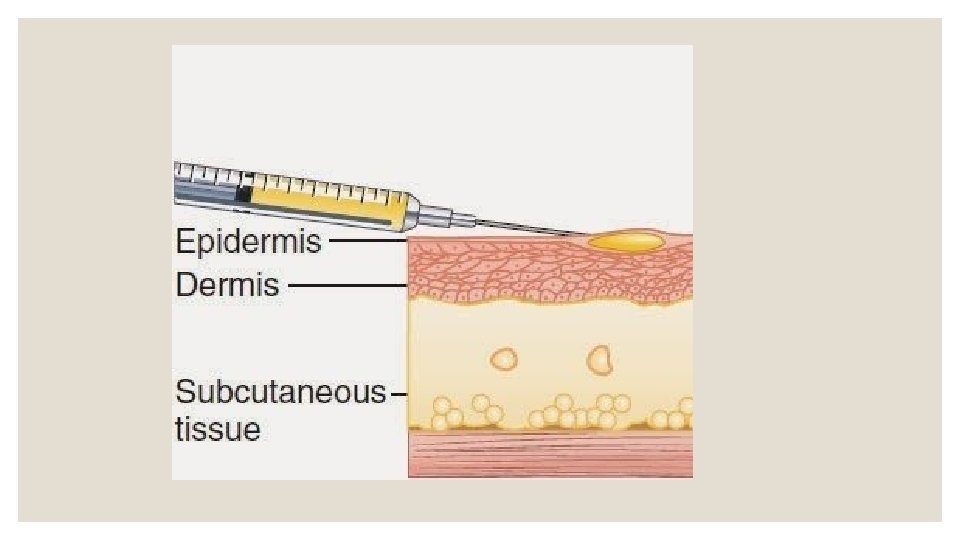
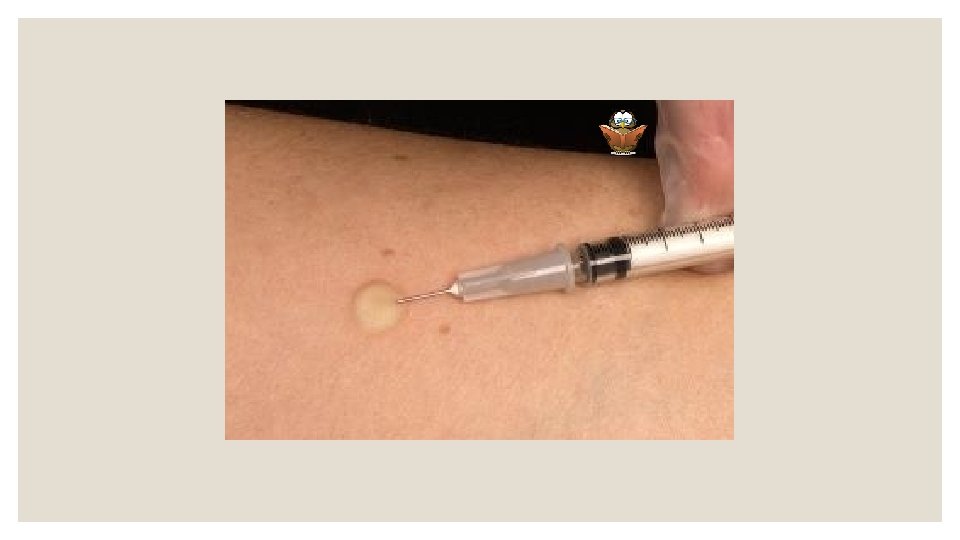
Intradermal Injections ◦ 15 degree angle ◦ Small volumes (<0. 1 ml) injected into the dermal layer ◦ Used for TB test or allergy testing ◦ Usual site is anterior forearm ◦ Do not massage ◦ Needle point should be visible under the skin ◦ Mark area on skin as appropriate ◦ https: //www. bing. com/videos/search? q=administering+an+injection&&view =detail&mid=725693443 D 8 D 34577 CF 8&&FOR M=VRDGAR
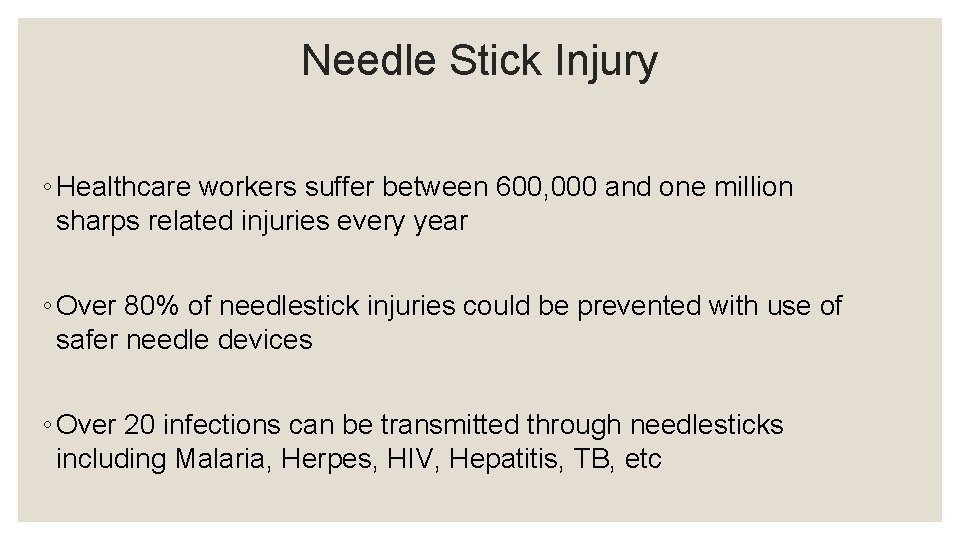
Needle Stick Injury ◦ Healthcare workers suffer between 600, 000 and one million sharps related injuries every year ◦ Over 80% of needlestick injuries could be prevented with use of safer needle devices ◦ Over 20 infections can be transmitted through needlesticks including Malaria, Herpes, HIV, Hepatitis, TB, etc
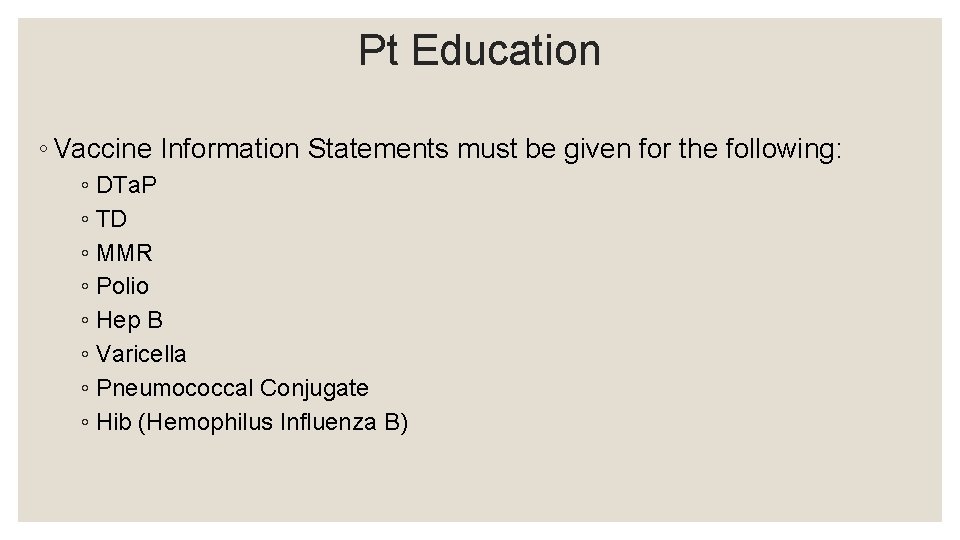
Pt Education ◦ Vaccine Information Statements must be given for the following: ◦ DTa. P ◦ TD ◦ MMR ◦ Polio ◦ Hep B ◦ Varicella ◦ Pneumococcal Conjugate ◦ Hib (Hemophilus Influenza B)
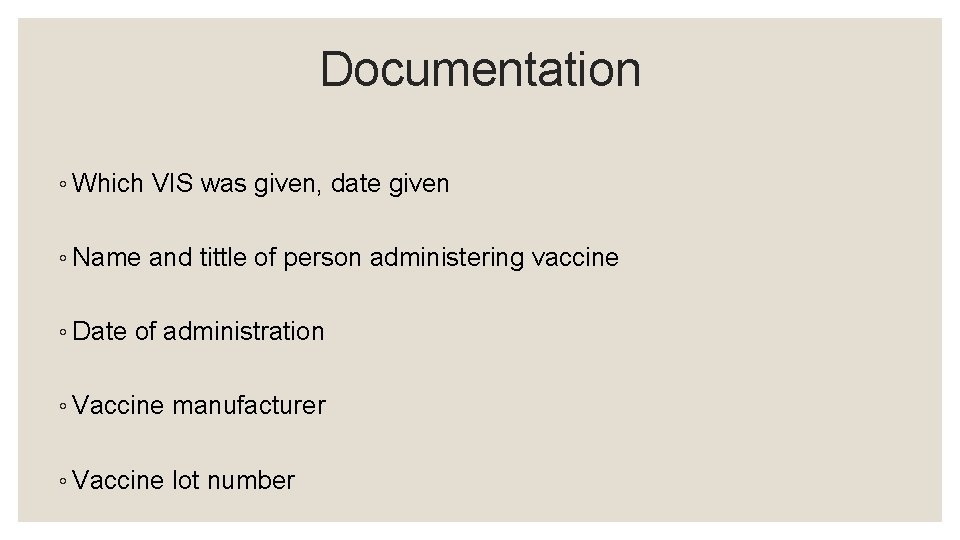
Documentation ◦ Which VIS was given, date given ◦ Name and tittle of person administering vaccine ◦ Date of administration ◦ Vaccine manufacturer ◦ Vaccine lot number
THE END