
14 Chapter Operations Management Copyright 2011 Pearson Education
- Slides: 26
14 Chapter Operations Management Copyright © 2011 Pearson Education
Learning Outcomes • Define operations management and explain its role • Define the nature and purpose of value chain management • Describe how value chain management is done • Discuss contemporary issues in value chain management Copyright © 2011 Pearson Education 14 -2
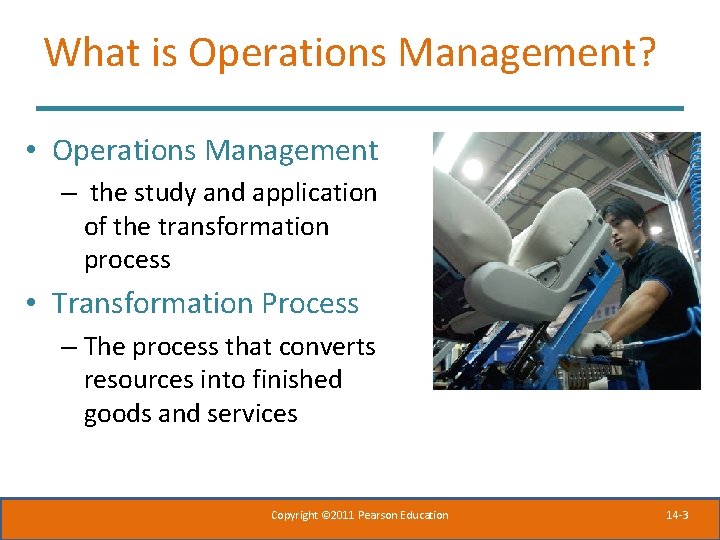
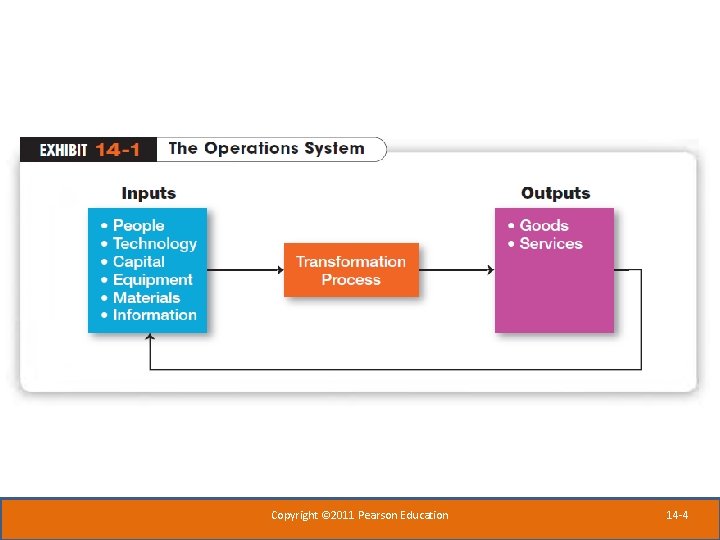
What is Operations Management? • Operations Management – the study and application of the transformation process • Transformation Process – The process that converts resources into finished goods and services Copyright © 2011 Pearson Education 14 -3
Copyright © 2011 Pearson Education 14 -4
How do Service and Manufacturing Firms Differ? • Manufacturing Organizations – Organizations that produce physical goods • Service Organizations – Organizations that produce nonphysical products in the form of services Copyright © 2011 Pearson Education 14 -5
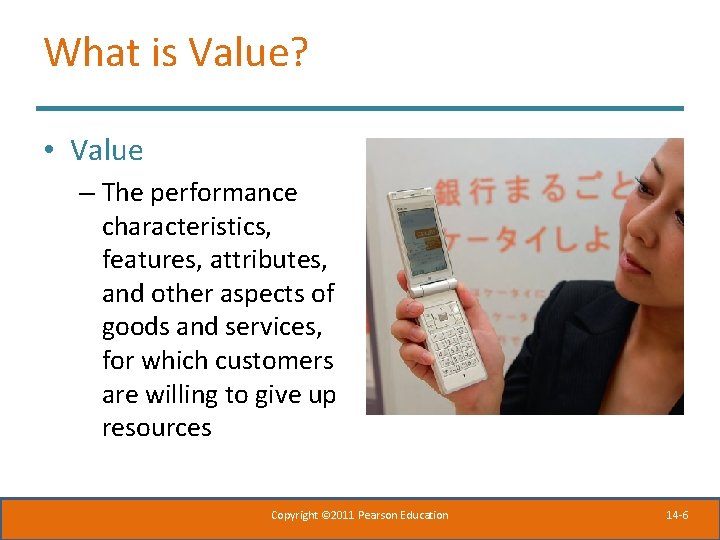
What is Value? • Value – The performance characteristics, features, attributes, and other aspects of goods and services, for which customers are willing to give up resources Copyright © 2011 Pearson Education 14 -6
What is Value Chain Management? • Value Chain – The entire series of work activities that add value at each step from raw materials to finished product • Value Chain Management – The process of managing the sequence of activities and information along the entire value chain Copyright © 2011 Pearson Education 14 -7
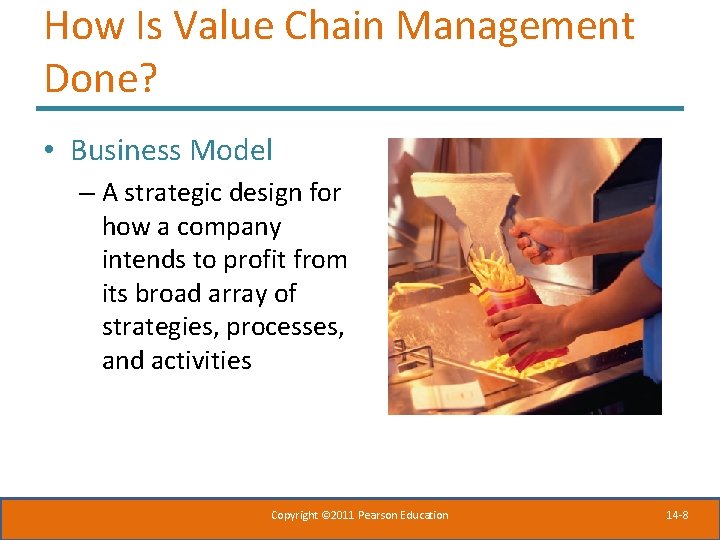
How Is Value Chain Management Done? • Business Model – A strategic design for how a company intends to profit from its broad array of strategies, processes, and activities Copyright © 2011 Pearson Education 14 -8
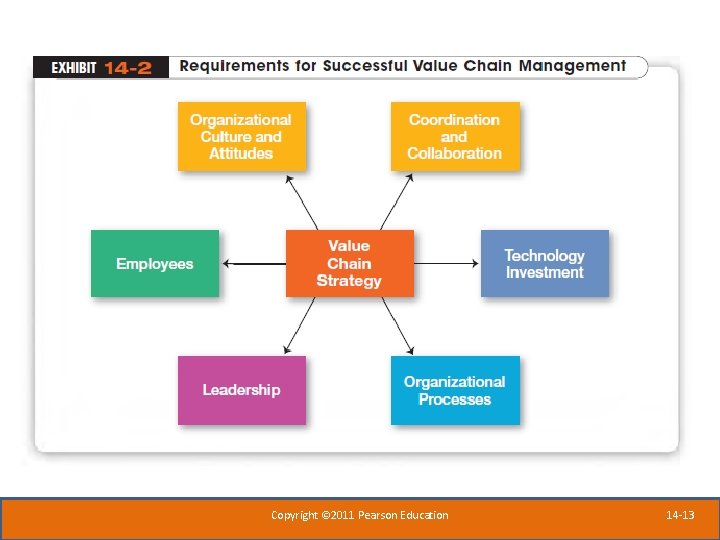
Requirements for Successful Value Chain Management • Coordination and Collaboration – All partners in the chain identify things customers value and integrate their efforts comprehensively and seamlessly • Technology Investment – key tools include a supporting enterprise resource planning (ERP) software system that links all of an organization’s activities with trading network partners Copyright © 2011 Pearson Education 14 -9
Requirements for Successful Value Chain Management (cont. ) • Organizational Processes – Improving forecasting, collaborating with partners, and evaluating performance of activities in the chain • Leadership – successful value chain management isn’t possible without strong and committed leadership Copyright © 2011 Pearson Education 14 -10
Requirements for Successful Value Chain Management (cont. ) • Employees and Human Resources – flexible approaches to job design, an effective hiring process, and ongoing training • Organizational Culture and Attitudes – attitudes include sharing, collaborating, openness, flexibility, mutual respect, and trust Copyright © 2011 Pearson Education 14 -11
What Are Organizational Processes? • Organizational Processes – The way organizational work is done – Managers must critically evaluate all organizational processes from beginning to end by looking at core competencies—the organization’s unique skills, capabilities, and resources—to determine where value is being added Copyright © 2011 Pearson Education 14 -12
Copyright © 2011 Pearson Education 14 -13
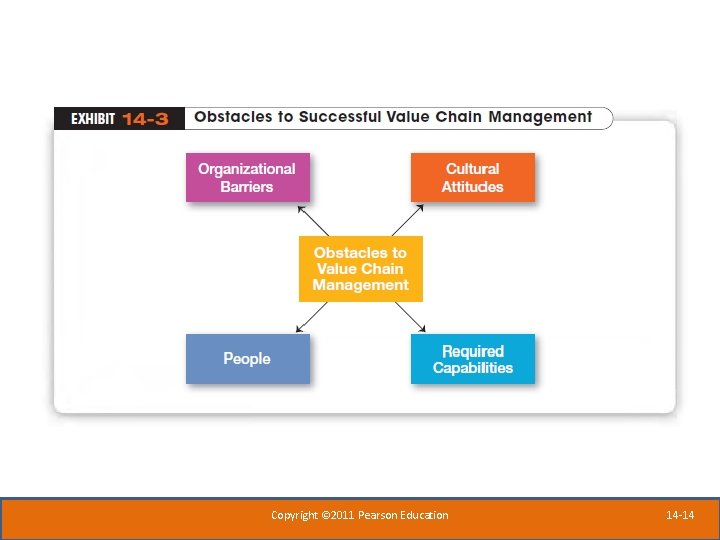
Copyright © 2011 Pearson Education 14 -14
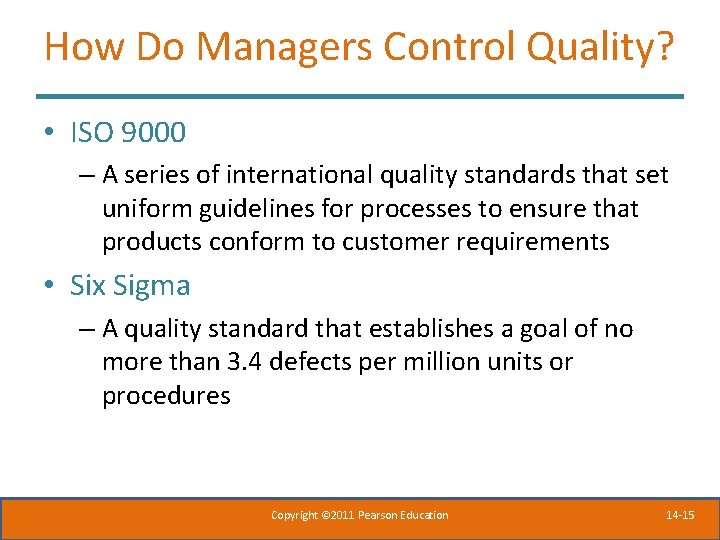
How Do Managers Control Quality? • ISO 9000 – A series of international quality standards that set uniform guidelines for processes to ensure that products conform to customer requirements • Six Sigma – A quality standard that establishes a goal of no more than 3. 4 defects per million units or procedures Copyright © 2011 Pearson Education 14 -15
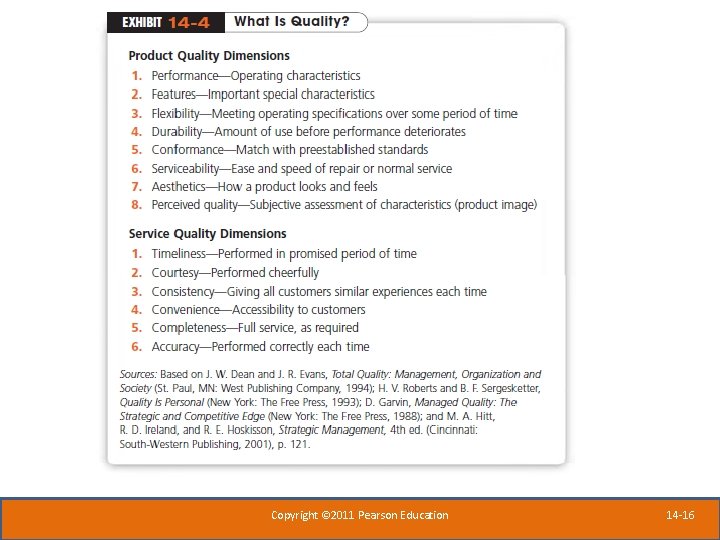
Copyright © 2011 Pearson Education 14 -16
How Are Projects Measured? • Project – A one-time-only set of activities with a definite beginning and ending point • Project Management – The task of getting project activities done on time, within budget, and according to specifications Copyright © 2011 Pearson Education 14 -17
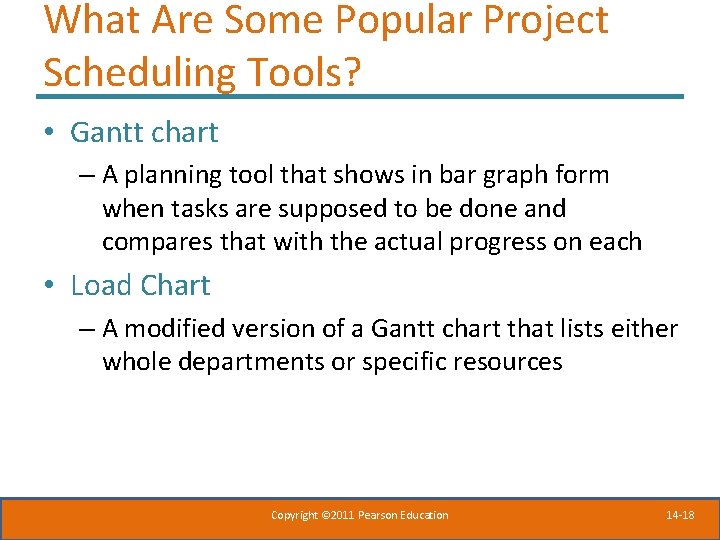
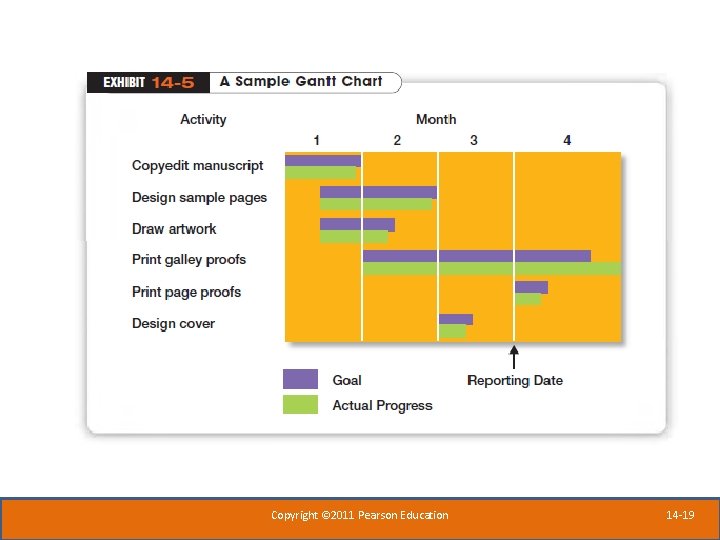
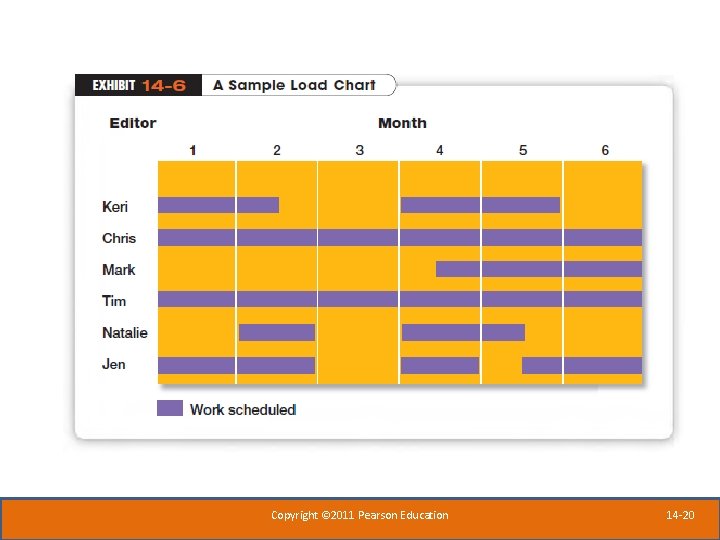
What Are Some Popular Project Scheduling Tools? • Gantt chart – A planning tool that shows in bar graph form when tasks are supposed to be done and compares that with the actual progress on each • Load Chart – A modified version of a Gantt chart that lists either whole departments or specific resources Copyright © 2011 Pearson Education 14 -18
Copyright © 2011 Pearson Education 14 -19
Copyright © 2011 Pearson Education 14 -20
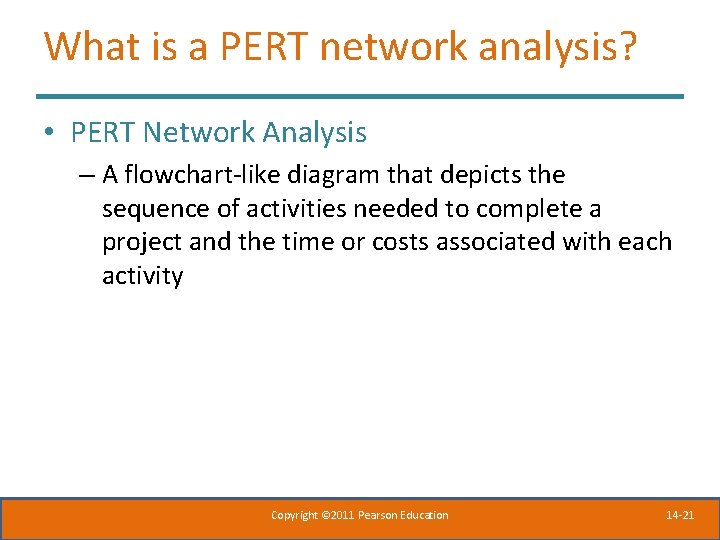
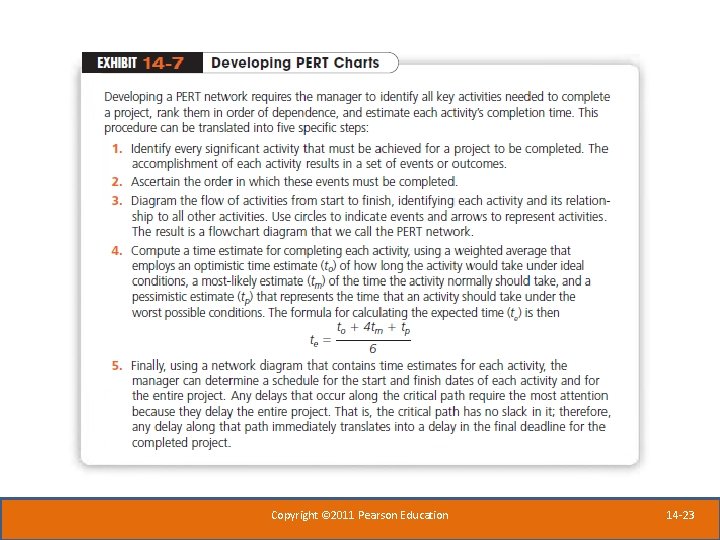
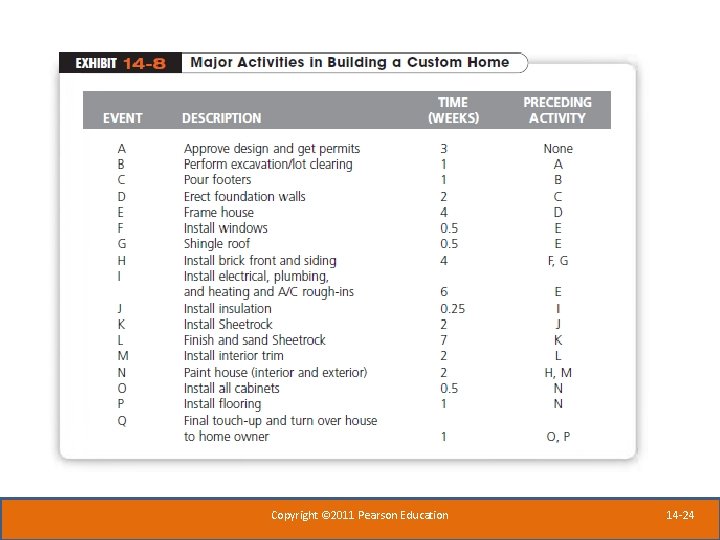
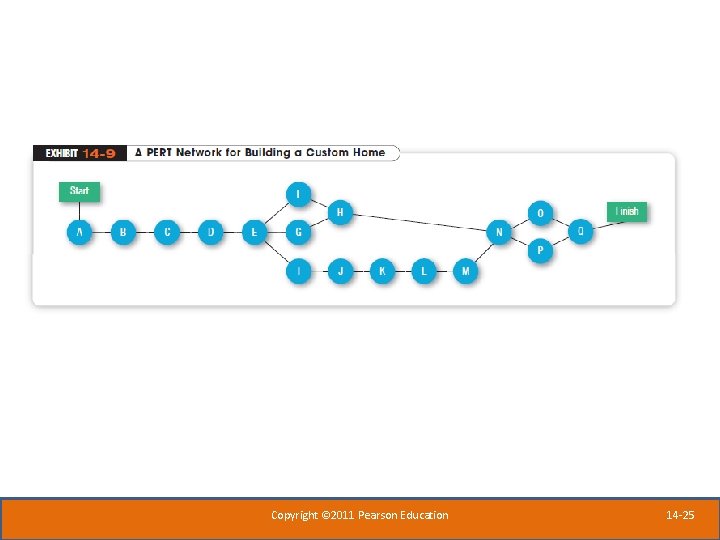
What is a PERT network analysis? • PERT Network Analysis – A flowchart-like diagram that depicts the sequence of activities needed to complete a project and the time or costs associated with each activity Copyright © 2011 Pearson Education 14 -21
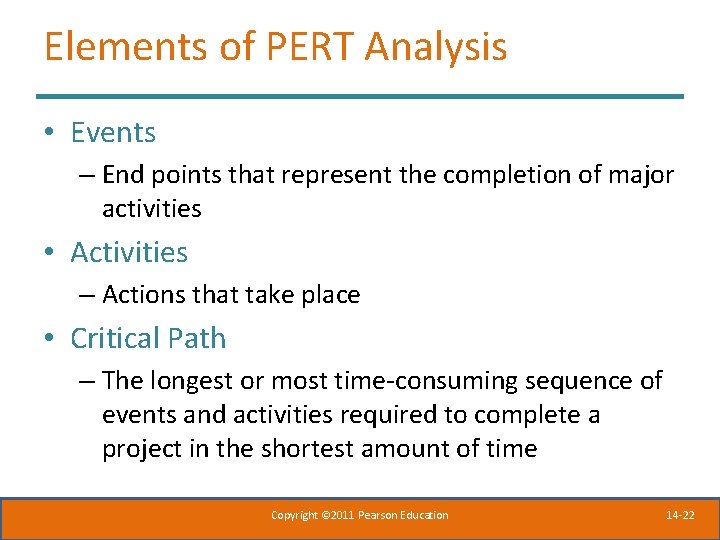
Elements of PERT Analysis • Events – End points that represent the completion of major activities • Activities – Actions that take place • Critical Path – The longest or most time-consuming sequence of events and activities required to complete a project in the shortest amount of time Copyright © 2011 Pearson Education 14 -22
Copyright © 2011 Pearson Education 14 -23
Copyright © 2011 Pearson Education 14 -24
Copyright © 2011 Pearson Education 14 -25
Copyright © 2011 Pearson Education 14 -26