
14 4 14 5 Gene Pools Evolutionary Biology
14. 4 & 14. 5 Gene Pools & Evolutionary Biology
Gene Pool • • Definition- all the alleles of a population. A population -smallest level of evolution. Reservoir of genes for natural selection. Supplies genetic variation. – Mutations – Sexual recombination- meiosis and fertilization

Frequency of alleles – How often certain alleles occur in the gene pool. Usually expressed as decimal or a percentage,
Microevolution • Generation to generation change in the allele frequency. • 2 main factors that can change allele frequency are– Genetic drift – Natural selection
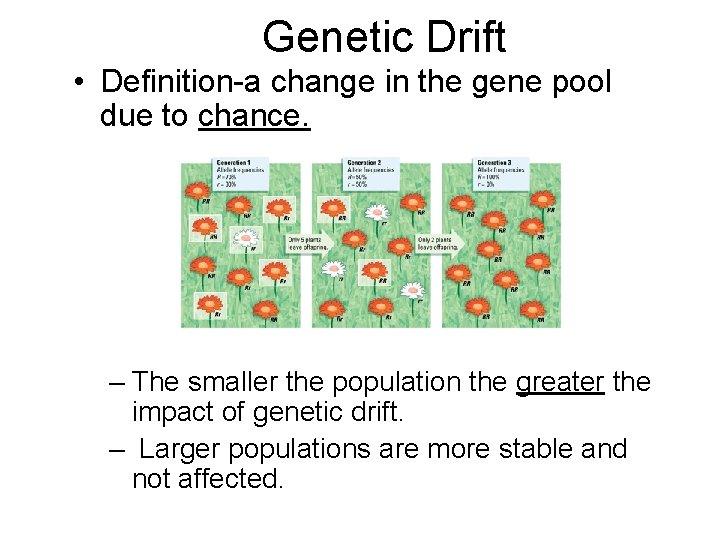
Genetic Drift • Definition-a change in the gene pool due to chance. – The smaller the population the greater the impact of genetic drift. – Larger populations are more stable and not affected.
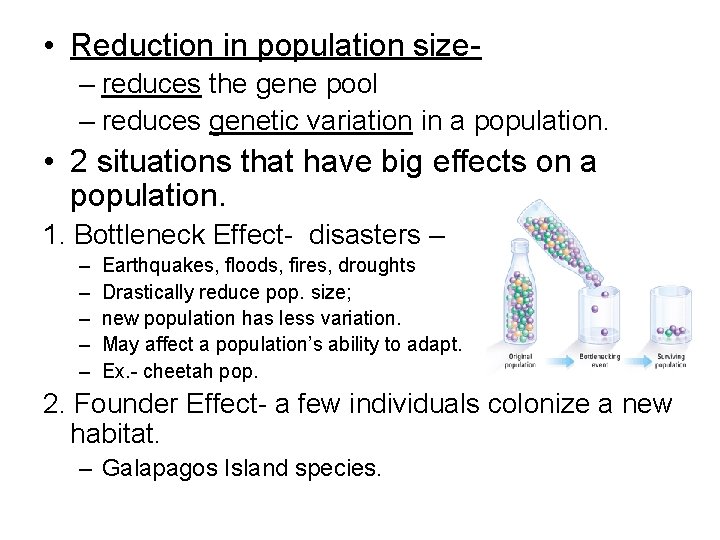
• Reduction in population size– reduces the gene pool – reduces genetic variation in a population. • 2 situations that have big effects on a population. 1. Bottleneck Effect- disasters – – – Earthquakes, floods, fires, droughts Drastically reduce pop. size; new population has less variation. May affect a population’s ability to adapt. Ex. - cheetah pop. 2. Founder Effect- a few individuals colonize a new habitat. – Galapagos Island species.
Lesser factors for changing allele frequencies • 1. Gene Flow – – The exchange of genes with another population. – Migration of fertile individuals between populations. – Gene flow reduces genetic differences between populations
• 2. Mutations – change in DNA – If carried by a gamete- enters the gene pool. – Original source of variation. – Important in asexually reproducing organismsbacteria. • If favorable ; rapid increase in gene pool due to natural selection. • If unfavorable; decrease in frequency.
Natural Selection • Not random • Leads to adaptation • Biological Fitness- Contribution to the gene pool of the next generation of the most “fit”. • Production of healthy, fertile offspring is what counts.
Darwin’s Finches • Peter and Rosemary Grant’s Research • 30 yr. Study in the Galapagos. • 2 species of finches with different beak sizes. • Their data related beak size to changes in environment- wet and dry seasons and types of seeds available. • Data provided evidence for natural selection occurring in a shorter time span.
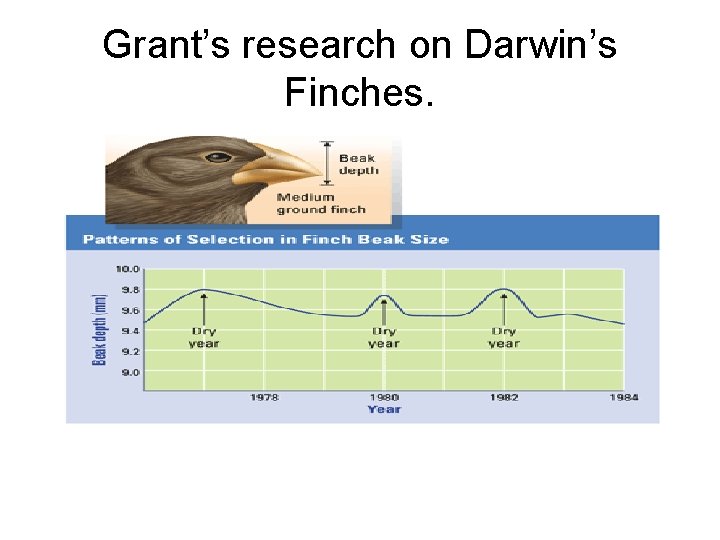
Grant’s research on Darwin’s Finches.
Evolutionary Biology 14. 5 • Natural Selection and Sickle Cell Disease. – Sickle Cell Disease- abnormal shaped rbcs- 2 alleles needed for the disease – Heterozygous- no disease but immunity to malaria. – 30% of the African population is heterozygous in endemic malaria areas. – Natural selection maintains a higher allele frequency.
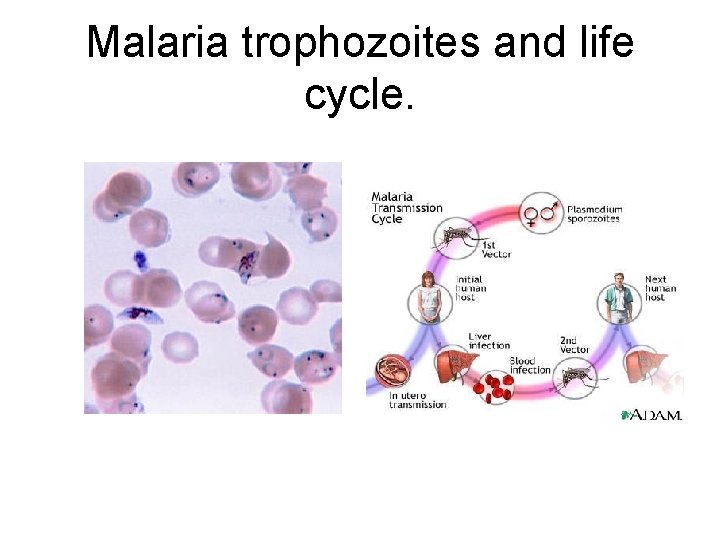
Malaria trophozoites and life cycle.
Antibiotic Resistance- evolution in action • Natural selection –Resistant strains of bacteria –Huge public health issue » Resistant tuberculosis » Methicillin resistant staphylococci.
- Slides: 14