
13 Security and Ethical Challenges IT Security Ethics

- Slides: 54
13 Security and Ethical Challenges
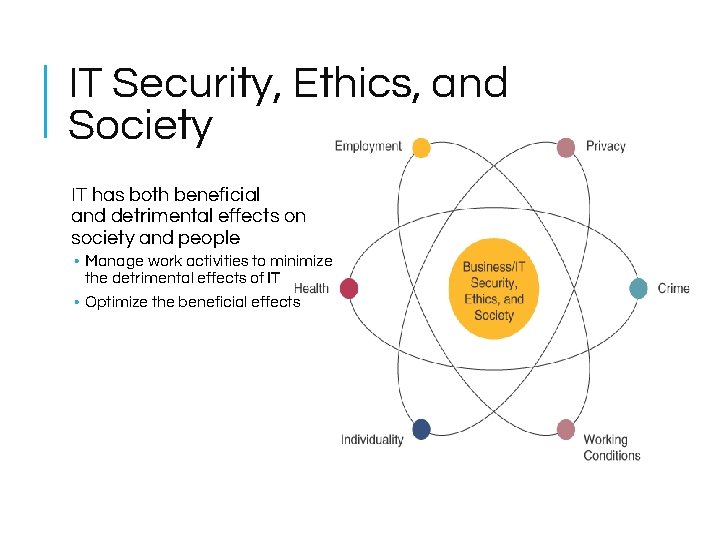
IT Security, Ethics, and Society IT has both beneficial and detrimental effects on society and people • Manage work activities to minimize the detrimental effects of IT • Optimize the beneficial effects
Case: Catching Cases of Plagiarism Problem: The Internet provides abundant information to students who may be tempted to download material and submit it as their own work. Solution: Some companies (e. g. , Plagiarism. org) are offering Internet-based anti-plagiarism technology to identify such cases of plagiarism. Manuscript are checked against a database of other manuscripts collected from different universities and from all over the Internet. Results: ? ? ? Cases of gross plagiarism are more likely to be flagged.
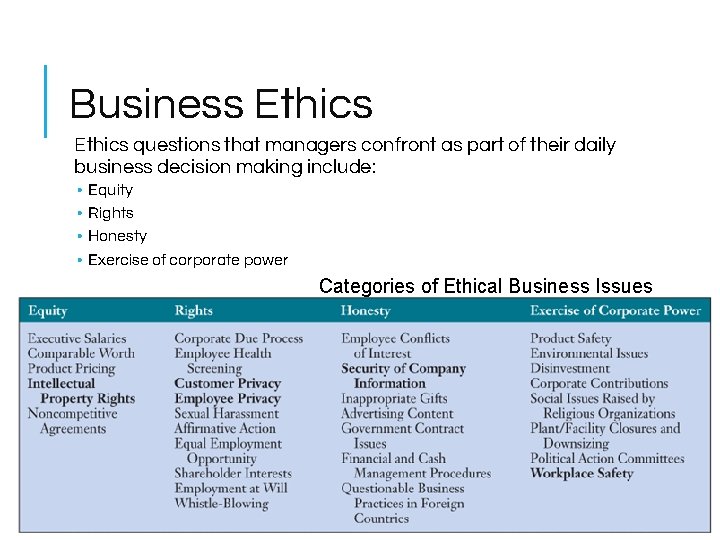
Business Ethics questions that managers confront as part of their daily business decision making include: • • Equity Rights Honesty Exercise of corporate power Categories of Ethical Business Issues 4
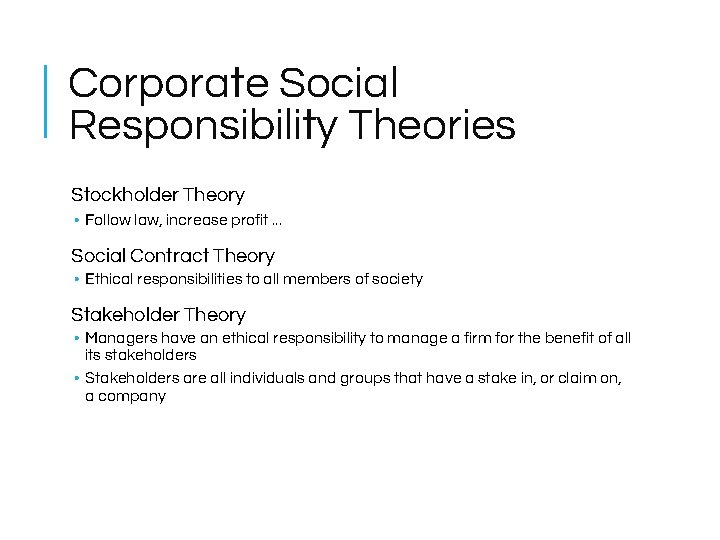
Corporate Social Responsibility Theories Stockholder Theory • Follow law, increase profit. . . Social Contract Theory • Ethical responsibilities to all members of society Stakeholder Theory • Managers have an ethical responsibility to manage a firm for the benefit of all its stakeholders • Stakeholders are all individuals and groups that have a stake in, or claim on, a company
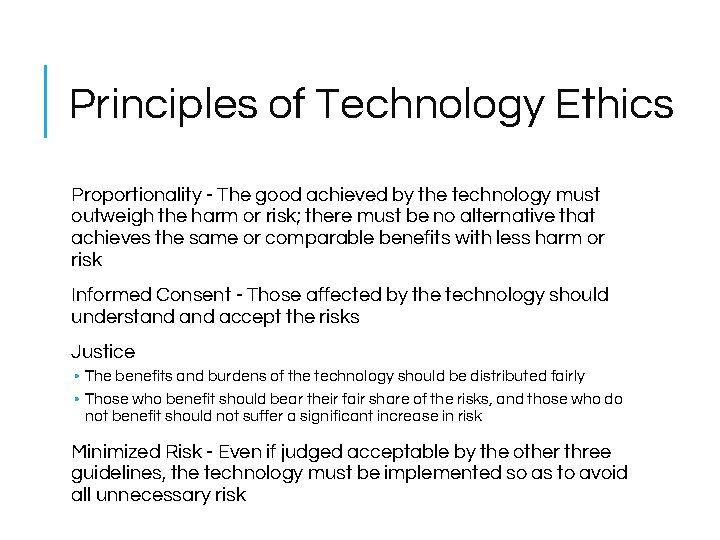
Principles of Technology Ethics Proportionality - The good achieved by the technology must outweigh the harm or risk; there must be no alternative that achieves the same or comparable benefits with less harm or risk Informed Consent - Those affected by the technology should understand accept the risks Justice • The benefits and burdens of the technology should be distributed fairly • Those who benefit should bear their fair share of the risks, and those who do not benefit should not suffer a significant increase in risk Minimized Risk - Even if judged acceptable by the other three guidelines, the technology must be implemented so as to avoid all unnecessary risk
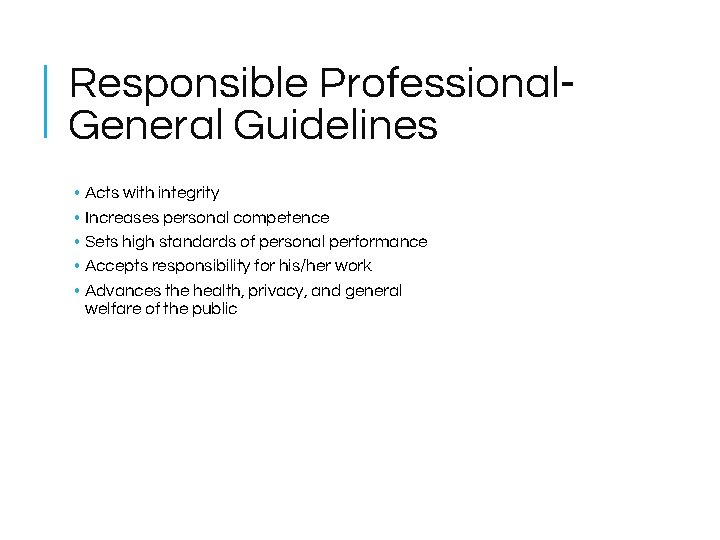
Responsible Professional. General Guidelines • • • Acts with integrity Increases personal competence Sets high standards of personal performance Accepts responsibility for his/her work Advances the health, privacy, and general welfare of the public
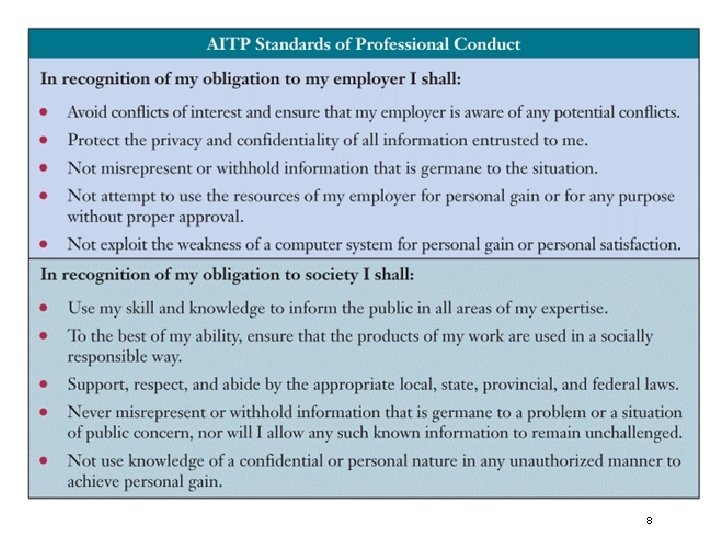
8
Computer Crime Computer crime includes • Unauthorized use, access, modification, or destruction of hardware, software, data, or network resources • The unauthorized release of information • The unauthorized copying of software • Denying an end user access to his/her own hardware, software, data, or network resources • Using or conspiring to use computer or network resources illegally to obtain information or tangible property
Hacking & Cracking Hacking is • The obsessive use of computers • The unauthorized access and use of networked computer systems Electronic Breaking and Entering • Hacking into a computer system and reading files, but neither stealing nor damaging anything Cracker • A malicious or criminal hacker who maintains knowledge of the vulnerabilities found for private advantage
Malware- by cracker The software Vulnerability to malware • • • Security defects in software • Insecure design or user error • Over-privileged users and overprivileged code • Use of the same operating system disrupt computer operations gather sensitive information gain access to computer systems display unwanted advertising. Concealment • Viruses, trojan horses, rootkits, backdoors and evasion Anti-malware strategies • nti-virus and anti-malware software • Website security scans • "Air gap" isolation or "Parallel Network" https: //en. wikipedia. org/wiki/Malware
Viruses and Worms A virus is a program that cannot work without being inserted into another program • A worm can run unaided These programs copy annoying or destructive routines into networked computers • Copy routines spread the virus Commonly transmitted through • • The Internet and online services Email and file attachments Disks from contaminated computers Shareware
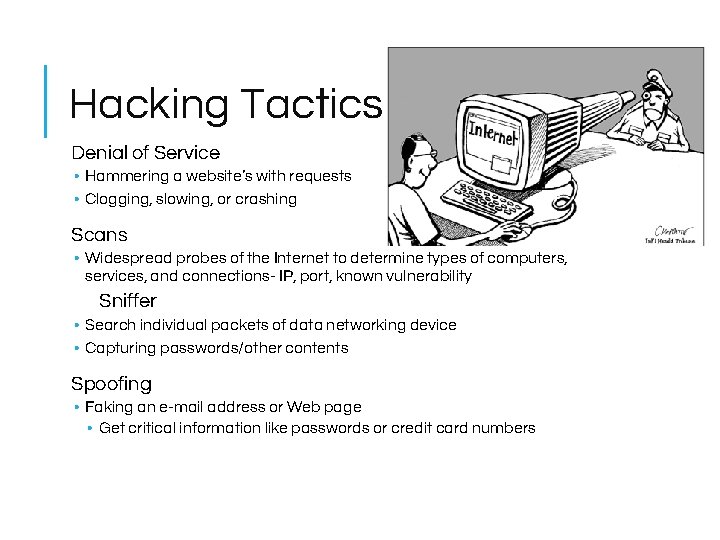
Hacking Tactics Denial of Service • Hammering a website’s with requests • Clogging, slowing, or crashing Scans • Widespread probes of the Internet to determine types of computers, services, and connections- IP, port, known vulnerability Sniffer • Search individual packets of data networking device • Capturing passwords/other contents Spoofing • Faking an e-mail address or Web page • Get critical information like passwords or credit card numbers
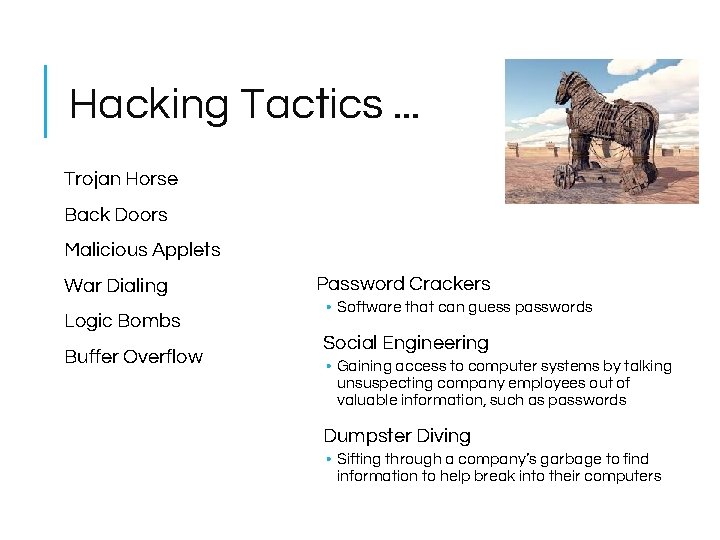
Hacking Tactics. . . Trojan Horse Back Doors Malicious Applets War Dialing Logic Bombs Buffer Overflow Password Crackers • Software that can guess passwords Social Engineering • Gaining access to computer systems by talking unsuspecting company employees out of valuable information, such as passwords Dumpster Diving • Sifting through a company’s garbage to find information to help break into their computers
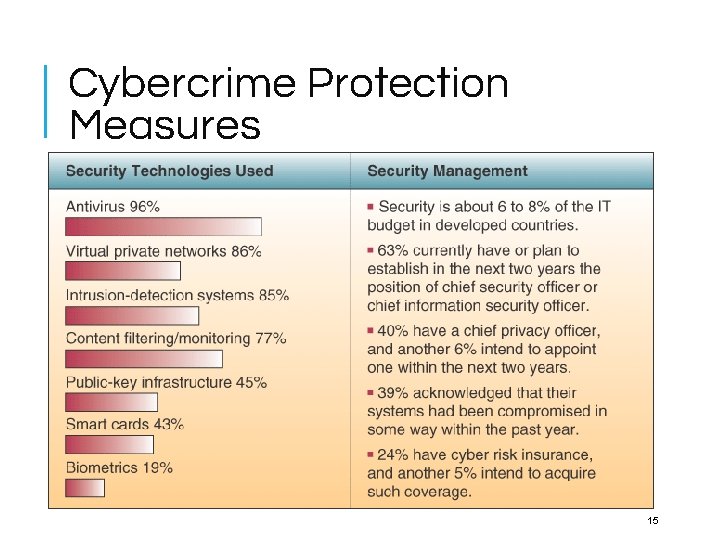
Cybercrime Protection Measures 15
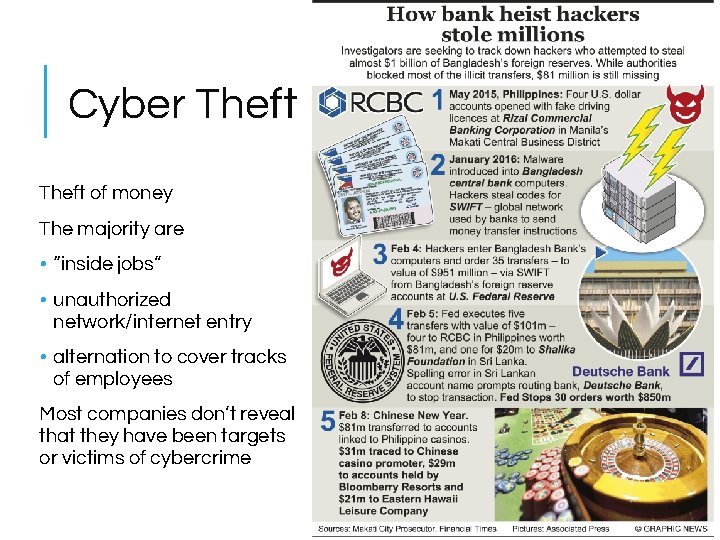
Cyber Theft of money The majority are • “inside jobs” • unauthorized network/internet entry • alternation to cover tracks of employees Most companies don’t reveal that they have been targets or victims of cybercrime
Unauthorized Use at Work It is (employee) time and resource theft • Private consulting • Personal finances • Playing video games Sniffers- Use for monitoring !
Internet Abuses in the Workplace • • • General email abuses Unauthorized usage and access Copyright infringement/plagiarism Newsgroup postings Transmission of confidential data Pornography Hacking Non-work-related download/upload Leisure use of the Internet Use of external ISPs Moonlighting
Theft of Intellectual Property • Copyrighted material • Includes such things as music, videos, images, articles, books, and software Copyright Infringement is Illegal • Peer-to-peer networking techniques have made it easy to trade pirated intellectual property Publishers Offer Inexpensive Online Music • Illegal downloading of music and video is down and continues to drop Software Piracy • Unauthorized copying of computer programs Licensing • Purchasing software is really a payment for a license for fair use • Site license allows a certain number of copies
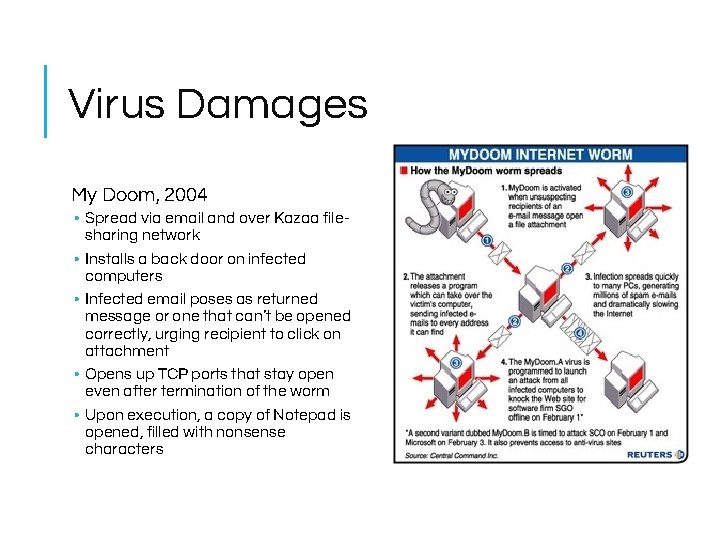
Virus Damages My Doom, 2004 • Spread via email and over Kazaa filesharing network • Installs a back door on infected computers • Infected email poses as returned message or one that can’t be opened correctly, urging recipient to click on attachment • Opens up TCP ports that stay open even after termination of the worm • Upon execution, a copy of Notepad is opened, filled with nonsense characters
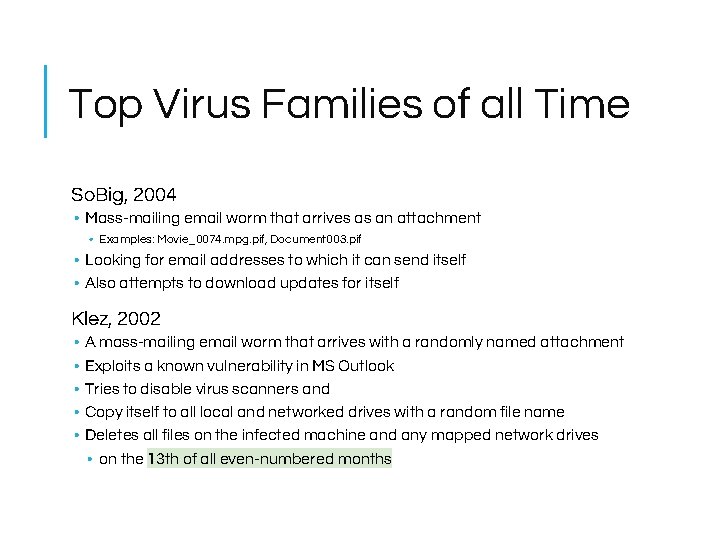
Top Virus Families of all Time So. Big, 2004 • Mass-mailing email worm that arrives as an attachment • Examples: Movie_0074. mpg. pif, Document 003. pif • Looking for email addresses to which it can send itself • Also attempts to download updates for itself Klez, 2002 • • • A mass-mailing email worm that arrives with a randomly named attachment Exploits a known vulnerability in MS Outlook Tries to disable virus scanners and Copy itself to all local and networked drives with a random file name Deletes all files on the infected machine and any mapped network drives • on the 13 th of all even-numbered months
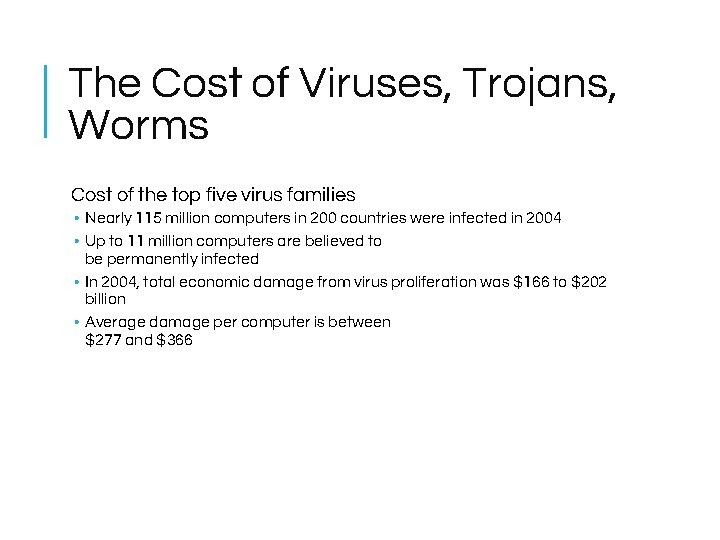
The Cost of Viruses, Trojans, Worms Cost of the top five virus families • Nearly 115 million computers in 200 countries were infected in 2004 • Up to 11 million computers are believed to be permanently infected • In 2004, total economic damage from virus proliferation was $166 to $202 billion • Average damage per computer is between $277 and $366
Adware and Spyware Adware • Software that purports to serve a useful purpose, and often does • Allows advertisers to display pop-up and banner ads without the consent of the computer users
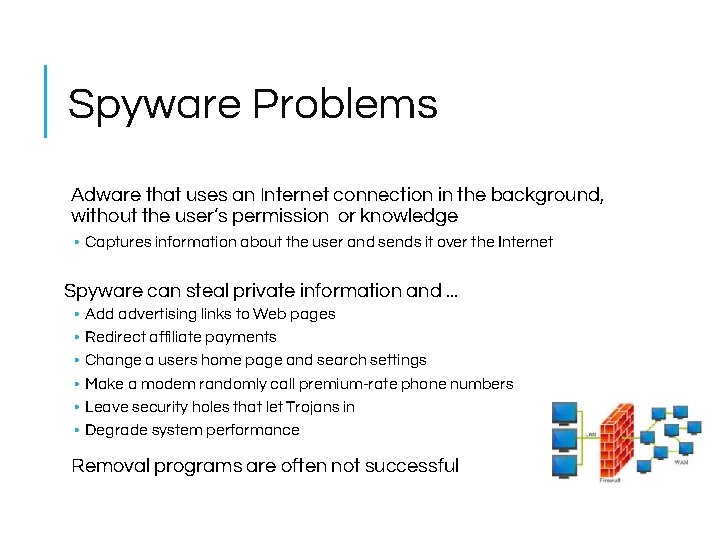
Spyware Problems Adware that uses an Internet connection in the background, without the user’s permission or knowledge • Captures information about the user and sends it over the Internet Spyware can steal private information and. . . • • • Add advertising links to Web pages Redirect affiliate payments Change a users home page and search settings Make a modem randomly call premium-rate phone numbers Leave security holes that let Trojans in Degrade system performance Removal programs are often not successful
Privacy Issues The power of information technology to store and retrieve information can have a negative effect on every individual’s right to privacy • Personal information is collected with every visit to a Web site • Confidential information stored by credit bureaus, credit card companies, and the government has been stolen or misused
Privacy Issues Violation of Privacy • Accessing individuals’ private email conversations and computer records • Collecting and sharing information about individuals gained from their visits to Internet websites Computer Monitoring • Always knowing where a person is • Mobile and paging services are becoming more closely associated with people than with places Computer Matching • Using customer information gained from many sources to market additional business services Unauthorized Access of Personal Files • Collecting telephone numbers, email addresses, credit card numbers, and other information to build customer profiles
Opt-in Versus Opt-out Permission Marketing Methods by which individuals can avoid receiving unsolicited product or service information. This ability is usually associated with direct marketing campaigns such as, e-mail marketing, or direct mail. Opt-In • You explicitly consent to allow data to be compiled about you • This is the default in Europe Opt-Out • Data can be compiled about you unless you specifically request it not be • This is the default in the U. S.
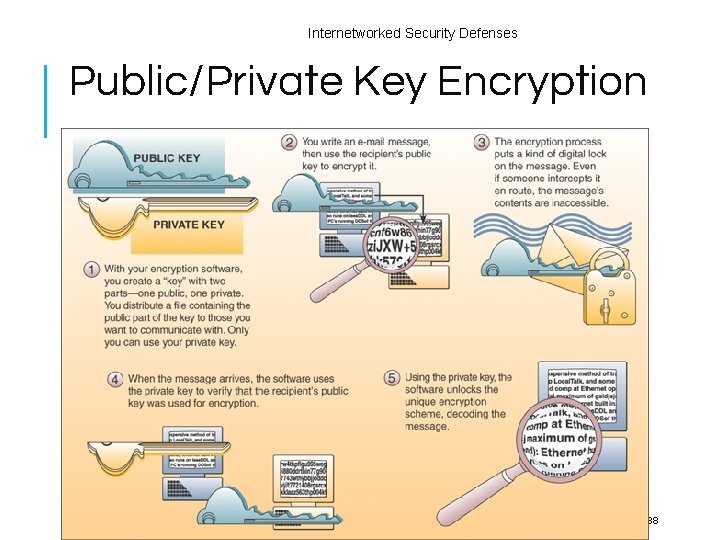
Protecting Your Privacy on the Internet • Encrypt email • Send newsgroup postings through anonymous remailers • Ask your ISP not to sell your name and information to mailing list providers and other marketers • Don’t reveal personal data and interests on online service and website user profiles
Privacy Laws Electronic Communications Privacy Act and Computer Fraud and Abuse Act • Prohibit intercepting data communications messages, stealing or destroying data, or trespassing in federal-related computer systems U. S. Computer Matching and Privacy Act • Regulates the matching of data held in federal agency files to verify eligibility for federal programs Other laws impacting privacy • • Sarbanes-Oxley Health Insurance Portability and Accountability Act (HIPAA) Gramm-Leach-Bliley USA Patriot Act… Bangladesh?
Computer Libel and Censorship The opposite side of the privacy debate… • Freedom of information, speech, and press Biggest battlegrounds - bulletin boards, email boxes, and online files of Internet and public networks Weapons used in this battle – spamming, flame mail, libel laws, and censorship Spamming - Indiscriminate sending of unsolicited email messages to many Internet users Flaming • Sending extremely critical, derogatory, and often vulgar email messages or newsgroup posting to other users on the Internet or online services • Especially prevalent on special-interest newsgroups
Cyberlaw Laws intended to regulate activities over the Internet or via electronic communication devices • Encompasses a wide variety of legal and political issues • Includes intellectual property, privacy, freedom of expression, and jurisdiction The intersection of technology and the law is controversial • Some feel the Internet should not be regulated • Encryption and cryptography make traditional form of regulation difficult • The Internet treats censorship as damage and simply routes around it Cyberlaw only began to emerge in 1996 • Debate continues regarding the applicability of legal principles derived from issues that had nothing to do with cyberspace
Other Challenges Employment • IT creates new jobs and increases productivity • It can also cause significant reductions in job opportunities, as well as requiring new job skills Computer Monitoring • Using computers to monitor the productivity and behavior of employees as they work • Criticized as unethical because it monitors individuals, not just work, and is done constantly • Criticized as invasion of privacy because many employees do not know they are being monitored Working Conditions • IT has eliminated monotonous or obnoxious tasks • However, some skilled craftsperson jobs have been replaced by jobs requiring routine, repetitive tasks or standby roles Individuality • Dehumanizes and depersonalizes activities because computers eliminate human relationships • Inflexible systems
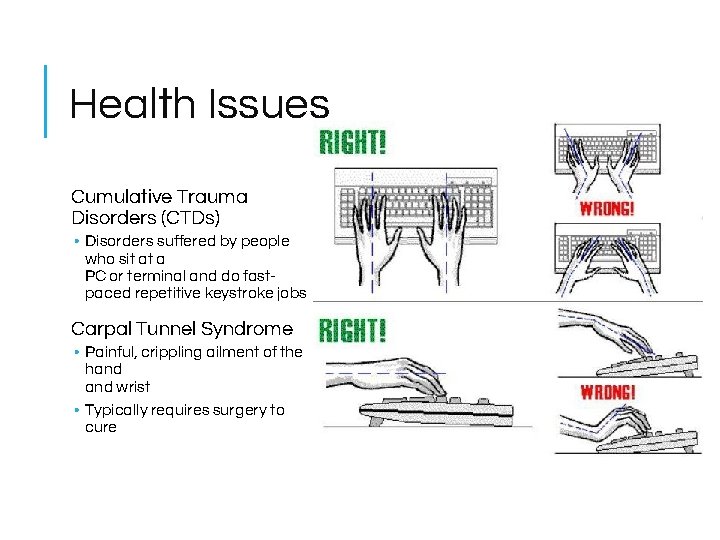
Health Issues Cumulative Trauma Disorders (CTDs) • Disorders suffered by people who sit at a PC or terminal and do fastpaced repetitive keystroke jobs Carpal Tunnel Syndrome • Painful, crippling ailment of the hand wrist • Typically requires surgery to cure
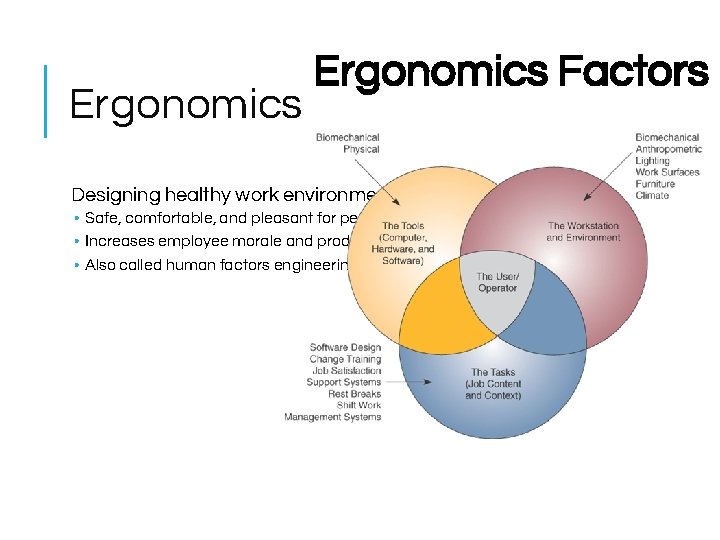
Ergonomics Factors Designing healthy work environments • Safe, comfortable, and pleasant for people to work in • Increases employee morale and productivity • Also called human factors engineering
Societal Solutions Using information technologies to solve human and social problems • • • Medical diagnosis Computer-assisted instruction Governmental program planning Environmental quality control Law enforcement Job placement The detrimental effects of IT • Often caused by individuals or organizations not accepting ethical responsibility for their actions
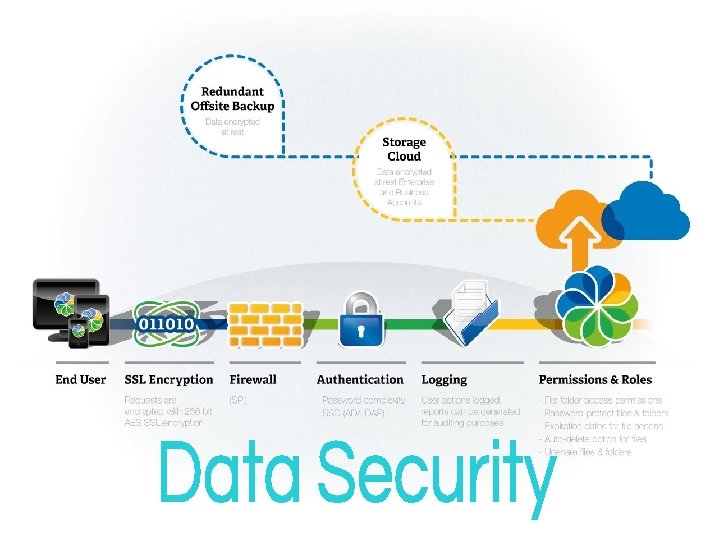
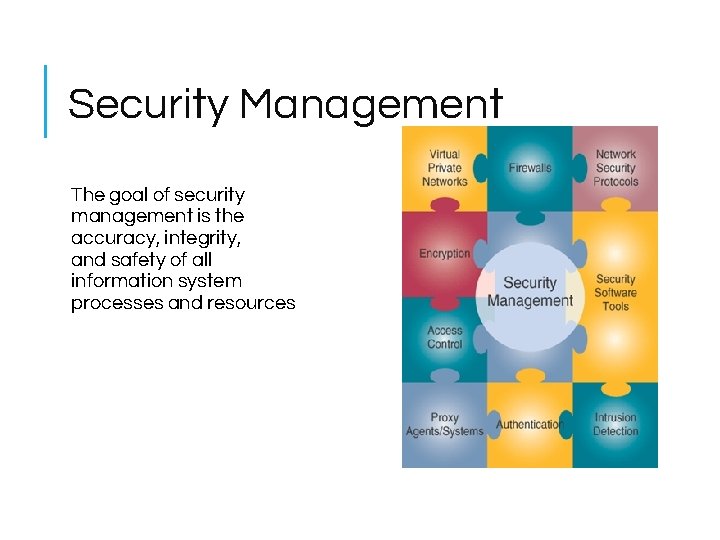
Security Management The goal of security management is the accuracy, integrity, and safety of all information system processes and resources
Internetworked Security Defenses Public/Private Key Encryption 38
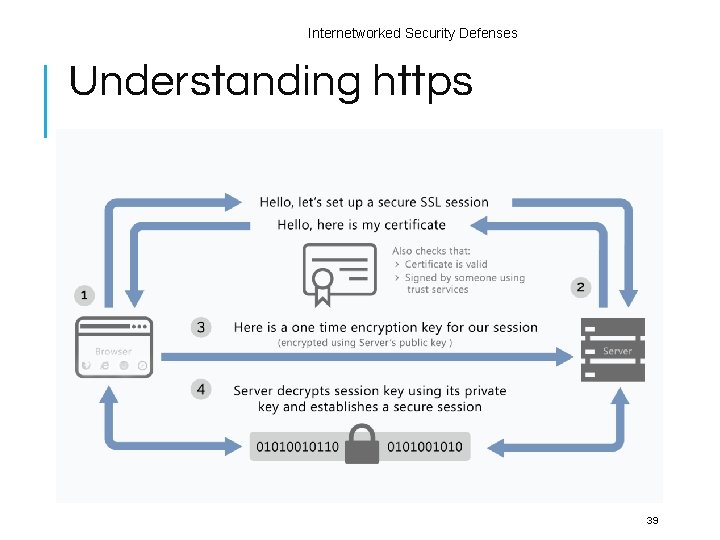
Internetworked Security Defenses Understanding https 39
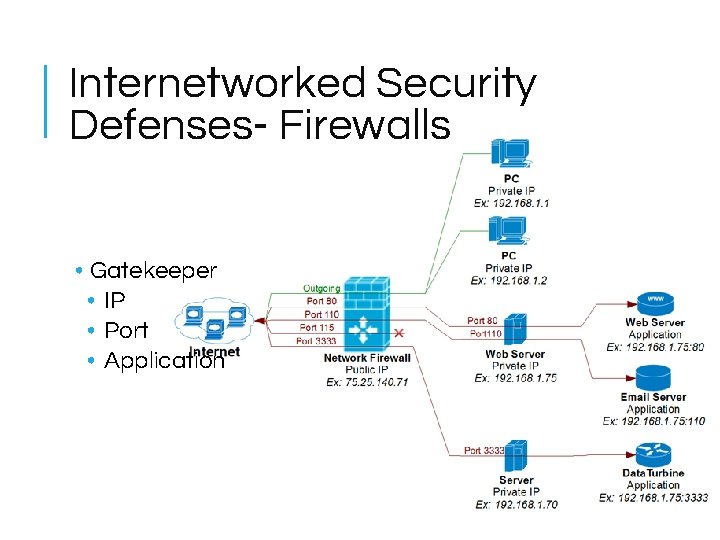
Internetworked Security Defenses- Firewalls • Gatekeeper • IP • Port • Application
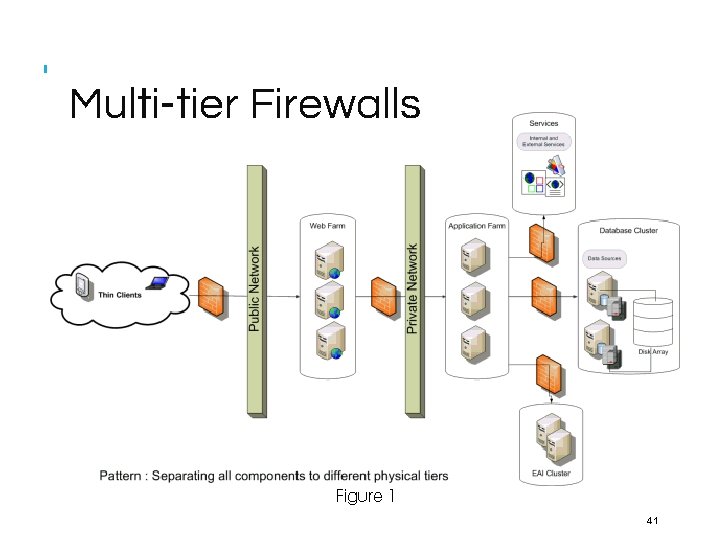
Multi-tier Firewalls 41
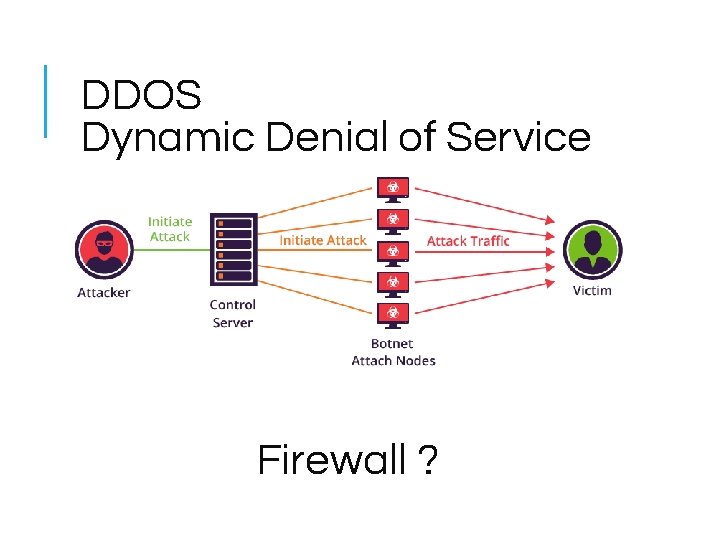
DDOS Dynamic Denial of Service Firewall ?
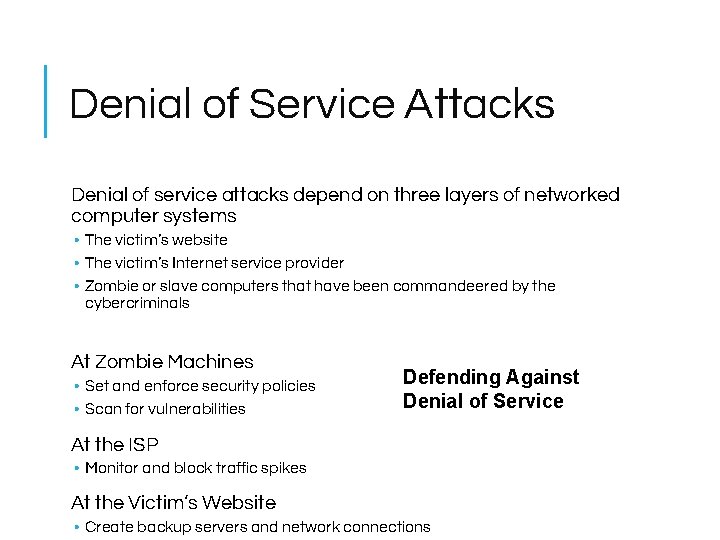
Denial of Service Attacks Denial of service attacks depend on three layers of networked computer systems • The victim’s website • The victim’s Internet service provider • Zombie or slave computers that have been commandeered by the cybercriminals At Zombie Machines • Set and enforce security policies • Scan for vulnerabilities Defending Against Denial of Service At the ISP • Monitor and block traffic spikes At the Victim’s Website • Create backup servers and network connections
Internetworked Security Defenses Email Monitoring • Use of content monitoring software that scans for troublesome words that might compromise corporate security Virus Defenses • Centralize the updating and distribution of antivirus software • Use a security suite that integrates virus protection with firewalls, Web security, and content blocking features
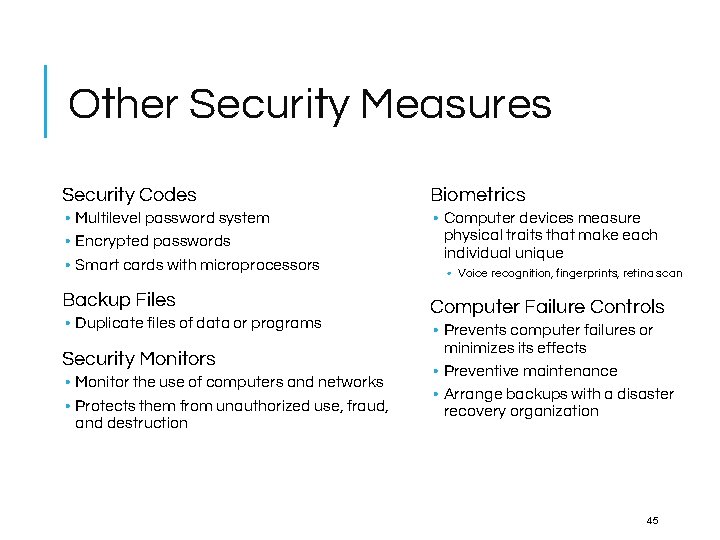
Other Security Measures Security Codes Biometrics • Multilevel password system • Encrypted passwords • Smart cards with microprocessors • Computer devices measure physical traits that make each individual unique Backup Files Computer Failure Controls • Duplicate files of data or programs Security Monitors • Monitor the use of computers and networks • Protects them from unauthorized use, fraud, and destruction • Voice recognition, fingerprints, retina scan • Prevents computer failures or minimizes its effects • Preventive maintenance • Arrange backups with a disaster recovery organization 45
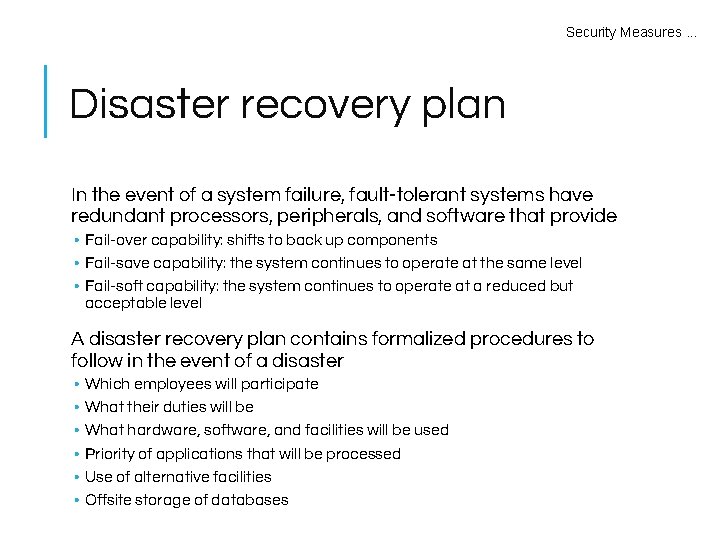
Security Measures. . . Disaster recovery plan In the event of a system failure, fault-tolerant systems have redundant processors, peripherals, and software that provide • Fail-over capability: shifts to back up components • Fail-save capability: the system continues to operate at the same level • Fail-soft capability: the system continues to operate at a reduced but acceptable level A disaster recovery plan contains formalized procedures to follow in the event of a disaster • • • Which employees will participate What their duties will be What hardware, software, and facilities will be used Priority of applications that will be processed Use of alternative facilities Offsite storage of databases
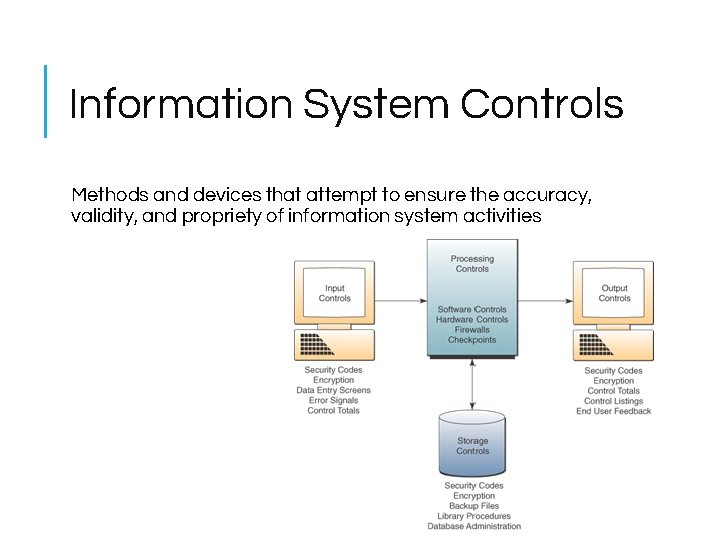
Information System Controls Methods and devices that attempt to ensure the accuracy, validity, and propriety of information system activities
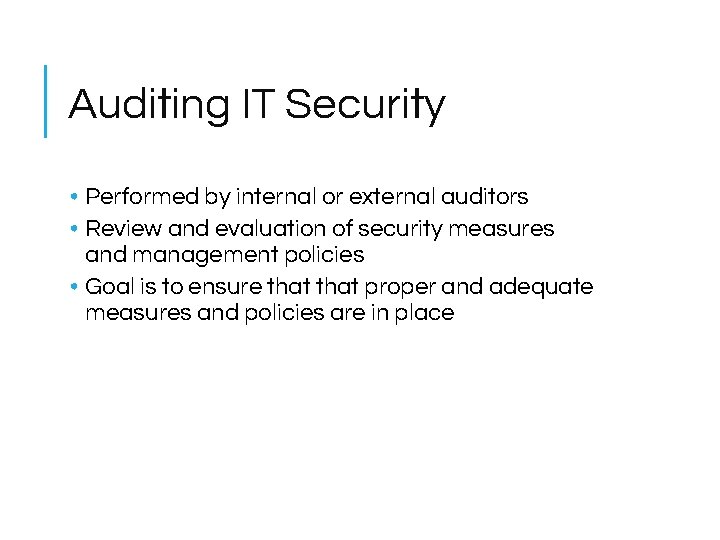
Auditing IT Security • Performed by internal or external auditors • Review and evaluation of security measures and management policies • Goal is to ensure that proper and adequate measures and policies are in place
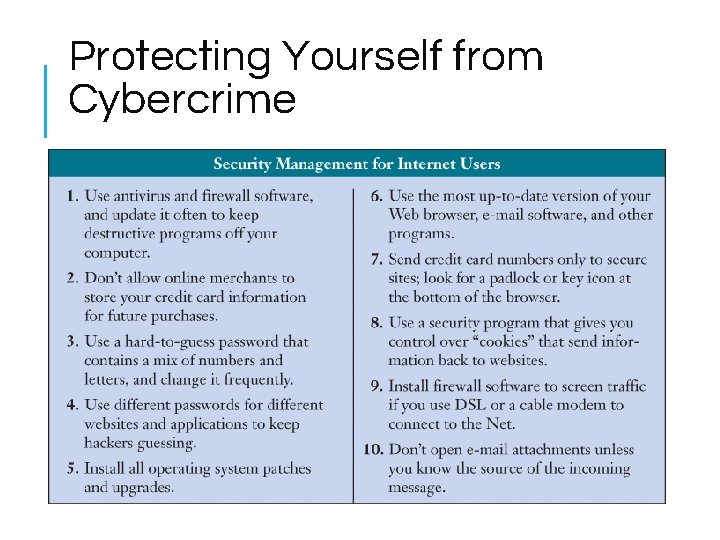
Protecting Yourself from Cybercrime
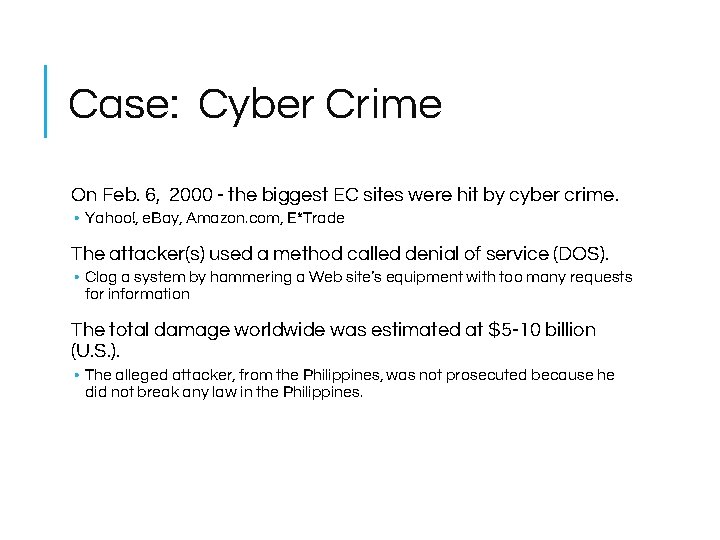
Case: Cyber Crime On Feb. 6, 2000 - the biggest EC sites were hit by cyber crime. • Yahoo!, e. Bay, Amazon. com, E*Trade The attacker(s) used a method called denial of service (DOS). • Clog a system by hammering a Web site’s equipment with too many requests for information The total damage worldwide was estimated at $5 -10 billion (U. S. ). • The alleged attacker, from the Philippines, was not prosecuted because he did not break any law in the Philippines.
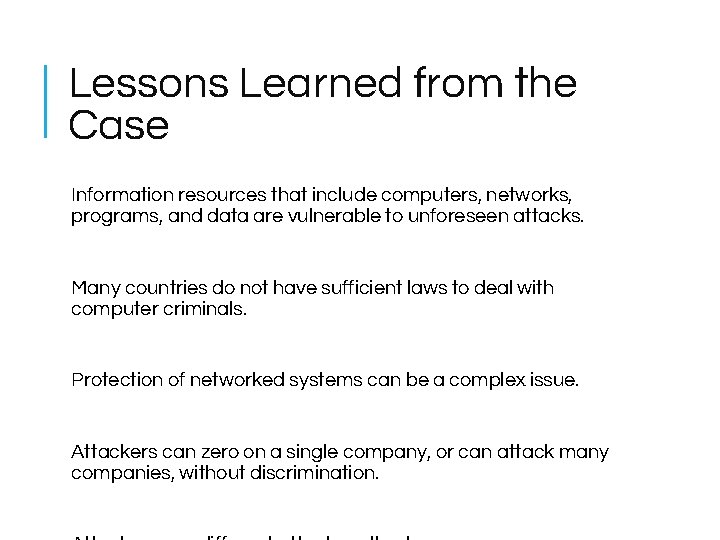
Lessons Learned from the Case Information resources that include computers, networks, programs, and data are vulnerable to unforeseen attacks. Many countries do not have sufficient laws to deal with computer criminals. Protection of networked systems can be a complex issue. Attackers can zero on a single company, or can attack many companies, without discrimination.
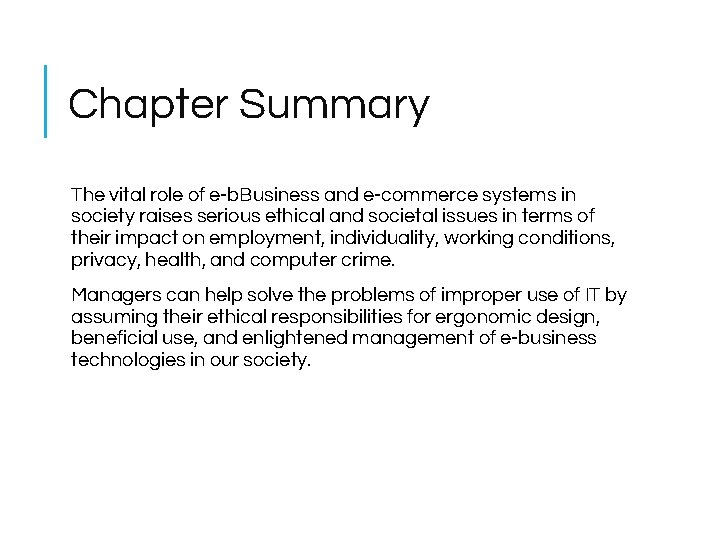
Chapter Summary The vital role of e-b. Business and e-commerce systems in society raises serious ethical and societal issues in terms of their impact on employment, individuality, working conditions, privacy, health, and computer crime. Managers can help solve the problems of improper use of IT by assuming their ethical responsibilities for ergonomic design, beneficial use, and enlightened management of e-business technologies in our society.
Chapter Summary (cont) Business and IT activities involve many ethical considerations. Ethical principles and standards of conduct can serve as guidelines for dealing with ethical businesses issues. One of the most important responsibilities of the management of a company is to assure the security and quality of its ebusiness activities. Security management tools and policies can ensure the accuracy, integrity, and safety of e-business systems and resources.