
13 Life Colonies in early America ObjectivesStandards Describe

13 Life. Colonies in early America Objectives/Standards: Describe the contributions of geographic and economic conditions, religion, and colonial systems of government to the development of American democratic practices. Describe the geography, cultures, and economics of the Southern, Middle Atlantic, and New England Colonies. Describe interactions (e. g. , agricultural and cultural exchanges, alliances, conflicts) between Native Americans and European settlers.
Vocabulary Colony – What is a colony? A settlement in a new area. The first English colonies in North America were along the eastern coast. Colonist – What is a Colonist? An English man or woman that moves to the new world of North America.
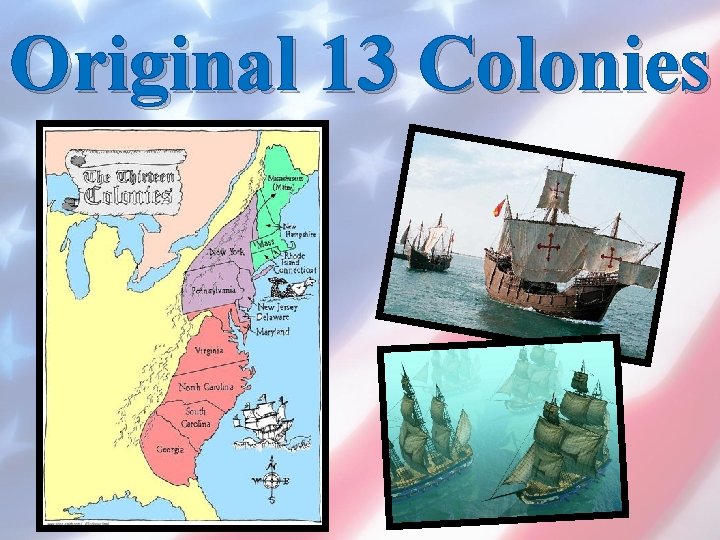
Original 13 Colonies
Reasons Why • Some Englishmen came for religious freedom from the Church of English. • They wanted land wealth that they couldn’t have in England. • They wanted freedom from the King’s rule. • They wanted a new beginning • They want adventure. • They wanted gold and riches.
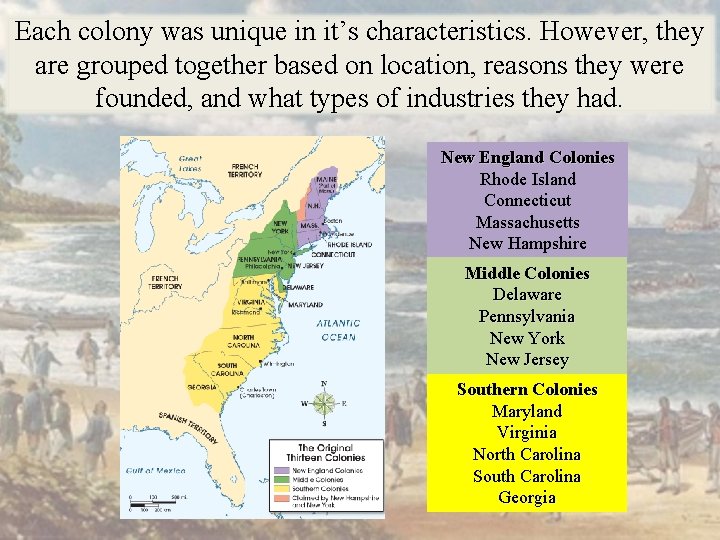
The Colonies Each colony was unique in it’s characteristics. However, they are grouped together based on location, reasons they were founded, and what types of industries they had. New England Colonies Rhode Island Connecticut Massachusetts New Hampshire Middle Colonies Delaware Pennsylvania New York New Jersey Southern Colonies Maryland Virginia North Carolina South Carolina Georgia
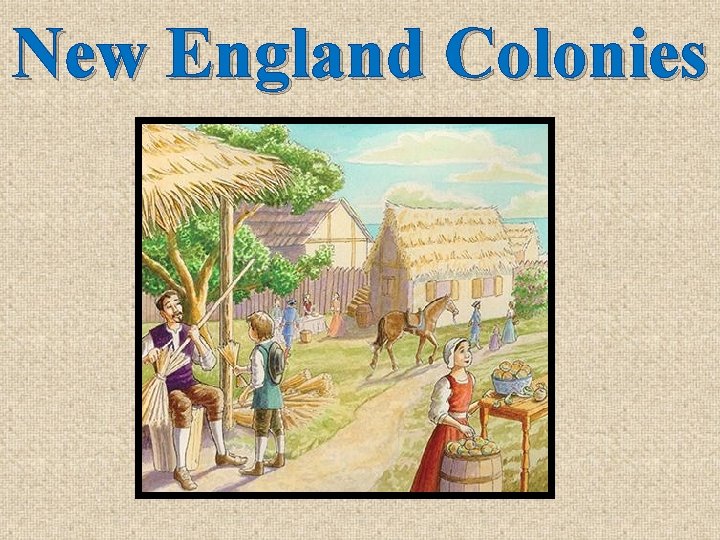
New England Colonies
Vocabulary Puritans – Who were they? The Puritans came to New England to escape the King who punished them for their religion. They governed a strict colony that was based around the bible and the church. They had elected officials but they were male. No women could serve in the Puritan government.
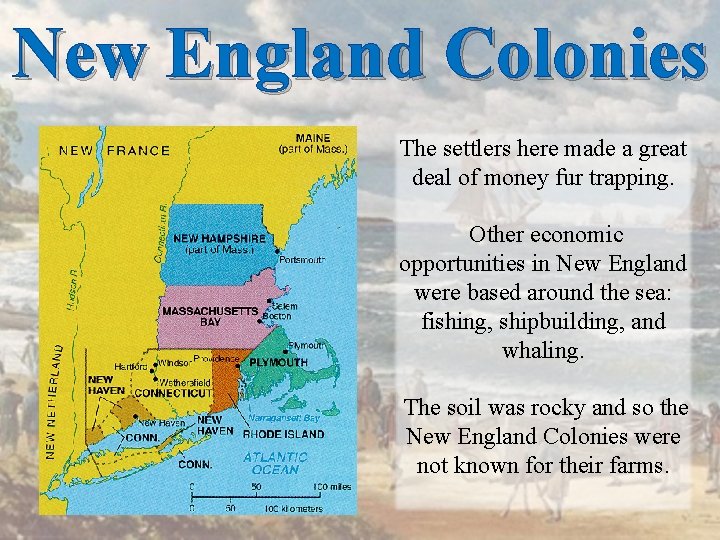
New England Colonies The settlers here made a great deal of money fur trapping. Other economic opportunities in New England were based around the sea: fishing, shipbuilding, and whaling. The soil was rocky and so the New England Colonies were not known for their farms.
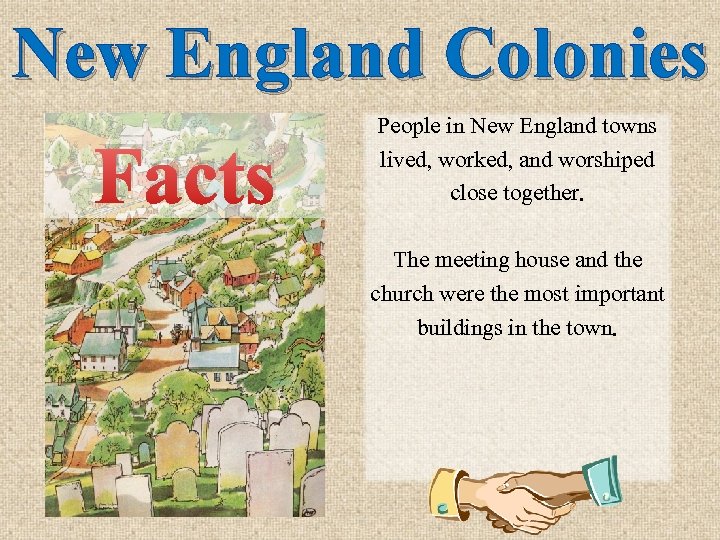
New England Colonies Facts People in New England towns lived, worked, and worshiped close together. The meeting house and the church were the most important buildings in the town.
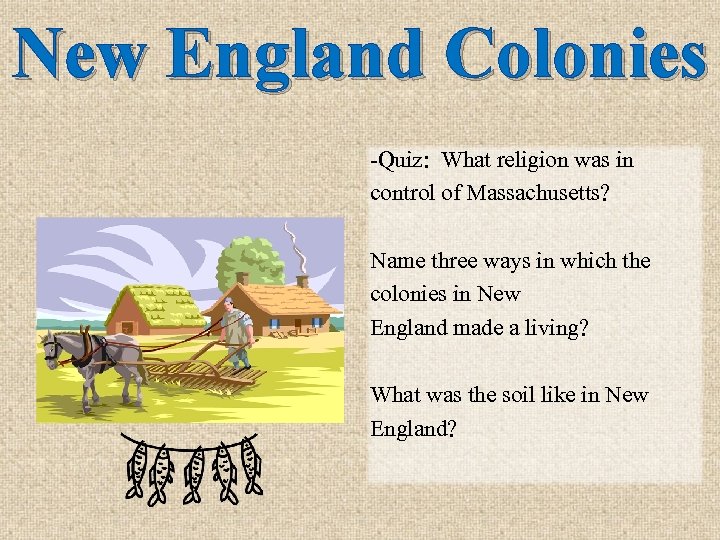
New England Colonies -Quiz: What religion was in control of Massachusetts? Name three ways in which the colonies in New England made a living? What was the soil like in New England?
Middle Colonies
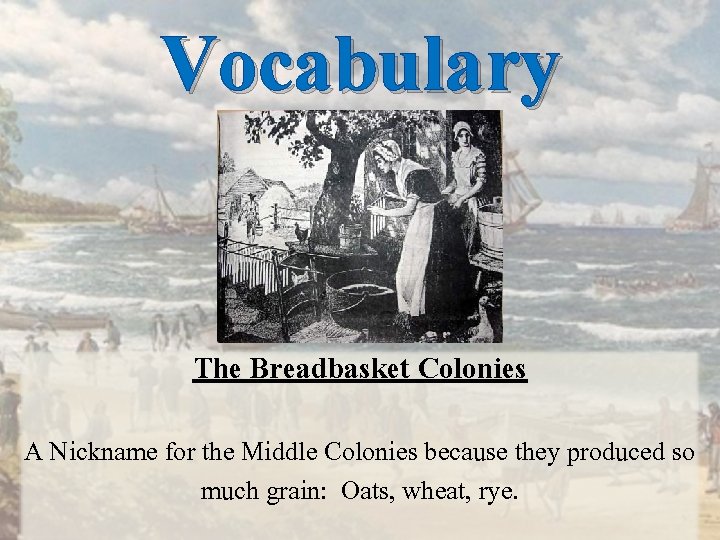
Vocabulary The Breadbasket Colonies A Nickname for the Middle Colonies because they produced so much grain: Oats, wheat, rye.
Vocabulary Immigrant– What is an immigrant? A person that comes into a country to start a new life. People came to America from many different places to start a new life. Diversity– What is diversity? A group of people from very different backgrounds. The Middle colonies were an interesting place to live because of the diversity among the people.
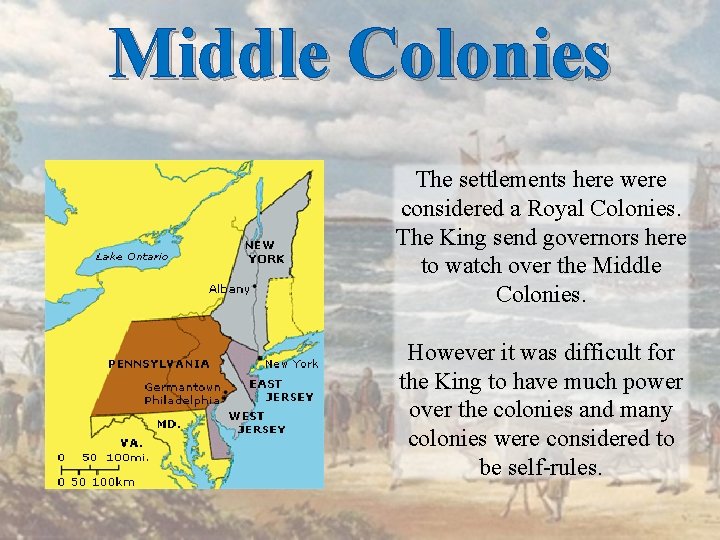
Middle Colonies The settlements here were considered a Royal Colonies. The King send governors here to watch over the Middle Colonies. However it was difficult for the King to have much power over the colonies and many colonies were considered to be self-rules.
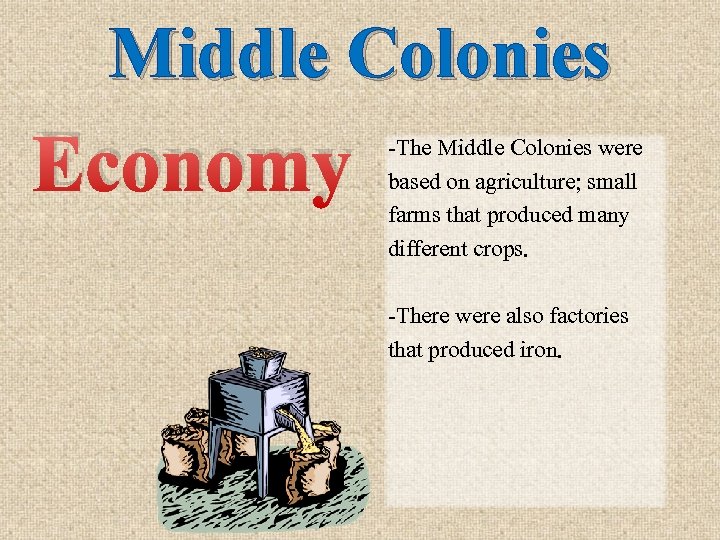
Middle Colonies Economy -The Middle Colonies were based on agriculture; small farms that produced many different crops. -There were also factories that produced iron.
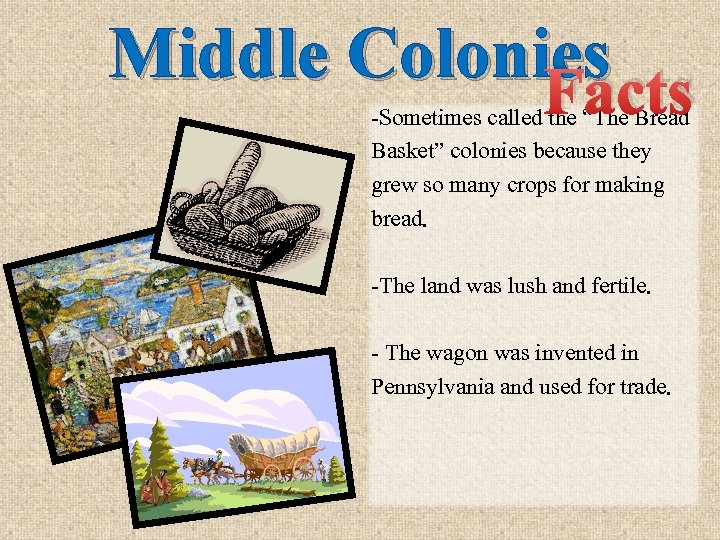
Middle Colonies Facts -Sometimes called the “The Bread Basket” colonies because they grew so many crops for making bread. -The land was lush and fertile. - The wagon was invented in Pennsylvania and used for trade.
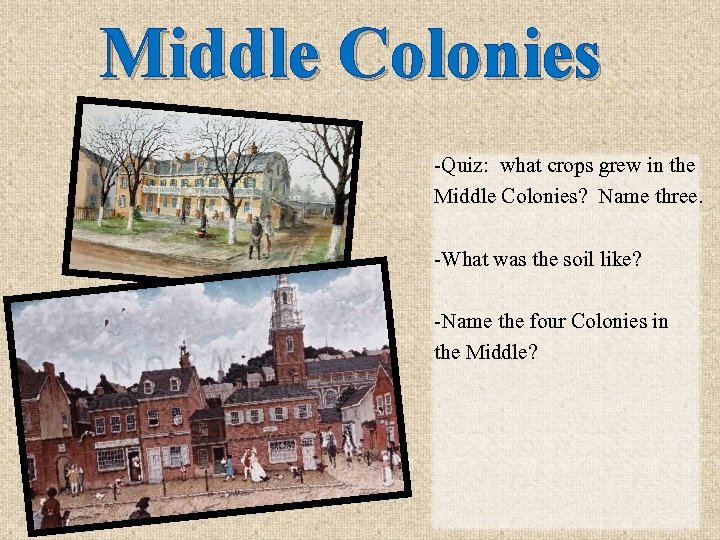
Middle Colonies -Quiz: what crops grew in the Middle Colonies? Name three. -What was the soil like? -Name the four Colonies in the Middle?
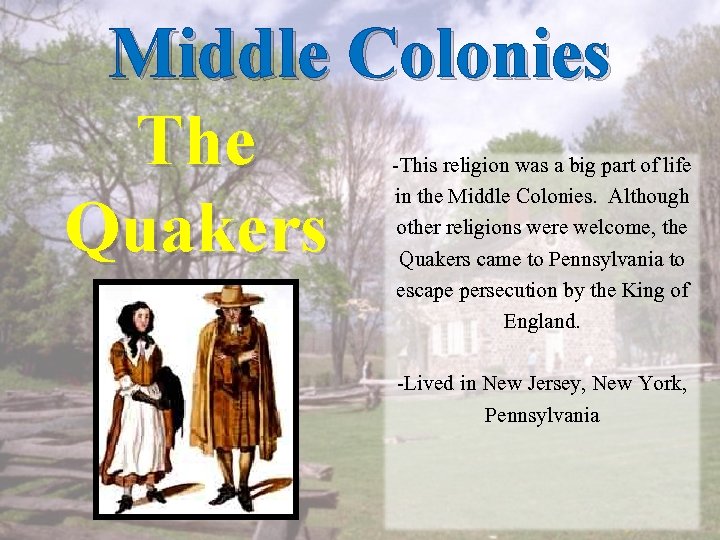
Middle Colonies The Quakers -This religion was a big part of life in the Middle Colonies. Although other religions were welcome, the Quakers came to Pennsylvania to escape persecution by the King of England. -Lived in New Jersey, New York, Pennsylvania
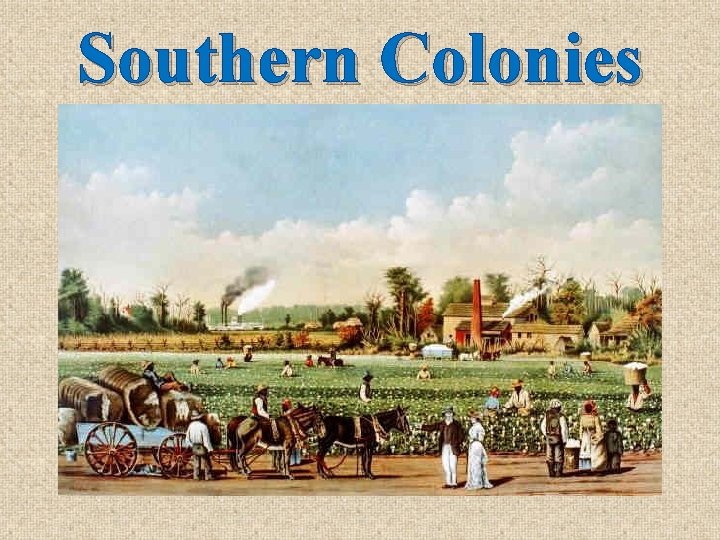
Southern Colonies
Vocabulary Overseer– What is a overseer? Someone that was hired to watch slaves as they worked. Plantation owners hired overseers to watch the slaves and make sure they did their jobs. Indigo– What is indigo? A plant that was used in making blue dye. The farmers grew indigo plants. Indigo was an important cash crop for the Southern colonies.
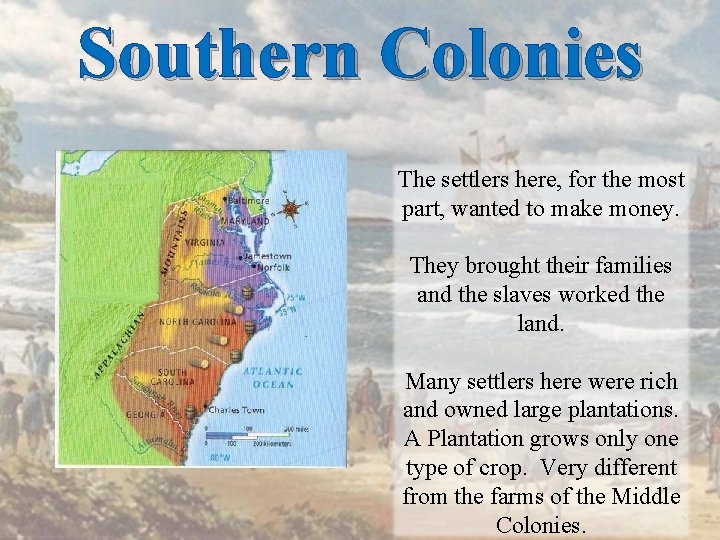
Southern Colonies The settlers here, for the most part, wanted to make money. They brought their families and the slaves worked the land. Many settlers here were rich and owned large plantations. A Plantation grows only one type of crop. Very different from the farms of the Middle Colonies.
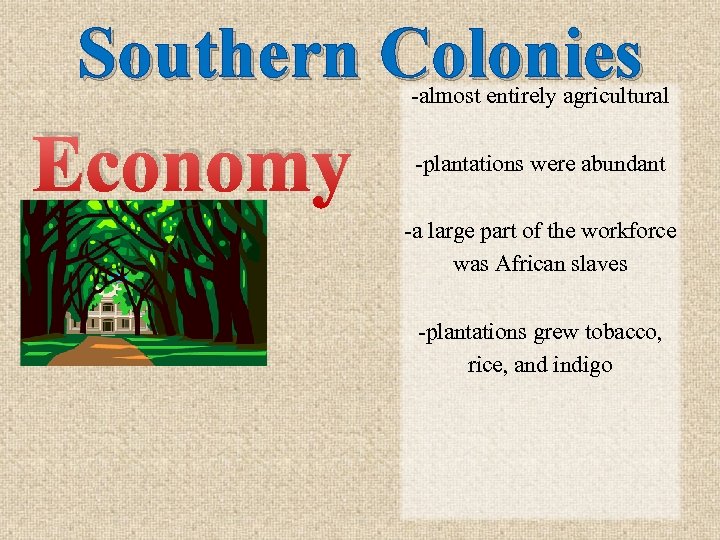
Southern Colonies Economy -almost entirely agricultural -plantations were abundant -a large part of the workforce was African slaves -plantations grew tobacco, rice, and indigo
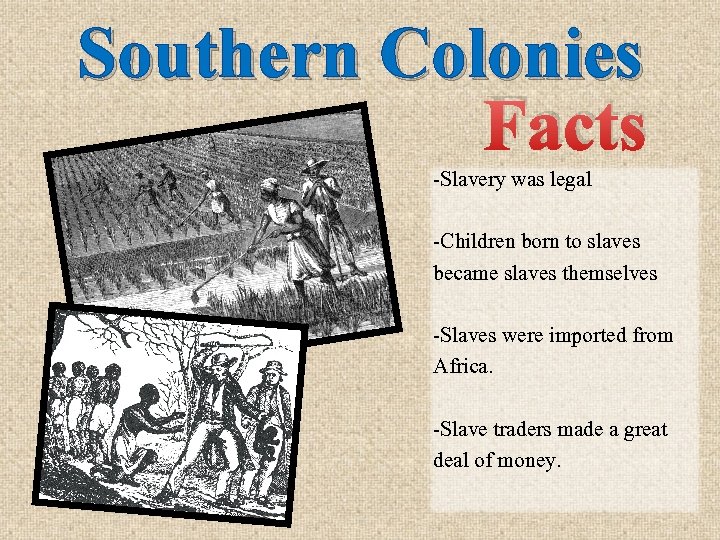
Southern Colonies Facts -Slavery was legal -Children born to slaves became slaves themselves -Slaves were imported from Africa. -Slave traders made a great deal of money.
Decide which are facts and which are opinions. On the next slide, decide if the statement is fact or opinion. Then, tell why. Fact: A state that is supported by evidence and is true. Opinion: A statement that tells what a person might believe or feel.
Decide which are facts and which are opinions. 1. The settlers traded goods with each other. 2. Farming families were the best workers. 3. Slaves were owned by plantation owners. 4. Leaders during this time were excellent speakers. 5. The Quakers had the best ideas about religion. 6. If children misbehaved in school, they would be punished. 7. Trading is a better way to run a community than using money. 8. The Southern colonies had many plantations.
Imagine you are a colonist from either the New England, Middle, or Southern colonies. Step 2: Write a journal entry of your life during this time. It should be a few paragraphs long. Step 3: Include your thoughts, feelings, activities around you, conflicts, daily life, etc. Hint; use a combination of the notes your took from this presentation, research from your Social Studies book, library books, or internet to assist you in your facts.
- Slides: 26