
13 Fieldwork Chapter Outline 1 Overview 2 The



- Slides: 16
13 Fieldwork
Chapter Outline 1) Overview 2) The Nature of Fieldwork 3) Fieldwork/Data Collection Process 4) Selection of Field Workers 5) Training of Field Workers i. Making the Initial Contact ii. Asking the Questions iii. Probing iv. Recording the Answers v. Terminating the Interview
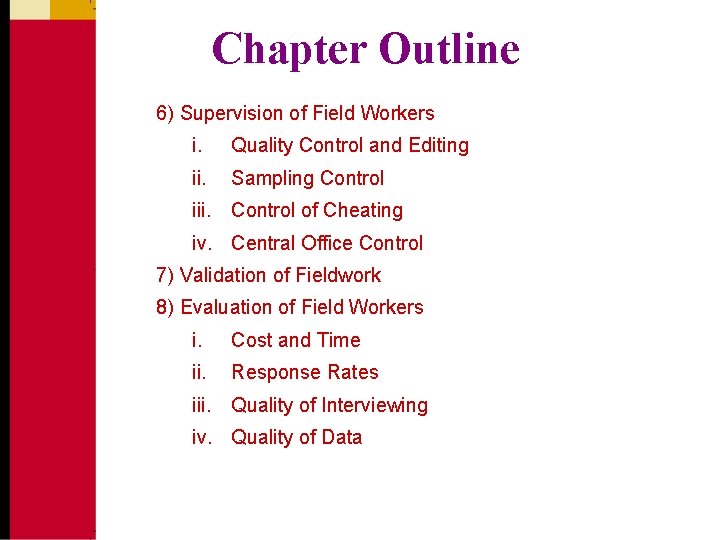
Chapter Outline 6) Supervision of Field Workers i. Quality Control and Editing ii. Sampling Control iii. Control of Cheating iv. Central Office Control 7) Validation of Fieldwork 8) Evaluation of Field Workers i. Cost and Time ii. Response Rates iii. Quality of Interviewing iv. Quality of Data
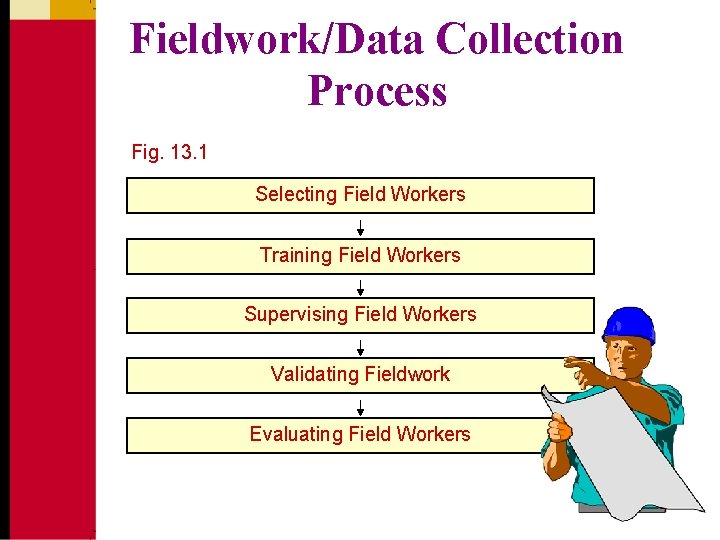
Fieldwork/Data Collection Process Fig. 13. 1 Selecting Field Workers Training Field Workers Supervising Field Workers Validating Fieldwork Evaluating Field Workers
Selection of Field Workers The researcher should: – Develop job specifications for the project, taking into account the mode of data collection. – Decide what characteristics the field workers should have. – Recruit appropriate individuals.
General Qualifications of Field Workers • Healthy. Field workers must have the stamina required to do the job. • Outgoing. The interviewers should be able to establish rapport with the respondents. • Communicative. Effective speaking and listening skills are a great asset. • Pleasant appearance. If the field worker's physical appearance is unpleasant or unusual, the data collected may be biased. • Educated. Interviewers must have good reading and writing skills. • Experienced interviewers are likely to do a better job.
Training of Field Workers • Making the Initial Contact – Interviewers should be trained to make opening remarks that will convince potential respondents that their participation is important. • Asking the Questions 1. Be thoroughly familiar with the questionnaire. 2. Ask the questions in the order in which they appear in the questionnaire. 3. Use the exact wording given in the questionnaire. 4. Read each question slowly. 5. Repeat questions that are not understood. 6. Ask every applicable question. 7. Follow instructions, skip patterns, probe carefully.
Figure 14. 4 Training Field Workers Making the Initial Contact Asking Questions Probing Recording Answers Terminating the Interview
Training of Field Workers • Probing – Some commonly used probing techniques: 1. Repeating the question. 2. Repeating the respondent's reply. 3. Using a pause or silent probe. 4. Boosting or reassuring the respondent. 5. Eliciting clarification. 6. Using objective/neutral questions or comments.
Commonly Used Probes and Abbreviations
Training of Field Workers • • Recording the Answers – Guidelines for recording answers to unstructured questions: 1. Record responses during the interview. 2. Use the respondent's own words. 3. Do not summarize or paraphrase the respondent's answers. 4. Include everything that pertains to the question objectives. 5. Include all probes and comments. 6. Repeat the response as it is written down. Terminating the Interview – The respondent should be left with a positive feeling about the interview.
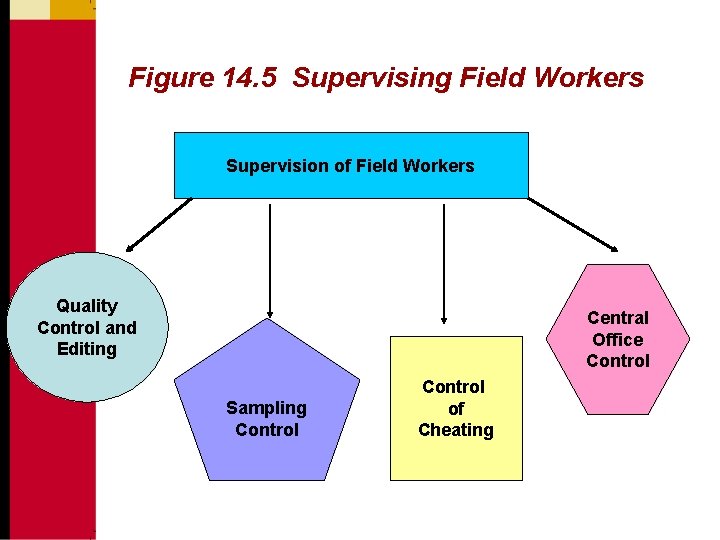
Figure 14. 5 Supervising Field Workers Supervision of Field Workers Quality Control and Editing Central Office Control Sampling Control of Cheating
Supervision of Field Workers Supervision of field workers means making sure that they are following the procedures and techniques in which they were trained. Supervision involves quality control and editing, sampling control, control of cheating, and central office control. – Quality Control and Editing – This requires checking to see if the field procedures are being properly implemented. – Sampling Control – The supervisor attempts to ensure that the interviewers are strictly following the sampling plan. – Control of Cheating – Cheating can be minimized through proper training, supervision, and validation. – Central Office Control – Supervisors provide quality and cost-control information to the central office.
Validation of Fieldwork • The supervisors call 10 - 25% of the respondents to inquire whether the field workers actually conducted the interviews. • The supervisors ask about the length and quality of the interview, reaction to the interviewer, and basic demographic data. • The demographic information is cross-checked against the information reported by the interviewers on the questionnaires.
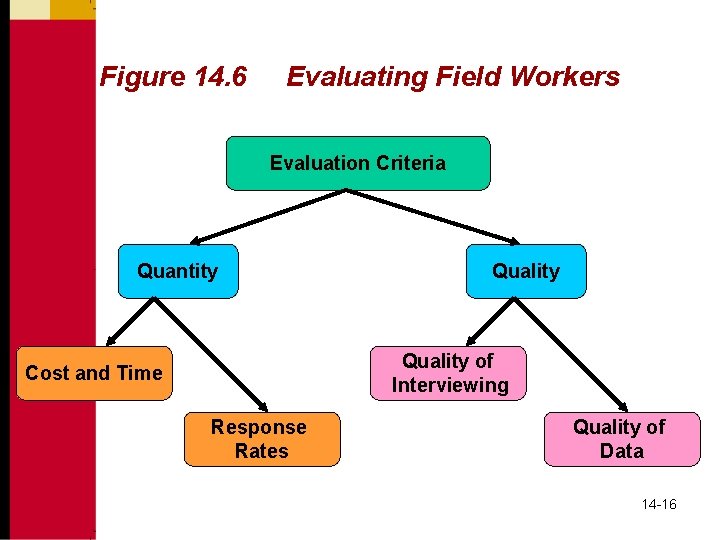
Evaluation of Field Workers • Cost and Time. The interviewers can be compared in terms of the total cost (salary and expenses) per completed interview. • Response Rates. It is important to monitor response rates on a timely basis so that corrective action can be taken if these rates are too low. • Quality of Interviewing. To evaluate interviewers on the quality of interviewing, the supervisor must directly observe the interviewing process. • Quality of Data. The completed questionnaires of each interviewer should be evaluated for the quality of data.
Figure 14. 6 Evaluating Field Workers Evaluation Criteria Quantity Quality of Interviewing Cost and Time Response Rates Quality of Data 14 -16