
13 4 Magnetic Field of a Coil or
- Slides: 28
(13. 4) Magnetic Field of a Coil or Solenoid
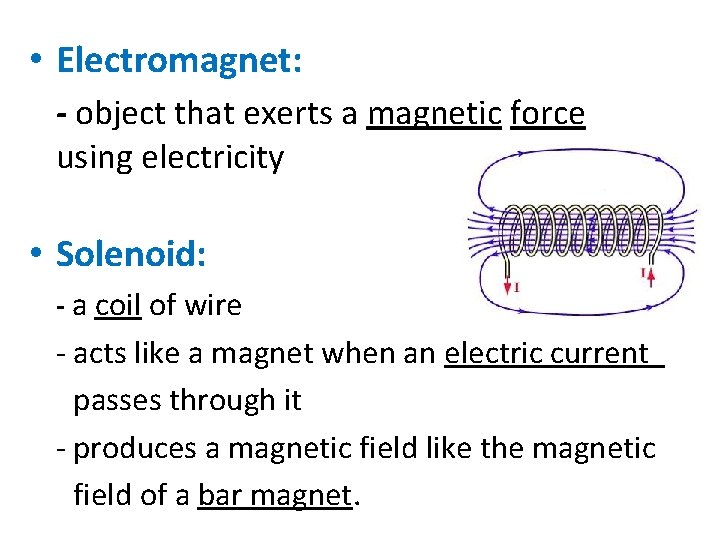
• Electromagnet: - object that exerts a magnetic force using electricity • Solenoid: - a coil of wire - acts like a magnet when an electric current passes through it - produces a magnetic field like the magnetic field of a bar magnet.
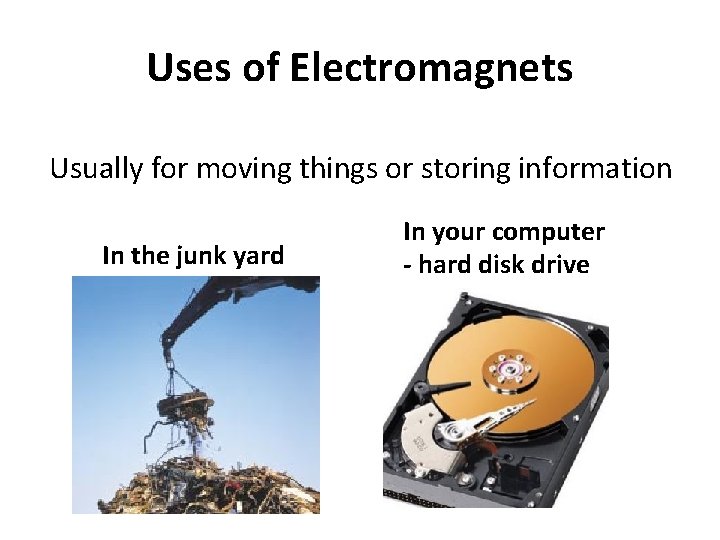
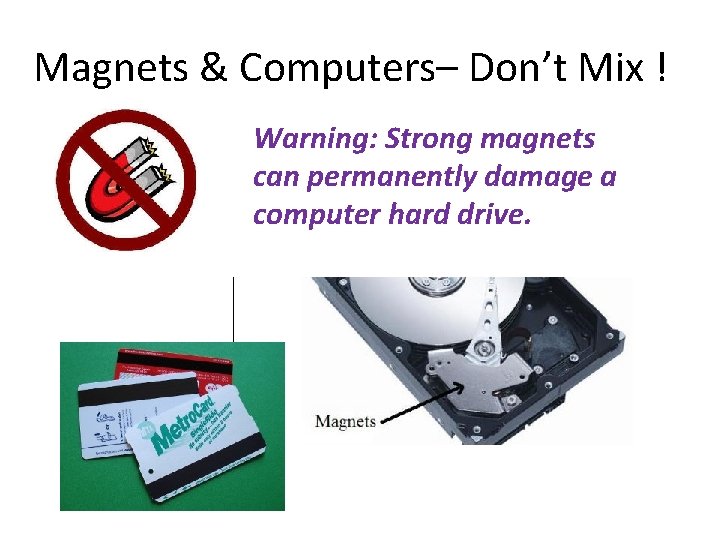
Uses of Electromagnets Usually for moving things or storing information In the junk yard In your computer - hard disk drive
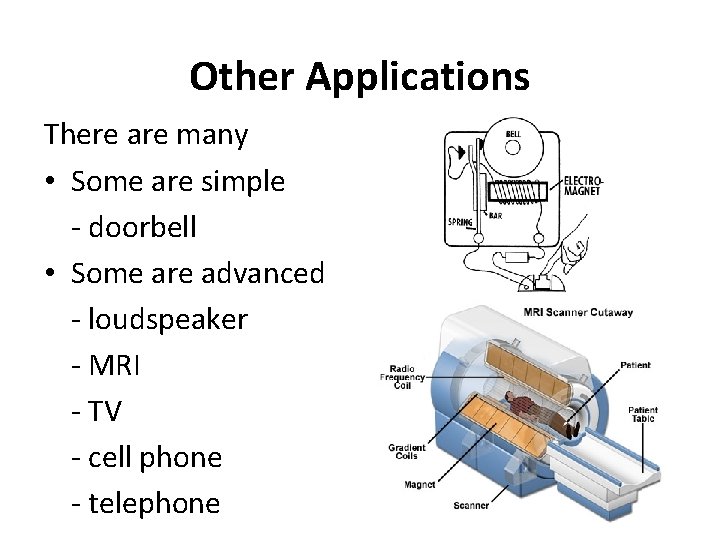
Other Applications There are many • Some are simple - doorbell • Some are advanced - loudspeaker - MRI - TV - cell phone - telephone
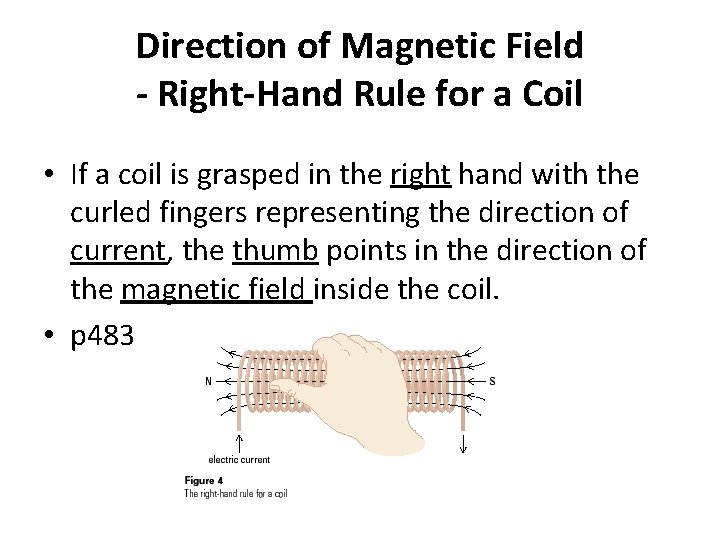
Direction of Magnetic Field - Right-Hand Rule for a Coil • If a coil is grasped in the right hand with the curled fingers representing the direction of current, the thumb points in the direction of the magnetic field inside the coil. • p 483
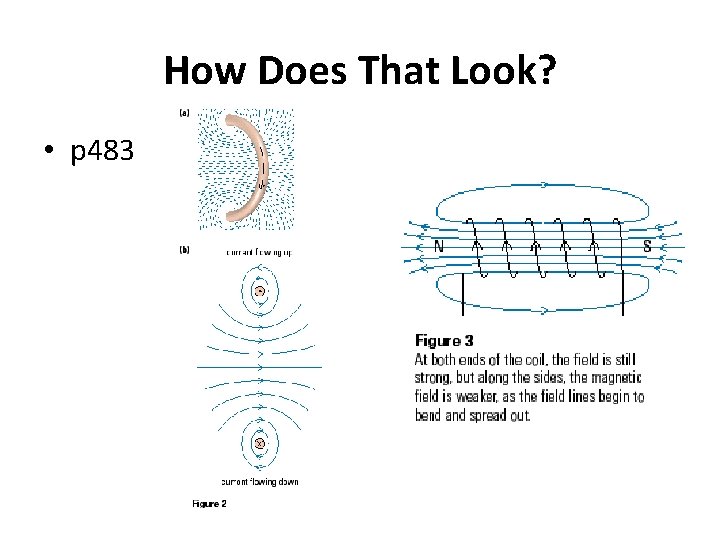
How Does That Look? • p 483
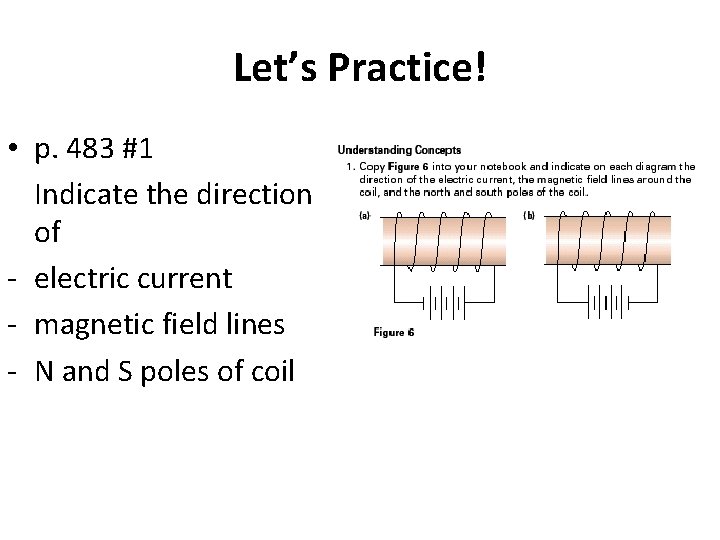
Let’s Practice! • p. 483 #1 Indicate the direction of - electric current - magnetic field lines - N and S poles of coil
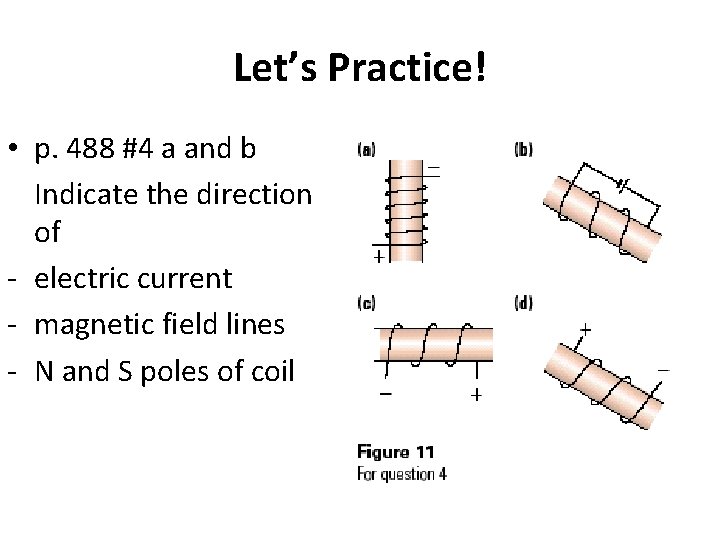
Let’s Practice! • p. 488 #4 a and b Indicate the direction of - electric current - magnetic field lines - N and S poles of coil
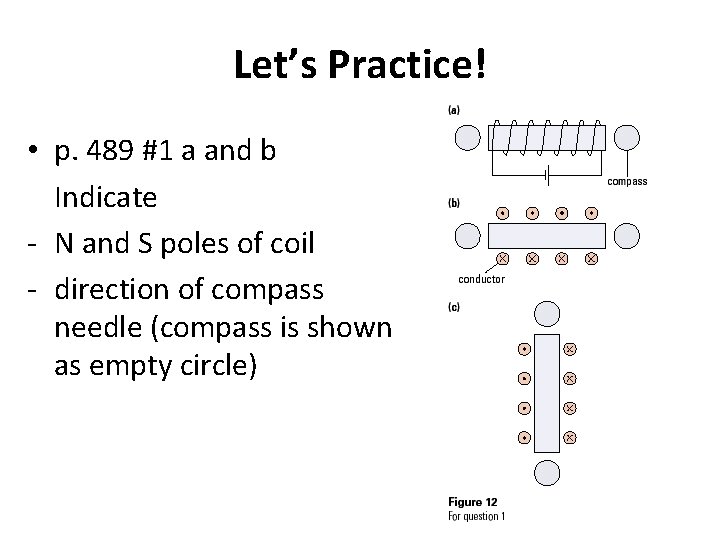
Let’s Practice! • p. 489 #1 a and b Indicate - N and S poles of coil - direction of compass needle (compass is shown as empty circle)
Strength of the Magnetic Field There are several factors… • Current in the coil F I • Number of loops (or turns) in the coil F N • Permeability of the Core (i. e. the factor by which a core material increases the magnetic field strength)
(13. 5) The Motor Principle
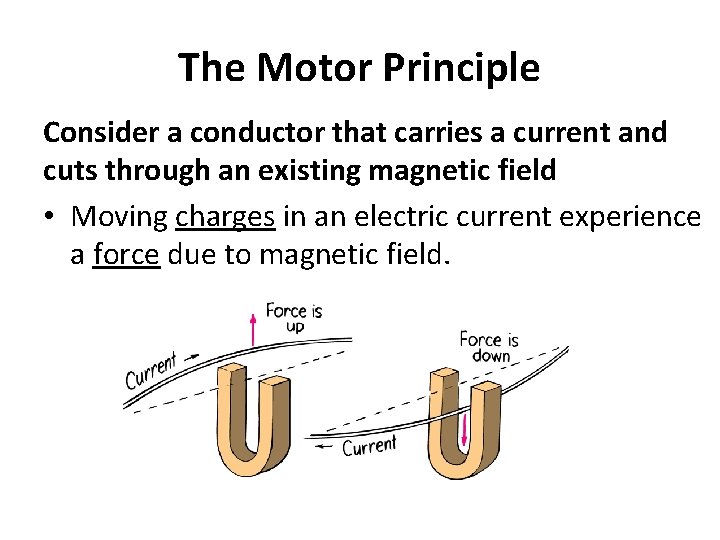
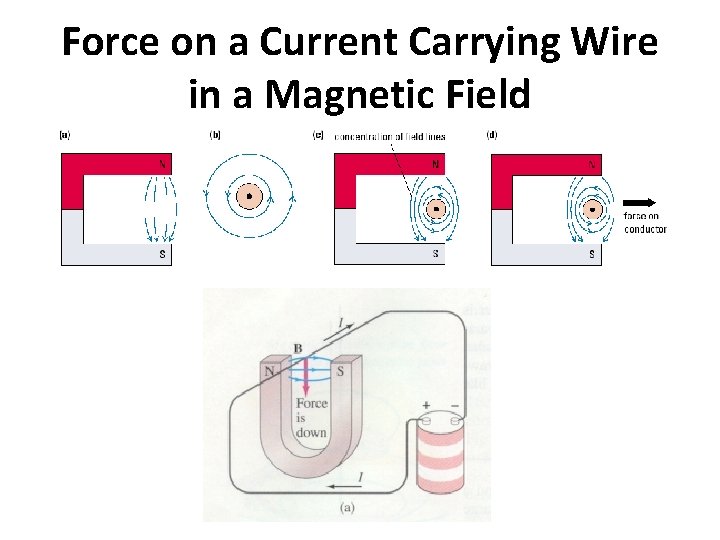
The Motor Principle Consider a conductor that carries a current and cuts through an existing magnetic field • Moving charges in an electric current experience a force due to magnetic field.
Force on a Current Carrying Wire in a Magnetic Field
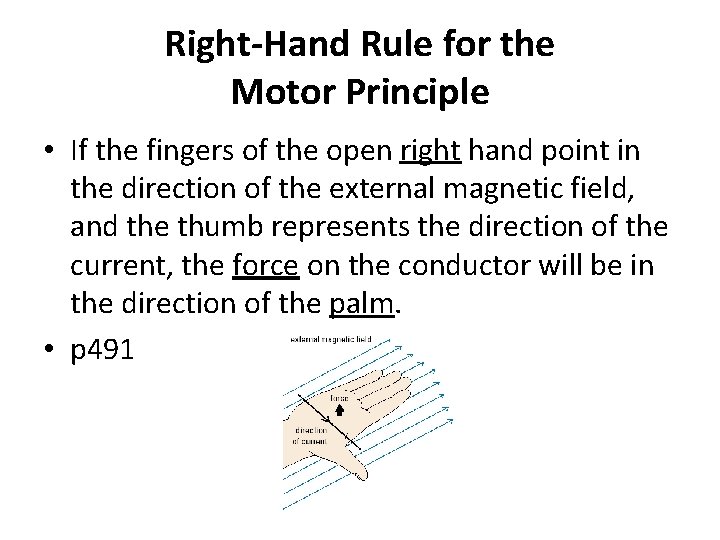
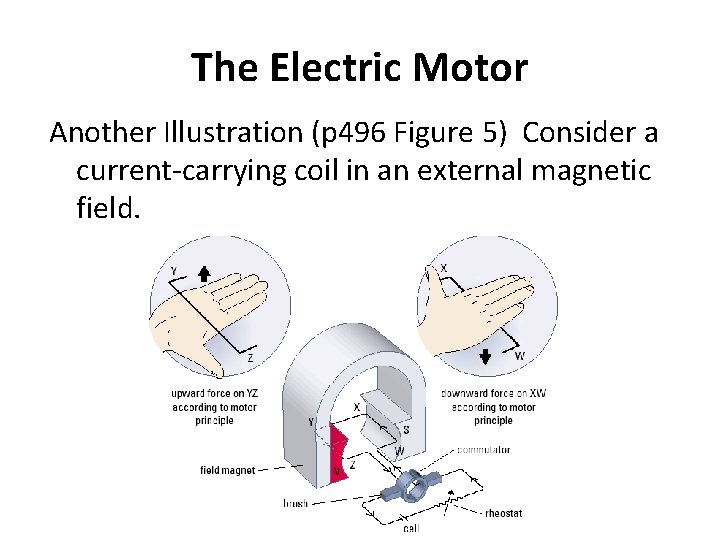
Right-Hand Rule for the Motor Principle • If the fingers of the open right hand point in the direction of the external magnetic field, and the thumb represents the direction of the current, the force on the conductor will be in the direction of the palm. • p 491
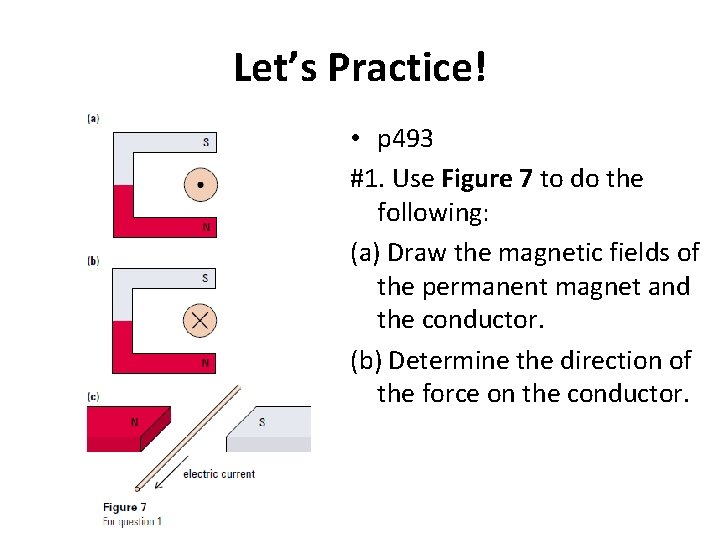
Let’s Practice! • p 493 #1. Use Figure 7 to do the following: (a) Draw the magnetic fields of the permanent magnet and the conductor. (b) Determine the direction of the force on the conductor.
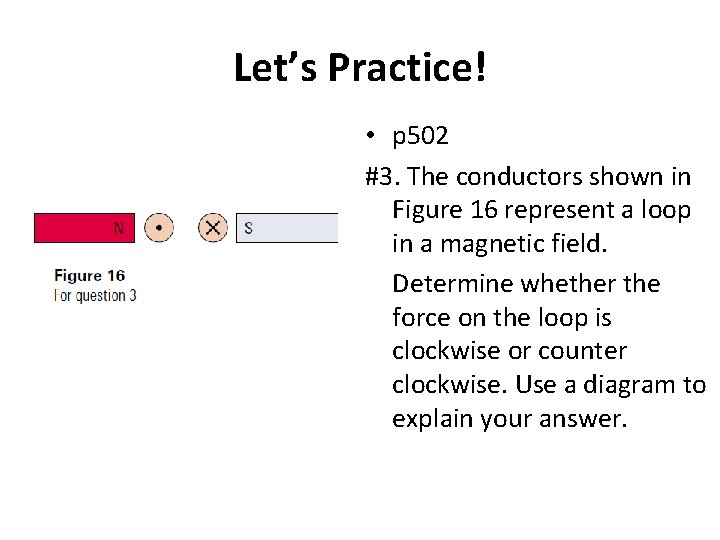
Let’s Practice! • p 502 #3. The conductors shown in Figure 16 represent a loop in a magnetic field. Determine whether the force on the loop is clockwise or counter clockwise. Use a diagram to explain your answer.
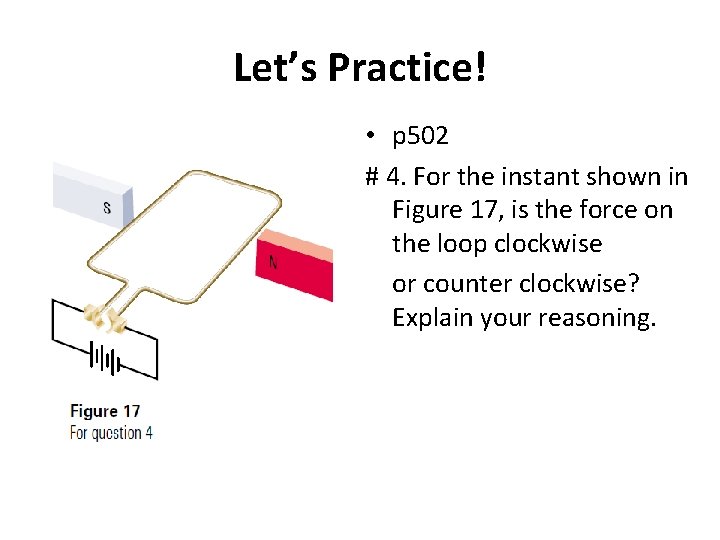
Let’s Practice! • p 502 # 4. For the instant shown in Figure 17, is the force on the loop clockwise or counter clockwise? Explain your reasoning.
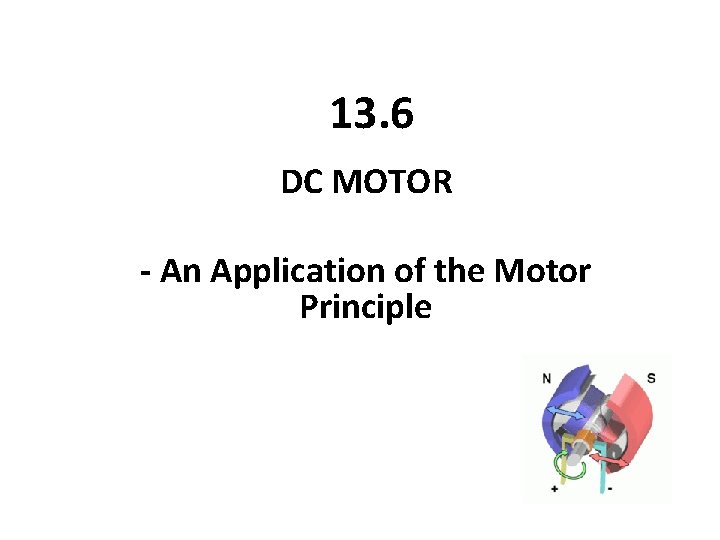
13. 6 DC MOTOR - An Application of the Motor Principle
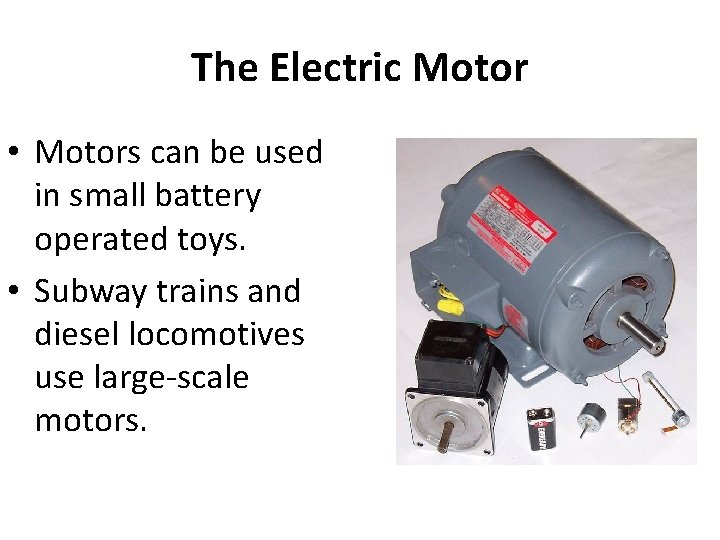
The Electric Motor • Motors can be used in small battery operated toys. • Subway trains and diesel locomotives use large-scale motors.
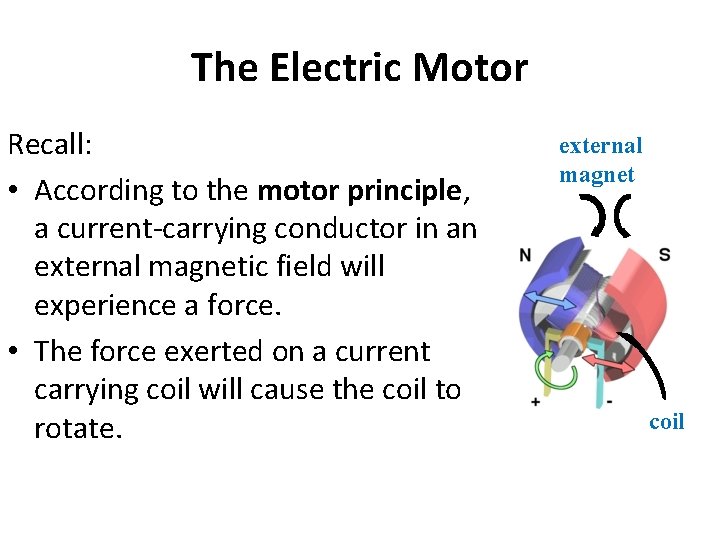
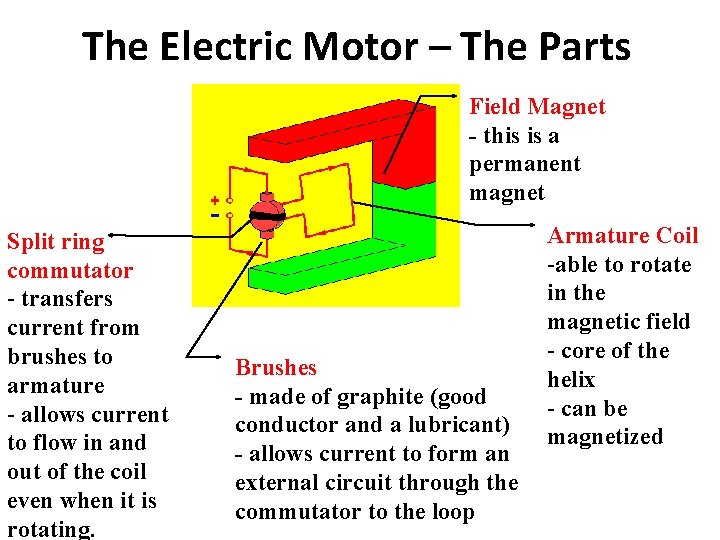
The Electric Motor Recall: • According to the motor principle, a current-carrying conductor in an external magnetic field will experience a force. • The force exerted on a current carrying coil will cause the coil to rotate. external magnet coil
The Electric Motor – The Parts Field Magnet - this is a permanent magnet Split ring commutator - transfers current from brushes to armature - allows current to flow in and out of the coil even when it is rotating. Brushes - made of graphite (good conductor and a lubricant) - allows current to form an external circuit through the commutator to the loop Armature Coil -able to rotate in the magnetic field - core of the helix - can be magnetized
Electric Motor – Let’s See That ! Follow the Link DC Motor Java Applet
The Electric Motor Another Illustration (p 496 Figure 5) Consider a current-carrying coil in an external magnetic field.
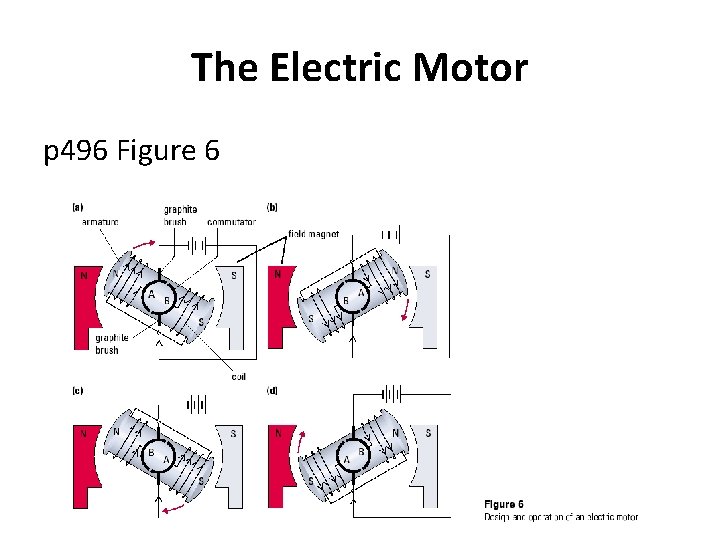
The Electric Motor p 496 Figure 6
The Electric Motor What would make the motor turn more quickly? More Force is produced by ü More current through armature ü More turns in the armature ü Stronger magnetic field
How is it Done? Follow these steps and you can make a DC motor yourself! How To Build a Simple DC Motor
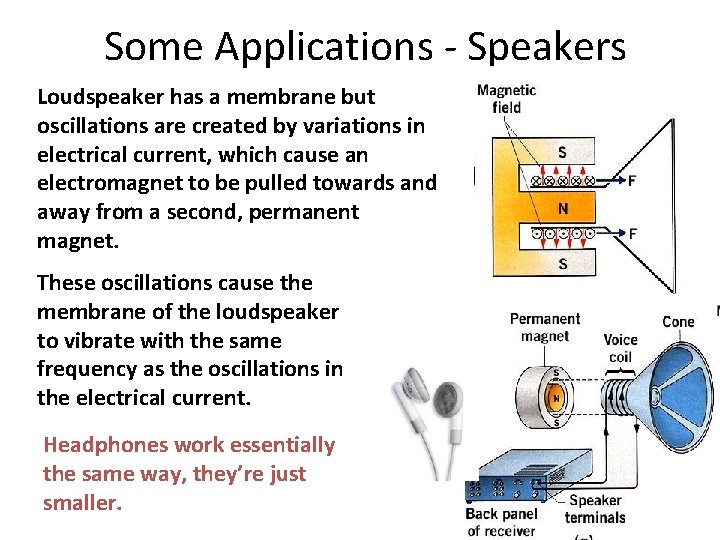
Some Applications - Speakers Loudspeaker has a membrane but oscillations are created by variations in electrical current, which cause an electromagnet to be pulled towards and away from a second, permanent magnet. These oscillations cause the membrane of the loudspeaker to vibrate with the same frequency as the oscillations in the electrical current. Headphones work essentially the same way, they’re just smaller.
Magnets & Computers– Don’t Mix ! Warning: Strong magnets can permanently damage a computer hard drive.