
13 21 Mass Spectrometry Principles of ElectronImpact Mass
- Slides: 28
13. 21 Mass Spectrometry
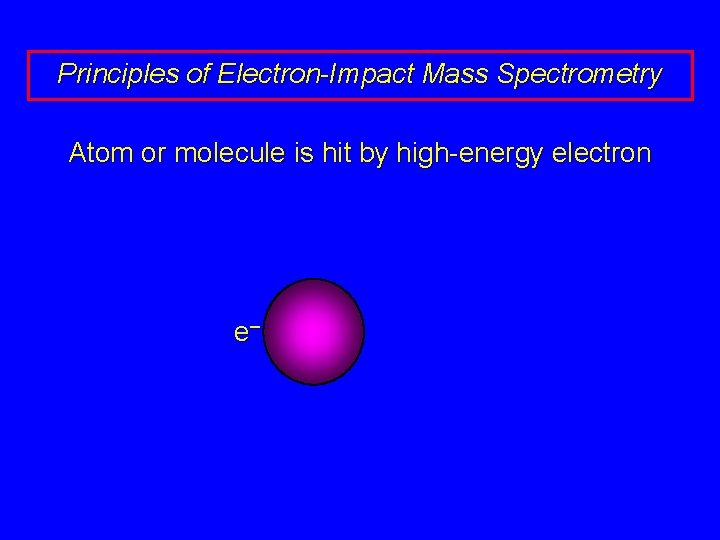
Principles of Electron-Impact Mass Spectrometry Atom or molecule is hit by high-energy electron e–
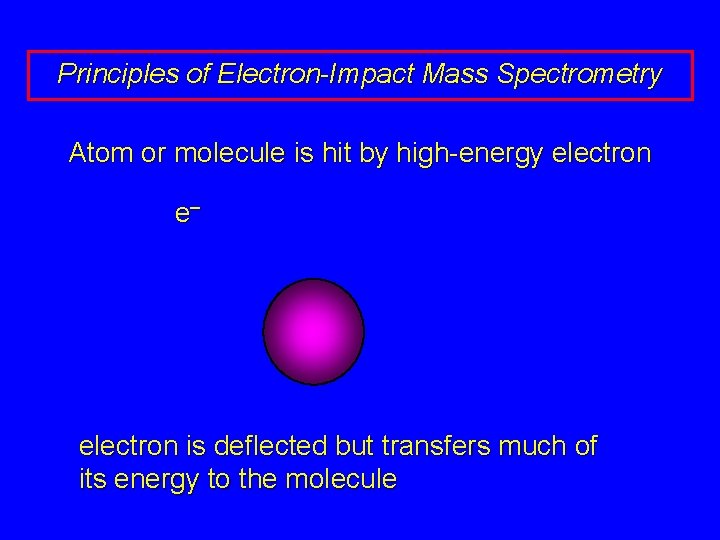
Principles of Electron-Impact Mass Spectrometry Atom or molecule is hit by high-energy electron e– electron is deflected but transfers much of its energy to the molecule
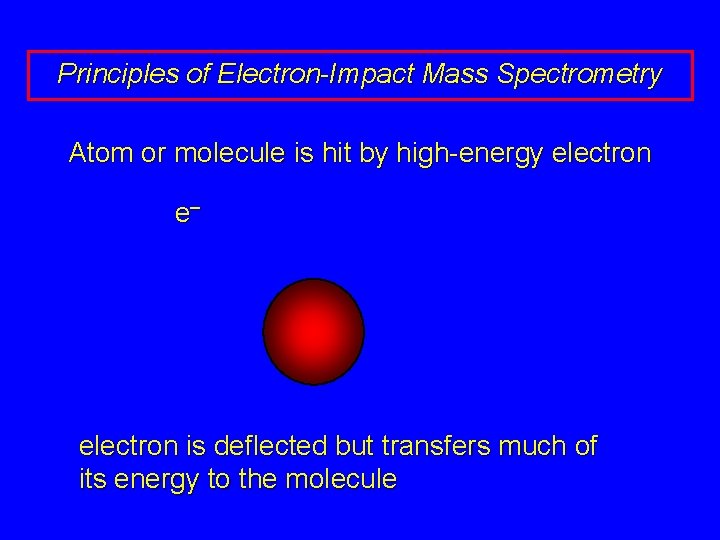
Principles of Electron-Impact Mass Spectrometry Atom or molecule is hit by high-energy electron e– electron is deflected but transfers much of its energy to the molecule
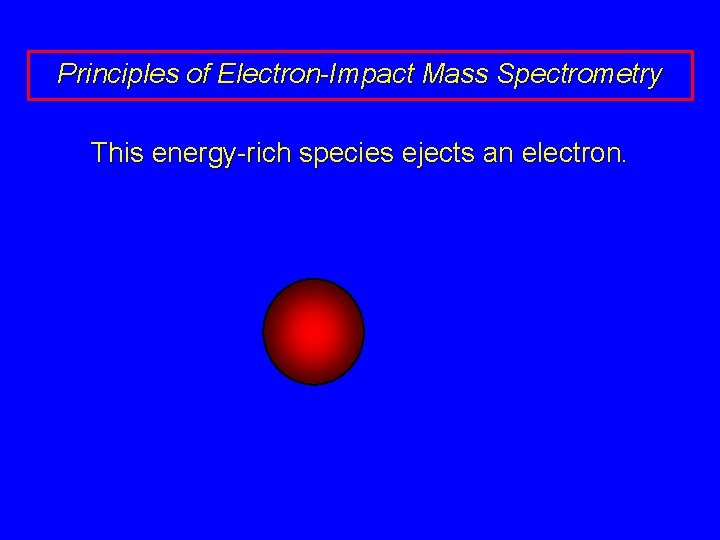
Principles of Electron-Impact Mass Spectrometry This energy-rich species ejects an electron.
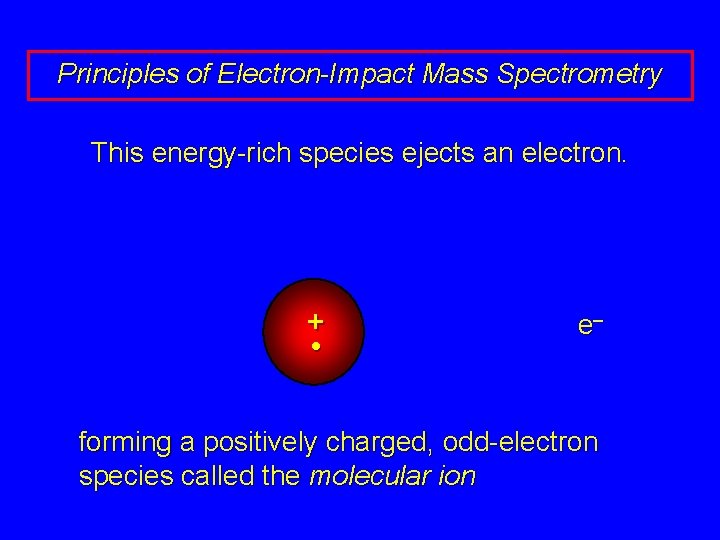
Principles of Electron-Impact Mass Spectrometry This energy-rich species ejects an electron. + • e– forming a positively charged, odd-electron species called the molecular ion
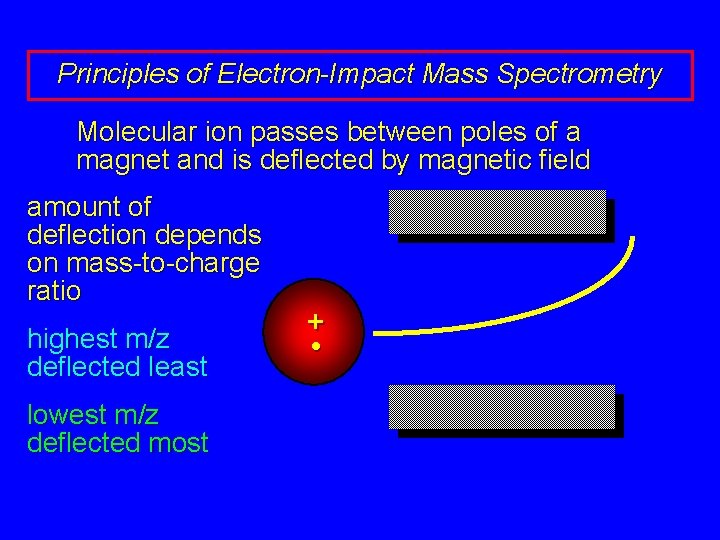
Principles of Electron-Impact Mass Spectrometry Molecular ion passes between poles of a magnet and is deflected by magnetic field amount of deflection depends on mass-to-charge ratio highest m/z deflected least lowest m/z deflected most + •
Principles of Electron-Impact Mass Spectrometry If the only ion that is present is the molecular ion, mass spectrometry provides a way to measure the molecular weight of a compound and is often used for this purpose. However, the molecular ion often fragments to a mixture of species of lower m/z.
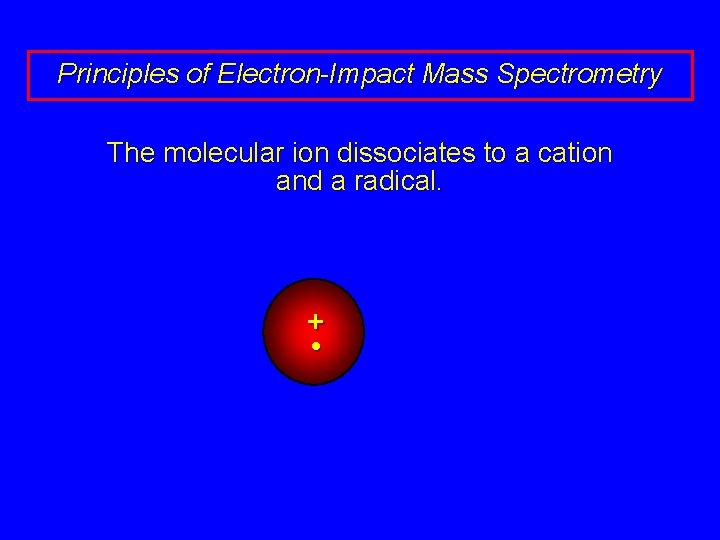
Principles of Electron-Impact Mass Spectrometry The molecular ion dissociates to a cation and a radical. + •
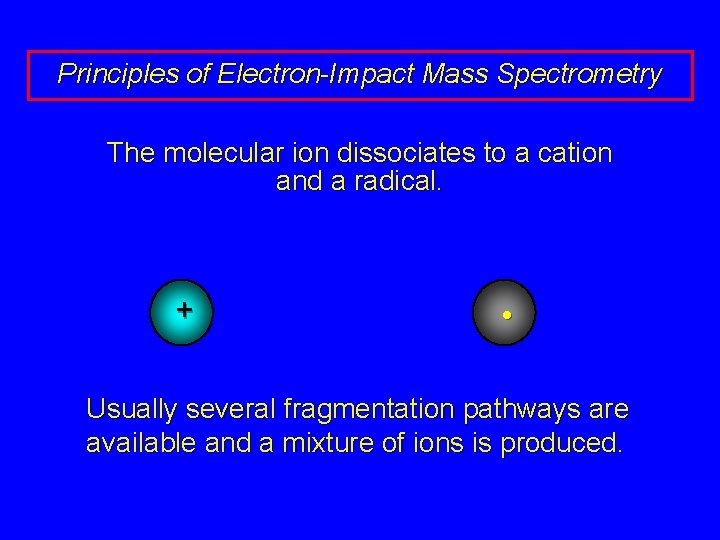
Principles of Electron-Impact Mass Spectrometry The molecular ion dissociates to a cation and a radical. + • Usually several fragmentation pathways are available and a mixture of ions is produced.
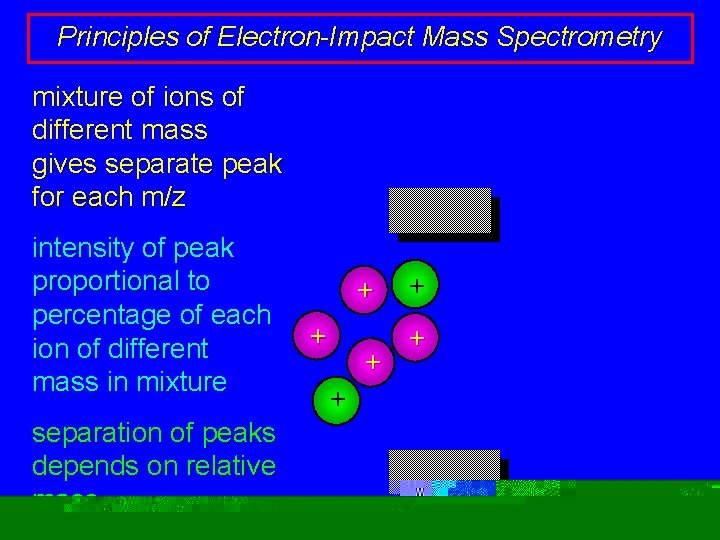
Principles of Electron-Impact Mass Spectrometry mixture of ions of different mass gives separate peak for each m/z intensity of peak proportional to percentage of each ion of different mass in mixture separation of peaks depends on relative mass + + +
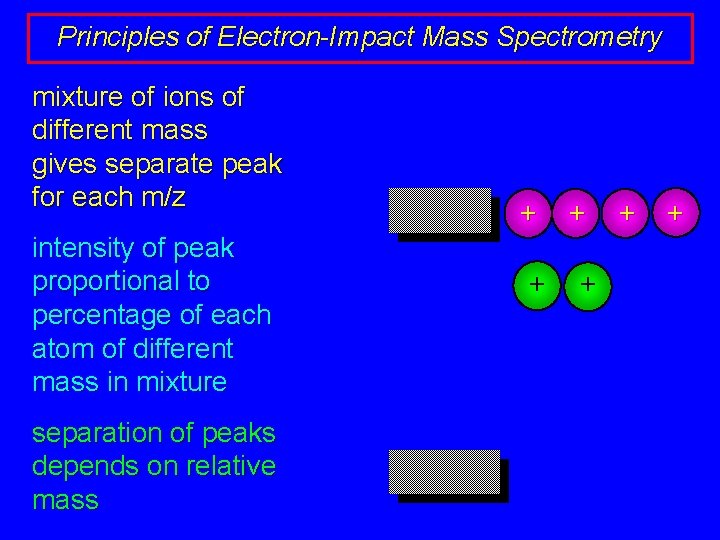
Principles of Electron-Impact Mass Spectrometry mixture of ions of different mass gives separate peak for each m/z intensity of peak proportional to percentage of each atom of different mass in mixture separation of peaks depends on relative mass + + +
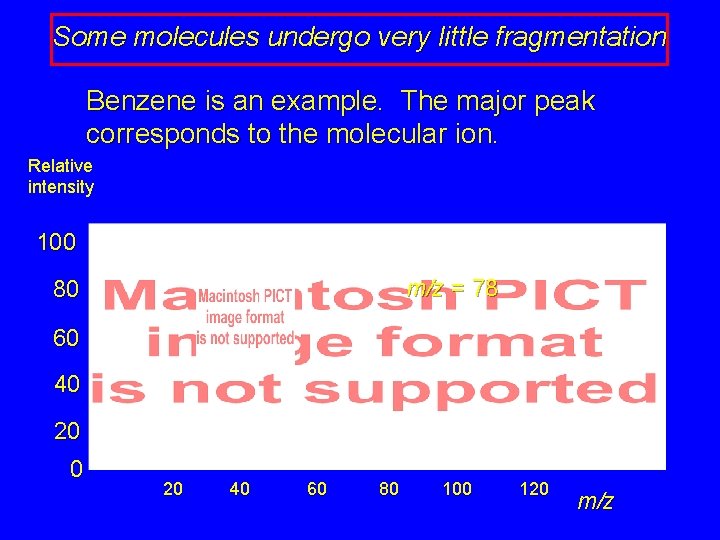
Some molecules undergo very little fragmentation Benzene is an example. The major peak corresponds to the molecular ion. Relative intensity 100 m/z = 78 80 60 40 20 40 60 80 100 120 m/z
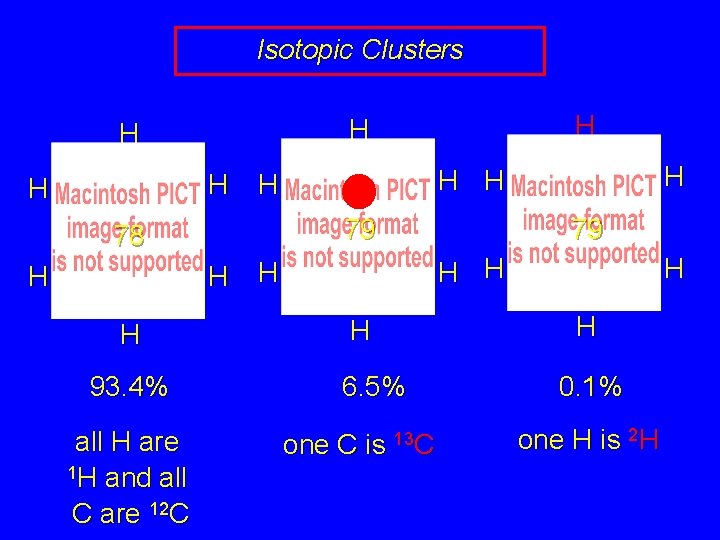
Isotopic Clusters H H 79 H H 93. 4% all H are 1 H and all C are 12 C H H 78 H H 79 H H 6. 5% one C is 13 C H H 0. 1% one H is 2 H
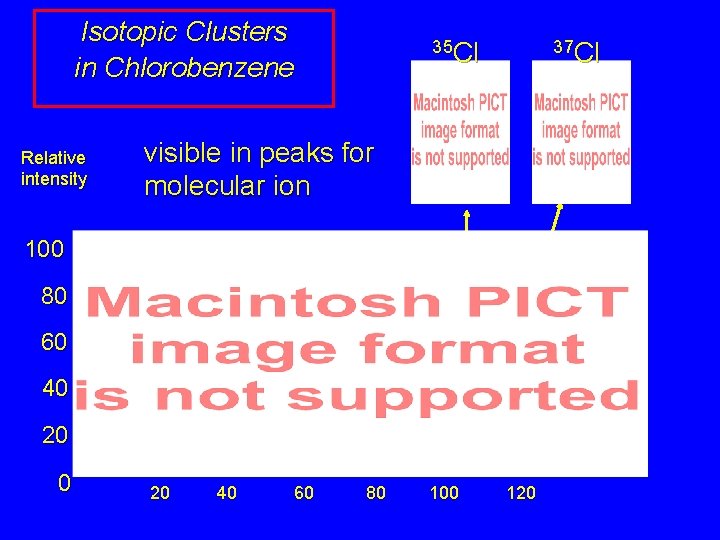
Isotopic Clusters in Chlorobenzene Relative intensity 35 Cl 37 Cl visible in peaks for molecular ion 100 112 80 60 40 114 20 0 20 40 60 80 100 120 m/z
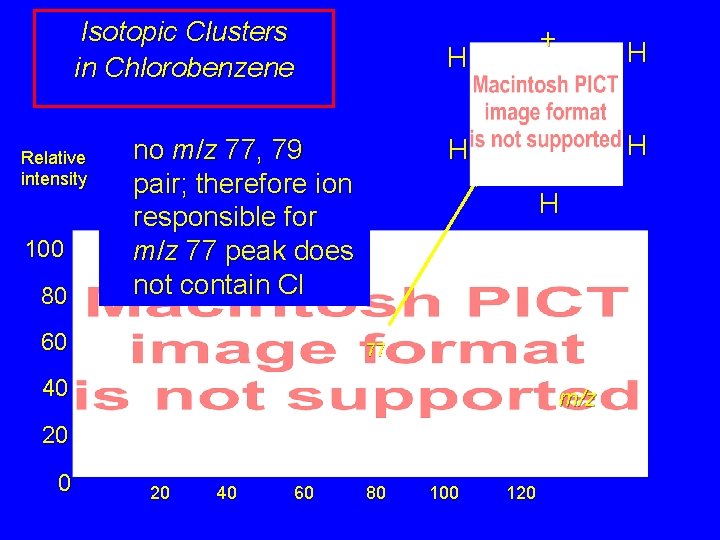
Isotopic Clusters in Chlorobenzene Relative intensity 100 80 H H H 77 40 m/z 20 0 H H no m/z 77, 79 pair; therefore ion responsible for m/z 77 peak does not contain Cl 60 + 20 40 60 80 100 120
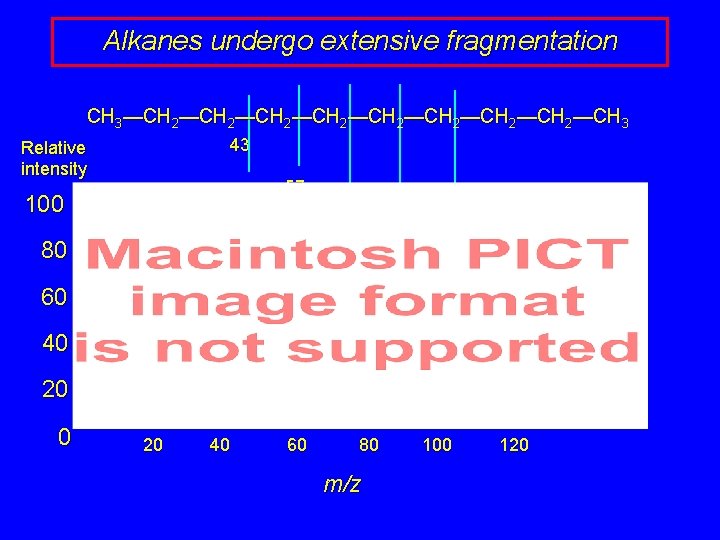
Alkanes undergo extensive fragmentation CH 3—CH 2—CH 2—CH 3 43 Relative intensity 57 100 80 Decane 60 71 40 85 20 0 142 99 20 40 60 80 m/z 100 120
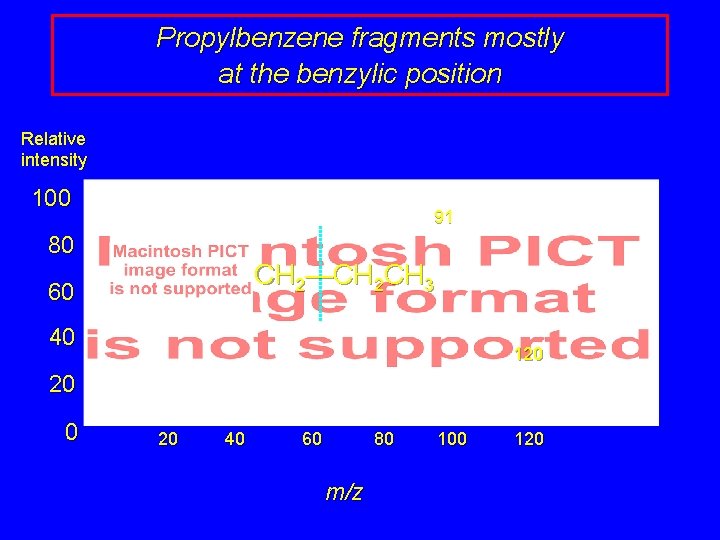
Propylbenzene fragments mostly at the benzylic position Relative intensity 100 91 80 CH 2—CH 2 CH 3 60 40 120 20 40 60 80 m/z 100 120
13. 22 Molecular Formula as a Clue to Structure
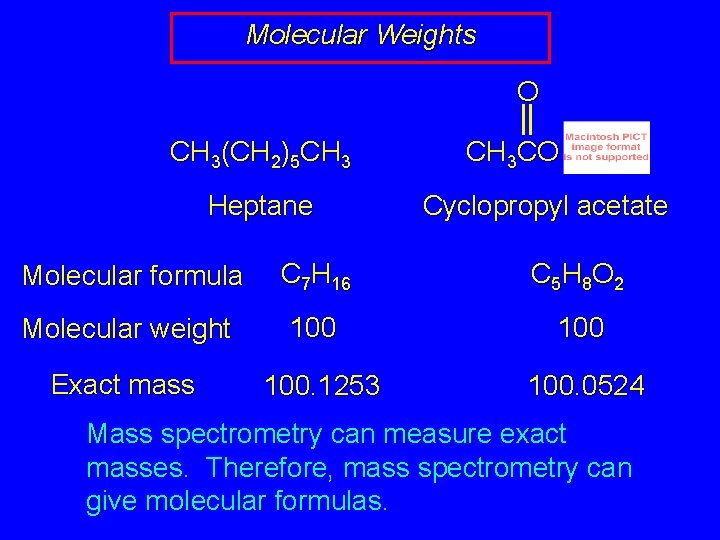
Molecular Weights O CH 3(CH 2)5 CH 3 Heptane CH 3 CO Cyclopropyl acetate Molecular formula C 7 H 16 C 5 H 8 O 2 Molecular weight 100 Exact mass 100. 1253 100. 0524 Mass spectrometry can measure exact masses. Therefore, mass spectrometry can give molecular formulas.
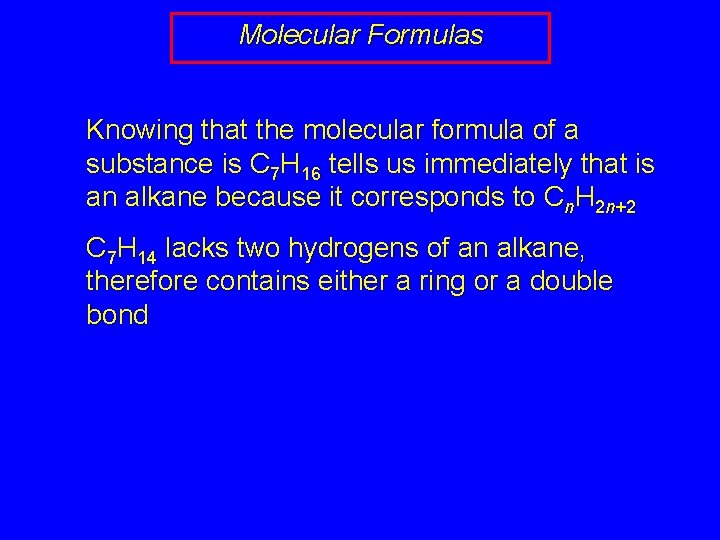
Molecular Formulas Knowing that the molecular formula of a substance is C 7 H 16 tells us immediately that is an alkane because it corresponds to Cn. H 2 n+2 C 7 H 14 lacks two hydrogens of an alkane, therefore contains either a ring or a double bond
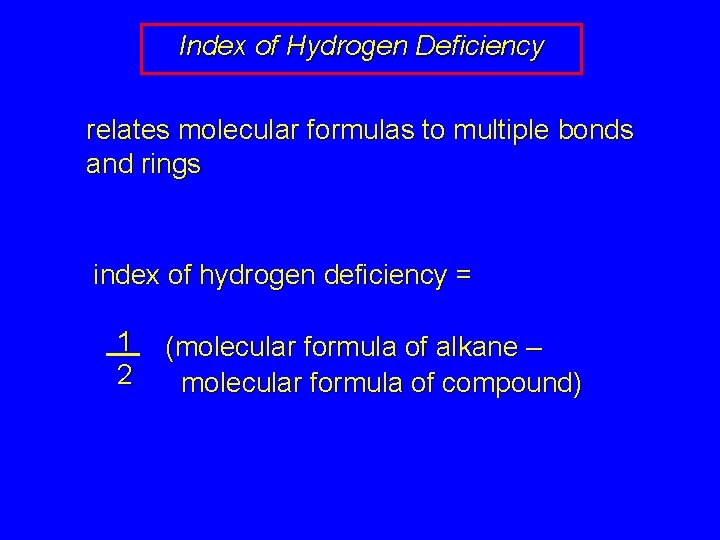
Index of Hydrogen Deficiency relates molecular formulas to multiple bonds and rings index of hydrogen deficiency = 1 2 (molecular formula of alkane – molecular formula of compound)
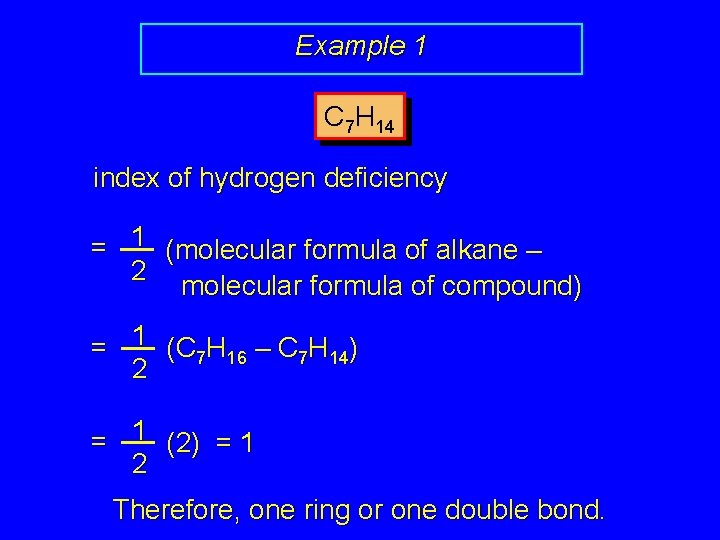
Example 1 C 7 H 14 index of hydrogen deficiency = 1 (molecular formula of alkane – 2 molecular formula of compound) = 1 (C 7 H 16 – C 7 H 14) 2 = 1 (2) = 1 2 Therefore, one ring or one double bond.
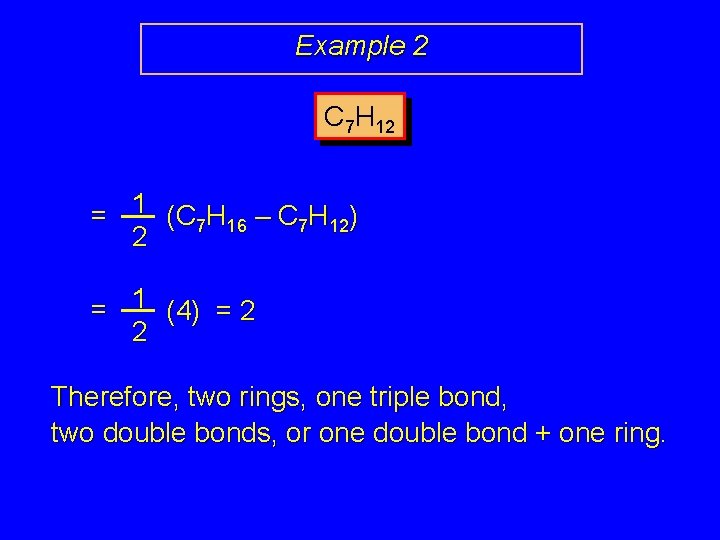
Example 2 C 7 H 12 = 1 (C 7 H 16 – C 7 H 12) 2 = 1 (4) = 2 2 Therefore, two rings, one triple bond, two double bonds, or one double bond + one ring.
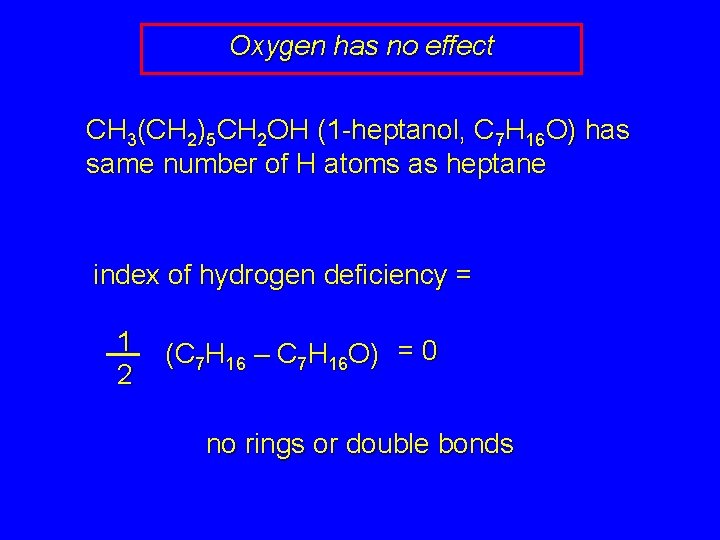
Oxygen has no effect CH 3(CH 2)5 CH 2 OH (1 -heptanol, C 7 H 16 O) has same number of H atoms as heptane index of hydrogen deficiency = 1 2 (C 7 H 16 – C 7 H 16 O) = 0 no rings or double bonds
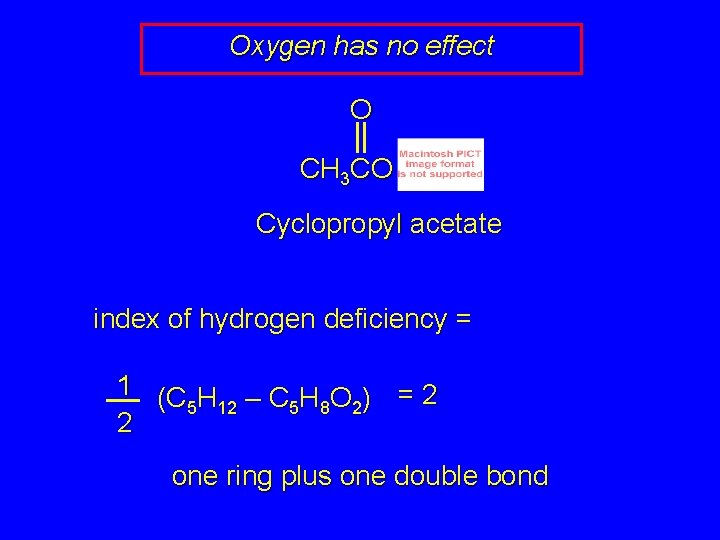
Oxygen has no effect O CH 3 CO Cyclopropyl acetate index of hydrogen deficiency = 1 (C H – C H O ) = 2 5 12 5 8 2 2 one ring plus one double bond
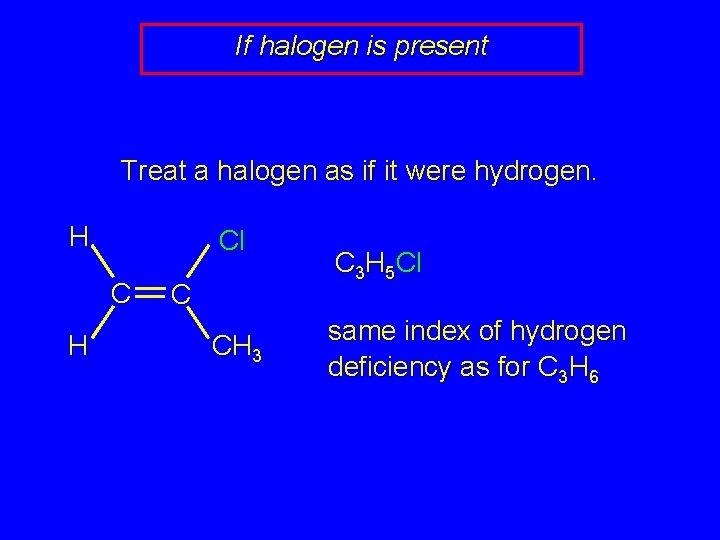
If halogen is present Treat a halogen as if it were hydrogen. H Cl C H C CH 3 C 3 H 5 Cl same index of hydrogen deficiency as for C 3 H 6
Rings versus Multiple Bonds Index of hydrogen deficiency tells us the sum of rings plus multiple bonds. Catalytic hydrogenation tells us how many multiple bonds there are.