
13 1 Rule of Charlemagne Setting the Stage
- Slides: 17
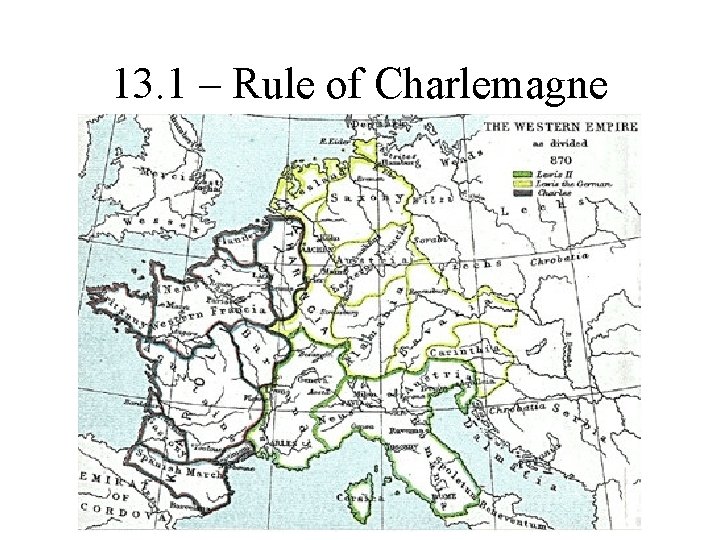
13. 1 – Rule of Charlemagne
Setting the Stage • The Middle Ages in Europe after the fall of the Roman Empire • Spans from 500 – 1500 • New Society Emerges: – 1) The classical heritage of Rome – 2) The beliefs of the Roman Catholic Church – 3) Customs of German Tribes
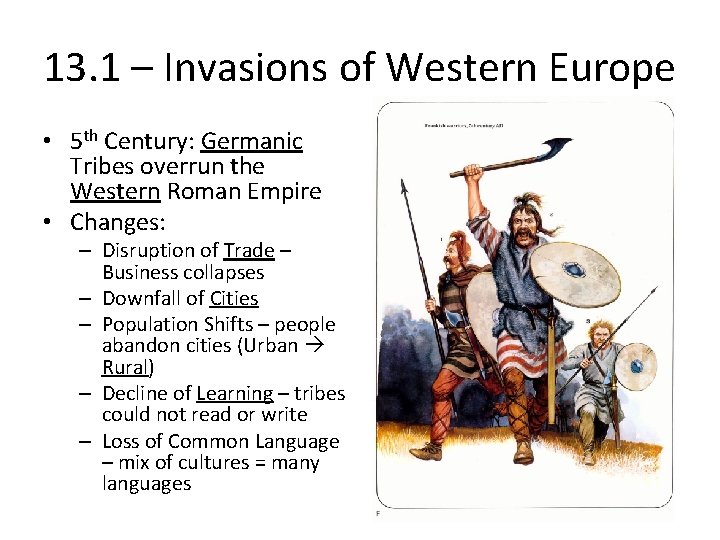
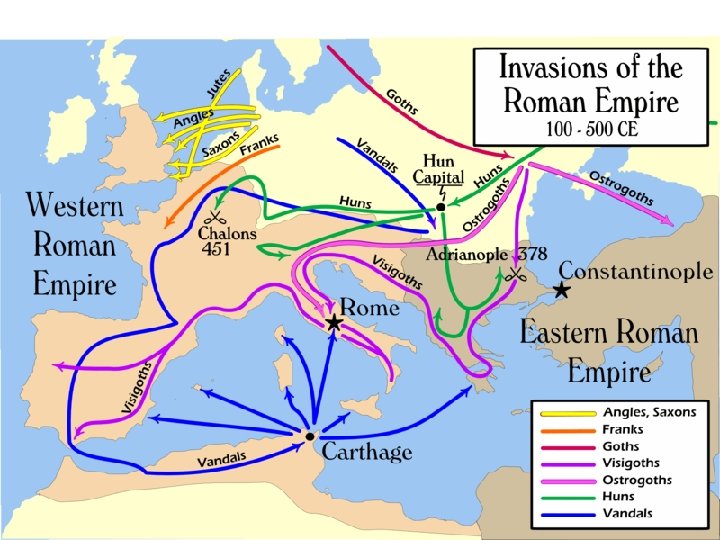
13. 1 – Invasions of Western Europe • 5 th Century: Germanic Tribes overrun the Western Roman Empire • Changes: – Disruption of Trade – Business collapses – Downfall of Cities – Population Shifts – people abandon cities (Urban Rural) – Decline of Learning – tribes could not read or write – Loss of Common Language – mix of cultures = many languages
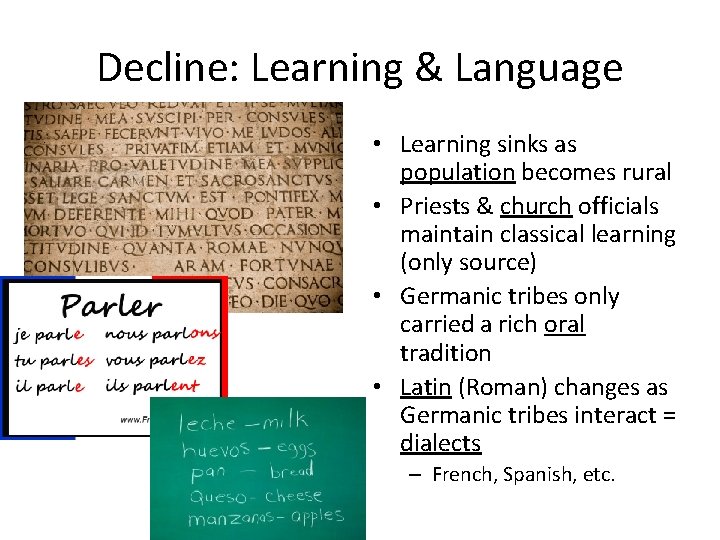
Decline: Learning & Language • Learning sinks as population becomes rural • Priests & church officials maintain classical learning (only source) • Germanic tribes only carried a rich oral tradition • Latin (Roman) changes as Germanic tribes interact = dialects – French, Spanish, etc.
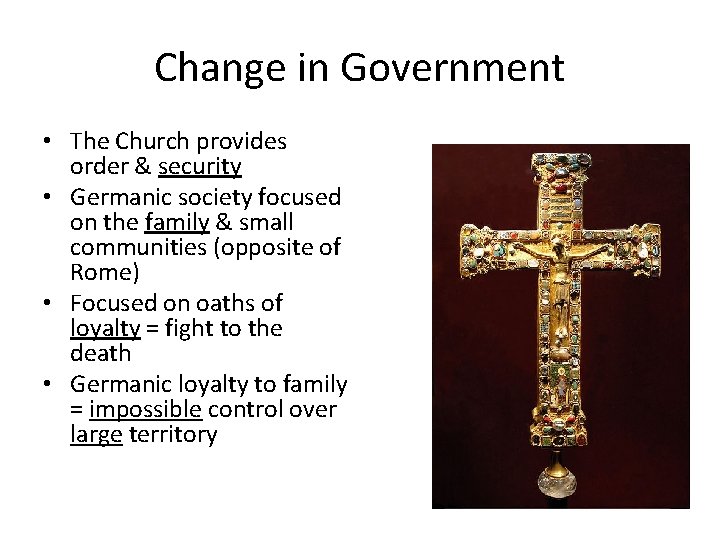
Change in Government • The Church provides order & security • Germanic society focused on the family & small communities (opposite of Rome) • Focused on oaths of loyalty = fight to the death • Germanic loyalty to family = impossible control over large territory
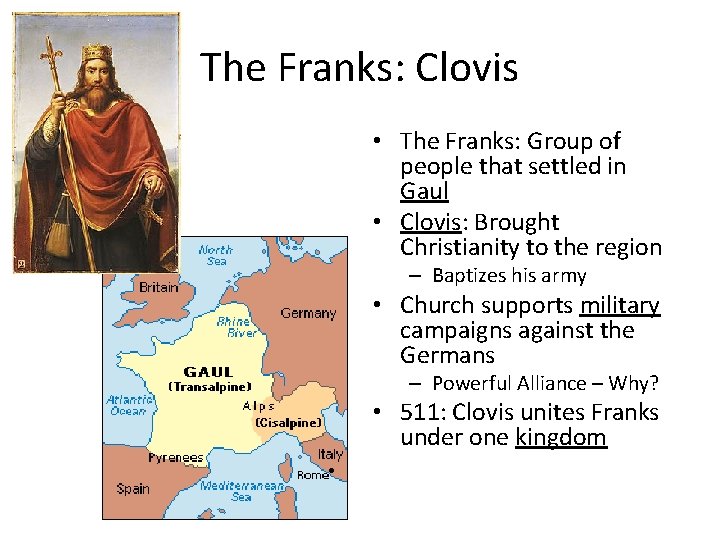
The Franks: Clovis • The Franks: Group of people that settled in Gaul • Clovis: Brought Christianity to the region – Baptizes his army • Church supports military campaigns against the Germans – Powerful Alliance – Why? • 511: Clovis unites Franks under one kingdom
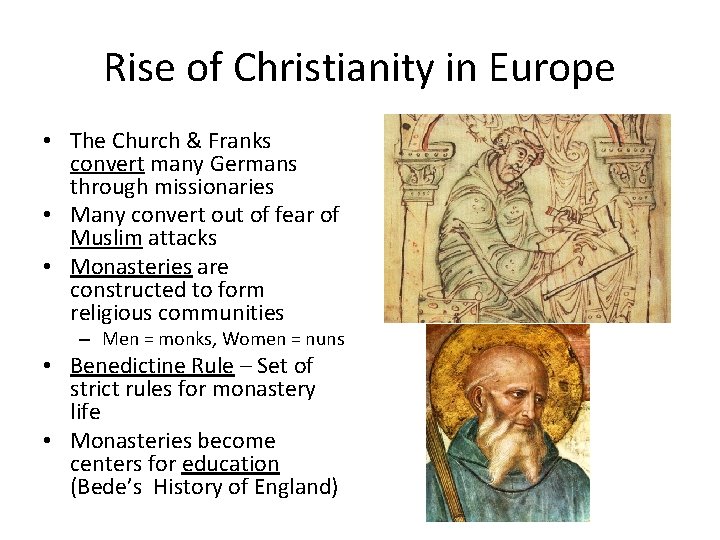
Rise of Christianity in Europe • The Church & Franks convert many Germans through missionaries • Many convert out of fear of Muslim attacks • Monasteries are constructed to form religious communities – Men = monks, Women = nuns • Benedictine Rule – Set of strict rules for monastery life • Monasteries become centers for education (Bede’s History of England)
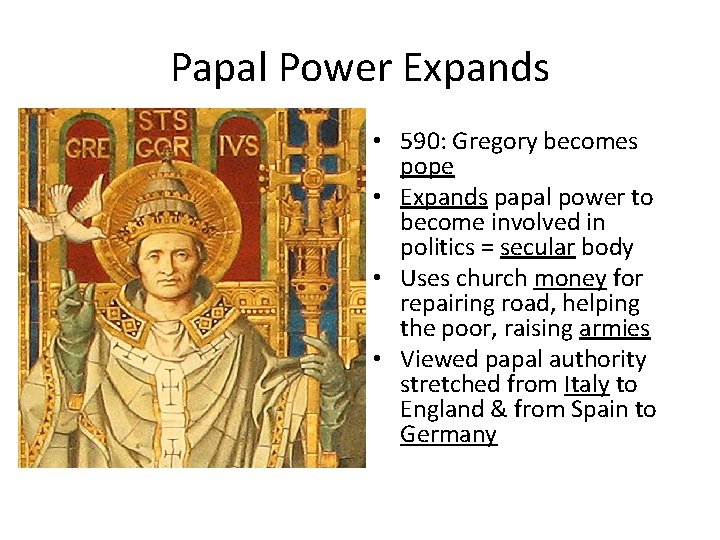
Papal Power Expands • 590: Gregory becomes pope • Expands papal power to become involved in politics = secular body • Uses church money for repairing road, helping the poor, raising armies • Viewed papal authority stretched from Italy to England & from Spain to Germany
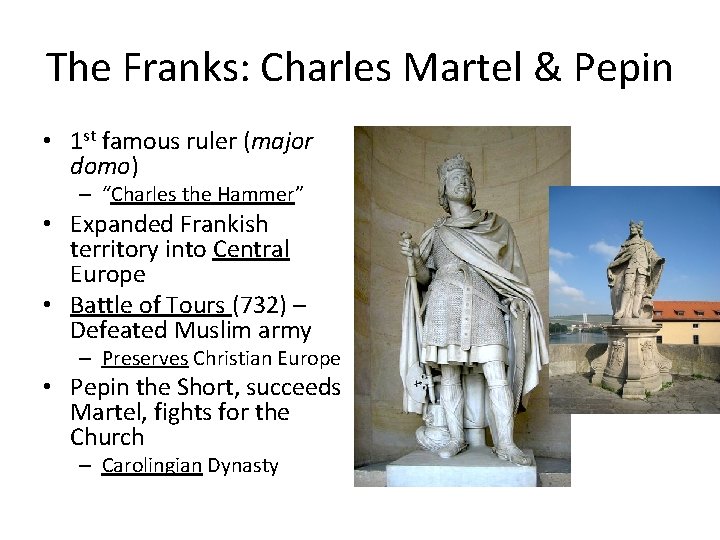
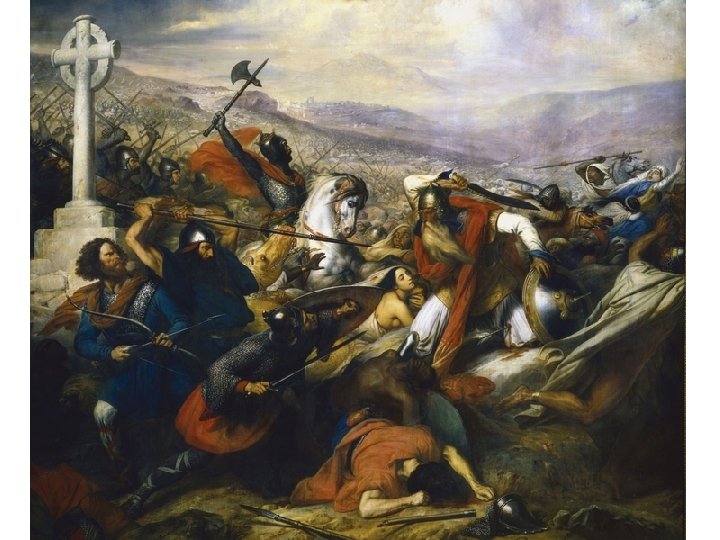
The Franks: Charles Martel & Pepin • 1 st famous ruler (major domo) – “Charles the Hammer” • Expanded Frankish territory into Central Europe • Battle of Tours (732) – Defeated Muslim army – Preserves Christian Europe • Pepin the Short, succeeds Martel, fights for the Church – Carolingian Dynasty
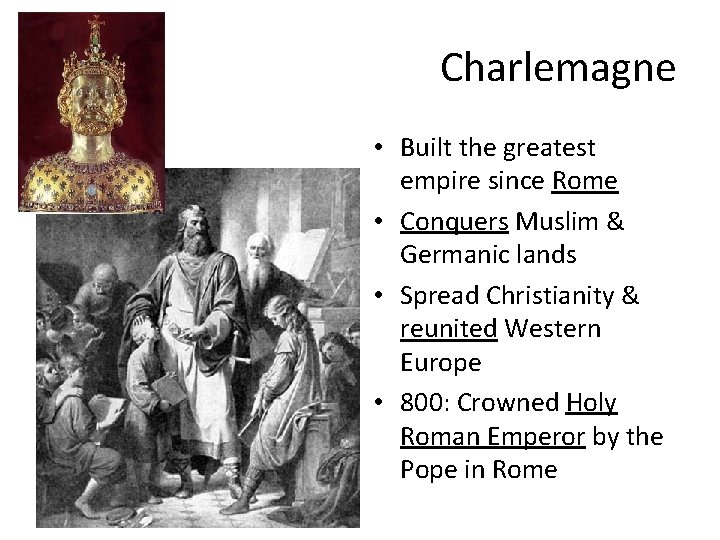
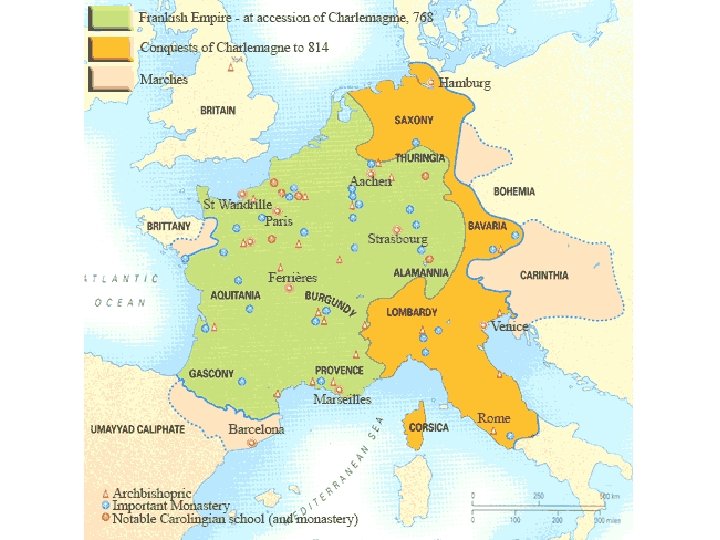
Charlemagne • Built the greatest empire since Rome • Conquers Muslim & Germanic lands • Spread Christianity & reunited Western Europe • 800: Crowned Holy Roman Emperor by the Pope in Rome
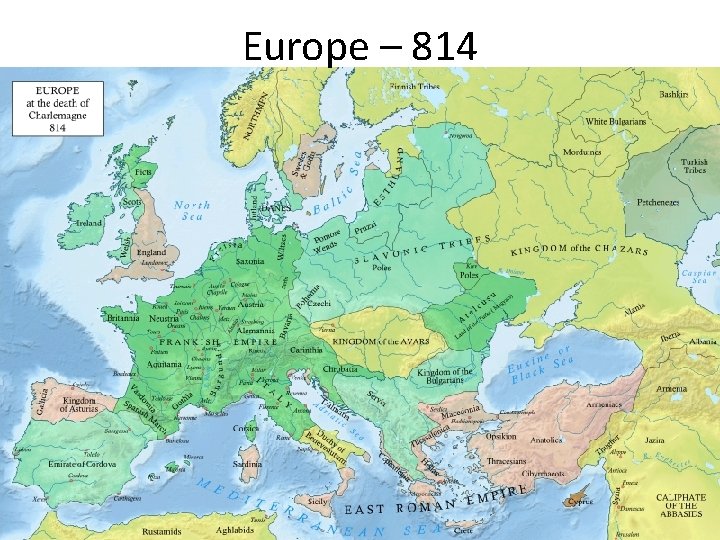
Europe – 814
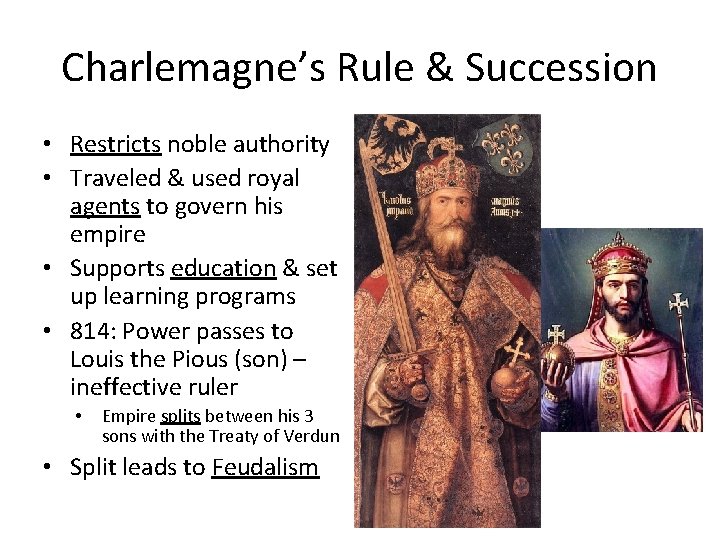
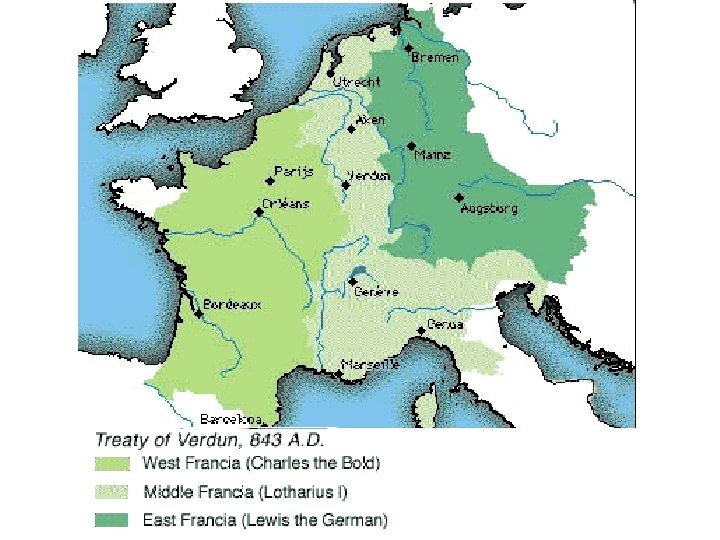
Charlemagne’s Rule & Succession • Restricts noble authority • Traveled & used royal agents to govern his empire • Supports education & set up learning programs • 814: Power passes to Louis the Pious (son) – ineffective ruler • Empire splits between his 3 sons with the Treaty of Verdun • Split leads to Feudalism