
13 1 Identifying the Substance of the Gene

13. 1 Identifying the Substance of the Gene Experiments to determine the chemical composition of genes 1928 -1952.
Learning Objectives § Identify the clues that bacterial transformation yielded about the gene. § Explain the role bacterial viruses played in identifying genetic material. § Describe the role of DNA in heredity. Vocabulary § Transformation-bacteria can incorporate genes from it’s environment and change its traits. § Bacteriophage-a type of virus that attacks bacteria.
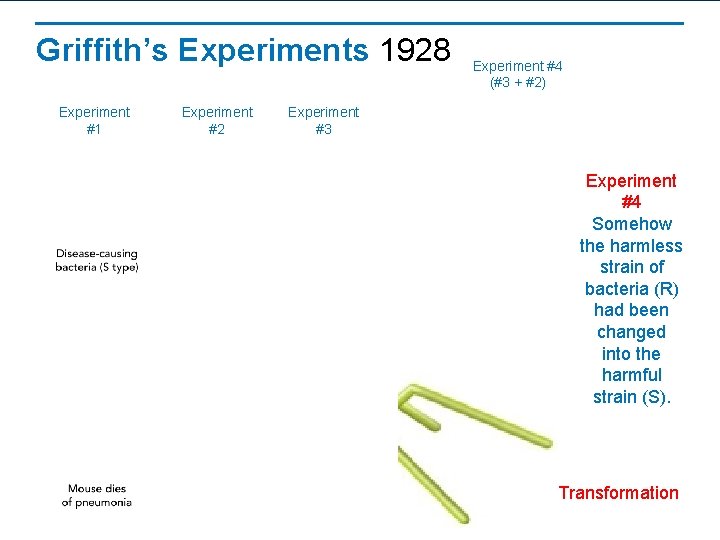
Griffith’s Experiments 1928 Experiment #1 Experiment #2 Experiment #4 (#3 + #2) Experiment #3 Experiment #4 Somehow the harmless strain of bacteria (R) had been changed into the harmful strain (S). Transformation
Avery’s Experiments 1944 Avery’s team used enzymes that destroyed proteins, lipids, carbohydrates or nucleic acids and injected them into the heatkilled (S) + harmless (R) bacteria from Griffith’s experiment (#4). The only enzyme that stopped transformation was the enzyme which destroyed nucleic acid. Therefore they determined that the nucleic acid must carry the genetic information. Scientists discovered that the nucleic acid DNA stores and transmits genetic information from one generation of bacteria to the next. What was the independent variable? What was the dependent variable?
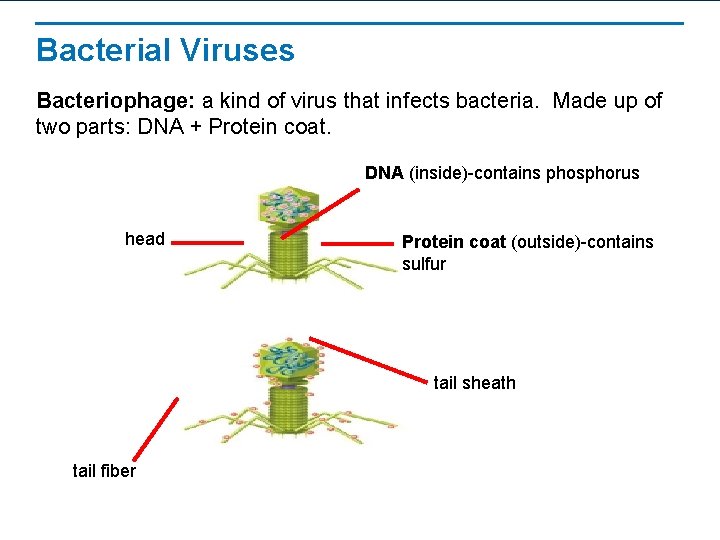
Bacterial Viruses Bacteriophage: a kind of virus that infects bacteria. Made up of two parts: DNA + Protein coat. DNA (inside)-contains phosphorus head Protein coat (outside)-contains sulfur tail sheath tail fiber
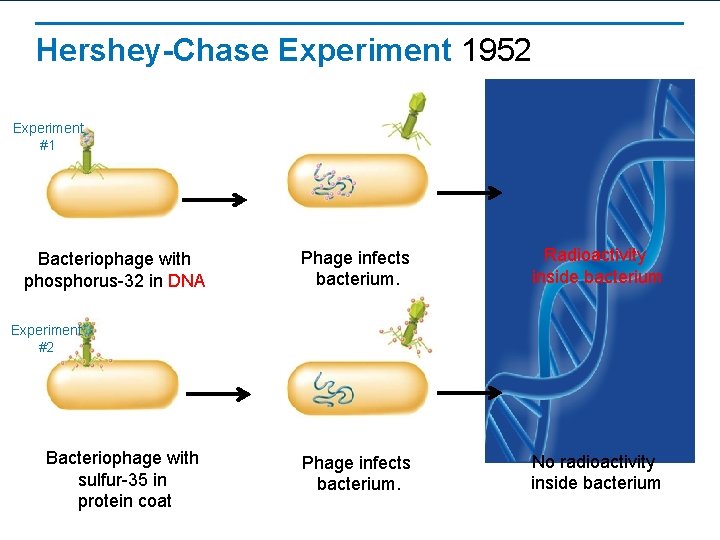
Hershey-Chase Experiment 1952 Experiment #1 Bacteriophage with phosphorus-32 in DNA Phage infects bacterium. Radioactivity inside bacterium Phage infects bacterium. No radioactivity inside bacterium Experiment #2 Bacteriophage with sulfur-35 in protein coat
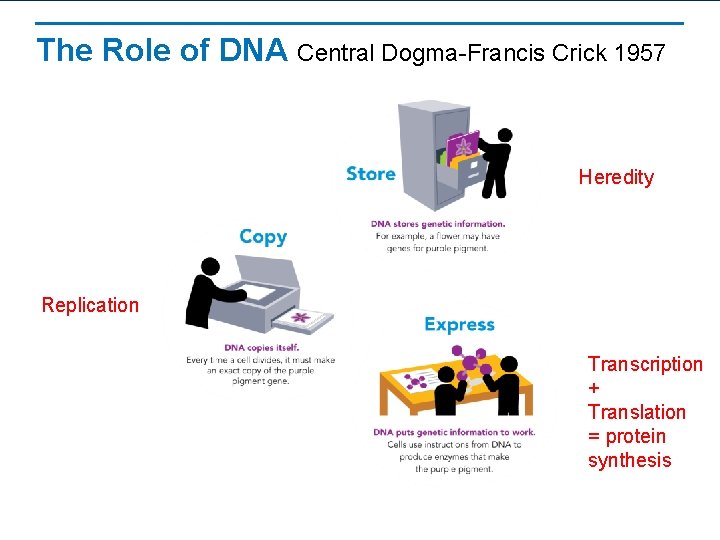
The Role of DNA Central Dogma-Francis Crick 1957 Heredity Replication Transcription + Translation = protein synthesis
- Slides: 7