
13 1 Chapter 13 Income and Social Class
- Slides: 18
13 -1 Chapter 13 Income and Social Class
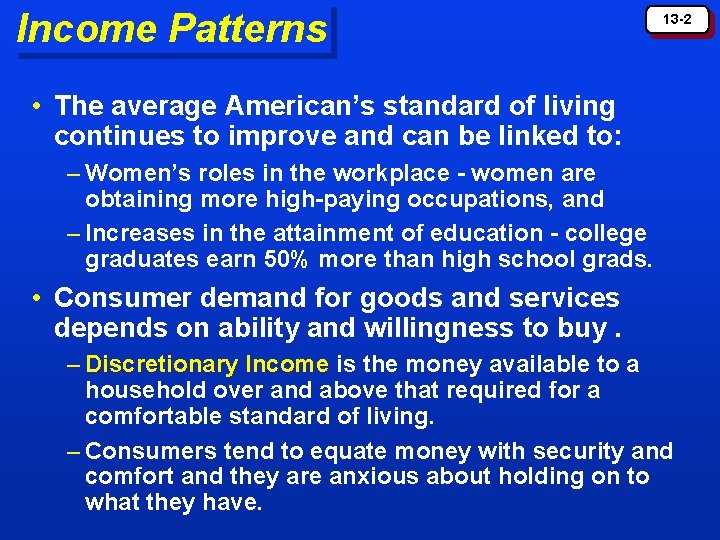
Income Patterns 13 -2 • The average American’s standard of living continues to improve and can be linked to: – Women’s roles in the workplace - women are obtaining more high-paying occupations, and – Increases in the attainment of education - college graduates earn 50% more than high school grads. • Consumer demand for goods and services depends on ability and willingness to buy. – Discretionary Income is the money available to a household over and above that required for a comfortable standard of living. – Consumers tend to equate money with security and comfort and they are anxious about holding on to what they have.
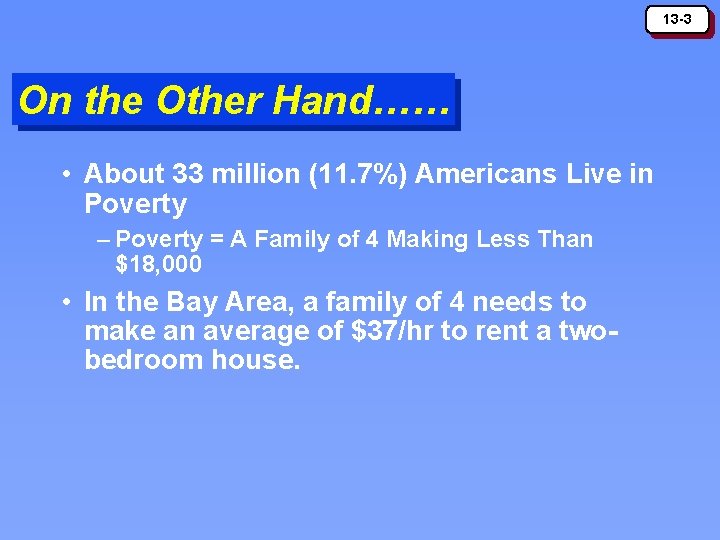
13 -3 On the Other Hand…… • About 33 million (11. 7%) Americans Live in Poverty – Poverty = A Family of 4 Making Less Than $18, 000 • In the Bay Area, a family of 4 needs to make an average of $37/hr to rent a twobedroom house.
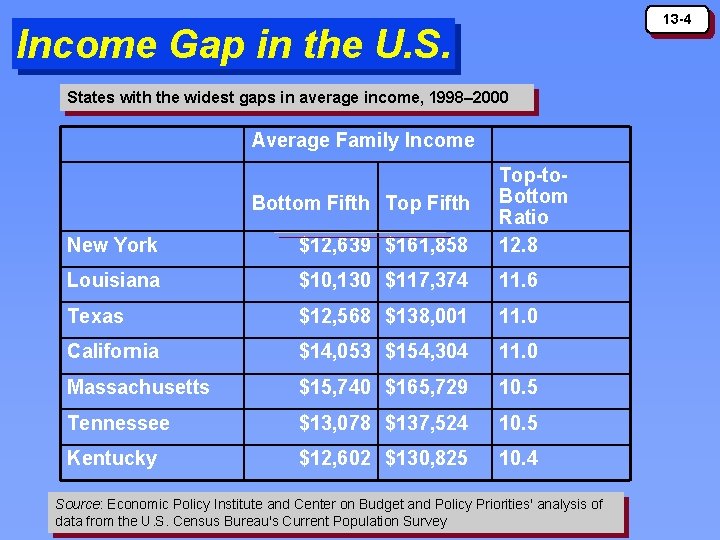
13 -4 Income Gap in the U. S. States with the widest gaps in average income, 1998– 2000 Average Family Income New York $12, 639 $161, 858 Top-to. Bottom Ratio 12. 8 Louisiana $10, 130 $117, 374 11. 6 Texas $12, 568 $138, 001 11. 0 California $14, 053 $154, 304 11. 0 Massachusetts $15, 740 $165, 729 10. 5 Tennessee $13, 078 $137, 524 10. 5 Kentucky $12, 602 $130, 825 10. 4 Bottom Fifth Top Fifth Source: Economic Policy Institute and Center on Budget and Policy Priorities' analysis of data from the U. S. Census Bureau's Current Population Survey
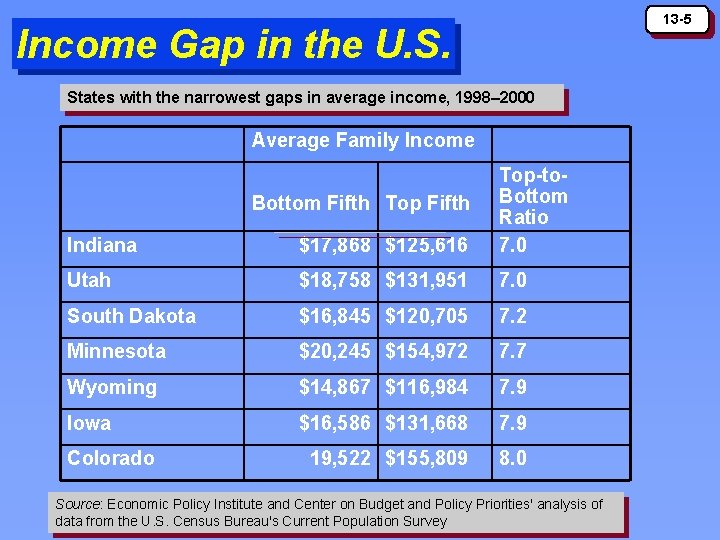
13 -5 Income Gap in the U. S. States with the narrowest gaps in average income, 1998– 2000 Average Family Income Indiana $17, 868 $125, 616 Top-to. Bottom Ratio 7. 0 Utah $18, 758 $131, 951 7. 0 South Dakota $16, 845 $120, 705 7. 2 Minnesota $20, 245 $154, 972 7. 7 Wyoming $14, 867 $116, 984 7. 9 Iowa $16, 586 $131, 668 7. 9 19, 522 $155, 809 8. 0 Bottom Fifth Top Fifth Colorado Source: Economic Policy Institute and Center on Budget and Policy Priorities' analysis of data from the U. S. Census Bureau's Current Population Survey
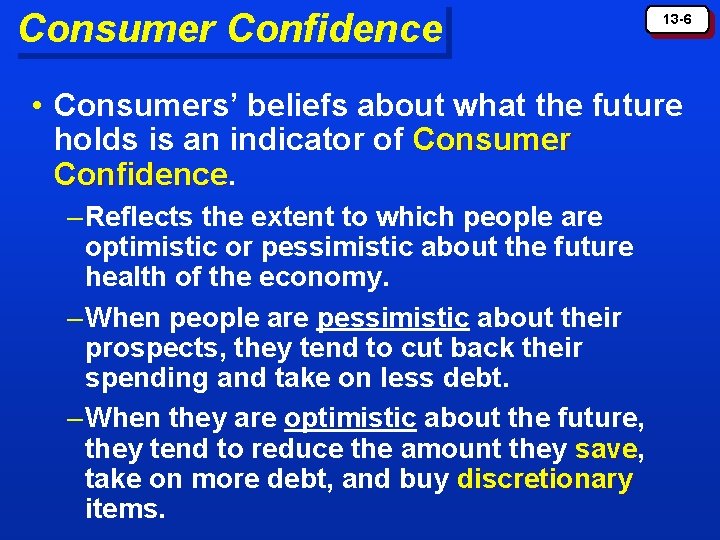
Consumer Confidence 13 -6 • Consumers’ beliefs about what the future holds is an indicator of Consumer Confidence – Reflects the extent to which people are optimistic or pessimistic about the future health of the economy. – When people are pessimistic about their prospects, they tend to cut back their spending and take on less debt. – When they are optimistic about the future, they tend to reduce the amount they save, save take on more debt, and buy discretionary items.
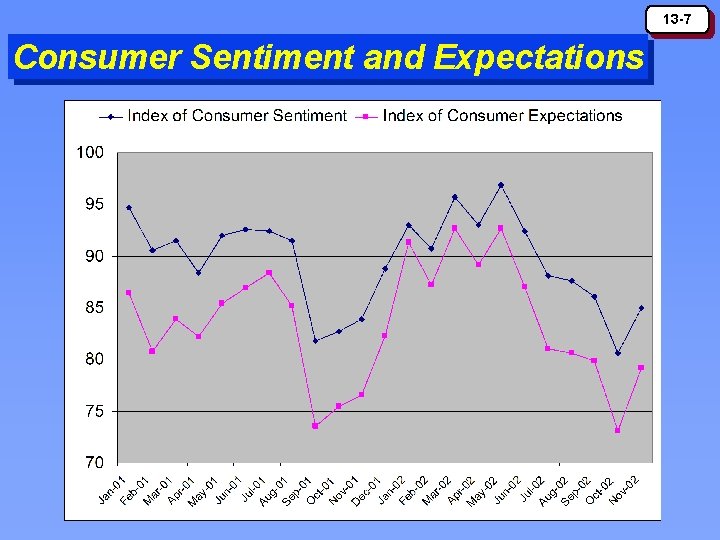
13 -7 Consumer Sentiment and Expectations
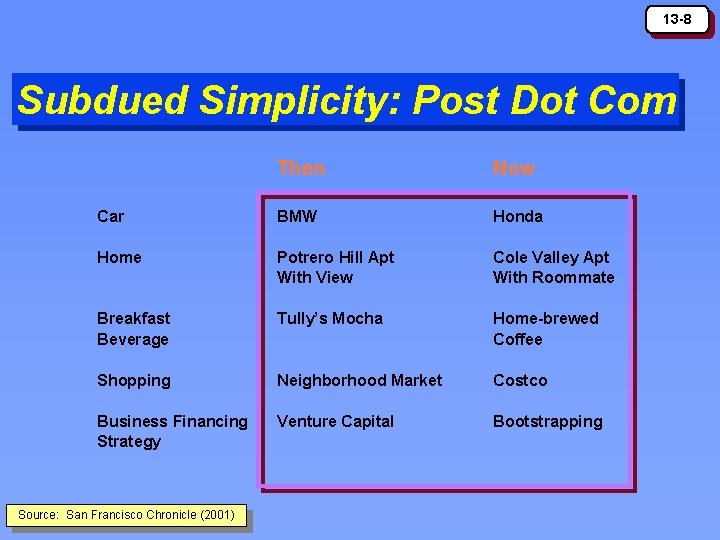
13 -8 Subdued Simplicity: Post Dot Com Then Now Car BMW Honda Home Potrero Hill Apt With View Cole Valley Apt With Roommate Breakfast Beverage Tully’s Mocha Home-brewed Coffee Shopping Neighborhood Market Costco Business Financing Strategy Venture Capital Bootstrapping Source: San Francisco Chronicle (2001)
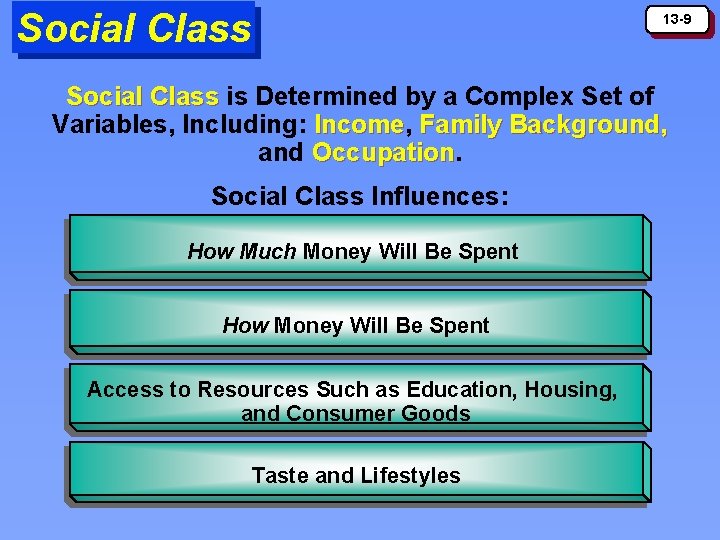
Social Class 13 -9 Social Class is Determined by a Complex Set of Variables, Including: Income, Income Family Background, and Occupation Social Class Influences: How Much Money Will Be Spent How Money Will Be Spent Access to Resources Such as Education, Housing, and Consumer Goods Taste and Lifestyles
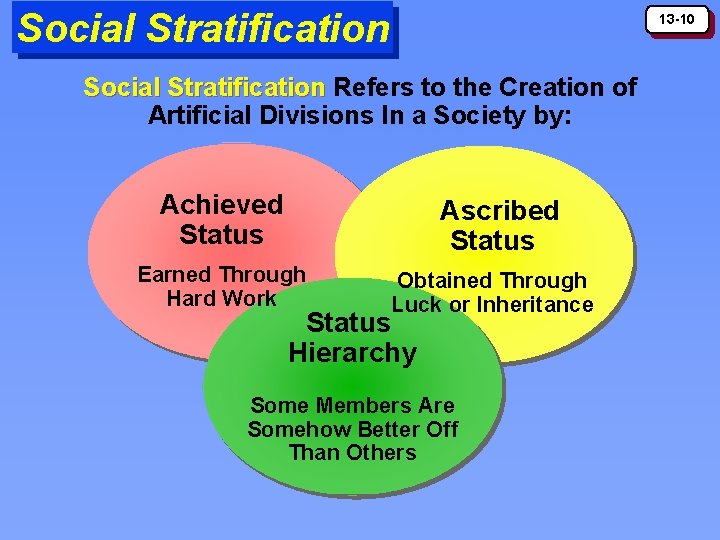
Social Stratification 13 -10 Social Stratification Refers to the Creation of Artificial Divisions In a Society by: Achieved Status Ascribed Status Earned Through Hard Work Obtained Through Luck or Inheritance Status Hierarchy Some Members Are Somehow Better Off Than Others
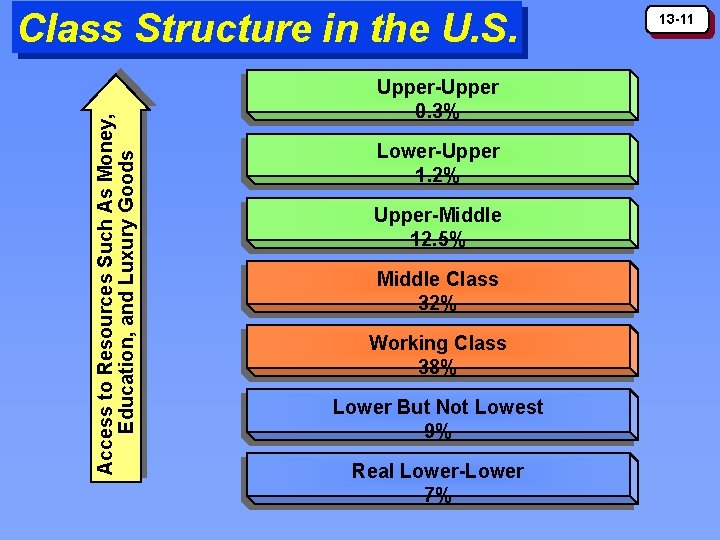
Access to Resources Such As Money, Education, and Luxury Goods Class Structure in the U. S. Upper-Upper 0. 3% Lower-Upper 1. 2% Upper-Middle 12. 5% Middle Class 32% Working Class 38% Lower But Not Lowest 9% Real Lower-Lower 7% 13 -11
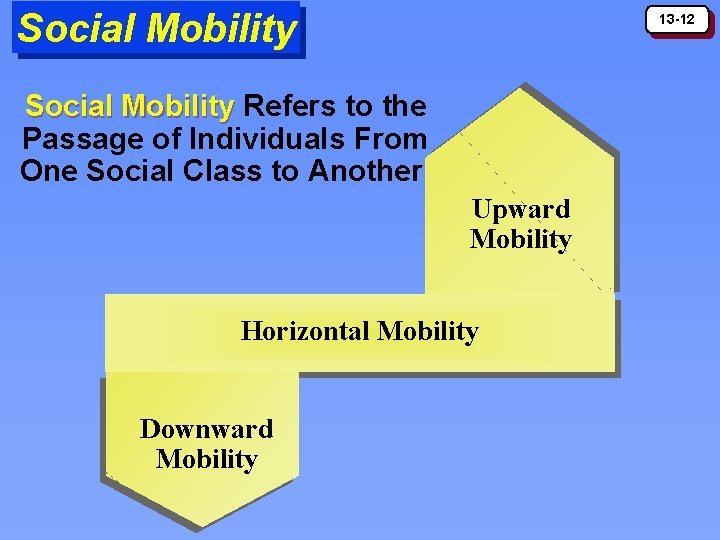
Social Mobility 13 -12 Social Mobility Refers to the Passage of Individuals From One Social Class to Another. Upward Mobility Horizontal Mobility Downward Mobility
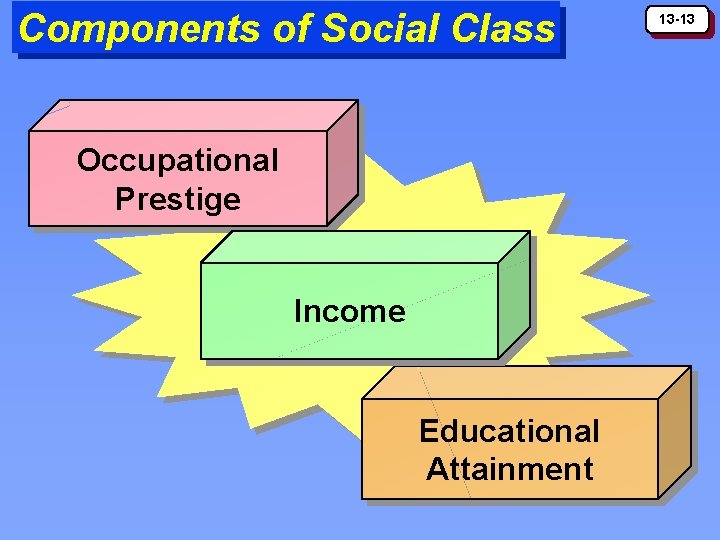
Components of Social Class Occupational Prestige Income Educational Attainment 13 -13
Relationship Between Income and Social Class 13 -14 • The relationship between income and social class: – More income doesn’t necessarily result in increased status or changed consumption patterns. – Income predicts purchase of expensive products without status (i. e. major appliances). – Social class can predict the purchase of low to moderate priced symbolic products (i. e. cosmetics). – Both social class and income are needed to predict purchases of expensive, symbolic products (i. e. cars, homes).
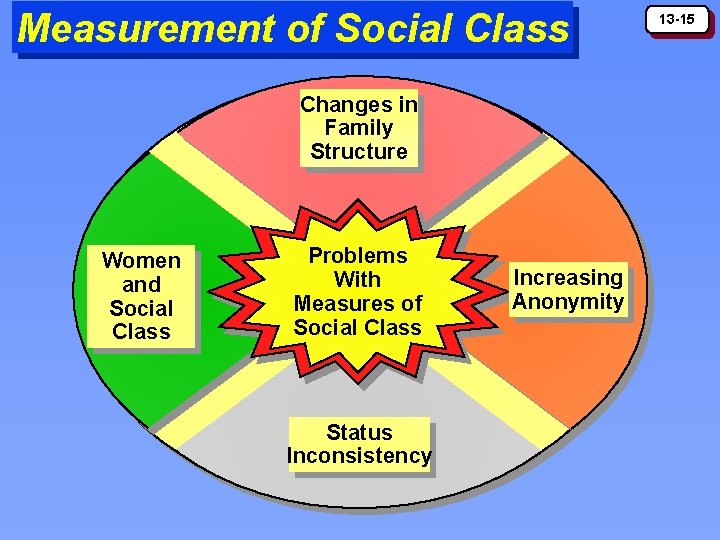
Measurement of Social Class Changes in Family Structure Women and Social Class Problems With Measures of Social Class Status Inconsistency Increasing Anonymity 13 -15
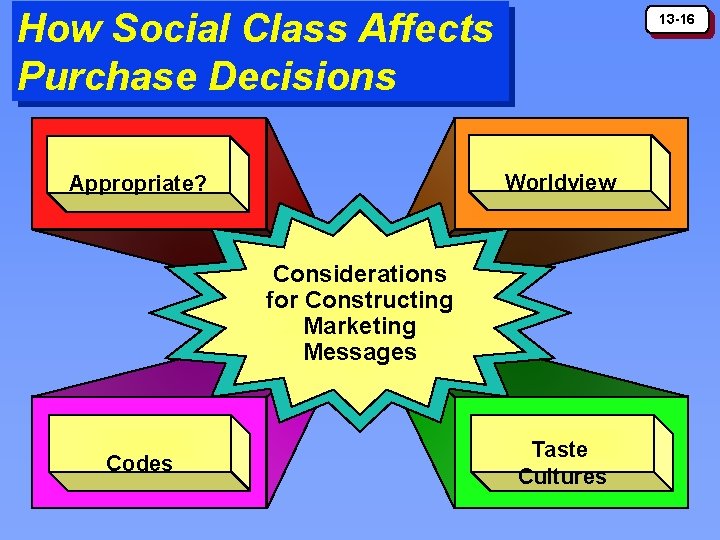
How Social Class Affects Purchase Decisions 13 -16 Worldview Appropriate? Considerations for Constructing Marketing Messages Codes Taste Cultures
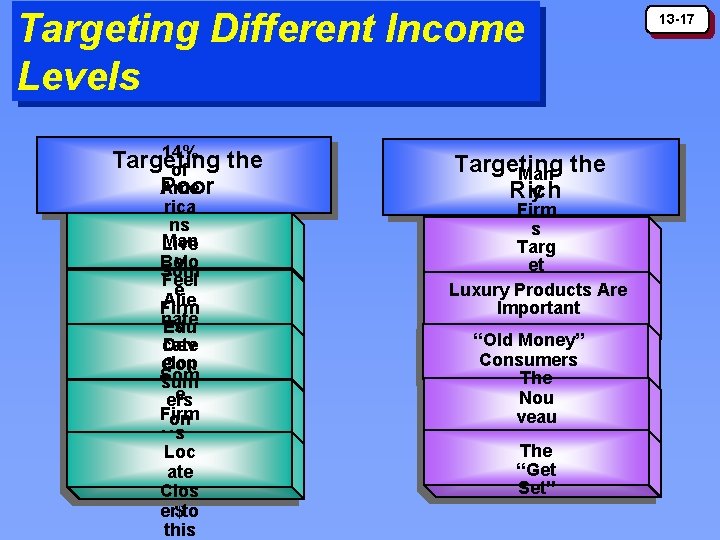
Targeting Different Income Levels 14% Targeting the of Poor Ame rica ns Man Live y Belo Som Feel w e the Alie Firm Pov nate s Edu erty d by Dev cate Line Soci elop Con Som ety Prod sum e ucts ers Firm for on s The How Loc m to ate Stre Clos tch er$to this Targeting Man the Rich y Firm s Targ et Afflu Luxury Products Are ent Important Mar kets “Old Money” Consumers The Nou veau Rich The es “Get Set” 13 -17
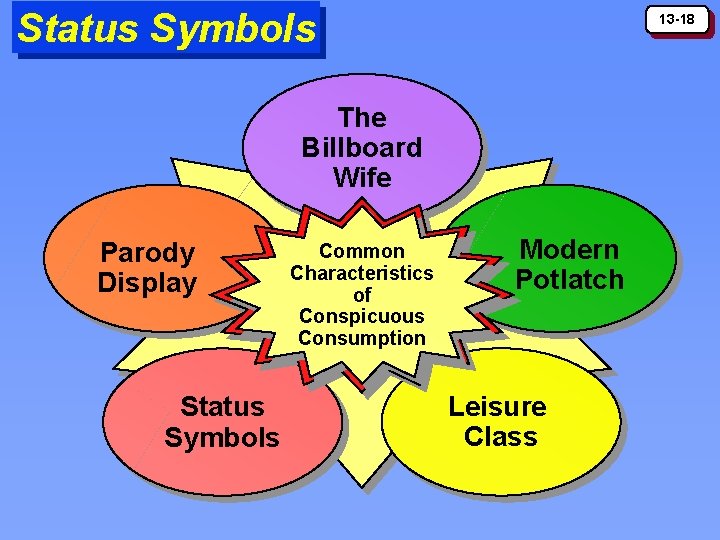
Status Symbols 13 -18 The Billboard Wife Parody Display Status Symbols Common Characteristics of Conspicuous Consumption Modern Potlatch Leisure Class