
121313 BR Federalism government in which power is
12/13/13 – BR- Federalism: government in which power is divided between , , and ---------. Separation of powers: Constitutional principle that limits powers vested in any person or individual; division of powers between the ---------, , and. Today: Understanding Federalism and The Branches of Government
Vocabulary Journal #14 Federalism: government in which power is divided between central authority, states, and localities. Separation of powers: Constitutional principle that limits powers vested in any person or individual; division of powers between the legislative, executive, and judicial branches. Why are these concepts so important to our form of government? Why do we have them?
Levels Of Government: Who’s Responsible for What? Look at the different levels of government (Federal, State, and Local) Do you see how different levels are in charge of certain things?
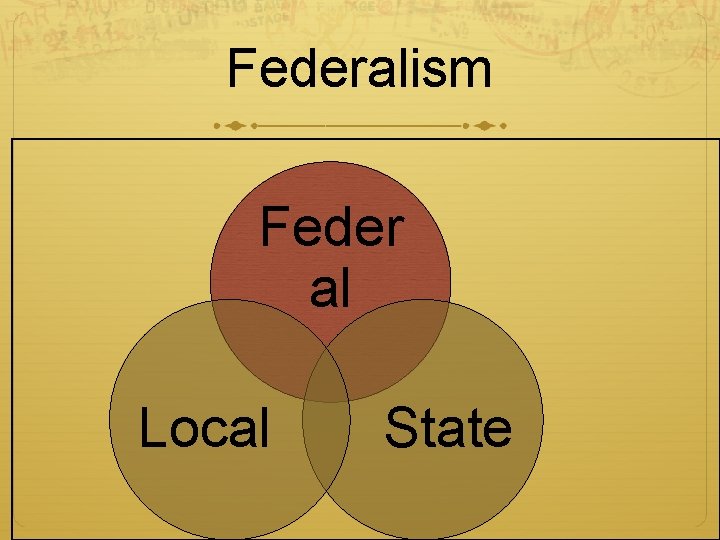
Federalism Feder al Local State
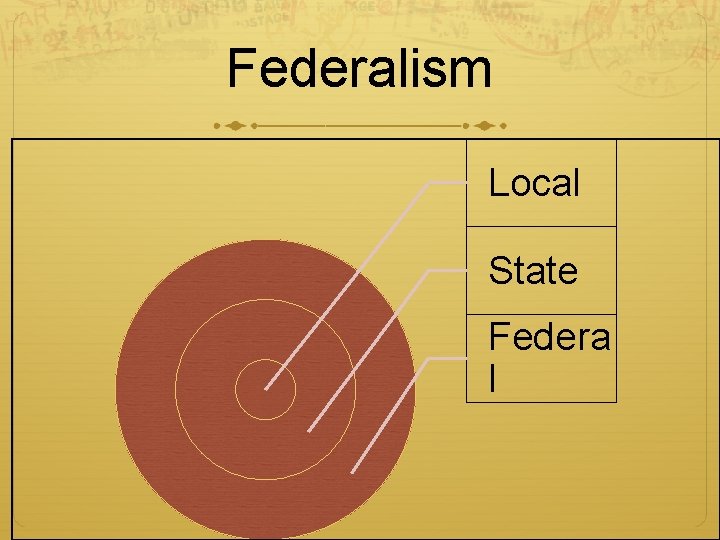
Federalism Local State Federa l
Using our Discussion and your notes Complete the federal, state, and local venn diagram Homework: For each level (state, local, and federal) state one problem that level could solve and explain why they would handle it. For example: Federal - Poor mail delivery. The federal government would have to handle this because the post office is their responsibility. Page 27 of Blue Book for Tuesday! Wednesday in room 167
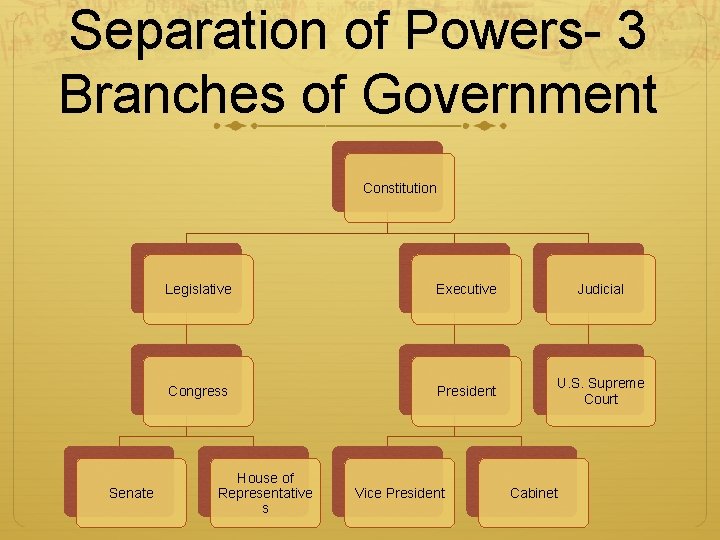
Separation of Powers- 3 Branches of Government Constitution Senate Legislative Executive Judicial Congress President U. S. Supreme Court House of Representative s Vice President Cabinet
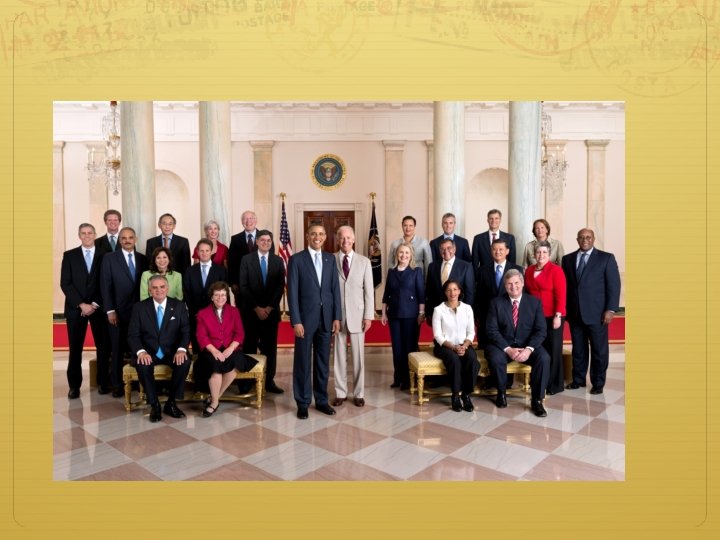
What is a presidential cabinet? Some sort of special furniture? The tradition of the Cabinet dates back to the beginnings of the Presidency itself. Established in Article II, Section 2, of the Constitution, the Cabinet's role is to advise the President on any subject he may require relating to the duties of each member's respective office. The Cabinet includes the Vice President and the heads of 15 executive departments — the Secretaries of Agriculture, Commerce, Defense, Education, Energy, Health and Human Services, Homeland Security, Housing and Urban Development, Interior, Labor, State, Transportation, Treasury, and Veterans Affairs, as well as the Attorney General.
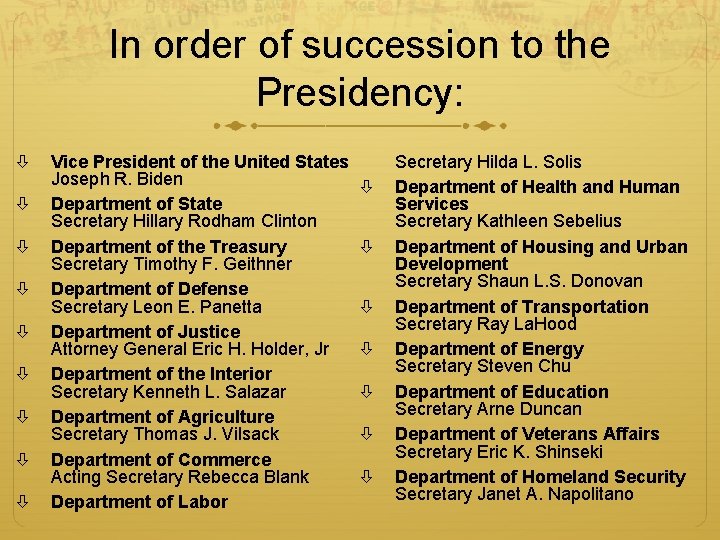
In order of succession to the Presidency: Vice President of the United States Joseph R. Biden Department of State Secretary Hillary Rodham Clinton Department of the Treasury Secretary Timothy F. Geithner Department of Defense Secretary Leon E. Panetta Department of Justice Attorney General Eric H. Holder, Jr Department of the Interior Secretary Kenneth L. Salazar Department of Agriculture Secretary Thomas J. Vilsack Department of Commerce Acting Secretary Rebecca Blank Department of Labor Secretary Hilda L. Solis Department of Health and Human Services Secretary Kathleen Sebelius Department of Housing and Urban Development Secretary Shaun L. S. Donovan Department of Transportation Secretary Ray La. Hood Department of Energy Secretary Steven Chu Department of Education Secretary Arne Duncan Department of Veterans Affairs Secretary Eric K. Shinseki Department of Homeland Security Secretary Janet A. Napolitano
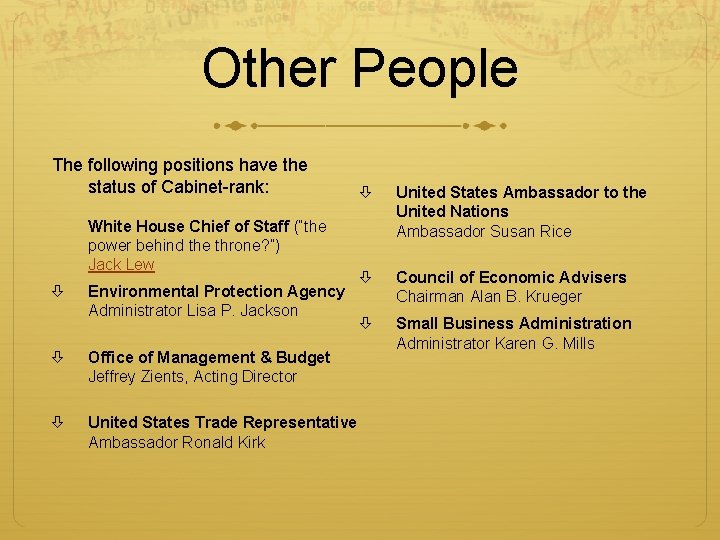
Other People The following positions have the status of Cabinet-rank: White House Chief of Staff (“the power behind the throne? ”) Jack Lew Environmental Protection Agency Administrator Lisa P. Jackson Office of Management & Budget Jeffrey Zients, Acting Director United States Trade Representative Ambassador Ronald Kirk United States Ambassador to the United Nations Ambassador Susan Rice Council of Economic Advisers Chairman Alan B. Krueger Small Business Administration Administrator Karen G. Mills
Levels Of Government: Who’s Responsible for What? Look at the different levels of government (Federal, State, and Local) Do you see how different levels are in charge of certain things?
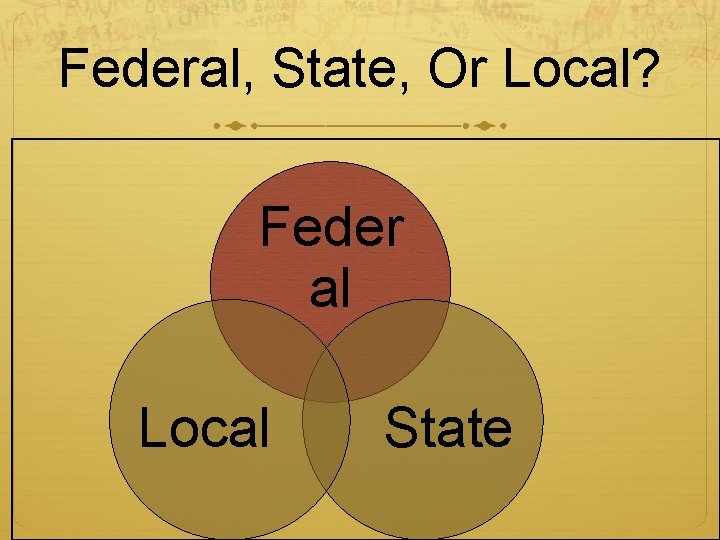
Federal, State, Or Local? Feder al Local State
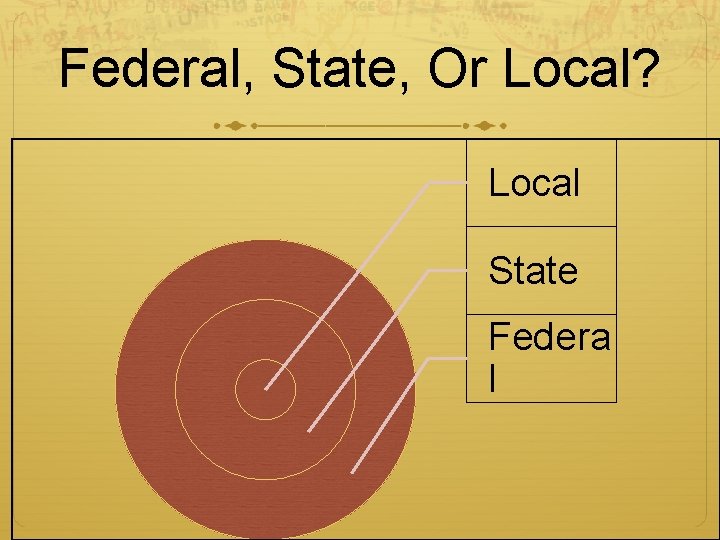
Federal, State, Or Local? Local State Federa l
Using our Discussion and your notes Complete the federal, state, and local venn diagram Homework: For each level (state, local, and federal) state one problem that level could solve and explain why they would handle it. For example: Federal - Poor mail delivery. The federal government would have to handle this because the post office is their responsibility.
- Slides: 15