
12 Lymphatic Immune Systems Lesson 12 1 The

- Slides: 37
12 Lymphatic & Immune Systems Lesson 12. 1: The Lymphatic System Lesson 12. 2: Nonspecific Defenses Lesson 12. 3: Specific Defenses Lesson 12. 4: Disorders and Diseases
Chapter 12: The Lymphatic and Immune Systems Lesson 12. 1 Lymphatic System
Outline: Lymphatic System • Organization of the lymphatic system – Lymph formation and flow – Lymph drainage • Lymphatic cells, tissues, and organs – Lymphatic cells – Lymphatic tissues – Lymphatic organs © Goodheart-Willcox Co. , Inc. Permission granted to reproduce for educational use only.
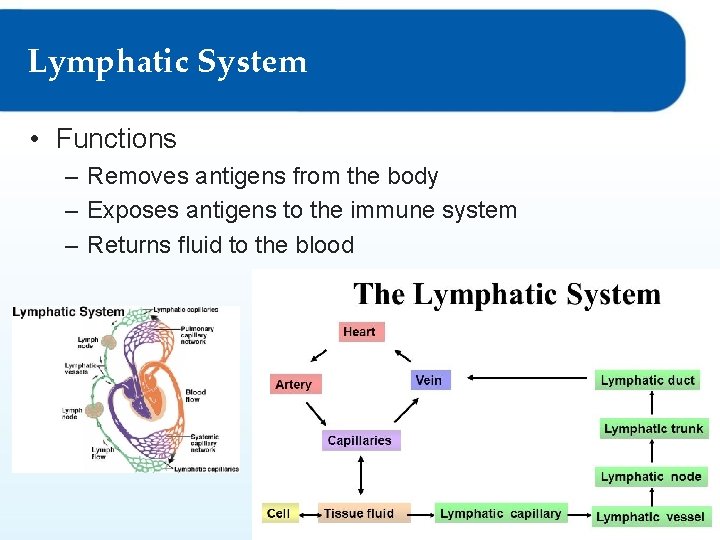
Lymphatic System • Functions – Removes antigens from the body – Exposes antigens to the immune system – Returns fluid to the blood © Goodheart-Willcox Co. , Inc. Permission granted to reproduce for educational use only.
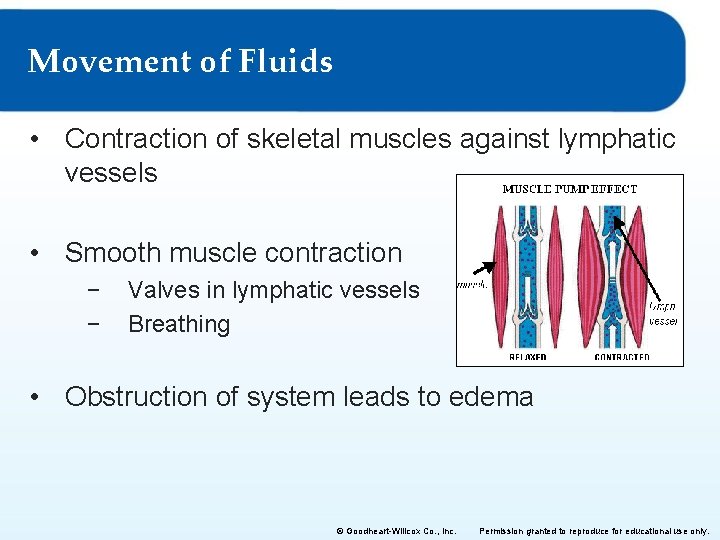
Movement of Fluids • Contraction of skeletal muscles against lymphatic vessels • Smooth muscle contraction − − Valves in lymphatic vessels Breathing • Obstruction of system leads to edema © Goodheart-Willcox Co. , Inc. Permission granted to reproduce for educational use only.
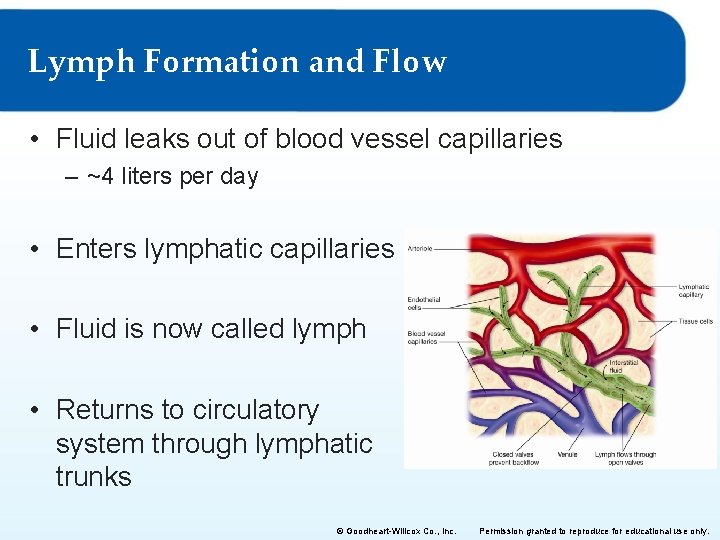
Lymph Formation and Flow • Fluid leaks out of blood vessel capillaries – ~4 liters per day • Enters lymphatic capillaries • Fluid is now called lymph • Returns to circulatory system through lymphatic trunks © Goodheart-Willcox Co. , Inc. Permission granted to reproduce for educational use only.
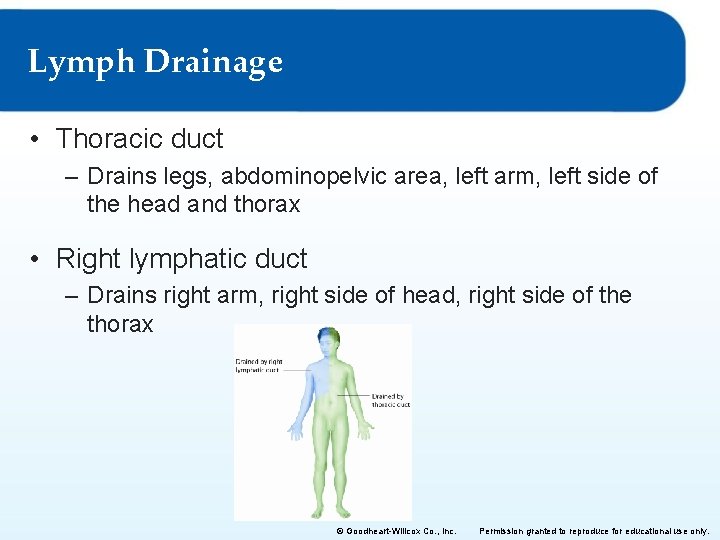
Lymph Drainage • Thoracic duct – Drains legs, abdominopelvic area, left arm, left side of the head and thorax • Right lymphatic duct – Drains right arm, right side of head, right side of the thorax © Goodheart-Willcox Co. , Inc. Permission granted to reproduce for educational use only.
Lymph Drainage © Goodheart-Willcox Co. , Inc. Permission granted to reproduce for educational use only.
Lymphatic Cells • Lymphocytes – T lymphocytes mature in thymus – B lymphocytes mature in bone marrow • Macrophages – “Eat” other cells – Leave lymphatic tissue to enter surrounding tissue © Goodheart-Willcox Co. , Inc. Permission granted to reproduce for educational use only.
Lymphatic Tissues • Mucosa associated lymphatic tissue (MALT) – Tonsils • Pharyngeal • Palatine • Lingual • Lymphatic nodules – – – Cervical Axillary Abdominal Inguinal Pelvic Lumbar © Goodheart-Willcox Co. , Inc. Permission granted to reproduce for educational use only.
Lymph Nodes • Concentration of immune cells • Nodes are found grouped together at various parts of the body • Filtration of blood © Goodheart-Willcox Co. , Inc. Permission granted to reproduce for educational use only.
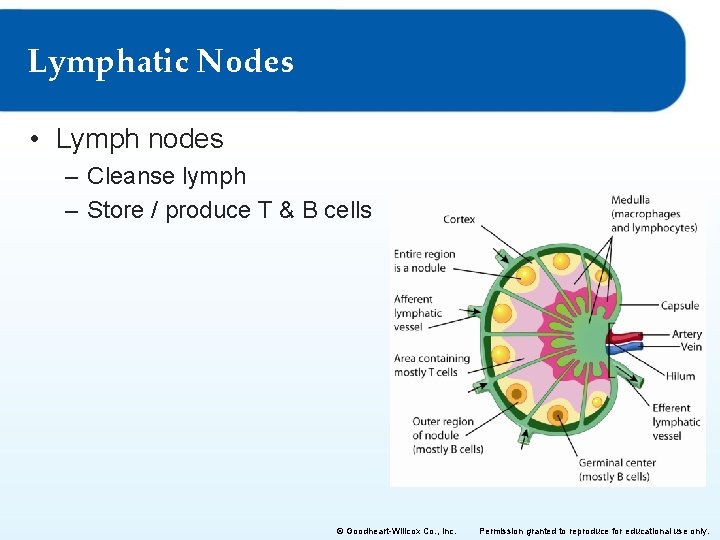
Lymphatic Nodes • Lymph nodes – Cleanse lymph – Store / produce T & B cells © Goodheart-Willcox Co. , Inc. Permission granted to reproduce for educational use only.
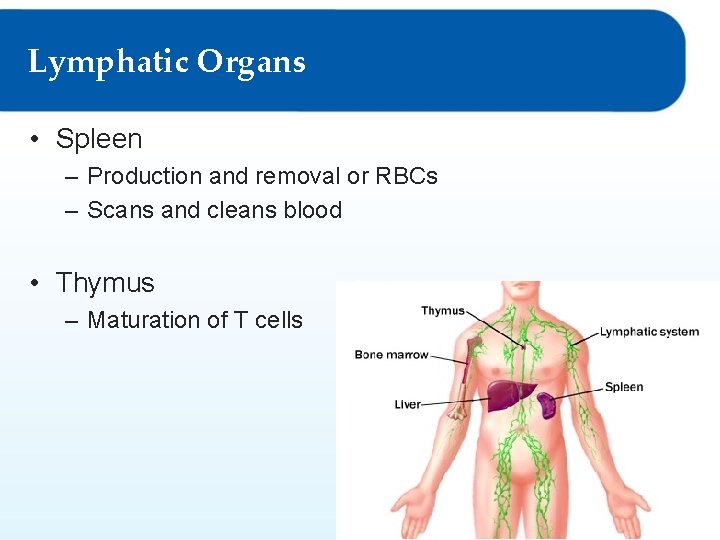
Lymphatic Organs • Spleen – Production and removal or RBCs – Scans and cleans blood • Thymus – Maturation of T cells © Goodheart-Willcox Co. , Inc. Permission granted to reproduce for educational use only.
Spleen • Largest lymphatic organ • Located in the upper left quadrant of abdominal cavity • Functions − Filters blood similarly to lymph nodes − Removes worn-out red cells − If removed (splenectomy), liver takes over most of its function © Goodheart-Willcox Co. , Inc. Permission granted to reproduce for educational use only.
Thymus • Located just above the heart in the mediastinum • Large in children, shrinks as we age • Functions − Same as lymph node − Also produces lymphocytes − Produces thymosin – stimulates production of lymphocytes © Goodheart-Willcox Co. , Inc. Permission granted to reproduce for educational use only.
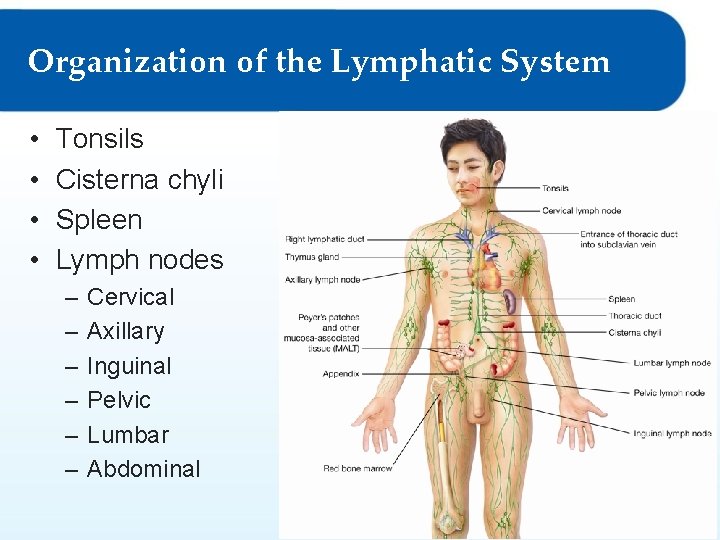
Organization of the Lymphatic System • • Tonsils Cisterna chyli Spleen Lymph nodes – – – Cervical Axillary Inguinal Pelvic Lumbar Abdominal © Goodheart-Willcox Co. , Inc. Permission granted to reproduce for educational use only.
Chapter 12: The Lymphatic and Immune Systems Lesson 12. 2 Nonspecific Defenses
Nonspecific Defenses • • Physical barriers Cellular and chemical defenses Inflammatory response Fever © Goodheart-Willcox Co. , Inc. Permission granted to reproduce for educational use only.
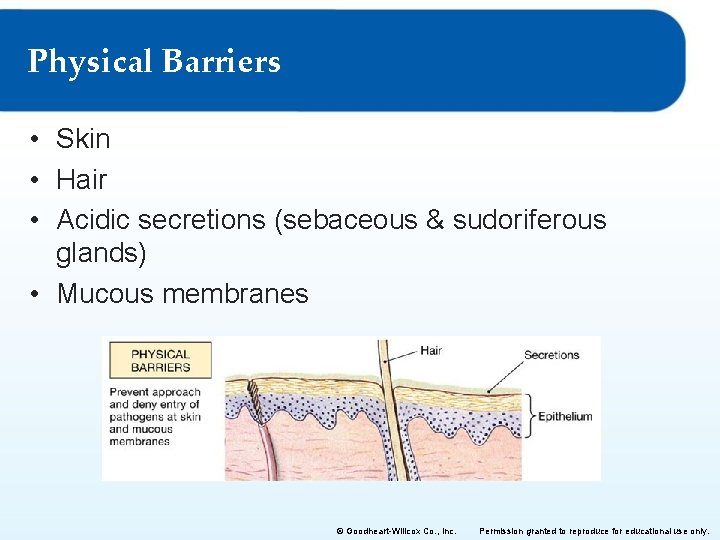
Physical Barriers • Skin • Hair • Acidic secretions (sebaceous & sudoriferous glands) • Mucous membranes © Goodheart-Willcox Co. , Inc. Permission granted to reproduce for educational use only.
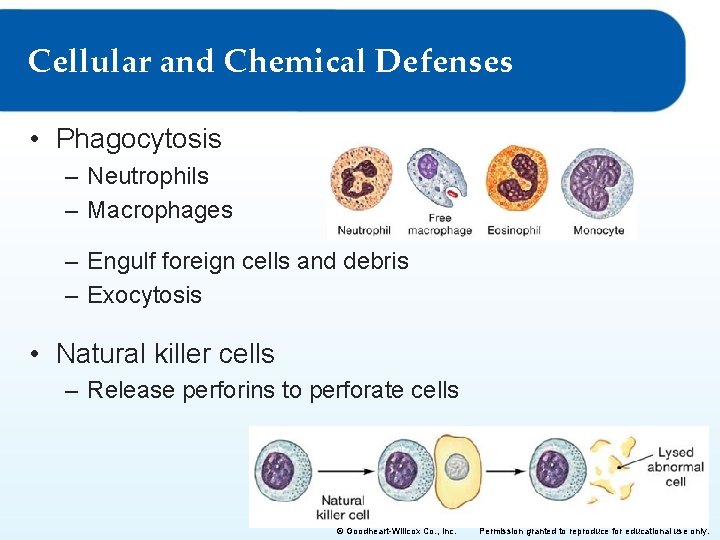
Cellular and Chemical Defenses • Phagocytosis – Neutrophils – Macrophages – Engulf foreign cells and debris – Exocytosis • Natural killer cells – Release perforins to perforate cells © Goodheart-Willcox Co. , Inc. Permission granted to reproduce for educational use only.
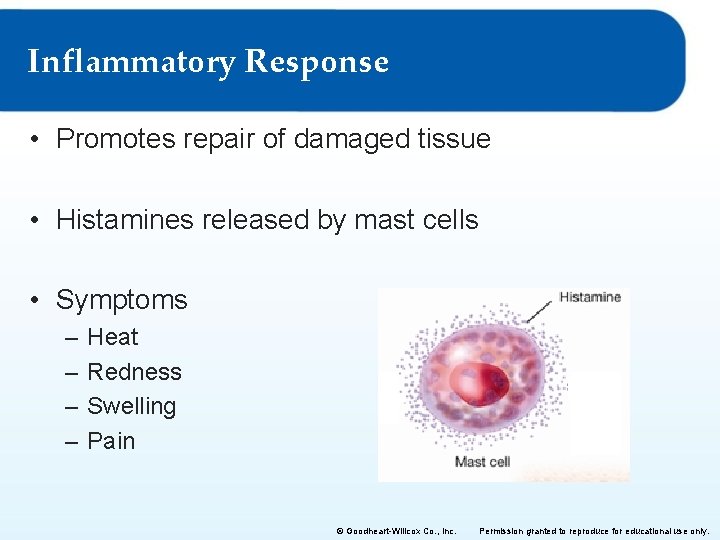
Inflammatory Response • Promotes repair of damaged tissue • Histamines released by mast cells • Symptoms – – Heat Redness Swelling Pain © Goodheart-Willcox Co. , Inc. Permission granted to reproduce for educational use only.
The Development of Inflammation • Tissue damage occurs • Intracellular contents are released from damaged cells into interstitial fluid • Mast cells release histamine • Blood vessels dilate, blood flow increases, capillary permeability increases • Clot formation occurs • Scar tissue forms, replacement cells grow © Goodheart-Willcox Co. , Inc. Permission granted to reproduce for educational use only.
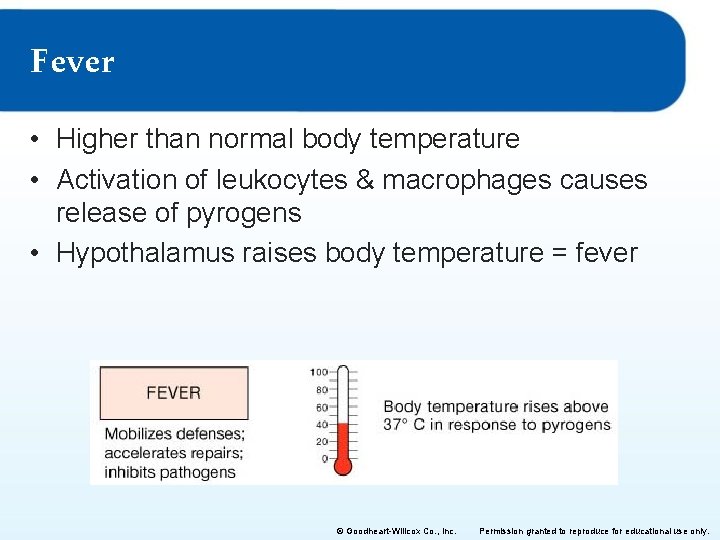
Fever • Higher than normal body temperature • Activation of leukocytes & macrophages causes release of pyrogens • Hypothalamus raises body temperature = fever © Goodheart-Willcox Co. , Inc. Permission granted to reproduce for educational use only.
Chapter 12: The Lymphatic and Immune Systems Lesson 12. 3 Specific Defenses
Specific Defenses • • Antigens Immune system cells Primary and secondary immune responses Cellular immunity © Goodheart-Willcox Co. , Inc. Permission granted to reproduce for educational use only.
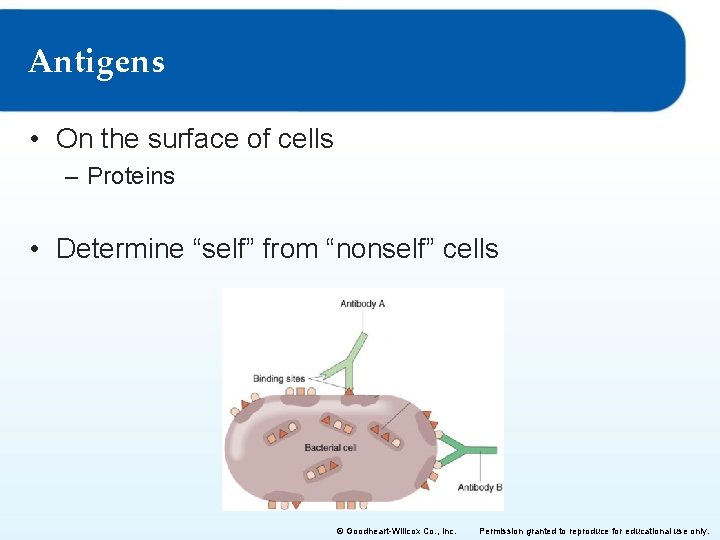
Antigens • On the surface of cells – Proteins • Determine “self” from “nonself” cells © Goodheart-Willcox Co. , Inc. Permission granted to reproduce for educational use only.
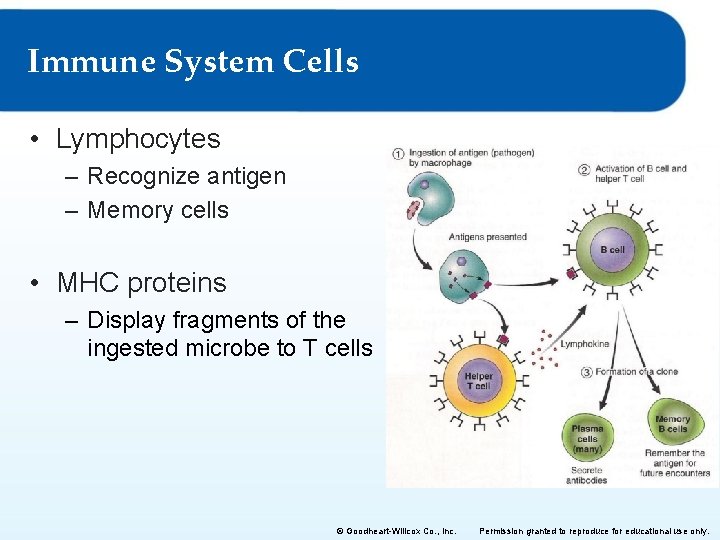
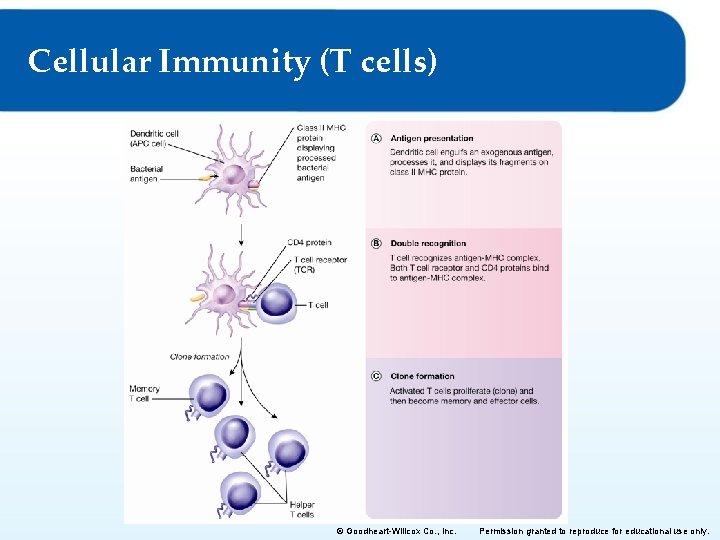
Immune System Cells • Lymphocytes – Recognize antigen – Memory cells • MHC proteins – Display fragments of the ingested microbe to T cells © Goodheart-Willcox Co. , Inc. Permission granted to reproduce for educational use only.
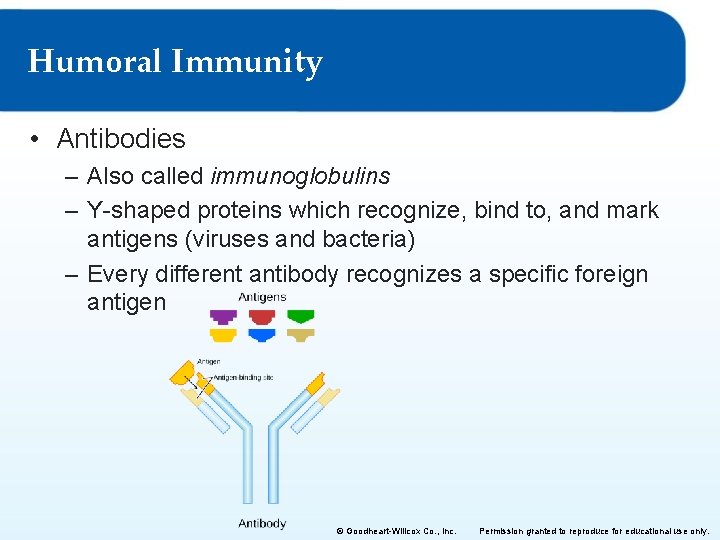
Humoral Immunity • Antibodies – Also called immunoglobulins – Y-shaped proteins which recognize, bind to, and mark antigens (viruses and bacteria) – Every different antibody recognizes a specific foreign antigen © Goodheart-Willcox Co. , Inc. Permission granted to reproduce for educational use only.
Primary and Secondary Immune Responses • Primary immune response – When first exposed • Secondary immune response – Memory cells respond to invader • Active immunity – Exposed, infected, recovered • Passive immunity – Vaccination © Goodheart-Willcox Co. , Inc. Permission granted to reproduce for educational use only.
Cellular Immunity (T cells) © Goodheart-Willcox Co. , Inc. Permission granted to reproduce for educational use only.
Chapter 12: The Lymphatic and Immune Systems Lesson 12. 4 Disorders and Diseases of the Immune System
Disorders and Diseases of the Immune System • • cancer and lymph nodes allergies autoimmune disorders HIV and AIDS © Goodheart-Willcox Co. , Inc. Permission granted to reproduce for educational use only.
Cancer and Lymph Nodes • rapid, unregulated cell growth • metastasis – cancerous cells move within body • cancerous cells may lodge in lymph nodes © Goodheart-Willcox Co. , Inc. Permission granted to reproduce for educational use only.
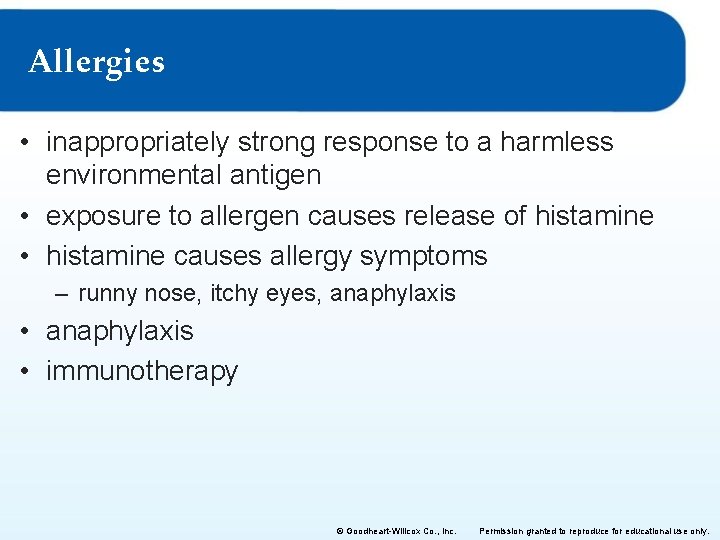
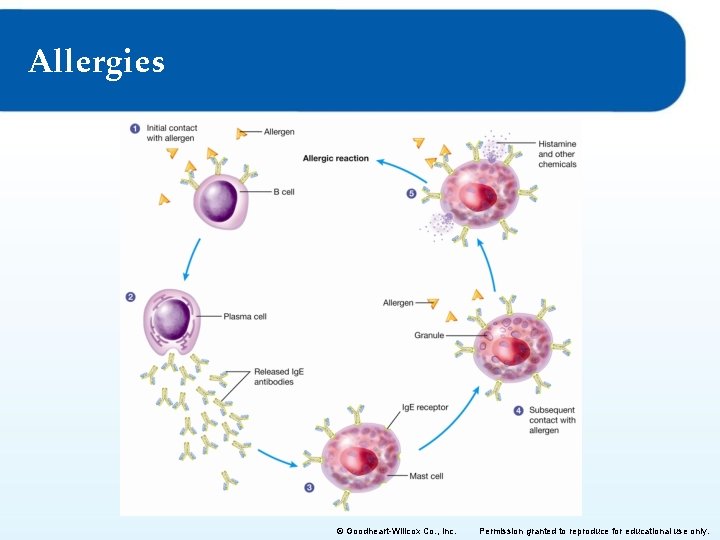
Allergies • inappropriately strong response to a harmless environmental antigen • exposure to allergen causes release of histamine • histamine causes allergy symptoms – runny nose, itchy eyes, anaphylaxis • anaphylaxis • immunotherapy © Goodheart-Willcox Co. , Inc. Permission granted to reproduce for educational use only.
Allergies © Goodheart-Willcox Co. , Inc. Permission granted to reproduce for educational use only.
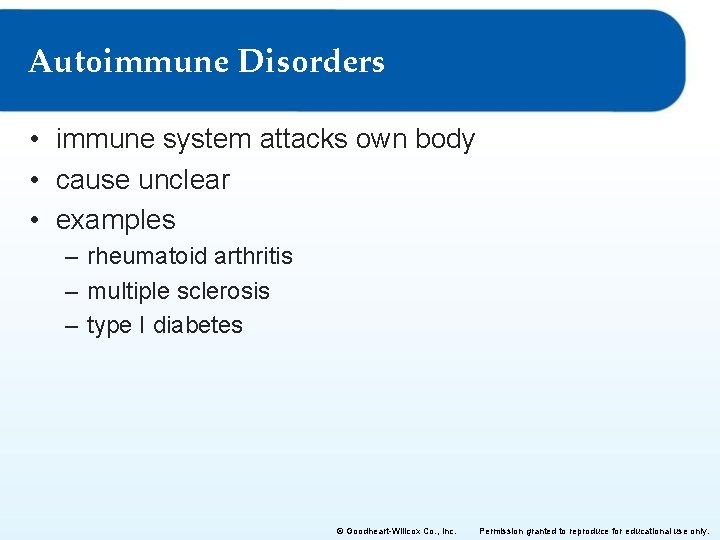
Autoimmune Disorders • immune system attacks own body • cause unclear • examples – rheumatoid arthritis – multiple sclerosis – type I diabetes © Goodheart-Willcox Co. , Inc. Permission granted to reproduce for educational use only.
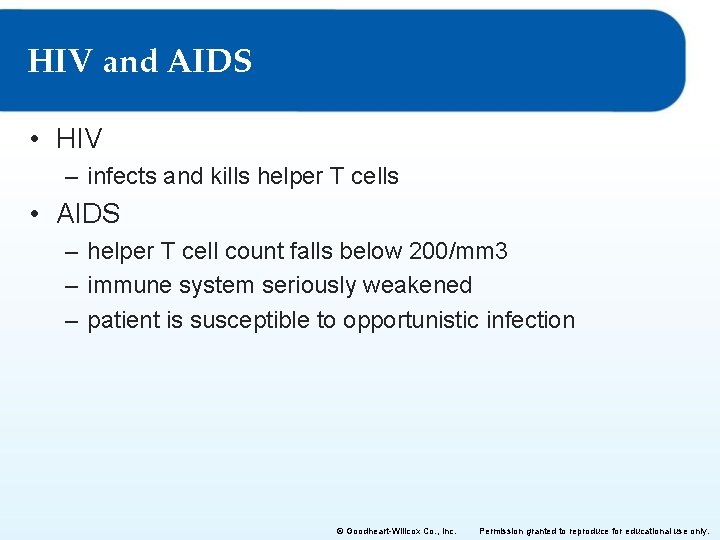
HIV and AIDS • HIV – infects and kills helper T cells • AIDS – helper T cell count falls below 200/mm 3 – immune system seriously weakened – patient is susceptible to opportunistic infection © Goodheart-Willcox Co. , Inc. Permission granted to reproduce for educational use only.