
12 Lead ECG Trainer Cali Roen Laura Bagley

12 Lead ECG Trainer Cali Roen, Laura Bagley, Tony Schuler, Amy Weaver Client: Dr. Patricia Padgen, Dept. of Emergency Medical Services Advisor: Prof. Tom Yen, Dept. of Biomedical Engineering BME 400 October 17, 2008
Overview • • The 12 – Lead ECG: Uses and Electrode Placement Training Mannequin Specifications Existing ECG Training Mannequins Design Alternatives – ECG Signal Generator – Electrode Placement Feedback • Future Work
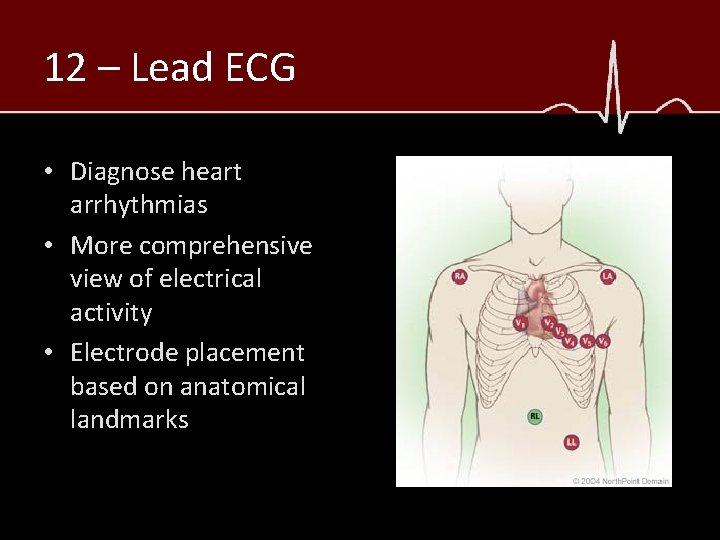
12 – Lead ECG • Diagnose heart arrhythmias • More comprehensive view of electrical activity • Electrode placement based on anatomical landmarks
Training Mannequin • Develop an adult mannequin for 12 -lead ECG training • Mannequin should produce a variety of ECG signals • Students should place ECG electrodes on the chest using anatomical landmarks • Provide feedback about correct/incorrect placement
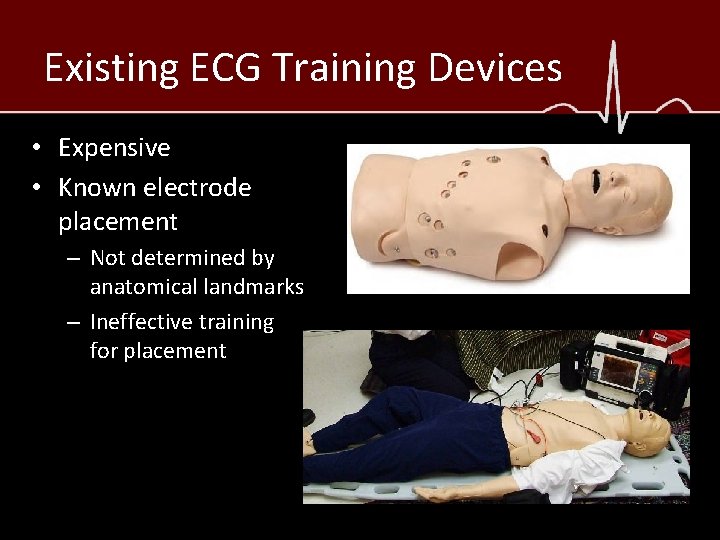
Existing ECG Training Devices • Expensive • Known electrode placement – Not determined by anatomical landmarks – Ineffective training for placement
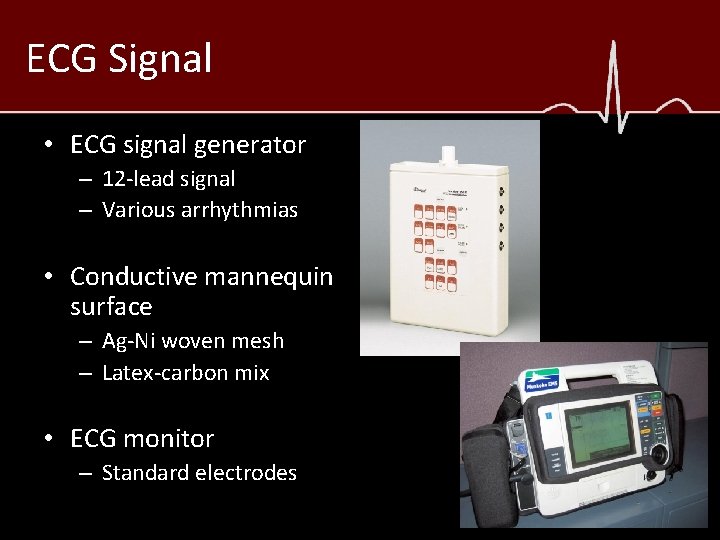
ECG Signal • ECG signal generator – 12 -lead signal – Various arrhythmias • Conductive mannequin surface – Ag-Ni woven mesh – Latex-carbon mix • ECG monitor – Standard electrodes
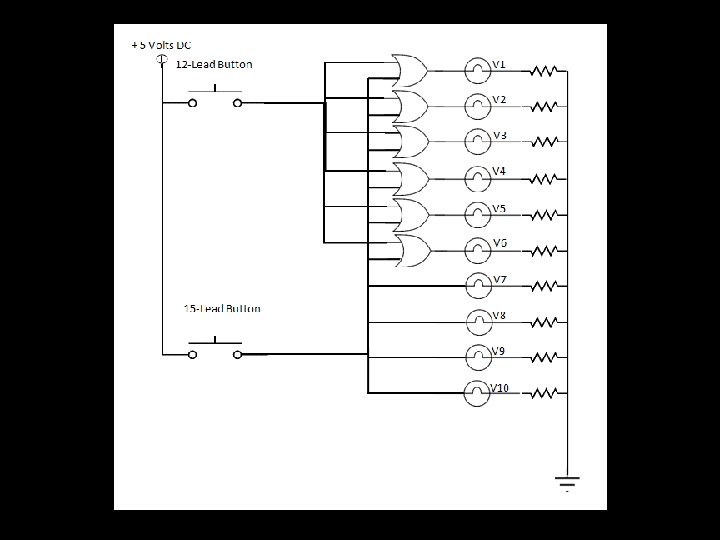
Electrode Placement Feedback • Design 1 – Feedback circuit – 12 -lead capability – Separate placement feedback display – Electrode isolation – Anatomical landmarks • Design 2 – LED marked placement – 12 - and 15 -lead capability – Anatomical landmarks
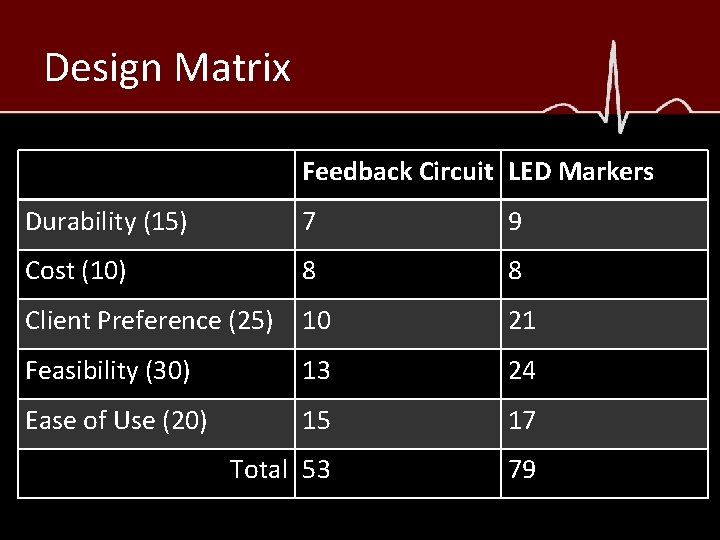
Design Matrix Feedback Circuit LED Markers Durability (15) 7 9 Cost (10) 8 8 Client Preference (25) 10 21 Feasibility (30) 13 24 Ease of Use (20) 15 17 Total 53 79
Future Work • Determine an appropriately conductive biomaterial to use for the skin • Construct circuit on the chest plate • Modify 12 – Lead ECG simulator
References • www. laerdal. com • www. muskoka. ambulance. ca/g/photos/lifepak 12. jpg • Harris, James. Electrically Conductive Latex-Based Composites.
- Slides: 11