
12 Integrated Solid Waste Management in Indonesia 12



- Slides: 40
12 – Integrated Solid Waste Management in Indonesia 12 Integrated Solid Waste Management in Indonesia 1/28
12 – Integrated Solid Waste Management in Indonesia Contents • • • Introduction Integrated solid waste management Assessing existing waste management systems Analyzing existing waste management systems Improvements to existing systems 2/28
12 – Integrated Solid Waste Management in Indonesia We can use the concept of ISWM in Indonesia to: • Assess the present situation of SWM • Analyse the performance of SWM • Identify possible improvements Assess present situation Analyse performance Identify possible improvements Better performance of the waste management system 3/28
12 – Integrated Solid Waste Management in Indonesia The concept of ISWM has three dimensions: - Stakeholders involved in SWM - The (practical and technical) elements of the SWM system - The aspects of the local context of the SWM 4/28
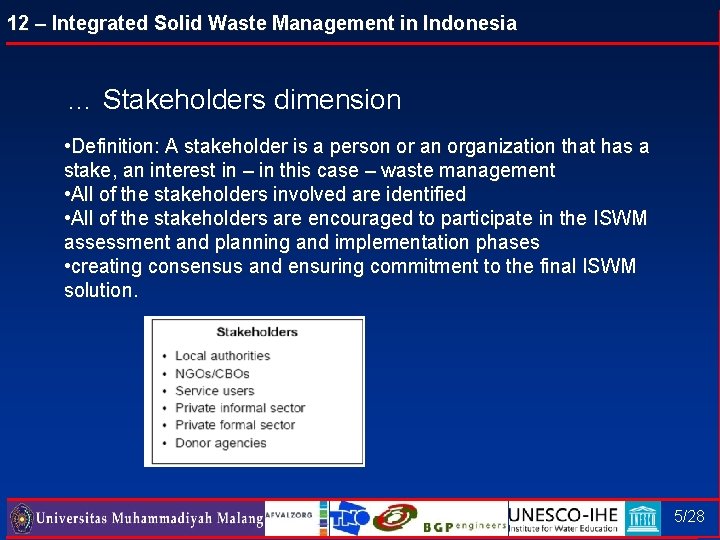
12 – Integrated Solid Waste Management in Indonesia … Stakeholders dimension • Definition: A stakeholder is a person or an organization that has a stake, an interest in – in this case – waste management • All of the stakeholders involved are identified • All of the stakeholders are encouraged to participate in the ISWM assessment and planning and implementation phases • creating consensus and ensuring commitment to the final ISWM solution. 5/28
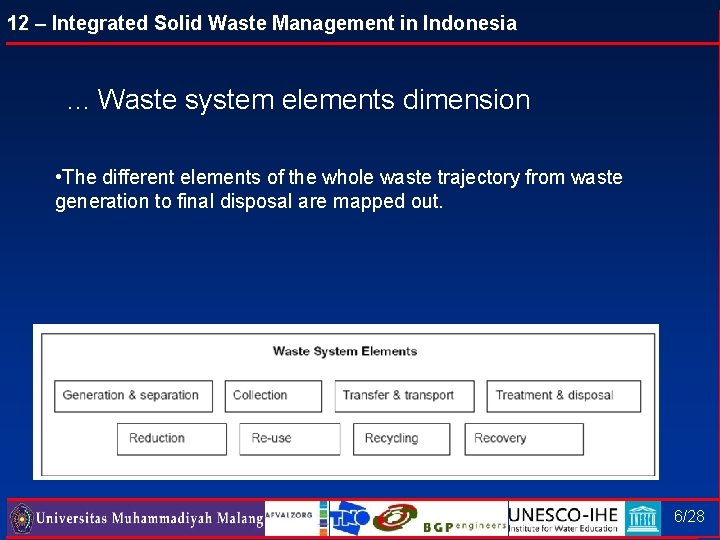
12 – Integrated Solid Waste Management in Indonesia . . . Waste system elements dimension • The different elements of the whole waste trajectory from waste generation to final disposal are mapped out. 6/28
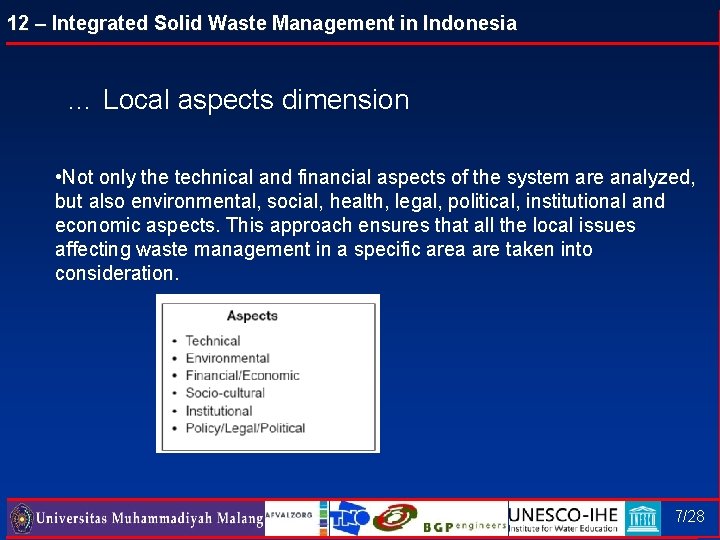
12 – Integrated Solid Waste Management in Indonesia … Local aspects dimension • Not only the technical and financial aspects of the system are analyzed, but also environmental, social, health, legal, political, institutional and economic aspects. This approach ensures that all the local issues affecting waste management in a specific area are taken into consideration. 7/28
12 – Integrated Solid Waste Management in Indonesia …It combines three components to produce sustainable solutions to waste management problems 8/28
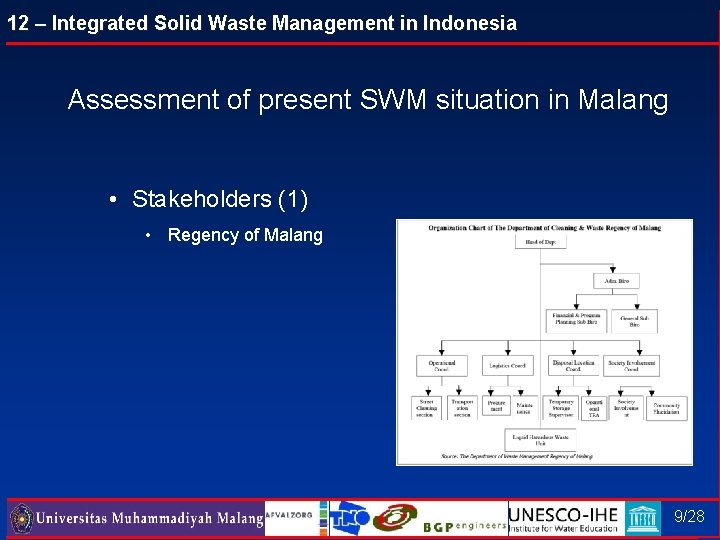
12 – Integrated Solid Waste Management in Indonesia Assessment of present SWM situation in Malang • Stakeholders (1) • Regency of Malang 9/28
12 – Integrated Solid Waste Management in Indonesia Assessment of present SWM situation in Malang • Stakeholders (2) • Households 10/28
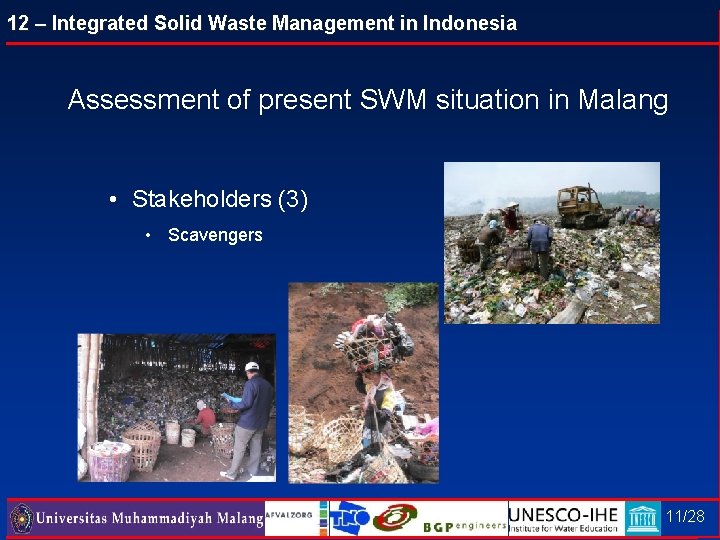
12 – Integrated Solid Waste Management in Indonesia Assessment of present SWM situation in Malang • Stakeholders (3) • Scavengers 11/28
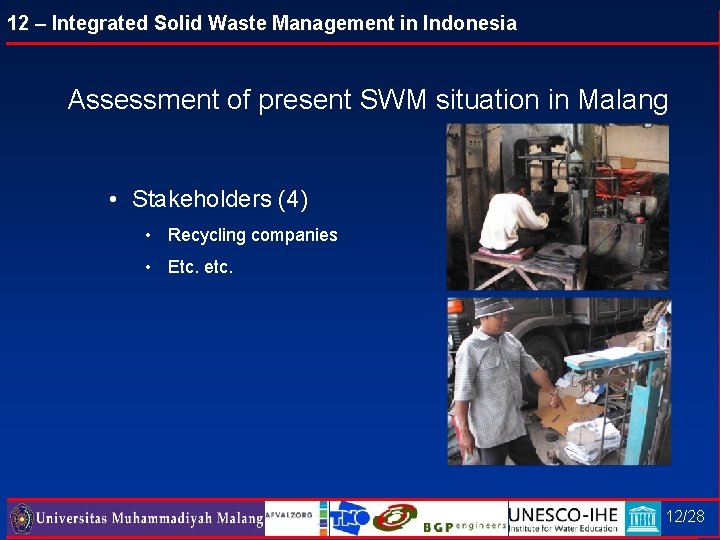
12 – Integrated Solid Waste Management in Indonesia Assessment of present SWM situation in Malang • Stakeholders (4) • Recycling companies • Etc. etc. 12/28
12 – Integrated Solid Waste Management in Indonesia Assessment of present SWM situation in Malang • Waste system elements • Description of waste system elements in Malang • Description of waste flow 13/28
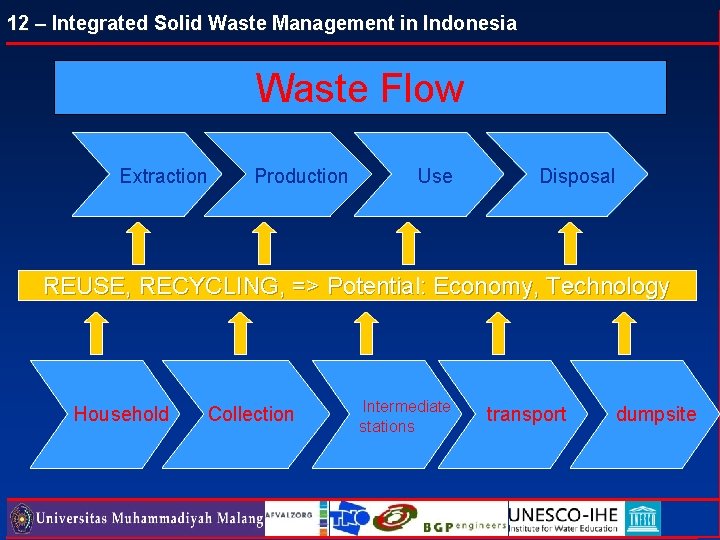
12 – Integrated Solid Waste Management in Indonesia Waste Flow Extraction Production Use Disposal REUSE, RECYCLING, => Potential: Economy, Technology Household Collection Intermediate transport stations dumpsite
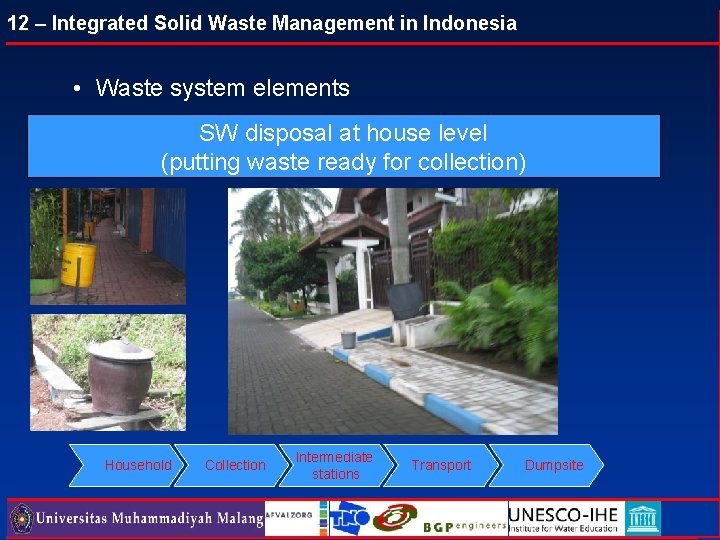
12 – Integrated Solid Waste Management in Indonesia • Waste system elements SW disposal at house level (putting waste ready for collection) Household Collection Intermediate stations Transport Dumpsite
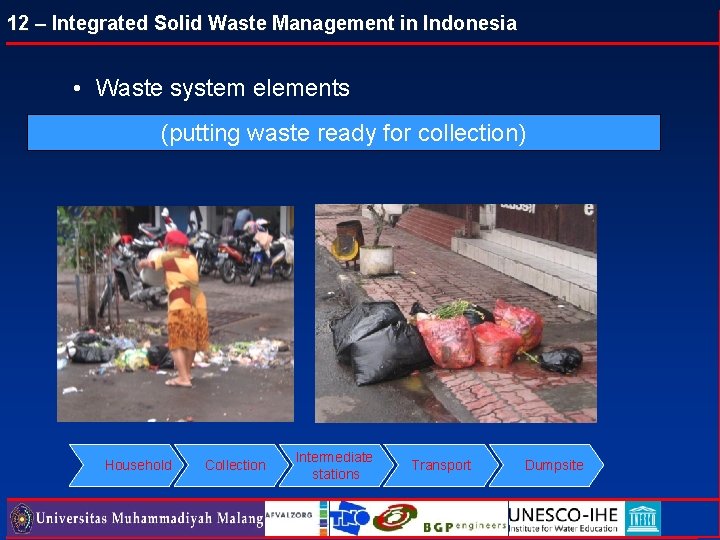
12 – Integrated Solid Waste Management in Indonesia • Waste system elements (putting waste ready for collection) Household Collection Intermediate stations Transport Dumpsite
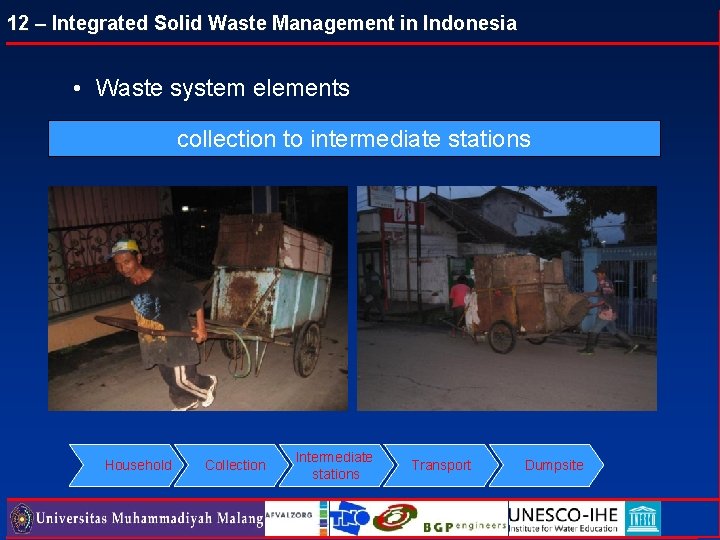
12 – Integrated Solid Waste Management in Indonesia • Waste system elements collection to intermediate stations Household Collection Intermediate stations Transport Dumpsite
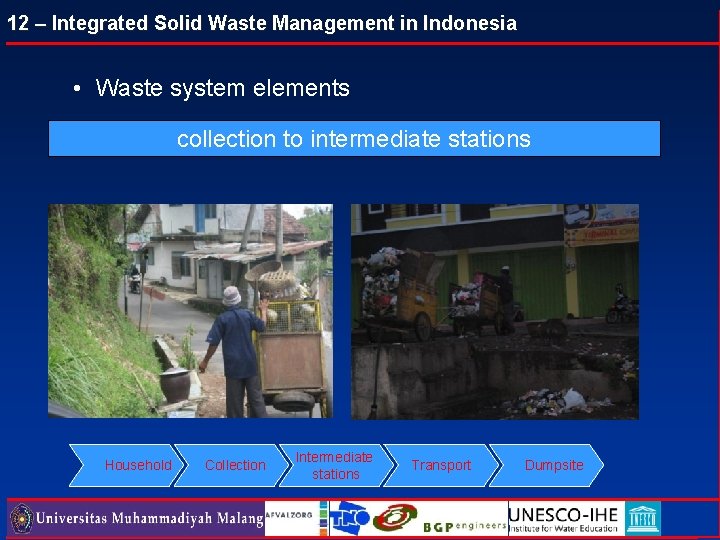
12 – Integrated Solid Waste Management in Indonesia • Waste system elements collection to intermediate stations Household Collection Intermediate stations Transport Dumpsite
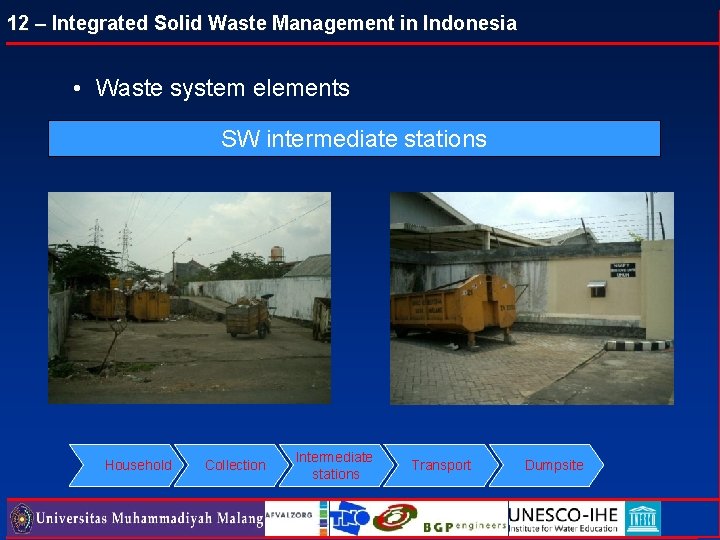
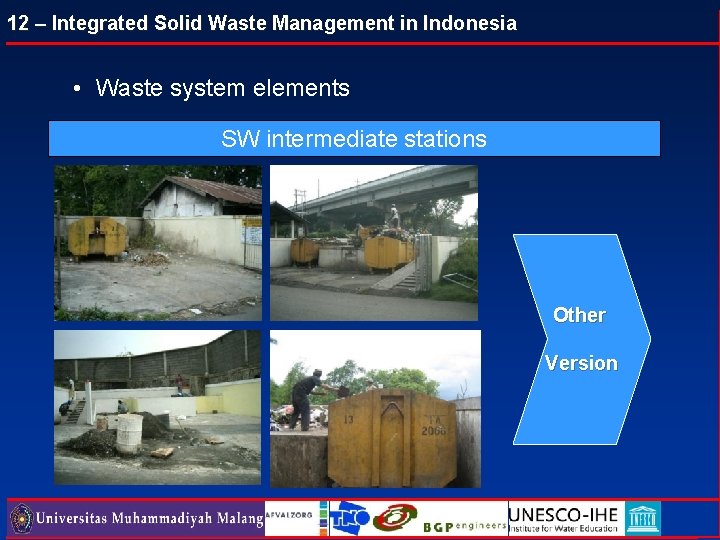
12 – Integrated Solid Waste Management in Indonesia • Waste system elements SW intermediate stations Household Collection Intermediate stations Transport Dumpsite
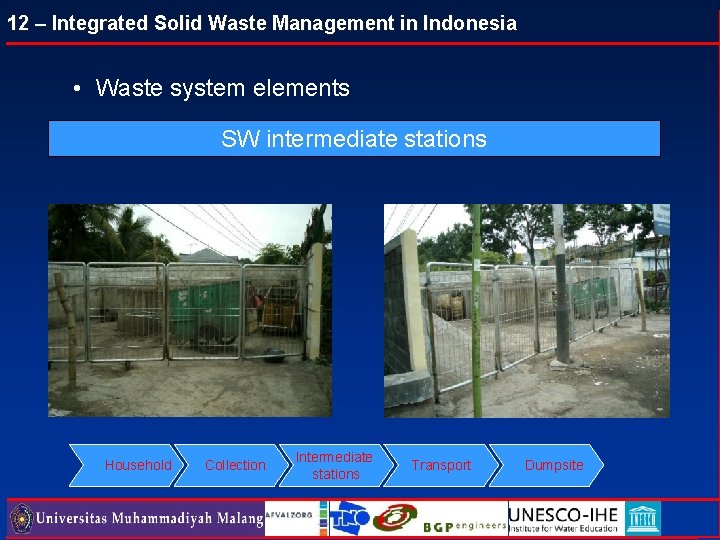
12 – Integrated Solid Waste Management in Indonesia • Waste system elements SW intermediate stations Household Collection Intermediate stations Transport Dumpsite
12 – Integrated Solid Waste Management in Indonesia • Waste system elements SW intermediate stations Other Version
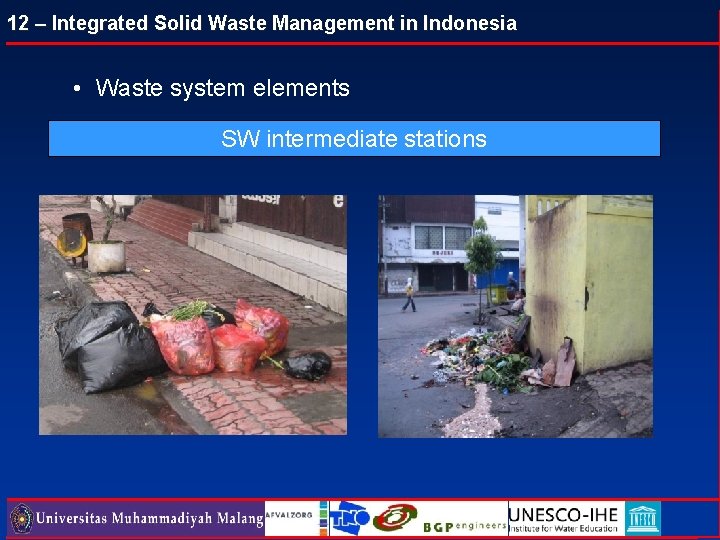
12 – Integrated Solid Waste Management in Indonesia • Waste system elements SW intermediate stations
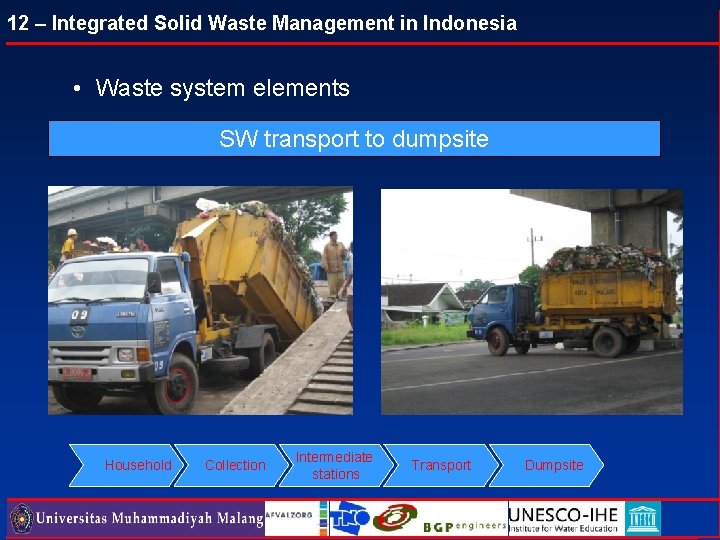
12 – Integrated Solid Waste Management in Indonesia • Waste system elements SW transport to dumpsite Household Collection Intermediate stations Transport Dumpsite
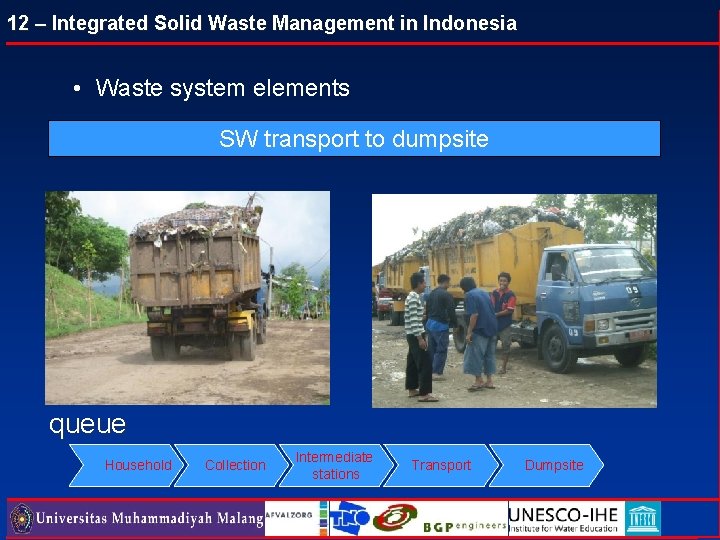
12 – Integrated Solid Waste Management in Indonesia • Waste system elements SW transport to dumpsite queue Household Collection Intermediate stations Transport Dumpsite
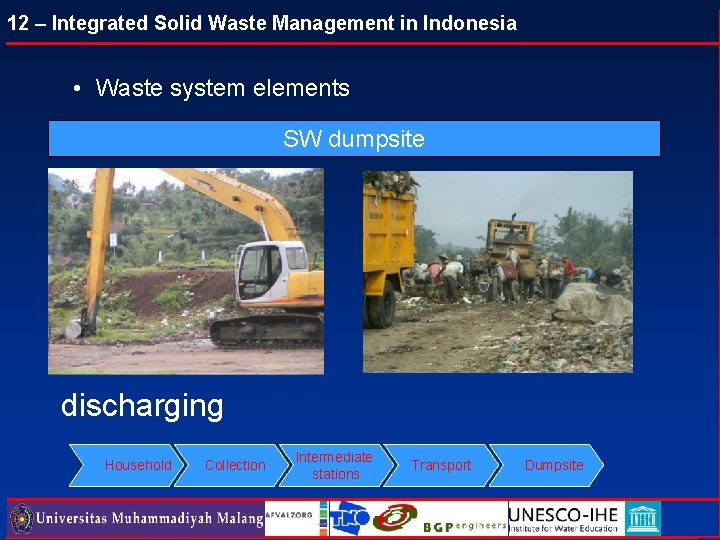
12 – Integrated Solid Waste Management in Indonesia • Waste system elements SW dumpsite discharging Household Collection Intermediate stations Transport Dumpsite
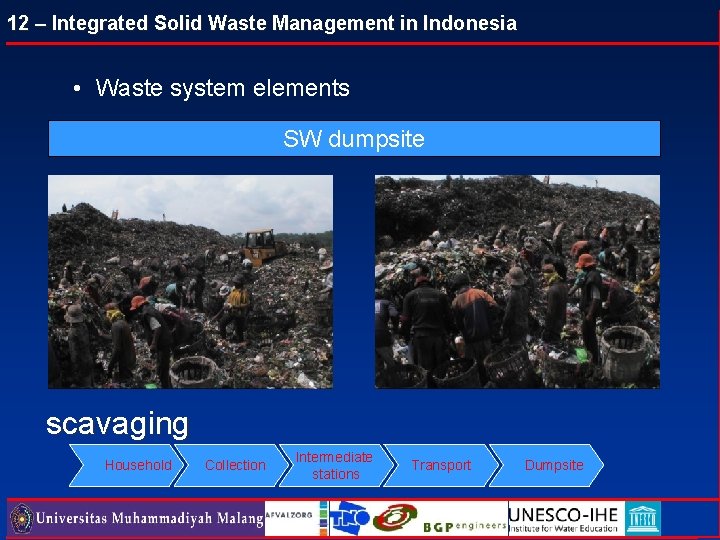
12 – Integrated Solid Waste Management in Indonesia • Waste system elements SW dumpsite scavaging Household Collection Intermediate stations Transport Dumpsite
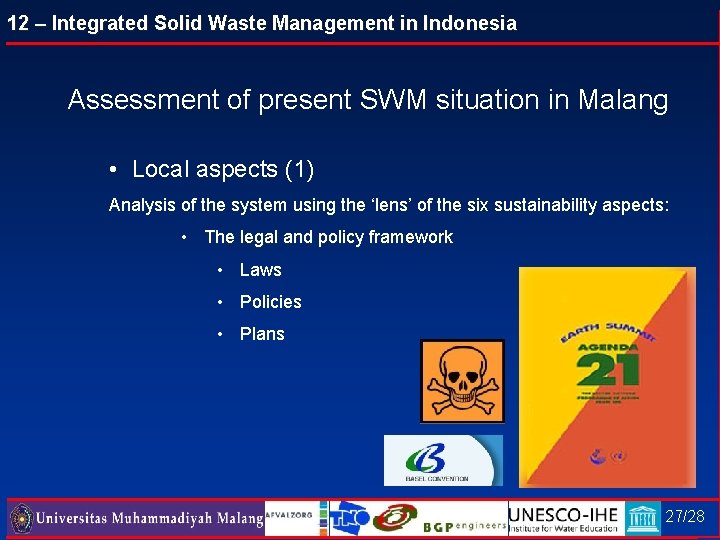
12 – Integrated Solid Waste Management in Indonesia Assessment of present SWM situation in Malang • Local aspects (1) Analysis of the system using the ‘lens’ of the six sustainability aspects: • The legal and policy framework • Laws • Policies • Plans 27/28
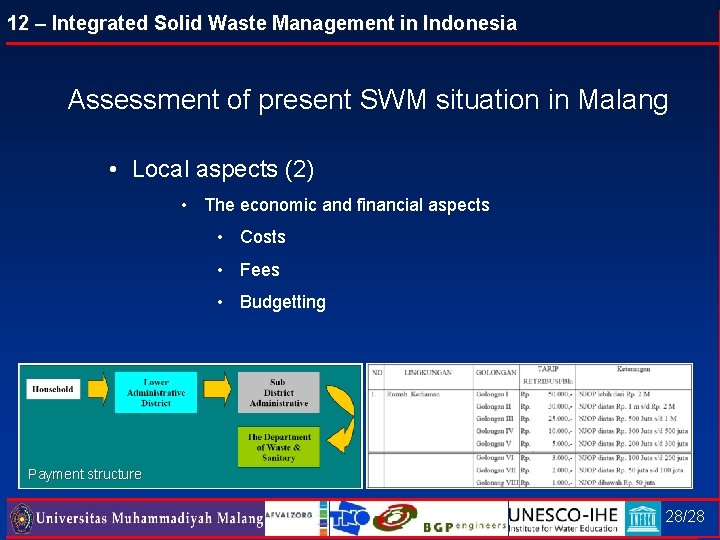
12 – Integrated Solid Waste Management in Indonesia Assessment of present SWM situation in Malang • Local aspects (2) • The economic and financial aspects • Costs • Fees • Budgetting Payment structure 28/28
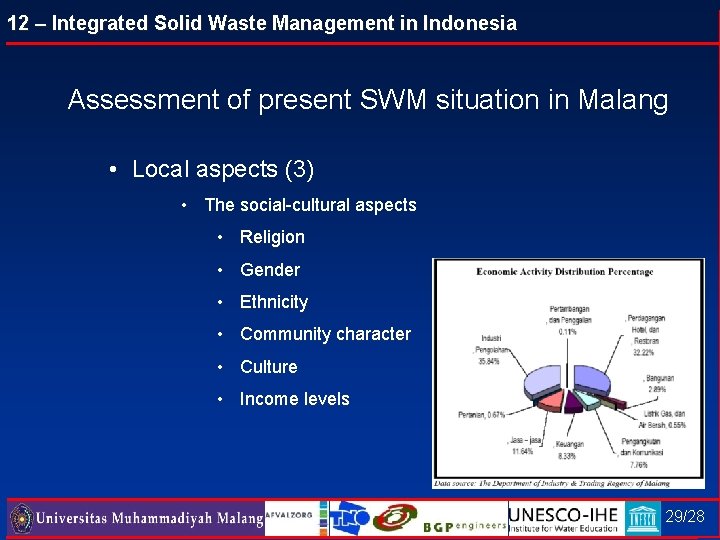
12 – Integrated Solid Waste Management in Indonesia Assessment of present SWM situation in Malang • Local aspects (3) • The social-cultural aspects • Religion • Gender • Ethnicity • Community character • Culture • Income levels 29/28
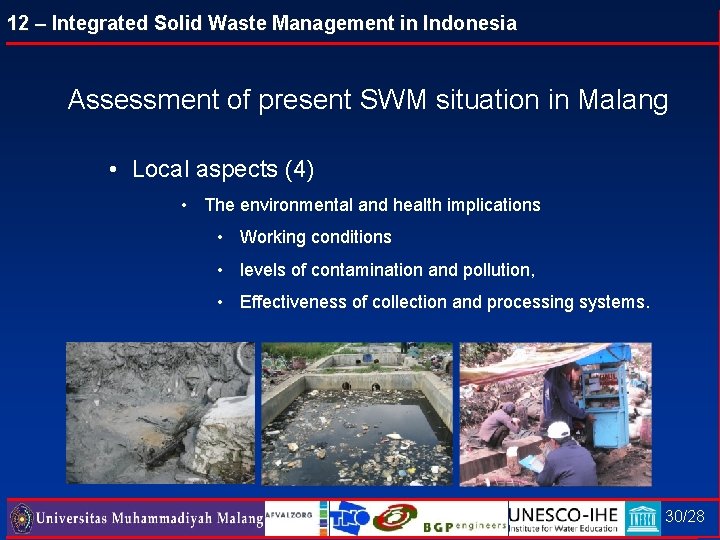
12 – Integrated Solid Waste Management in Indonesia Assessment of present SWM situation in Malang • Local aspects (4) • The environmental and health implications • Working conditions • levels of contamination and pollution, • Effectiveness of collection and processing systems. 30/28
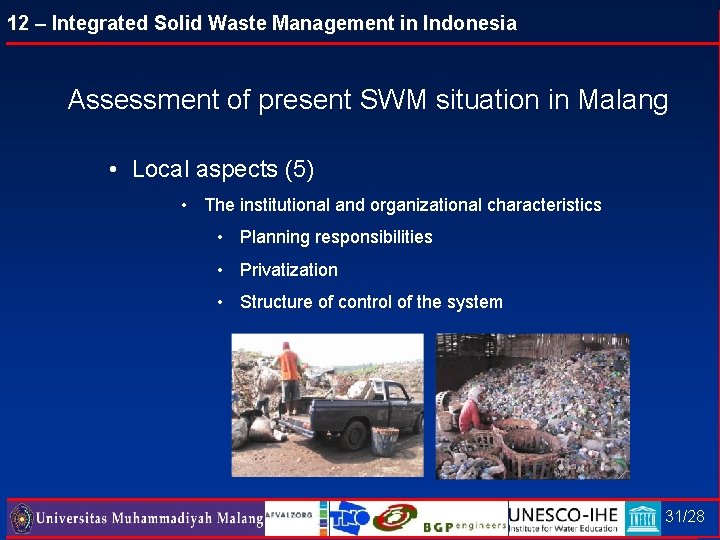
12 – Integrated Solid Waste Management in Indonesia Assessment of present SWM situation in Malang • Local aspects (5) • The institutional and organizational characteristics • Planning responsibilities • Privatization • Structure of control of the system 31/28
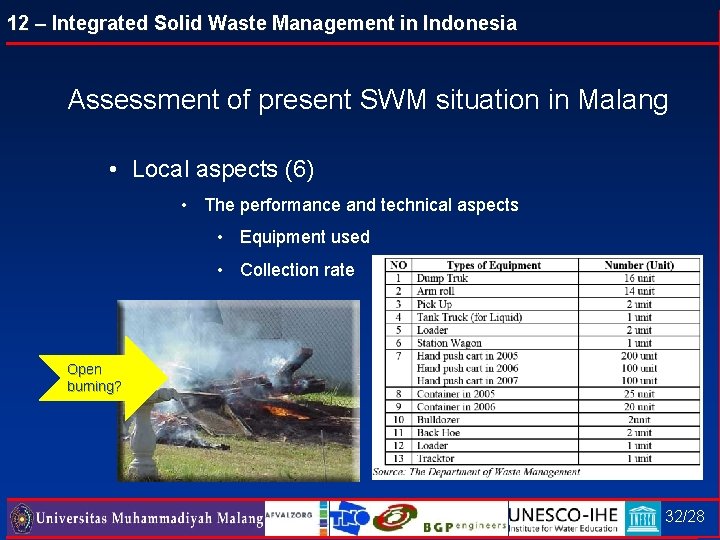
12 – Integrated Solid Waste Management in Indonesia Assessment of present SWM situation in Malang • Local aspects (6) • The performance and technical aspects • Equipment used • Collection rate Open burning? 32/28
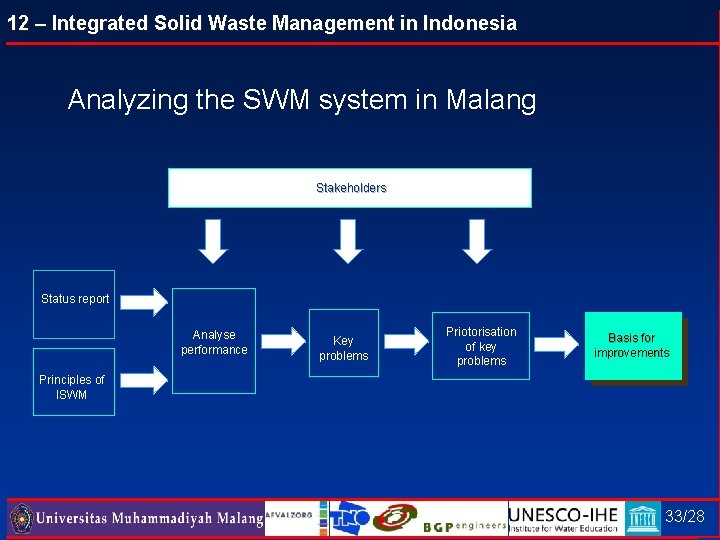
12 – Integrated Solid Waste Management in Indonesia Analyzing the SWM system in Malang Stakeholders Status report Analyse performance Key problems Priotorisation of key problems Basis for improvements Principles of ISWM 33/28
12 – Integrated Solid Waste Management in Indonesia Analyzing the SWM system in Malang • Analyse the present situation against the principles of ISWM: • Efficiency • Effectiveness • Equity • Fairness • Sustainability 34/28
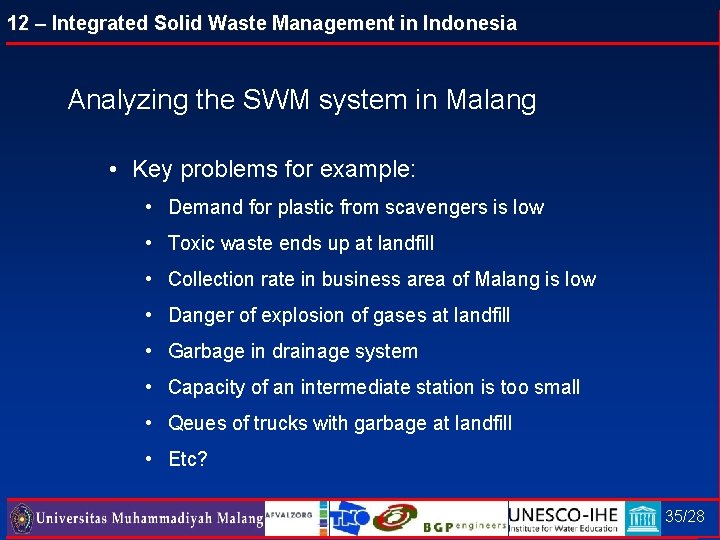
12 – Integrated Solid Waste Management in Indonesia Analyzing the SWM system in Malang • Key problems for example: • Demand for plastic from scavengers is low • Toxic waste ends up at landfill • Collection rate in business area of Malang is low • Danger of explosion of gases at landfill • Garbage in drainage system • Capacity of an intermediate station is too small • Qeues of trucks with garbage at landfill • Etc? 35/28
12 – Integrated Solid Waste Management in Indonesia Improvements for the SWM system in Malang • Possible improvements to address key problems • Should be efficient, effective, equite, fair and sustainable • Should not negatively affect other stakeholders, waste system elements, or local aspects. 36/28
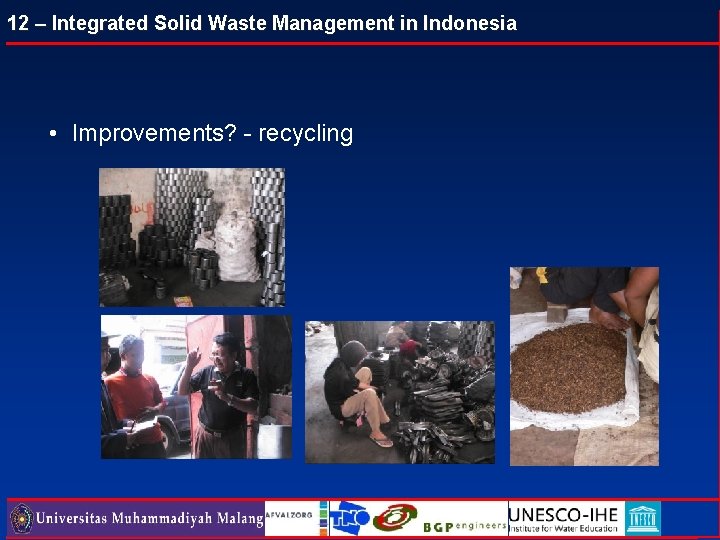
12 – Integrated Solid Waste Management in Indonesia • Improvements? - recycling
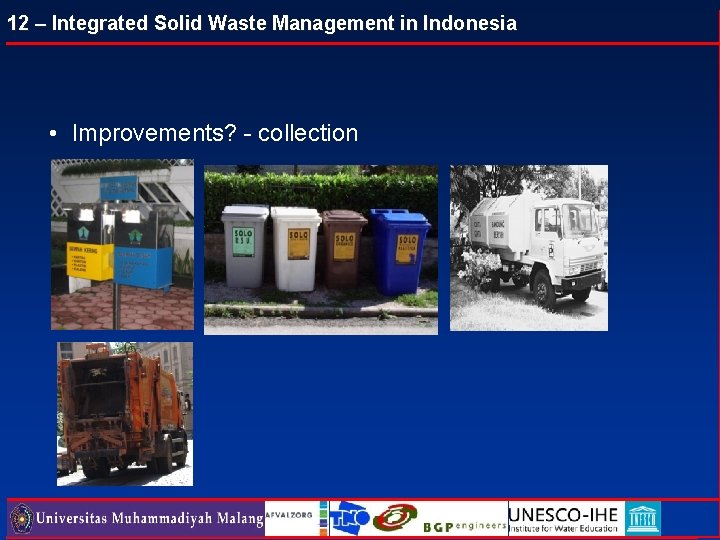
12 – Integrated Solid Waste Management in Indonesia • Improvements? - collection
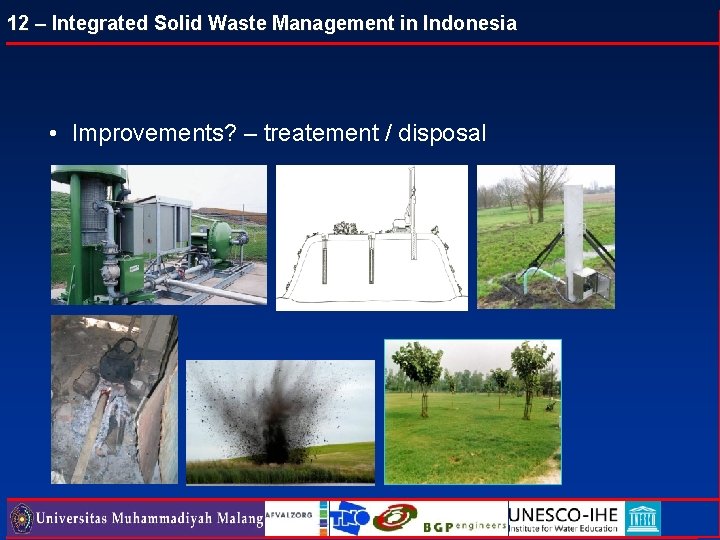
12 – Integrated Solid Waste Management in Indonesia • Improvements? – treatement / disposal
12 – Integrated Solid Waste Management in Indonesia Conclusion • No ‘magical solution’ to all waste problems. • The waste system should be considered as an integrated whole and seen through the lens of all aspects to analyze the situation and to suggest improvements that fit the local situation.