
12 Growth Theory Previously Economic growth is central
- Slides: 43
12 Growth Theory
Previously • Economic growth is central to modern macroeconomics and helps us understand how living standards might be improved. • Only recently have standards of living improved. • Changes in per capita real GDP affect welfare. • Factors that contribute to economic growth: – Resources – Technology – Institutions
Big Questions 1. 2. 3. 4. How do macroeconomic theories evolve? What is the Solow growth model? How does technology affect growth? Why are institutions the key to economic growth?
Solow Growth Model • Sources of economic growth: – Resources – Technology – Institutions • Growth theory started almost 60 years ago with Robert Solow • The Solow model still forms the basis of growth theory, but theory has changed significantly over the past two decades
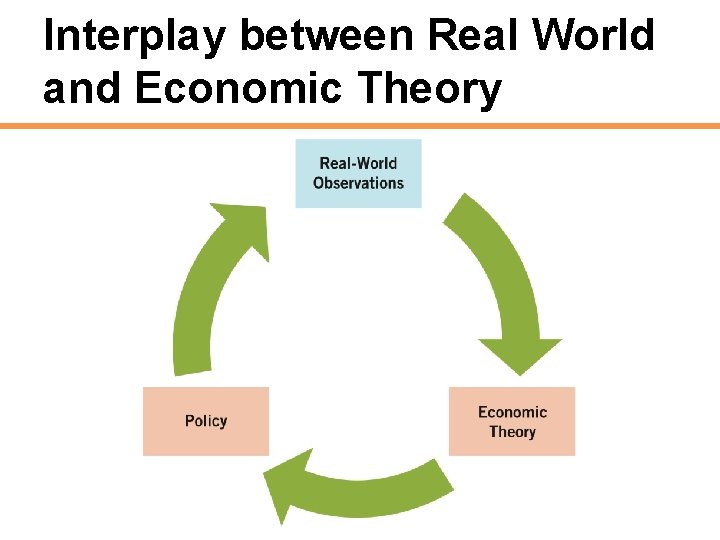
Interplay between Real World and Economic Theory
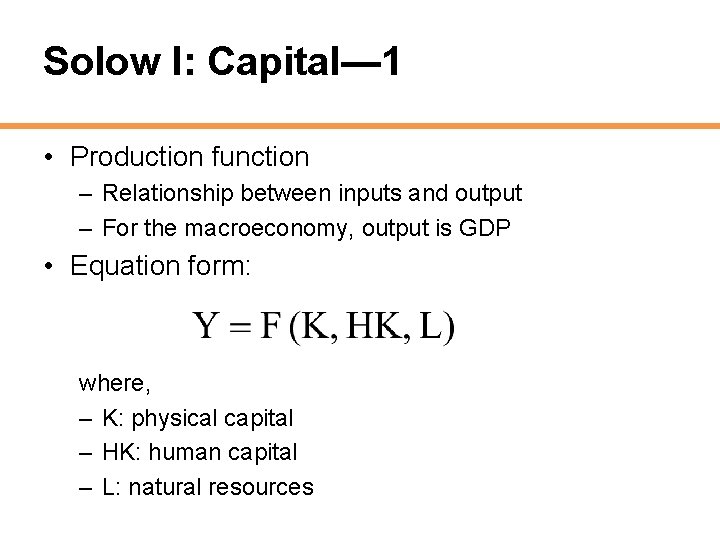
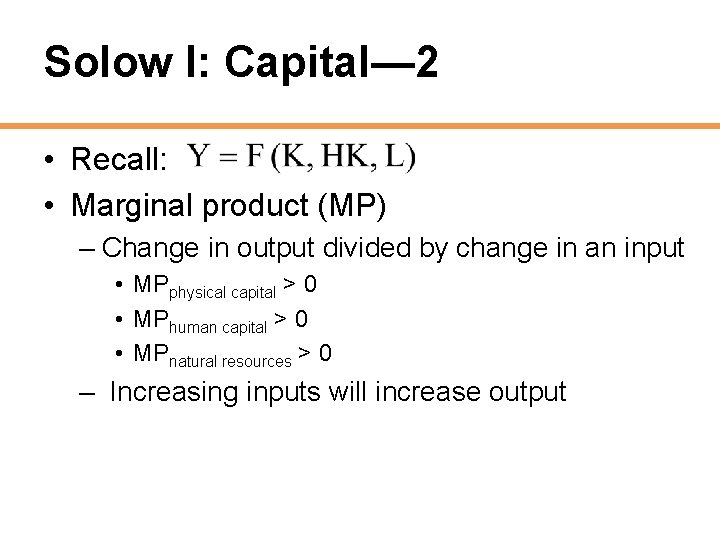
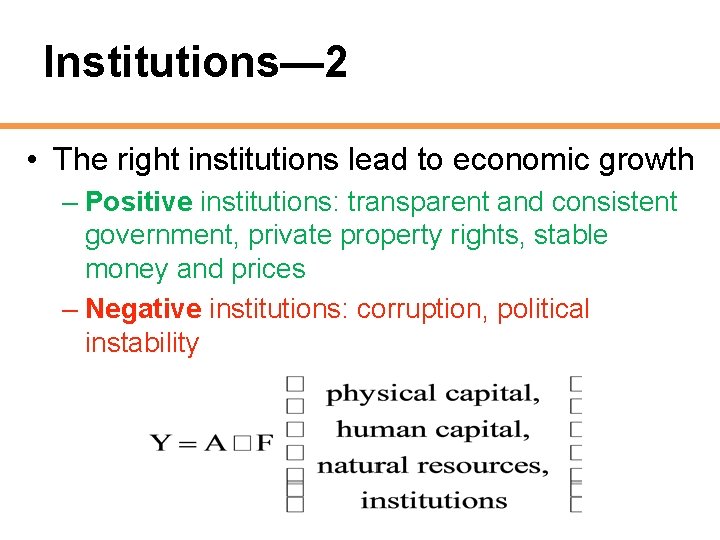
Solow I: Capital— 1 • Production function – Relationship between inputs and output – For the macroeconomy, output is GDP • Equation form: where, – K: physical capital – HK: human capital – L: natural resources
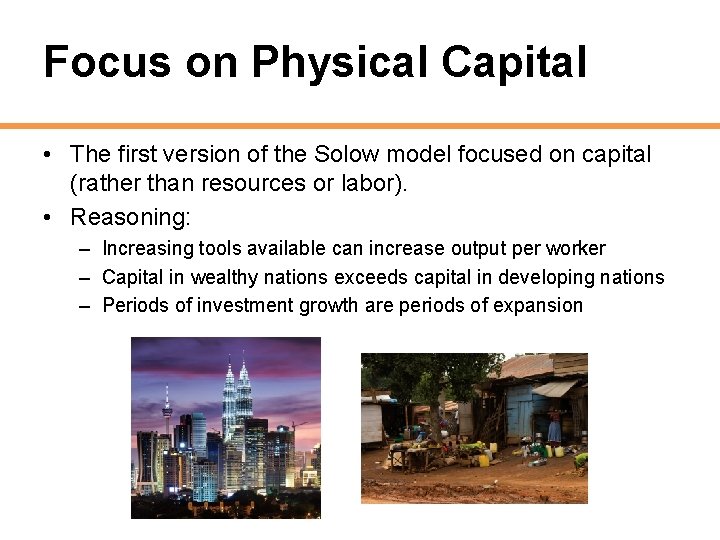
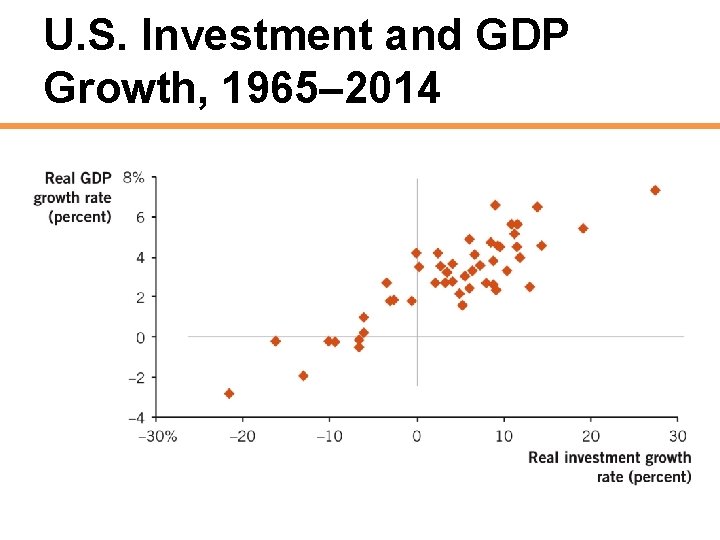
Focus on Physical Capital • The first version of the Solow model focused on capital (rather than resources or labor). • Reasoning: – Increasing tools available can increase output per worker – Capital in wealthy nations exceeds capital in developing nations – Periods of investment growth are periods of expansion
U. S. Investment and GDP Growth, 1965– 2014
Solow I: Capital— 2 • Recall: • Marginal product (MP) – Change in output divided by change in an input • MPphysical capital > 0 • MPhuman capital > 0 • MPnatural resources > 0 – Increasing inputs will increase output
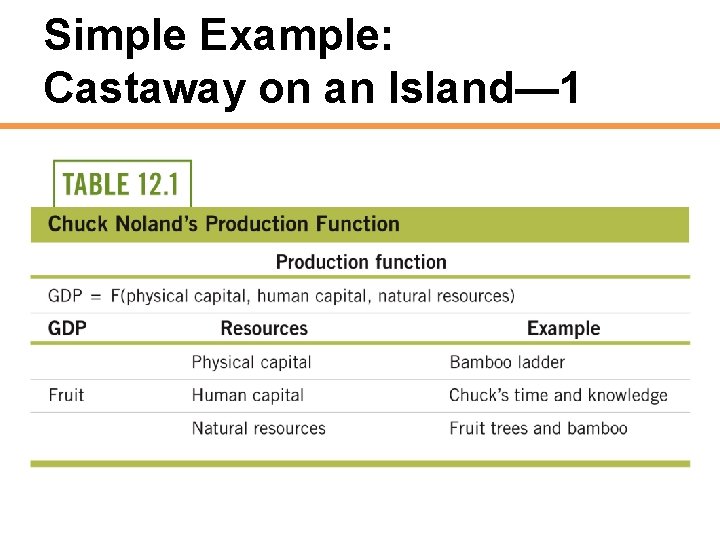
Simple Example: Castaway on an Island— 1
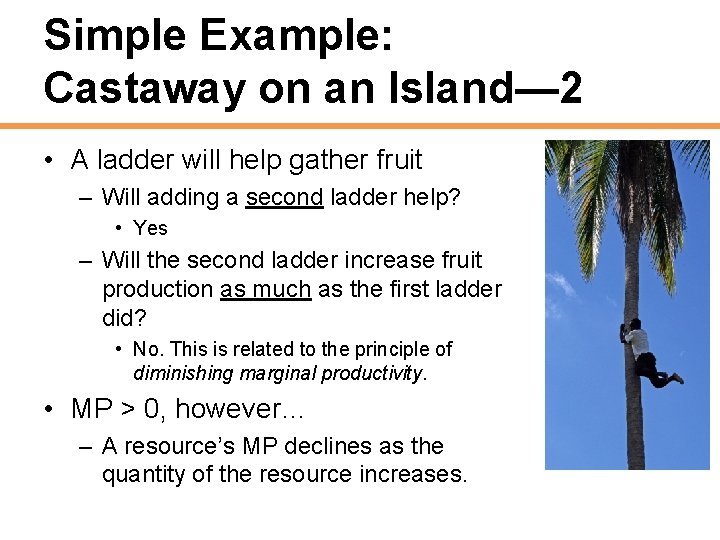
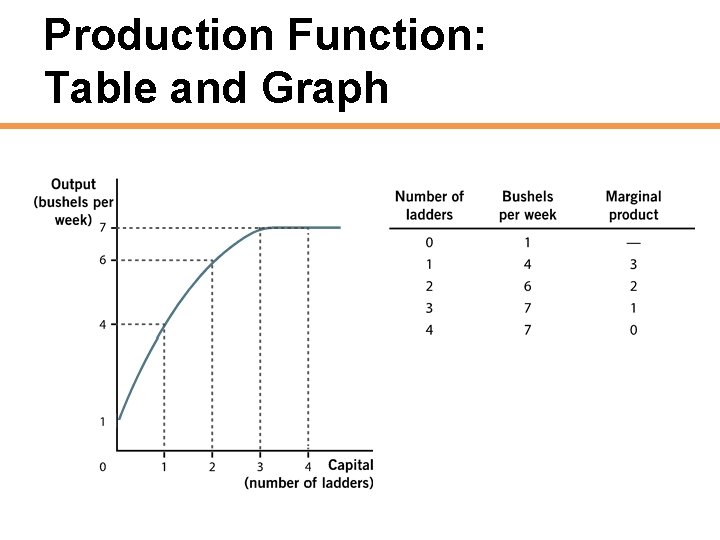
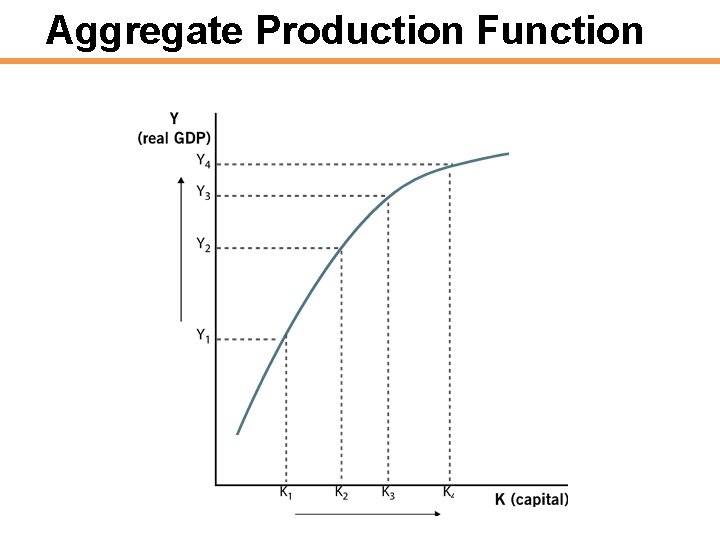
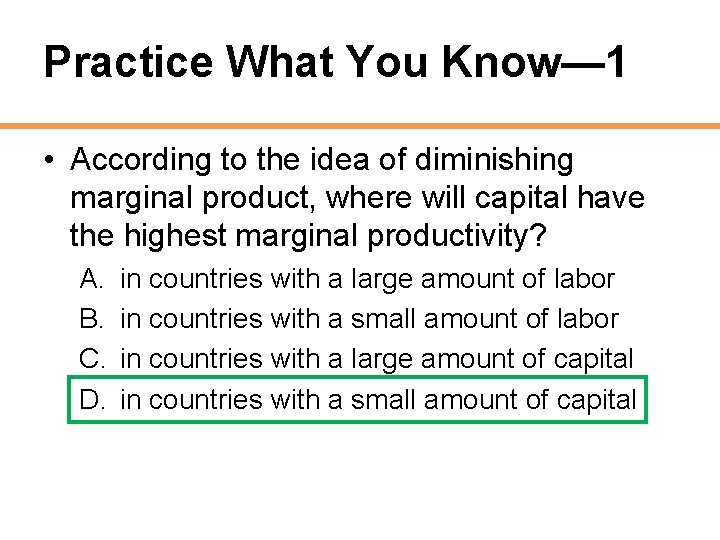
Simple Example: Castaway on an Island— 2 • A ladder will help gather fruit – Will adding a second ladder help? • Yes – Will the second ladder increase fruit production as much as the first ladder did? • No. This is related to the principle of diminishing marginal productivity. • MP > 0, however… – A resource’s MP declines as the quantity of the resource increases.
Production Function: Table and Graph
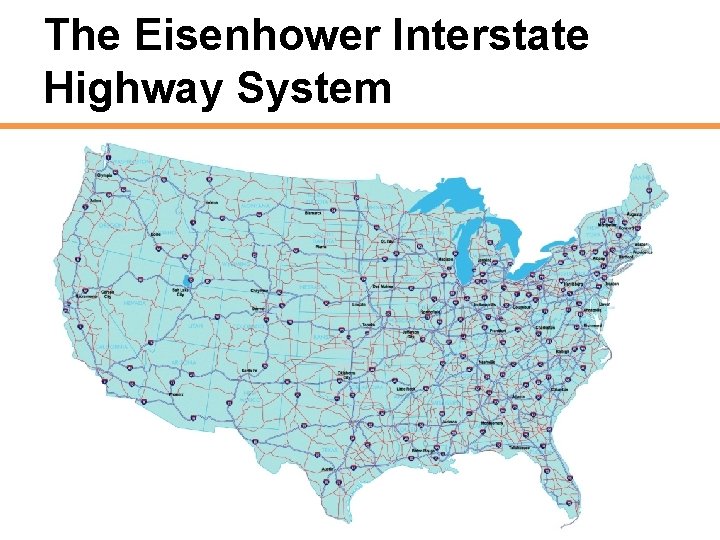
The Eisenhower Interstate Highway System
Aggregate Production Function
Practice What You Know— 1 • According to the idea of diminishing marginal product, where will capital have the highest marginal productivity? A. B. C. D. in countries with a large amount of labor in countries with a small amount of labor in countries with a large amount of capital in countries with a small amount of capital
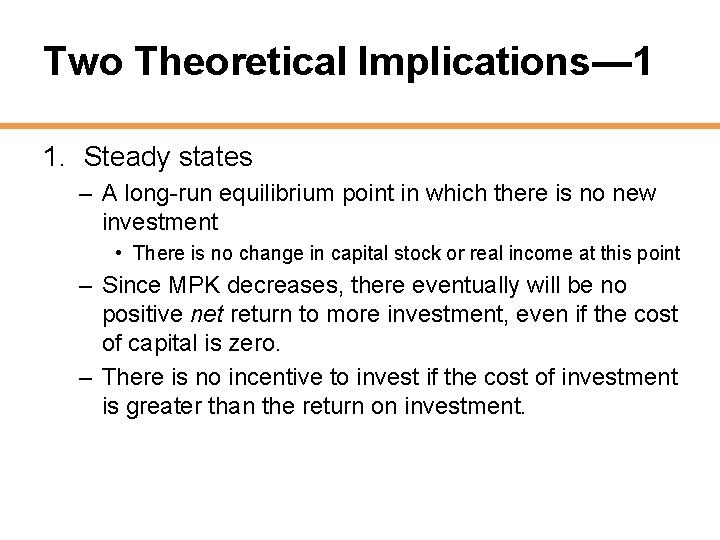
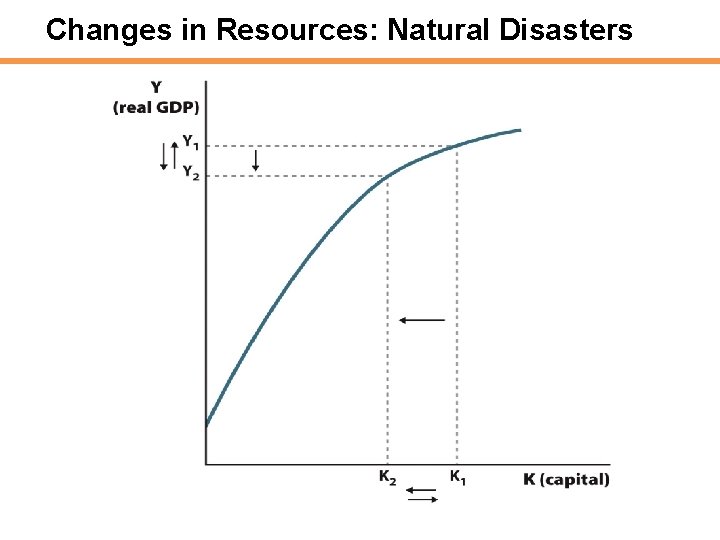
Two Theoretical Implications— 1 1. Steady states – A long-run equilibrium point in which there is no new investment • There is no change in capital stock or real income at this point – Since MPK decreases, there eventually will be no positive net return to more investment, even if the cost of capital is zero. – There is no incentive to invest if the cost of investment is greater than the return on investment.
Changes in Resources: Natural Disasters
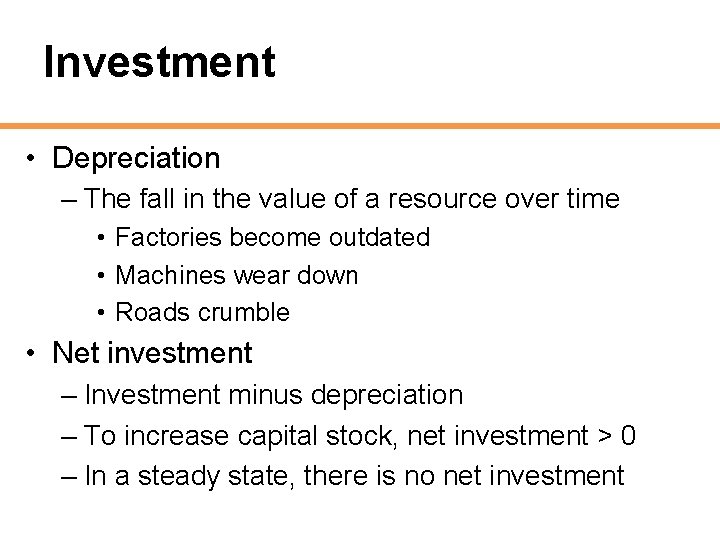
Investment • Depreciation – The fall in the value of a resource over time • Factories become outdated • Machines wear down • Roads crumble • Net investment – Investment minus depreciation – To increase capital stock, net investment > 0 – In a steady state, there is no net investment
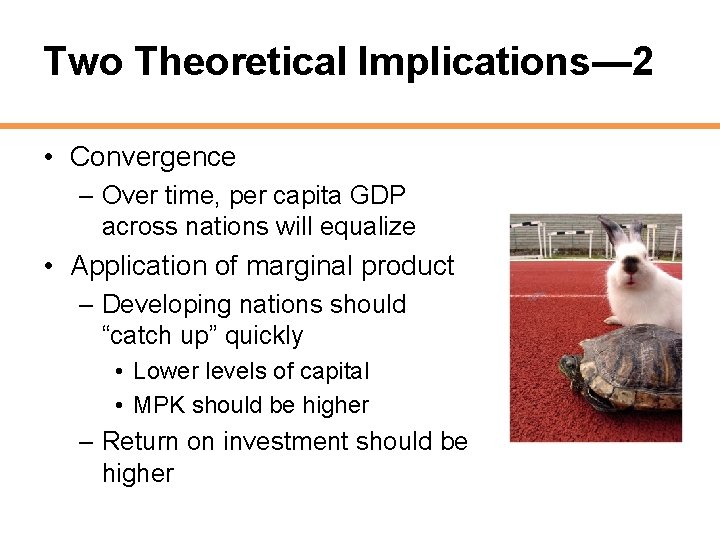
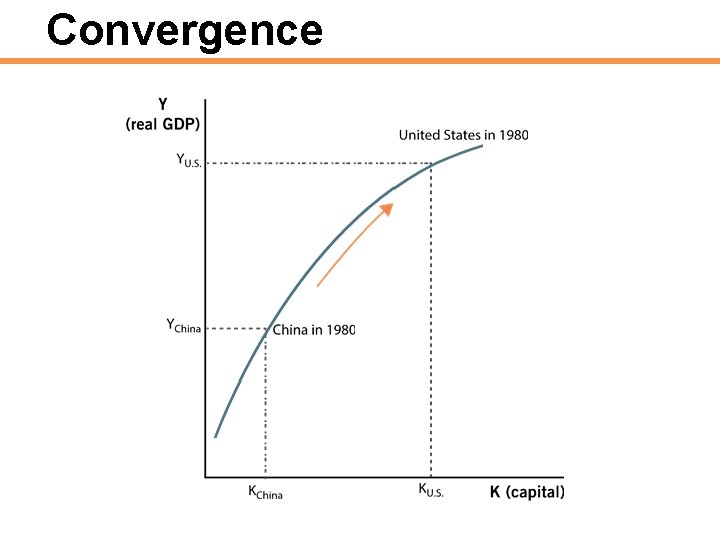
Two Theoretical Implications— 2 • Convergence – Over time, per capita GDP across nations will equalize • Application of marginal product – Developing nations should “catch up” quickly • Lower levels of capital • MPK should be higher – Return on investment should be higher
Convergence
Two Theoretical Implications— 3 • Does our model match the data? 1) Is a factory in Haiti more productive than a factory in Germany? 2) Are more people willing to invest in Haiti instead of the United States because of a higher expected rate of return? • Data show: – Growth in wealthy nations outpaces poor countries – No sign of convergence
Capital and Growth • Capital appears to cause economic growth – Strong correlation between wealth and output – Workers are more productive with more tools • However: – Capital alone is not enough to explain sustained growth! – Need a more advanced version of the Solow model to explain economic growth
Practice What You Know— 2 • The original Solow model focused on what as the main source of economic growth? A. B. C. D. labor education capital effective government
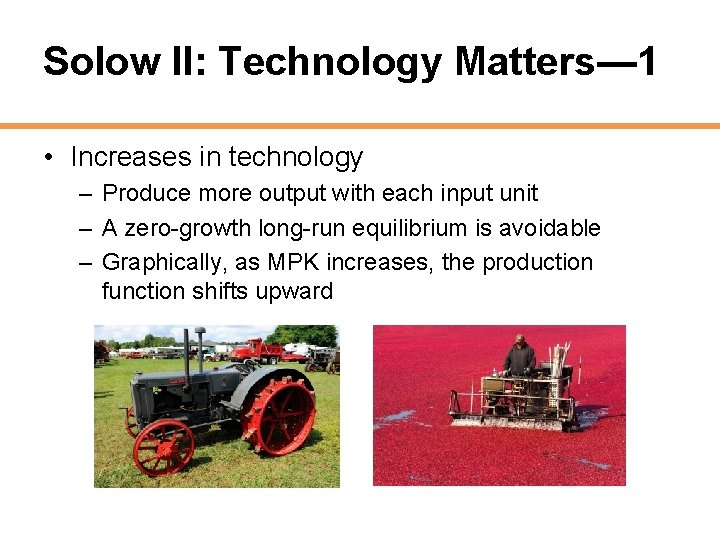
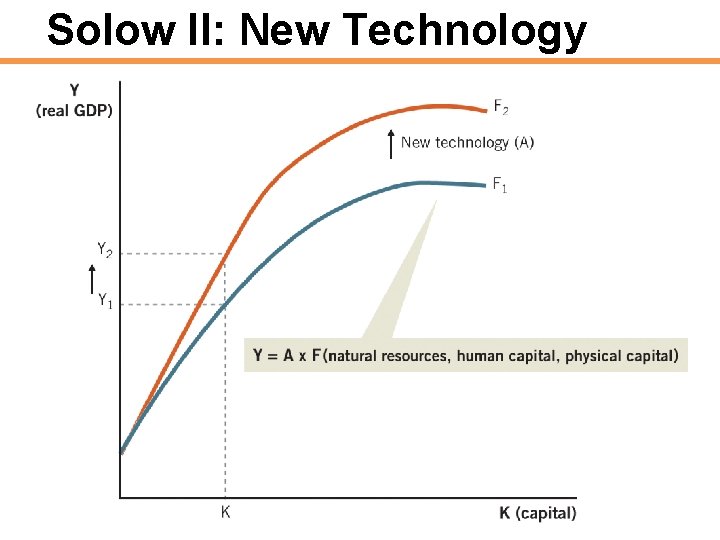
Solow II: Technology Matters— 1 • Increases in technology – Produce more output with each input unit – A zero-growth long-run equilibrium is avoidable – Graphically, as MPK increases, the production function shifts upward
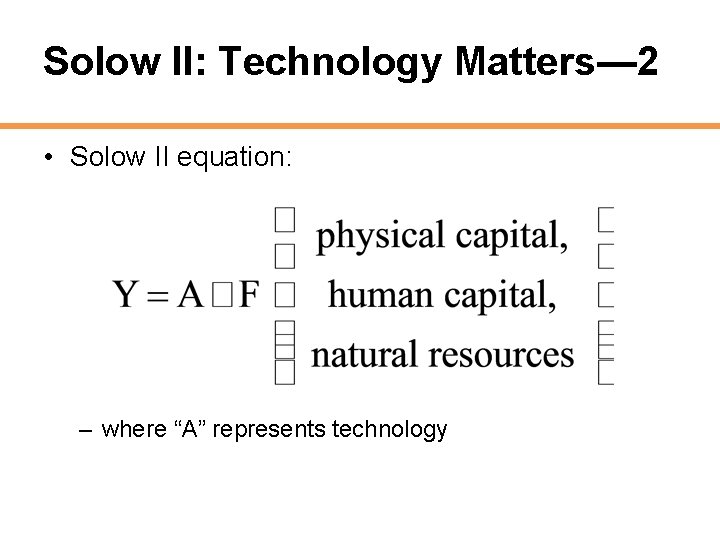
Solow II: Technology Matters— 2 • Solow II equation: – where “A” represents technology
Solow II: New Technology
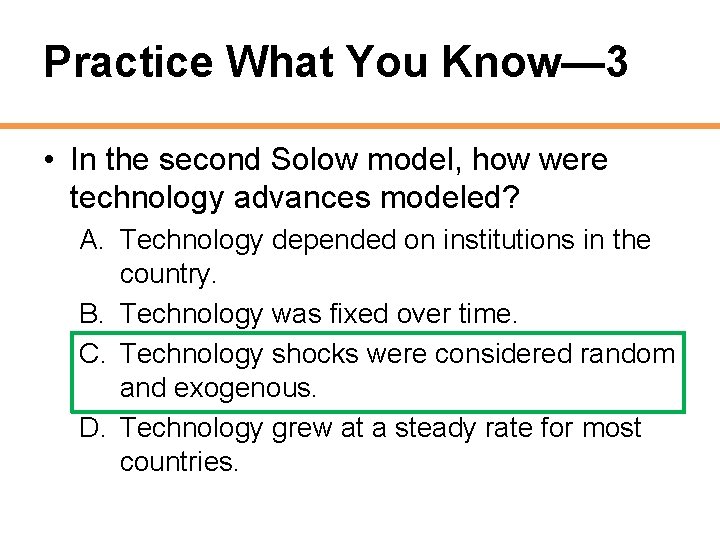
Practice What You Know— 3 • In the second Solow model, how were technology advances modeled? A. Technology depended on institutions in the country. B. Technology was fixed over time. C. Technology shocks were considered random and exogenous. D. Technology grew at a steady rate for most countries.
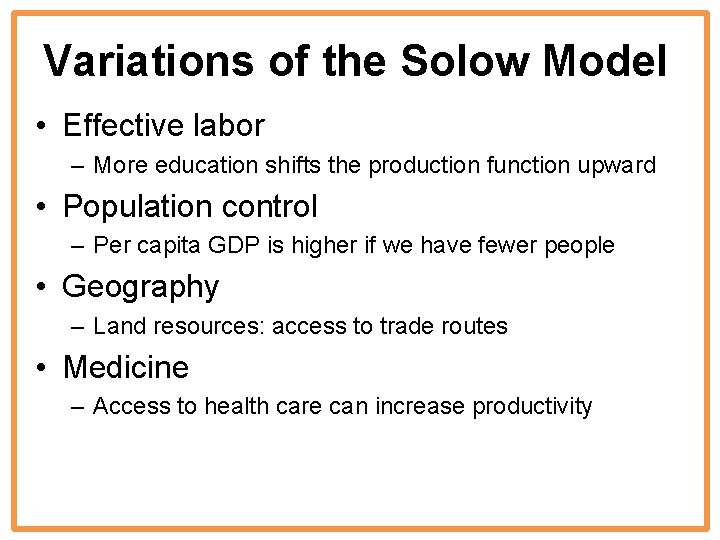
Variations of the Solow Model • Effective labor – More education shifts the production function upward • Population control – Per capita GDP is higher if we have fewer people • Geography – Land resources: access to trade routes • Medicine – Access to health care can increase productivity
Exogenous Technical Change • Assumption of exogenous technology shocks – Technology increases just “happen” to hit • Nothing in the economy produces the change – Until the 1980 s when new models incorporated technological change into the model (endogenous) • Two reasons for this assumption: – Technological progress often is lucky and random – Made theoretical models easier to solve
Policy Implications of the Solow Growth Theory • Results of Solow – Wealth comes from capital and technology – Wealthy nations fund capital investment in poor countries • Two types of aid in the 1950 s and 1960 s – Actual capital goods were built with aid – Aid given to developing countries to fund infrastructure • Results of these policies – Some countries received billions in aid and are no better off today than they were in 1960 – Some countries received almost no aid and have grown rapidly
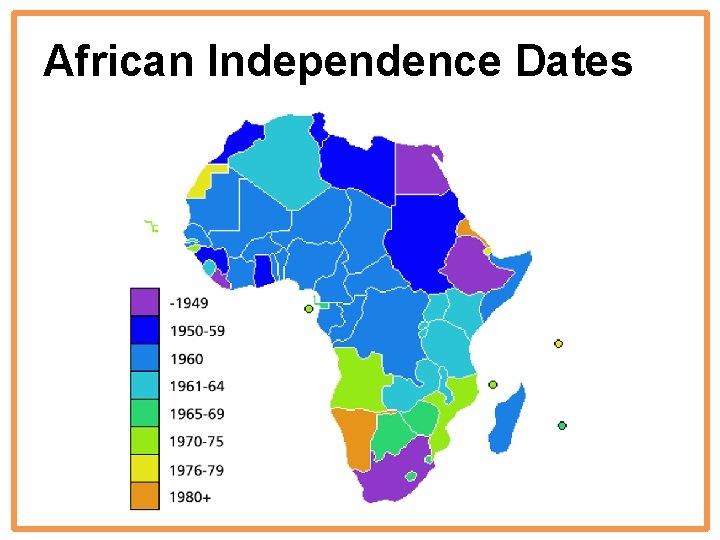
Solow Case Study: Africa • From 1956 to 1977 – Thirty-seven African countries achieved independence – Unique opportunity to apply the Solow model – Heavy capital investment projects in Africa • Results – Fifty years later, policies failed across the continent – Why? Incomplete growth theory, faulty policy – Observations led to a reexamination of growth theory
African Independence Dates
Modern Growth Theory • Modern growth theory – Some economies grow faster for reasons specific to those economies – Technological change is now considered endogenous • Create an environment that encourages technological change • Robert Lucas: "Is there some action a government of India could take that would lead the Indian economy to grow like Indonesia’s or Egypt’s? If so, what exactly? If not, what is it about the “nature of India” that makes it so? The consequences for human welfare involved in questions like these are simply staggering: once one starts to think about them, it is hard to think of anything else. "
Economics in Modern Marvels, “Harvesting 2” • Modern Marvels (History Channel) – This episode features technological advancements in the food production industry. – Technology and mechanization can produce food cheaper.
Practice What You Know— 4 • How does modern growth theory model technology and technological change? A. Technology change is endogenous and depends on factors that currently exist in the economy. B. Technology changes faster in less-developed countries and convergence will occur. C. Technological advances occur at faster rates with a stronger government. D. Technology grows exponentially.
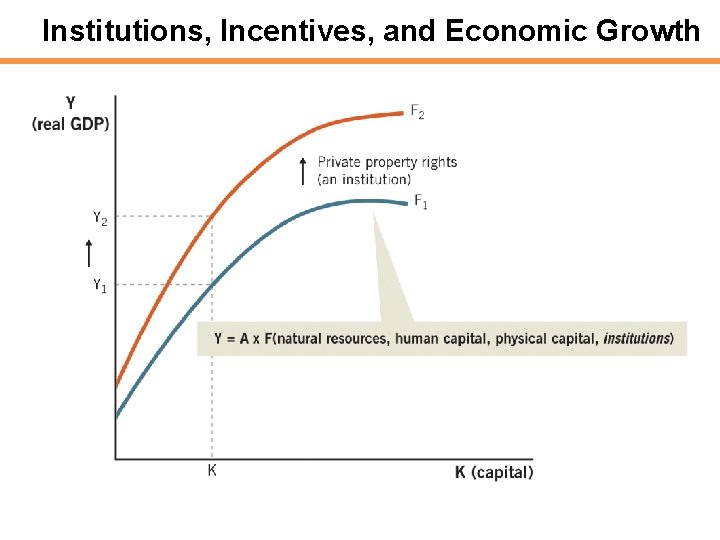
Institutions— 1 • Institutions: – Significant practices, relationships, or organizations in society that frame the incentive structure within which individuals and business firms act
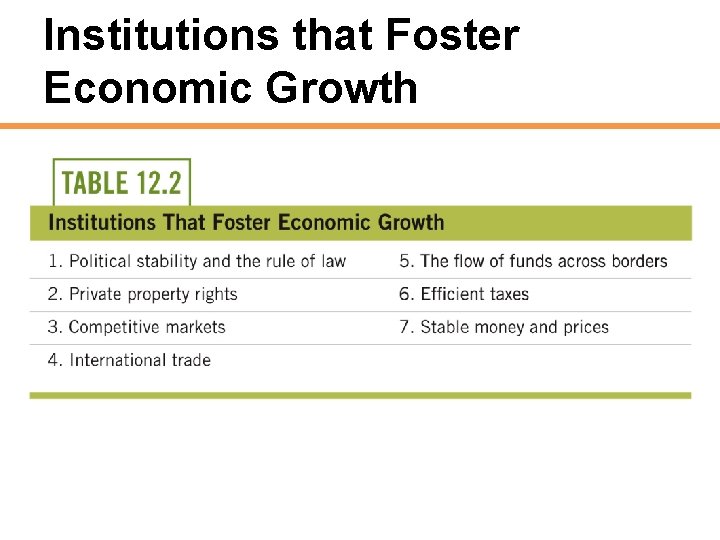
Institutions— 2 • The right institutions lead to economic growth – Positive institutions: transparent and consistent government, private property rights, stable money and prices – Negative institutions: corruption, political instability
Institutions that Foster Economic Growth
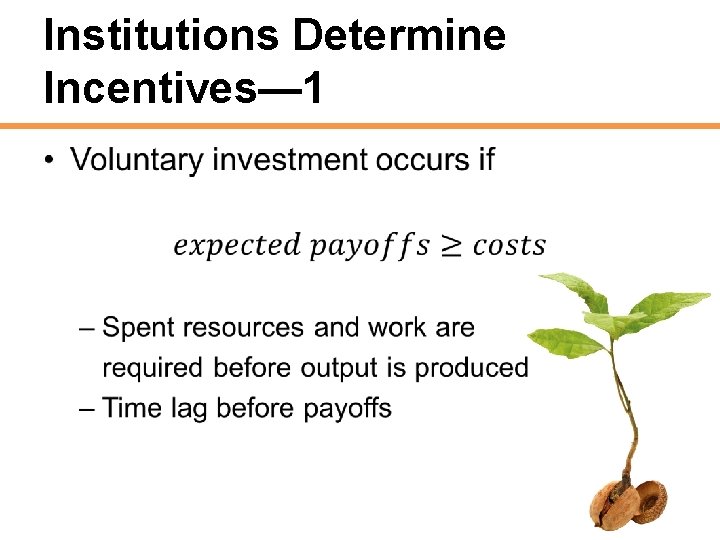
Institutions Determine Incentives— 1 •
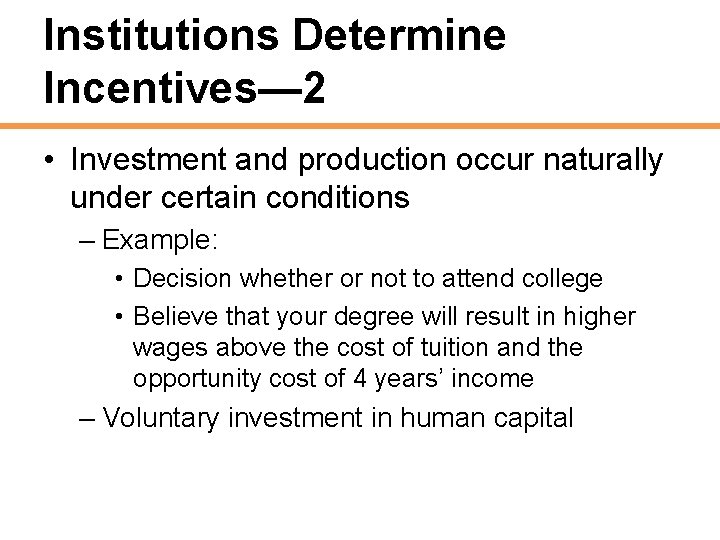
Institutions Determine Incentives— 2 • Investment and production occur naturally under certain conditions – Example: • Decision whether or not to attend college • Believe that your degree will result in higher wages above the cost of tuition and the opportunity cost of 4 years’ income – Voluntary investment in human capital
Institutions, Incentives, and Economic Growth
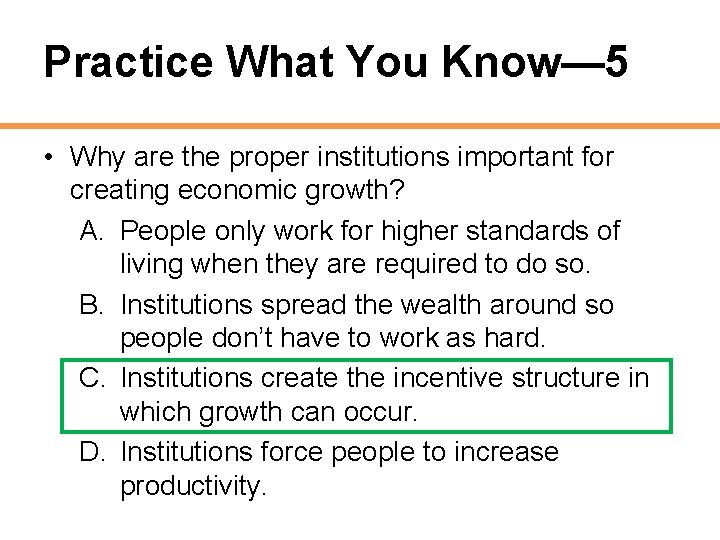
Practice What You Know— 5 • Why are the proper institutions important for creating economic growth? A. People only work for higher standards of living when they are required to do so. B. Institutions spread the wealth around so people don’t have to work as hard. C. Institutions create the incentive structure in which growth can occur. D. Institutions force people to increase productivity.
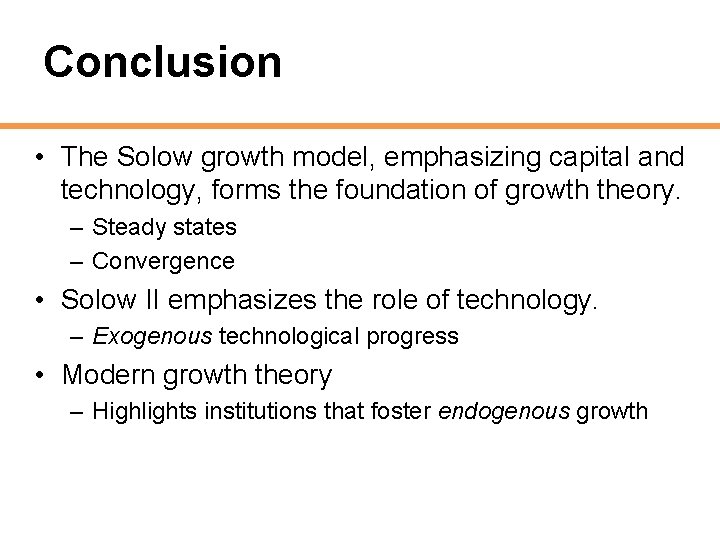
Conclusion • The Solow growth model, emphasizing capital and technology, forms the foundation of growth theory. – Steady states – Convergence • Solow II emphasizes the role of technology. – Exogenous technological progress • Modern growth theory – Highlights institutions that foster endogenous growth