
12 Chapter 12 Instructional Evaluation Several Key Terms



- Slides: 27
第 12章 Chapter 12 教学评价 Instructional Evaluation
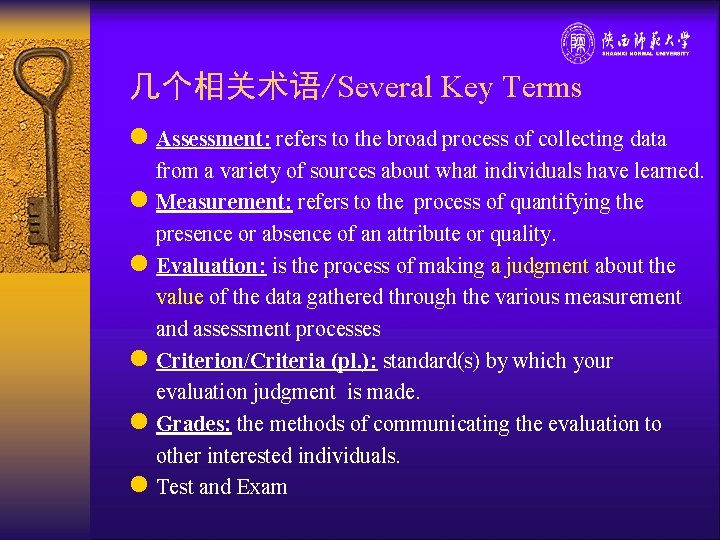
几个相关术语/Several Key Terms l Assessment: refers to the broad process of collecting data l l l from a variety of sources about what individuals have learned. Measurement: refers to the process of quantifying the presence or absence of an attribute or quality. Evaluation: is the process of making a judgment about the value of the data gathered through the various measurement and assessment processes Criterion/Criteria (pl. ): standard(s) by which your evaluation judgment is made. Grades: the methods of communicating the evaluation to other interested individuals. Test and Exam
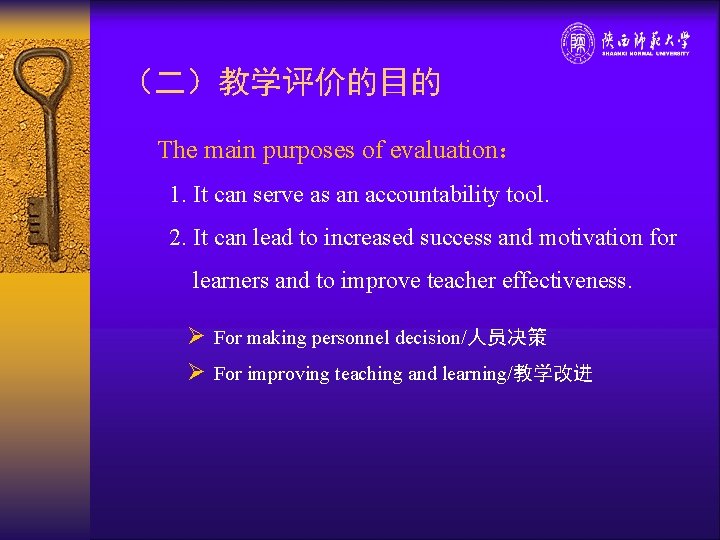
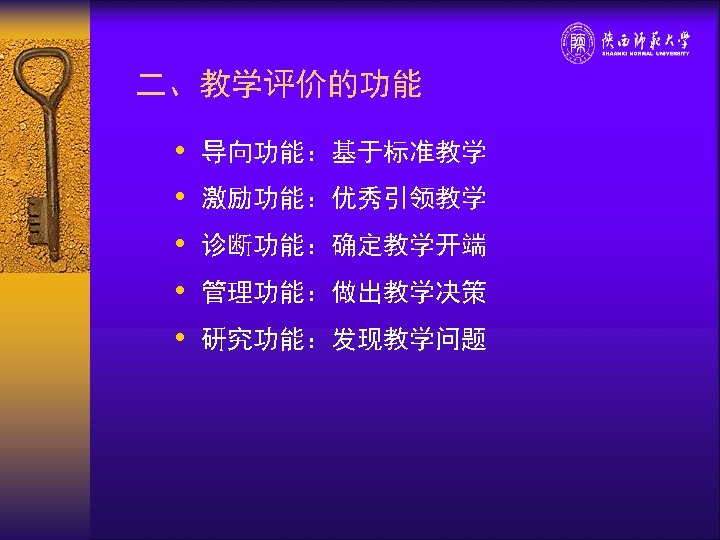
(二)教学评价的目的 The main purposes of evaluation: 1. It can serve as an accountability tool. 2. It can lead to increased success and motivation for learners and to improve teacher effectiveness. Ø For making personnel decision/人员决策 Ø For improving teaching and learning/教学改进
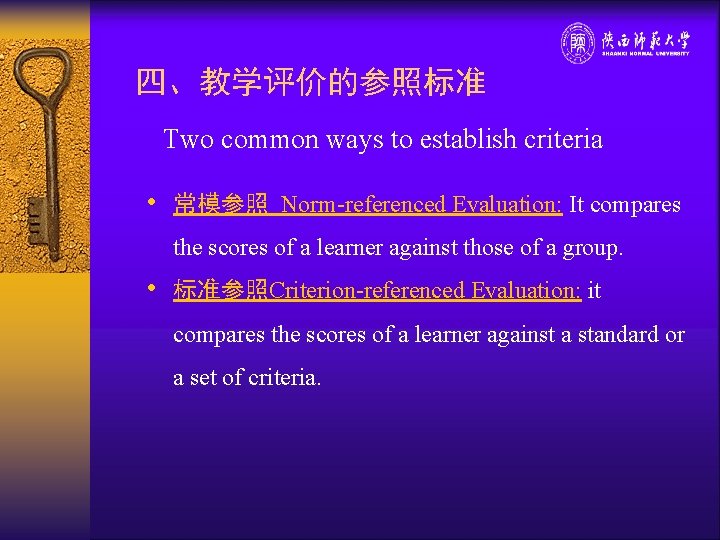
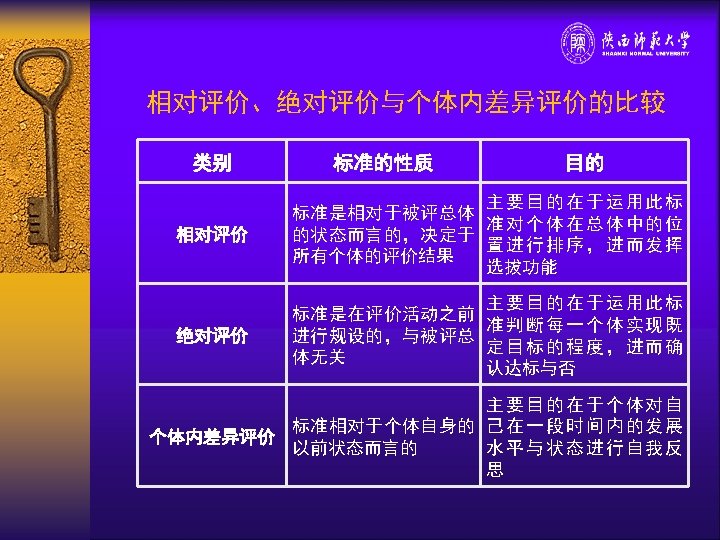
四、教学评价的参照标准 Two common ways to establish criteria • 常模参照 Norm-referenced Evaluation: It compares the scores of a learner against those of a group. • 标准参照Criterion-referenced Evaluation: it compares the scores of a learner against a standard or a set of criteria.
Questions: Ø What do you see as the uses and advantages of norm- referenced evaluation and criterion-referenced evaluation? Ø Are there occasions when both of the evaluations are used ? If so, try to describe the circumstances.
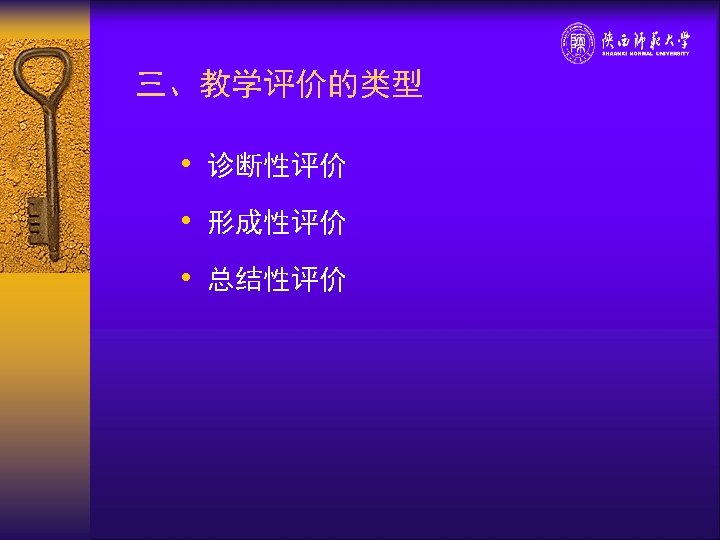
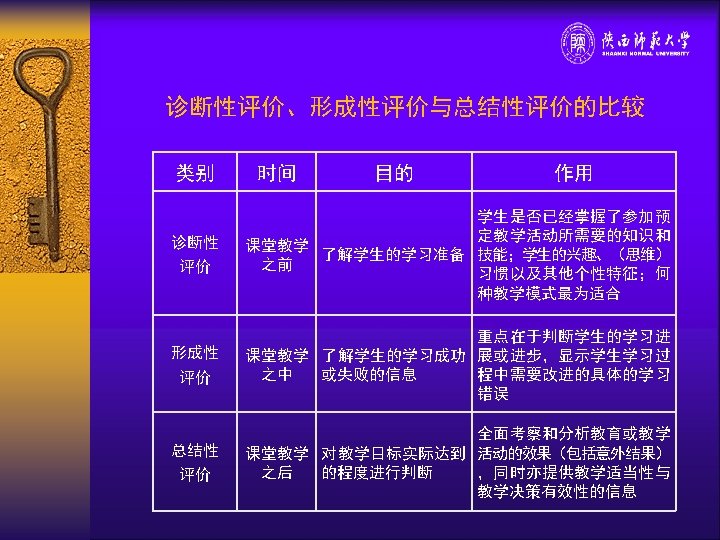
Relationships between assessment and the instructional process: • Placement assessment: (at the beginning of a new course. ) It place learners in instructional settings that are at the appropriate level if difficulty.
• Formative assessment: (when instructional sequence is occurring. ) It provide formative information so that the teacher can adjust the learning sequence to meet the needs of the learners. • Summative assessment: (at the conclusion of an instructional unit. ) It provide summative information at the end of an instructional sequence so that fair and accurate evaluations of progress can be made.
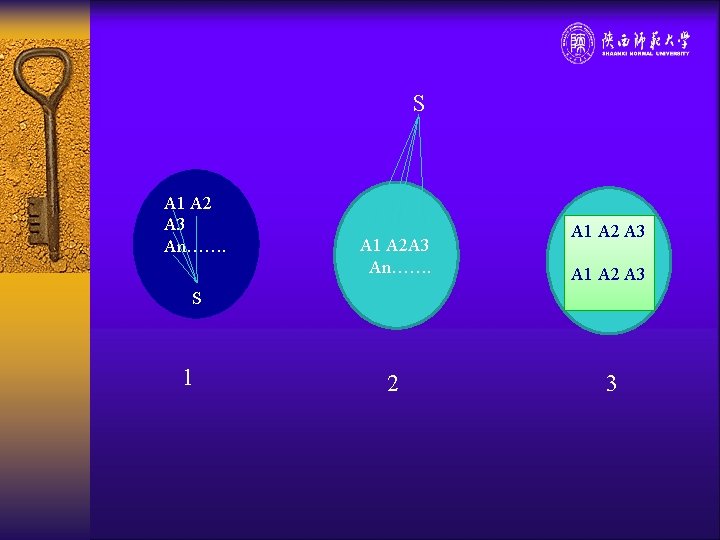
S A 1 A 2 A 3 An……. A 1 A 2 A 3 S 1 2 3