
12 9 Diazomethane Carbenes and Cyclopropane Synthesis Cyclopropanes
12 -9 Diazomethane, Carbenes and Cyclopropane Synthesis Cyclopropanes can be readily prepared by the addition of a carbene to the double bond of an alkene. A carbene has the general structure, R 2 C: , in which the central carbon is surrounded by six electrons (sextet), and is thus electron deficient. The electron-deficient carbene readily adds to an electron rich alkene. 38
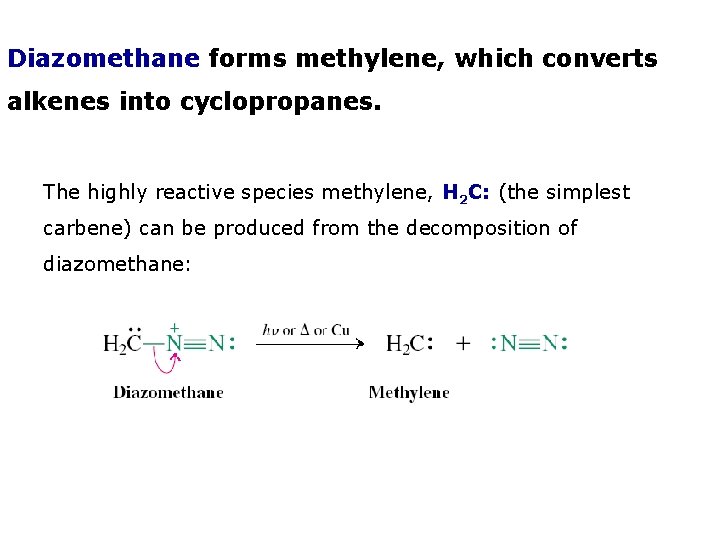
Diazomethane forms methylene, which converts alkenes into cyclopropanes. The highly reactive species methylene, H 2 C: (the simplest carbene) can be produced from the decomposition of diazomethane:
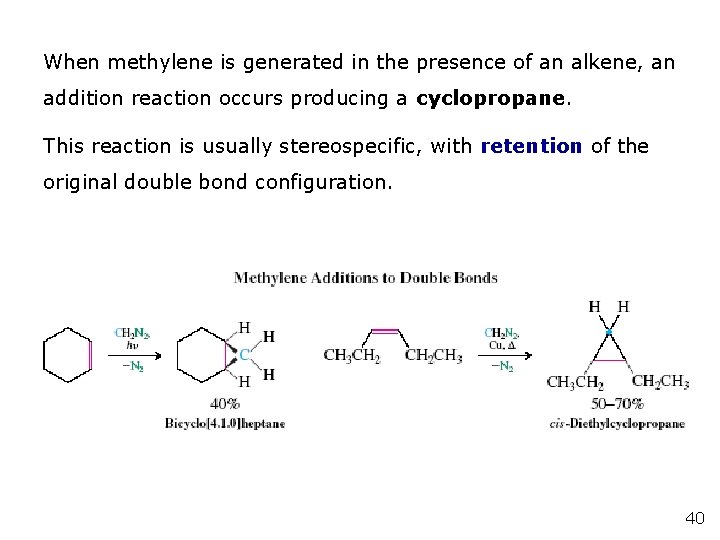
When methylene is generated in the presence of an alkene, an addition reaction occurs producing a cyclopropane. This reaction is usually stereospecific, with retention of the original double bond configuration. 40
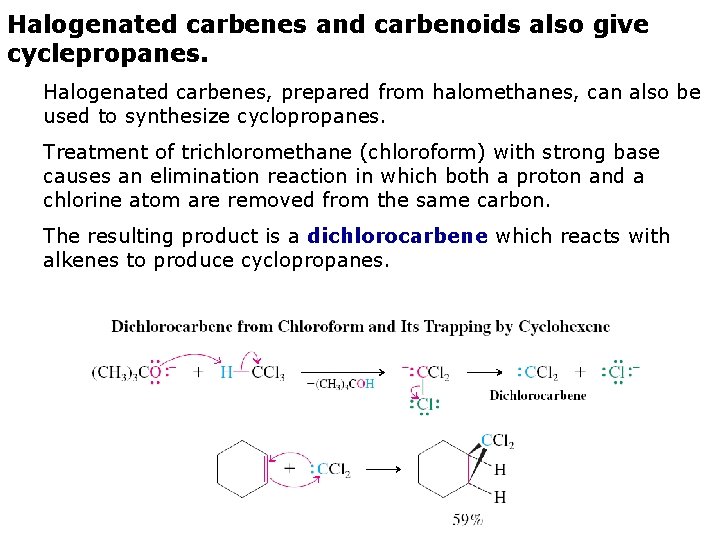
Halogenated carbenes and carbenoids also give cyclepropanes. Halogenated carbenes, prepared from halomethanes, can also be used to synthesize cyclopropanes. Treatment of trichloromethane (chloroform) with strong base causes an elimination reaction in which both a proton and a chlorine atom are removed from the same carbon. The resulting product is a dichlorocarbene which reacts with alkenes to produce cyclopropanes.
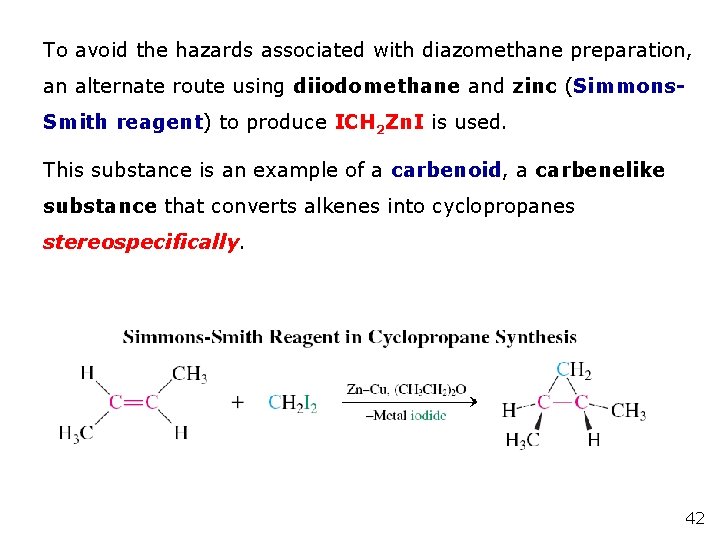
To avoid the hazards associated with diazomethane preparation, an alternate route using diiodomethane and zinc (Simmons. Smith reagent) to produce ICH 2 Zn. I is used. This substance is an example of a carbenoid, a carbenelike substance that converts alkenes into cyclopropanes stereospecifically. 42
12 -10 Oxacyclopropane (Epoxide) Synthesis: Epoxidation by Peroxycarboxylic Acids Oxacyclopropanes contain a single oxygen atom connected to two carbons to form a three-membered ring. Oxacyclopropanes may be converted into vicinal anti diols.
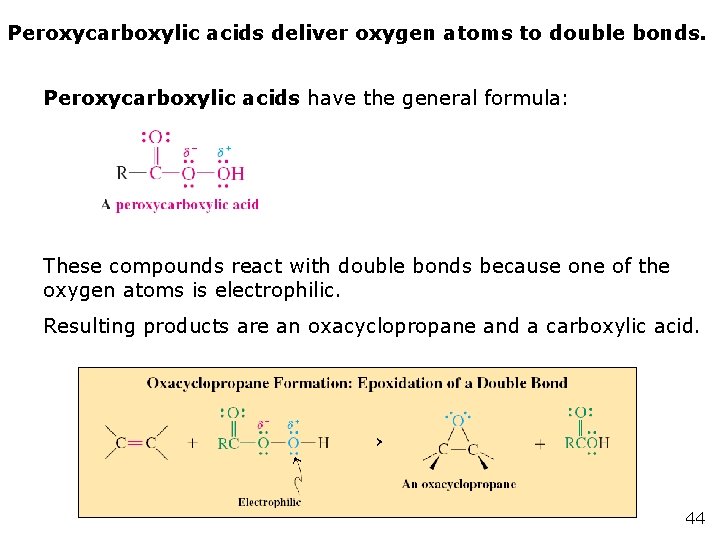
Peroxycarboxylic acids deliver oxygen atoms to double bonds. Peroxycarboxylic acids have the general formula: These compounds react with double bonds because one of the oxygen atoms is electrophilic. Resulting products are an oxacyclopropane and a carboxylic acid. 44
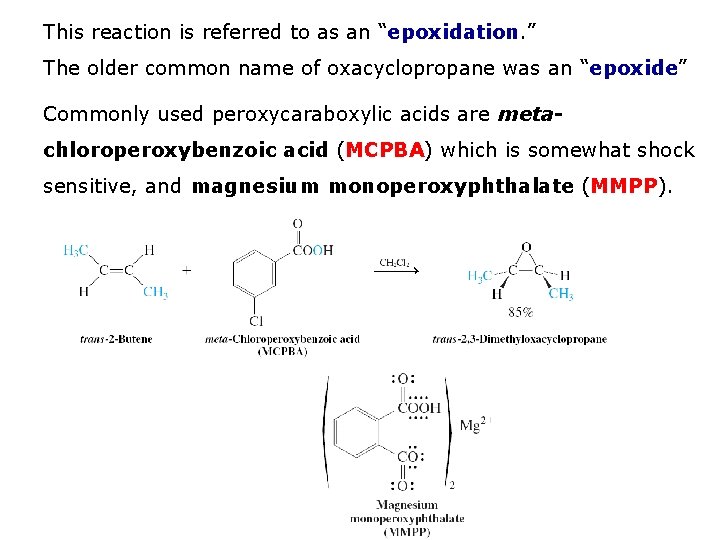
This reaction is referred to as an “epoxidation. ” The older common name of oxacyclopropane was an “epoxide” Commonly used peroxycaraboxylic acids are metachloroperoxybenzoic acid (MCPBA) which is somewhat shock sensitive, and magnesium monoperoxyphthalate (MMPP).
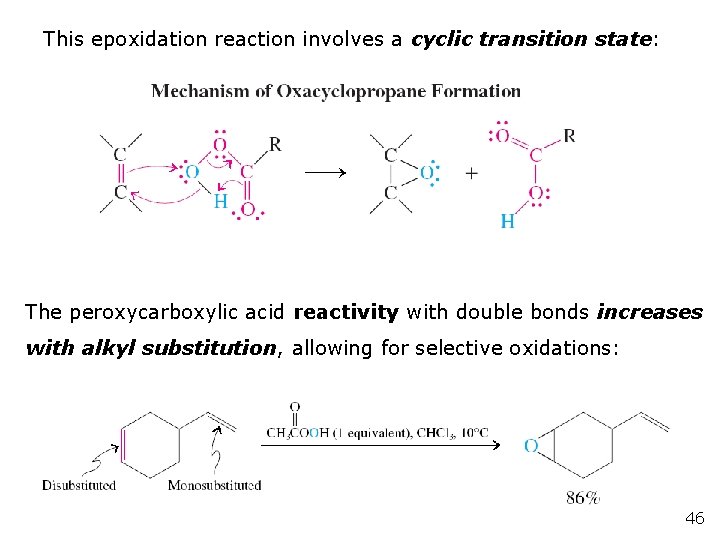
This epoxidation reaction involves a cyclic transition state: The peroxycarboxylic acid reactivity with double bonds increases with alkyl substitution, allowing for selective oxidations: 46
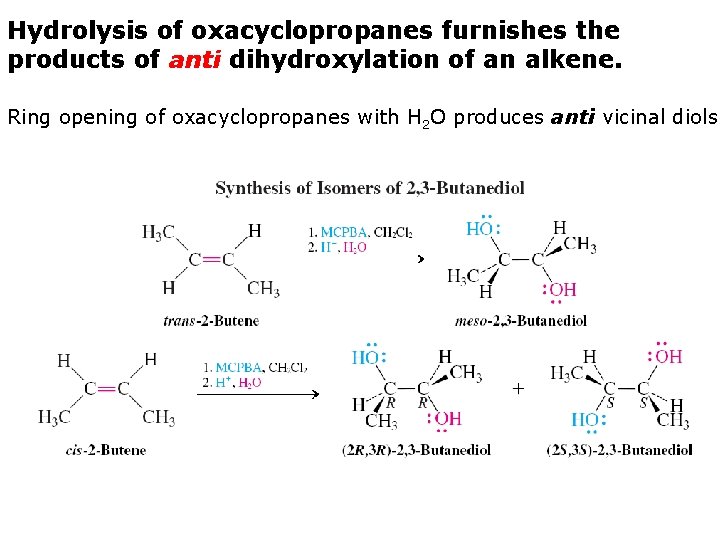
Hydrolysis of oxacyclopropanes furnishes the products of anti dihydroxylation of an alkene. Ring opening of oxacyclopropanes with H 2 O produces anti vicinal diols
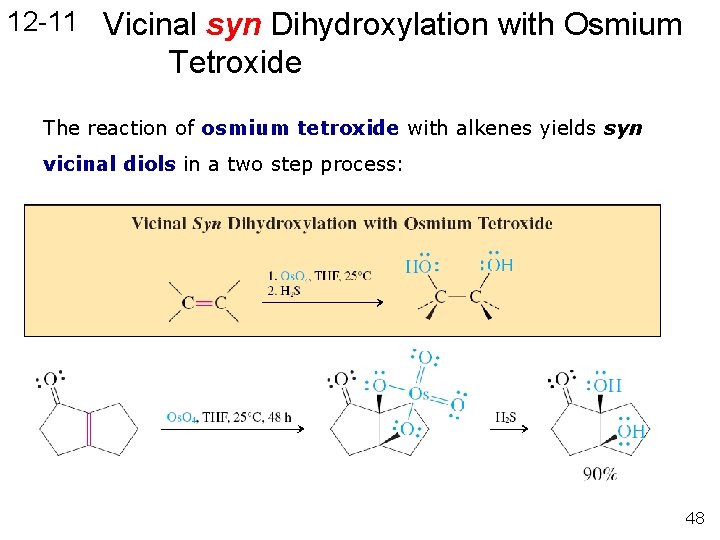
12 -11 Vicinal syn Dihydroxylation with Osmium Tetroxide The reaction of osmium tetroxide with alkenes yields syn vicinal diols in a two step process: 48
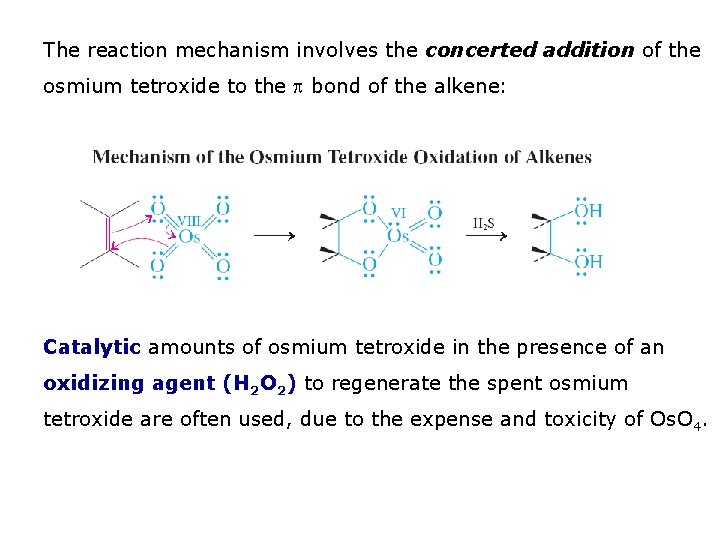
The reaction mechanism involves the concerted addition of the osmium tetroxide to the bond of the alkene: Catalytic amounts of osmium tetroxide in the presence of an oxidizing agent (H 2 O 2) to regenerate the spent osmium tetroxide are often used, due to the expense and toxicity of Os. O 4.

An older reagent for vicinal syn dihydroxylation of alkenes is KMn. O 4. This reagent is less useful than Os. O 4 because of its tendency towards overoxidation. The deep purple KMn. O 4 is converted into a brown precipitate, (Mn. O 2) during the reaction, which can serve as a useful test for the presence of alkenes. 50
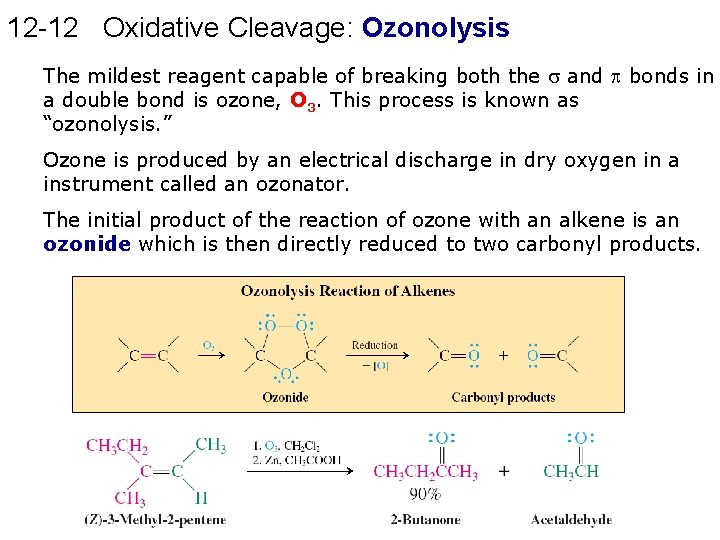
12 -12 Oxidative Cleavage: Ozonolysis The mildest reagent capable of breaking both the and bonds in a double bond is ozone, O 3. This process is known as “ozonolysis. ” Ozone is produced by an electrical discharge in dry oxygen in a instrument called an ozonator. The initial product of the reaction of ozone with an alkene is an ozonide which is then directly reduced to two carbonyl products.
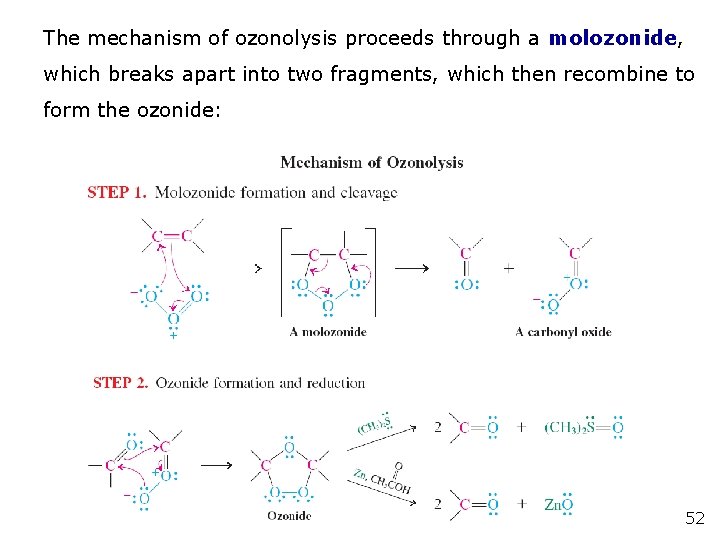
The mechanism of ozonolysis proceeds through a molozonide, which breaks apart into two fragments, which then recombine to form the ozonide: 52
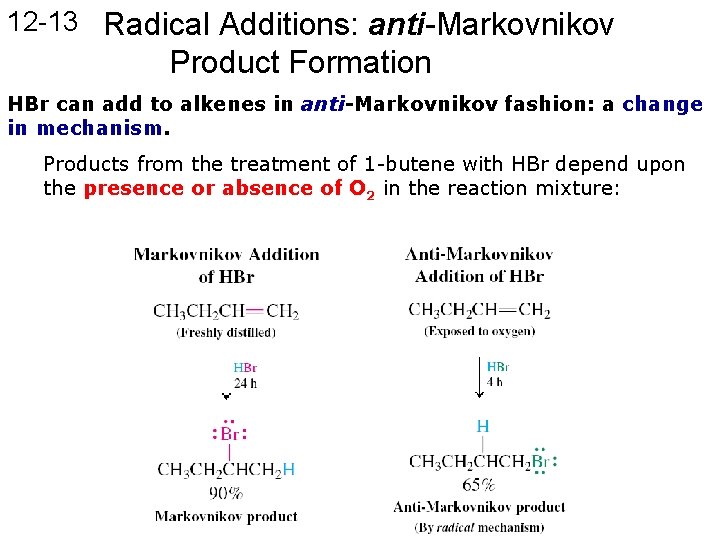
12 -13 Radical Additions: anti-Markovnikov Product Formation HBr can add to alkenes in anti-Markovnikov fashion: a change in mechanism. Products from the treatment of 1 -butene with HBr depend upon the presence or absence of O 2 in the reaction mixture:
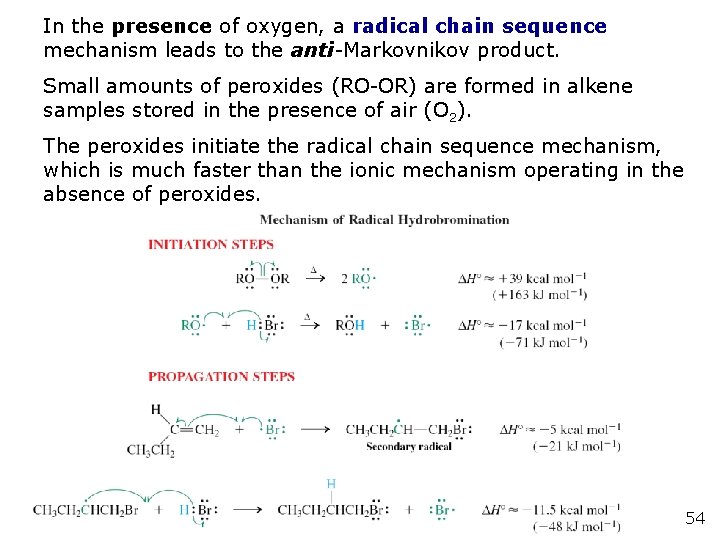
In the presence of oxygen, a radical chain sequence mechanism leads to the anti-Markovnikov product. Small amounts of peroxides (RO-OR) are formed in alkene samples stored in the presence of air (O 2). The peroxides initiate the radical chain sequence mechanism, which is much faster than the ionic mechanism operating in the absence of peroxides. 54
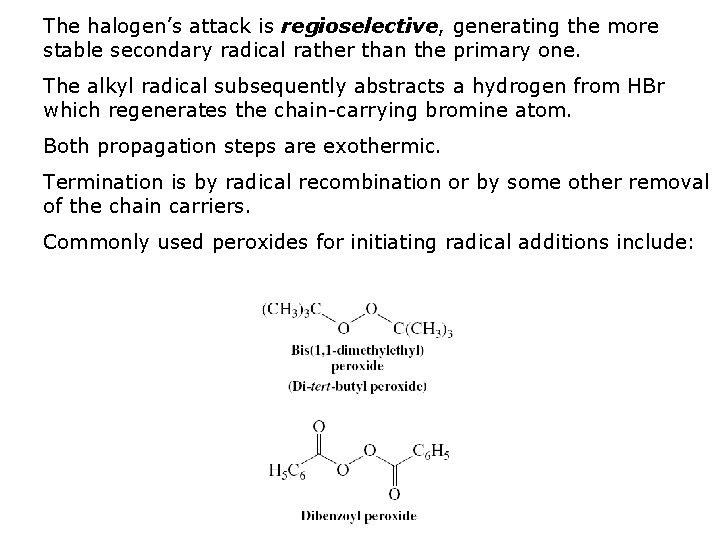
The halogen’s attack is regioselective, generating the more stable secondary radical rather than the primary one. The alkyl radical subsequently abstracts a hydrogen from HBr which regenerates the chain-carrying bromine atom. Both propagation steps are exothermic. Termination is by radical recombination or by some other removal of the chain carriers. Commonly used peroxides for initiating radical additions include:
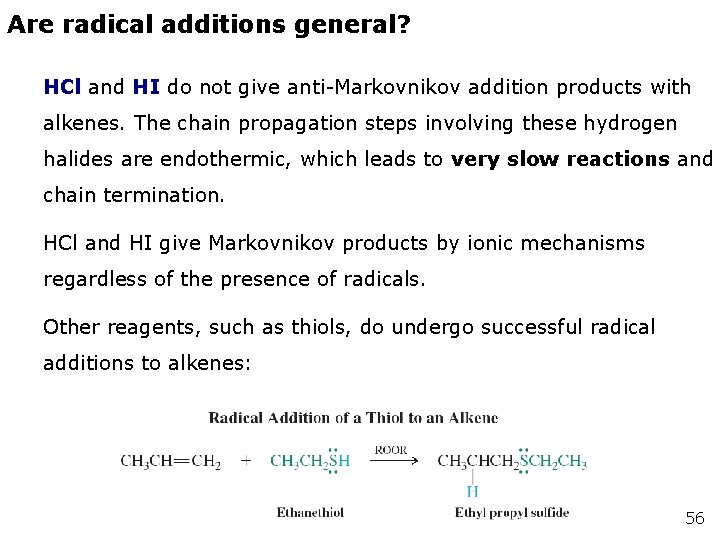
Are radical additions general? HCl and HI do not give anti-Markovnikov addition products with alkenes. The chain propagation steps involving these hydrogen halides are endothermic, which leads to very slow reactions and chain termination. HCl and HI give Markovnikov products by ionic mechanisms regardless of the presence of radicals. Other reagents, such as thiols, do undergo successful radical additions to alkenes: 56
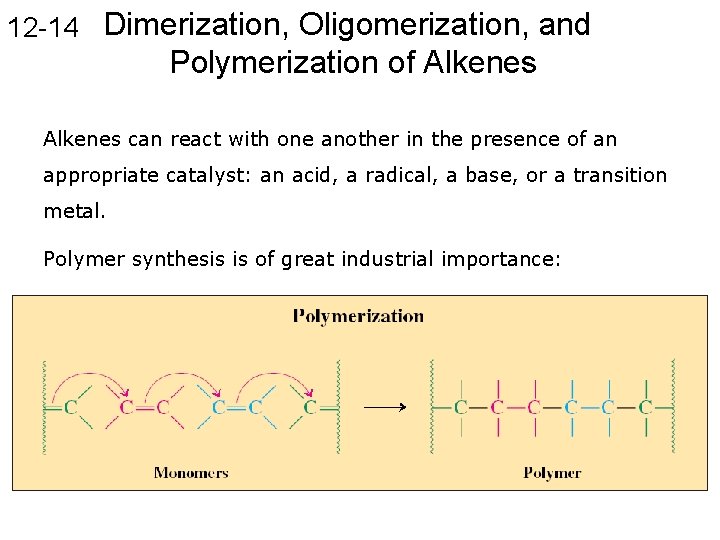
12 -14 Dimerization, Oligomerization, and Polymerization of Alkenes can react with one another in the presence of an appropriate catalyst: an acid, a radical, a base, or a transition metal. Polymer synthesis is of great industrial importance:
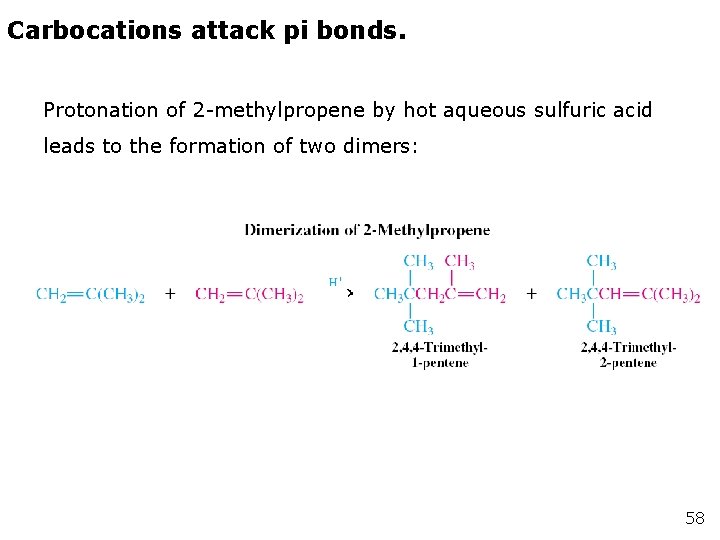
Carbocations attack pi bonds. Protonation of 2 -methylpropene by hot aqueous sulfuric acid leads to the formation of two dimers: 58
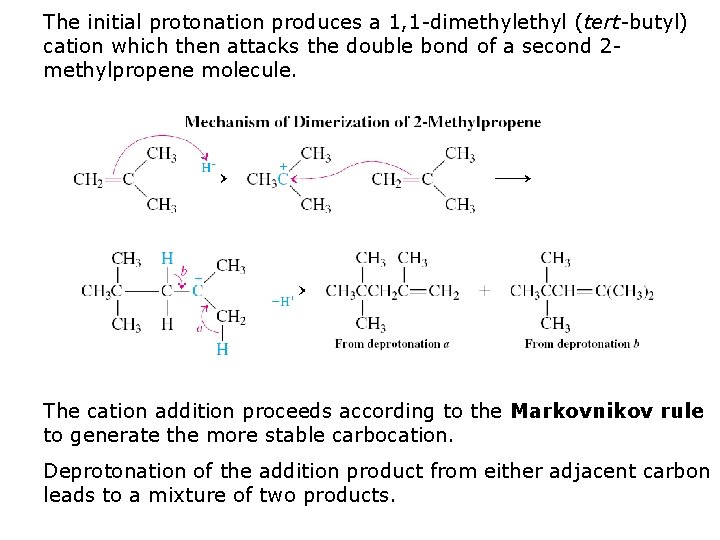
The initial protonation produces a 1, 1 -dimethyl (tert-butyl) cation which then attacks the double bond of a second 2 methylpropene molecule. The cation addition proceeds according to the Markovnikov rule to generate the more stable carbocation. Deprotonation of the addition product from either adjacent carbon leads to a mixture of two products.
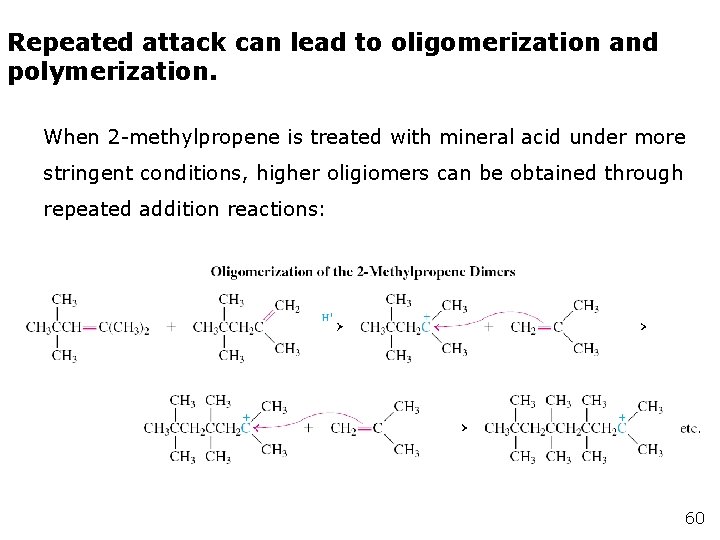
Repeated attack can lead to oligomerization and polymerization. When 2 -methylpropene is treated with mineral acid under more stringent conditions, higher oligiomers can be obtained through repeated addition reactions: 60
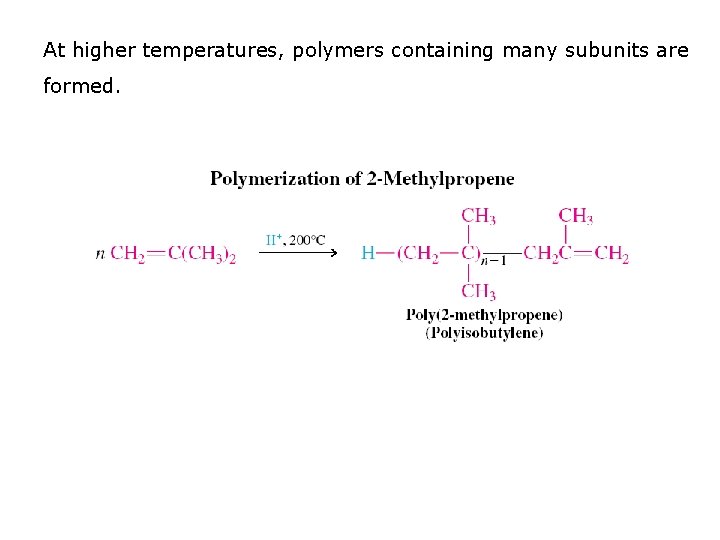
At higher temperatures, polymers containing many subunits are formed.
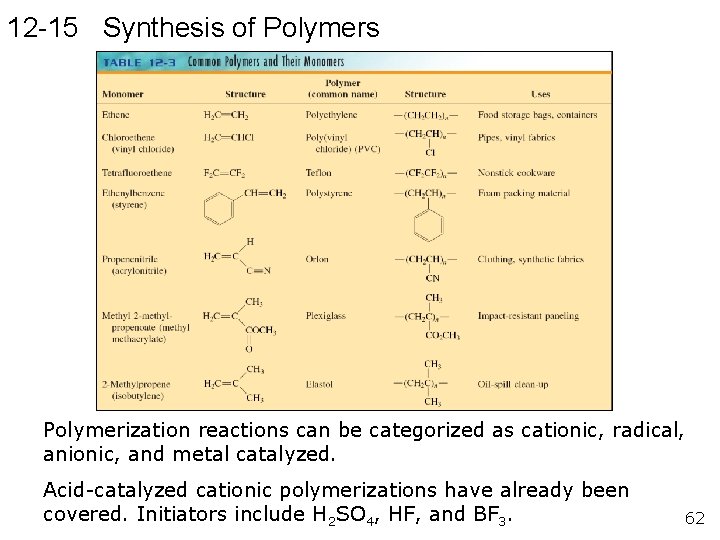
12 -15 Synthesis of Polymers Polymerization reactions can be categorized as cationic, radical, anionic, and metal catalyzed. Acid-catalyzed cationic polymerizations have already been covered. Initiators include H 2 SO 4, HF, and BF 3. 62
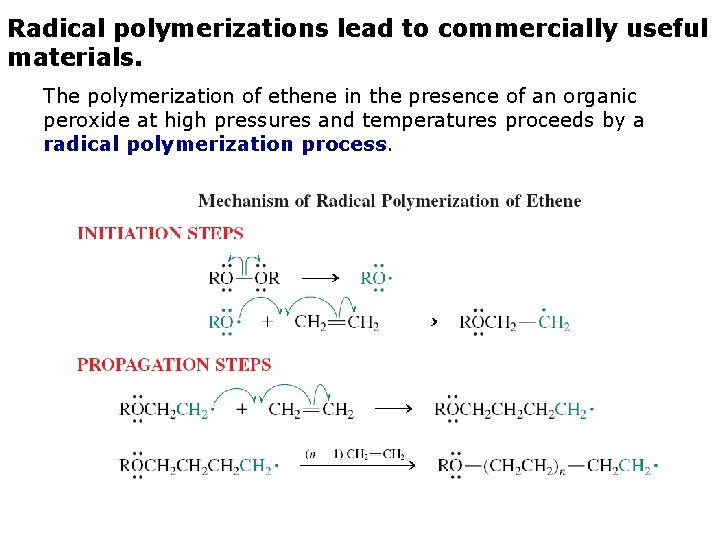
Radical polymerizations lead to commercially useful materials. The polymerization of ethene in the presence of an organic peroxide at high pressures and temperatures proceeds by a radical polymerization process.
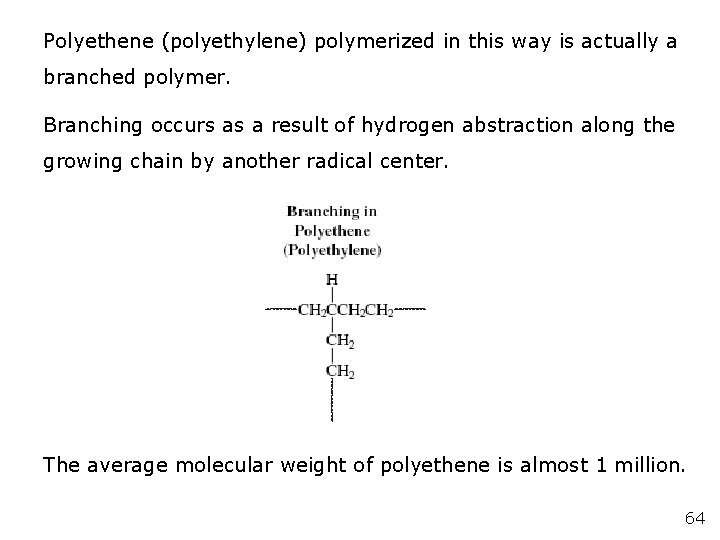
Polyethene (polyethylene) polymerized in this way is actually a branched polymer. Branching occurs as a result of hydrogen abstraction along the growing chain by another radical center. The average molecular weight of polyethene is almost 1 million. 64
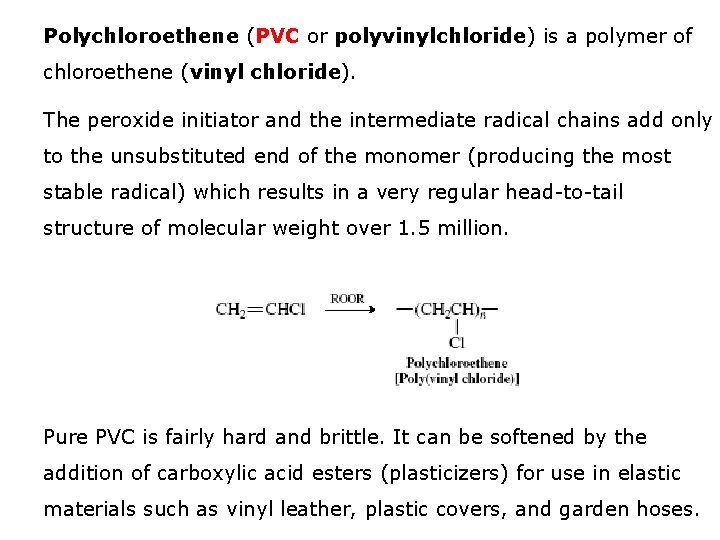
Polychloroethene (PVC or polyvinylchloride) is a polymer of chloroethene (vinyl chloride). The peroxide initiator and the intermediate radical chains add only to the unsubstituted end of the monomer (producing the most stable radical) which results in a very regular head-to-tail structure of molecular weight over 1. 5 million. Pure PVC is fairly hard and brittle. It can be softened by the addition of carboxylic acid esters (plasticizers) for use in elastic materials such as vinyl leather, plastic covers, and garden hoses.
Polypropenenitrile (polyacrylonitrile) can be prepared from propenenitrile (acrylonitrile) using hydrogen peroxide with Fe. SO 4 as a catalyst. Polypropenenitrile, -(CH 2 CHCN)n-, also known as Orlon, is used to make fibers. 66
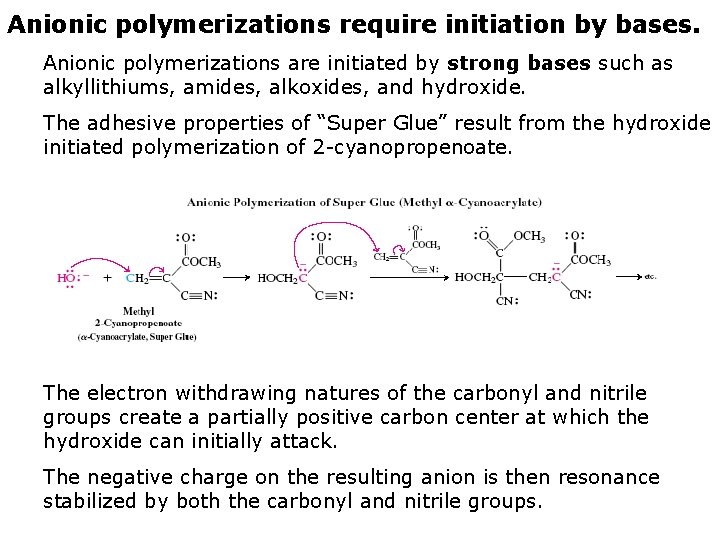
Anionic polymerizations require initiation by bases. Anionic polymerizations are initiated by strong bases such as alkyllithiums, amides, alkoxides, and hydroxide. The adhesive properties of “Super Glue” result from the hydroxide initiated polymerization of 2 -cyanopropenoate. The electron withdrawing natures of the carbonyl and nitrile groups create a partially positive carbon center at which the hydroxide can initially attack. The negative charge on the resulting anion is then resonance stabilized by both the carbonyl and nitrile groups.
Metal-catalyzed polymerizations produce highly regular chains. Ziegler-Natta catalysts are important initiators for metalcatalyzed polymerizations. They are typically made from titanium tetrachloride and a trialkylaluminum such as Al(CH 2 CH 3)3. Polymers produced using a Ziegler-Natta catalyst are characterized by regularity of construction and high linearity. This results in much higher density and strength than similar polymers obtained from radical polymerization. 68
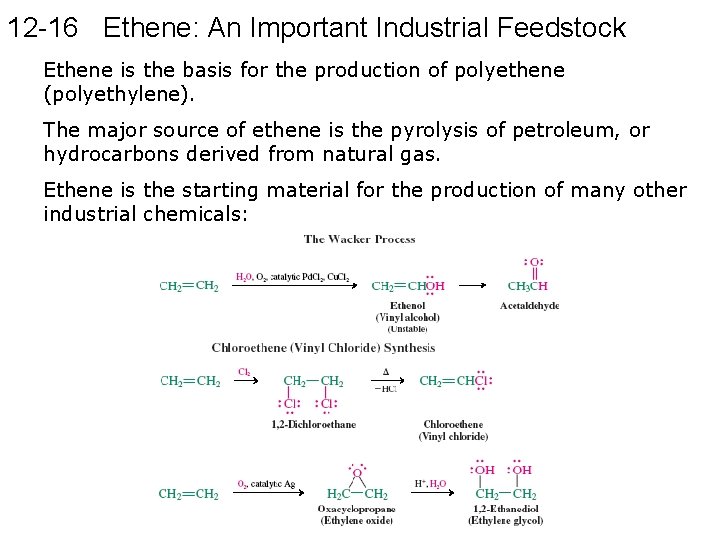
12 -16 Ethene: An Important Industrial Feedstock Ethene is the basis for the production of polyethene (polyethylene). The major source of ethene is the pyrolysis of petroleum, or hydrocarbons derived from natural gas. Ethene is the starting material for the production of many other industrial chemicals:
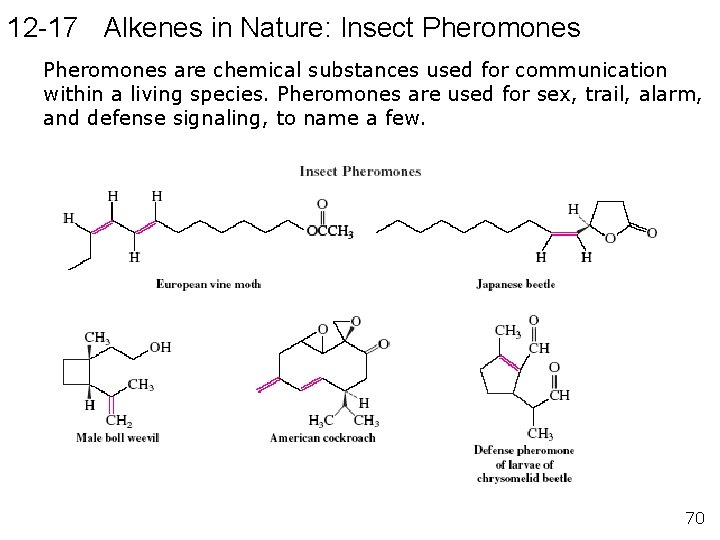
12 -17 Alkenes in Nature: Insect Pheromones are chemical substances used for communication within a living species. Pheromones are used for sex, trail, alarm, and defense signaling, to name a few. 70
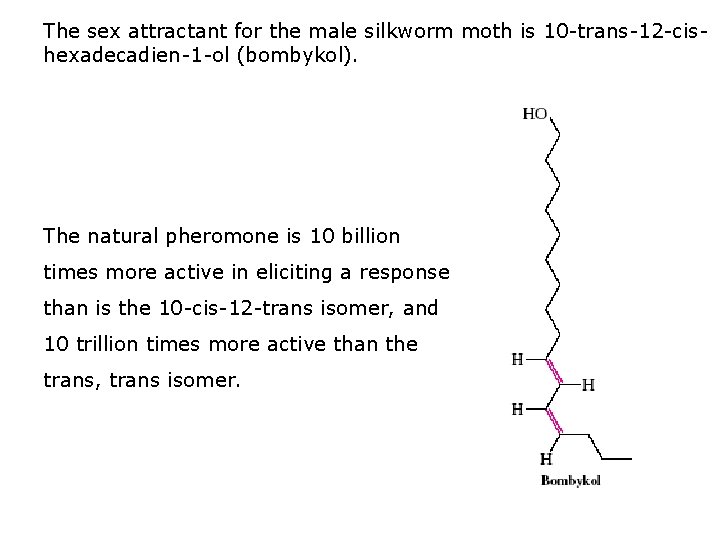
The sex attractant for the male silkworm moth is 10 -trans-12 -cishexadecadien-1 -ol (bombykol). The natural pheromone is 10 billion times more active in eliciting a response than is the 10 -cis-12 -trans isomer, and 10 trillion times more active than the trans, trans isomer.
12 Important Concepts 1. Double Bond Reactivity – exothermic addition reactions leading to saturated products 2. Hydrogenation of Alkenes – immeasurably slow unless a catalyst is used • Palladium on carbon, Pt. O 2, Raney nickel • H 2 preferentially added to the least hindered face of the double bond 3. Bond – attacked by acid and electrophiles • • If the initial intermediate is a carbocation, the more highly substituted carbocation is formed (Markovnikov’s Rule). If the initial intermediate is cyclic onium ion, nucleophilic ring opening is at the more substituted carbon (control of both regio- and stereochemistry). 72
12 Important Concepts 4. Hydroboration – mechanistically between hydrogenation and electrophilic addition • Step 1: complexation to boron • Step 2: concerted transfer of hydrogen to carbon • Hydroboration-oxidation: anti-Markovnikov hydration of alkenes 5. Carbenes and Carbenoids – useful for synthesis of cyclopropanes from alkenes 6. Peroxycarboxylic Acids – contains oxygen atom transferable to alkenes to give oxacyclopropanes (epoxidation) 7. Osmium Tetroxide – addition to alkenes in a concerted syn manner to give vicinal diols
12 Important Concepts 8. Ozonolysis – when followed by reduction, yields carbonyl compounds by cleavage of the double bond 9. Radical Chain Additions To Alkenes – • • • Chain carrier adds to the bond to form the more highly substituted radical Allows for anti-Markovnikov hydrobromination of alkenes Allows for the addition of thiols and some halomethanes 10. Polymers – Alkenes react with themselves to form polymers. • Initiation by charged species, radicals or some transition metals 74
- Slides: 37