
12 7 Synapses Synaptic Activity Action potentials nerve

- Slides: 28
12 -7 Synapses • Synaptic Activity – Action potentials (nerve impulses) • Are transmitted from presynaptic neuron • To postsynaptic neuron (or other postsynaptic cell) • Across a synapse
12 -7 Synapses • Two Types of Synapses 1. Electrical synapses • Direct physical contact between cells 2. Chemical synapses • Signal transmitted across a gap by chemical neurotransmitters
12 -7 Synapses • Chemical Synapses – Are found in most synapses between neurons and all synapses between neurons and other cells – Cells not in direct contact – Action potential may or may not be propagated to postsynaptic cell, depending on: • Amount of neurotransmitter released • Sensitivity of postsynaptic cell
12 -7 Synapses • Two Classes of Neurotransmitters 1. Excitatory neurotransmitters • Cause depolarization of postsynaptic membranes • Promote action potentials 2. Inhibitory neurotransmitters • Cause hyperpolarization of postsynaptic membranes • Suppress action potentials
12 -7 Synapses • The Effect of a Neurotransmitter – On a postsynaptic membrane • Depends on the receptor • Not on the neurotransmitter – For example, acetylcholine (ACh) • Usually promotes action potentials • But inhibits cardiac neuromuscular junctions
12 -7 Synapses • Cholinergic Synapses – Any synapse that releases ACh at: 1. All neuromuscular junctions with skeletal muscle fibers 2. Many synapses in CNS 3. All neuron-to-neuron synapses in PNS 4. All neuromuscular and neuroglandular junctions of ANS parasympathetic division
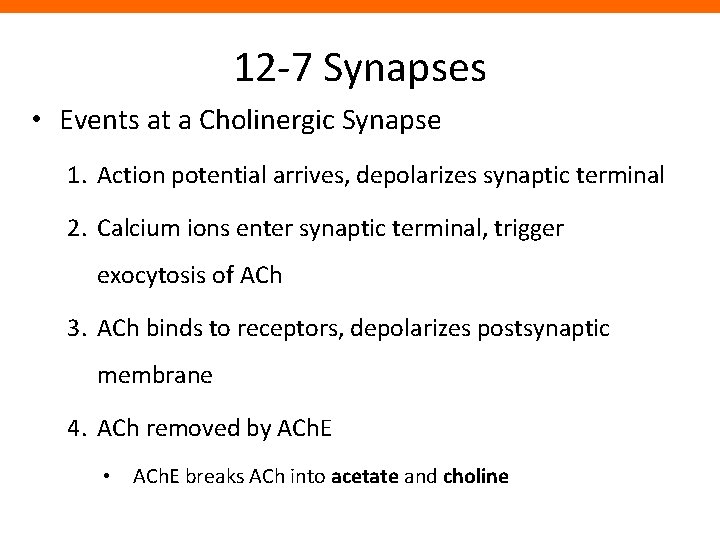
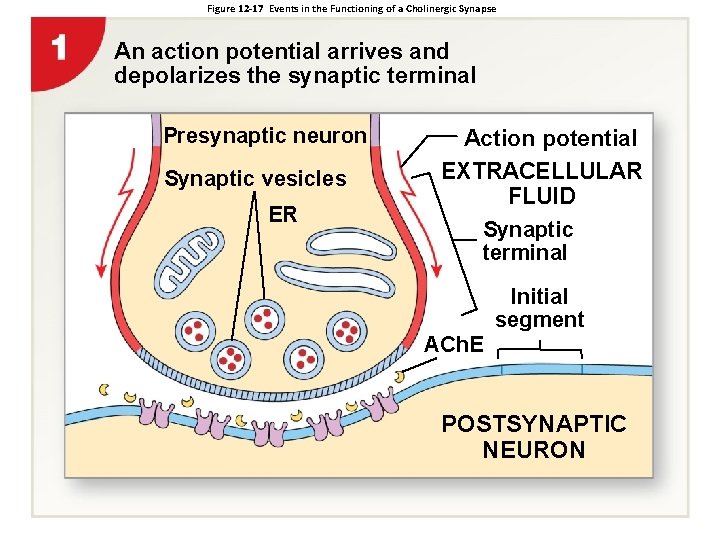
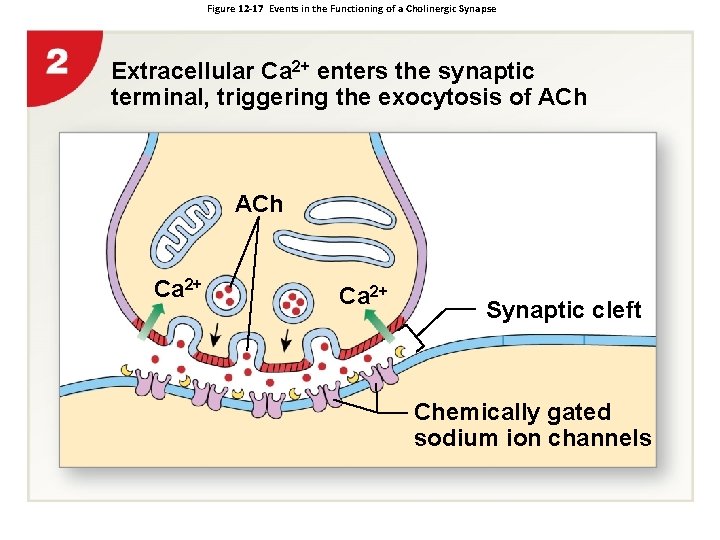
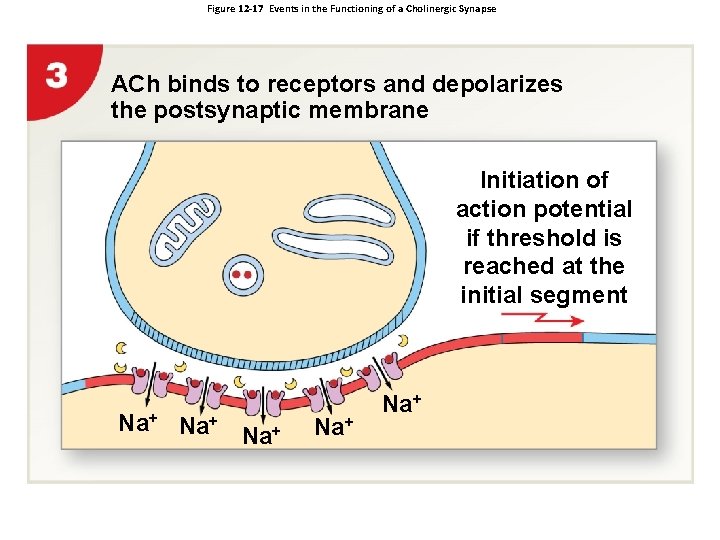
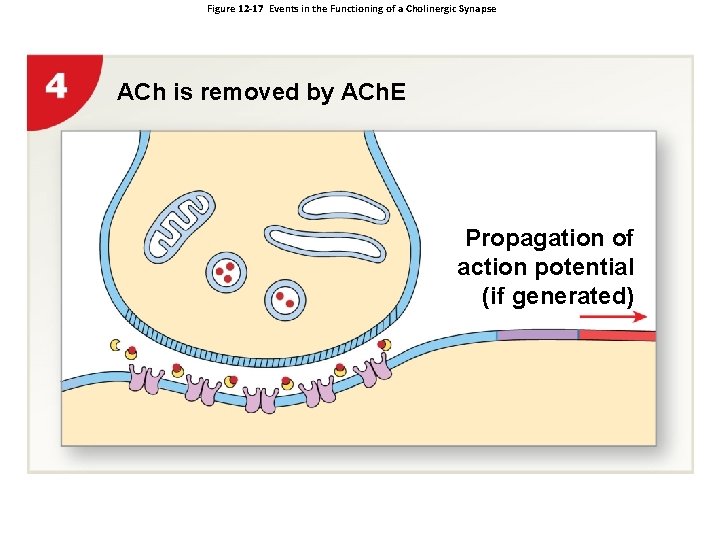
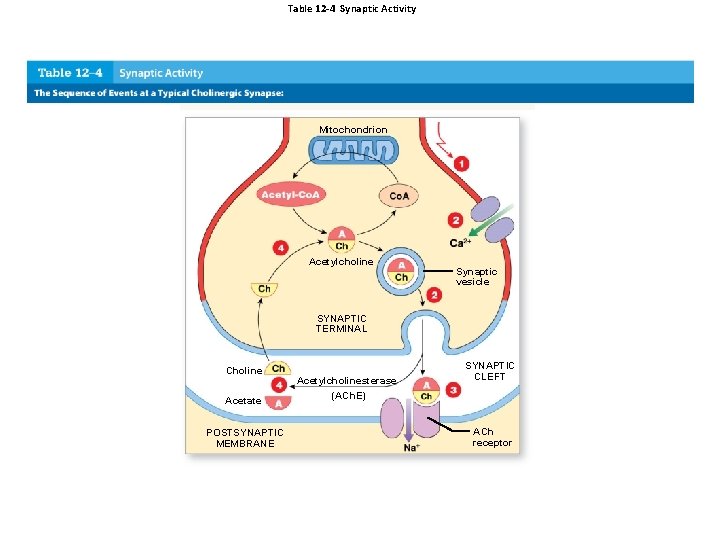
12 -7 Synapses • Events at a Cholinergic Synapse 1. Action potential arrives, depolarizes synaptic terminal 2. Calcium ions enter synaptic terminal, trigger exocytosis of ACh 3. ACh binds to receptors, depolarizes postsynaptic membrane 4. ACh removed by ACh. E • ACh. E breaks ACh into acetate and choline
Figure 12 -17 Events in the Functioning of a Cholinergic Synapse An action potential arrives and depolarizes the synaptic terminal Presynaptic neuron Synaptic vesicles ER Action potential EXTRACELLULAR FLUID Synaptic terminal Initial segment ACh. E POSTSYNAPTIC NEURON
Figure 12 -17 Events in the Functioning of a Cholinergic Synapse Extracellular Ca 2+ enters the synaptic terminal, triggering the exocytosis of ACh Ca 2+ Synaptic cleft Chemically gated sodium ion channels
Figure 12 -17 Events in the Functioning of a Cholinergic Synapse ACh binds to receptors and depolarizes the postsynaptic membrane Initiation of action potential if threshold is reached at the initial segment Na+ Na+ Na+
Figure 12 -17 Events in the Functioning of a Cholinergic Synapse ACh is removed by ACh. E Propagation of action potential (if generated)
12 -7 Synapses • Synaptic Delay – A synaptic delay of 0. 2– 0. 5 msec occurs between: • Arrival of action potential at synaptic terminal • And effect on postsynaptic membrane – Fewer synapses mean faster response – Reflexes may involve only one synapse
12 -7 Synapses • Synaptic Fatigue – Occurs when neurotransmitter cannot recycle fast enough to meet demands of intense stimuli – Synapse inactive until ACh is replenished
Table 12 -4 Synaptic Activity Mitochondrion Acetylcholine Synaptic vesicle SYNAPTIC TERMINAL Choline Acetate POSTSYNAPTIC MEMBRANE Acetylcholinesterase SYNAPTIC CLEFT (ACh. E) ACh receptor
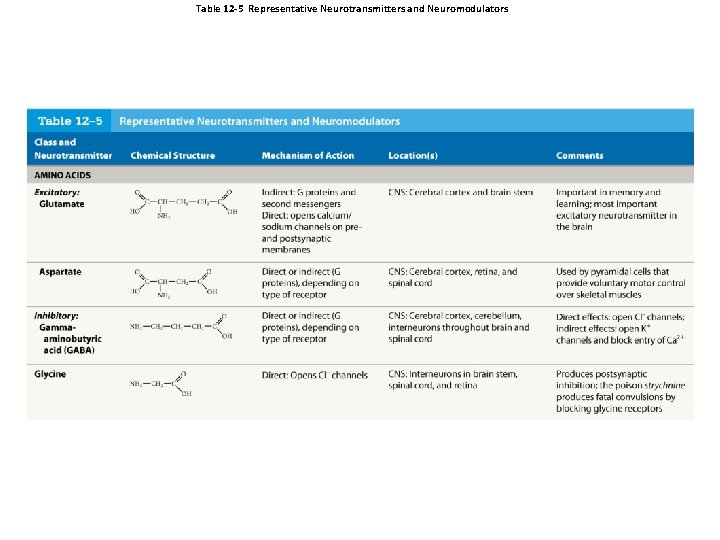
12 -8 Neurotransmitters and Neuromodulators • Other Neurotransmitters – At least 50 neurotransmitters other than ACh, including: • Biogenic amines • Amino acids • Neuropeptides • Dissolved gases
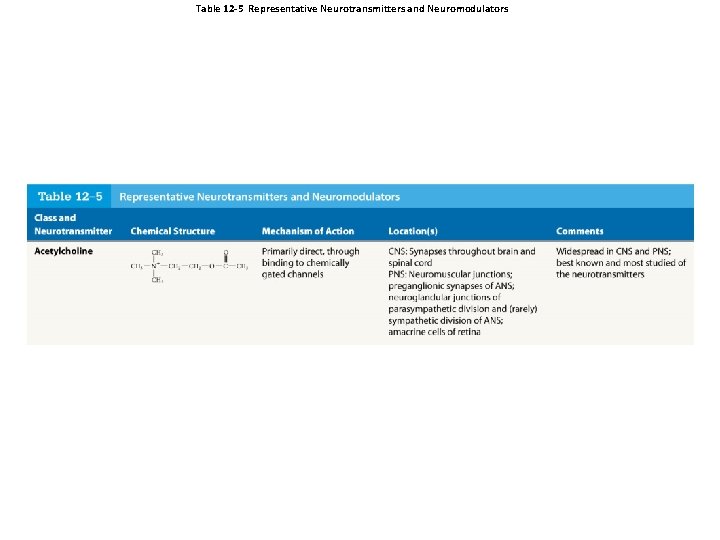
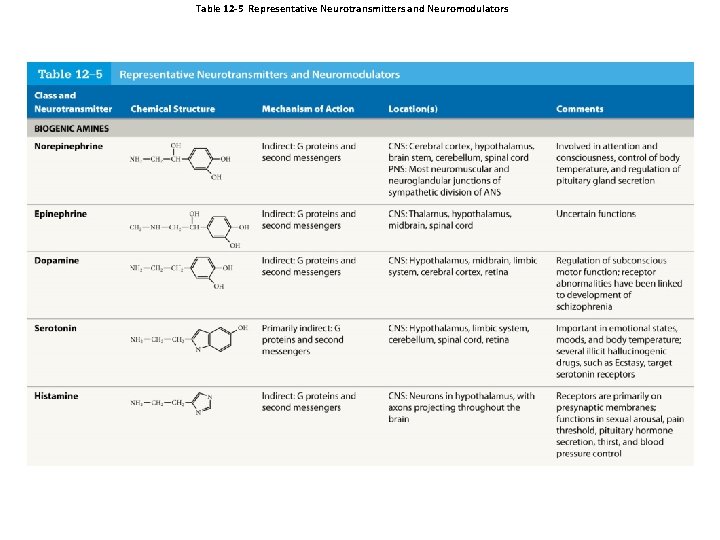
12 -8 Neurotransmitters and Neuromodulators • Important Neurotransmitters – Other than acetylcholine • Norepinephrine (NE) • Dopamine • Serotonin
• 12 -8 Neurotransmitters and Neuromodulators Norepinephrine (NE) – Released by adrenergic synapses – Excitatory and depolarizing effect – Widely distributed in brain and portions of ANS • Dopamine – A CNS neurotransmitter – May be excitatory or inhibitory – Involved in Parkinson’s disease and cocaine use • Serotonin – A CNS neurotransmitter – Affects attention and emotional states
12 -8 Neurotransmitters and Neuromodulators • Chemical Synapse – The synaptic terminal releases a neurotransmitter that binds to the postsynaptic plasma membrane – Produces temporary, localized change in permeability or function of postsynaptic cell – Changes affect cell, depending on nature and number of stimulated receptors
12 -8 Neurotransmitters and Neuromodulators • Many Drugs – Affect nervous system by stimulating receptors that respond to neurotransmitters – Can have complex effects on perception, motor control, and emotional states
12 -8 Neurotransmitters and Neuromodulators • Neuromodulators – Other chemicals released by synaptic terminals – Similar in function to neurotransmitters – Characteristics of neuromodulators • Effects are long term, slow to appear • Responses involve multiple steps, intermediary compounds • Affect presynaptic membrane, postsynaptic membrane, or both • Released alone or with a neurotransmitter
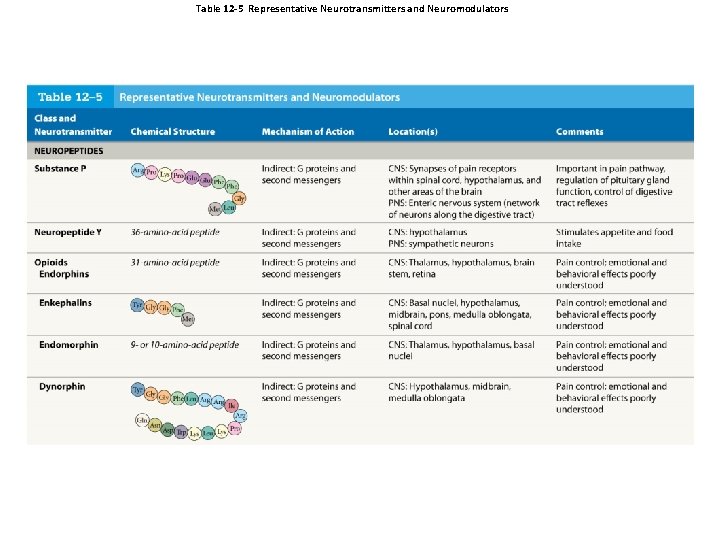
12 -8 Neurotransmitters and Neuromodulators • Neuropeptides – Neuromodulators that bind to receptors and activate enzymes • Opioids – Neuromodulators in the CNS – Bind to the same receptors as opium or morphine – Relieve pain
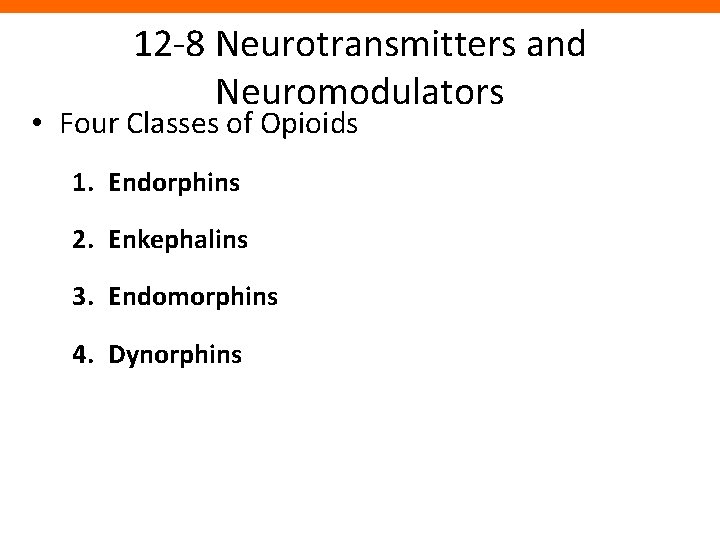
12 -8 Neurotransmitters and Neuromodulators • Four Classes of Opioids 1. Endorphins 2. Enkephalins 3. Endomorphins 4. Dynorphins
Table 12 -5 Representative Neurotransmitters and Neuromodulators
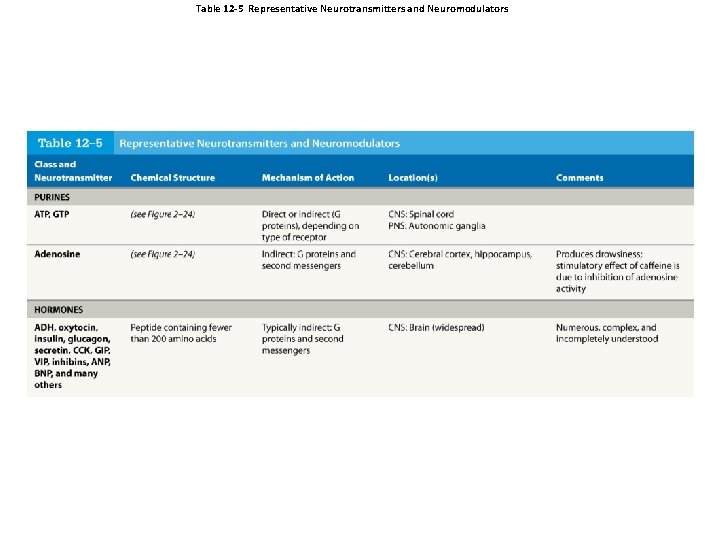
Table 12 -5 Representative Neurotransmitters and Neuromodulators
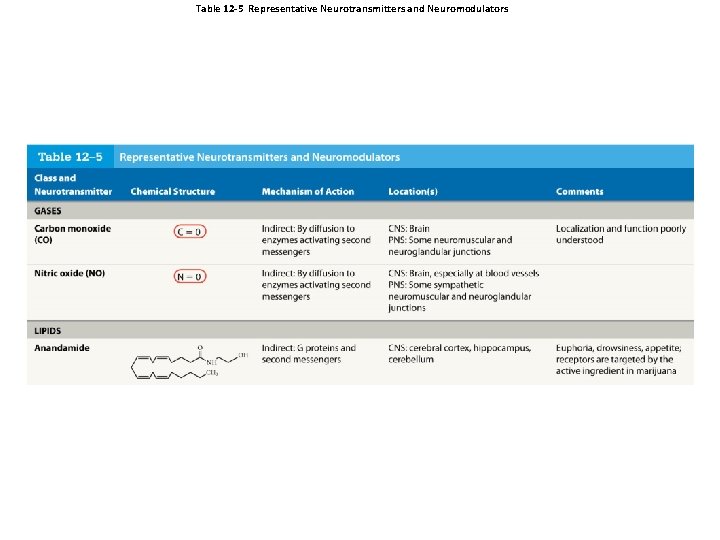
Table 12 -5 Representative Neurotransmitters and Neuromodulators
Table 12 -5 Representative Neurotransmitters and Neuromodulators
Table 12 -5 Representative Neurotransmitters and Neuromodulators
Table 12 -5 Representative Neurotransmitters and Neuromodulators