
12 4 Mutations What is a Mutation A


- Slides: 8
12 -4 Mutations
What is a Mutation? • A Change in the genetic material. • DNA
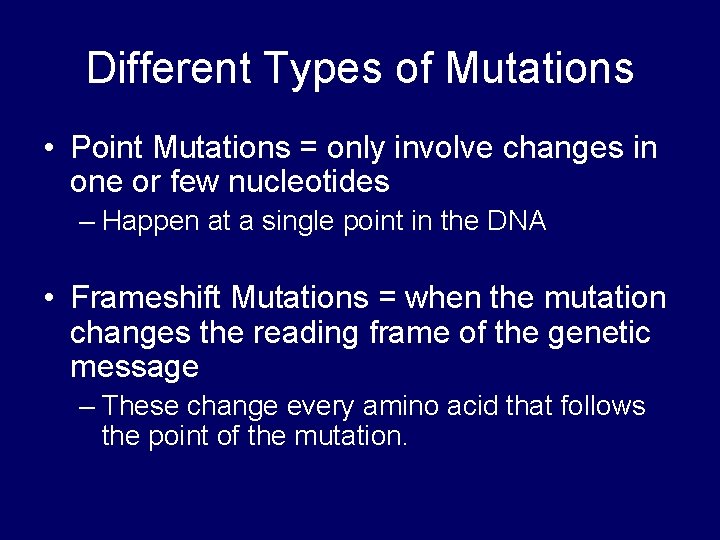
Different Types of Mutations • Point Mutations = only involve changes in one or few nucleotides – Happen at a single point in the DNA • Frameshift Mutations = when the mutation changes the reading frame of the genetic message – These change every amino acid that follows the point of the mutation.
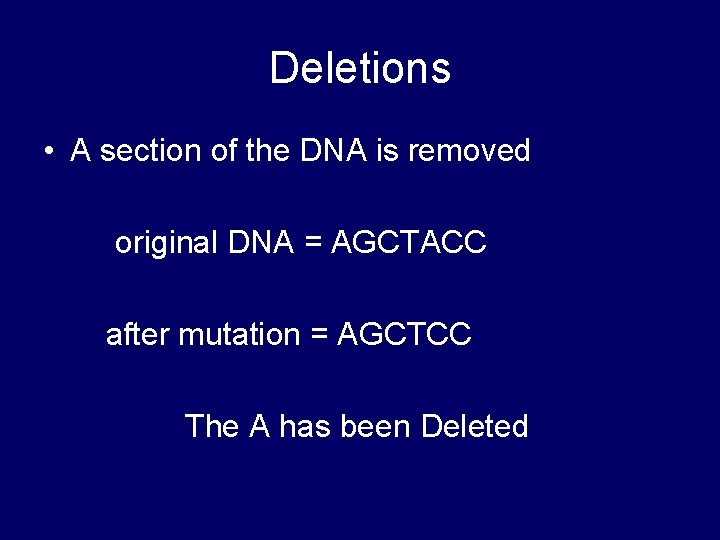
Deletions • A section of the DNA is removed original DNA = AGCTACC after mutation = AGCTCC The A has been Deleted
Duplication • A section of the DNA has been duplicated or doubled original DNA = AGCTACC After the mutation = AGGCTACC The G has been duplicated
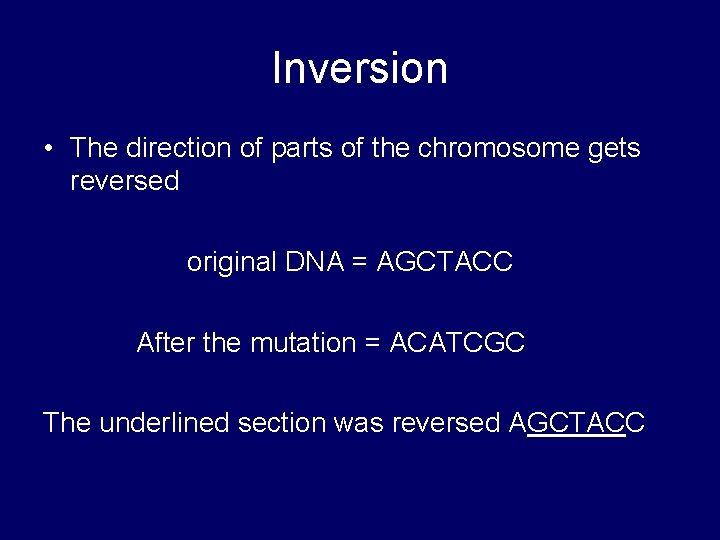
Inversion • The direction of parts of the chromosome gets reversed original DNA = AGCTACC After the mutation = ACATCGC The underlined section was reversed AGCTACC
Translocation • When part of one chromosome breaks off and attaches to another original DNA = AGCTACC TAGTAGGTA After the mutation = AGTAGTA CTACCGGTA The underlined sections were translocated
Why are mutations important? • Most mutations are neutral, they do not help or harm the effect of gene expression or the proteins they code for • Some mutations cause dramatic changes in protein structure or gene activity and are harmful • Some mutations are useful and cause the production of a proteins with a useful advantage or they can add to genetic diversity.