
12 2 Surface Area of Prisms And Cylinders
- Slides: 19
12. 2 – Surface Area of Prisms And Cylinders
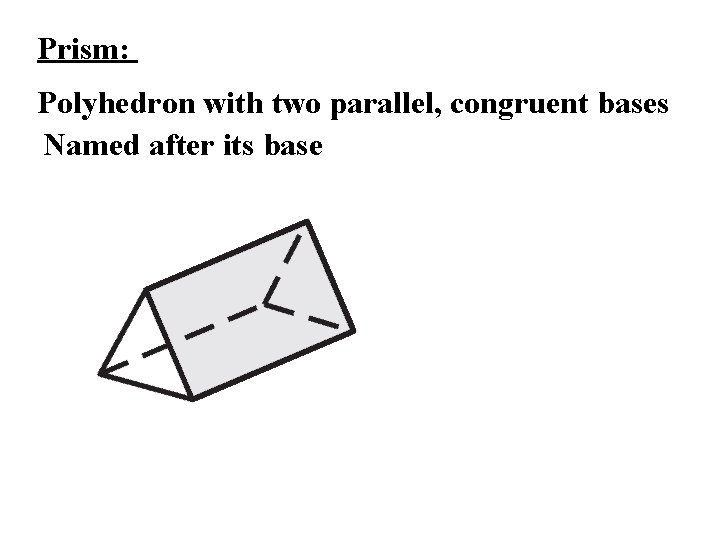
Prism: Polyhedron with two parallel, congruent bases Named after its base
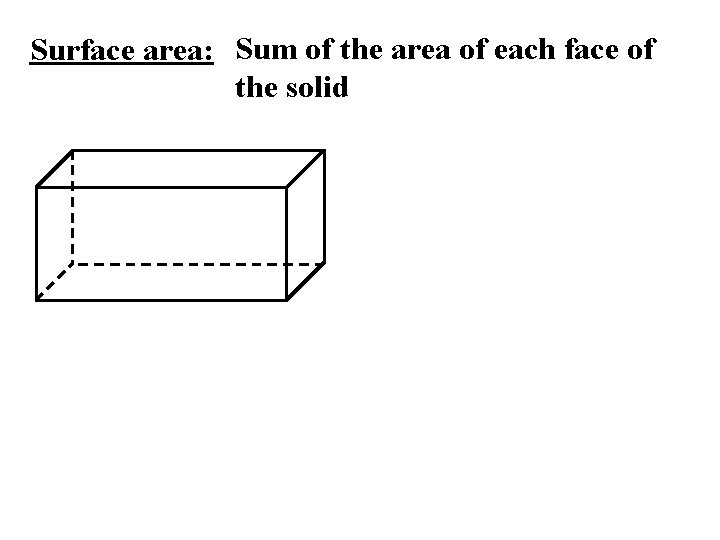
Surface area: Sum of the area of each face of the solid
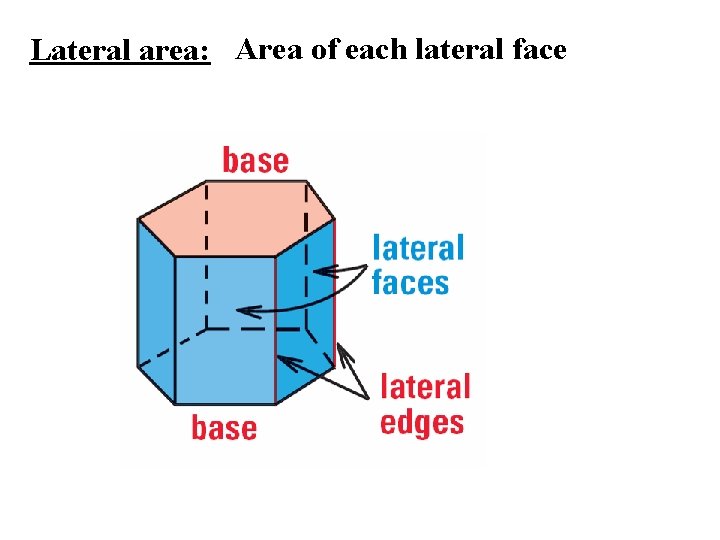
Lateral area: Area of each lateral face
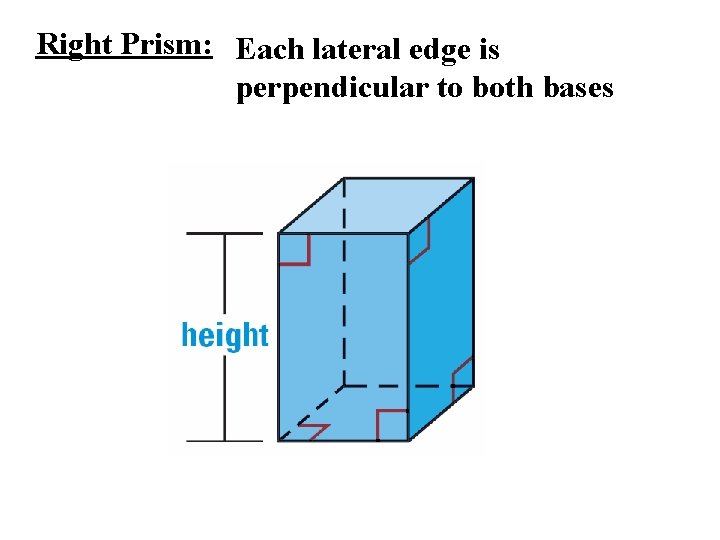
Right Prism: Each lateral edge is perpendicular to both bases
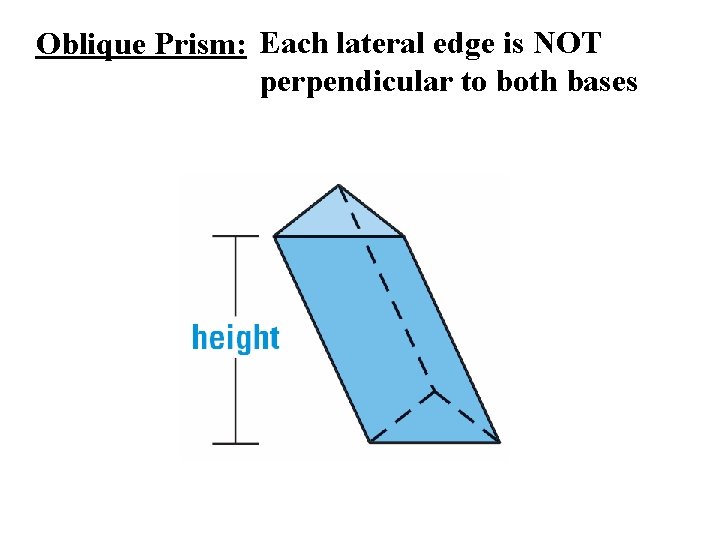
Oblique Prism: Each lateral edge is NOT perpendicular to both bases
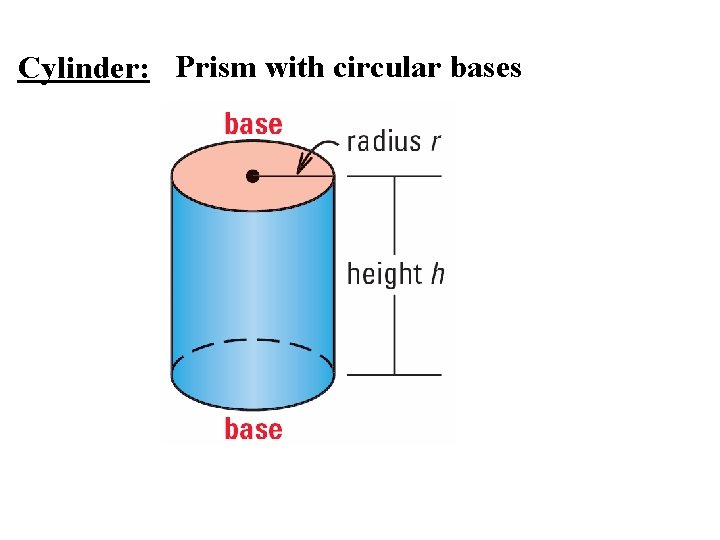
Cylinder: Prism with circular bases
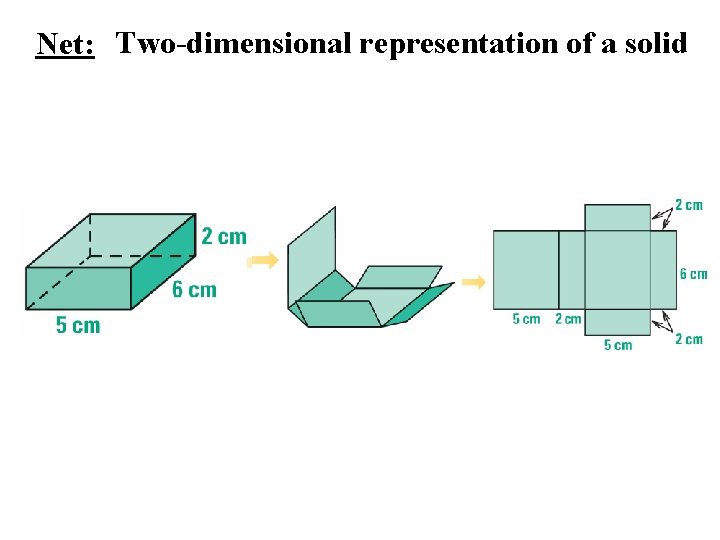
Net: Two-dimensional representation of a solid
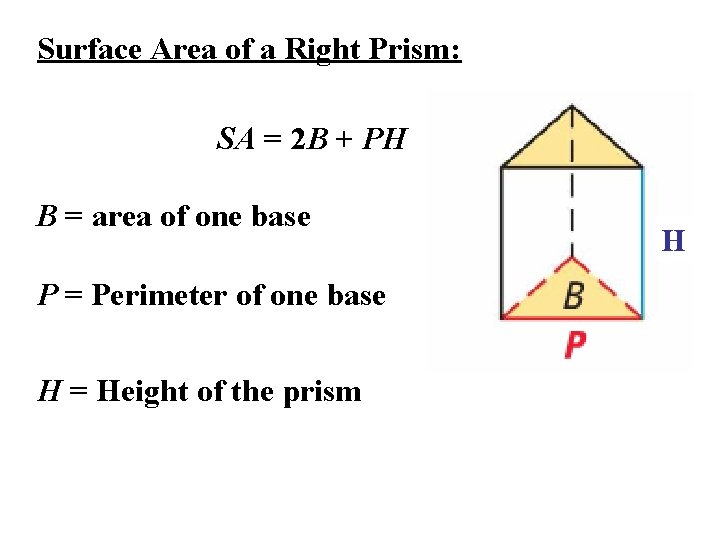
Surface Area of a Right Prism: SA = 2 B + PH B = area of one base P = Perimeter of one base H = Height of the prism H
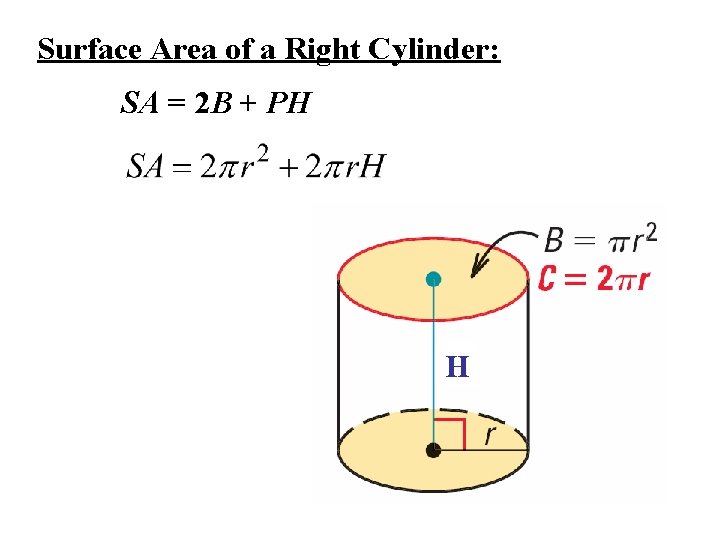
Surface Area of a Right Cylinder: SA = 2 B + PH H
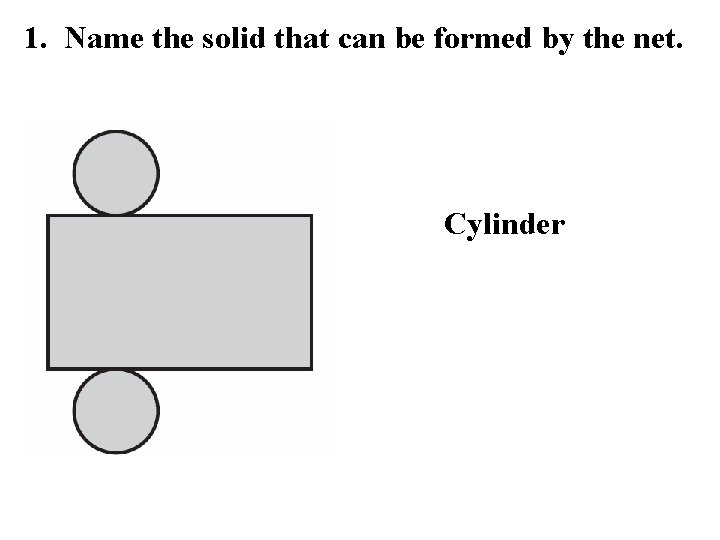
1. Name the solid that can be formed by the net. Cylinder
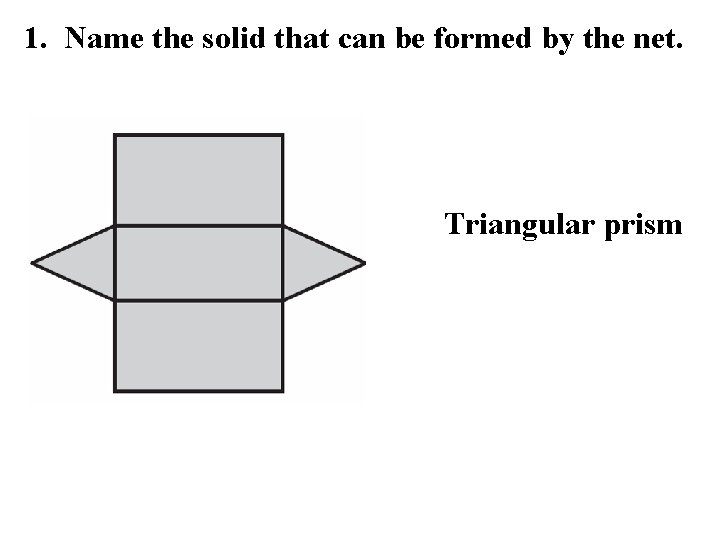
1. Name the solid that can be formed by the net. Triangular prism
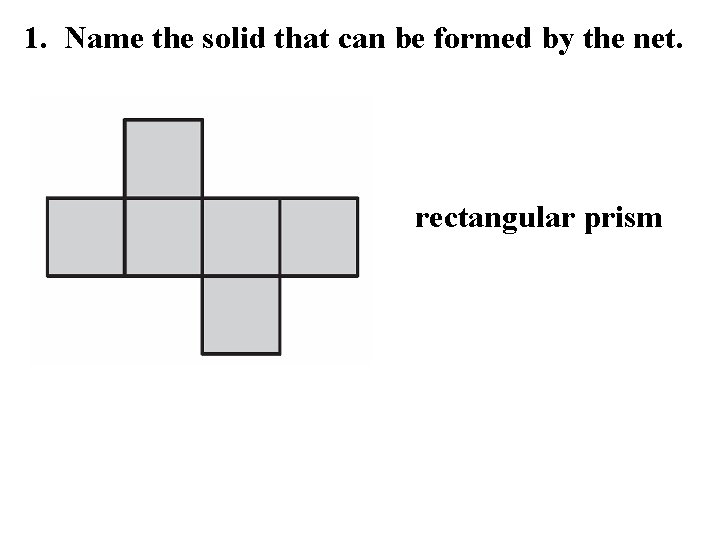
1. Name the solid that can be formed by the net. rectangular prism
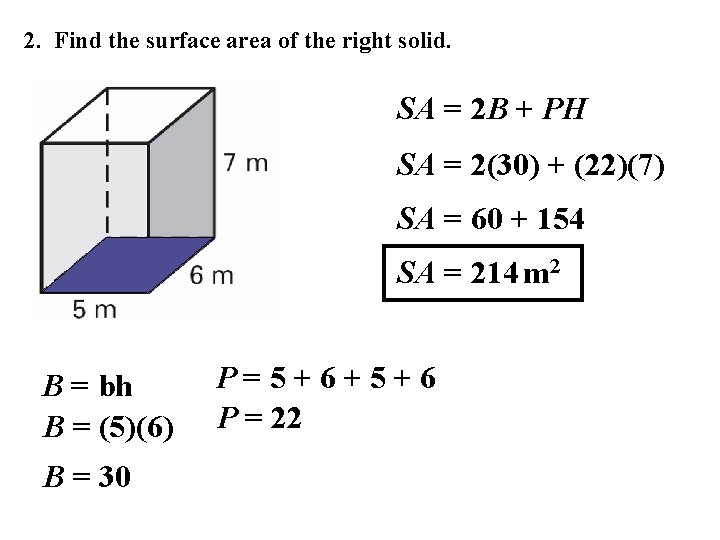
2. Find the surface area of the right solid. SA = 2 B + PH SA = 2(30) + (22)(7) SA = 60 + 154 SA = 214 m 2 B = bh B = (5)(6) B = 30 P=5+6+5+6 P = 22
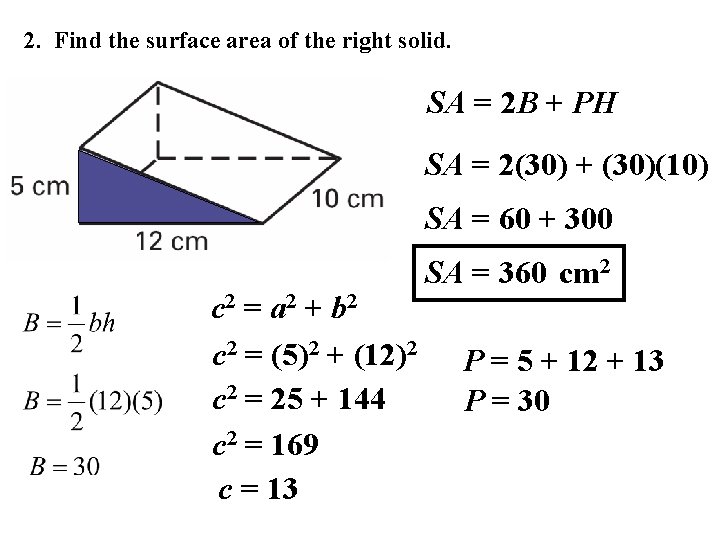
2. Find the surface area of the right solid. SA = 2 B + PH SA = 2(30) + (30)(10) SA = 60 + 300 c 2 = a 2 + b 2 c 2 = (5)2 + (12)2 c 2 = 25 + 144 c 2 = 169 c = 13 SA = 360 cm 2 P = 5 + 12 + 13 P = 30
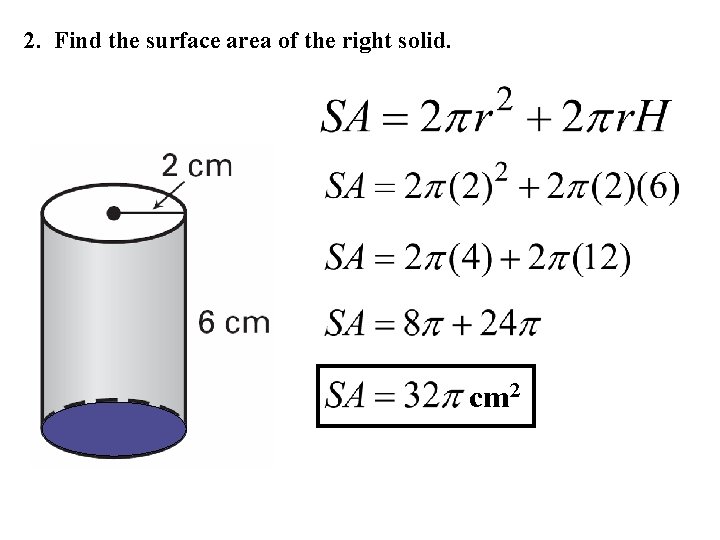
2. Find the surface area of the right solid. cm 2
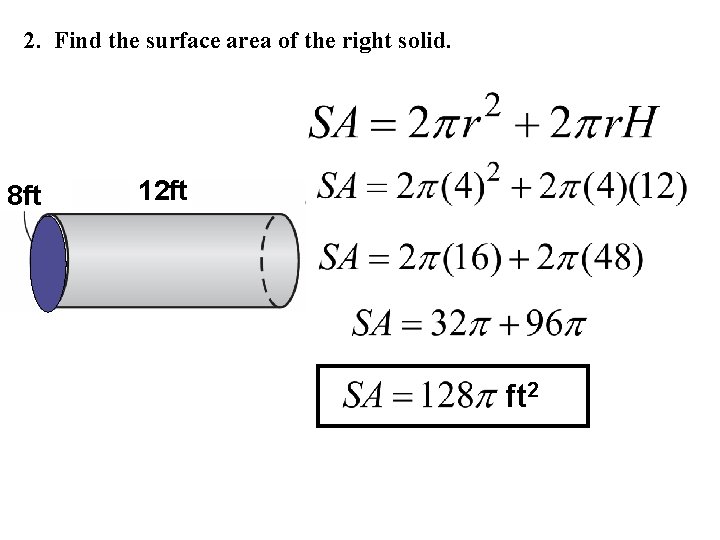
2. Find the surface area of the right solid. 8 ft 12 ft ft 2
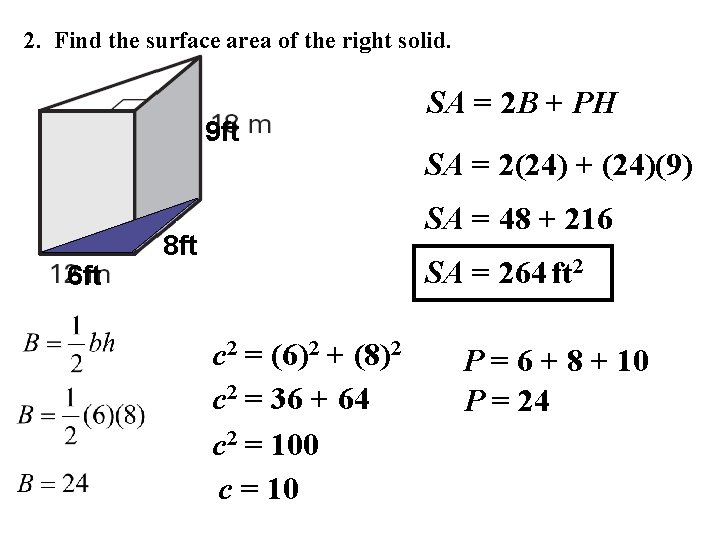
2. Find the surface area of the right solid. 9 ft 6 ft SA = 2 B + PH SA = 2(24) + (24)(9) SA = 48 + 216 8 ft SA = 264 ft 2 c 2 = (6)2 + (8)2 c 2 = 36 + 64 c 2 = 100 c = 10 P = 6 + 8 + 10 P = 24
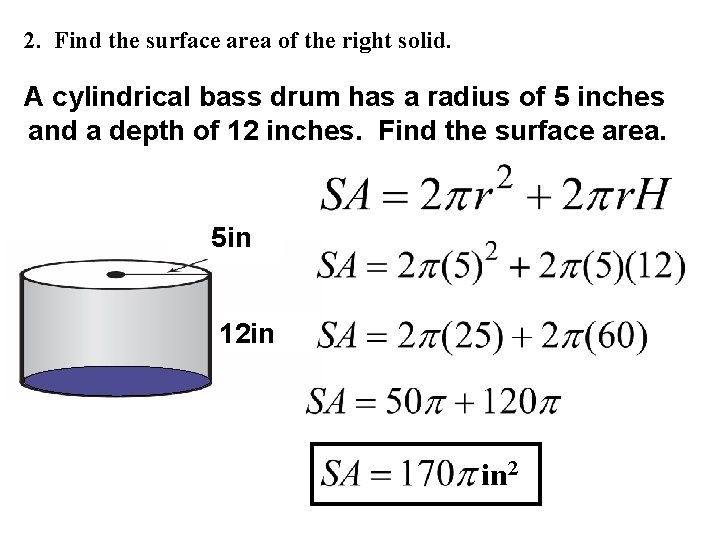
2. Find the surface area of the right solid. A cylindrical bass drum has a radius of 5 inches and a depth of 12 inches. Find the surface area. 5 in 12 in in 2