
12 1 The Function of Circulation SBI 3
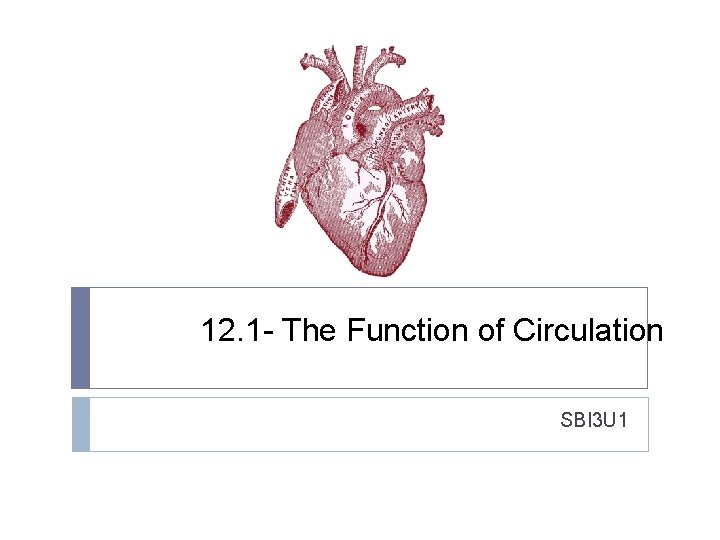
12. 1 - The Function of Circulation SBI 3 U 1
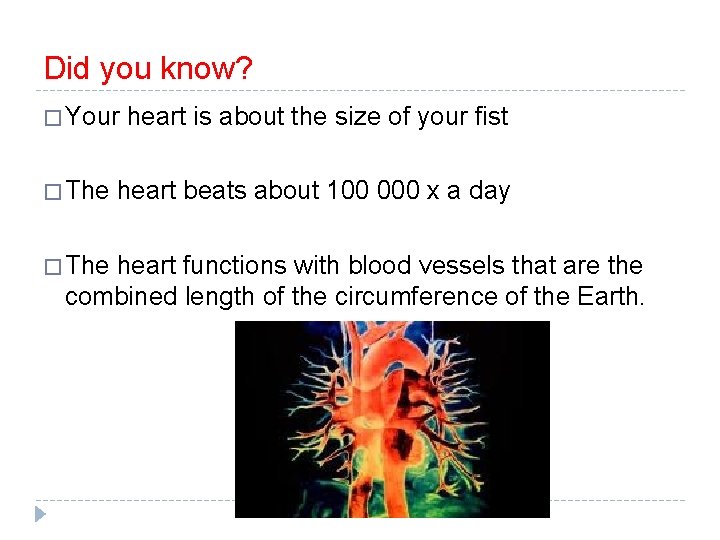
Did you know? � Your � The heart is about the size of your fist heart beats about 100 000 x a day heart functions with blood vessels that are the combined length of the circumference of the Earth.
Main Functions of the Circulatory System 1. Transportation of gases, nutrient molecules, and waste materials 2. Regulates internal temperature and transports chemical substances vital for health 3. Protects against blood loss from injury and disease -causing microbes
Major Components of the Circulatory System 1)Heart: muscular organ that pumps blood through the body 2)Blood vessels: system of hollow tubes through which blood moves Ie. Arteries, veins, capillaries 3)Blood: fluid that transports nutrients, oxygen, carbon dioxide, and many other materials
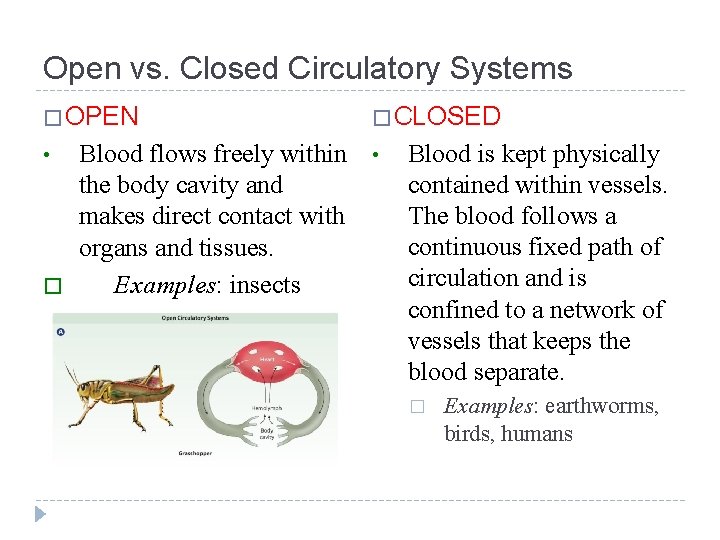
Open vs. Closed Circulatory Systems � OPEN • � Blood flows freely within the body cavity and makes direct contact with organs and tissues. Examples: insects � CLOSED • Blood is kept physically contained within vessels. The blood follows a continuous fixed path of circulation and is confined to a network of vessels that keeps the blood separate. � Examples: earthworms, birds, humans
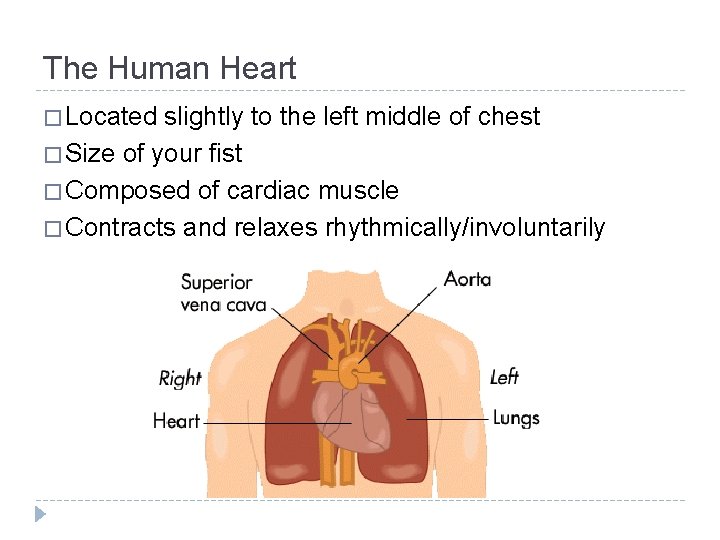
The Human Heart � Located slightly to the left middle of chest � Size of your fist � Composed of cardiac muscle � Contracts and relaxes rhythmically/involuntarily
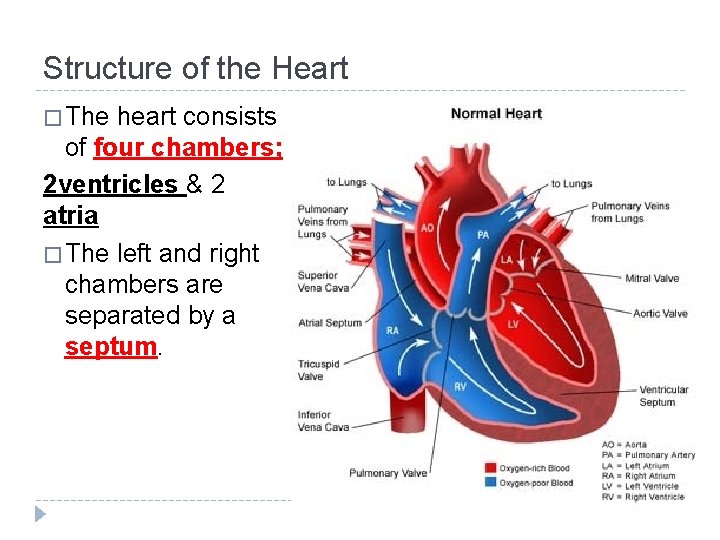
Structure of the Heart � The heart consists of four chambers; 2 ventricles & 2 atria � The left and right chambers are separated by a septum.
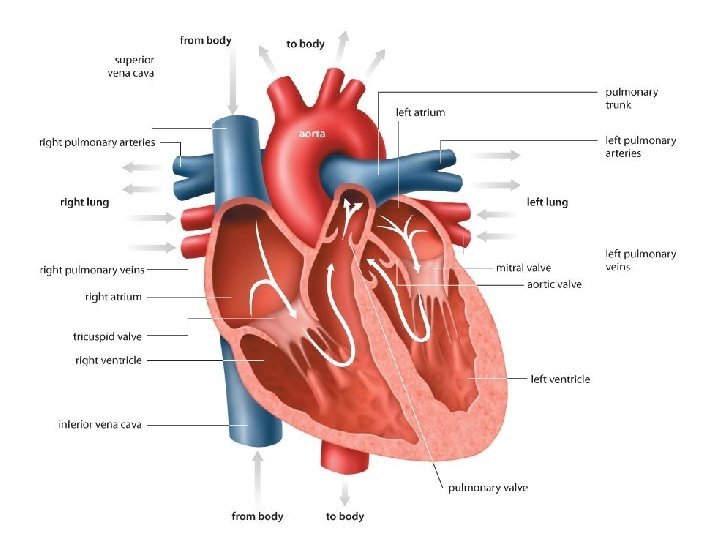
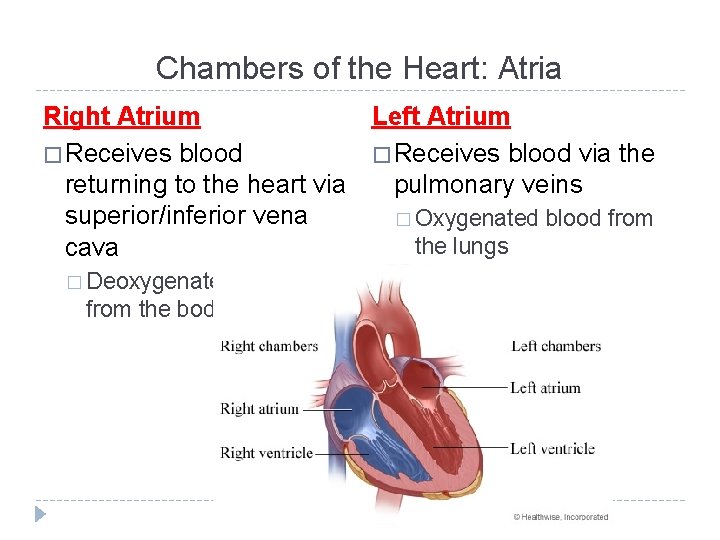
Chambers of the Heart: Atria Left Atrium Right Atrium � Receives blood via the � Receives blood pulmonary veins returning to the heart via superior/inferior vena � Oxygenated blood from the lungs cava � Deoxygenated from the body blood
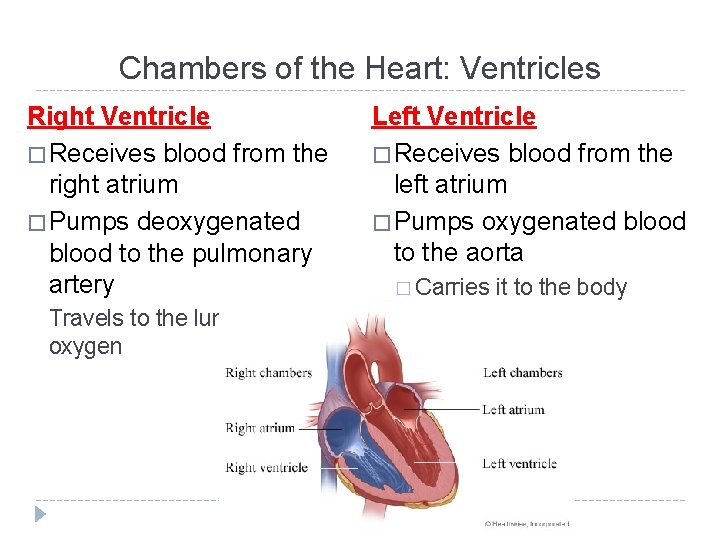
Chambers of the Heart: Ventricles Right Ventricle � Receives blood from the right atrium � Pumps deoxygenated blood to the pulmonary artery Travels to the lungs to get oxygen Left Ventricle � Receives blood from the left atrium � Pumps oxygenated blood to the aorta � Carries it to the body
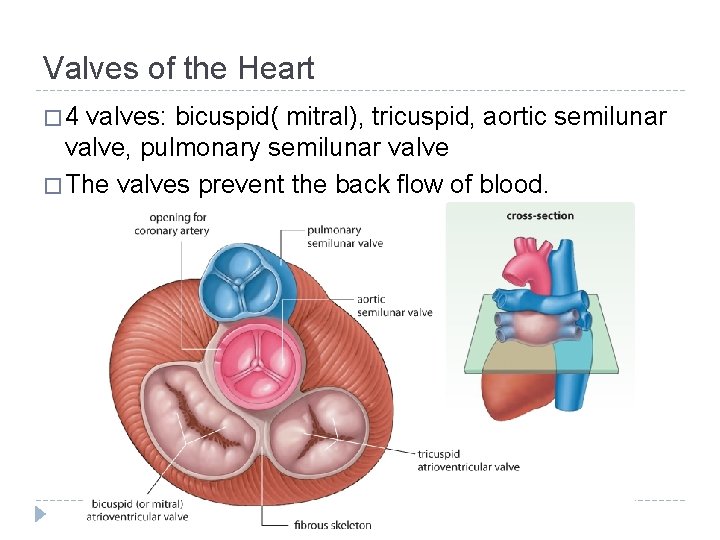
Valves of the Heart � 4 valves: bicuspid( mitral), tricuspid, aortic semilunar valve, pulmonary semilunar valve � The valves prevent the back flow of blood.
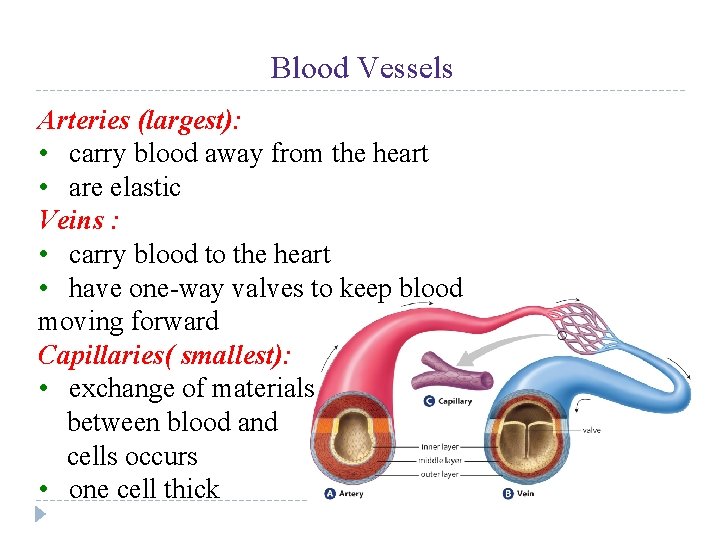
UNIT 4 Chapter 12: The Circulatory System Blood Vessels Arteries (largest): • carry blood away from the heart • are elastic Veins : • carry blood to the heart • have one-way valves to keep blood moving forward Capillaries( smallest): • exchange of materials between blood and cells occurs • one cell thick Section 12. 1
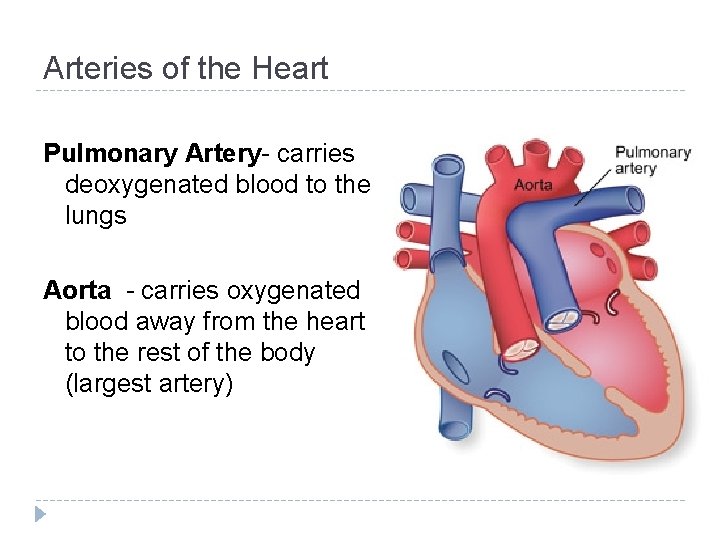
Arteries of the Heart Pulmonary Artery- carries deoxygenated blood to the lungs Aorta - carries oxygenated blood away from the heart to the rest of the body (largest artery)
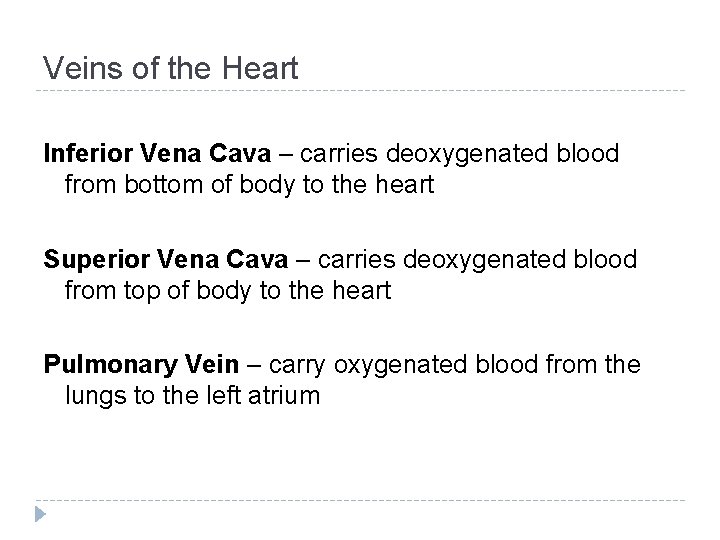
Veins of the Heart Inferior Vena Cava – carries deoxygenated blood from bottom of body to the heart Superior Vena Cava – carries deoxygenated blood from top of body to the heart Pulmonary Vein – carry oxygenated blood from the lungs to the left atrium
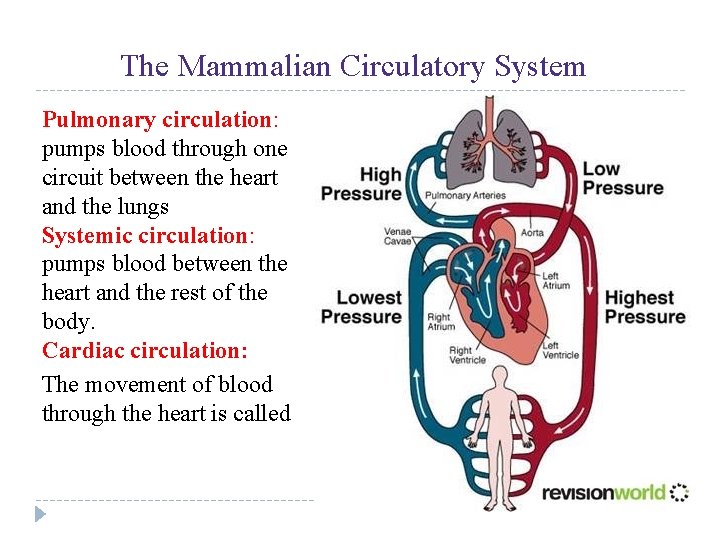
UNIT 4 Chapter 12: The Circulatory System The Mammalian Circulatory System Pulmonary circulation: pumps blood through one circuit between the heart and the lungs Systemic circulation: pumps blood between the heart and the rest of the body. Cardiac circulation: The movement of blood through the heart is called Section 12. 1
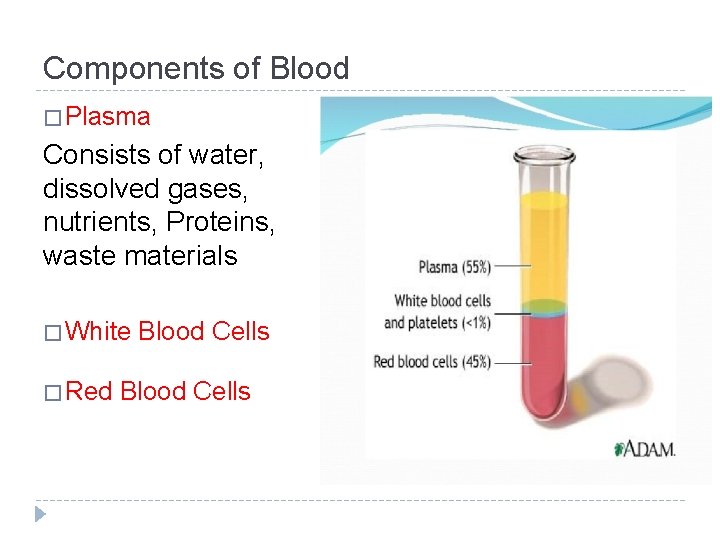
Components of Blood � Plasma Consists of water, dissolved gases, nutrients, Proteins, waste materials � White � Red Blood Cells
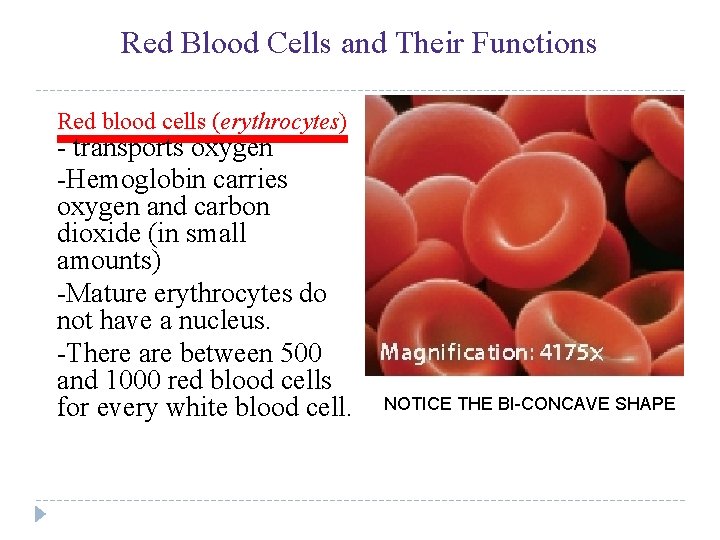
UNIT 4 Chapter 12: The Circulatory System Section 12. 1 Red Blood Cells and Their Functions Red blood cells (erythrocytes) - transports oxygen -Hemoglobin carries oxygen and carbon dioxide (in small amounts) -Mature erythrocytes do not have a nucleus. -There are between 500 and 1000 red blood cells for every white blood cell. NOTICE THE BI-CONCAVE SHAPE
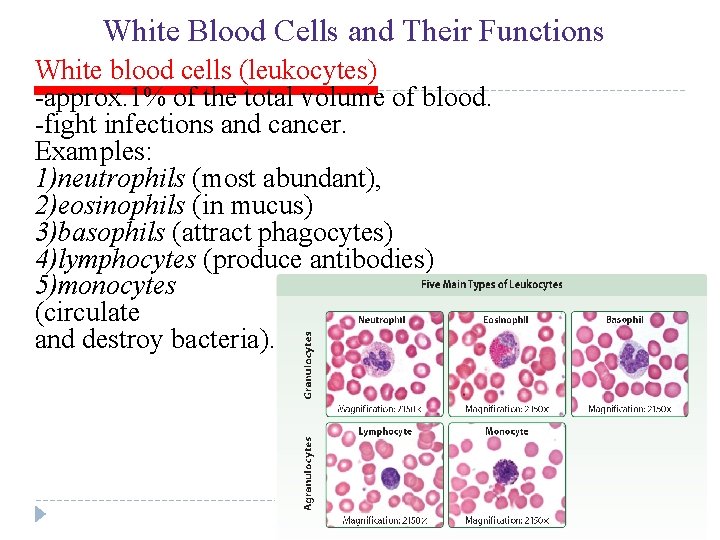
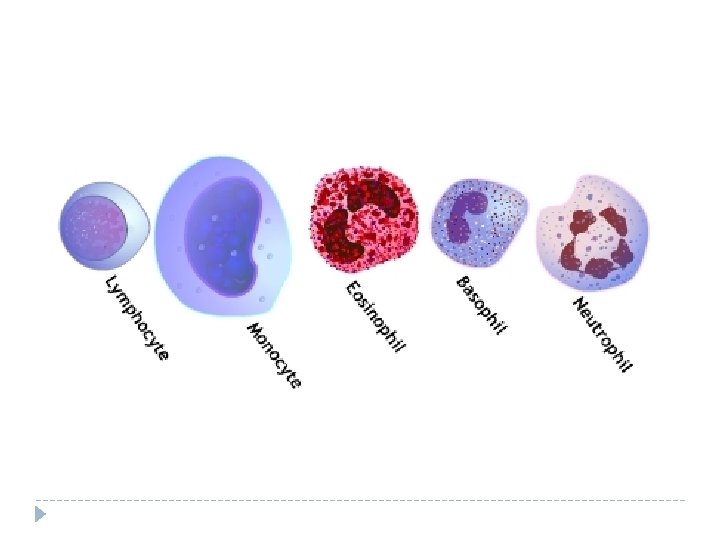
UNIT 4 Chapter 12: The Circulatory System White Blood Cells and Their Functions White blood cells (leukocytes) -approx. 1% of the total volume of blood. -fight infections and cancer. Examples: 1)neutrophils (most abundant), 2)eosinophils (in mucus) 3)basophils (attract phagocytes) 4)lymphocytes (produce antibodies) 5)monocytes (circulate and destroy bacteria). Section 12. 1
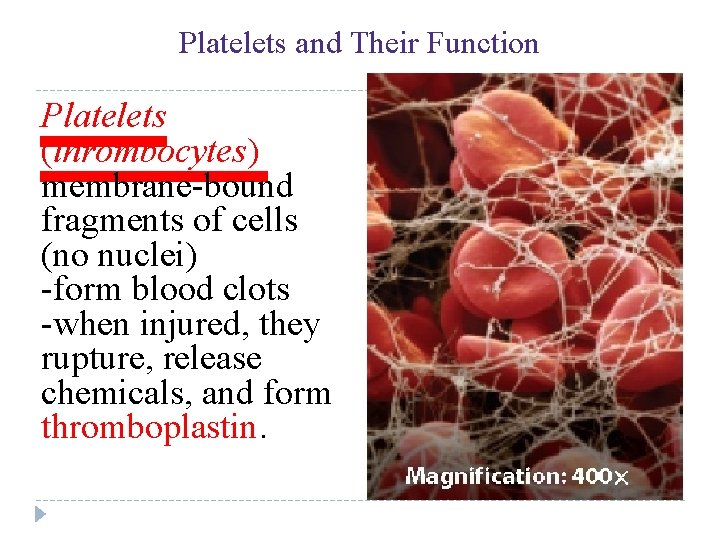
UNIT 4 Chapter 12: The Circulatory System Platelets and Their Function Platelets (thrombocytes) membrane-bound fragments of cells (no nuclei) -form blood clots -when injured, they rupture, release chemicals, and form thromboplastin. Section 12. 1
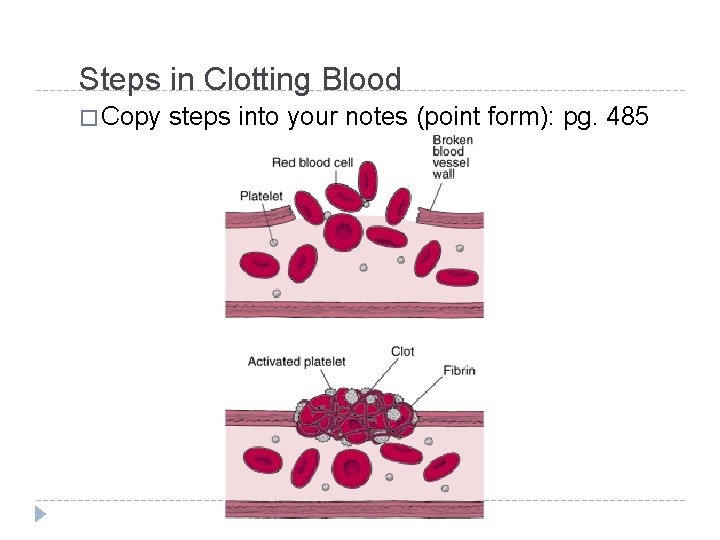
Steps in Clotting Blood � Copy steps into your notes (point form): pg. 485
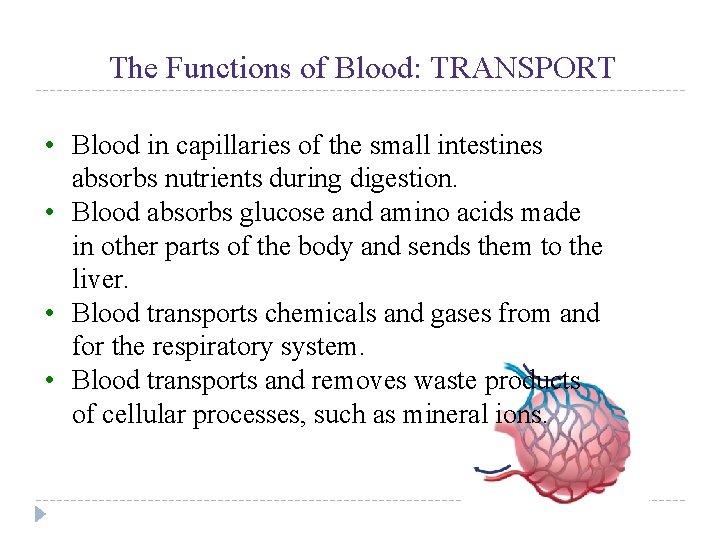
UNIT 4 Chapter 12: The Circulatory System Section 12. 1 The Functions of Blood: TRANSPORT • Blood in capillaries of the small intestines absorbs nutrients during digestion. • Blood absorbs glucose and amino acids made in other parts of the body and sends them to the liver. • Blood transports chemicals and gases from and for the respiratory system. • Blood transports and removes waste products of cellular processes, such as mineral ions.
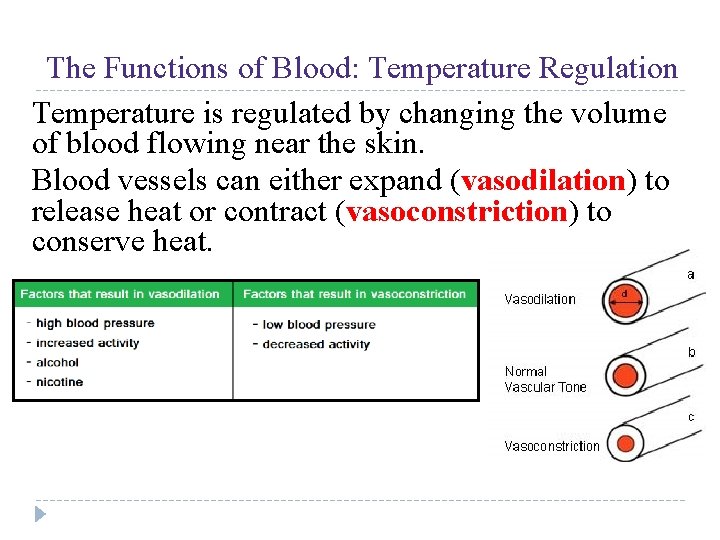
UNIT 4 Chapter 12: The Circulatory System Section 12. 1 The Functions of Blood: Temperature Regulation Temperature is regulated by changing the volume of blood flowing near the skin. Blood vessels can either expand (vasodilation) to release heat or contract (vasoconstriction) to conserve heat.
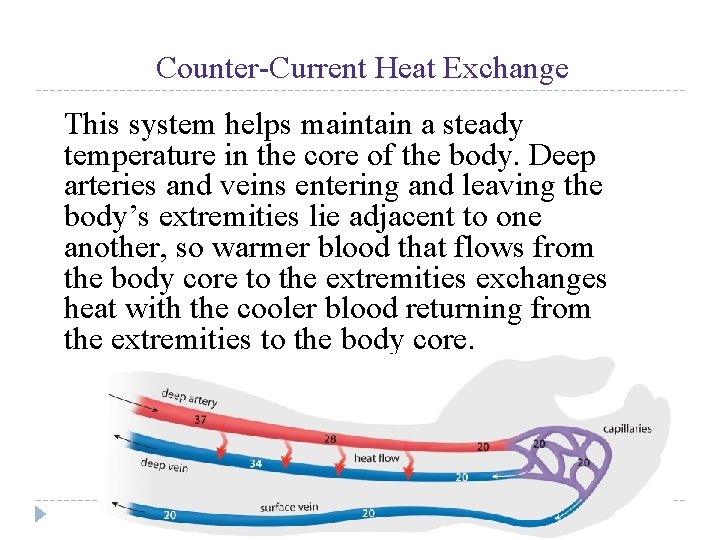
UNIT 4 Chapter 12: The Circulatory System Section 12. 1 Counter-Current Heat Exchange This system helps maintain a steady temperature in the core of the body. Deep arteries and veins entering and leaving the body’s extremities lie adjacent to one another, so warmer blood that flows from the body core to the extremities exchanges heat with the cooler blood returning from the extremities to the body core.
Homework 1) Read and make notes 12. 1 2) Complete pg. 481 #1 -6 3) Label the diagram of the heart
- Slides: 25