
12 07 16 Digestion Section by section What
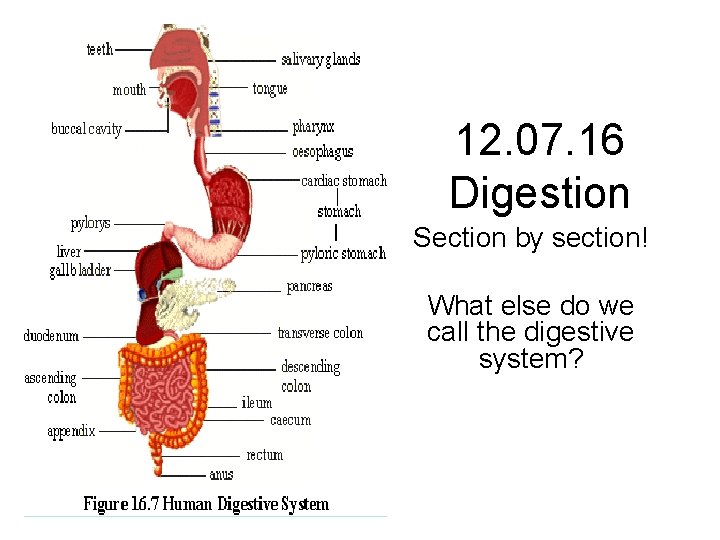
12. 07. 16 Digestion Section by section! What else do we call the digestive system?
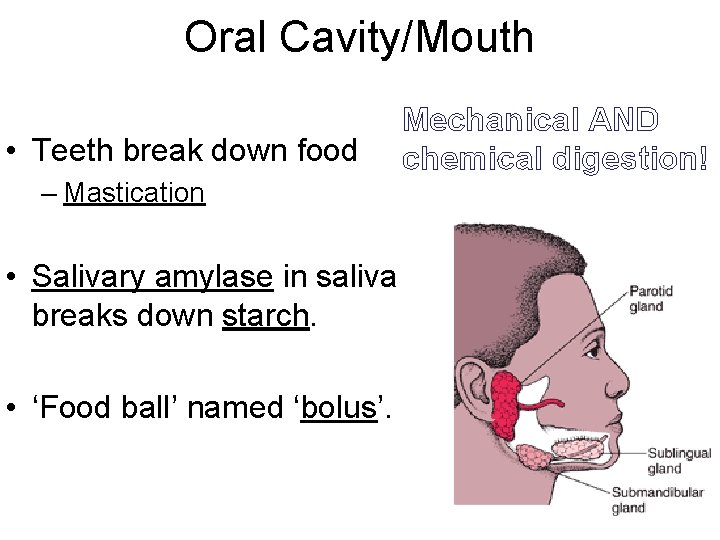
Oral Cavity/Mouth • Teeth break down food – Mastication • Salivary amylase in saliva breaks down starch. • ‘Food ball’ named ‘bolus’. Mechanical AND chemical digestion!
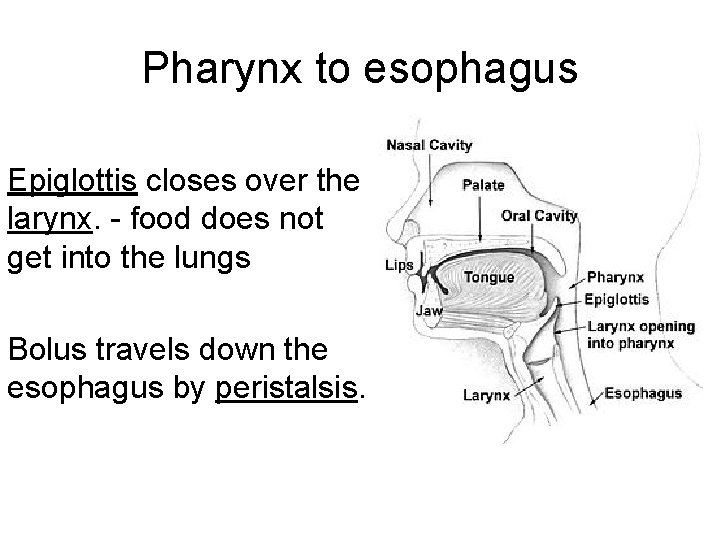
Pharynx to esophagus Epiglottis closes over the larynx. - food does not get into the lungs Bolus travels down the esophagus by peristalsis.
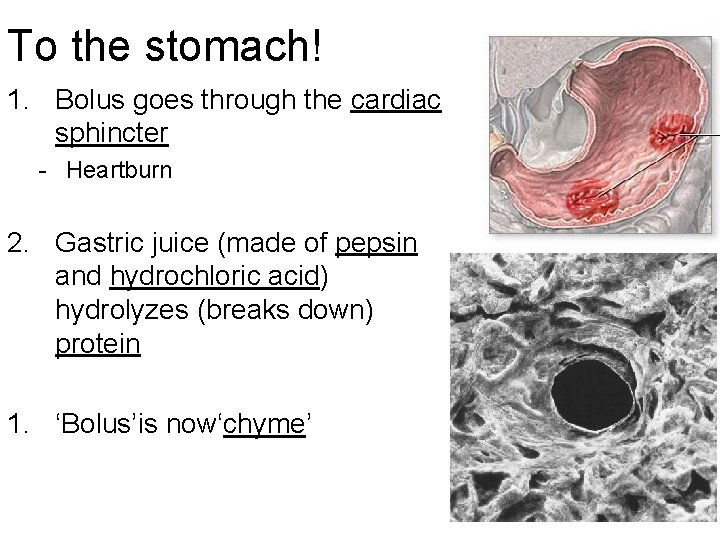
To the stomach! 1. Bolus goes through the cardiac sphincter - Heartburn 2. Gastric juice (made of pepsin and hydrochloric acid) hydrolyzes (breaks down) protein 1. ‘Bolus’is now‘chyme’
Check it • What gets digested in the mouth? What is the enzyme that does it? Carbohydrate, amylase • What gets digested in the stomach? What is the enzyme that does it? Protein, pepsin
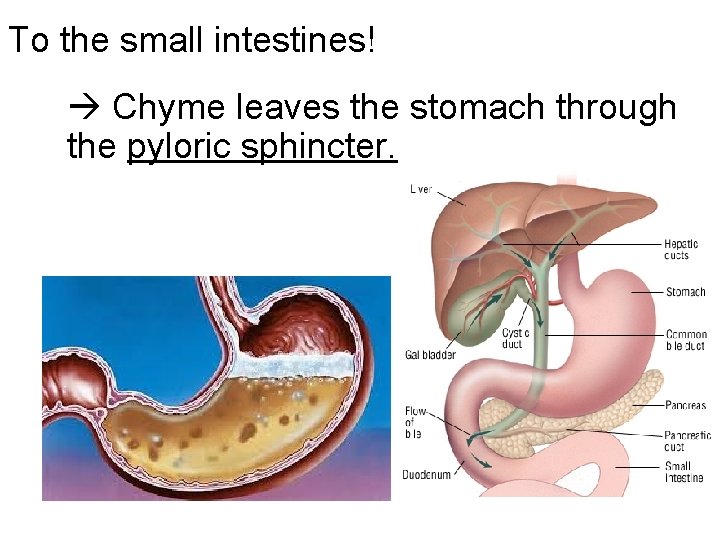
To the small intestines! Chyme leaves the stomach through the pyloric sphincter.
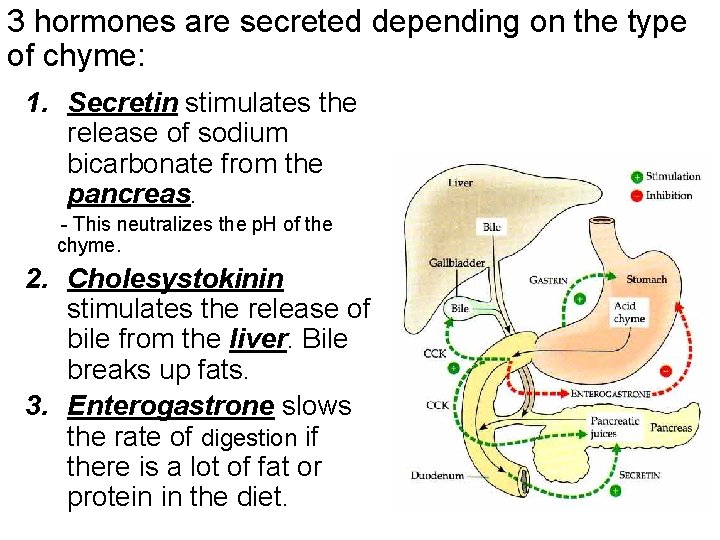
3 hormones are secreted depending on the type of chyme: 1. Secretin stimulates the release of sodium bicarbonate from the pancreas. - This neutralizes the p. H of the chyme. 2. Cholesystokinin stimulates the release of bile from the liver. Bile breaks up fats. 3. Enterogastrone slows the rate of digestion if there is a lot of fat or protein in the diet.
Review • What hormone gets secreted after a high fat meal? Cholesystokinin –stimulates the liver to secrete bile • What hormone gets secreted if the chyme is full of acid? secretin • What hormone gets secreted if the meal is large and full of protein or fat? (Slows digestion…) Enterogasterone
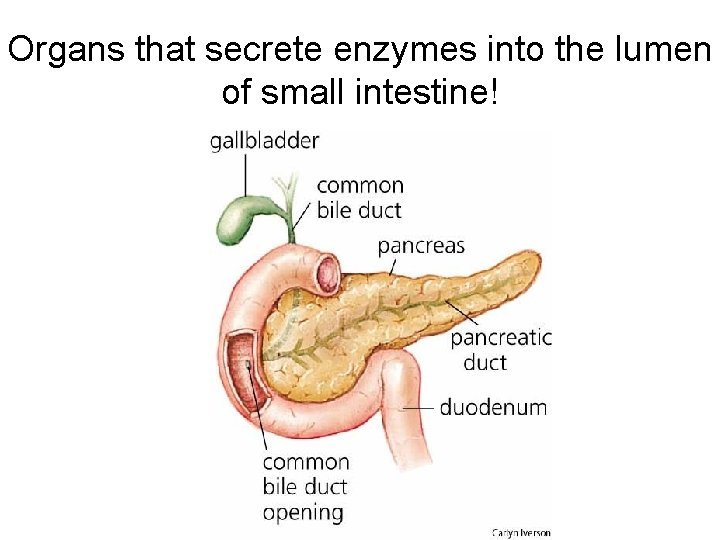
Organs that secrete enzymes into the lumen of small intestine!
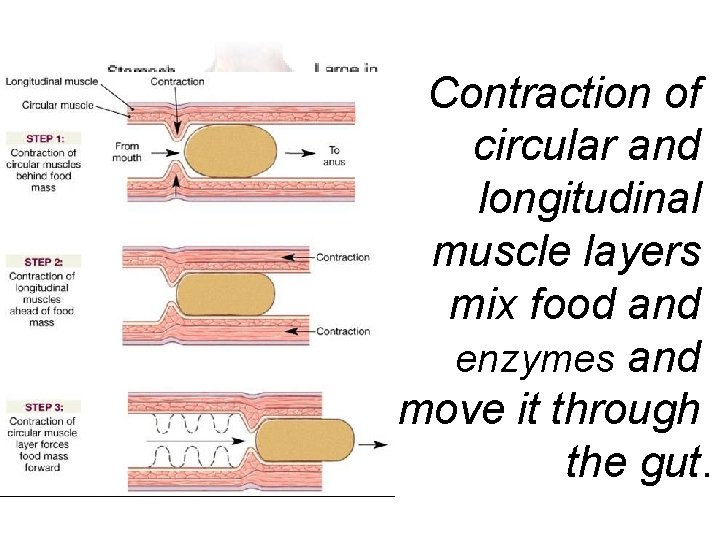
Contraction of circular and longitudinal muscle layers mix food and enzymes and move it through the gut.
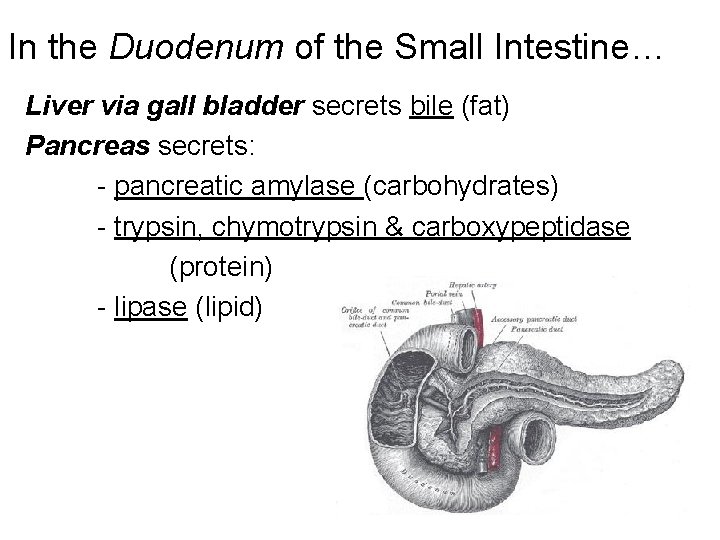
In the Duodenum of the Small Intestine… Liver via gall bladder secrets bile (fat) Pancreas secrets: - pancreatic amylase (carbohydrates) - trypsin, chymotrypsin & carboxypeptidase (protein) - lipase (lipid)
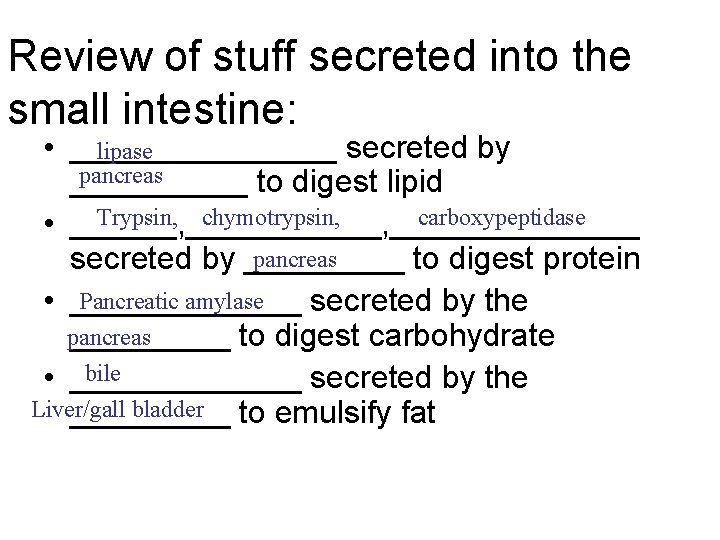
Review of stuff secreted into the small intestine: • ________ secreted by lipase pancreas _____ to digest lipid Trypsin, chymotrypsin, carboxypeptidase • ______, __________ pancreas secreted by _____ to digest protein Pancreatic amylase • _______ secreted by the pancreas _____ to digest carbohydrate bile • _______ secreted by the Liver/gall bladder to emulsify fat _____
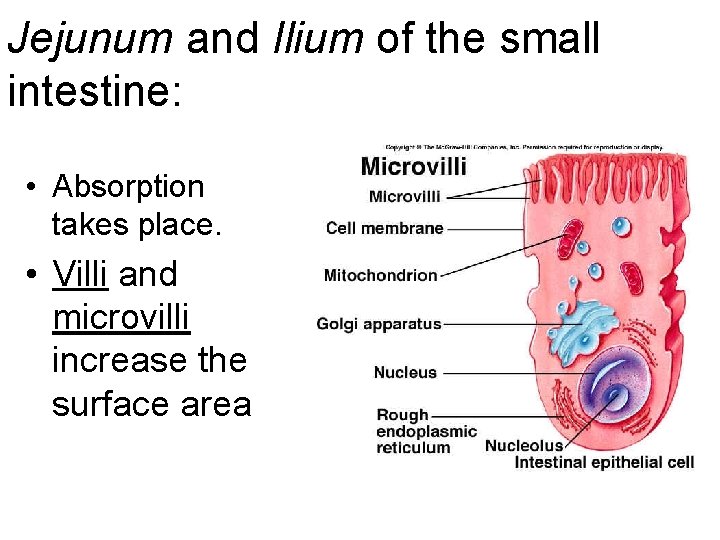
Jejunum and Ilium of the small intestine: • Absorption takes place. • Villi and microvilli increase the surface area
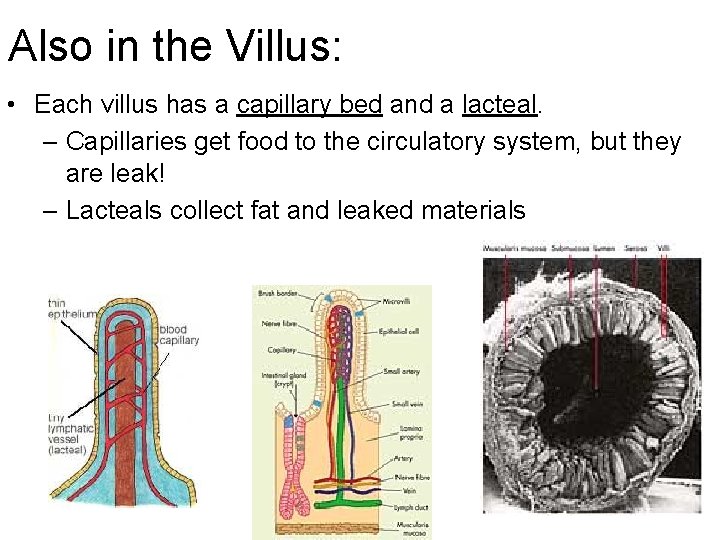
Also in the Villus: • Each villus has a capillary bed and a lacteal. – Capillaries get food to the circulatory system, but they are leak! – Lacteals collect fat and leaked materials
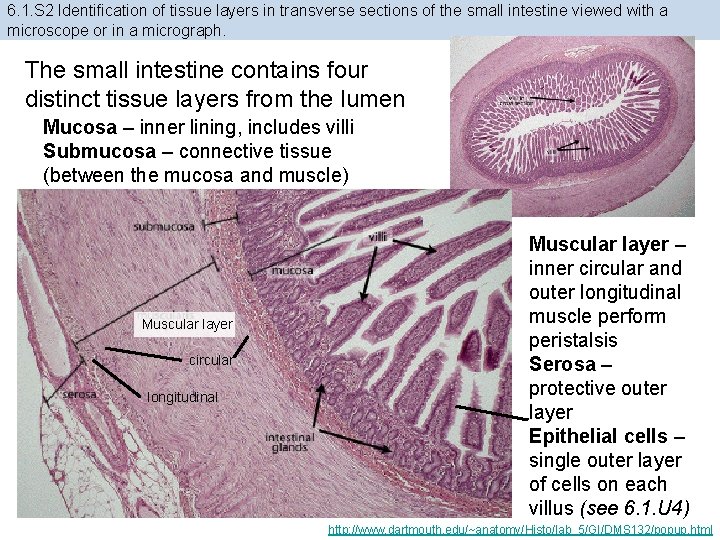
6. 1. S 2 Identification of tissue layers in transverse sections of the small intestine viewed with a microscope or in a micrograph. The small intestine contains four distinct tissue layers from the lumen Mucosa – inner lining, includes villi Submucosa – connective tissue (between the mucosa and muscle) Muscular layer circular longitudinal Muscular layer – inner circular and outer longitudinal muscle perform peristalsis Serosa – protective outer layer Epithelial cells – single outer layer of cells on each villus (see 6. 1. U 4) http: //www. dartmouth. edu/~anatomy/Histo/lab_5/GI/DMS 132/popup. html
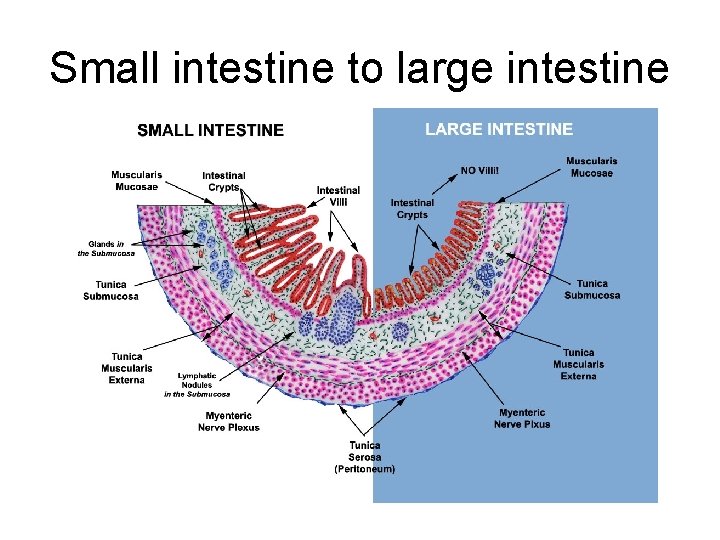
Small intestine to large intestine
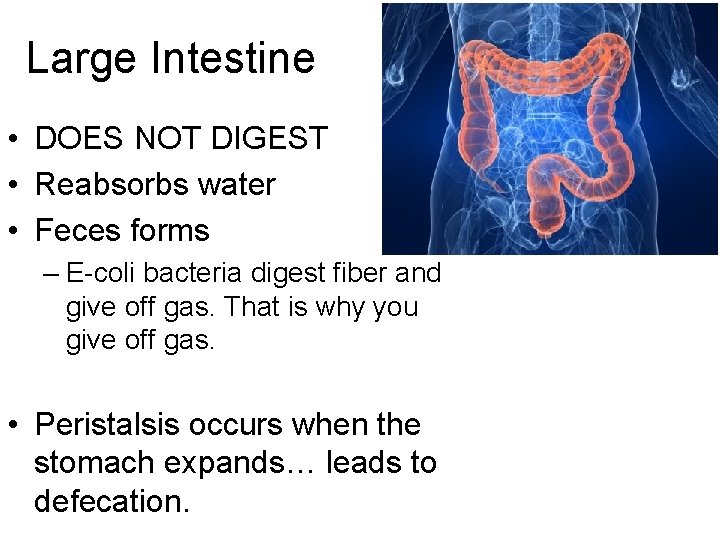
Large Intestine • DOES NOT DIGEST • Reabsorbs water • Feces forms – E-coli bacteria digest fiber and give off gas. That is why you give off gas. • Peristalsis occurs when the stomach expands… leads to defecation.
Problems of the large intestine • Constipation: Hard, dry feces. Happens when the feces is left in the large intestine too long and too much water is reabsorbed. • Diarrhea: watery feces. Happens when there is too much peristaltic activity (infection, emotional stress, physical stress…) – Ulcerative colitis: Ulcers resulting in constant diarrhea. • Colon cancer: tumors of the colon.
- Slides: 18