
11716 THE LIFE CYCLE OF A STAR Objective
11/7/16 THE LIFE CYCLE OF A STAR Objective: I will compare and contrast the life cycle of stars based on their initial mass. PAGE 33
Life Cycle of a Star

Main Sequence Stars • Once nuclear fusion occurs, a star enters the main sequence • Longest stage in star life cycle • Smaller stars = billions of years • Larger stars = millions of years
A Delicate Balancing Act
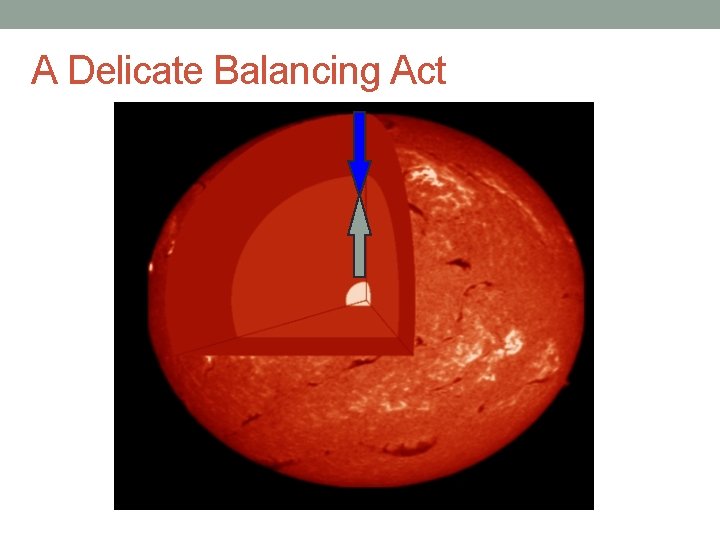
Red Giant • Outer layers collapse, core heats up • Fusion of helium into carbon begins • Outer shell expands greatly (100 x MS) • Forces regain balance
Red Giant • What happens next depends on how much mass the star has.
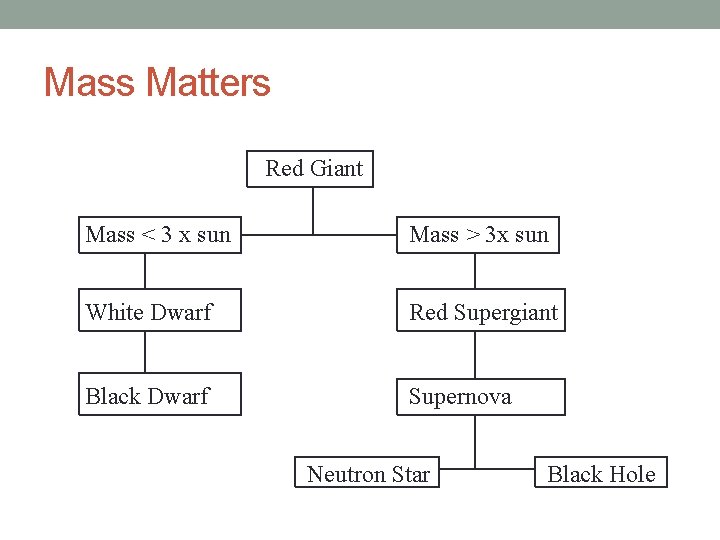
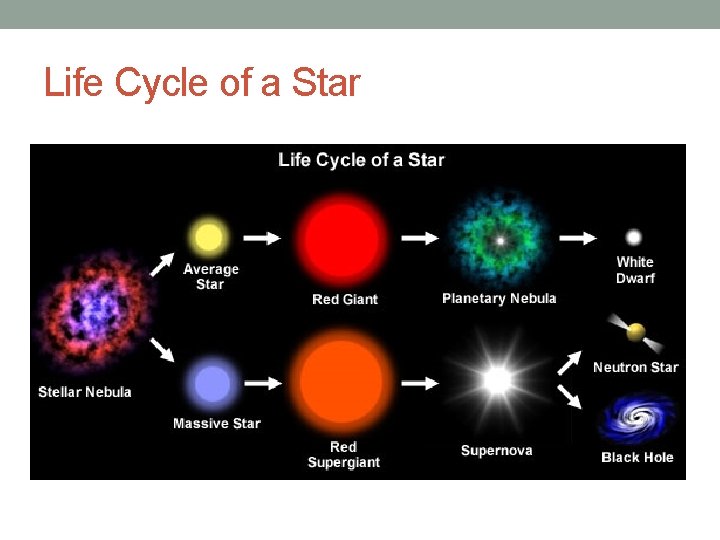
Mass Matters Red Giant Mass < 3 x sun Mass > 3 x sun White Dwarf Red Supergiant Black Dwarf Supernova Neutron Star Black Hole
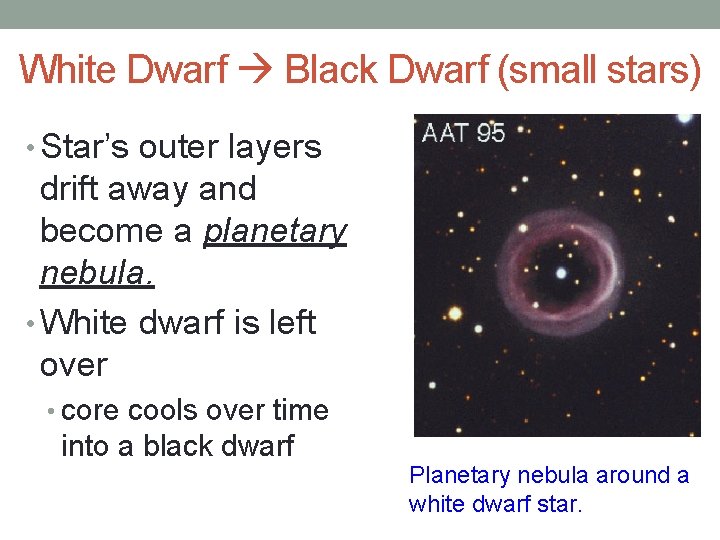
White Dwarf Black Dwarf (small stars) • Star’s outer layers drift away and become a planetary nebula. • White dwarf is left over • core cools over time into a black dwarf Planetary nebula around a white dwarf star.
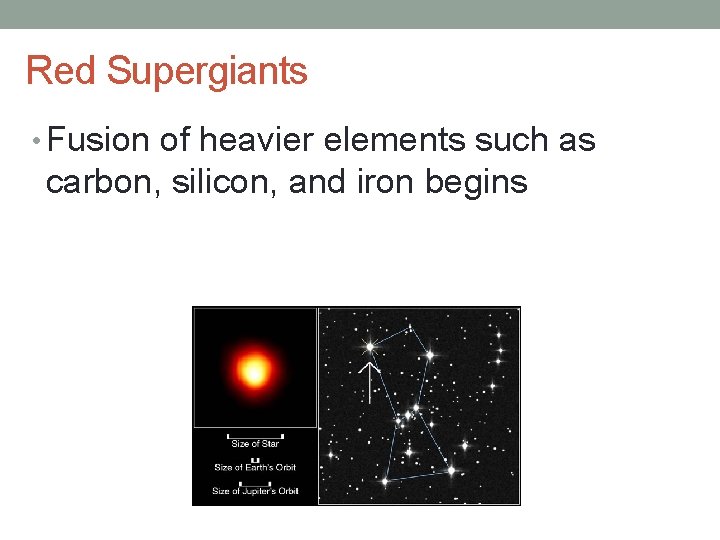
Red Supergiants • Fusion of heavier elements such as carbon, silicon, and iron begins
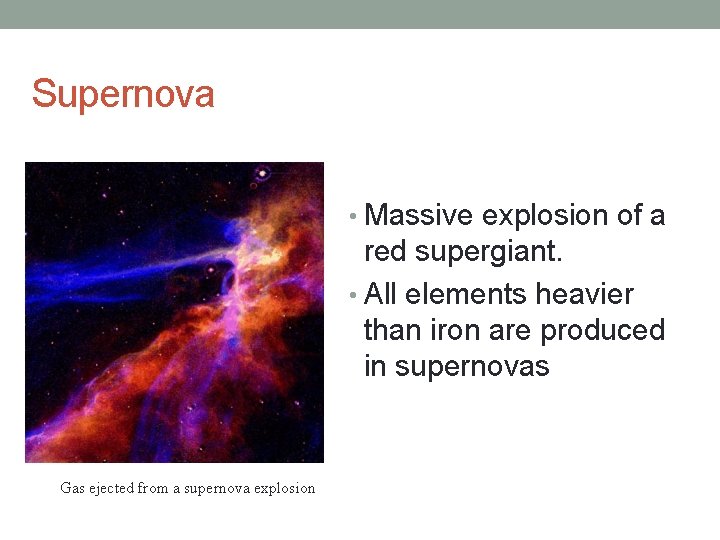
Supernova • Massive explosion of a red supergiant. • All elements heavier than iron are produced in supernovas Gas ejected from a supernova explosion
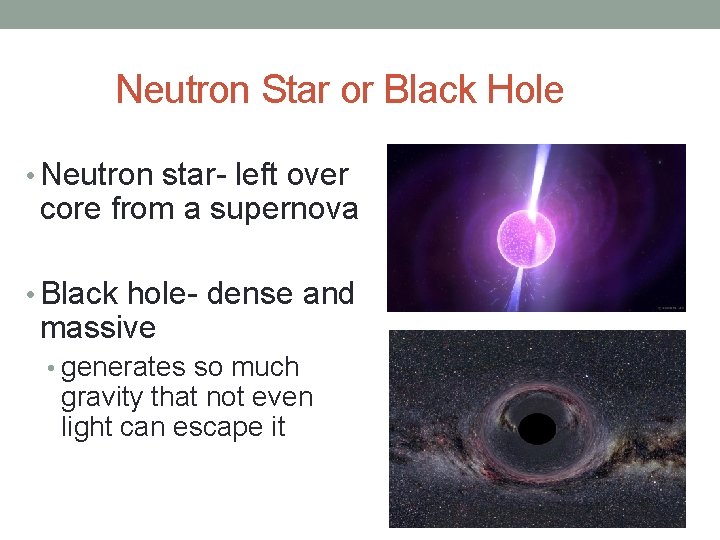
Neutron Star or Black Hole • Neutron star- left over core from a supernova • Black hole- dense and massive • generates so much gravity that not even light can escape it
- Slides: 11