
117 Who am I Mikhail I Gofman Assistant
- Slides: 17
1/17 Who am I? • Mikhail I. Gofman • Assistant Professor of Computer Science at CSUF since Fall 2012. • Education: Ph. D. in Computer Science at State University of New York at Binghamton. • Work experience: Interned at Emerson Network Power as: • Information Technology professional • Entry-level electronics engineer • Embedded systems developer
2/17 What do I do? Research • Access control policies • Virtualization and cloud security Teaching • Introduction to Computer Security • Cryptography • Web security • Network Security • Biometric authentication • Computer Communications • Operating Systems
3/17 First Things First: Special Thanks to Our Sponsors and Supporters!
4/17 ECS Security Center: A Vision of Excellence in Cybersecurity
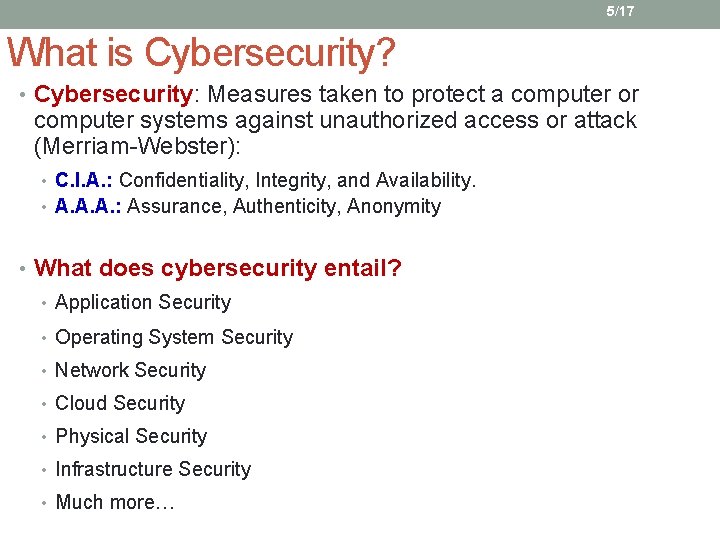
5/17 What is Cybersecurity? • Cybersecurity: Measures taken to protect a computer or computer systems against unauthorized access or attack (Merriam-Webster): • C. I. A. : Confidentiality, Integrity, and Availability. • A. A. A. : Assurance, Authenticity, Anonymity • What does cybersecurity entail? • Application Security • Operating System Security • Network Security • Cloud Security • Physical Security • Infrastructure Security • Much more…
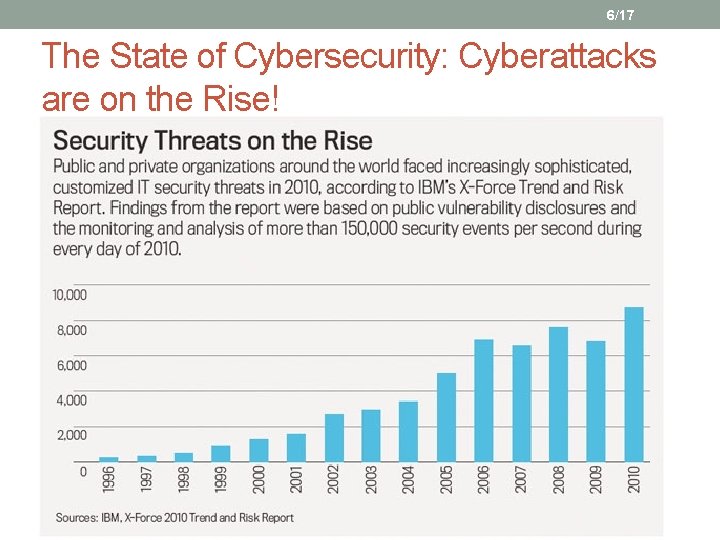
6/17 The State of Cybersecurity: Cyberattacks are on the Rise!
7/17 How Can We Improve the State of Cybersecurity? Our Mission. • Produce security talent through top-notch security education. • Work symbiotically with industry partners and professionals across different disciplines to advance cybersecurity research. • Serve the broader community by promoting cybersecurity awareness and literacy.
8/17 Taking Initiative: The Strategy (1) • Goal 1: adapt an interdisciplinary approach to cybersecurity curriculum development: • Computer Science: software, system, and network security. • Electrical Engineering: security of the electrical grid systems. • Civil Engineering: infrastructure security. • Business and Information systems: Systems auditing, fraud- prevention/detection. • Goal 2: support and sponsor student and faculty research in cybersecurity: • Funding opportunities for security research projects. • Engage students in research.
9/17 Taking the Initiative: The Strategy (2) • Goal 3: Maintain symbiotic ties with industry partners: • Solicit industry feedback guiding security curriculum development. • Create security internship opportunities for students. • Build a school-to-industry pipeline supplying industry partners with security talent. • Encourage collaborative research projects between ECS faculty and industry professionals. • Much more…
10/17 From Strategy to Tactics
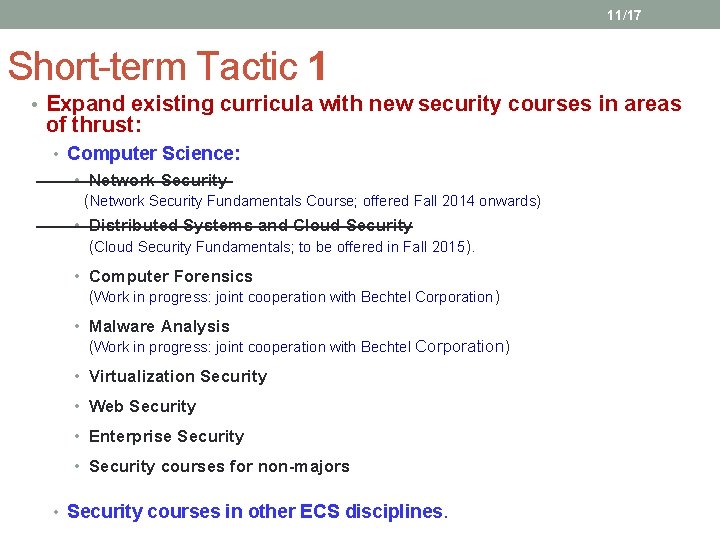
11/17 Short-term Tactic 1 • Expand existing curricula with new security courses in areas of thrust: • Computer Science: • Network Security (Network Security Fundamentals Course; offered Fall 2014 onwards) • Distributed Systems and Cloud Security (Cloud Security Fundamentals; to be offered in Fall 2015). • Computer Forensics (Work in progress: joint cooperation with Bechtel Corporation) • Malware Analysis (Work in progress: joint cooperation with Bechtel Corporation) • Virtualization Security • Web Security • Enterprise Security • Security courses for non-majors • Security courses in other ECS disciplines.
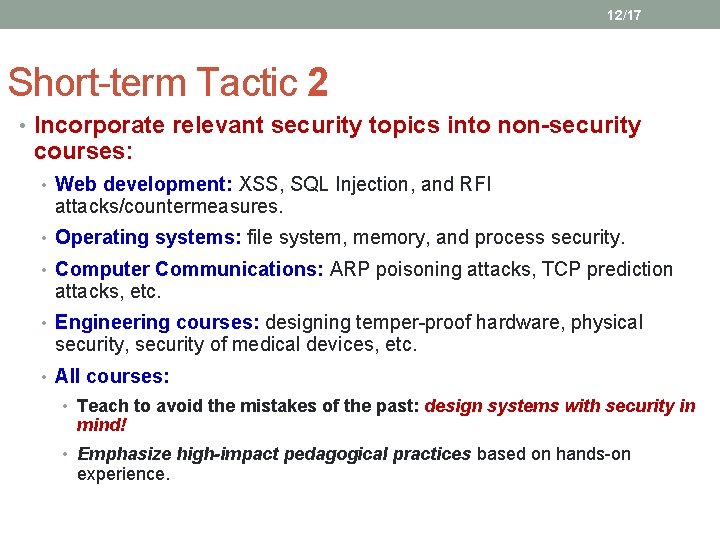
12/17 Short-term Tactic 2 • Incorporate relevant security topics into non-security courses: • Web development: XSS, SQL Injection, and RFI attacks/countermeasures. • Operating systems: file system, memory, and process security. • Computer Communications: ARP poisoning attacks, TCP prediction attacks, etc. • Engineering courses: designing temper-proof hardware, physical security, security of medical devices, etc. • All courses: • Teach to avoid the mistakes of the past: design systems with security in mind! • Emphasize high-impact pedagogical practices based on hands-on experience.
13/17 Short-term Tactic 3 • Recruit faculty professionals qualified to teach and shepherd our curriculum: • Cryptography • Digital Forensics • Distributed Systems Security • Big. Data Security • Trusted platforms • Mobile Security
14/17 Short-term Tactic 4 • Support student organizations: • Offensive Security Society (Computer Science): professional group of students interested in cybersecurity. • ISACA (Business/ISDS): a worldwide association of information security professionals dedicated to the audit, control, and security of information systems (CSUF chapter).
15/17 Long-term Tactics (1) • Tactic 1: establish undergraduate/graduate advising tracks in security. • Tactic 2: establish undergraduate/graduate degree programs in cybersecurity. • Tactic 3: establish a minor in security. • Tactic 4: establish vibrant, high-impact, externally funded security research agenda.
16/17 Long-term Tactics (2) • The Holy Grail: meet National Security Agency’s (NSA’s) criteria for becoming a nationally recognized center of excellence in security education!
17/17 QUESTIONS?