
1142019 Classification Reading Strategyuse class set to read

- Slides: 23
1/14/2019 Classification Reading Strategyuse class set to read and fill in blanks. TURN IN!!! 2. Classification Notes 3. Checkpoint 4. Reminder- you need your own color pencils and folder by Monday. I am checking to make sure you have them. VOCAB QUIZ Thursday 1/17!! 1.
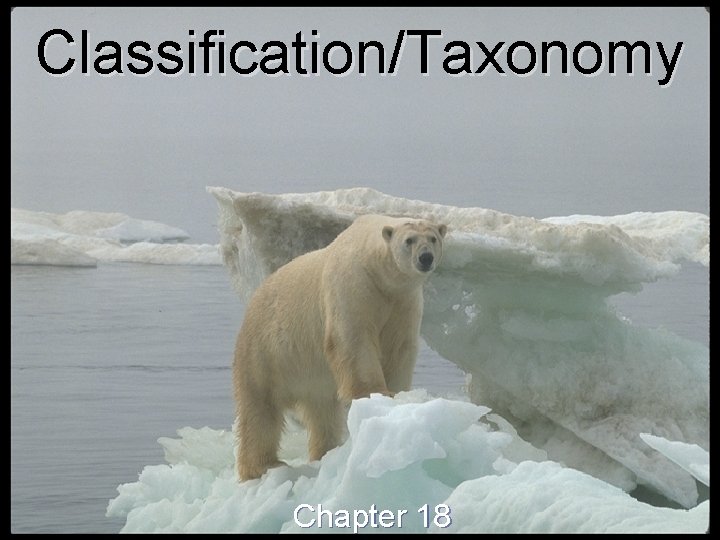
Classification/Taxonomy Chapter 18
Why Classify?
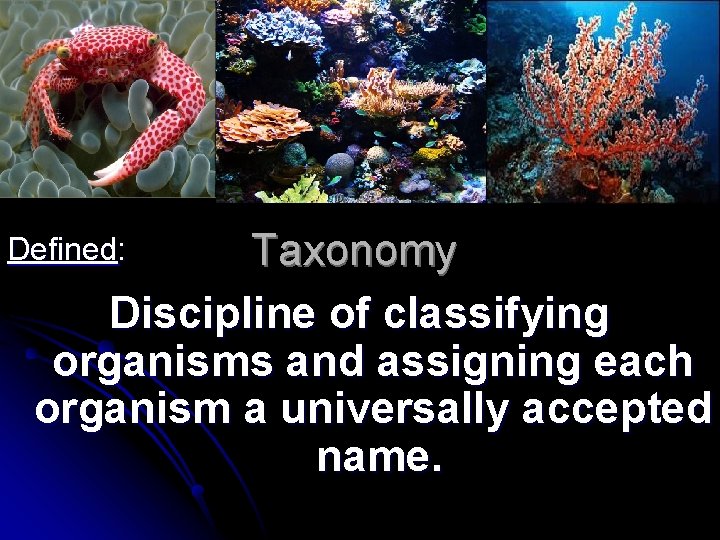
Taxonomy Discipline of classifying organisms and assigning each organism a universally accepted name. Defined:
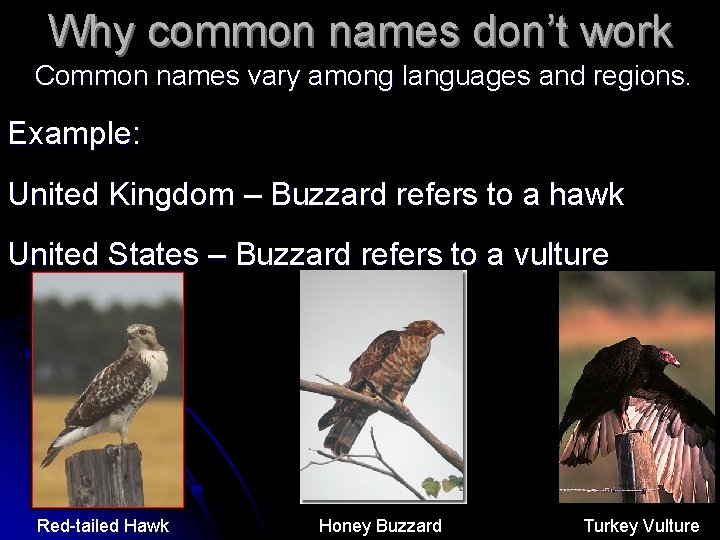
Why common names don’t work Common names vary among languages and regions. Example: United Kingdom – Buzzard refers to a hawk United States – Buzzard refers to a vulture Red-tailed Hawk Honey Buzzard Turkey Vulture
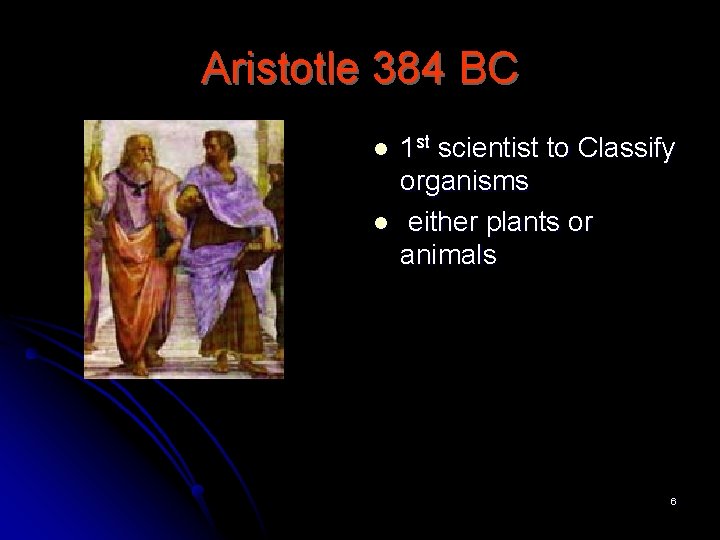
Aristotle 384 BC l l 1 st scientist to Classify organisms either plants or animals 6
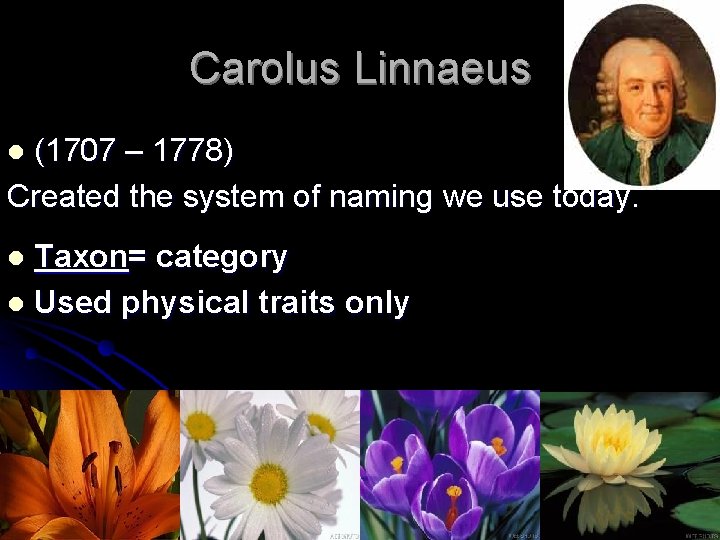
Carolus Linnaeus (1707 – 1778) Created the system of naming we use today. l Taxon= category l Used physical traits only l
Binomial Nomenclature “Bi” means 2 l “nomial” means number l “Nomen” means name l “Clature” means the system of l Defined: each species is assigned a two-part scientific name.
Binomial Nomenclature Carolus Linnaeus l In binomial nomenclature, each species is assigned a two-part scientific name. l l The scientific name is always written in italics or underlined. l The first word (the genus) is capitalized l The second word (the species) is lowercased. EX- Genus species or Genus species Humans- Homo sapien 9
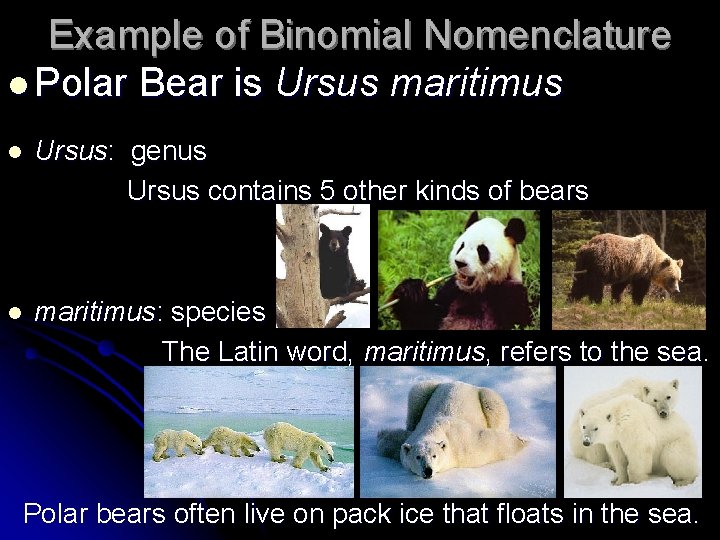
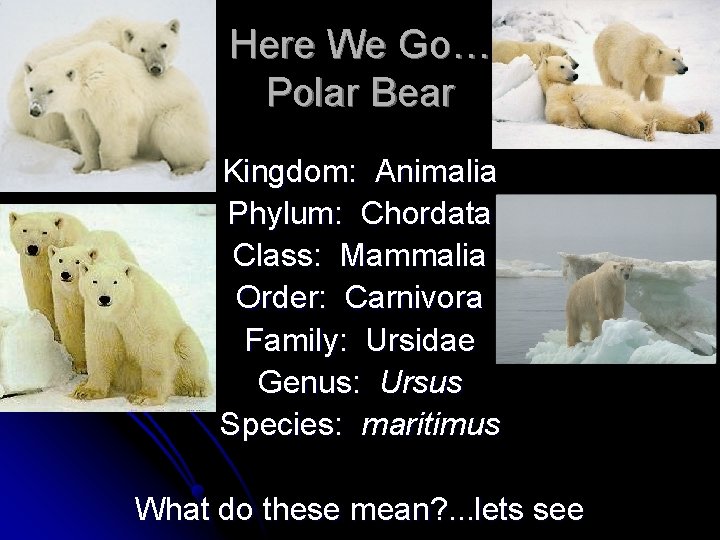
Example of Binomial Nomenclature l Polar Bear is Ursus maritimus l Ursus: genus Ursus contains 5 other kinds of bears l maritimus: species The Latin word, maritimus, refers to the sea. Polar bears often live on pack ice that floats in the sea.
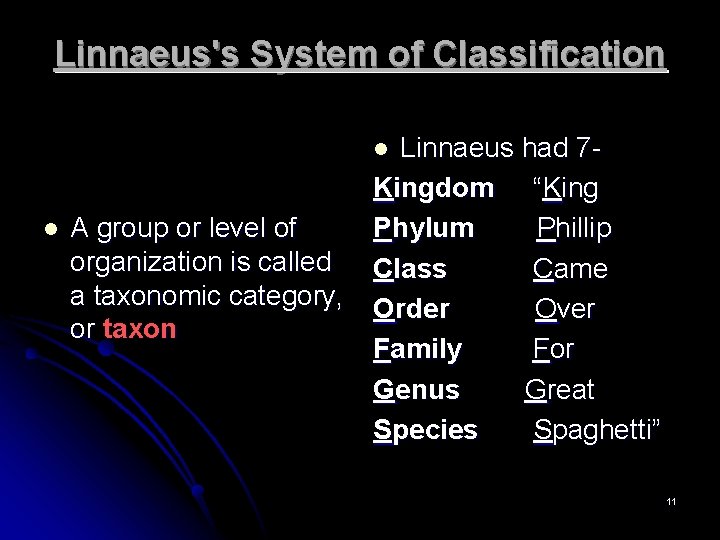
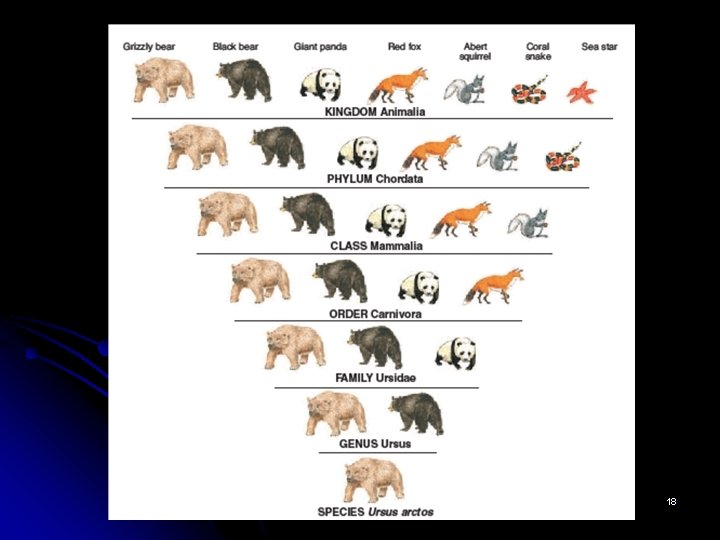
Linnaeus's System of Classification Linnaeus had 7 Kingdom “King Phylum Phillip Class Came Order Over Family For Genus Great Species Spaghetti” l l A group or level of organization is called a taxonomic category, or taxon 11
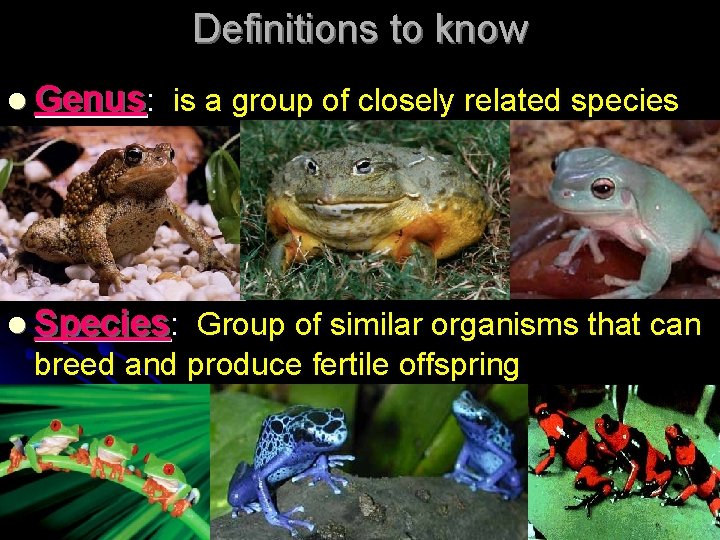
Definitions to know l Genus: is a group of closely related species l Species: Group of similar organisms that can breed and produce fertile offspring
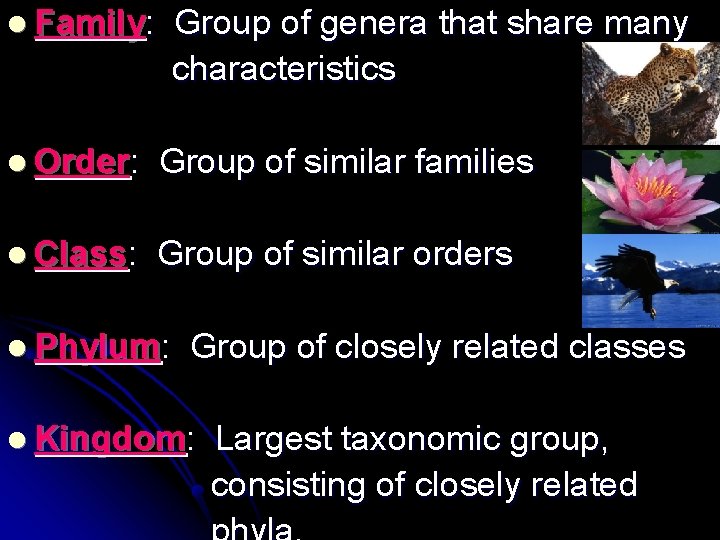
l Family: Group of genera that share many characteristics l Order: Group of similar families l Class: Group of similar orders l Phylum: Group of closely related classes l Kingdom: Largest taxonomic group, consisting of closely related
Here We Go… Polar Bear Kingdom: Animalia Phylum: Chordata Class: Mammalia Order: Carnivora Family: Ursidae Genus: Ursus Species: maritimus What do these mean? . . . lets see
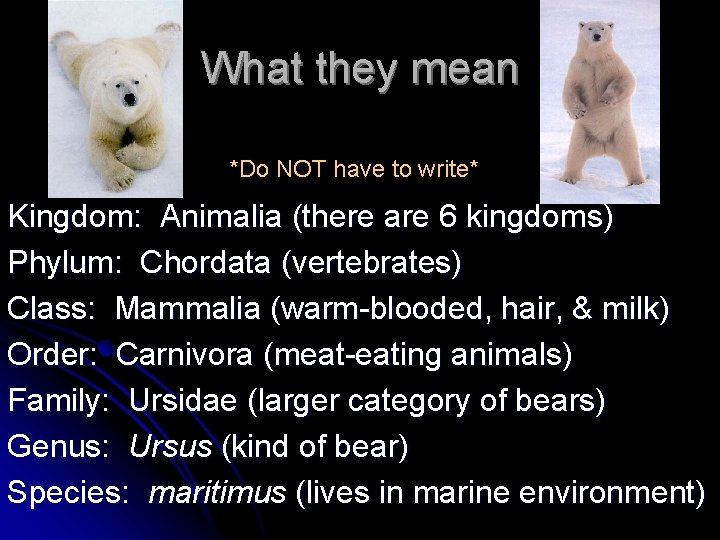
What they mean *Do NOT have to write* Kingdom: Animalia (there are 6 kingdoms) Phylum: Chordata (vertebrates) Class: Mammalia (warm-blooded, hair, & milk) Order: Carnivora (meat-eating animals) Family: Ursidae (larger category of bears) Genus: Ursus (kind of bear) Species: maritimus (lives in marine environment)
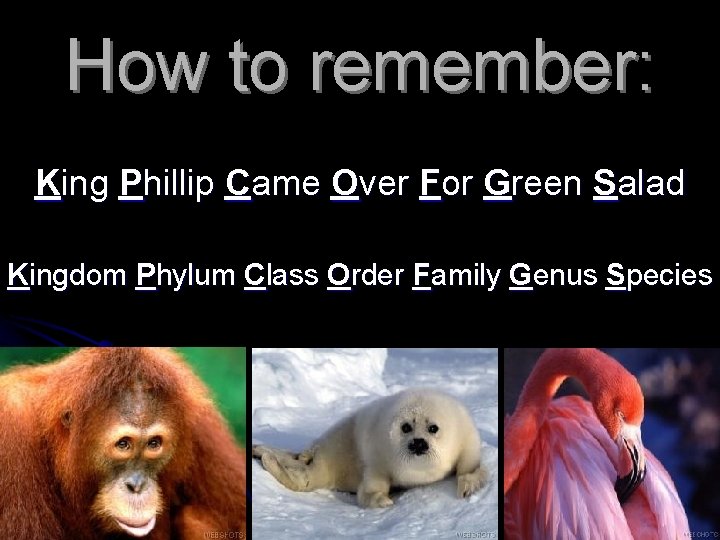
How to remember: King Phillip Came Over For Green Salad Kingdom Phylum Class Order Family Genus Species
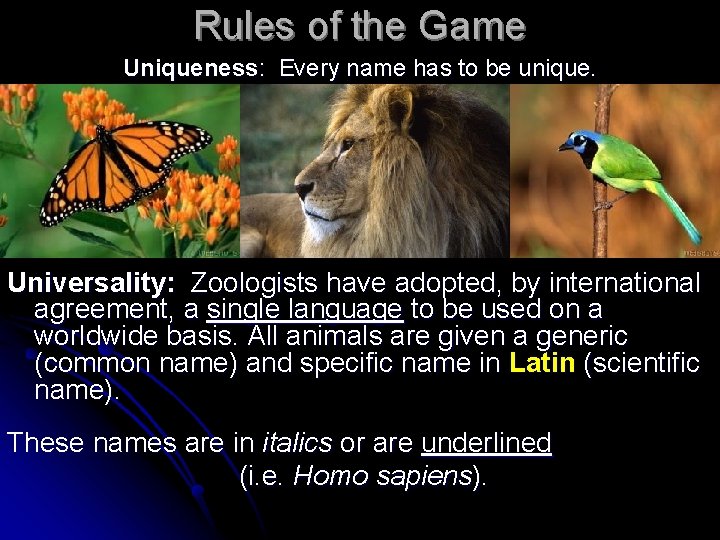
Rules of the Game Uniqueness: Every name has to be unique. Universality: Zoologists have adopted, by international agreement, a single language to be used on a worldwide basis. All animals are given a generic (common name) and specific name in Latin (scientific name). These names are in italics or are underlined (i. e. Homo sapiens).
18
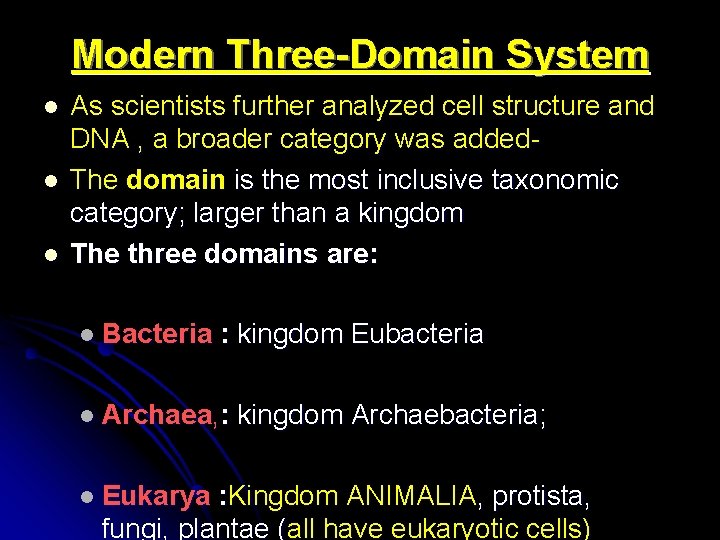
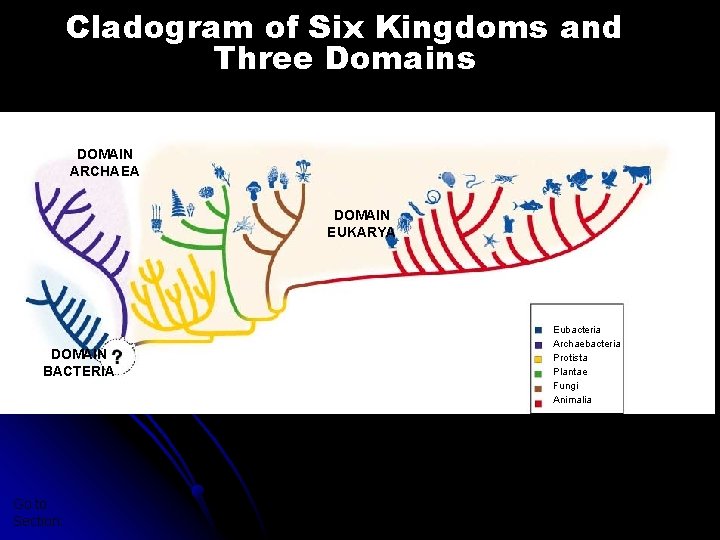
Modern Three-Domain System l l l As scientists further analyzed cell structure and DNA , a broader category was added. The domain is the most inclusive taxonomic category; larger than a kingdom The three domains are: l Bacteria : kingdom Eubacteria l Archaea, : l Eukarya kingdom Archaebacteria; : Kingdom ANIMALIA, protista, fungi, plantae (all have eukaryotic cells)
Cladogram of Six Kingdoms and Three Domains Section 18 -3 DOMAIN ARCHAEA DOMAIN EUKARYA Kingdoms DOMAIN BACTERIA Go to Section: Eubacteria Archaebacteria Protista Plantae Fungi Animalia
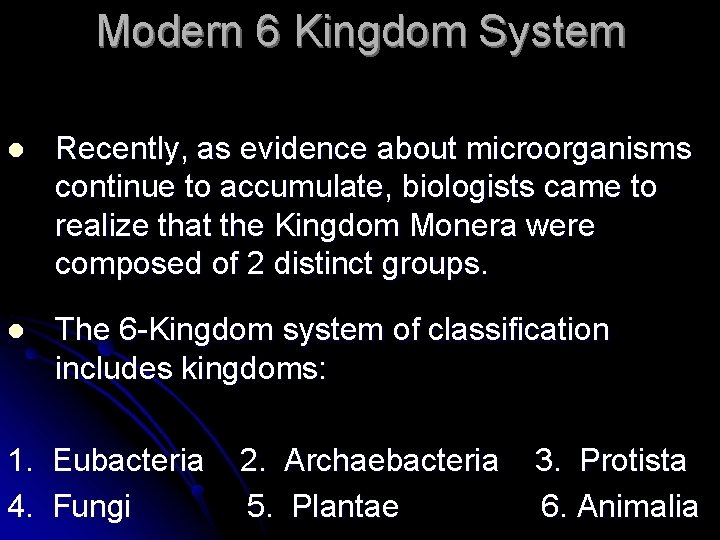
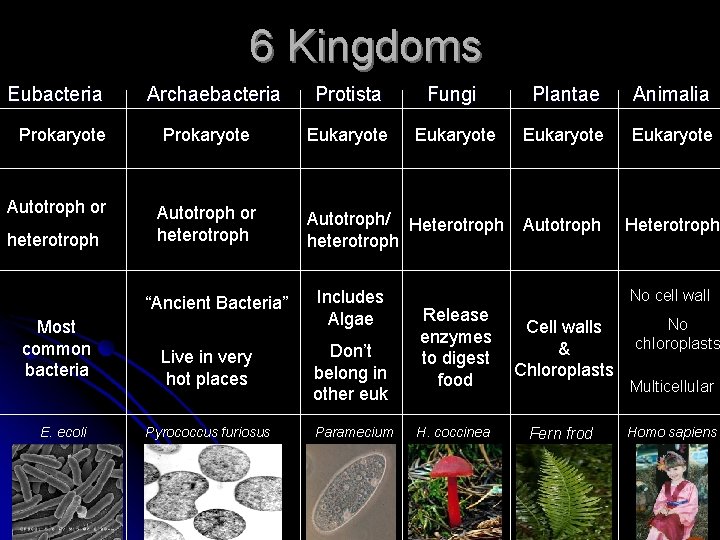
Modern 6 Kingdom System l Recently, as evidence about microorganisms continue to accumulate, biologists came to realize that the Kingdom Monera were composed of 2 distinct groups. l The 6 -Kingdom system of classification includes kingdoms: 1. Eubacteria 4. Fungi 2. Archaebacteria 5. Plantae 3. Protista 6. Animalia
6 Kingdoms Eubacteria Prokaryote Autotroph or heterotroph Archaebacteria Prokaryote Autotroph or heterotroph “Ancient Bacteria” Most common bacteria E. ecoli Protista Fungi Plantae Animalia Eukaryote Autotroph Heterotroph Autotroph/ Heterotroph heterotroph Includes Algae Live in very hot places Don’t belong in other euk Pyrococcus furiosus Paramecium No cell wall Release enzymes to digest food Cell walls & Chloroplasts H. coccinea Fern frod No chloroplasts Multicellular Homo sapiens
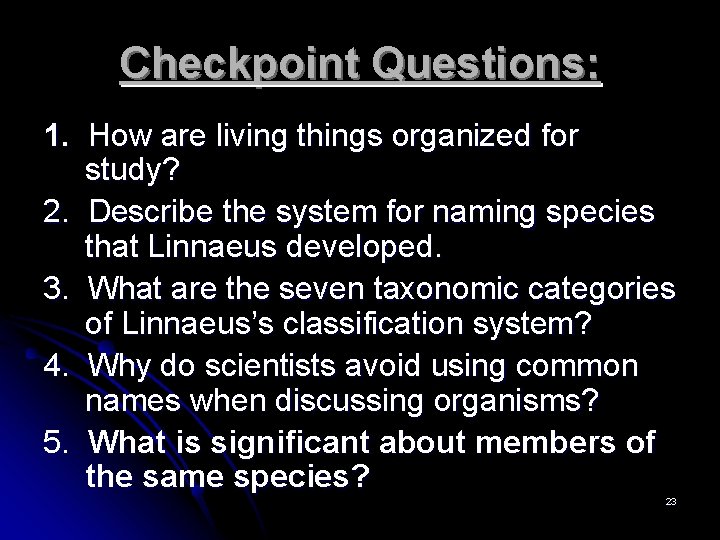
Checkpoint Questions: 1. How are living things organized for study? 2. Describe the system for naming species that Linnaeus developed. 3. What are the seven taxonomic categories of Linnaeus’s classification system? 4. Why do scientists avoid using common names when discussing organisms? 5. What is significant about members of the same species? 23