
11 Objectives To explain the need for safety
11
Objectives • To explain the need for safety rules at home and school. • To discuss the importance of regularly checking household items to ensure house safety. • To develop home emergency-response plans. 2
Main Menu Safety Rules A Safe House 3
Safety Rules 44
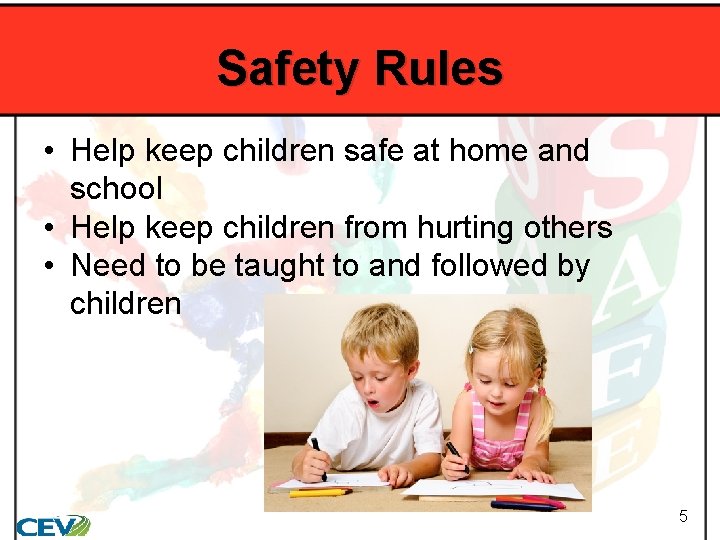
Safety Rules • Help keep children safe at home and school • Help keep children from hurting others • Need to be taught to and followed by children 5
Parental Promotion of Safety • During middle childhood includes: – bicycle safety – gun safety – water safety – bus safety – playground safety 6

Parental Promotion of Safety • During adolescence includes: – bike safety – water safety – bus safety – gun safety 7
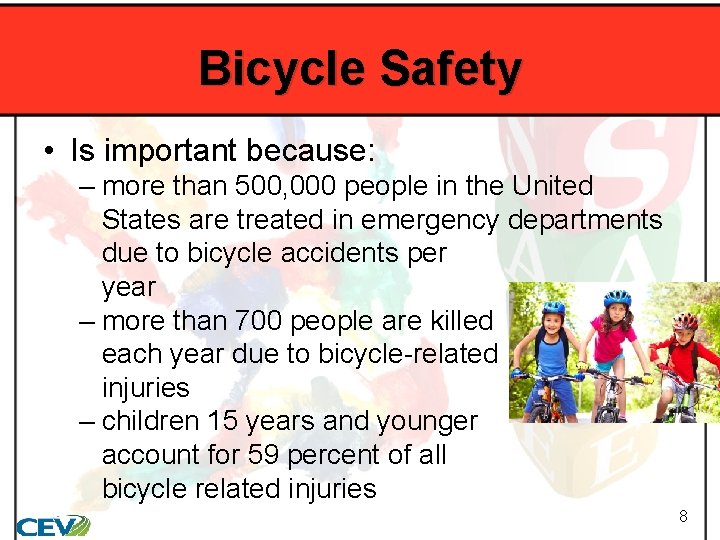
Bicycle Safety • Is important because: – more than 500, 000 people in the United States are treated in emergency departments due to bicycle accidents per year – more than 700 people are killed each year due to bicycle-related injuries – children 15 years and younger account for 59 percent of all bicycle related injuries 8
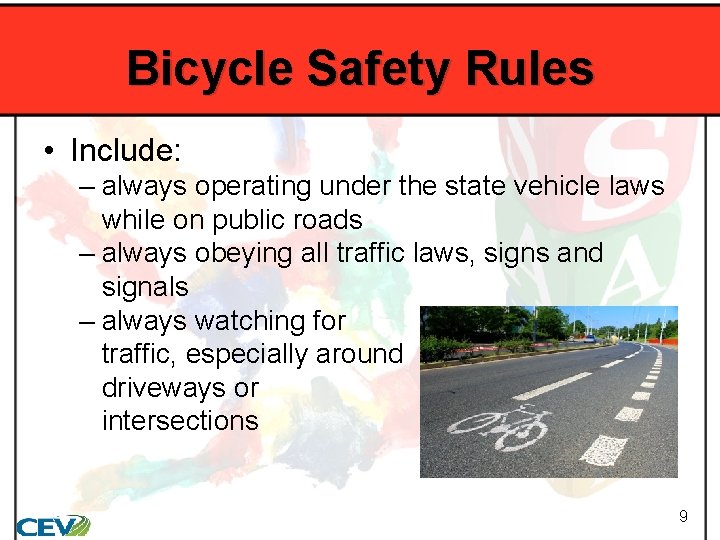
Bicycle Safety Rules • Include: – always operating under the state vehicle laws while on public roads – always obeying all traffic laws, signs and signals – always watching for traffic, especially around driveways or intersections 9
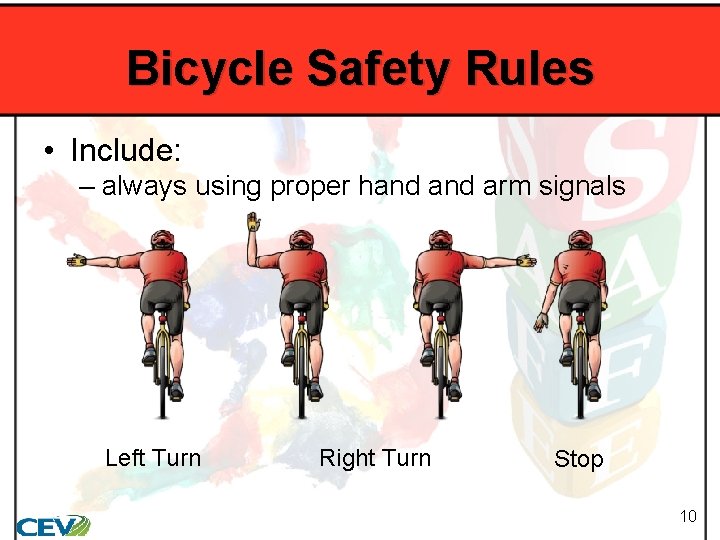
Bicycle Safety Rules • Include: – always using proper hand arm signals Left Turn Right Turn Stop 10

Bicycle Safety Rules • Include: – always wearing a properly fitting bicycle helmet – always wearing bright or light colors – always making sure your bicycle is maintained properly • • air in the tires seat and handlebars adjusted to your height brake capable of stopping the bicycle headlamp and reflectors for riding at night 11

Gun Safety • Is important because: – more than one third of all U. S. households own guns – 606 people were killed by unintentional firearm injuries in 2010 – 34 percent victims of unintentional shooting for the period a 20052010 were under 25 years of age 12
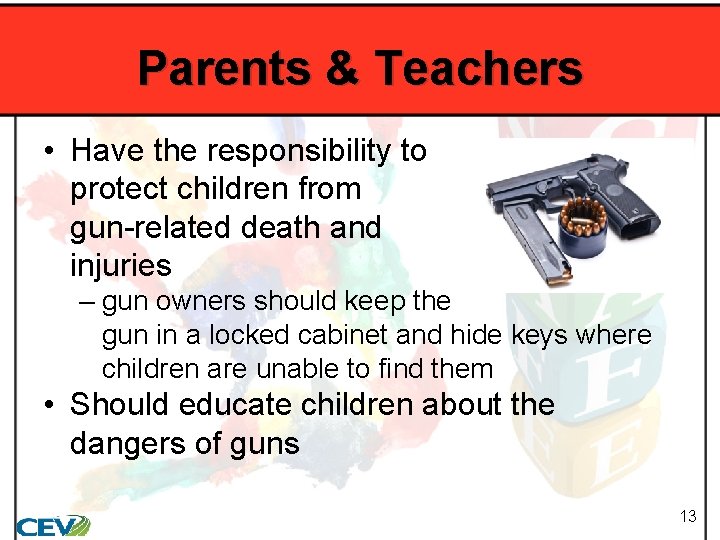
Parents & Teachers • Have the responsibility to protect children from gun-related death and injuries – gun owners should keep the gun in a locked cabinet and hide keys where children are unable to find them • Should educate children about the dangers of guns 13
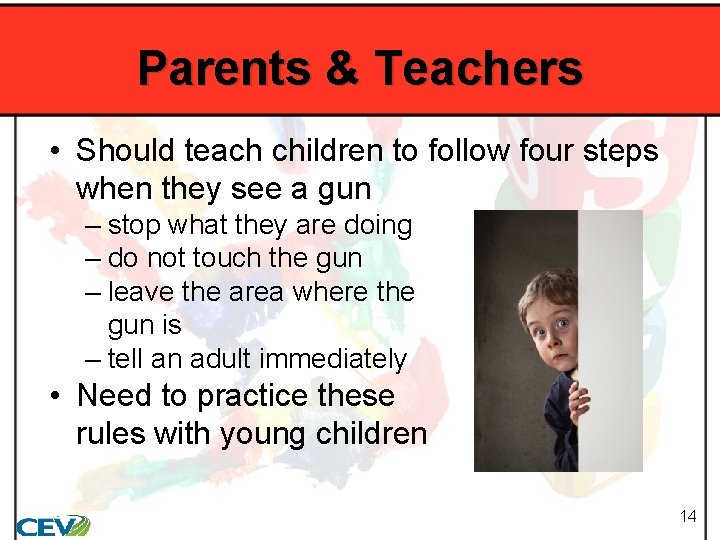
Parents & Teachers • Should teach children to follow four steps when they see a gun – stop what they are doing – do not touch the gun – leave the area where the gun is – tell an adult immediately • Need to practice these rules with young children 14
Water Safety • Is important because: – on average there approximately 3, 500 fatal unintentional drownings each year in the United States – children ages one to four have the highest drowning rates – drowning is the second leading fatality among those aged one to 14 15
Water Safety • Includes: – supervising when anyone is in or around the water – using the buddy system – learning to swim – avoiding swimming after drinking alcohol – learning CPR – installing a fence around a backyard swimming pool – removing toys from pool when it is not being used 16
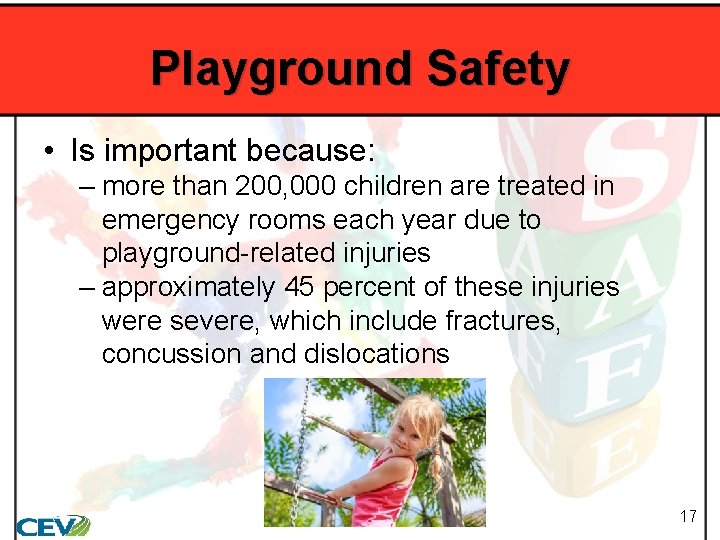
Playground Safety • Is important because: – more than 200, 000 children are treated in emergency rooms each year due to playground-related injuries – approximately 45 percent of these injuries were severe, which include fractures, concussion and dislocations 17
Playgrounds • Should be built properly – surfaces around equipment should be filled with at least 12 inches of loose-fill, such as wood chips, mulch, sand shredded rubber – all elevated platforms should be surrounded with guardrails which are at least 29 inches high – any opening should be less than 3. 5 inches or more than 9 inches apart to avoid trapping children • Should be maintained regularly 18
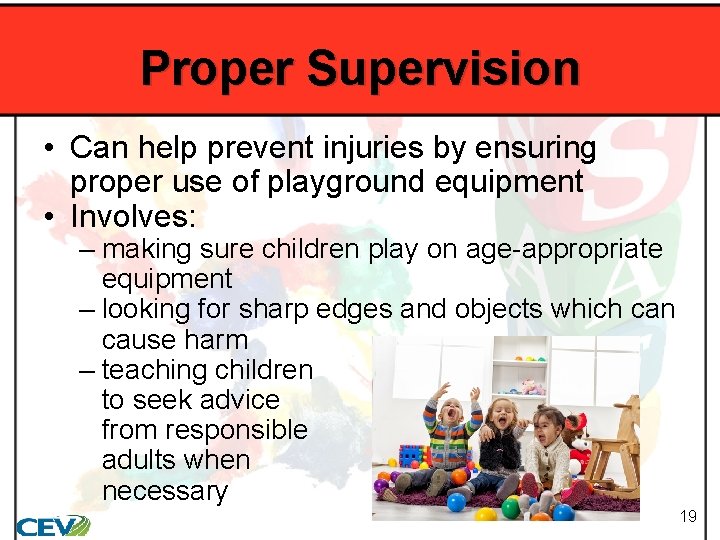
Proper Supervision • Can help prevent injuries by ensuring proper use of playground equipment • Involves: – making sure children play on age-appropriate equipment – looking for sharp edges and objects which can cause harm – teaching children to seek advice from responsible adults when necessary 19
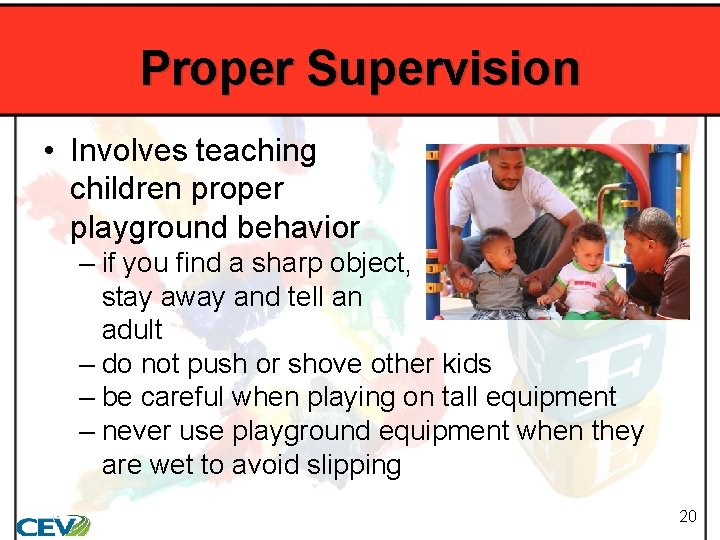
Proper Supervision • Involves teaching children proper playground behavior – if you find a sharp object, stay away and tell an adult – do not push or shove other kids – be careful when playing on tall equipment – never use playground equipment when they are wet to avoid slipping 20

Bus Safety • Is important because: – more than 22 million children ride school buses every school day – approximately 53 percent of all K-12 students ride school buses – approximately 16 children are severely injured in the loading and unloading zone around school buses each year 21
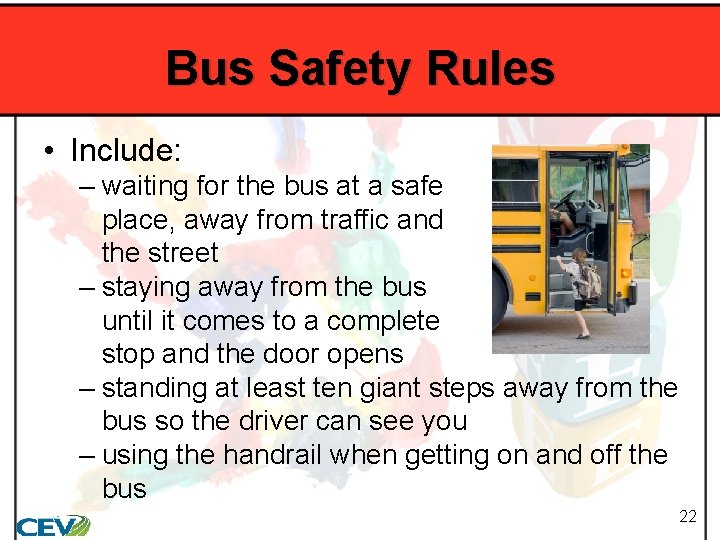
Bus Safety Rules • Include: – waiting for the bus at a safe place, away from traffic and the street – staying away from the bus until it comes to a complete stop and the door opens – standing at least ten giant steps away from the bus so the driver can see you – using the handrail when getting on and off the bus 22
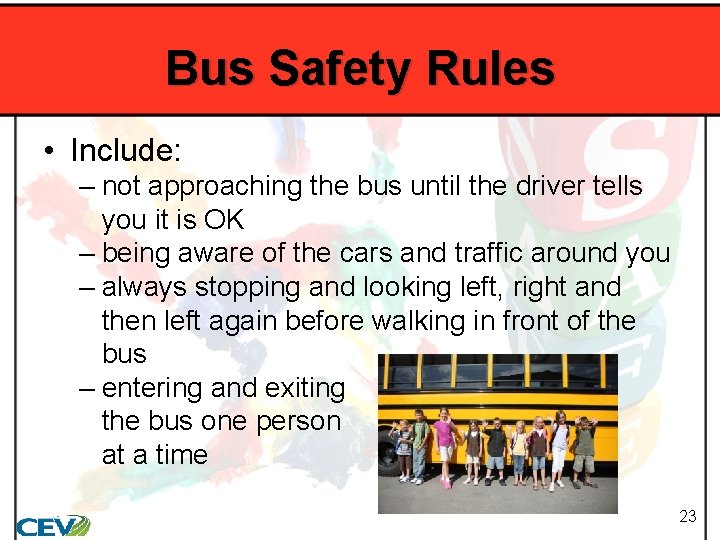
Bus Safety Rules • Include: – not approaching the bus until the driver tells you it is OK – being aware of the cars and traffic around you – always stopping and looking left, right and then left again before walking in front of the bus – entering and exiting the bus one person at a time 23
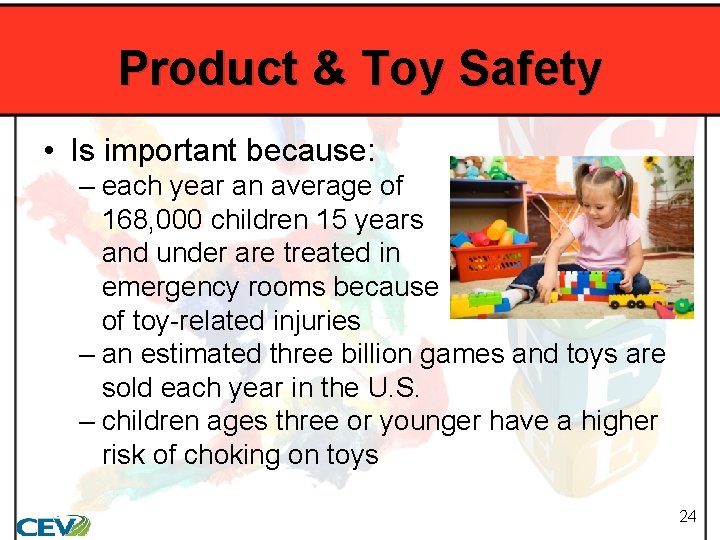
Product & Toy Safety • Is important because: – each year an average of 168, 000 children 15 years and under are treated in emergency rooms because of toy-related injuries – an estimated three billion games and toys are sold each year in the U. S. – children ages three or younger have a higher risk of choking on toys 24
Car Seat Safety • For infants includes: – keeping the car seat rear-facing in the back seat until the child has reached at least two years of age – keeping the shoulder straps snug and at or below the child’s shoulders with the top of the clip at armpit level – keeping at least one inch between the top of the rear-facing car seat and the top of the child’s head 25

Car Seat Safety • For toddlers and preschoolers includes: – keeping the child in a forward-facing car seat with a harness until the child has reached the height and weight limit allowed by the car seat manufacturer • The American Pediatric Association recommends not using a forward-facing car seat until the child has reached two years of age 26
Car Seat Safety • For toddlers and preschoolers includes: – making sure the car seat is installed correctly • perform the wiggle test: if the car seat wiggles more than one inch, it is not installed correctly – making sure the shoulder straps are coming straight down and are not twisted – making sure the chest buckle is at the chest 27

Proper Handling Techniques • For infants include: – washing your hands before handling the infant – providing support to the infant’s head and neck while holding – never shaking the infant 28
Stroller Safety • For infants includes: – making sure the stroller reclines because newborns can not sit up or hold their heads up – setting the stroller brakes whenever taking your hands off of the stroller – buckling the infant into the stroller – making sure the stroller is level on the ground to prevent the stroller from tipping over 29

Stroller Safety • For toddlers and preschoolers includes: – buckling the child in at all times – making sure the child is at a safe distance when folding the stroller up – storing bags under the stroller to prevent tipping – keeping the stroller out of the sun to prevent the metal and plastic from becoming hot and potentially burning the child 30
Choking Hazard Prevention • For infants, toddlers and preschoolers includes: – properly timing the introduction of solid foods – avoiding high-risk foods • for example, hot dogs, cheese, grapes and nuts – evaluating children’s toys for hazardous pieces – keeping common household objects out of reach • for example, buttons, batteries and pen caps 31
Child Proofing • For the home includes: – moving the mattress in the child’s crib to the lowest position once they start trying to pull themselves up – moving all poisonous and sharp objects into a locked cabinet – tying up curtains and blind cords to avoid strangulation 32
Child Proofing • For the home includes: – placing safety covers over electrical outlets – placing cushioned strips or pad guards to sharp table edges – installing toilet locks – installing baby monitors or baby cameras in the child’s nursery 33
Proper Cleaning Techniques • For toys include: – checking the tag to know if the toy is machine washable – washing toys by hand 1. 2. 3. 4. immersing a clean cloth in soapy water rubbing the cloth in a circular motion over the toy rinsing the toy to remove soap hanging the toy up to air dry 34
The U. S. Consumer Product Safety Commission (CPSC) • Protects consumers from harmful toys and products • Issues warnings and recalls for various products • Tests all kinds of products around the home, including toys, to make sure they are safe • Relies on citizens to inform them of harmful products – notify CPSC if you find a toy or other product which could hurt a child or anyone else • 1 -800 -638 -2772 or www. cpsc. gov 35
The U. S. Consumer Product Safety Commission (CPSC) • May issue a public warning regarding a product posing a specific hazard or threat • May insist a company recall a product • Works with companies to make sure all future products are safe and to set safety standards which improve production 36

A Safe House 37 37

A Safe House • Requires checking the following: – cords, plugs and switches – smoke detectors – rugs – light bulbs – space heaters – potentially poisonous substances • Requires creating and practicing emergency-response plans 38
Cords, Plugs & Switches Checklist ü Cords should not be stretched across walkways ü Cords should not be positioned under furniture where damage can occur ü Extension cords should not be overloaded with plugs ü Cords should be in good condition (i. e. , not cracked, frayed or melted) ü Cords should not be attached to walls with staples or nails ü Unused outlets should have protective coverings, if children or pets are present ü All switches and plugs should be cool to the touch ü Wiring should not be exposed around outlets 39
Smoke Detector Checklist ü Smoke detectors should be tested monthly ü Replace batteries at least once a year ü Install at least one smoke detector per level of home ü Smoke detector should be located near bedrooms or in a hallway ü Smoke detector should be placed on ceiling or six 12 inches below ceiling on wall and not in high or noair flow areas (i. e. , near return air vents, corners, etc. ) ü Carbon Monoxide (CO 2) detectors should be installed 40
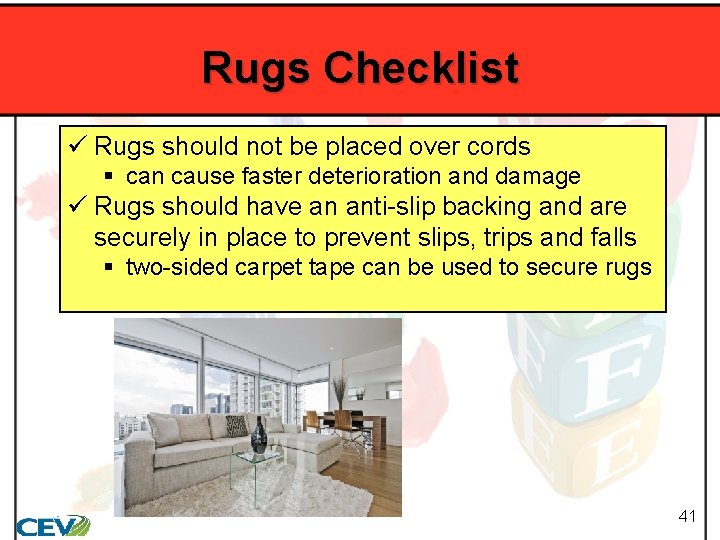
Rugs Checklist ü Rugs should not be placed over cords § can cause faster deterioration and damage ü Rugs should have an anti-slip backing and are securely in place to prevent slips, trips and falls § two-sided carpet tape can be used to secure rugs 41
Light Bulbs & Space Heater Checklist ü Make sure all light bulbs are the correct wattage for the fixture § if the correct wattage for a fixture is not known, use no higher than 60 watts ü Heaters are placed in an area out of traffic flow to prevent burns ü Do not use extension cords with space heaters unless absolutely necessary ü Blankets, curtains and any loose fabric should be kept away from heater to prevent fires ü Maintain adequate space around the space heater 42
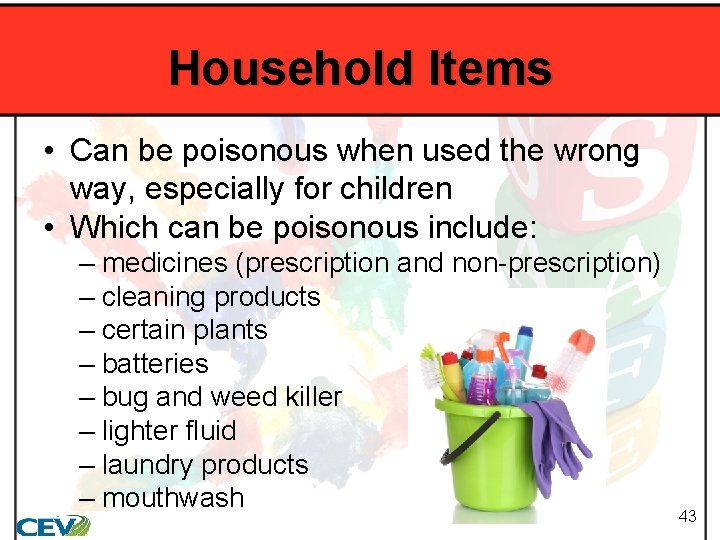
Household Items • Can be poisonous when used the wrong way, especially for children • Which can be poisonous include: – medicines (prescription and non-prescription) – cleaning products – certain plants – batteries – bug and weed killer – lighter fluid – laundry products – mouthwash 43
Potentially Poisonous Items Checklist ü Always read label before using ü Never leave substances unattended ü Never call medicine “candy” in front of children ü Always keep the Poison Control Center’s number easily accessible ü Always make sure all potentially poisonous substances are either locked in a child-proof cabinet or are stored out of children’s reach 44

Assessing Crib Safety • Includes: – making sure the slats and corner posts are no more than 2 3/8 inches apart • wider slats pose danger of entrapment – checking bolts, screws, etc. are firmly secured with no sharp edges or places which pinch – checking the paint used does not contain lead 45
Assessing Crib Safety • Includes: – making sure the mattress fits snugly against the inside of the crib using the two–finger test: • if you can fit more than two fingers between the mattress and the crib it is not a proper fit 46
Children’s Toy Safety • Includes avoiding the following: – avoiding toys with sharp pointy edges – avoiding any games which include parts smaller than 1. 75 inches • Includes looking for the following: – sturdy toys which can not be pulled apart – age appropriate toys – machine washable toys and are labeled nontoxic 47

Children’s Clothing Safety • Includes avoiding the following: – clothes with drawstrings or cords in the neck area – clothes with small parts • for example, buttons, beads, bows, sequins and labels • Includes looking for the following: – clothes meeting flammability standards – clothes which do not contain small parts – clothes without drawstrings or cords in the neck area 48
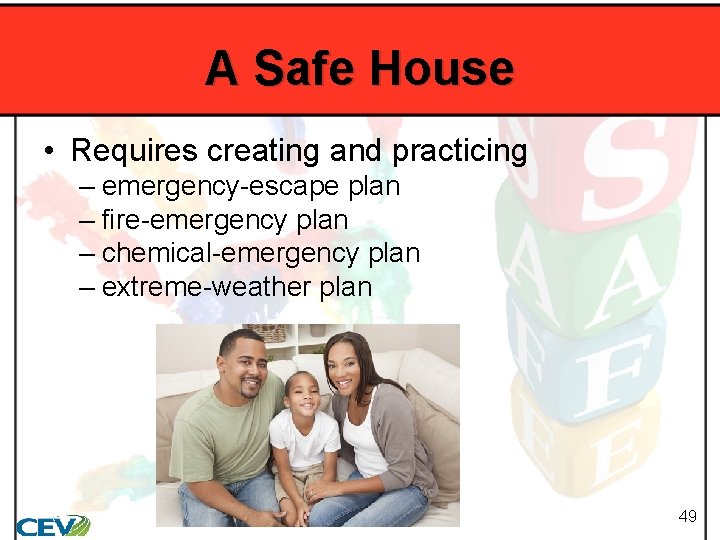
A Safe House • Requires creating and practicing – emergency-escape plan – fire-emergency plan – chemical-emergency plan – extreme-weather plan 49

Creating An Emergency. Escape Plan • Involves the following: – draw the layout of your house – label all doors, windows and exits in each room – note any obstacles possibly making exiting difficult (i. e. , bar on window, exit blocked on outside by bushes) – highlight escape paths from each room • should include primary and alternative exits • all family members should practice opening the exits in every room • make sure paths are clear and not blocked 50
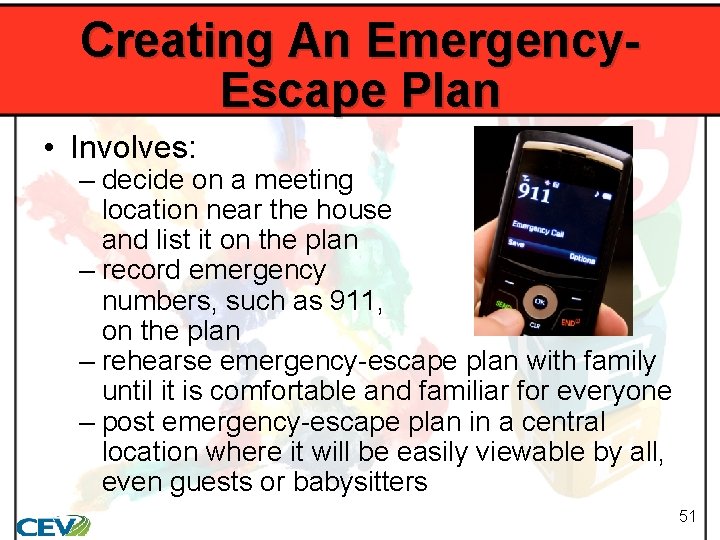
Creating An Emergency. Escape Plan • Involves: – decide on a meeting location near the house and list it on the plan – record emergency numbers, such as 911, on the plan – rehearse emergency-escape plan with family until it is comfortable and familiar for everyone – post emergency-escape plan in a central location where it will be easily viewable by all, even guests or babysitters 51
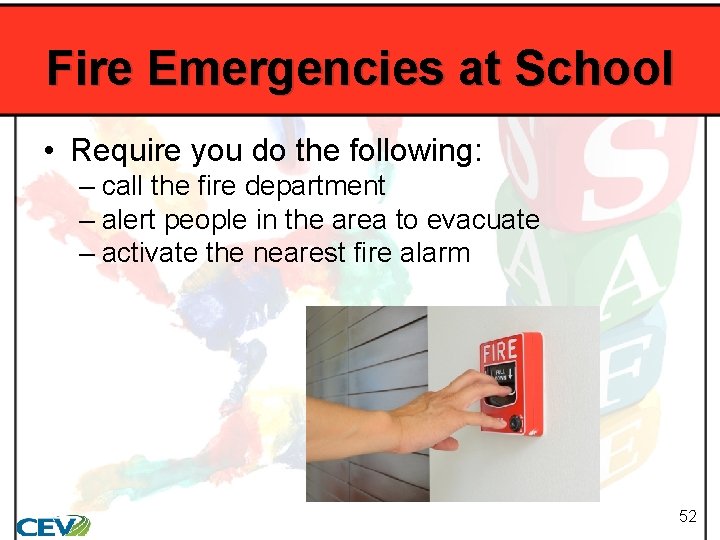
Fire Emergencies at School • Require you do the following: – call the fire department – alert people in the area to evacuate – activate the nearest fire alarm 52
Fire Emergencies • Require you do the following: – before opening the door, feel the door quickly with the back of your hand • if the door is hot, go to another exit • if the door is cool, bend down and check if the air coming from the room is cool – close all windows and doors behind you – stay low to the ground to avoid smoke – use the stairs, not the elevator 53
Chemical-Spill Emergencies • Require you do the following: – cover mouth and nose with a wet cloth – turn off heating, air conditioning and fans – go outside or to a room with fewer windows and doors – do not go to the basement 54
Air Pollution Emergencies • Require you do the following: – close all windows and doors – seal gaps around door, windows and exhaust fans with wet towels or thick tape – follow advice of local authorities 55
Thunder & Lightning Storm Emergencies • Require you do the following: – go immediately inside – stay away from water, faucets, sinks, telephones and windows – turn off and unplug all electrical appliances – stay away from tall objects, metal objects, water and open areas if outside 56

Tornado Emergencies • Require you do the following: – go to an underground storm shelter or basement – if it is not possible, then find a room on the first floor of the building you are in with little or no windows, such as: • small hallway • bathroom • closet 57
Reference • http: //transport. tamu. edu/bicycles/statelaw. aspx • http: //smartgunlaws. org/gun-deaths-and-injuriesstatistics/ • http: //www. dshs. wa. gov/pdf/ca/gunsafe. pdf • http: //www. safekids. org/our-work/research/factsheets/playground-safety-fact-sheet. html • http: //kidshealth. org/parent/firstaid_safe/outdoor/pl ayground. html# • http: //www. nsc. org/news_resources/Resources/Do cuments/School_Bus_Safety_Rules. pdf • http: //www. safekids. org/our-work/research/factsheets/toy-safety-fact-sheet. html 58
Acknowledgement Production Coordinators Caroline Huang-Loggains Sara Dickison Brand Manager Megan O’Quinn Graphic Designer Daniel Johnson Technical Writer Jessica Odom V. P. of Brand Management Clayton Franklin Executive Producer Gordon W. Davis, Ph. D. CEV Multimedia, Ltd. © MMXIV 59
- Slides: 59