
11 HHD Unit 2 Outcome 2 ADULTHOOD STAGES

- Slides: 25
11 HHD – Unit 2 Outcome 2 ADULTHOOD
STAGES OF ADULTHOOD � Adulthood: 18 years – death Classifications: ◦ Early adulthood: 18 – 39 years ◦ Middle adulthood: 40 – 65 years ◦ Late adulthood: 65+ (to death)
ADULTHOOD Agents of change: � Increased health problems and disability due to: ◦ ◦ Environment Genetics Gender Lifestyle (exercise, food intake, drugs, alcohol. . . )
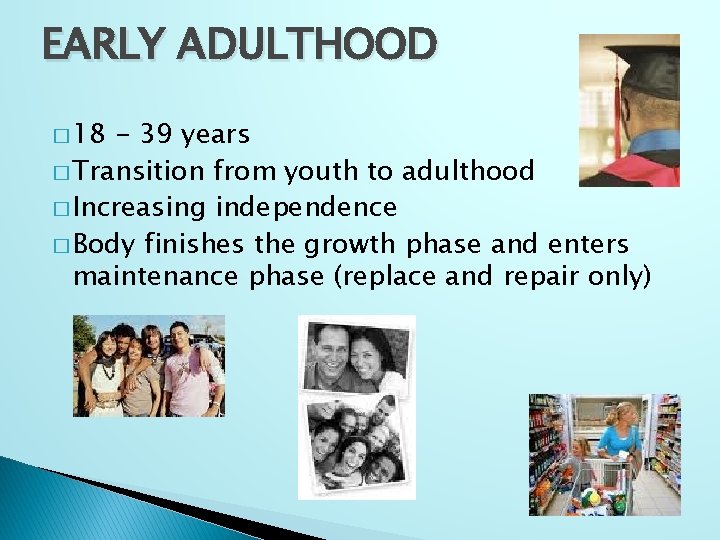
EARLY ADULTHOOD � 18 - 39 years � Transition from youth to adulthood � Increasing independence � Body finishes the growth phase and enters maintenance phase (replace and repair only)
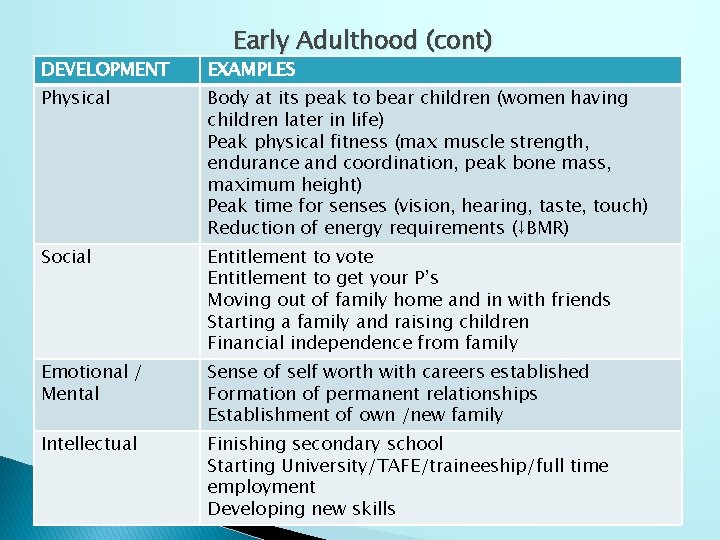
Early Adulthood (cont) DEVELOPMENT EXAMPLES Physical Body at its peak to bear children (women having children later in life) Peak physical fitness (max muscle strength, endurance and coordination, peak bone mass, maximum height) Peak time for senses (vision, hearing, taste, touch) Reduction of energy requirements (↓BMR) Social Entitlement to vote Entitlement to get your P’s Moving out of family home and in with friends Starting a family and raising children Financial independence from family Emotional / Mental Sense of self worth with careers established Formation of permanent relationships Establishment of own /new family Intellectual Finishing secondary school Starting University/TAFE/traineeship/full time employment Developing new skills
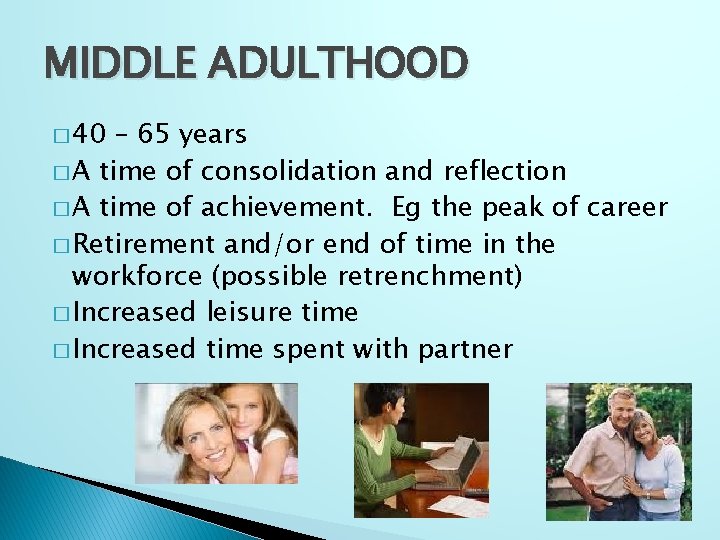
MIDDLE ADULTHOOD � 40 – 65 years � A time of consolidation and reflection � A time of achievement. Eg the peak of career � Retirement and/or end of time in the workforce (possible retrenchment) � Increased leisure time � Increased time spent with partner
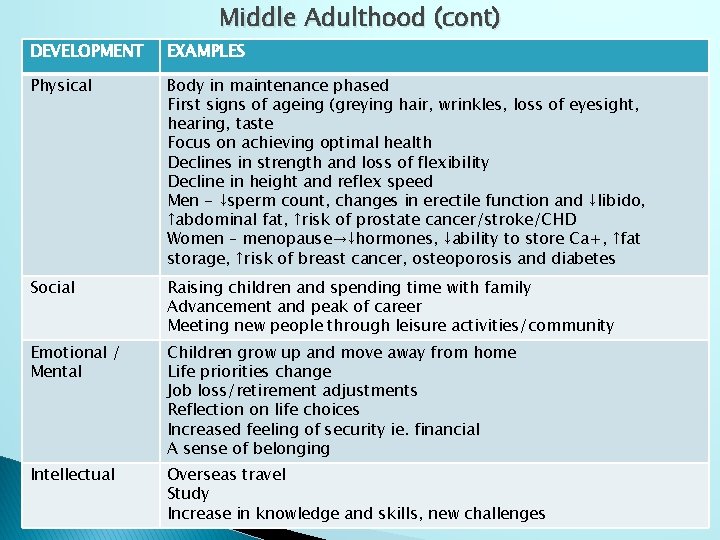
Middle Adulthood (cont) DEVELOPMENT EXAMPLES Physical Body in maintenance phased First signs of ageing (greying hair, wrinkles, loss of eyesight, hearing, taste Focus on achieving optimal health Declines in strength and loss of flexibility Decline in height and reflex speed Men - ↓sperm count, changes in erectile function and ↓libido, ↑abdominal fat, ↑risk of prostate cancer/stroke/CHD Women – menopause→↓hormones, ↓ability to store Ca+, ↑fat storage, ↑risk of breast cancer, osteoporosis and diabetes Social Raising children and spending time with family Advancement and peak of career Meeting new people through leisure activities/community Emotional / Mental Children grow up and move away from home Life priorities change Job loss/retirement adjustments Reflection on life choices Increased feeling of security ie. financial A sense of belonging Intellectual Overseas travel Study Increase in knowledge and skills, new challenges
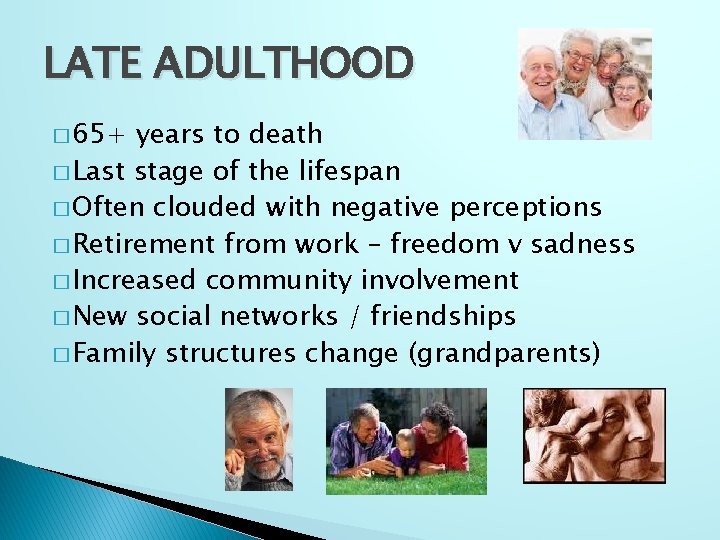
LATE ADULTHOOD � 65+ years to death � Last stage of the lifespan � Often clouded with negative perceptions � Retirement from work – freedom v sadness � Increased community involvement � New social networks / friendships � Family structures change (grandparents)
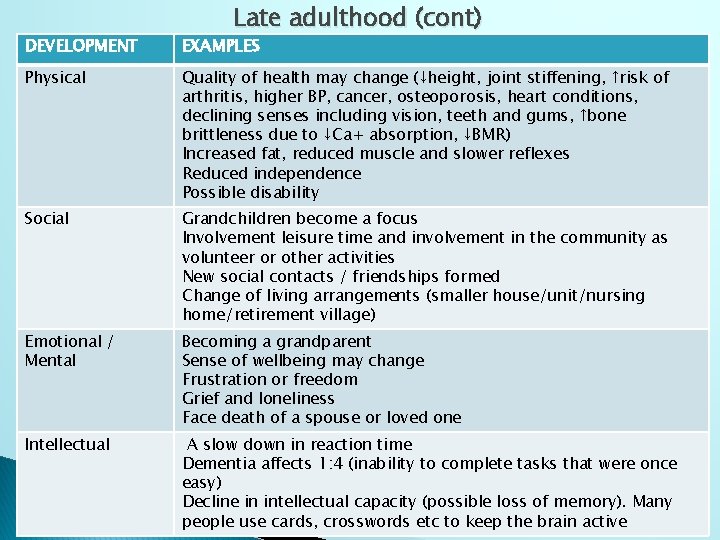
Late adulthood (cont) DEVELOPMENT EXAMPLES Physical Quality of health may change (↓height, joint stiffening, ↑risk of arthritis, higher BP, cancer, osteoporosis, heart conditions, declining senses including vision, teeth and gums, ↑bone brittleness due to ↓Ca+ absorption, ↓BMR) Increased fat, reduced muscle and slower reflexes Reduced independence Possible disability Social Grandchildren become a focus Involvement leisure time and involvement in the community as volunteer or other activities New social contacts / friendships formed Change of living arrangements (smaller house/unit/nursing home/retirement village) Emotional / Mental Becoming a grandparent Sense of wellbeing may change Frustration or freedom Grief and loneliness Face death of a spouse or loved one Intellectual A slow down in reaction time Dementia affects 1: 4 (inability to complete tasks that were once easy) Decline in intellectual capacity (possible loss of memory). Many people use cards, crosswords etc to keep the brain active
Revision 1. Identify a significant milestone for each stage of adulthood that can impact on H & D 2. Explain the interrelationships between social, emotional and intellectual development 3. What is menopause. At what stage does this change occur? 4. Families have a role in providing optimal H & D of adults. Explain the term optimal health 5. Complete the following table: EARLY ADULTHOOD MIDDLE ADULTHOOD LATE ADULTHOOD PHYSIOLOGICAL CHANGES 6. There a number of physiological changes that occur during the ageing process. Explain the impacts, both positive and negative, that environmental, genetic and lifestyle factors have in relation to these changes 7. Select one factor that contributes to the H & D of adults. Explore how this has a positive impact on maintaining H & D, making reference to the social, emotional and physical components of health
HEALTH STATUS OF AUSTRALIANS � Differences � Comparisons � Self assessed health status � Mortality � Morbidity � Disease burden
HEALTH STATUS OF AUSTRALIAN’S � As more and more people live longer, medical costs will rise � Behaviour in younger years can affect health in later years. Better health is experienced by older adults if they take preventative steps in the younger years � Health literacy (obtain, process and understand basic information, services and make appropriate health decisions) is at its peak b/w the late teens and 40’s; educated; employed and live in Canberra
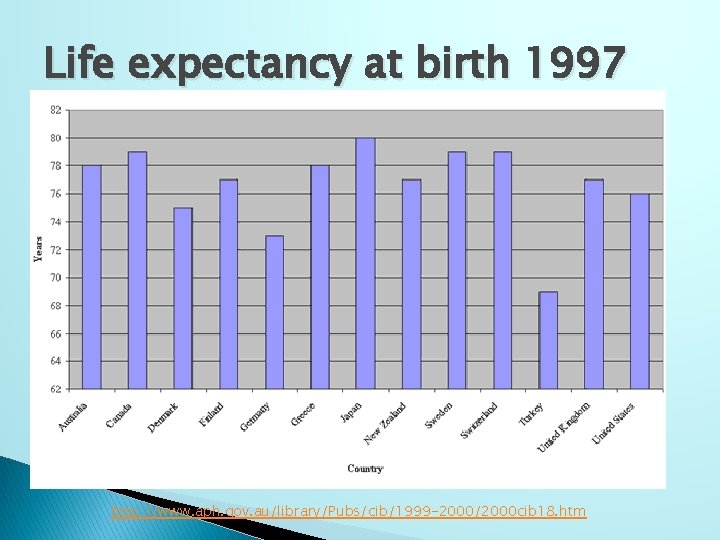
HEALTH STATUS OF AUSTRALIANS � Adults make up the largest % of the population � Australian adults generally describe themselves as having “good health” � Major health concerns facing Australians today – cancer, cardiovascular disease, diabetes � Life expectancy: an indication of how long a person can expect to live. The number of years of life remaining, if death rates do not change. eg. Males (2005) 78. 5 yrs; (1901 -1910) 55. 2 yrs eg. Females (2005) 83. 3 yrs; (1901 -1910) 58. 5 yrs eg. 80% of deaths occur in 65+ yrs Q. Why is life expectancy continually improving?
Life expectancy at birth 1997 http: //www. aph. gov. au/library/Pubs/cib/1999 -2000/2000 cib 18. htm
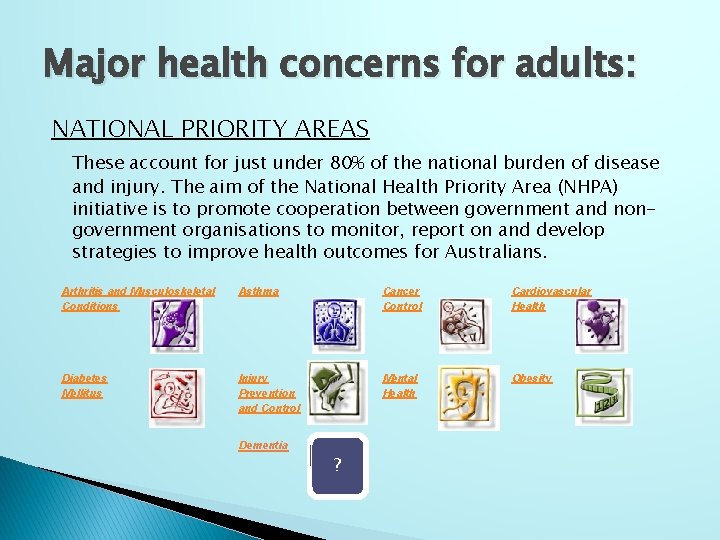
Major health concerns for adults: NATIONAL PRIORITY AREAS These account for just under 80% of the national burden of disease and injury. The aim of the National Health Priority Area (NHPA) initiative is to promote cooperation between government and nongovernment organisations to monitor, report on and develop strategies to improve health outcomes for Australians. Arthritis and Musculoskeletal Conditions Asthma Cancer Control Cardiovascular Health Diabetes Mellitus Injury Prevention and Control Mental Health Obesity Dementia ?
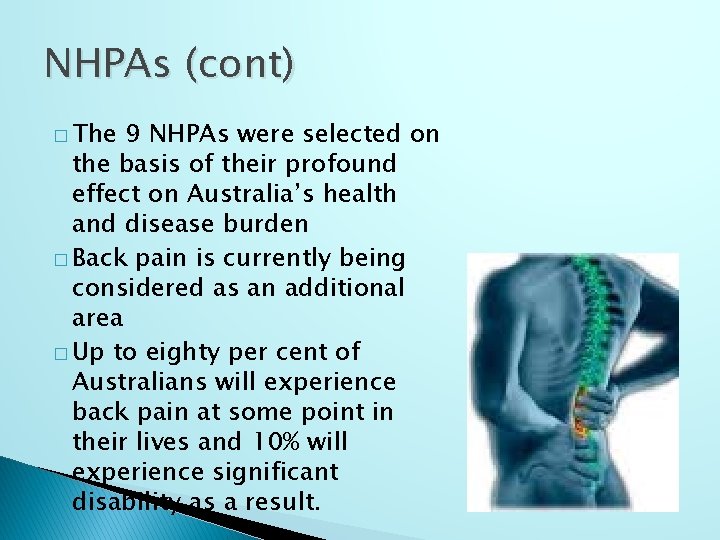
NHPAs (cont) � The 9 NHPAs were selected on the basis of their profound effect on Australia’s health and disease burden � Back pain is currently being considered as an additional area � Up to eighty per cent of Australians will experience back pain at some point in their lives and 10% will experience significant disability as a result.
MORTALITY: leading causes. . . 2005 � 65+ years (males and females) ◦ coronary heart disease ◦ cerebrovascular disease (blood supply to the brain) ◦ lung cancer ◦ Male mortality is still higher than female rates ◦ Female mortality rates have decreased more than males, over the years
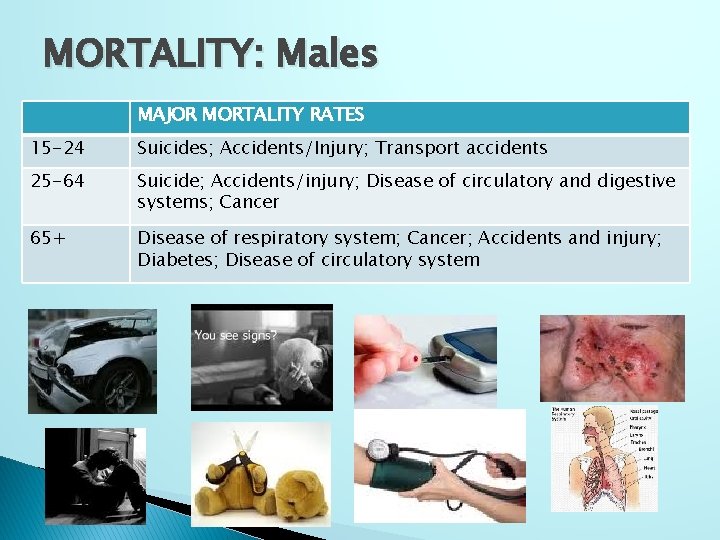
MORTALITY: Males MAJOR MORTALITY RATES 15 -24 Suicides; Accidents/Injury; Transport accidents 25 -64 Suicide; Accidents/injury; Disease of circulatory and digestive systems; Cancer 65+ Disease of respiratory system; Cancer; Accidents and injury; Diabetes; Disease of circulatory system
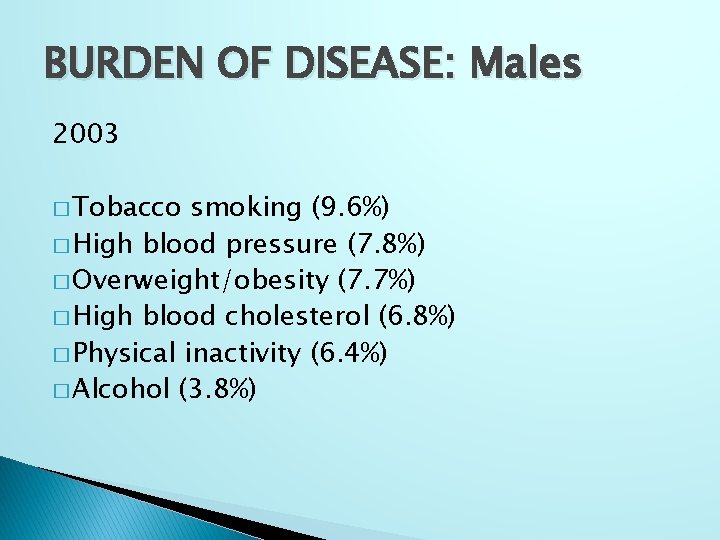
BURDEN OF DISEASE: Males 2003 � Tobacco smoking (9. 6%) � High blood pressure (7. 8%) � Overweight/obesity (7. 7%) � High blood cholesterol (6. 8%) � Physical inactivity (6. 4%) � Alcohol (3. 8%)
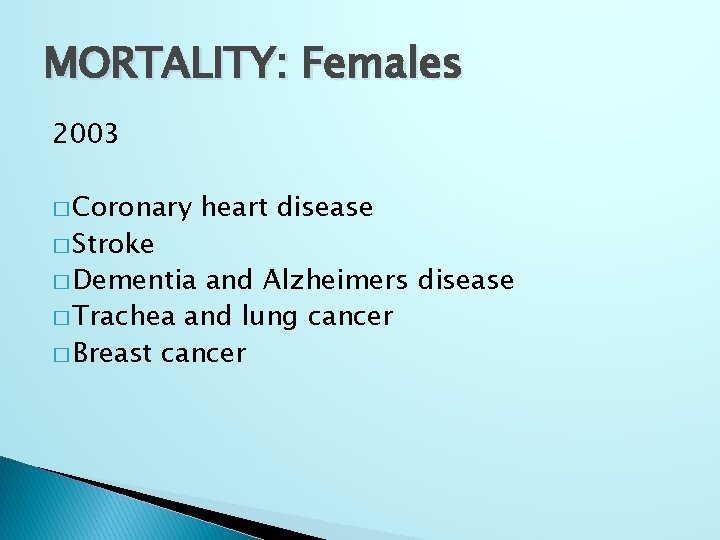
MORTALITY: Females 2003 � Coronary � Stroke � Dementia heart disease and Alzheimers disease � Trachea and lung cancer � Breast cancer
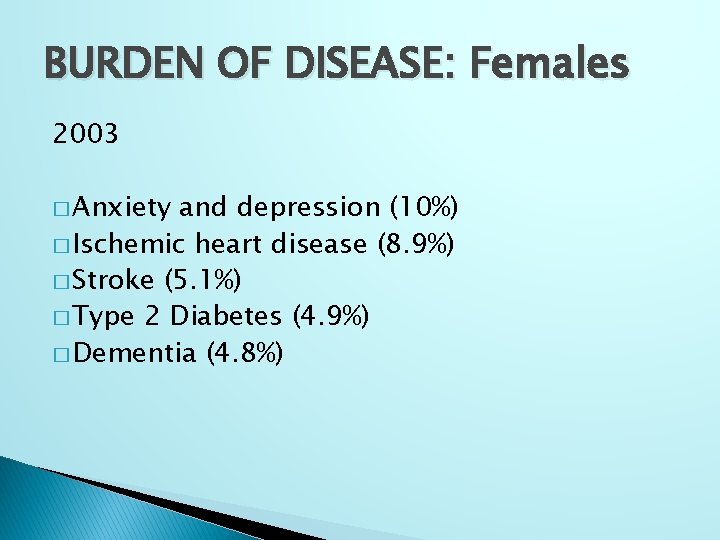
BURDEN OF DISEASE: Females 2003 � Anxiety and depression (10%) � Ischemic heart disease (8. 9%) � Stroke (5. 1%) � Type 2 Diabetes (4. 9%) � Dementia (4. 8%)
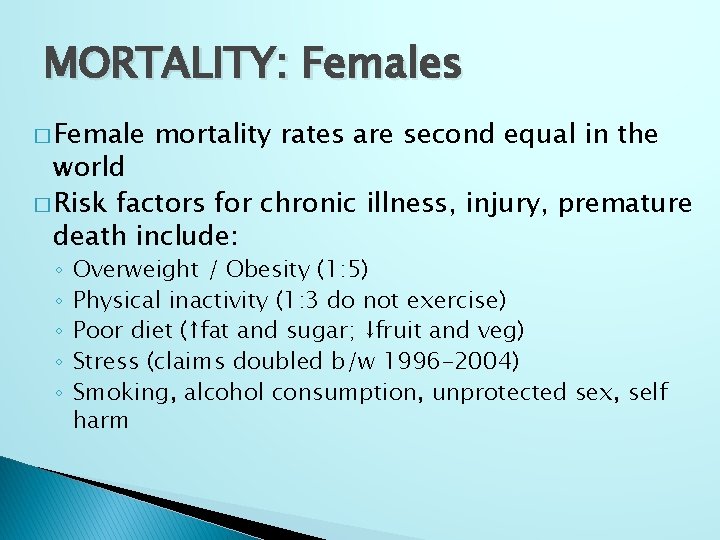
MORTALITY: Females � Female mortality rates are second equal in the world � Risk factors for chronic illness, injury, premature death include: ◦ ◦ ◦ Overweight / Obesity (1: 5) Physical inactivity (1: 3 do not exercise) Poor diet (↑fat and sugar; ↓fruit and veg) Stress (claims doubled b/w 1996 -2004) Smoking, alcohol consumption, unprotected sex, self harm
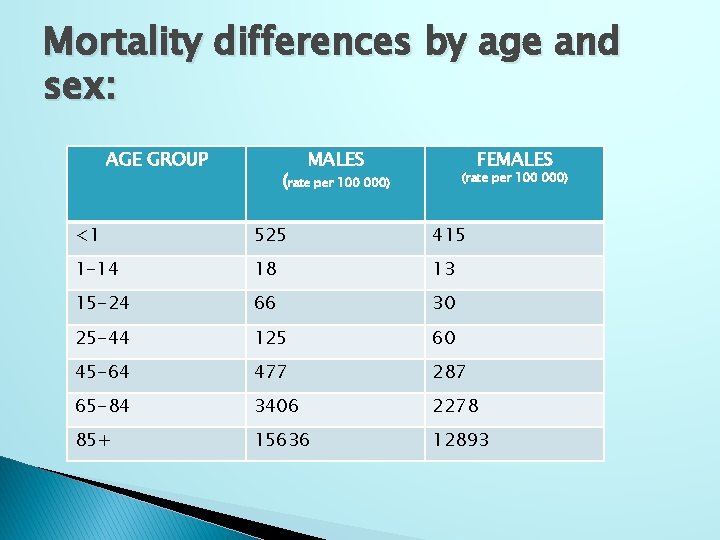
Mortality differences by age and sex: AGE GROUP MALES FEMALES (rate per 100 000) <1 525 415 1 -14 18 13 15 -24 66 30 25 -44 125 60 45 -64 477 287 65 -84 3406 2278 85+ 15636 12893
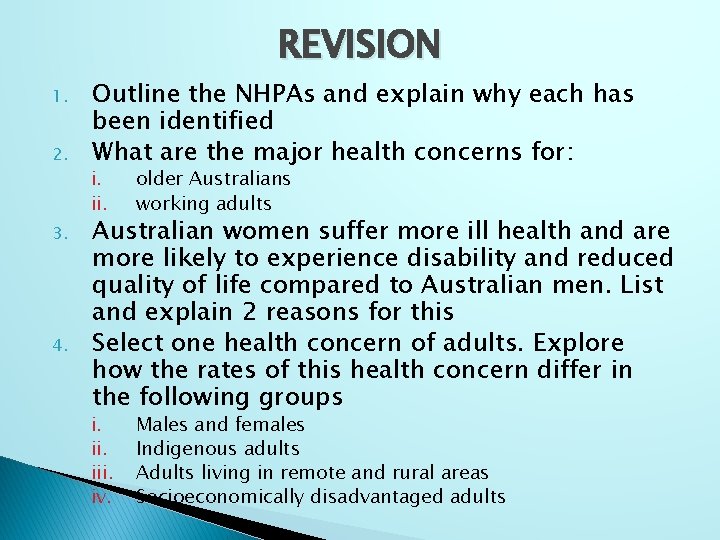
REVISION 1. 2. 3. 4. Outline the NHPAs and explain why each has been identified What are the major health concerns for: i. ii. older Australians working adults i. iii. iv. Males and females Indigenous adults Adults living in remote and rural areas Socioeconomically disadvantaged adults Australian women suffer more ill health and are more likely to experience disability and reduced quality of life compared to Australian men. List and explain 2 reasons for this Select one health concern of adults. Explore how the rates of this health concern differ in the following groups
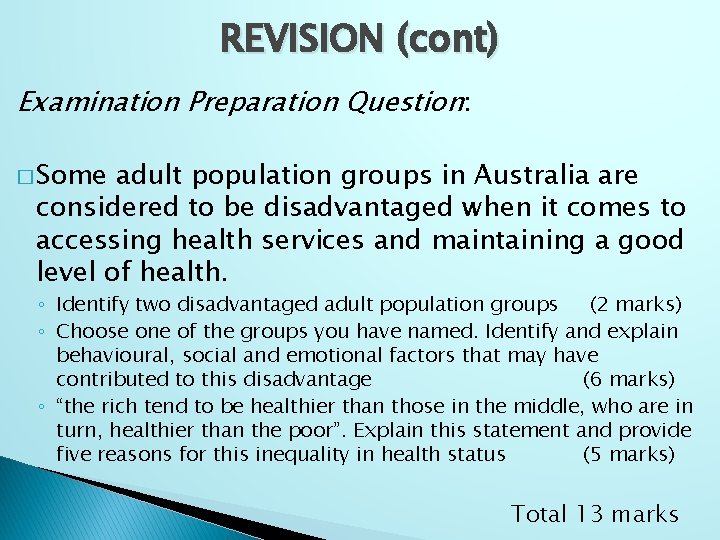
REVISION (cont) Examination Preparation Question: � Some adult population groups in Australia are considered to be disadvantaged when it comes to accessing health services and maintaining a good level of health. ◦ Identify two disadvantaged adult population groups (2 marks) ◦ Choose one of the groups you have named. Identify and explain behavioural, social and emotional factors that may have contributed to this disadvantage (6 marks) ◦ “the rich tend to be healthier than those in the middle, who are in turn, healthier than the poor”. Explain this statement and provide five reasons for this inequality in health status (5 marks) Total 13 marks