
11 e Database Systems Design Implementation and Management
11 e Database Systems Design, Implementation, and Management Coronel | Morris Chapter 6 Normalization of Database Tables © 2015 Cengage Learning. All Rights Reserved. May not be scanned, copied or duplicated, or posted to a publicly accessible website, in whole or in part.
Learning Objectives § In this chapter, students will learn: § What normalization is and what role it plays in the database design process § About the normal forms 1 NF, 2 NF, 3 NF, BCNF, and 4 NF § How normal forms can be transformed from lower normal forms to higher normal forms § That normalization and ER modeling are used concurrently to produce a good database design § That some situations require denormalization to generate information efficiently © 2015 Cengage Learning. All Rights Reserved. May not be scanned, copied or duplicated, or posted to a publicly accessible website, in whole or in part.
Normalization § Evaluating and correcting table structures to minimize data redundancies § Reduces data anomalies § Assigns attributes to tables based on determination § Normal forms § First normal form (1 NF) § Second normal form (2 NF) § Third normal form (3 NF) © 2015 Cengage Learning. All Rights Reserved. May not be scanned, copied or duplicated, or posted to a publicly accessible website, in whole or in part.
Normalization § Structural point of view of normal forms § Higher normal forms are better than lower normal forms § Properly designed 3 NF structures meet the requirement of fourth normal form (4 NF) § Denormalization: Produces a lower normal form § Results in increased performance and greater data redundancy © 2015 Cengage Learning. All Rights Reserved. May not be scanned, copied or duplicated, or posted to a publicly accessible website, in whole or in part.
Need for Normalization § Used while designing a new database structure § Analyzes the relationship among the attributes within each entity § Determines if the structure can be improved § Improves the existing data structure and creates an appropriate database design © 2015 Cengage Learning. All Rights Reserved. May not be scanned, copied or duplicated, or posted to a publicly accessible website, in whole or in part.
Normalization Process § Objective is to ensure that each table conforms to the concept of well-formed relations § Each table represents a single subject § No data item will be unnecessarily stored in more than one table § All nonprime attributes in a table are dependent on the primary key § Each table is void of insertion, update, and deletion anomalies © 2015 Cengage Learning. All Rights Reserved. May not be scanned, copied or duplicated, or posted to a publicly accessible website, in whole or in part.
Normalization Process § Ensures that all tables are in at least 3 NF § Higher forms are not likely to be encountered in business environment § Works one relation at a time § Starts by: § Identifying the dependencies of a relation (table) § Progressively breaking the relation into new set of relations © 2015 Cengage Learning. All Rights Reserved. May not be scanned, copied or duplicated, or posted to a publicly accessible website, in whole or in part.
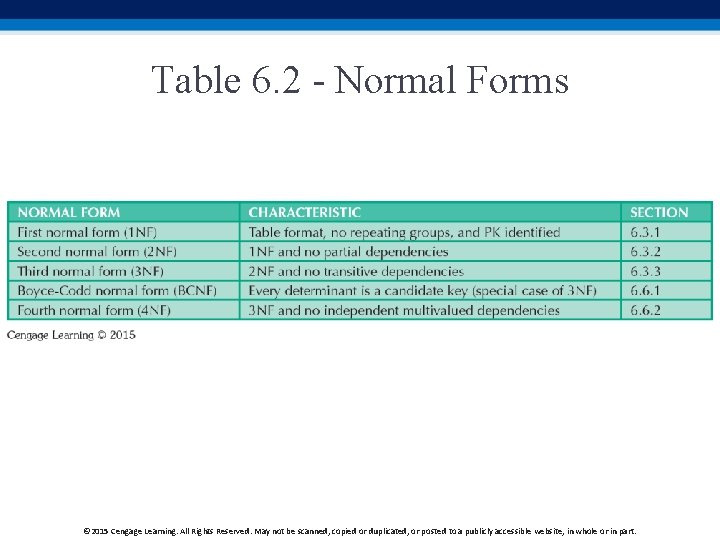
Table 6. 2 - Normal Forms © 2015 Cengage Learning. All Rights Reserved. May not be scanned, copied or duplicated, or posted to a publicly accessible website, in whole or in part.
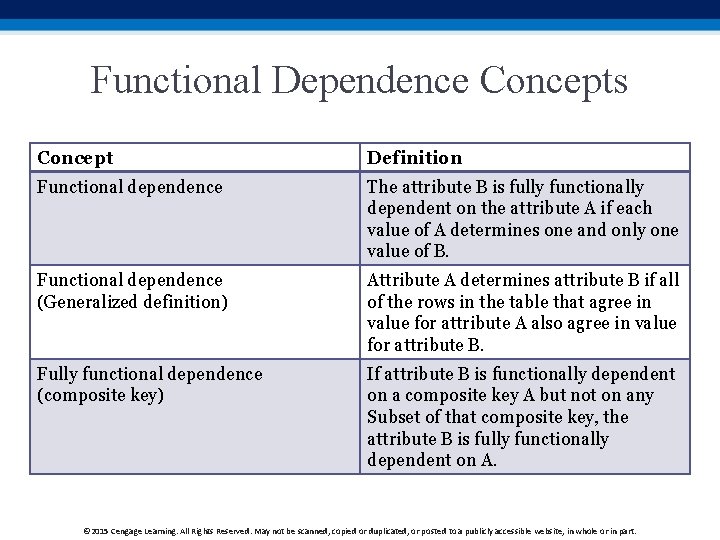
Functional Dependence Concepts Concept Definition Functional dependence The attribute B is fully functionally dependent on the attribute A if each value of A determines one and only one value of B. Functional dependence (Generalized definition) Attribute A determines attribute B if all of the rows in the table that agree in value for attribute A also agree in value for attribute B. Fully functional dependence (composite key) If attribute B is functionally dependent on a composite key A but not on any Subset of that composite key, the attribute B is fully functionally dependent on A. © 2015 Cengage Learning. All Rights Reserved. May not be scanned, copied or duplicated, or posted to a publicly accessible website, in whole or in part.
Types of Functional Dependencies § Partial dependency: Functional dependence in which the determinant is only part of the primary key § Assumption - One candidate key § Straight forward § Easy to identify § Transitive dependency: An attribute functionally depends on another nonkey attribute © 2015 Cengage Learning. All Rights Reserved. May not be scanned, copied or duplicated, or posted to a publicly accessible website, in whole or in part.
Conversion to First Normal Form § Repeating group: Group of multiple entries of same type can exist for any single key attribute occurrence § Existence proves the presence of data redundancies § Enable reducing data redundancies § Steps § Eliminate the repeating groups § Identify the primary key § Identify all dependencies © 2015 Cengage Learning. All Rights Reserved. May not be scanned, copied or duplicated, or posted to a publicly accessible website, in whole or in part.
Conversion to First Normal Form § Dependency diagram: Depicts all dependencies found within given table structure § Helps to get an overview of all relationships among table’s attributes § Makes it less likely that an important dependency will be overlooked © 2015 Cengage Learning. All Rights Reserved. May not be scanned, copied or duplicated, or posted to a publicly accessible website, in whole or in part.
Conversion to First Normal Form § 1 NF describes tabular format in which: § All key attributes are defined § There are no repeating groups in the table § All attributes are dependent on the primary key § All relational tables satisfy 1 NF requirements § Some tables contain partial dependencies § Subject to data redundancies and various anomalies © 2015 Cengage Learning. All Rights Reserved. May not be scanned, copied or duplicated, or posted to a publicly accessible website, in whole or in part.
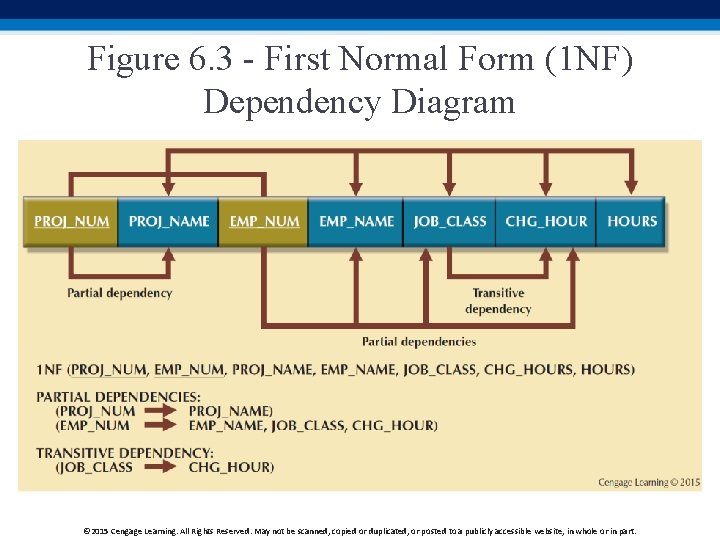
Figure 6. 3 - First Normal Form (1 NF) Dependency Diagram © 2015 Cengage Learning. All Rights Reserved. May not be scanned, copied or duplicated, or posted to a publicly accessible website, in whole or in part.
Conversion to Second Normal Form § Steps § Make new tables to eliminate partial dependencies § Reassign corresponding dependent attributes § Table is in 2 NF when it: § Is in 1 NF § Includes no partial dependencies © 2015 Cengage Learning. All Rights Reserved. May not be scanned, copied or duplicated, or posted to a publicly accessible website, in whole or in part.
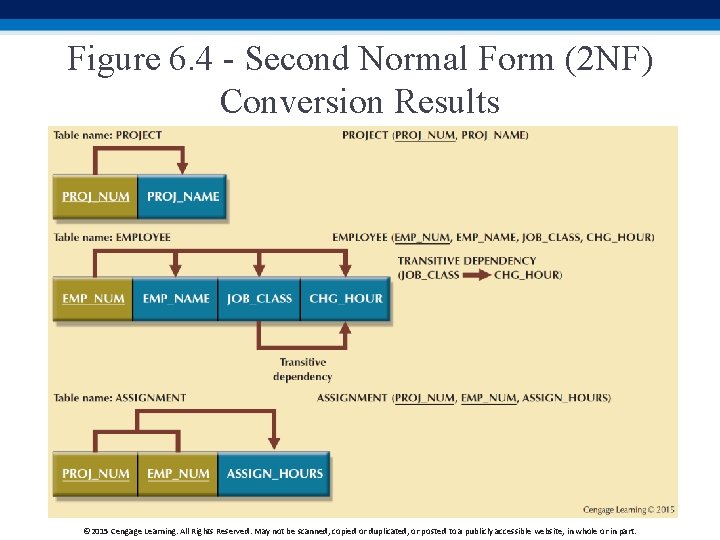
Figure 6. 4 - Second Normal Form (2 NF) Conversion Results © 2015 Cengage Learning. All Rights Reserved. May not be scanned, copied or duplicated, or posted to a publicly accessible website, in whole or in part.
Conversion to Third Normal Form § Steps § Make new tables to eliminate transitive dependencies § Determinant: Any attribute whose value determines other values within a row § Reassign corresponding dependent attributes § Table is in 3 NF when it: § Is in 2 NF § Contains no transitive dependencies © 2015 Cengage Learning. All Rights Reserved. May not be scanned, copied or duplicated, or posted to a publicly accessible website, in whole or in part.
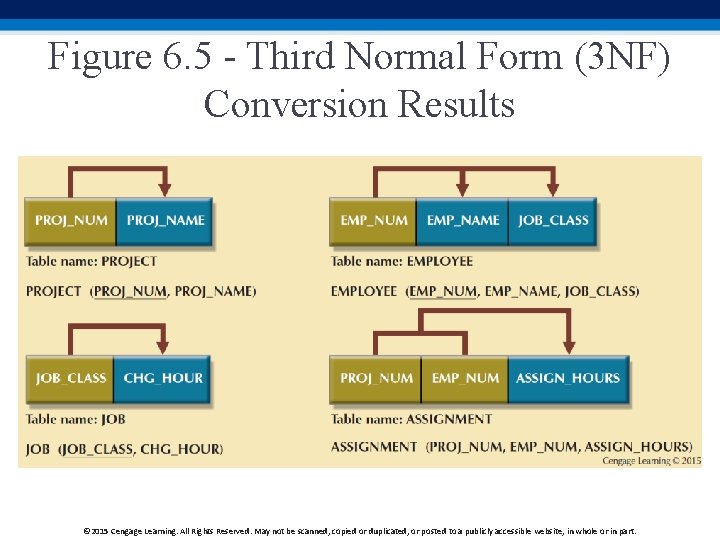
Figure 6. 5 - Third Normal Form (3 NF) Conversion Results © 2015 Cengage Learning. All Rights Reserved. May not be scanned, copied or duplicated, or posted to a publicly accessible website, in whole or in part.
Requirements for Good Normalized Set of Tables § Evaluate PK assignments and naming conventions § Refine attribute atomicity § Atomic attribute: Cannot be further subdivided § Atomicity: Characteristic of an atomic attribute § Identify new attributes and new relationships § Refine primary keys as required for data granularity § Granularity: Level of detail represented by the values stored in a table’s row § Maintain historical accuracy and evaluate using derived attributes © 2015 Cengage Learning. All Rights Reserved. May not be scanned, copied or duplicated, or posted to a publicly accessible website, in whole or in part.
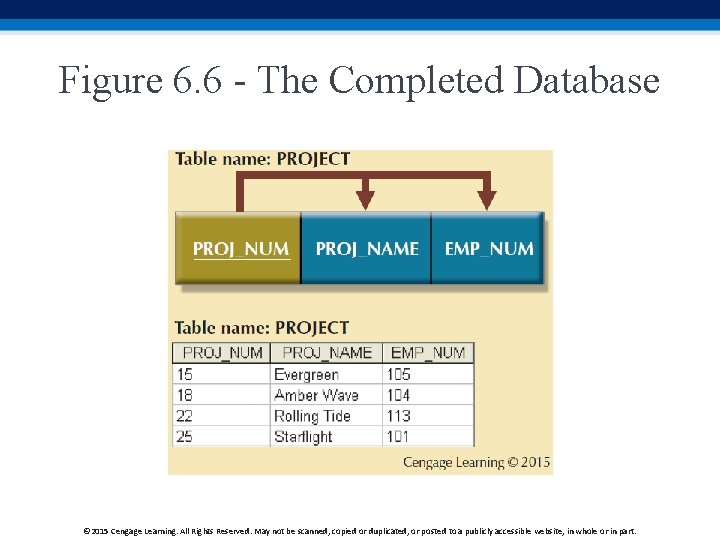
Figure 6. 6 - The Completed Database © 2015 Cengage Learning. All Rights Reserved. May not be scanned, copied or duplicated, or posted to a publicly accessible website, in whole or in part.
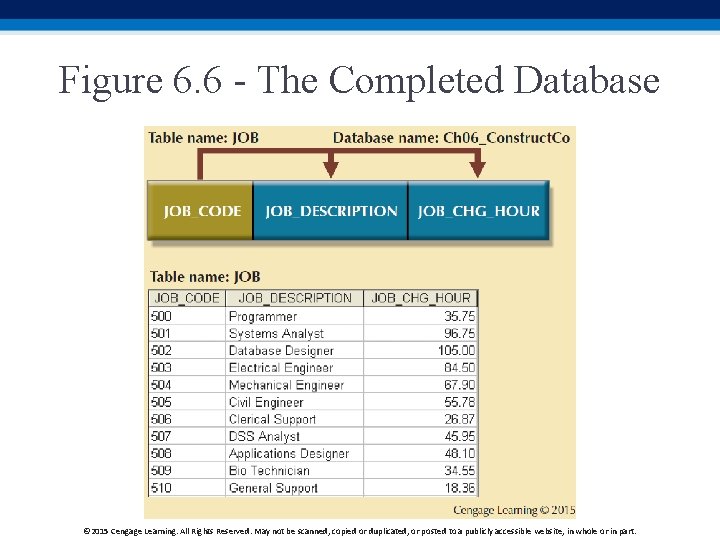
Figure 6. 6 - The Completed Database © 2015 Cengage Learning. All Rights Reserved. May not be scanned, copied or duplicated, or posted to a publicly accessible website, in whole or in part.
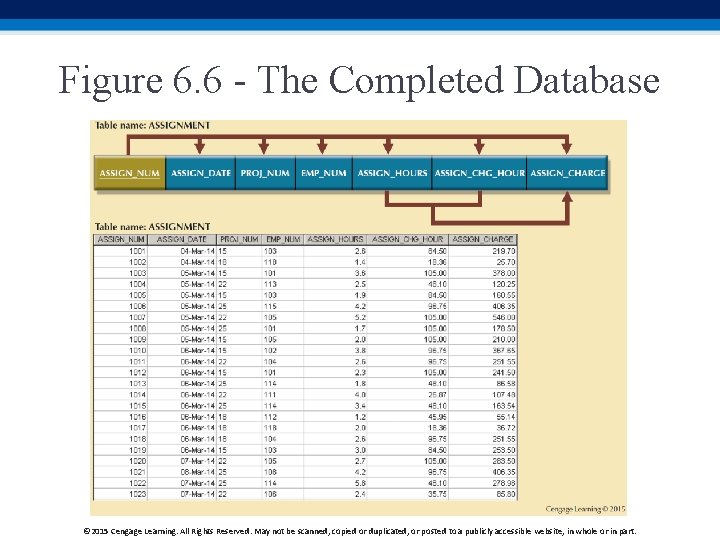
Figure 6. 6 - The Completed Database © 2015 Cengage Learning. All Rights Reserved. May not be scanned, copied or duplicated, or posted to a publicly accessible website, in whole or in part.
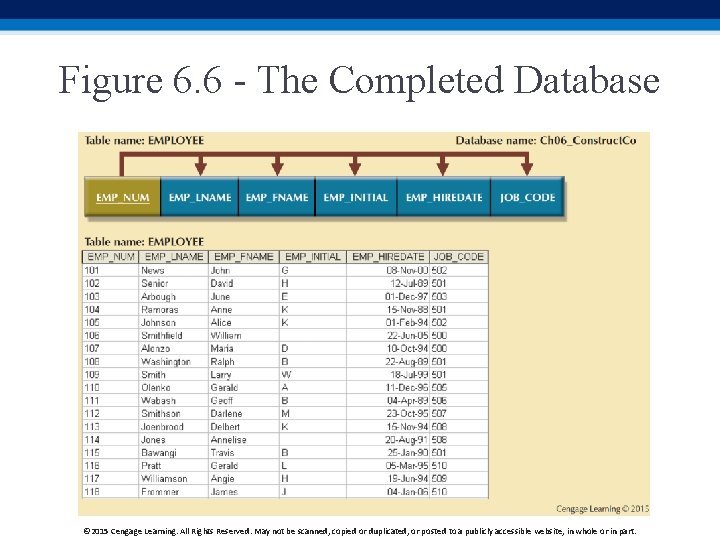
Figure 6. 6 - The Completed Database © 2015 Cengage Learning. All Rights Reserved. May not be scanned, copied or duplicated, or posted to a publicly accessible website, in whole or in part.
Surrogate Keys § Used by designers when the primary key is considered to be unsuitable § System-defined attribute § Created an managed via the DBMS § Have a numeric value which is automatically incremented for each new row © 2015 Cengage Learning. All Rights Reserved. May not be scanned, copied or duplicated, or posted to a publicly accessible website, in whole or in part.
The Boyce-Codd Normal Form (BCNF) § Every determinant in the table should be a candidate key § Candidate key - Same characteristics as primary key but not chosen to be the primary key § Equivalent to 3 NF when the table contains only one candidate key § Violated only when the table contains more than one candidate key § Considered to be a special case of 3 NF © 2015 Cengage Learning. All Rights Reserved. May not be scanned, copied or duplicated, or posted to a publicly accessible website, in whole or in part.
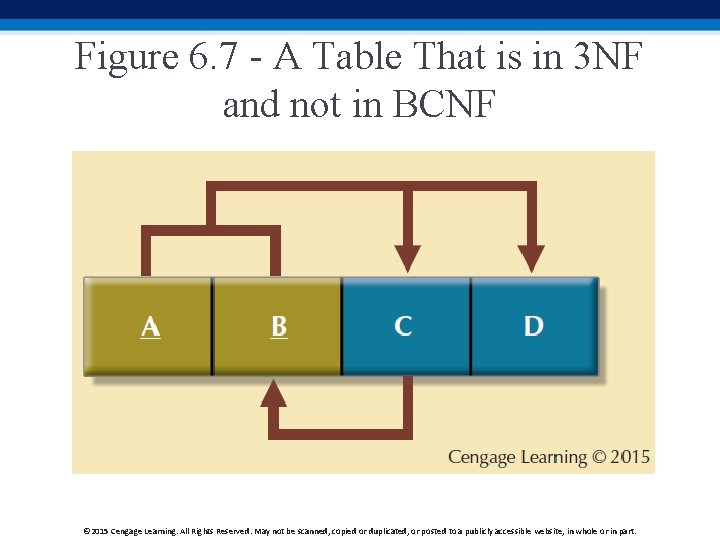
Figure 6. 7 - A Table That is in 3 NF and not in BCNF © 2015 Cengage Learning. All Rights Reserved. May not be scanned, copied or duplicated, or posted to a publicly accessible website, in whole or in part.
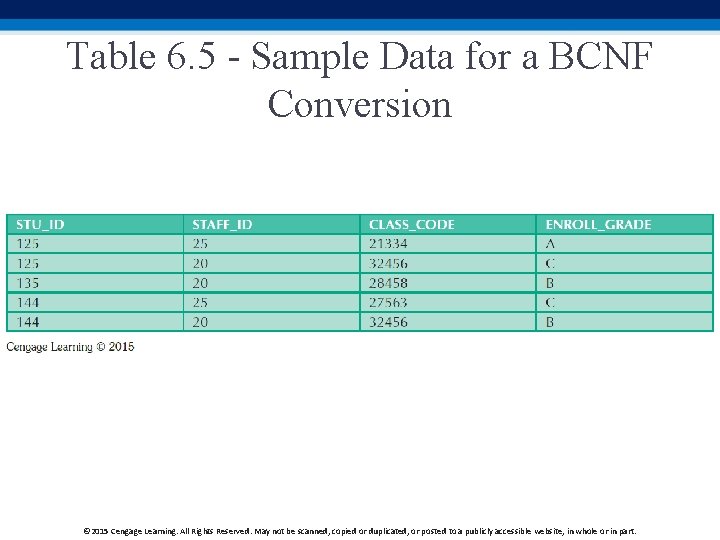
Table 6. 5 - Sample Data for a BCNF Conversion © 2015 Cengage Learning. All Rights Reserved. May not be scanned, copied or duplicated, or posted to a publicly accessible website, in whole or in part.
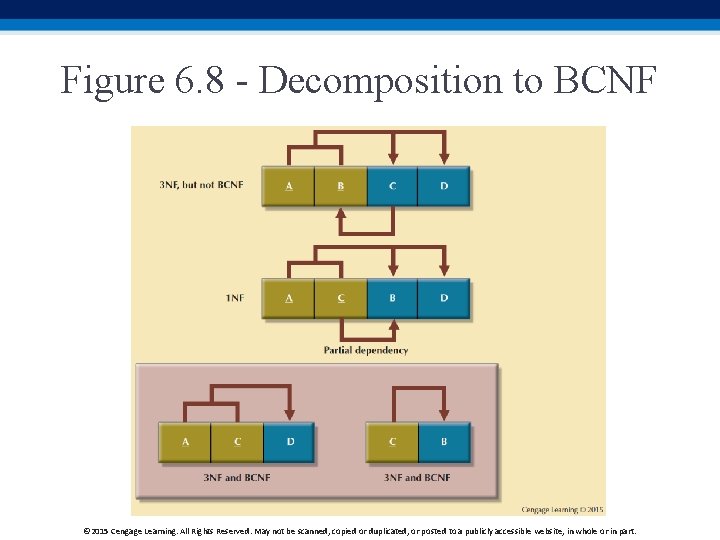
Figure 6. 8 - Decomposition to BCNF © 2015 Cengage Learning. All Rights Reserved. May not be scanned, copied or duplicated, or posted to a publicly accessible website, in whole or in part.
Fourth Normal Form (4 NF) § Table is in 4 NF when it: § Is in 3 NF § Has no multivalued dependencies § Rules § All attributes must be dependent on the primary key, but they must be independent of each other § No row may contain two or more multivalued facts about an entity © 2015 Cengage Learning. All Rights Reserved. May not be scanned, copied or duplicated, or posted to a publicly accessible website, in whole or in part.
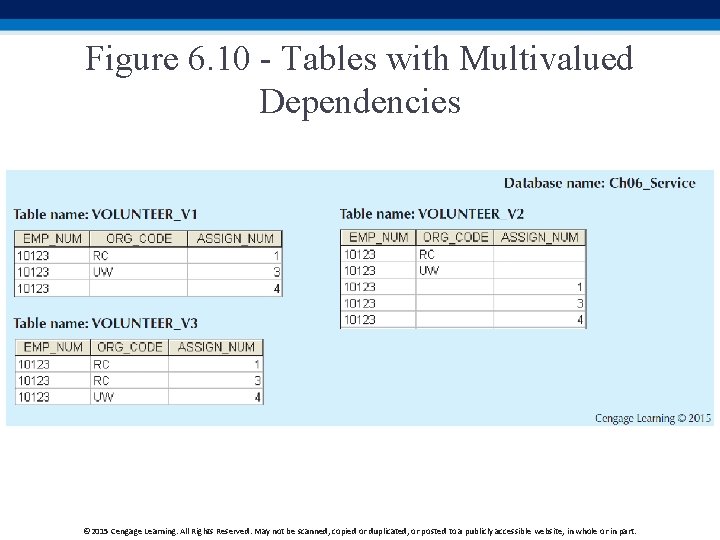
Figure 6. 10 - Tables with Multivalued Dependencies © 2015 Cengage Learning. All Rights Reserved. May not be scanned, copied or duplicated, or posted to a publicly accessible website, in whole or in part.
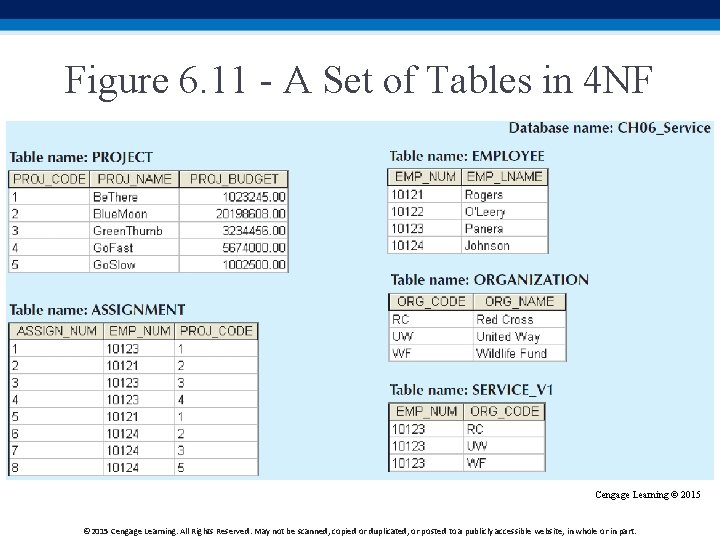
Figure 6. 11 - A Set of Tables in 4 NF Cengage Learning © 2015 Cengage Learning. All Rights Reserved. May not be scanned, copied or duplicated, or posted to a publicly accessible website, in whole or in part.
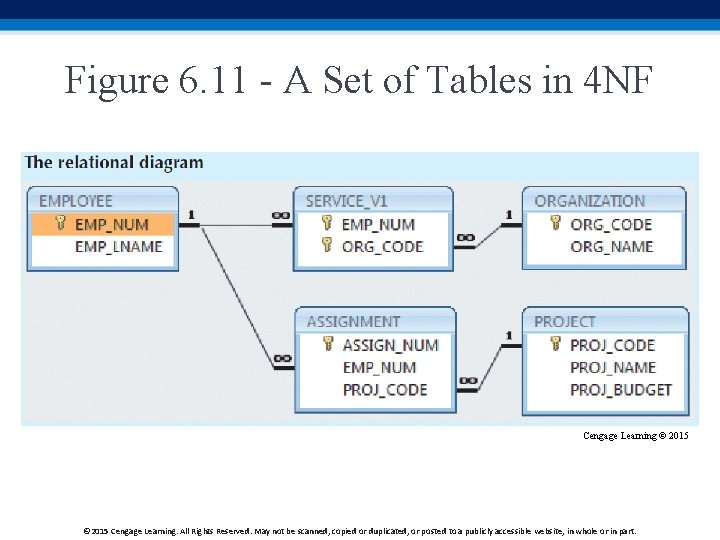
Figure 6. 11 - A Set of Tables in 4 NF Cengage Learning © 2015 Cengage Learning. All Rights Reserved. May not be scanned, copied or duplicated, or posted to a publicly accessible website, in whole or in part.
Normalization and Database Design § Normalization should be part of the design process § Proposed entities must meet required the normal form before table structures are created § Principles and normalization procedures to be understood to redesign and modify databases § ERD is created through an iterative process § Normalization focuses on the characteristics of specific entities © 2015 Cengage Learning. All Rights Reserved. May not be scanned, copied or duplicated, or posted to a publicly accessible website, in whole or in part.
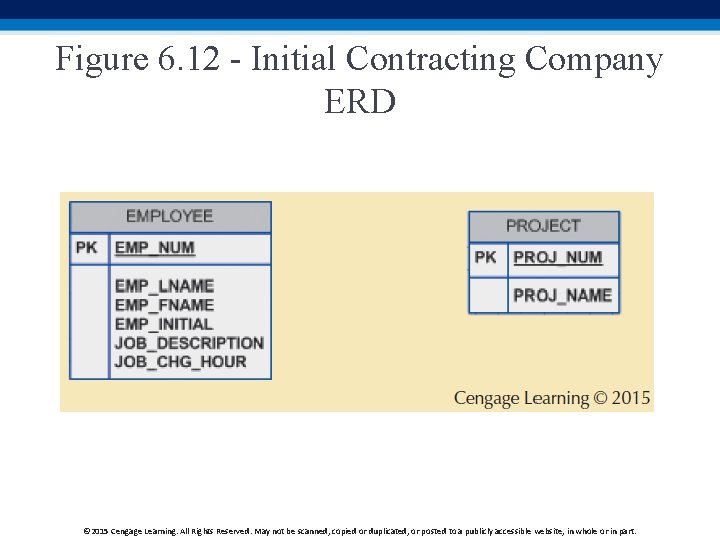
Figure 6. 12 - Initial Contracting Company ERD © 2015 Cengage Learning. All Rights Reserved. May not be scanned, copied or duplicated, or posted to a publicly accessible website, in whole or in part.
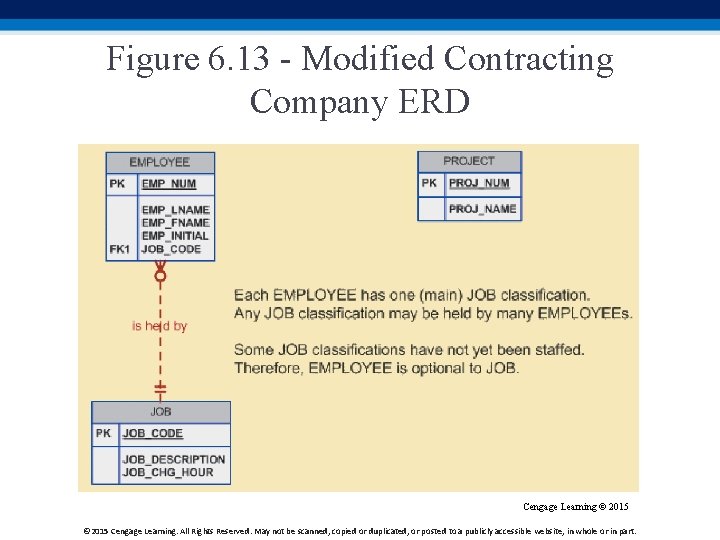
Figure 6. 13 - Modified Contracting Company ERD Cengage Learning © 2015 Cengage Learning. All Rights Reserved. May not be scanned, copied or duplicated, or posted to a publicly accessible website, in whole or in part.
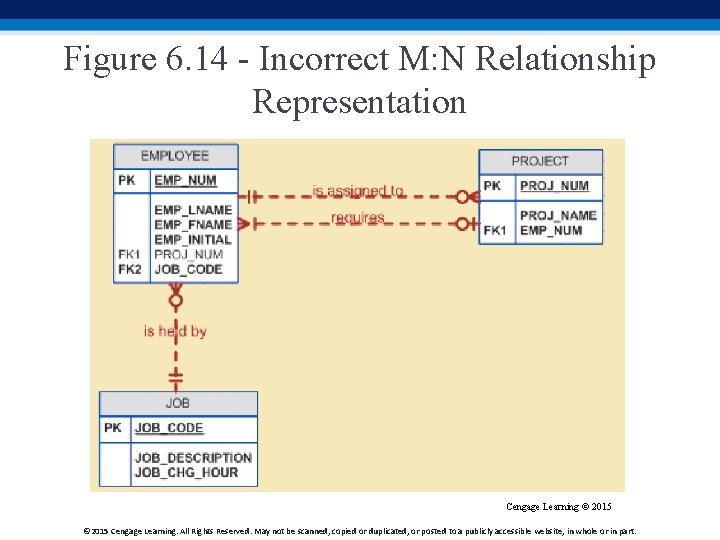
Figure 6. 14 - Incorrect M: N Relationship Representation Cengage Learning © 2015 Cengage Learning. All Rights Reserved. May not be scanned, copied or duplicated, or posted to a publicly accessible website, in whole or in part.
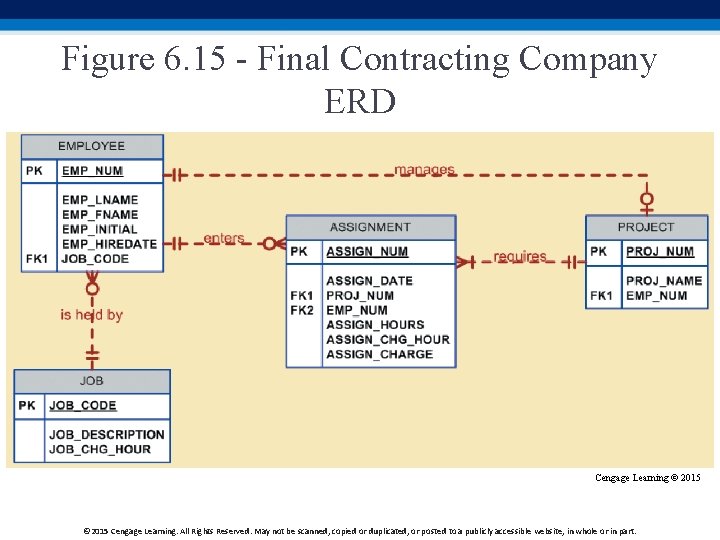
Figure 6. 15 - Final Contracting Company ERD Cengage Learning © 2015 Cengage Learning. All Rights Reserved. May not be scanned, copied or duplicated, or posted to a publicly accessible website, in whole or in part.
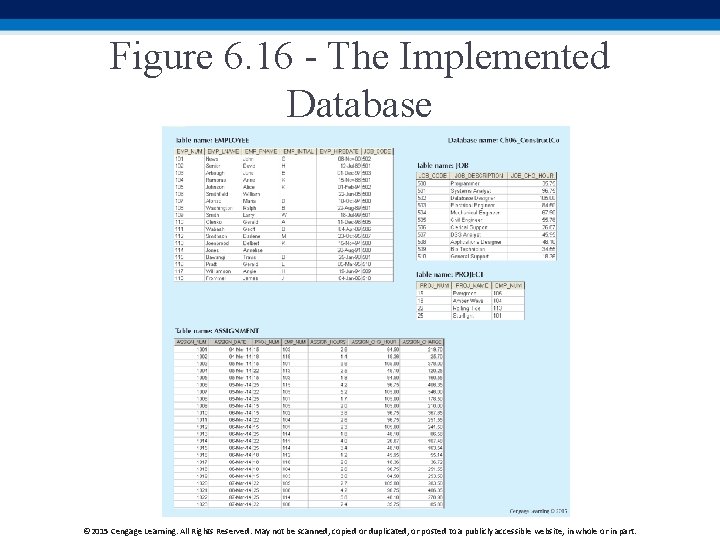
Figure 6. 16 - The Implemented Database © 2015 Cengage Learning. All Rights Reserved. May not be scanned, copied or duplicated, or posted to a publicly accessible website, in whole or in part.
Denormalization § Design goals § Creation of normalized relations § Processing requirements and speed § Number of database tables expands when tables are decomposed to conform to normalization requirements § Joining a larger number of tables: § Takes additional input/output (I/O) operations and processing logic § Reduces system speed © 2015 Cengage Learning. All Rights Reserved. May not be scanned, copied or duplicated, or posted to a publicly accessible website, in whole or in part.
Denormalization § Defects in unnormalized tables § Data updates are less efficient because tables are larger § Indexing is more cumbersome § No simple strategies for creating virtual tables known as views © 2015 Cengage Learning. All Rights Reserved. May not be scanned, copied or duplicated, or posted to a publicly accessible website, in whole or in part.
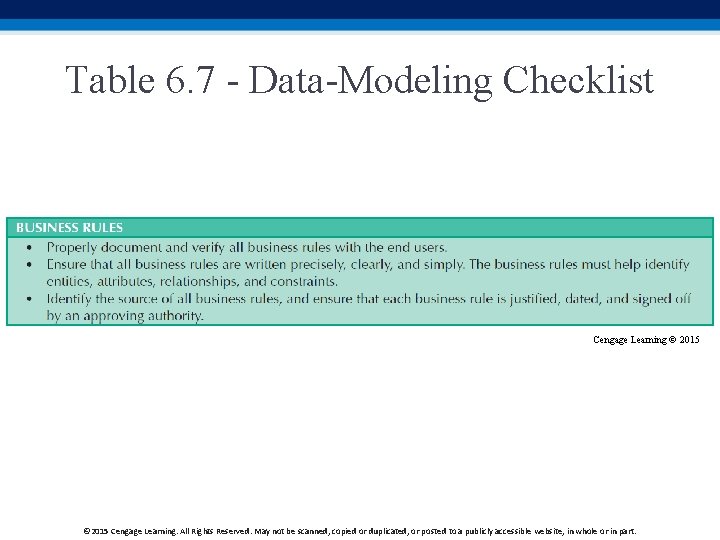
Table 6. 7 - Data-Modeling Checklist Cengage Learning © 2015 Cengage Learning. All Rights Reserved. May not be scanned, copied or duplicated, or posted to a publicly accessible website, in whole or in part.
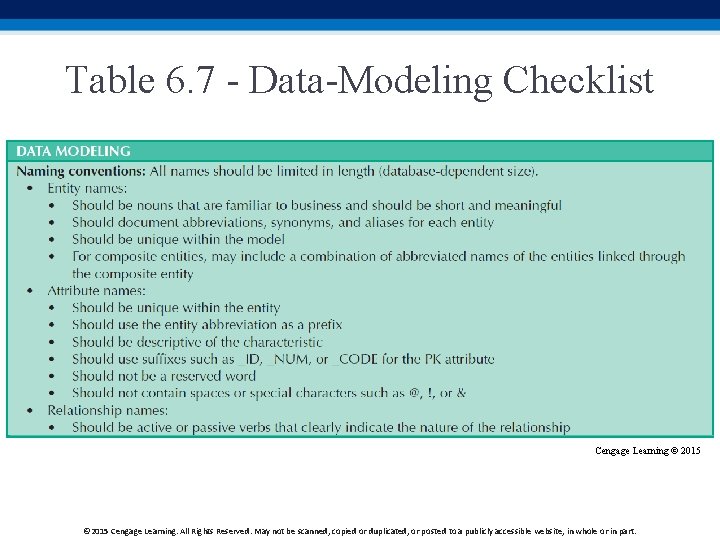
Table 6. 7 - Data-Modeling Checklist Cengage Learning © 2015 Cengage Learning. All Rights Reserved. May not be scanned, copied or duplicated, or posted to a publicly accessible website, in whole or in part.
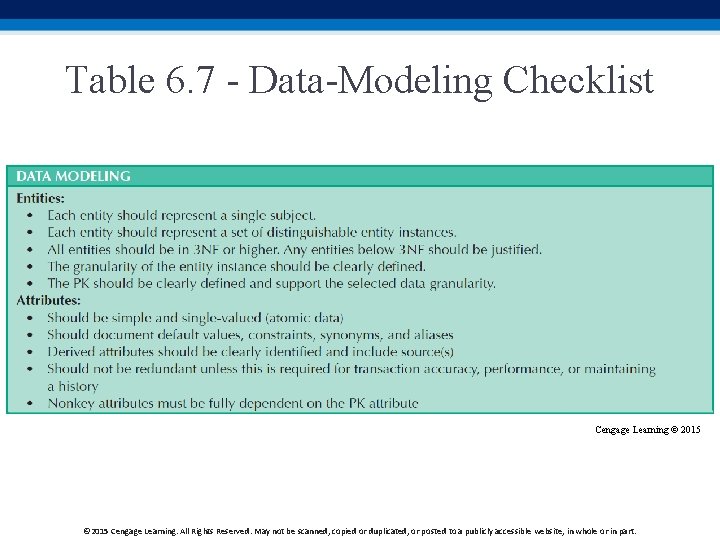
Table 6. 7 - Data-Modeling Checklist Cengage Learning © 2015 Cengage Learning. All Rights Reserved. May not be scanned, copied or duplicated, or posted to a publicly accessible website, in whole or in part.
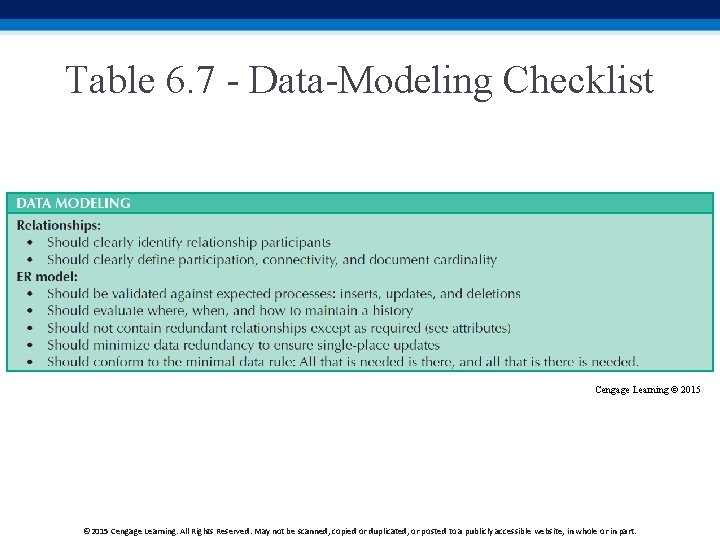
Table 6. 7 - Data-Modeling Checklist Cengage Learning © 2015 Cengage Learning. All Rights Reserved. May not be scanned, copied or duplicated, or posted to a publicly accessible website, in whole or in part.
- Slides: 44