
11 e Database Systems Design Implementation and Management
11 e Database Systems Design, Implementation, and Management Coronel | Morris Chapter 3 The Relational Database Model © 2015 Cengage Learning. All Rights Reserved. May not be scanned, copied or duplicated, or posted to a publicly accessible website, in whole or in part.
Learning Objectives § In this chapter, one will learn: § That the relational database model offers a logical view of data § About the relational model’s basic component: relations § That relations are logical constructs composed of rows (tuples) and columns (attributes) § That relations are implemented as tables in a relational DBMS © 2015 Cengage Learning. All Rights Reserved. May not be scanned, copied or duplicated, or posted to a publicly accessible website, in whole or in part. 2
Learning Objectives § In this chapter, one will learn: § About relational database operators, the data dictionary, and the system catalog § How data redundancy is handled in the relational database model § Why indexing is important © 2015 Cengage Learning. All Rights Reserved. May not be scanned, copied or duplicated, or posted to a publicly accessible website, in whole or in part. 3
A Logical View of Data § Relational database model enables logical representation of the data and its relationships § Logical simplicity yields simple and effective database design methodologies § Facilitated by the creation of data relationships based on a logical construct called a relation © 2015 Cengage Learning. All Rights Reserved. May not be scanned, copied or duplicated, or posted to a publicly accessible website, in whole or in part. 4

Table 3. 1 - Characteristics of a Relational Table © 2015 Cengage Learning. All Rights Reserved. May not be scanned, copied or duplicated, or posted to a publicly accessible website, in whole or in part. 5
Keys § Consist of one or more attributes that determine other attributes § Used to: § Ensure that each row in a table is uniquely identifiable § Establish relationships among tables and to ensure the integrity of the data § Primary key (PK): Attribute or combination of attributes that uniquely identifies any given row © 2015 Cengage Learning. All Rights Reserved. May not be scanned, copied or duplicated, or posted to a publicly accessible website, in whole or in part. 6
Determination § State in which knowing the value of one attribute makes it possible to determine the value of another § Is the basis for establishing the role of a key § Based on the relationships among the attributes © 2015 Cengage Learning. All Rights Reserved. May not be scanned, copied or duplicated, or posted to a publicly accessible website, in whole or in part. 7

Dependencies § Functional dependence: Value of one or more attributes determines the value of one or more other attributes § Determinant: Attribute whose value determines another § Dependent: Attribute whose value is determined by the other attribute § Full functional dependence: Entire collection of attributes in the determinant is necessary for the relationship © 2015 Cengage Learning. All Rights Reserved. May not be scanned, copied or duplicated, or posted to a publicly accessible website, in whole or in part. 8
Types of Keys § Composite key: Key that is composed of more than one attribute § Key attribute: Attribute that is a part of a key § Entity integrity: Condition in which each row in the table has its own unique identity § All of the values in the primary key must be unique § No key attribute in the primary key can contain a null © 2015 Cengage Learning. All Rights Reserved. May not be scanned, copied or duplicated, or posted to a publicly accessible website, in whole or in part. 9
Types of Keys § Null: Absence of any data value that could represent: § An unknown attribute value § A known, but missing, attribute value § A inapplicable condition § Referential integrity: Every reference to an entity instance by another entity instance is valid © 2015 Cengage Learning. All Rights Reserved. May not be scanned, copied or duplicated, or posted to a publicly accessible website, in whole or in part. 10
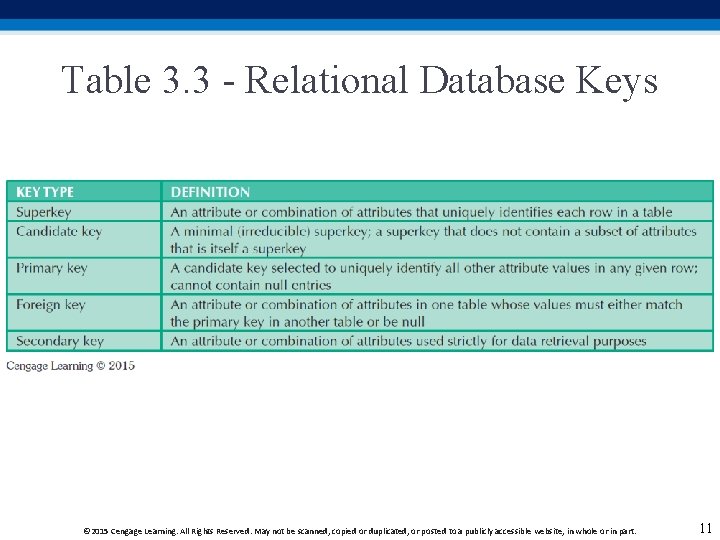
Table 3. 3 - Relational Database Keys © 2015 Cengage Learning. All Rights Reserved. May not be scanned, copied or duplicated, or posted to a publicly accessible website, in whole or in part. 11
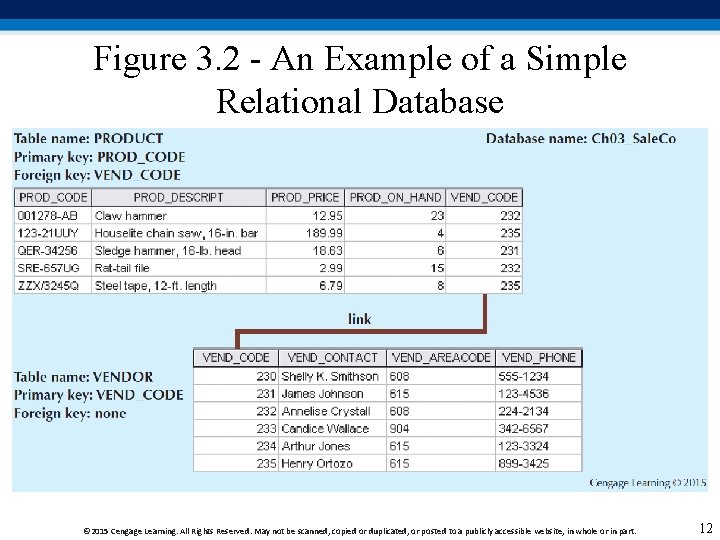
Figure 3. 2 - An Example of a Simple Relational Database © 2015 Cengage Learning. All Rights Reserved. May not be scanned, copied or duplicated, or posted to a publicly accessible website, in whole or in part. 12

Integrity Rules Entity Integrity Description Requirement All primary key entries are unique, and no part of a primary key may be null Purpose Each row will have a unique identity, and foreign key values can properly reference primary key values Example No invoice can have a duplicate number, nor it can be null © 2015 Cengage Learning. All Rights Reserved. May not be scanned, copied or duplicated, or posted to a publicly accessible website, in whole or in part. 13
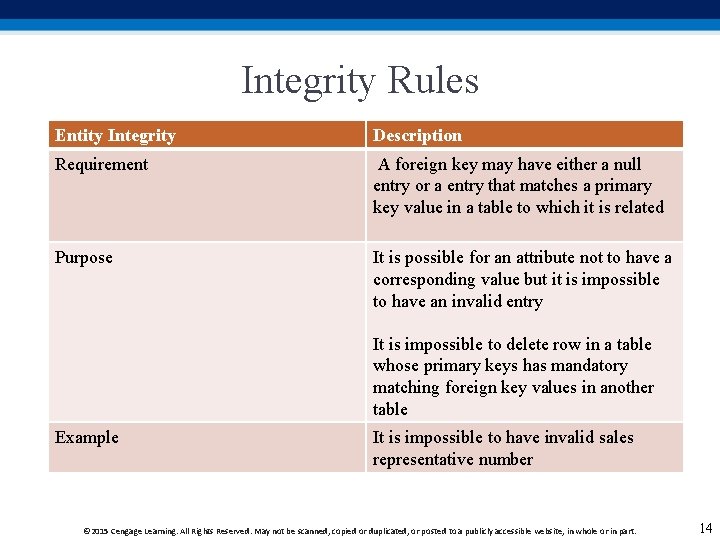
Integrity Rules Entity Integrity Description Requirement A foreign key may have either a null entry or a entry that matches a primary key value in a table to which it is related Purpose It is possible for an attribute not to have a corresponding value but it is impossible to have an invalid entry It is impossible to delete row in a table whose primary keys has mandatory matching foreign key values in another table Example It is impossible to have invalid sales representative number © 2015 Cengage Learning. All Rights Reserved. May not be scanned, copied or duplicated, or posted to a publicly accessible website, in whole or in part. 14
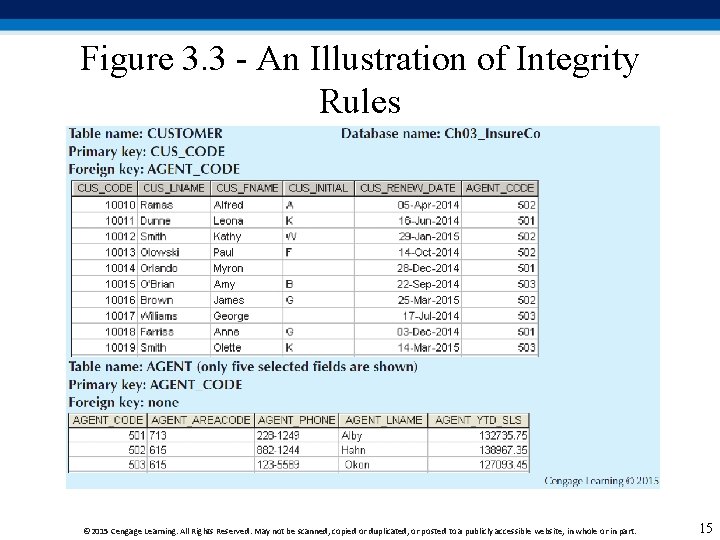
Figure 3. 3 - An Illustration of Integrity Rules © 2015 Cengage Learning. All Rights Reserved. May not be scanned, copied or duplicated, or posted to a publicly accessible website, in whole or in part. 15
Ways to Handle Nulls § Flags: Special codes used to indicate the absence of some value § NOT NULL constraint - Placed on a column to ensure that every row in the table has a value for that column § UNIQUE constraint - Restriction placed on a column to ensure that no duplicate values exist for that column © 2015 Cengage Learning. All Rights Reserved. May not be scanned, copied or duplicated, or posted to a publicly accessible website, in whole or in part. 16
Relational Algebra § Theoretical way of manipulating table contents using relational operators § Relvar: Variable that holds a relation § Heading contains the names of the attributes and the body contains the relation § Relational operators have the property of closure § Closure: Use of relational algebra operators on existing relations produces new relations © 2015 Cengage Learning. All Rights Reserved. May not be scanned, copied or duplicated, or posted to a publicly accessible website, in whole or in part. 17
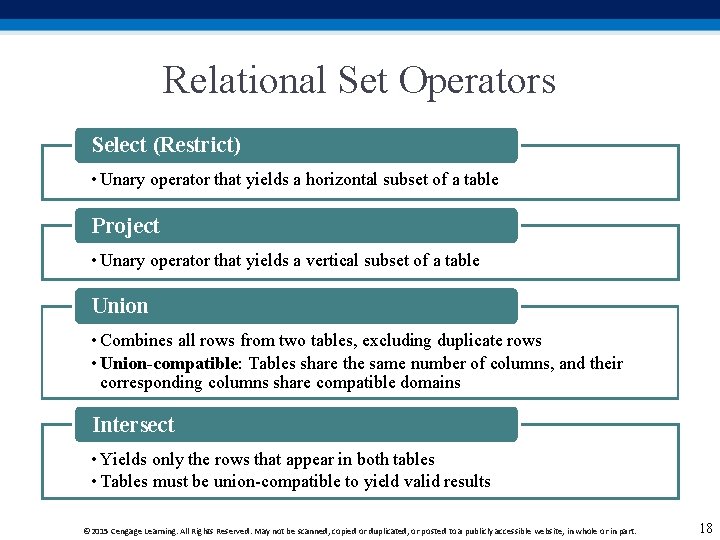
Relational Set Operators Select (Restrict) • Unary operator that yields a horizontal subset of a table Project • Unary operator that yields a vertical subset of a table Union • Combines all rows from two tables, excluding duplicate rows • Union-compatible: Tables share the same number of columns, and their corresponding columns share compatible domains Intersect • Yields only the rows that appear in both tables • Tables must be union-compatible to yield valid results © 2015 Cengage Learning. All Rights Reserved. May not be scanned, copied or duplicated, or posted to a publicly accessible website, in whole or in part. 18
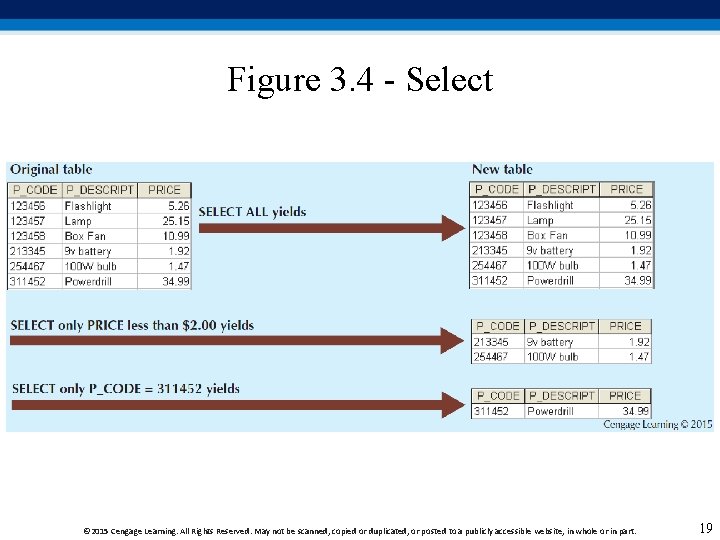
Figure 3. 4 - Select © 2015 Cengage Learning. All Rights Reserved. May not be scanned, copied or duplicated, or posted to a publicly accessible website, in whole or in part. 19
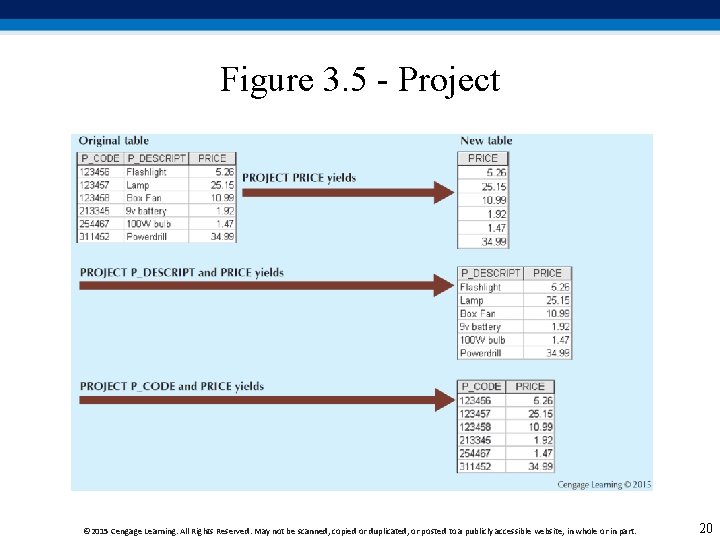
Figure 3. 5 - Project © 2015 Cengage Learning. All Rights Reserved. May not be scanned, copied or duplicated, or posted to a publicly accessible website, in whole or in part. 20
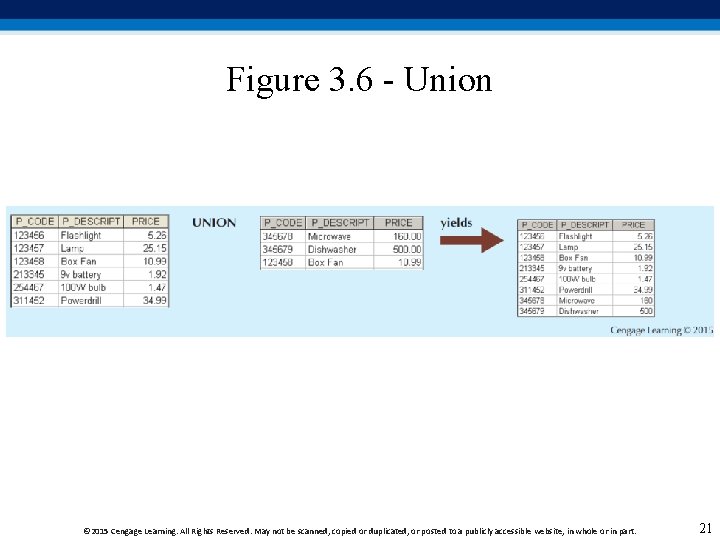
Figure 3. 6 - Union © 2015 Cengage Learning. All Rights Reserved. May not be scanned, copied or duplicated, or posted to a publicly accessible website, in whole or in part. 21
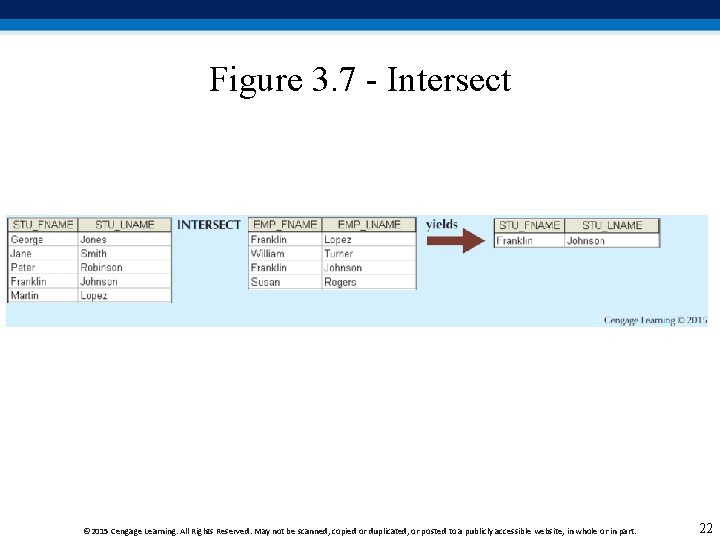
Figure 3. 7 - Intersect © 2015 Cengage Learning. All Rights Reserved. May not be scanned, copied or duplicated, or posted to a publicly accessible website, in whole or in part. 22
Relational Set Operators § Difference § Yields all rows in one table that are not found in the other table § Tables must be union-compatible to yield valid results § Product § Yields all possible pairs of rows from two tables © 2015 Cengage Learning. All Rights Reserved. May not be scanned, copied or duplicated, or posted to a publicly accessible website, in whole or in part. 23
Relational Set Operators § Join § Allows information to be intelligently combined from two or more tables § Divide § Uses one 2 -column table as the dividend and one single -column table as the divisor § Output is a single column that contains all values from the second column of the dividend that are associated with every row in the divisor © 2015 Cengage Learning. All Rights Reserved. May not be scanned, copied or duplicated, or posted to a publicly accessible website, in whole or in part. 24
Types of Joins § Natural join: Links tables by selecting only the rows with common values in their common attributes § Join columns: Common columns § Equijoin: Links tables on the basis of an equality condition that compares specified columns of each table § Theta join: Extension of natural join, denoted by adding a theta subscript after the JOIN symbol © 2015 Cengage Learning. All Rights Reserved. May not be scanned, copied or duplicated, or posted to a publicly accessible website, in whole or in part. 25
Types of Joins § Inner join: Only returns matched records from the tables that are being joined § Outer join: Matched pairs are retained and unmatched values in the other table are left null § Left outer join: Yields all of the rows in the first table, including those that do not have a matching value in the second table § Right outer join: Yields all of the rows in the second table, including those that do not have matching values in the first table © 2015 Cengage Learning. All Rights Reserved. May not be scanned, copied or duplicated, or posted to a publicly accessible website, in whole or in part. 26
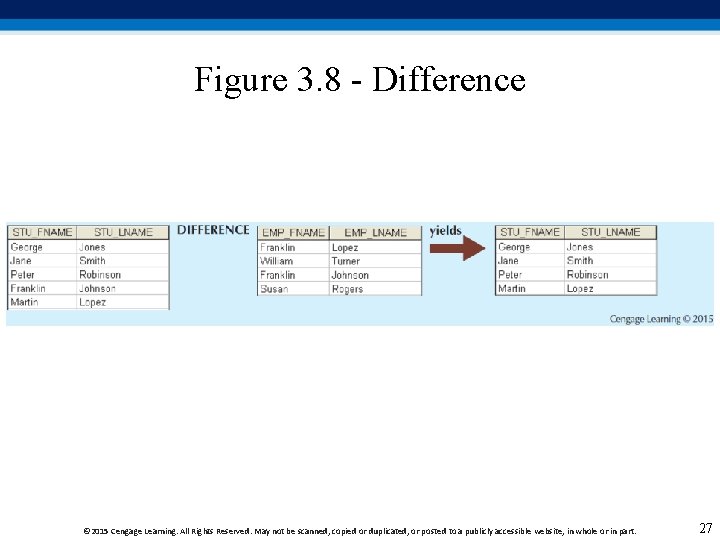
Figure 3. 8 - Difference © 2015 Cengage Learning. All Rights Reserved. May not be scanned, copied or duplicated, or posted to a publicly accessible website, in whole or in part. 27
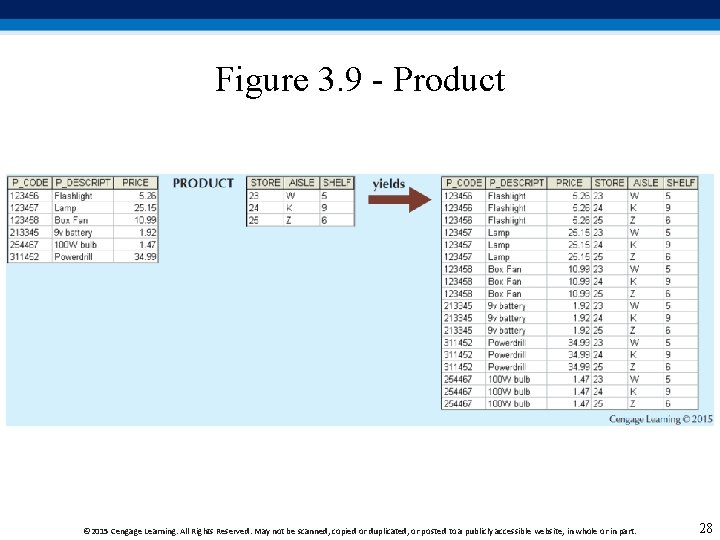
Figure 3. 9 - Product © 2015 Cengage Learning. All Rights Reserved. May not be scanned, copied or duplicated, or posted to a publicly accessible website, in whole or in part. 28
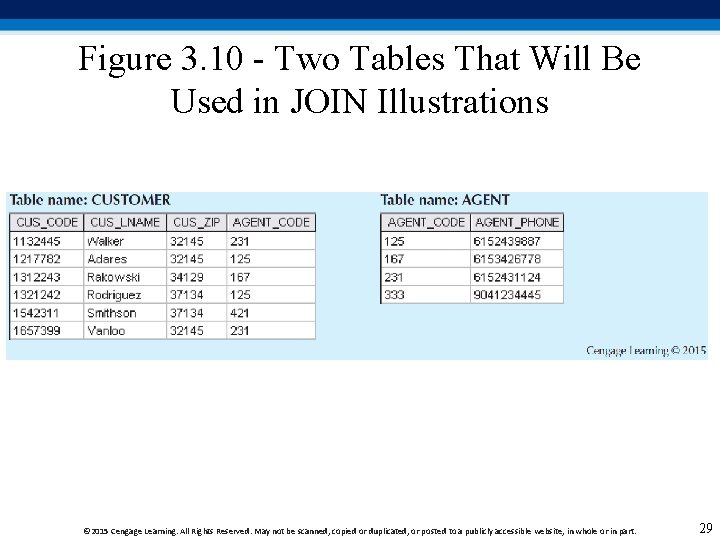
Figure 3. 10 - Two Tables That Will Be Used in JOIN Illustrations © 2015 Cengage Learning. All Rights Reserved. May not be scanned, copied or duplicated, or posted to a publicly accessible website, in whole or in part. 29
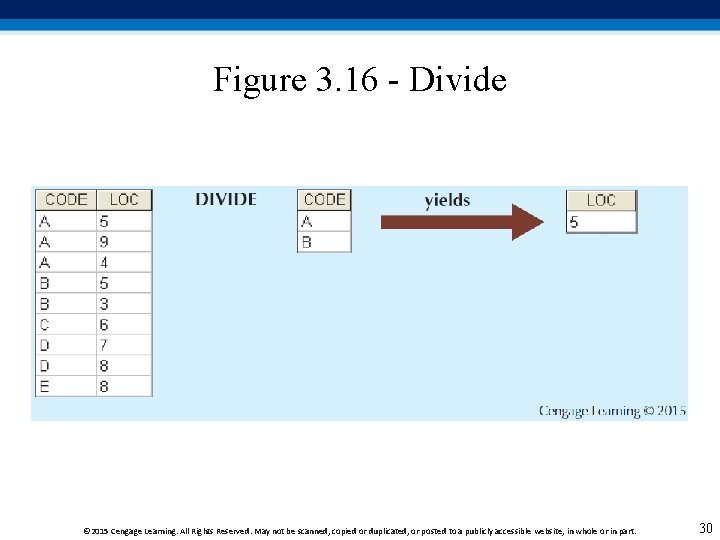
Figure 3. 16 - Divide © 2015 Cengage Learning. All Rights Reserved. May not be scanned, copied or duplicated, or posted to a publicly accessible website, in whole or in part. 30
Data Dictionary and the System Catalog § Data dictionary: Description of all tables in the database created by the user and designer § System catalog: System data dictionary that describes all objects within the database § Homonyms and synonyms must be avoided to lessen confusion § Homonym: Same name is used to label different attributes § Synonym: Different names are used to describe the same attribute © 2015 Cengage Learning. All Rights Reserved. May not be scanned, copied or duplicated, or posted to a publicly accessible website, in whole or in part. 31
Relationships within the Relational Database § 1: M relationship - Norm for relational databases § 1: 1 relationship - One entity can be related to only one other entity and vice versa § Many-to-many (M: N) relationship - Implemented by creating a new entity in 1: M relationships with the original entities § Composite entity (Bridge or associative entity): Helps avoid problems inherent to M: N relationships, includes the primary keys of tables to be linked © 2015 Cengage Learning. All Rights Reserved. May not be scanned, copied or duplicated, or posted to a publicly accessible website, in whole or in part. 32
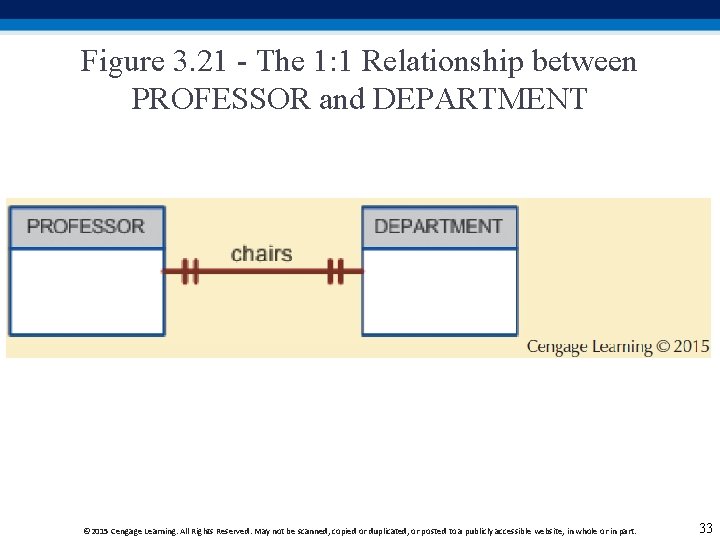
Figure 3. 21 - The 1: 1 Relationship between PROFESSOR and DEPARTMENT © 2015 Cengage Learning. All Rights Reserved. May not be scanned, copied or duplicated, or posted to a publicly accessible website, in whole or in part. 33
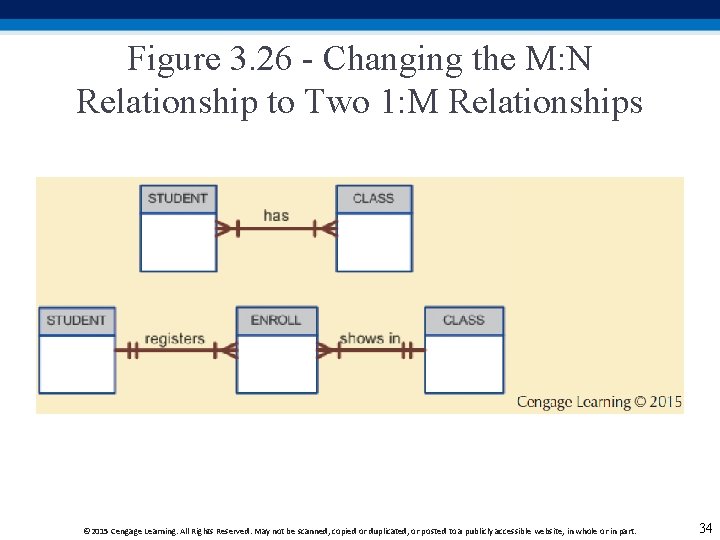
Figure 3. 26 - Changing the M: N Relationship to Two 1: M Relationships © 2015 Cengage Learning. All Rights Reserved. May not be scanned, copied or duplicated, or posted to a publicly accessible website, in whole or in part. 34
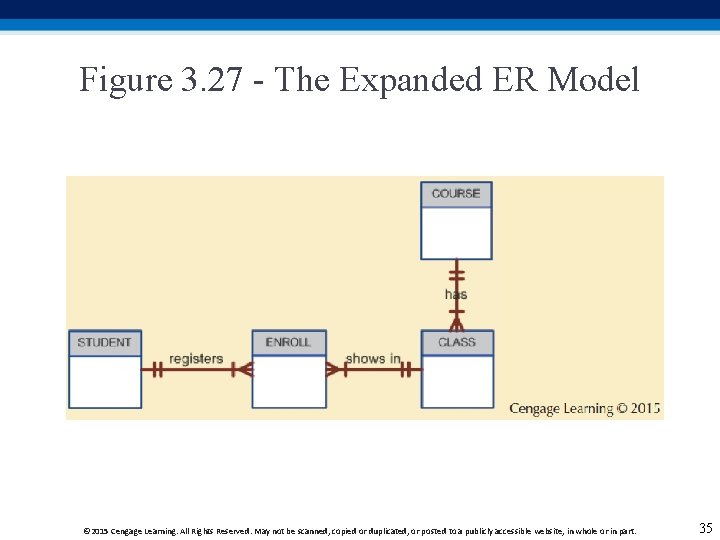
Figure 3. 27 - The Expanded ER Model © 2015 Cengage Learning. All Rights Reserved. May not be scanned, copied or duplicated, or posted to a publicly accessible website, in whole or in part. 35
Data Redundancy § Relational database facilitates control of data redundancies through use of foreign keys § To be controlled except the following circumstances § Data redundancy must be increased to make the database serve crucial information purposes § Exists to preserve the historical accuracy of the data © 2015 Cengage Learning. All Rights Reserved. May not be scanned, copied or duplicated, or posted to a publicly accessible website, in whole or in part. 36
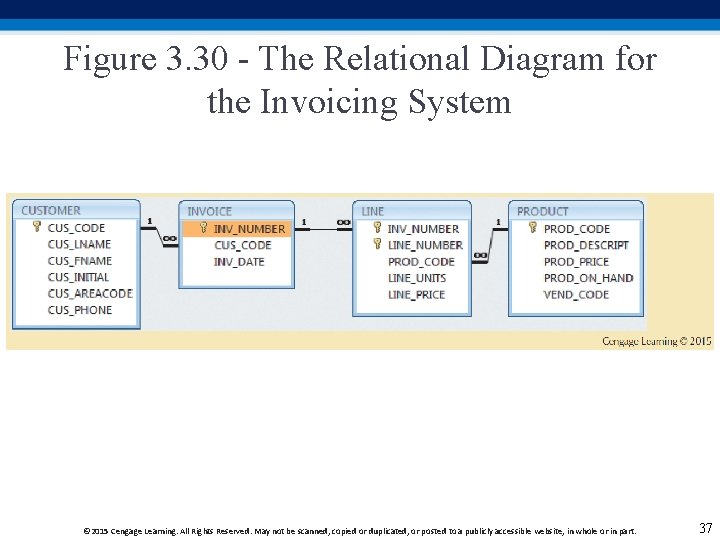
Figure 3. 30 - The Relational Diagram for the Invoicing System © 2015 Cengage Learning. All Rights Reserved. May not be scanned, copied or duplicated, or posted to a publicly accessible website, in whole or in part. 37
Index § Orderly arrangement to logically access rows in a table § Index key: Index’s reference point that leads to data location identified by the key § Unique index: Index key can have only one pointer value associated with it § Each index is associated with only one table © 2015 Cengage Learning. All Rights Reserved. May not be scanned, copied or duplicated, or posted to a publicly accessible website, in whole or in part. 38
- Slides: 38