
11 4 Meiosis Understanding Chromosomes in Humans Chromosomes
- Slides: 24
11 -4 Meiosis
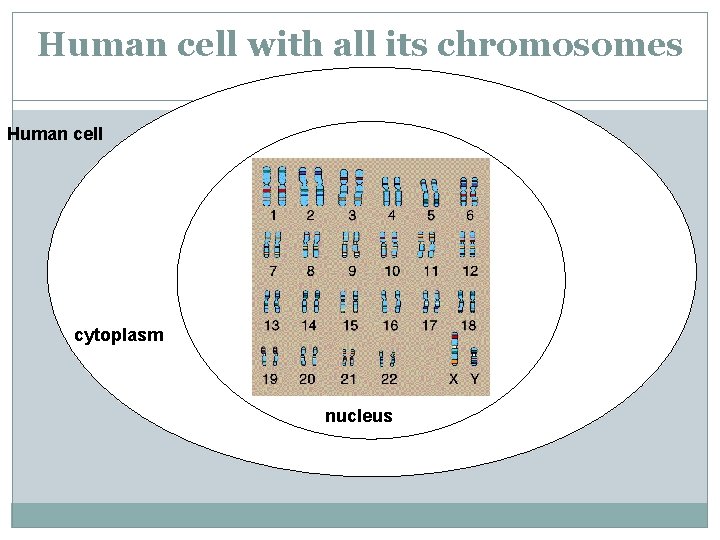
Understanding Chromosomes in Humans Chromosomes in Human Cells Where did we get our 46 chromosomes? From our parents How many did you get from your father? 23 How many did you get from your mother? 23 We often say that you got a set of chromosomes (23) from your mother and a set of chromosomes (23) from your father.
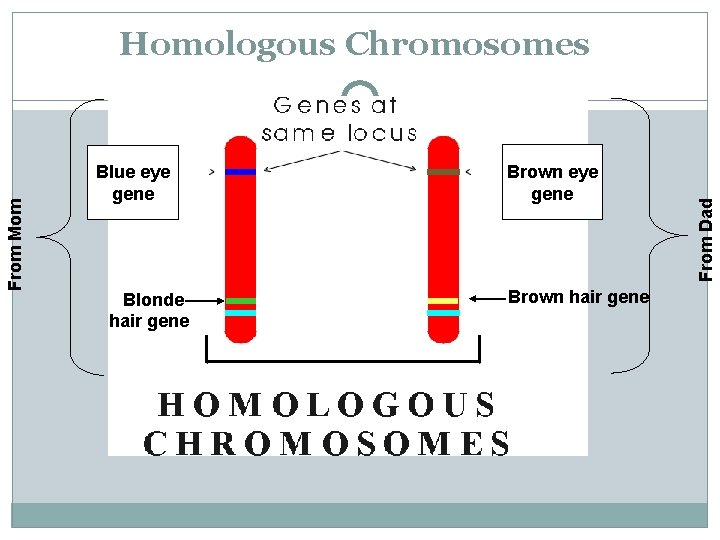
Homologous Chromosomes in Human Cells The set from your mother and the set from your father are called homologous chromosomes! Why are they called homologous? Because each set contains the same (homo) basic genetic information.
Blue eye gene Blonde hair gene Brown eye gene Brown hair gene From Dad From Mom Homologous Chromosomes
Human cell with all its chromosomes Human cell cytoplasm nucleus
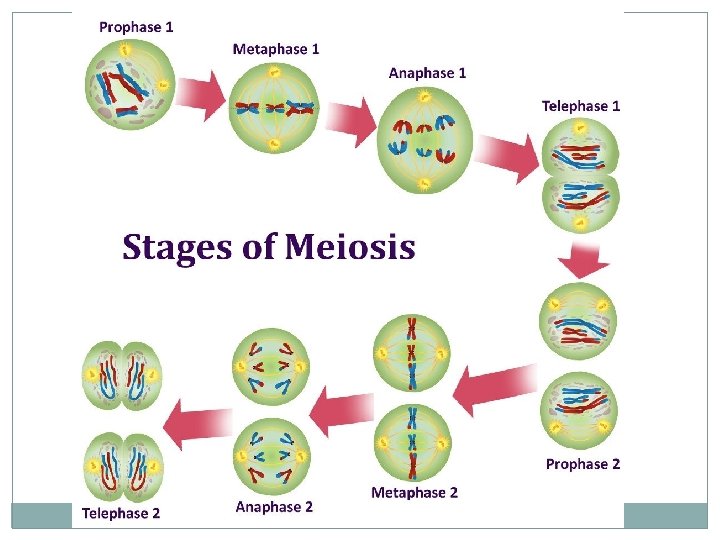
Introduction to Meiosis Process by which sex cells (gametes) are formed sperm cells or pollen cells (male cells) egg cells (female cells) Cell division of sex cells whereby, homologous chromosomes are separated
Phases of Meiosis Interphase Prophase I Metaphase I Anaphase I Telophase I Prophase II Metaphase II Anaphase II Telophase II
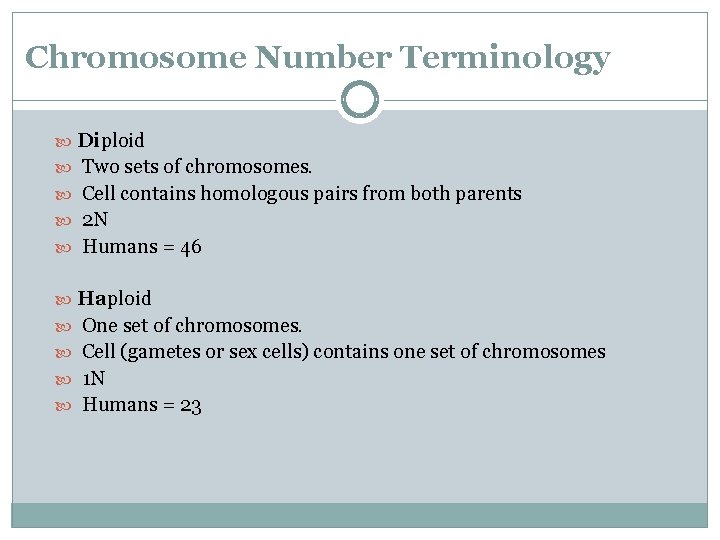
Chromosome Number Terminology Diploid Two sets of chromosomes. Cell contains homologous pairs from both parents 2 N Humans = 46 Haploid One set of chromosomes. Cell (gametes or sex cells) contains one set of chromosomes 1 N Humans = 23
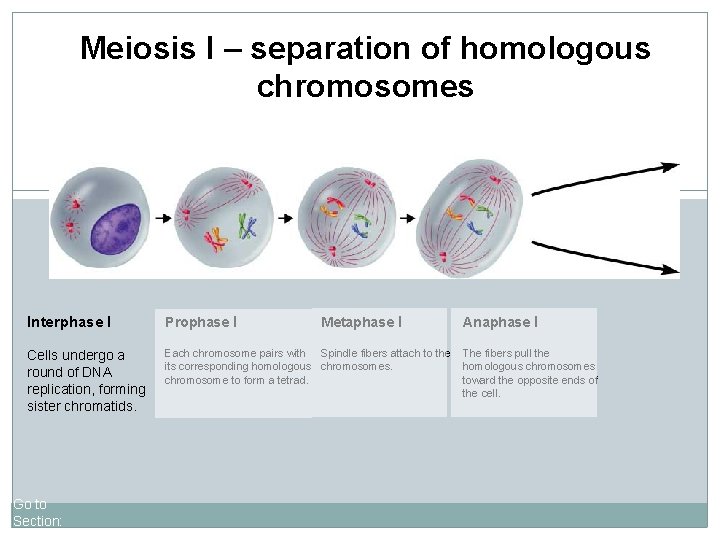
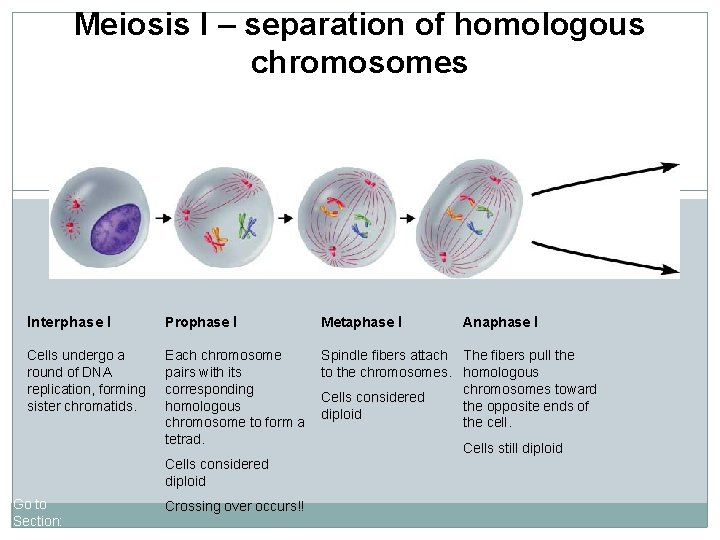
Meiosis I – separation of homologous chromosomes Interphase I Prophase I Cells undergo a round of DNA replication, forming sister chromatids. Each chromosome pairs with Spindle fibers attach to the its corresponding homologous chromosomes. chromosome to form a tetrad. Go to Section: Metaphase I Anaphase I The fibers pull the homologous chromosomes toward the opposite ends of the cell.
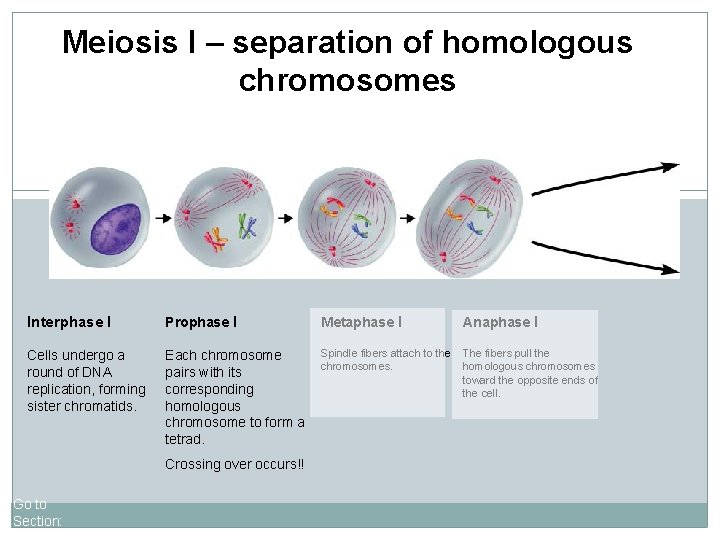
Meiosis I – separation of homologous chromosomes Interphase I Prophase I Metaphase I Anaphase I Cells undergo a round of DNA replication, forming sister chromatids. Each chromosome pairs with its corresponding homologous chromosome to form a tetrad. Spindle fibers attach to the chromosomes. The fibers pull the homologous chromosomes toward the opposite ends of the cell. Crossing over occurs!! Go to Section:
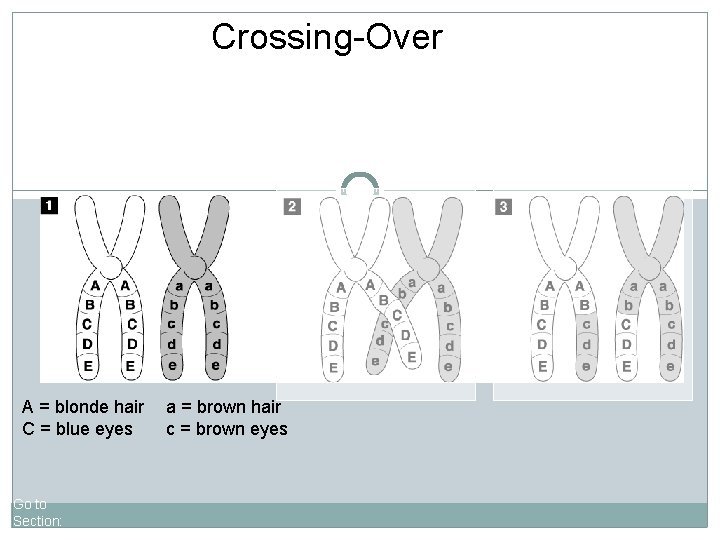
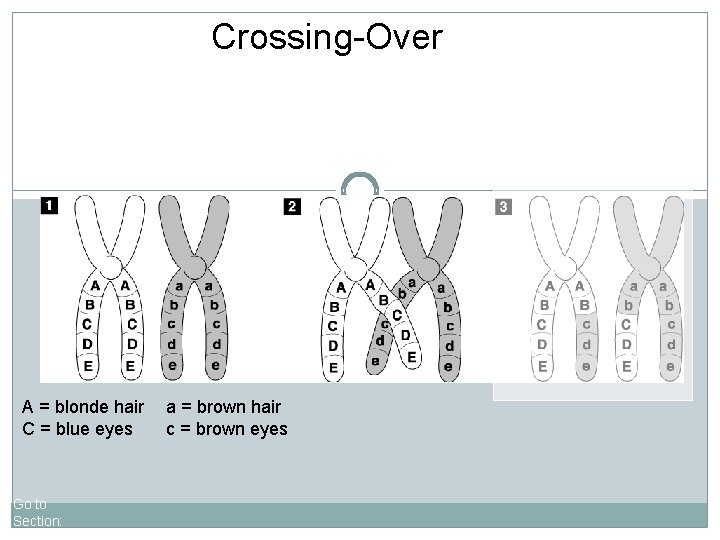
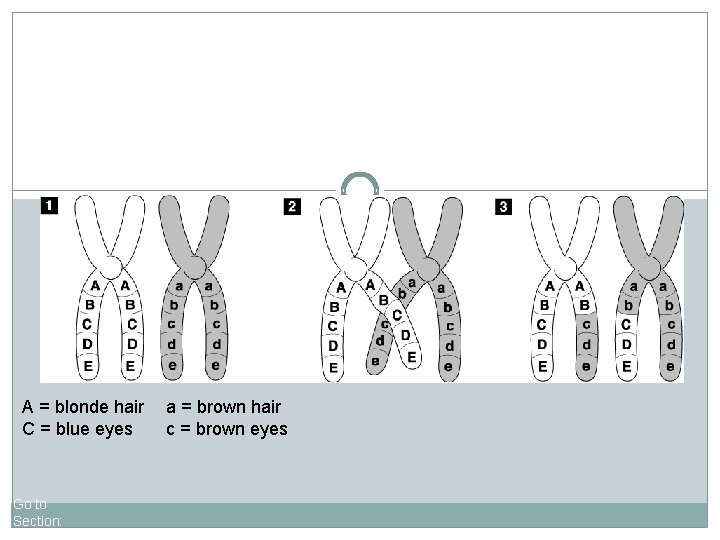
Crossing-Over A = blonde hair C = blue eyes Go to Section: a = brown hair c = brown eyes
Crossing-Over A = blonde hair C = blue eyes Go to Section: a = brown hair c = brown eyes
Crossing-Over A = blonde hair C = blue eyes Go to Section: a = brown hair c = brown eyes
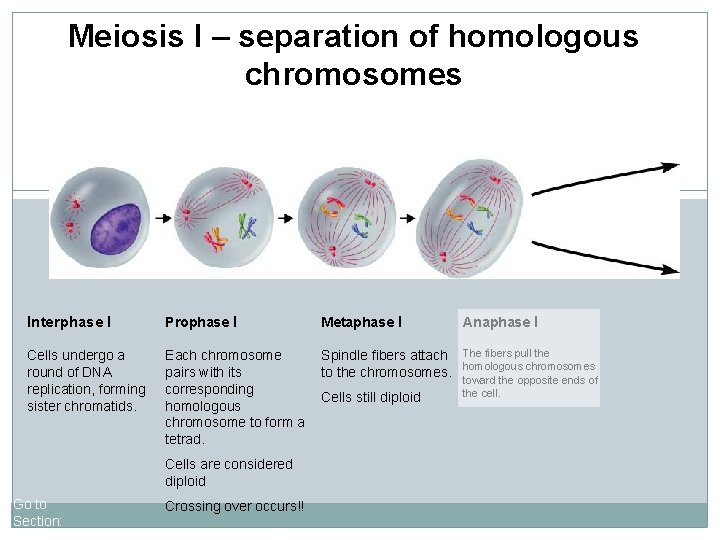
Meiosis I – separation of homologous chromosomes Interphase I Prophase I Metaphase I Anaphase I Cells undergo a round of DNA replication, forming sister chromatids. Each chromosome pairs with its corresponding homologous chromosome to form a tetrad. Spindle fibers attach to the chromosomes. The fibers pull the homologous chromosomes toward the opposite ends of the cell. Cells are considered diploid Go to Section: Crossing over occurs!! Cells still diploid
Meiosis I – separation of homologous chromosomes Interphase I Prophase I Metaphase I Cells undergo a round of DNA replication, forming sister chromatids. Each chromosome pairs with its corresponding homologous chromosome to form a tetrad. Spindle fibers attach The fibers pull the to the chromosomes. homologous chromosomes toward Cells considered the opposite ends of diploid the cell. Cells considered diploid Go to Section: Crossing over occurs!! Anaphase I Cells still diploid
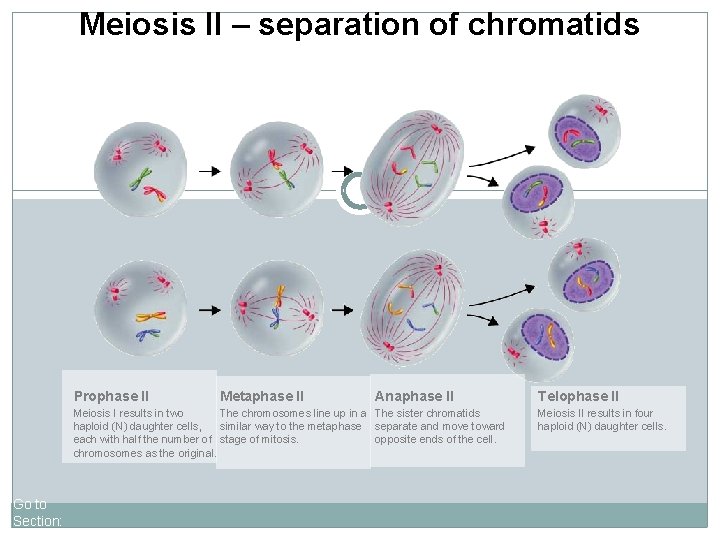
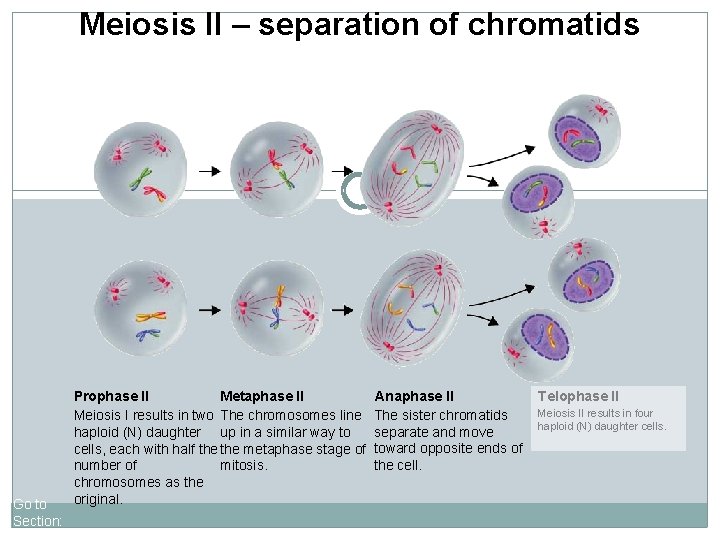
Meiosis II – separation of chromatids Prophase II Metaphase II Anaphase II Meiosis I results in two The chromosomes line up in a The sister chromatids haploid (N) daughter cells, similar way to the metaphase separate and move toward each with half the number of stage of mitosis. opposite ends of the cell. chromosomes as the original. Go to Section: Telophase II Meiosis II results in four haploid (N) daughter cells.
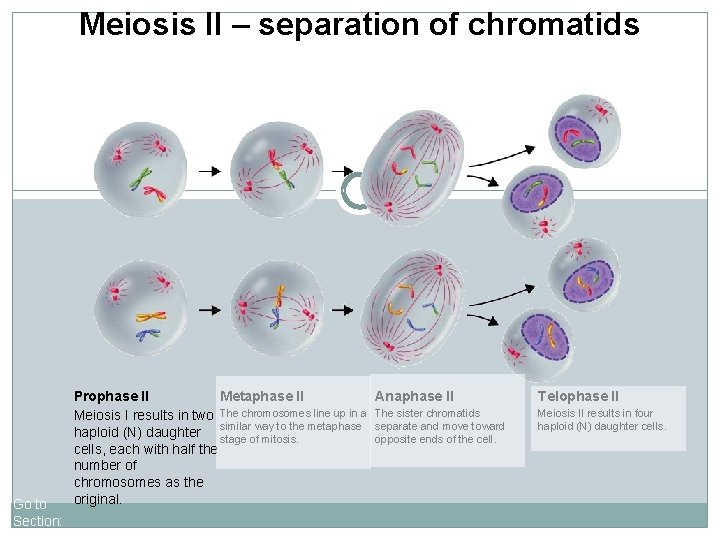
11 -17 Meiosisof II chromatids Meiosis IIFigure – separation Go to Section: Prophase II Metaphase II Anaphase II Meiosis I results in two The chromosomes line up in a The sister chromatids way to the metaphase separate and move toward haploid (N) daughter similar stage of mitosis. opposite ends of the cells, each with half the number of chromosomes as the original. Telophase II Meiosis II results in four haploid (N) daughter cells.
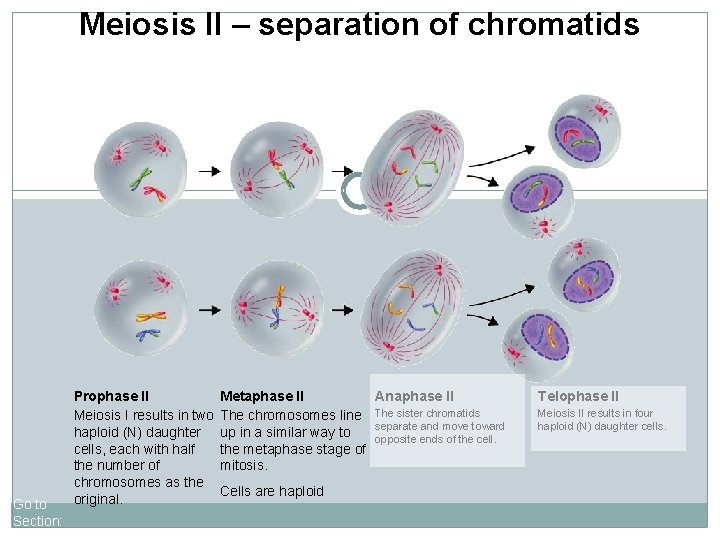
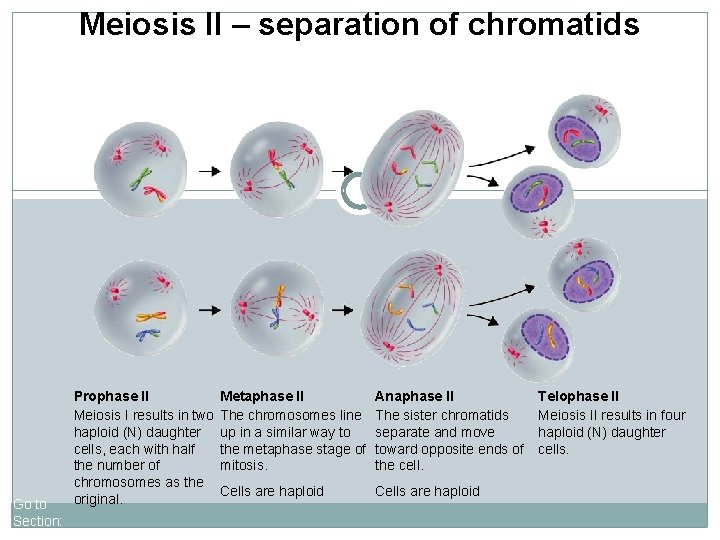
11 -17 Meiosisof II chromatids Meiosis IIFigure – separation Go to Section: Prophase II Meiosis I results in two haploid (N) daughter cells, each with half the number of chromosomes as the original. Metaphase II Anaphase II The chromosomes line The sister chromatids separate and move toward up in a similar way to opposite ends of the cell. the metaphase stage of mitosis. Cells are haploid Telophase II Meiosis II results in four haploid (N) daughter cells.
11 -17 Meiosisof II chromatids Meiosis IIFigure – separation Go to Section: Prophase II Metaphase II Meiosis I results in two The chromosomes line haploid (N) daughter up in a similar way to cells, each with half the metaphase stage of number of mitosis. chromosomes as the original. Anaphase II The sister chromatids separate and move toward opposite ends of the cell. Telophase II Meiosis II results in four haploid (N) daughter cells.
11 -17 Meiosisof II chromatids Meiosis IIFigure – separation Go to Section: Prophase II Meiosis I results in two haploid (N) daughter cells, each with half the number of chromosomes as the original. Metaphase II The chromosomes line up in a similar way to the metaphase stage of mitosis. Anaphase II The sister chromatids separate and move toward opposite ends of the cell. Cells are haploid Telophase II Meiosis II results in four haploid (N) daughter cells.
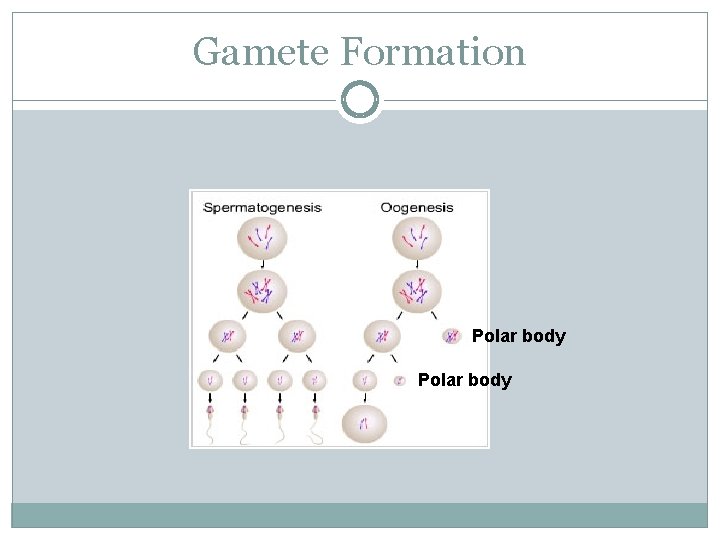
Gamete Formation Males sperm cells (1 N) pollen cells (1 N) Females egg cells (1 N) polar bodies those cells that do not participate in reproduction result from unequal division of the cytoplasm
Gamete Formation Polar body