
11 3 Excretory System Definitions Excretion The disposal

- Slides: 28
11. 3 Excretory System
Definitions Excretion— The disposal of nitrogen-containing waste products of metabolism Osmoregulation— How organisms regulate solute concentrations and balance the gain and loss of water
Why is excretion important? Body needs to get rid of waste Otherwise, waste will build up Take up space Prevent metabolic processes Poison organism
What are the two types of waste produced by the body? Solid waste Liquid waste (urea) Where is solid waste processed? Large intestine Where is solid waste excreted? Rectum and anus Where is liquid waste processed? Kidney Where is liquid waste excreted? Urinary tract
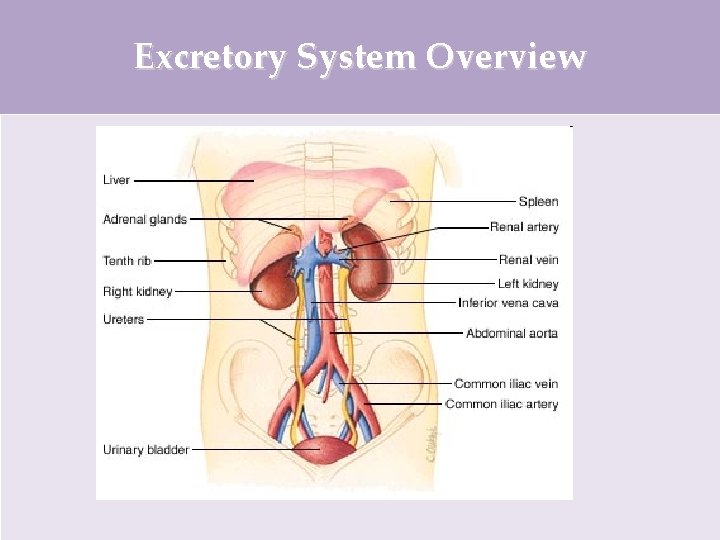
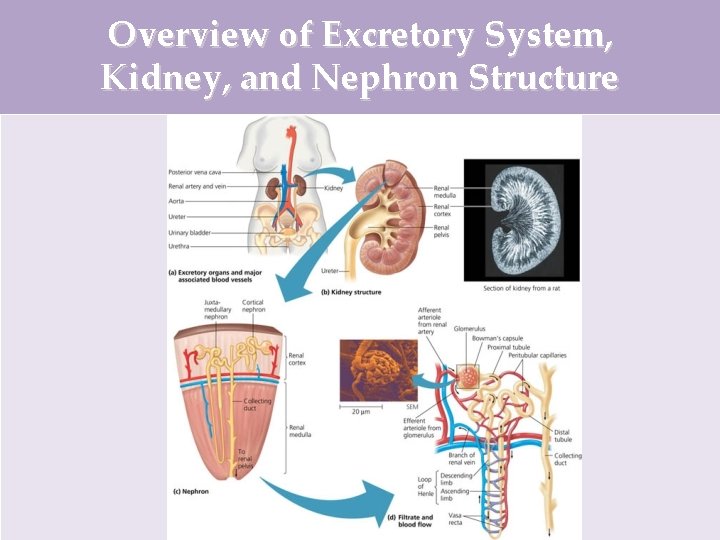
Excretory System Overview
Overview of Excretory System, Kidney, and Nephron Structure
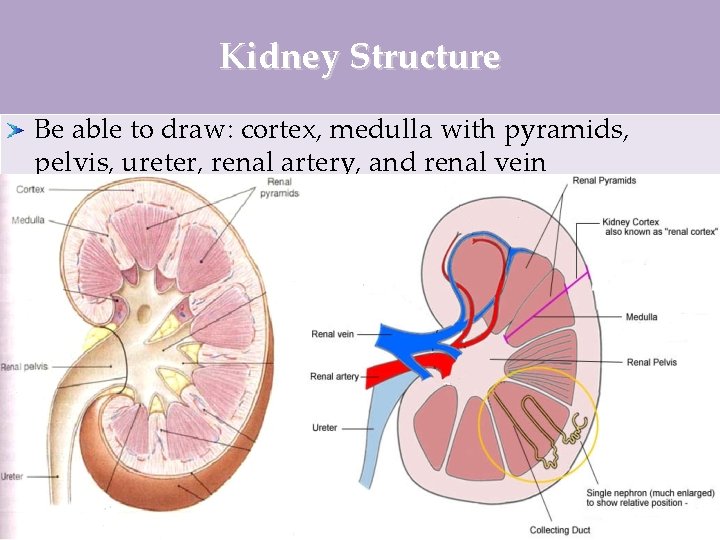
Kidney Structure Be able to draw: cortex, medulla with pyramids, pelvis, ureter, renal artery, and renal vein
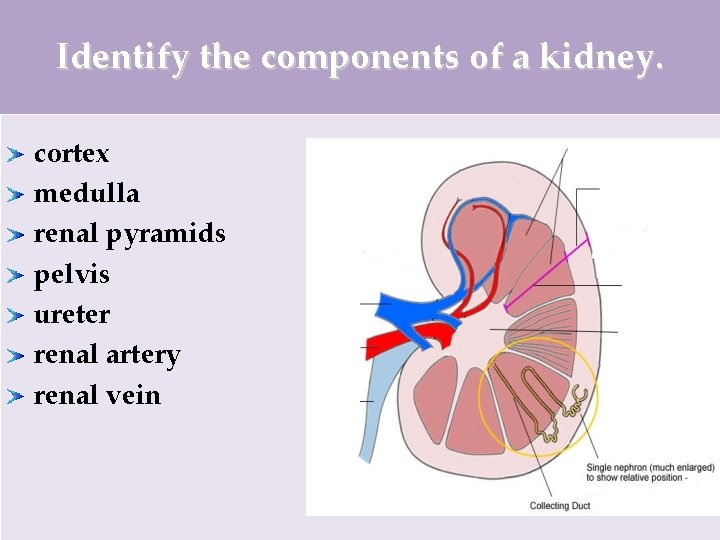
Identify the components of a kidney. cortex medulla renal pyramids pelvis ureter renal artery renal vein
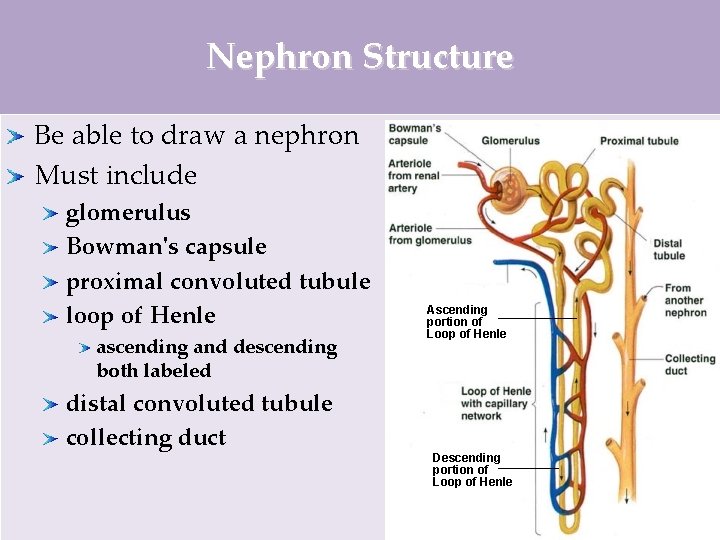
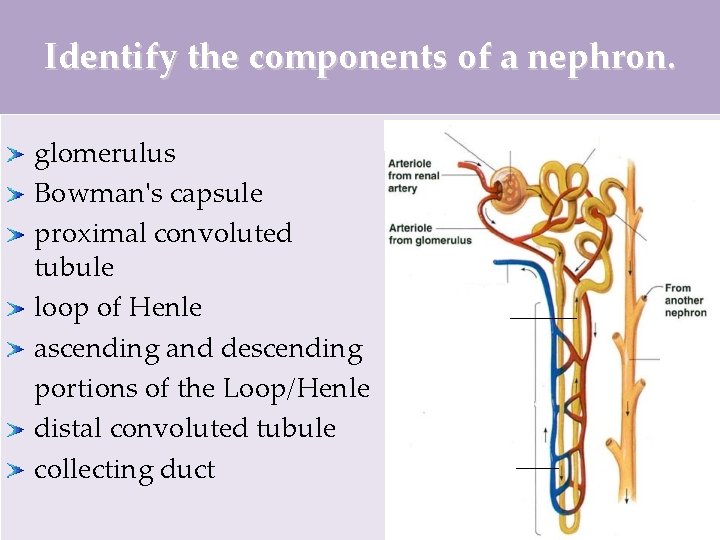
Nephron Structure Be able to draw a nephron Must include glomerulus Bowman's capsule proximal convoluted tubule loop of Henle ascending and descending both labeled distal convoluted tubule collecting duct Ascending portion of Loop of Henle Descending portion of Loop of Henle
Identify the components of a nephron. glomerulus Bowman's capsule proximal convoluted tubule loop of Henle ascending and descending portions of the Loop/Henle distal convoluted tubule collecting duct Ascending portion of Loop of Henle Descending portion of Loop of Henle
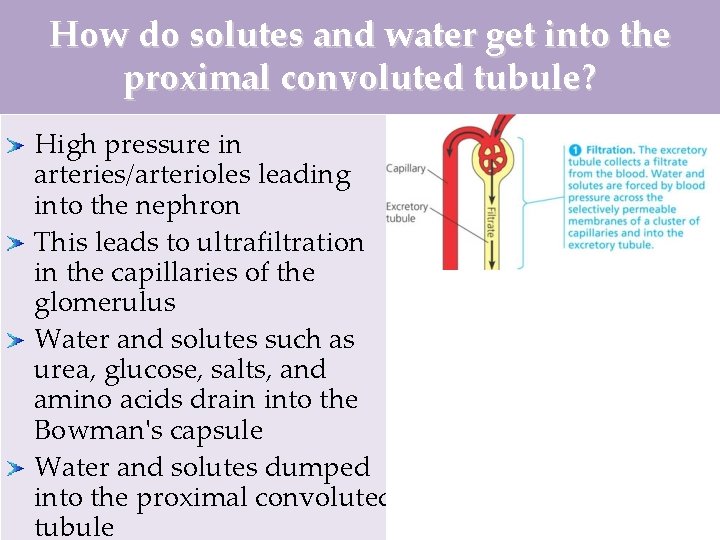
How do solutes and water get into the proximal convoluted tubule? High pressure in arteries/arterioles leading into the nephron This leads to ultrafiltration in the capillaries of the glomerulus Water and solutes such as urea, glucose, salts, and amino acids drain into the Bowman's capsule Water and solutes dumped into the proximal convoluted tubule
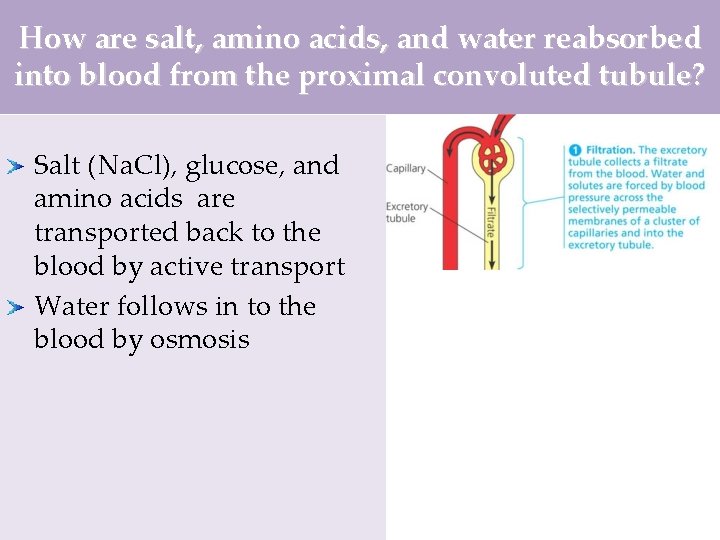
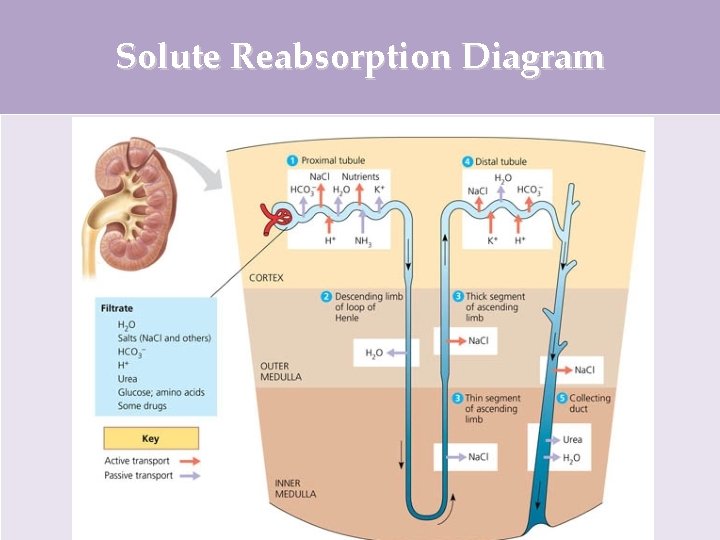
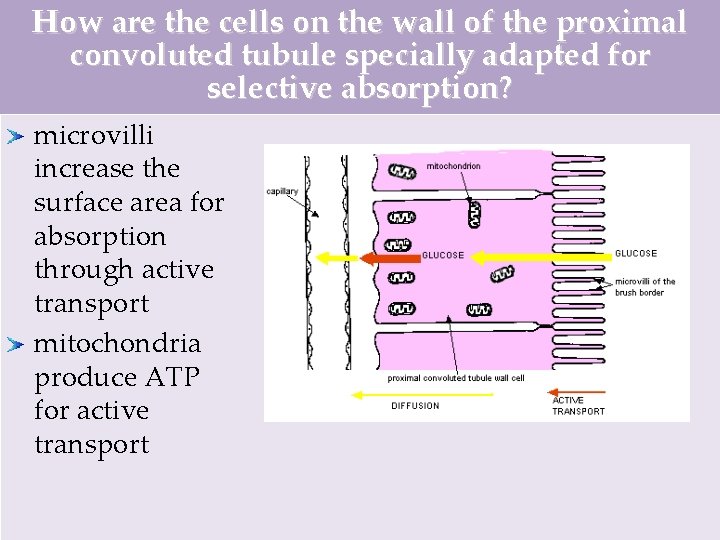
How are salt, amino acids, and water reabsorbed into blood from the proximal convoluted tubule? Salt (Na. Cl), glucose, and amino acids are transported back to the blood by active transport Water follows in to the blood by osmosis
Solute Reabsorption Diagram
How are the cells on the wall of the proximal convoluted tubule specially adapted for selective absorption? microvilli increase the surface area for absorption through active transport mitochondria produce ATP for active transport
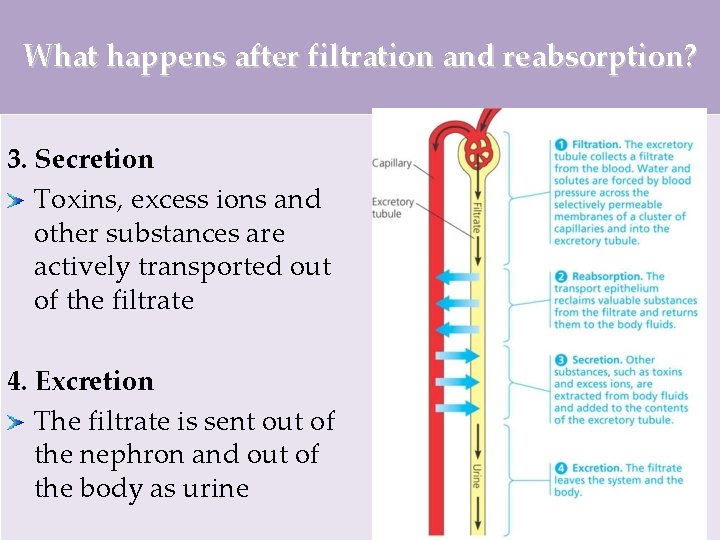
What happens after filtration and reabsorption? 3. Secretion Toxins, excess ions and other substances are actively transported out of the filtrate 4. Excretion The filtrate is sent out of the nephron and out of the body as urine
What are some reasons an individual’s blood solute concentration increase? vomiting and diarrhea makes the body lose water increased salt intake (from eating those potato chips. . . ) drinking alcohol adds ethanol and sugar drinking coffee adds sugar and caffeine excess sweating makes the body lose water if the individual isn’t drinking enough water
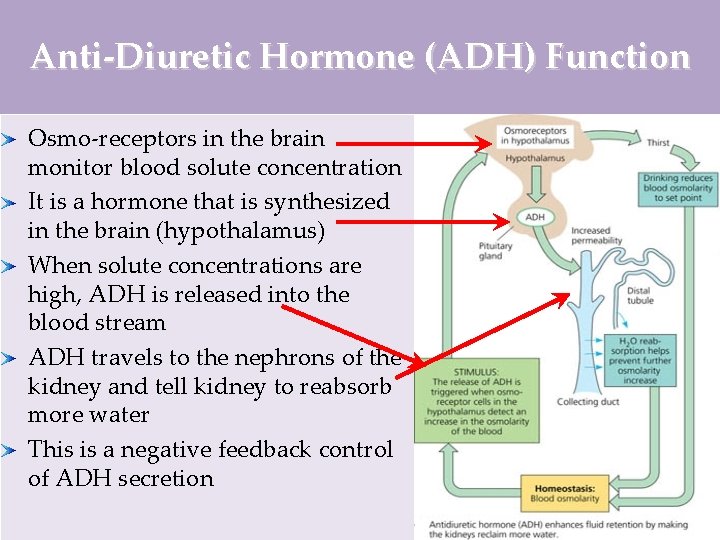
Anti-Diuretic Hormone (ADH) Function Osmo-receptors in the brain monitor blood solute concentration It is a hormone that is synthesized in the brain (hypothalamus) When solute concentrations are high, ADH is released into the blood stream ADH travels to the nephrons of the kidney and tell kidney to reabsorb more water This is a negative feedback control of ADH secretion
1. Blood vessels carry blood to and from the kidney. Draw a labelled diagram to show the internal structure of the kidney, including the vessels that are connected to it. (5 marks) cortex shown at the edge of kidney; medulla shown inside the cortex (with pyramids); pelvis shown on the concave side of the kidney; ureter shown connecting with the pelvis renal artery shown connected renal vein shown connected IB Exam Question
IB Exam Question 2. Draw a labelled diagram of a nephron. (6 marks) glomerulus; Bowman's capsule; proximal convoluted tubule; loop of Henle; ascending and descending both labeled; distal convoluted tubule; collecting duct;
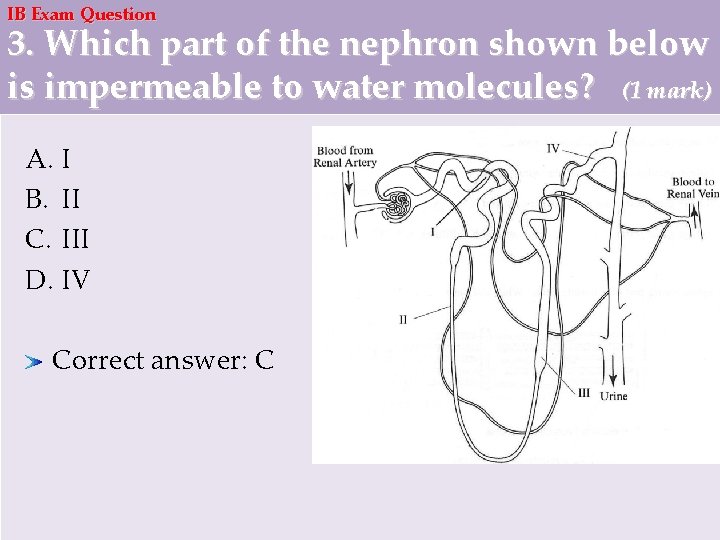
IB Exam Question 3. Which part of the nephron shown below is impermeable to water molecules? (1 mark) A. I B. II C. III D. IV Correct answer: C
IB Exam Question 4. Describe how the liquid and solutes that flow through the proximal convoluted tubule are produced. (2 marks) high pressure in arteries/arterioles leading into the nephron; this leads to ultrafiltration in the capillaries of the glomerulus; Water and solutes such as urea, glucose, salts, and amino acids drain into the Bowman's capsule which leads to the proximal convoluted tubule;
IB Exam Question 5. Explain how the structure of the proximal convoluted tubule cell is adapted to carry out selective re-absorption. (2 marks) microvilli increase the surface area for absorption / active transport; mitochondria produce ATP for active transport;
IB Exam Question 6. Name three solutes that are selectively reabsorbed back into the blood in the proximal convoluted tubule. (1 mark) glucose amino acids salt (Na. Cl) 7. Describe how these solutes and water are reabsorbed by the blood from the proximal convoluted tubule. Salt (Na. Cl), glucose, and amino acids are transported back to the blood by active transport Water follows in to the blood by osmosis
IB Exam Question 8. Where in the kidney does ultrafiltration take place? (1 mark) A. Glomerulus B. Loop of Henlé C. Proximal tubule D. Collecting ducts Correct answer: A
IB Exam Question 9. What can be changed in the kidney over a period of time in order to carry out the process of osmoregulation? (1 mark) A. The amount of blood flowing to the kidney B. The amount of fluid filtered from the blood in the glomeruli C. The amount of solutes selectively reabsorbed in the proximal convoluted tubule D. The amount of water reabsorbed in the collecting ducts Correct answer: D
IB Exam Question 10. State three reasons why a person’s blood plasma solute concentration may increase. (3 marks) vomiting / diarrhoea increase salt intake; drink alcohol / coffee; excess sweating / lack of water intake;
IB Exam Question 11. How does anti-diuretic hormone (ADH) function in osmoregulation. It is a hormone that is synthesized in the brain (hypothalamus) Osmo-receptors in the brain monitor blood solute concentration. When solute concentrations are high, ADH is released into the blood stream The hormone travels to the nephrons of the kidney and signal kidney to reabsorb more water. , This is a negative feedback control of ADH secretion;
IB Exam Question 12. Anti-diuretic hormone has its main effect on which part of the nephron? (1 mark) A. Proximal tubule B. Bowman’s capsule C. Loop of Henle D. Collecting duct Correct answer: D