
11 3 Crime Scene Sketching Detailed Drawing DISADVANTAGES



- Slides: 20
11 -3 Crime Scene Sketching & Detailed Drawing
DISADVANTAGES OF PHOTOS TO RECORD CRIME SCENES LACK DEPTH FAIL TO PROVIDE ACCURATE REPRESENTATION OF DISTANCES BETWEEN ITEMS OF EVIDENCE CAMERA ANGLE AND DISTANCE FROM WHICH PHOTOGRAPH IS TAKEN CAN LEAD TO FALSE INTERPRETATION OF CRITICAL RELATIONSHIPS AMONG OBJECTS
THE ADVANTAGE OF USING SCENE SKETCHES AND DETAILED DRAWINGS IS: • TO PROVIDE MORE ACCURATE INFORMATION TO THE COURT ABOUT EVENTS WHICH OCCURRED AT THE SCENE
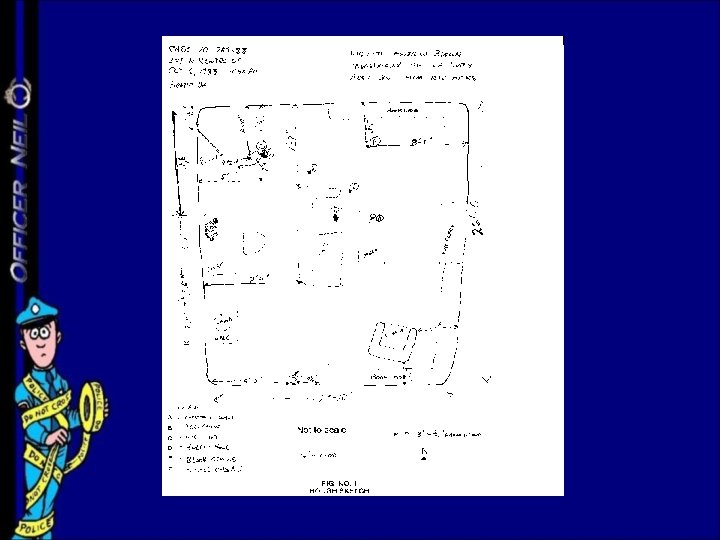
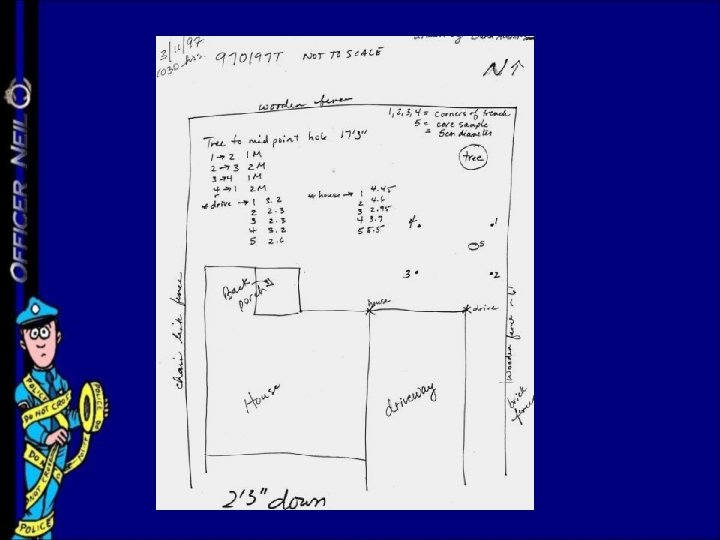
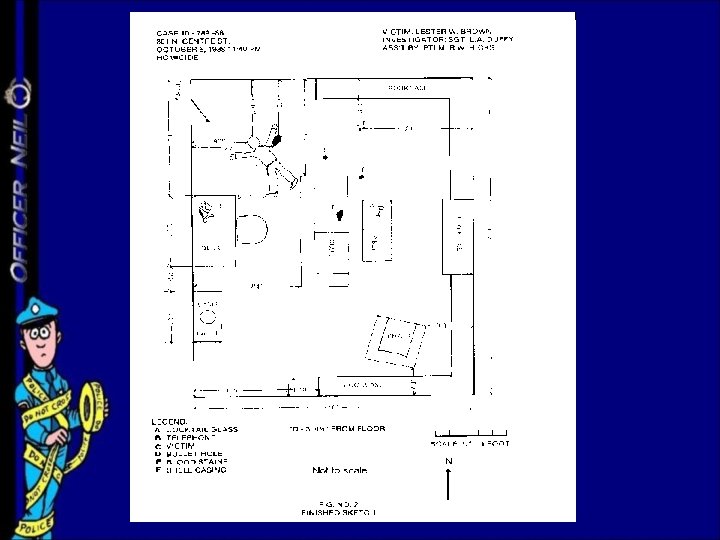
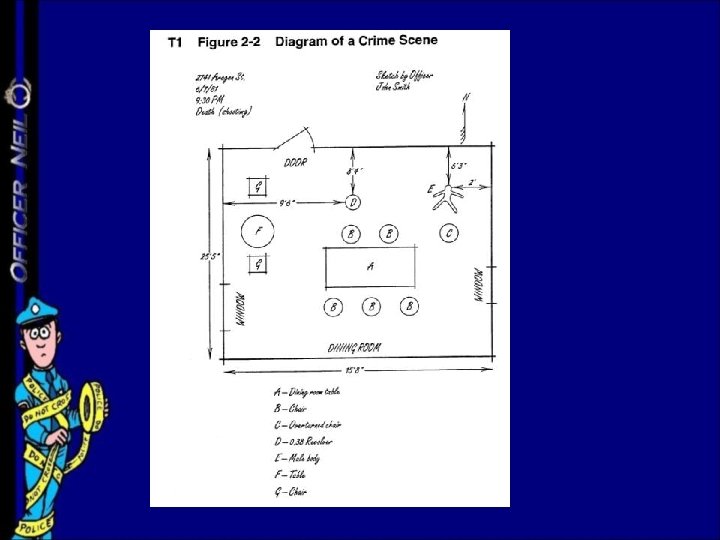
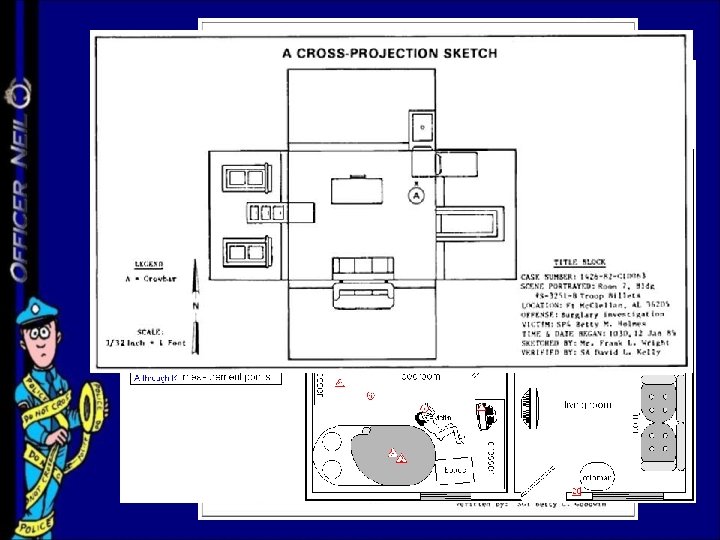
SPO #1 MAKING A CRIME SCENE SKETCH Draw a rough outline of the room or area Include the dimensions of the room or area drawn Include distances between objects shown Include dimensions of large pieces of furniture Have another officer verify your measurements Show all measurements on the drawing
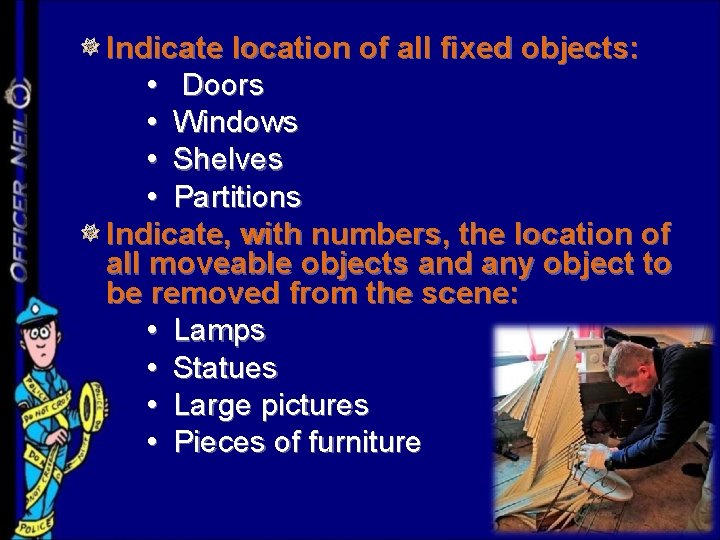
Indicate location of all fixed objects: • Doors • Windows • Shelves • Partitions Indicate, with numbers, the location of all moveable objects and any object to be removed from the scene: • Lamps • Statues • Large pictures • Pieces of furniture
• Create a legend on the sketch and include: • Case number • Address of building or area • Date • Victim’s name, if known • Name of officer who made sketch • Name of other officers present • Type of crime
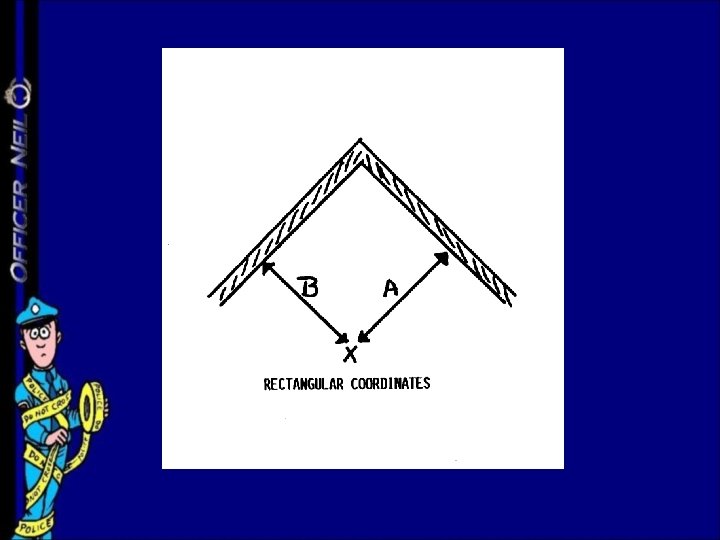
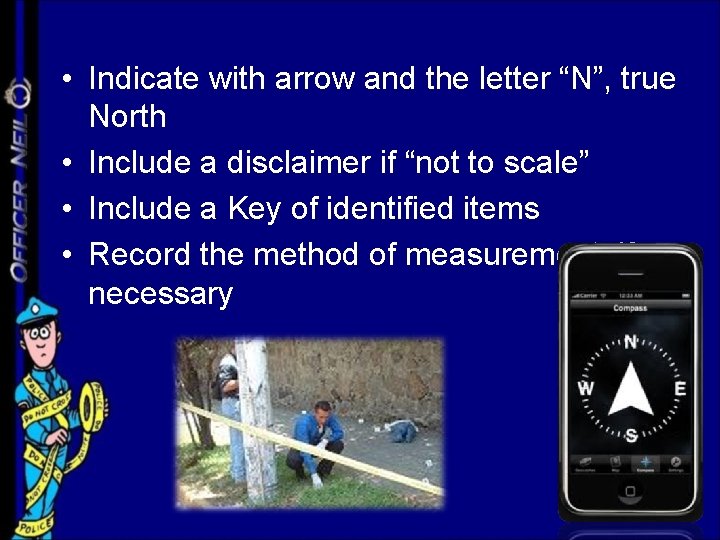
• Indicate with arrow and the letter “N”, true North • Include a disclaimer if “not to scale” • Include a Key of identified items • Record the method of measurement, if necessary
SPO # 2 MAKING A DETAILED, DRAWING FINAL INCLUDE A DISCLAIMER IF DETAILED DRAWING IS NOT TO SCALE STRAIGHTEN ALL LINES – USE TEMPLATE ROUND ALL CIRCLES – USE TEMPLATE TYPE ALL LABELS AND MEASUREMENTS CREATE A DRAWING IN A SIZE EASILY DUPLICATED USE PERMANENT MARKER FOR DRAWING
www. Officer. Neil. com