
11 2 Properties of the Atmosphere Objectives Students
11. 2 Properties of the Atmosphere
Objectives Students will be able to identify three properties of the atmosphere and how they interact. Students will be able to explain why atmospheric properties change with changes in altitude.
Word of the Day Density: The mass per unit volume of a material. Exert: To put forth.
11. 2 Properties of the Atmosphere P. 289 Main Idea Atmospheric properties, such as temperature, air pressure and humidity describe atmospheric conditions.
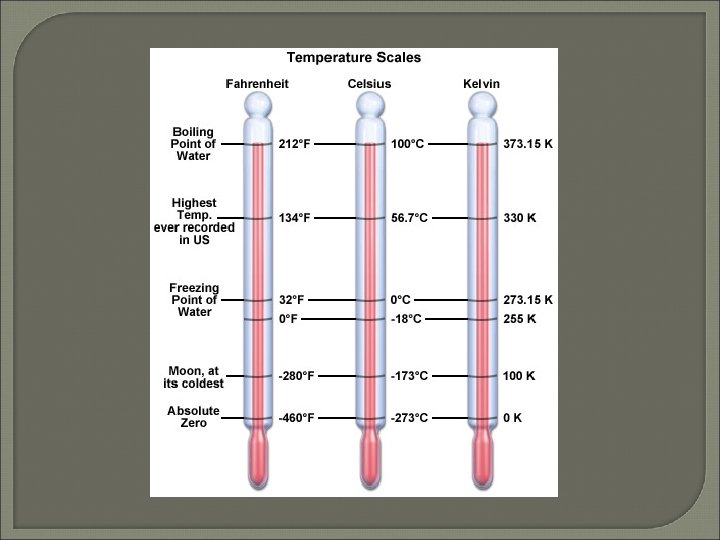
11. 2 Properties of the Atmosphere • P. 289 • • Temperature: A measure of movement. The faster the particles of a substance move, the higher is their temperature. 3 Scales of Measurement: 1. Fahrenheit (˚F) (Most common in US) 2. Celsius (˚C) • These are based on the boiling and freezing points of water. 3. Kelvin (˚K) • Based on Absolute Zero – where all movement of particles stops.
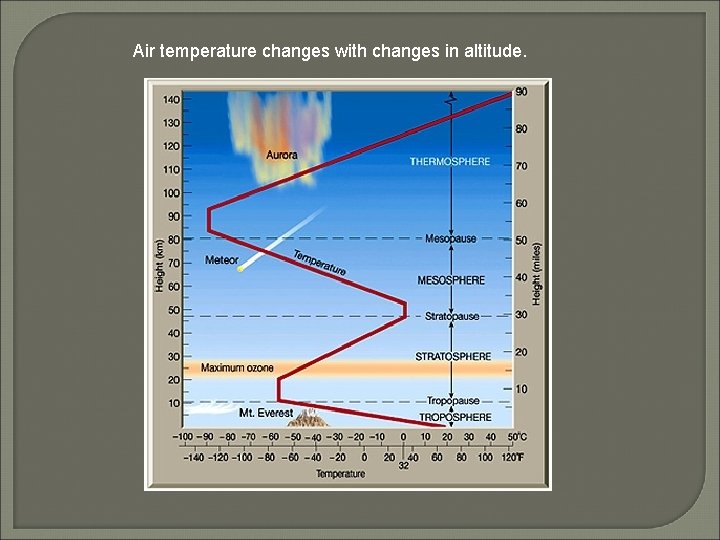
Air temperature changes with changes in altitude.
11. 2 Properties of the Atmosphere P. 290 Air pressure: The weight of air exerted on a surface. • Units: N / m² or millibars (mb. ) 100 N / m² = 1 mb. At sea-level atmosphere exerts pressure of 1000 mb. As you go higher in the atmosphere the air pressure decreases.
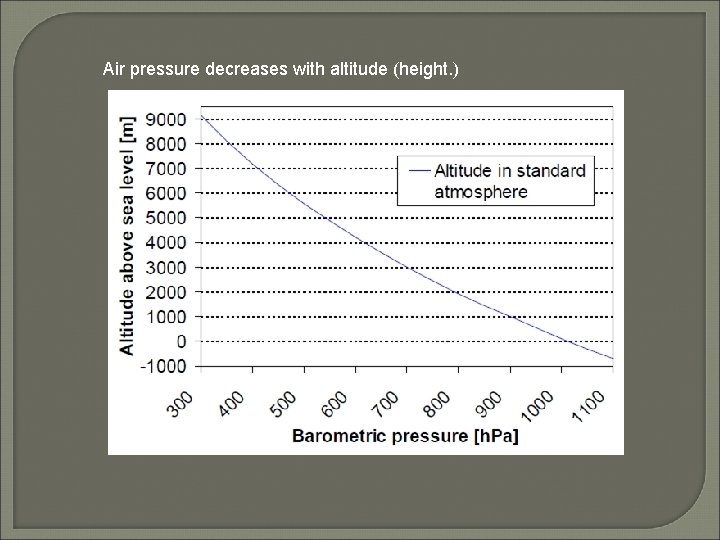
Air pressure decreases with altitude (height. )
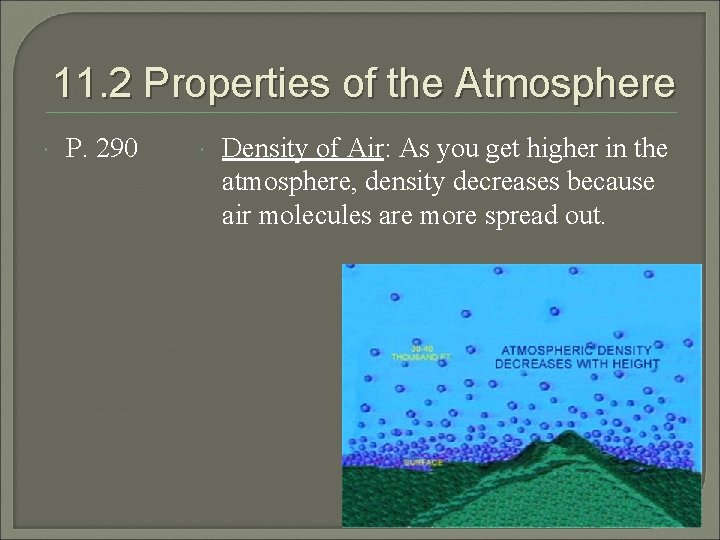
11. 2 Properties of the Atmosphere P. 290 Density of Air: As you get higher in the atmosphere, density decreases because air molecules are more spread out.
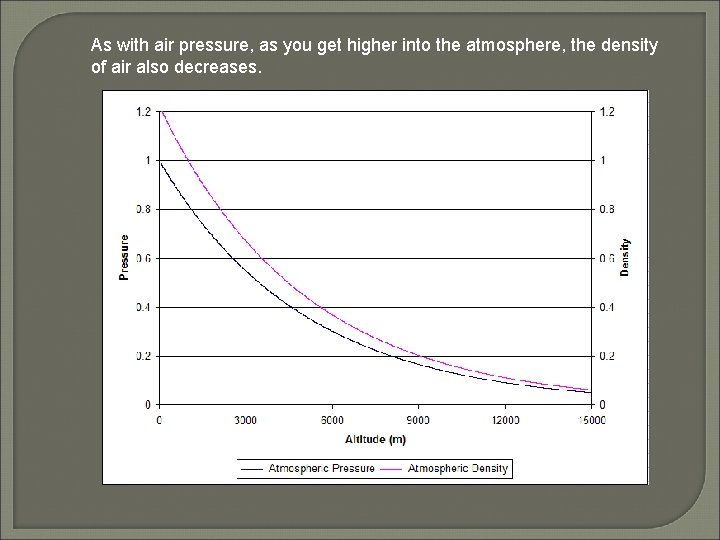
As with air pressure, as you get higher into the atmosphere, the density of air also decreases.
11. 2 Properties of the Atmosphere P. 291 Pressure – Temperature – Density Relationship: • Air pressure and Temperature: For air with the same density, warm air is at a higher pressure than cool air. • Air pressure and Density: For air with the same temperature high density air is at higher pressure than low density air. • Temperature and Density: At the same pressure, warmer air is less dense than is cooler air.
11. 2 Properties of the Atmosphere P. 291 Temperature Inversion: When warm air is on top of cooler air (occurs in troposphere. ) • Causes: Cold clear nights, Earth does not P. 292 radiate heat to lower levels of atmosphere. • Effects: Fog, low lying clouds and smog – smoke and fog (Haze). • We normally expect air to become colder as we increase in altitude in the troposphere.
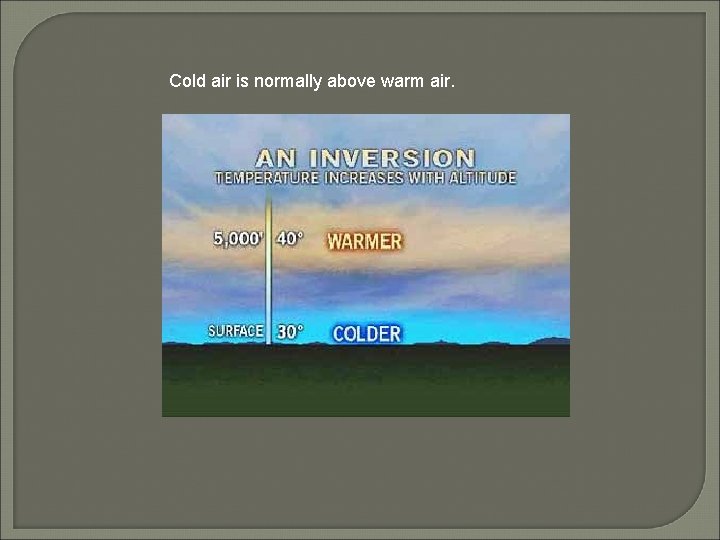
Cold air is normally above warm air.
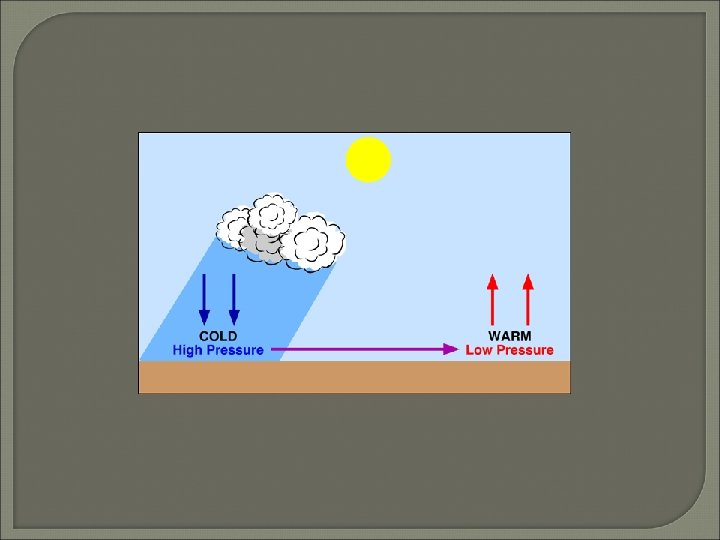
11. 2 Properties of the Atmosphere 9. 293 Wind: Warm air is less dense than cool air. • Air moves from more dense areas to less dense areas (WIND. ) • Differences in air densities caused by differences in heating Earth’s of surface.
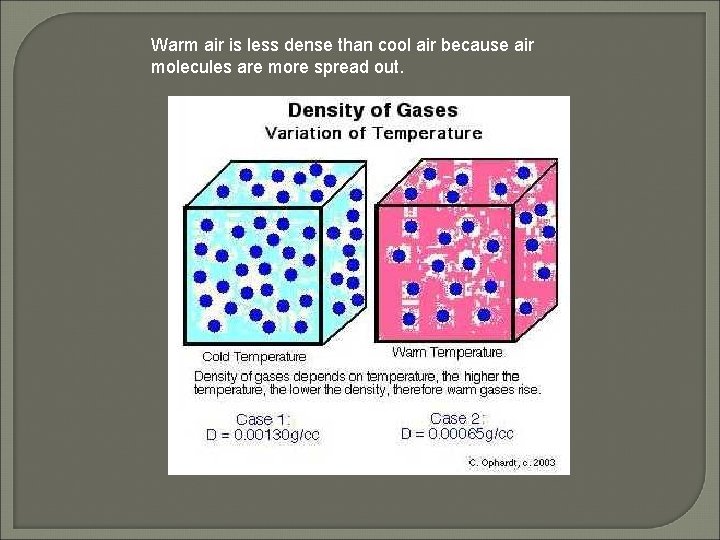
Warm air is less dense than cool air because air molecules are more spread out.
11. 2 Properties of the Atmosphere 9. 293 Wind and Pressure Differences: • In atmosphere air pressure increases as density increases. • Result: Air moves from regions of high pressure (COLD DENSE) to regions of low pressure (WARM – LESS DENSE. )
11. 2 Properties of the Atmosphere 9. 293 Wind Speed and Altitude: • Earth’s surface creates friction with wind (slows it down. ) • Higher in the atmosphere wind blows faster.
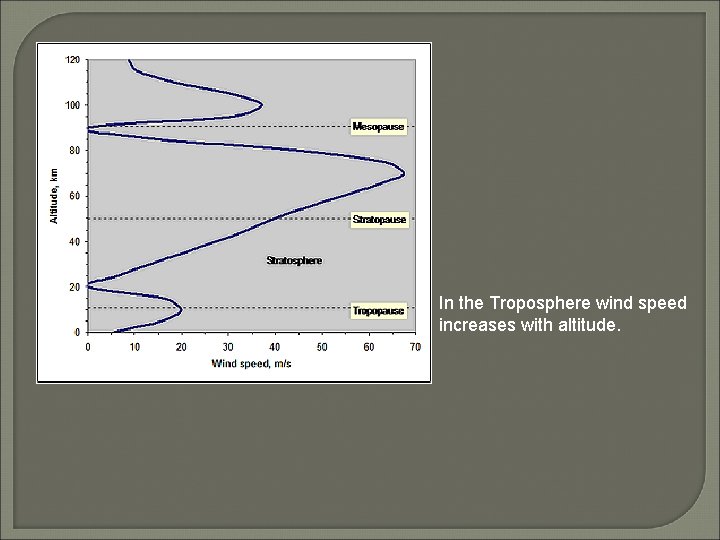
In the Troposphere wind speed increases with altitude.
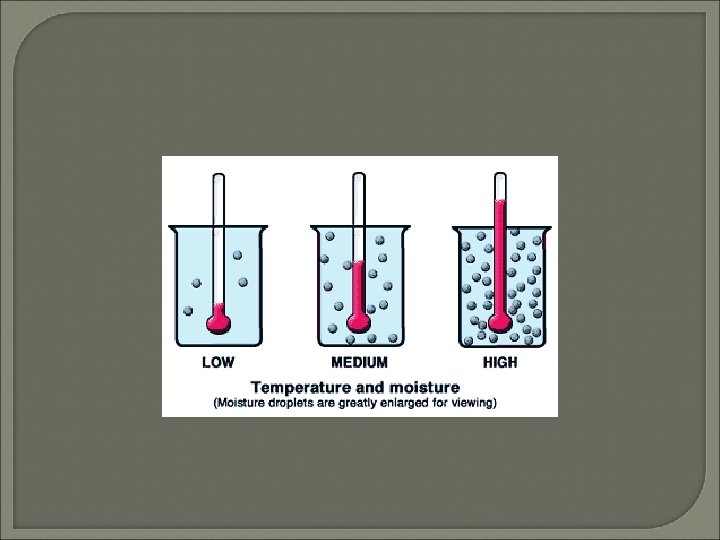
11. 2 Properties of the Atmosphere 9. 294 Humidity: The amount of water vapor in a given location of the atmosphere. • Expressed as relative humidity and dew point. • Saturation: when the amount of water vapor in the air has reached its maximum point. (The air can’t hold anymore. )
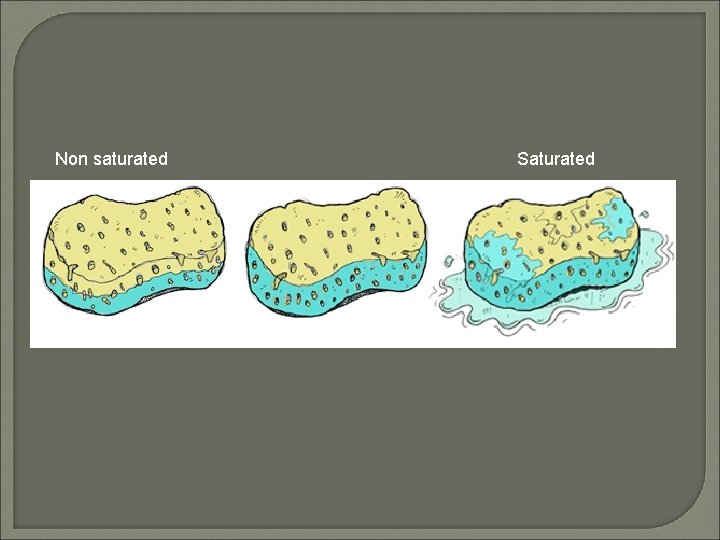
Non saturated Saturated
11. 2 Properties of the Atmosphere 9. 294 Relative Humidity: Amount of water vapor in air relative to amount of vapor needed for air to reach saturation (expressed as a percent. ) • Example: Forecast says relative humidity = 50% Means the air is holding half of the vapor it is capable of holding.
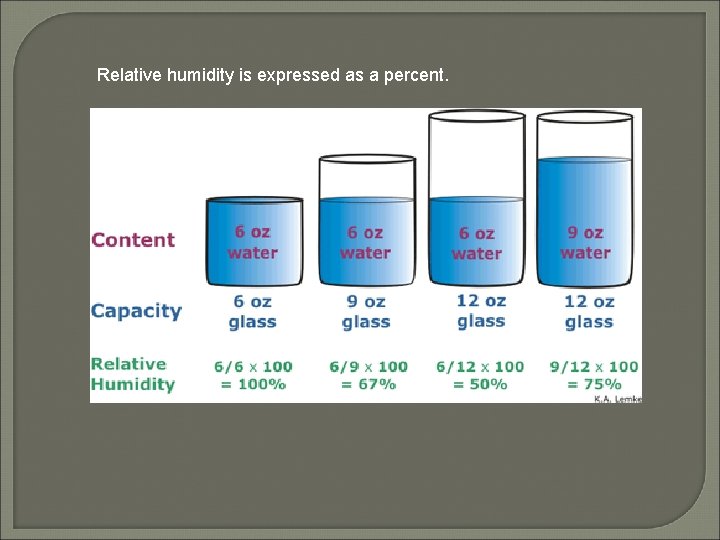
Relative humidity is expressed as a percent.
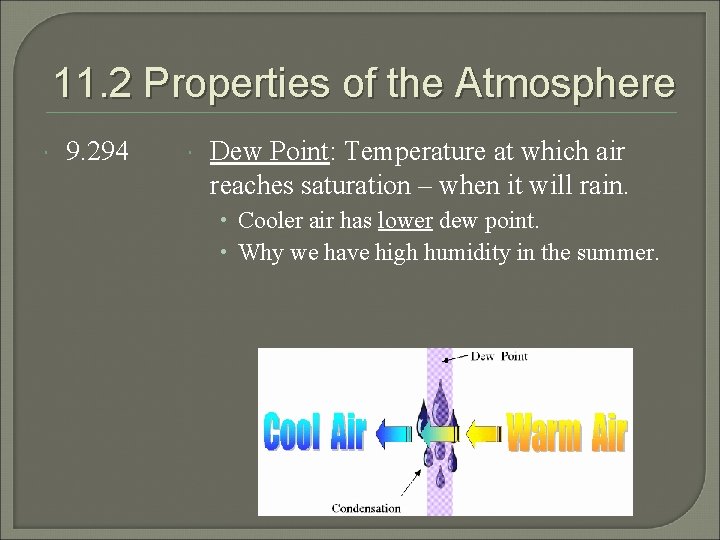
11. 2 Properties of the Atmosphere 9. 294 Dew Point: Temperature at which air reaches saturation – when it will rain. • Cooler air has lower dew point. • Why we have high humidity in the summer.
- Slides: 26