
11 1 Describing Chemical Reactions Writing Chemical Equations
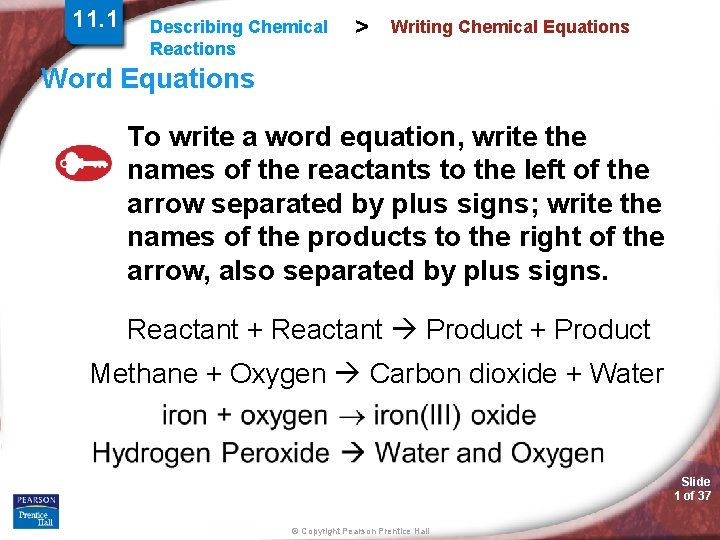
11. 1 Describing Chemical Reactions > Writing Chemical Equations Word Equations To write a word equation, write the names of the reactants to the left of the arrow separated by plus signs; write the names of the products to the right of the arrow, also separated by plus signs. Reactant + Reactant Product + Product Methane + Oxygen Carbon dioxide + Water Slide 1 of 37 © Copyright Pearson Prentice Hall
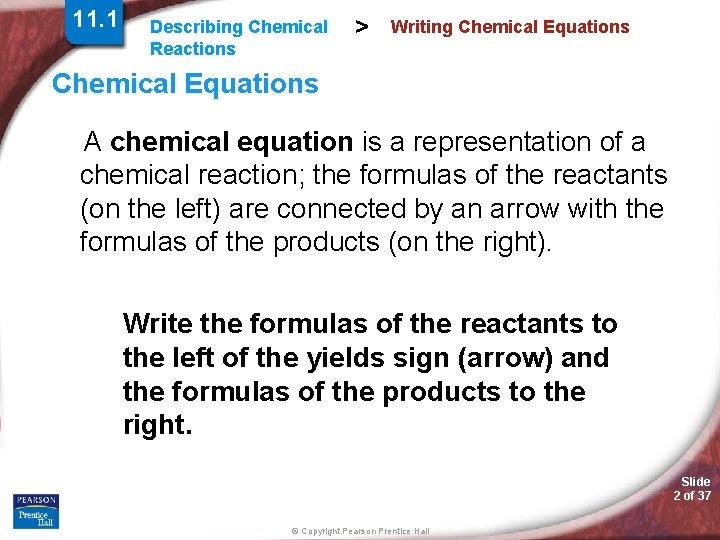
11. 1 Describing Chemical Reactions > Writing Chemical Equations A chemical equation is a representation of a chemical reaction; the formulas of the reactants (on the left) are connected by an arrow with the formulas of the products (on the right). Write the formulas of the reactants to the left of the yields sign (arrow) and the formulas of the products to the right. Slide 2 of 37 © Copyright Pearson Prentice Hall
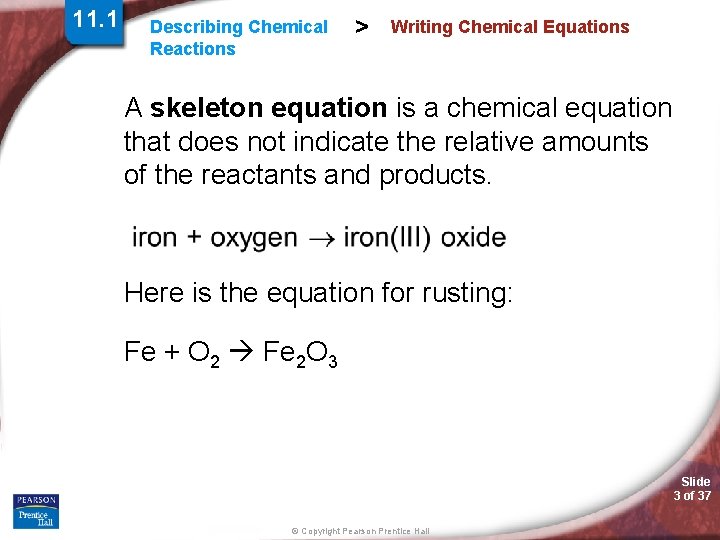
11. 1 Describing Chemical Reactions > Writing Chemical Equations A skeleton equation is a chemical equation that does not indicate the relative amounts of the reactants and products. Here is the equation for rusting: Fe + O 2 Fe 2 O 3 Slide 3 of 37 © Copyright Pearson Prentice Hall
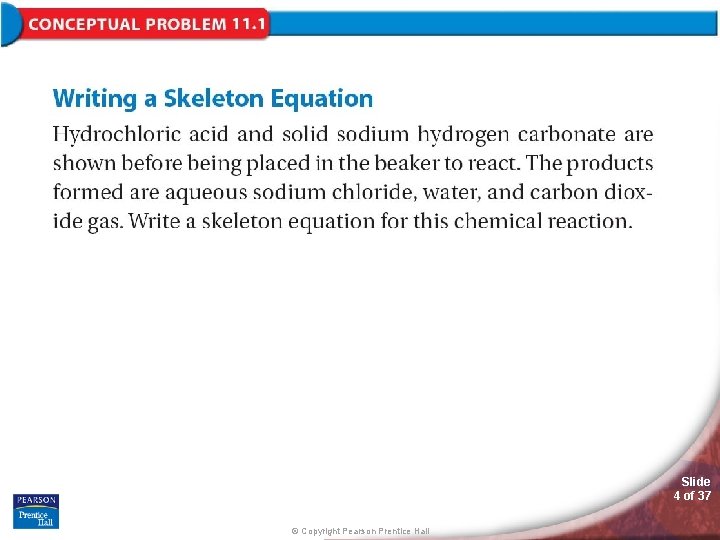
Slide 4 of 37 © Copyright Pearson Prentice Hall
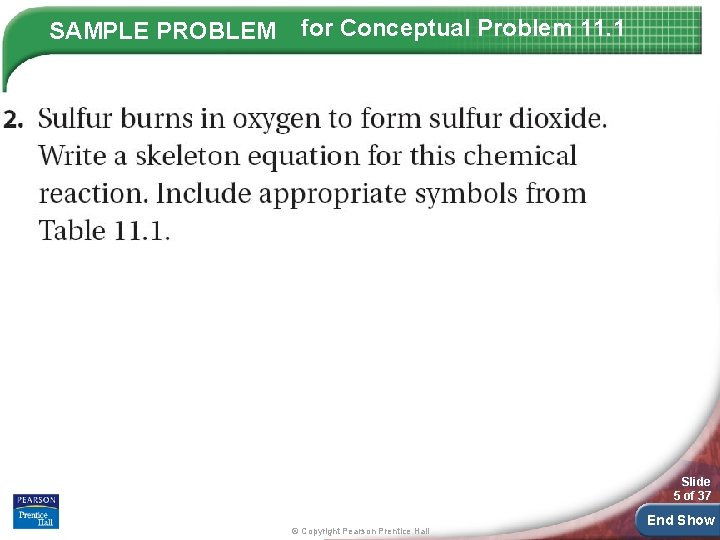
SAMPLE PROBLEM for Conceptual Problem 11. 1 Slide 5 of 37 © Copyright Pearson Prentice Hall End Show
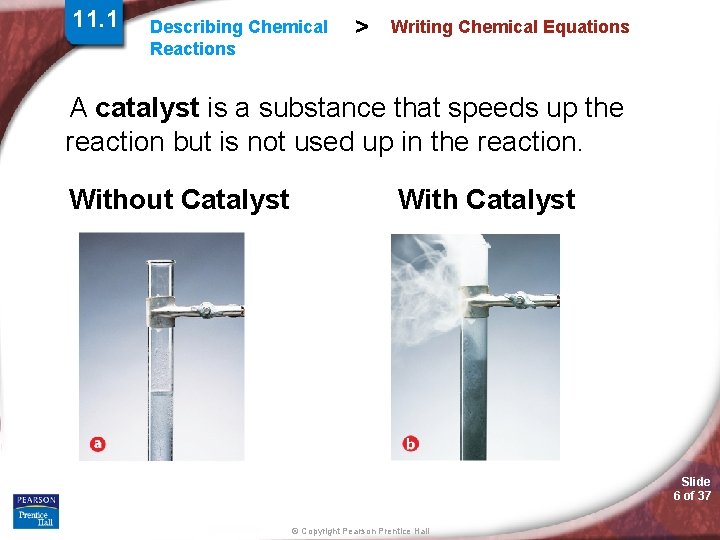
11. 1 Describing Chemical Reactions > Writing Chemical Equations A catalyst is a substance that speeds up the reaction but is not used up in the reaction. Without Catalyst With Catalyst Slide 6 of 37 © Copyright Pearson Prentice Hall
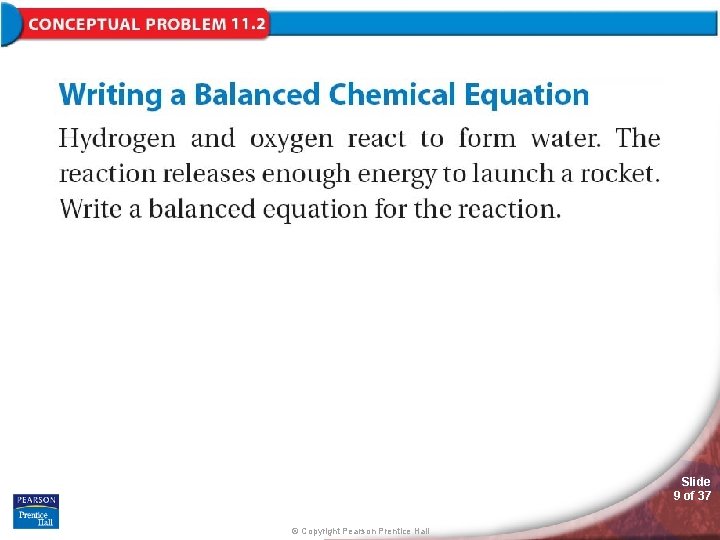
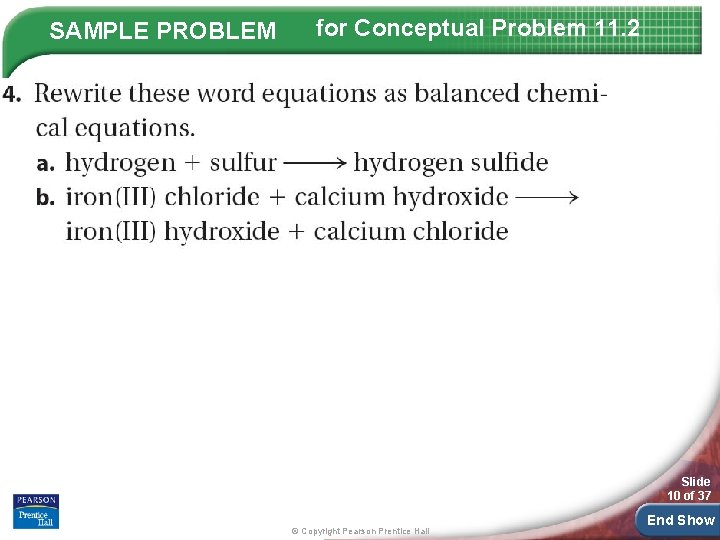
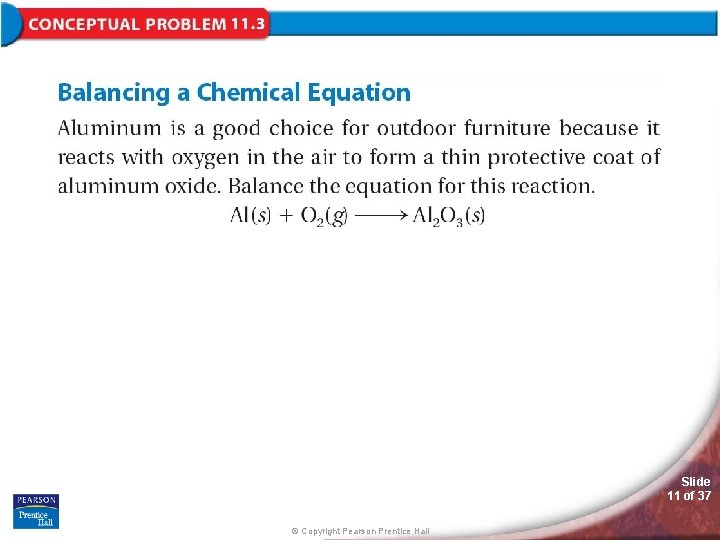
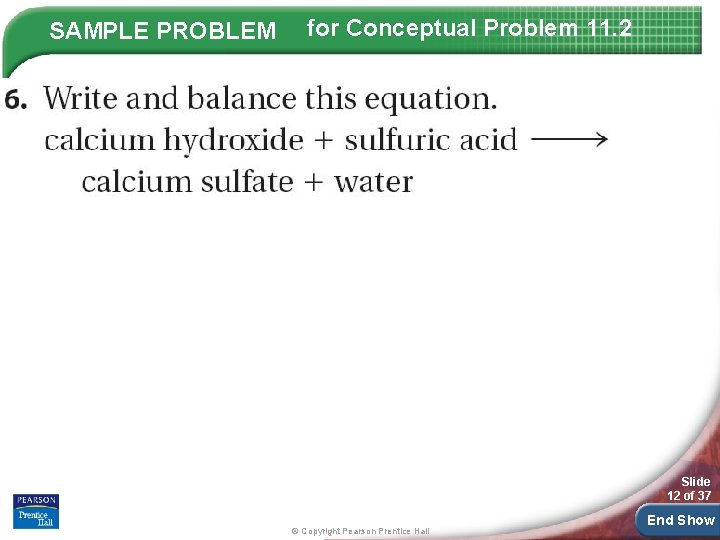
11. 1 Describing Chemical Reactions > Balancing Chemical Equations To write a balanced chemical equation, first write the skeleton equation. Then use coefficients to balance the equation so that it obeys the law of conservation of mass. Slide 7 of 37 © Copyright Pearson Prentice Hall
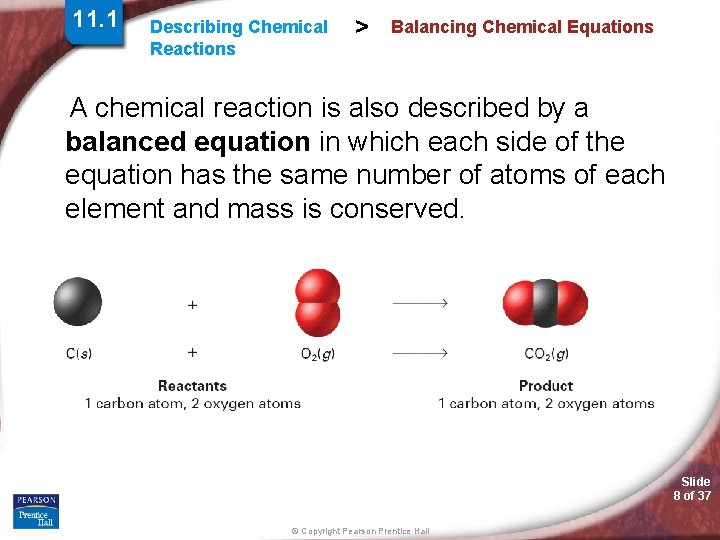
11. 1 Describing Chemical Reactions > Balancing Chemical Equations A chemical reaction is also described by a balanced equation in which each side of the equation has the same number of atoms of each element and mass is conserved. Slide 8 of 37 © Copyright Pearson Prentice Hall
Slide 9 of 37 © Copyright Pearson Prentice Hall
SAMPLE PROBLEM for Conceptual Problem 11. 2 Slide 10 of 37 © Copyright Pearson Prentice Hall End Show
Slide 11 of 37 © Copyright Pearson Prentice Hall
SAMPLE PROBLEM for Conceptual Problem 11. 2 Slide 12 of 37 © Copyright Pearson Prentice Hall End Show
- Slides: 12