
101012 Objective To begin to explore how scientists
10/10/12 Objective: To begin to explore how scientists trace the evolutionary history of organisms Entrance Ticket: What are 3 important events in the history of life on Earth? Explain why you chose each event.

Homework Take Home Quiz Chapter 13 and 14 Multiple Choice: 45 minutes Essay: 12 minutes No Book, No Notes

Presentations HWE
10/11/12 Objective: To begin to explore how scientists trace the evolutionary history of organisms Entrance Ticket: What are the 4 stages of the origin of life on Earth? Describe the importance of 2 of the 4 macromolecules that were involved in this process. Hand in: Answer Sheet, Video Notes, Progress Chart

10/12/12 Objective: To begin to explore how scientists trace the evolutionary history of organisms Entrance Ticket: What are shared ancestral characters? Provide an example. What are shared derived characters? Provide an example. When can a shared ancestral character be a shared derived character?
Announcements HW Phylogenetic Trees BLAST – n n n Read the Lab Complete Directed Notes Bring Questions
Shared characters are used to construct phylogenetic trees Once homologous characters have been identified, they can be used to infer a phylogeny
Shared Ancestral and Shared Derived Characters In comparison with its ancestor, an organism has both shared and different characteristics
A shared ancestral character is a character that originated in an ancestor of the taxon A shared derived character is an evolutionary novelty unique to a particular clade A character can be both ancestral and derived, depending on the context
Inferring Phylogenies Using Derived Characters When inferring evolutionary relationships, it is useful to know in which clade a shared derived character first appeared
Your Task Organize the organisms you have Determine the Outgroup Determine the shared derived character of the remaining organisms Create a phylogenetic tree Include hatchmarks Pose 3 questions regarding relatedness
The 3 Big Ideas of Evolution Common Ancestry Processes of Evolutionary Change Patterns of Evolutionary Relationships
Patterns Phylogenetic Trees Like a family tree! Shows evolutionary relationships between species n n Demonstrates common ancestry Relies on Fossil and Anatomical evidence Molecular Evidence
Overview: Investigating the Tree of Life Phylogeny is the evolutionary history of a species or group of related species The discipline of systematics classifies organisms and determines their evolutionary relationships Systematists use fossil, molecular, and genetic data to infer evolutionary relationships
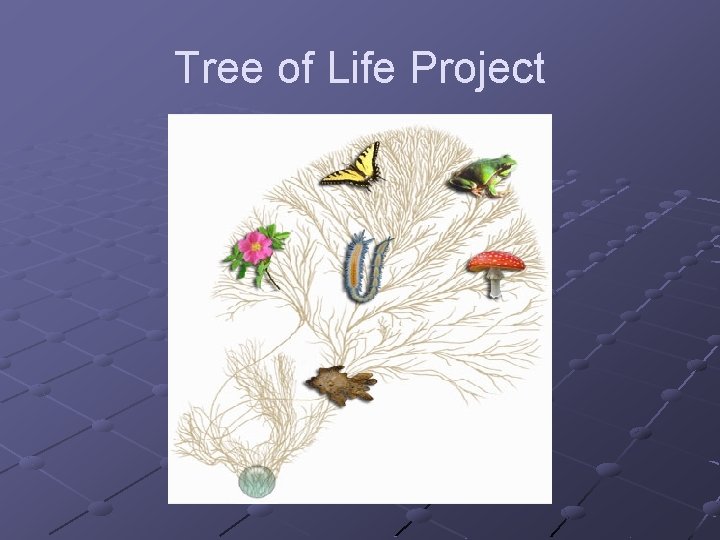
Tree of Life Project
How are plants, mushrooms and human connected in the tree of life? What evidence would we need to answer that question?
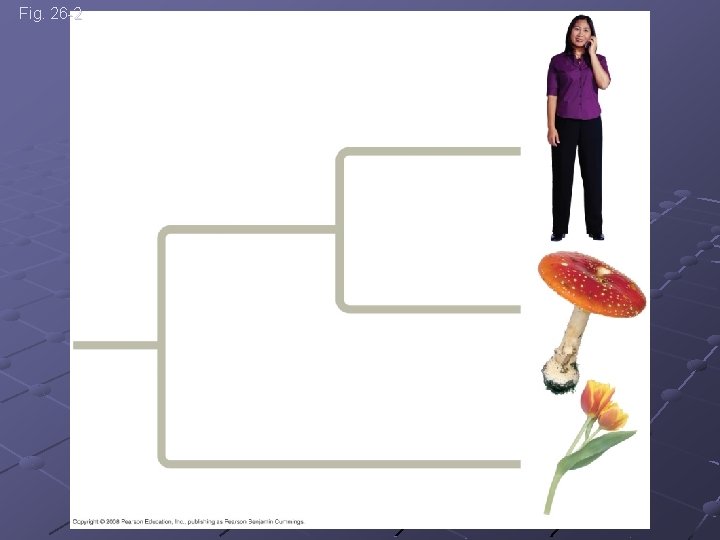
Fig. 26 -2
Linking Classification and Phylogeny Systematists depict evolutionary relationships in branching phylogenetic trees
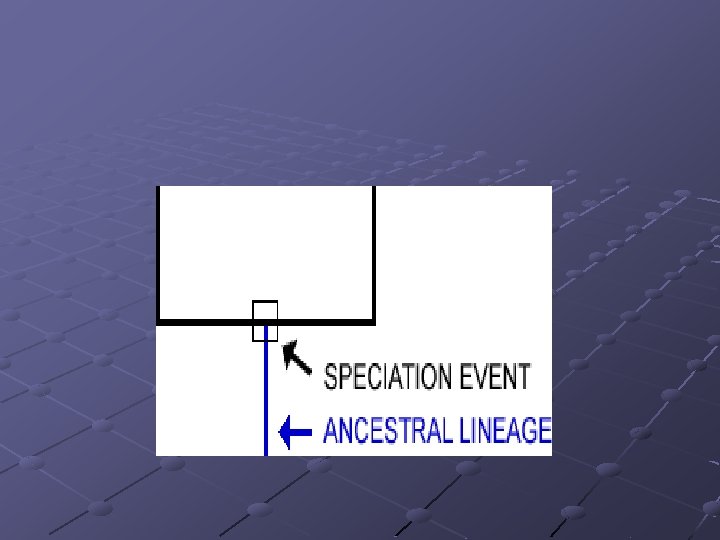
A phylogenetic tree represents a hypothesis about evolutionary relationships Each branch point represents the divergence of two species Sister taxa are groups that share an immediate common ancestor
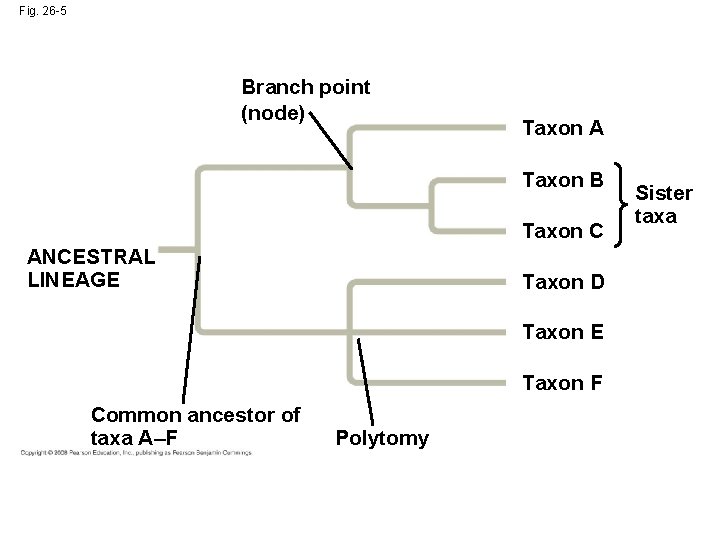
Fig. 26 -5 Branch point (node) Taxon A Taxon B Taxon C ANCESTRAL LINEAGE Taxon D Taxon E Taxon F Common ancestor of taxa A–F Polytomy Sister taxa
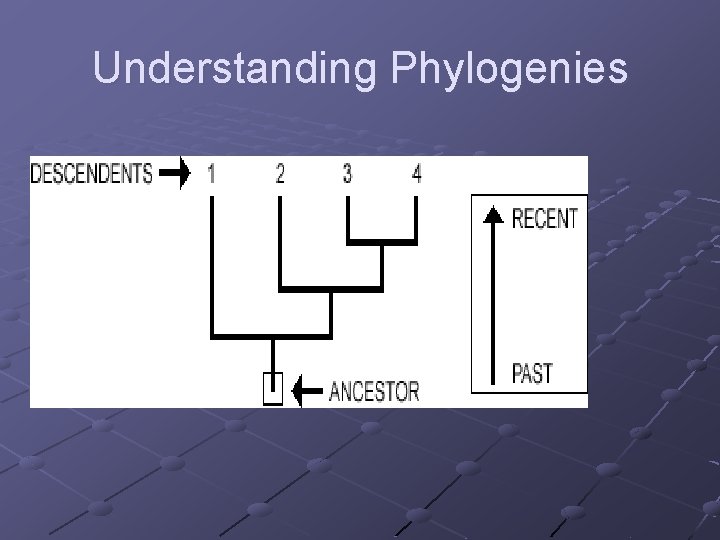
Understanding Phylogenies
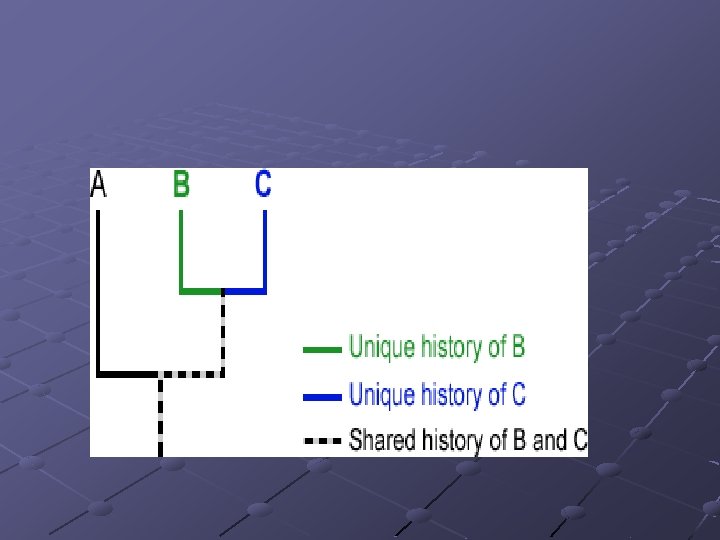
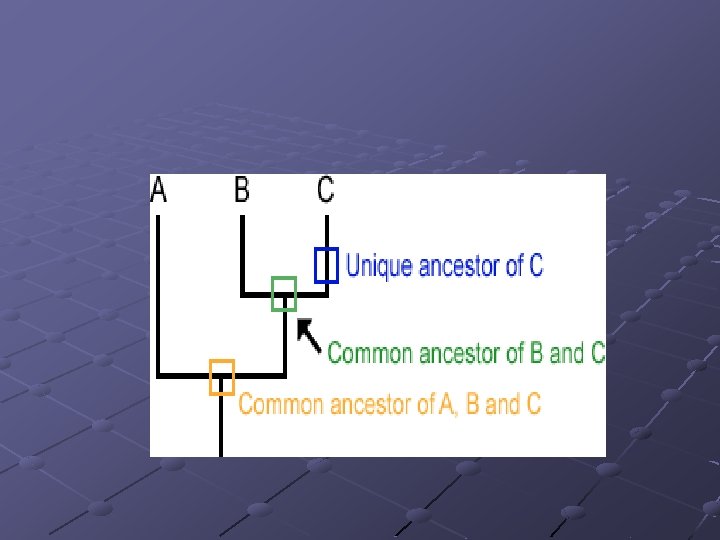
What We Can and Cannot Learn from Phylogenetic Trees Phylogenetic trees do show patterns of descent Phylogenetic trees do not indicate when species evolved or how much genetic change occurred in a lineage It shouldn’t be assumed that a taxon evolved from the taxon next to it
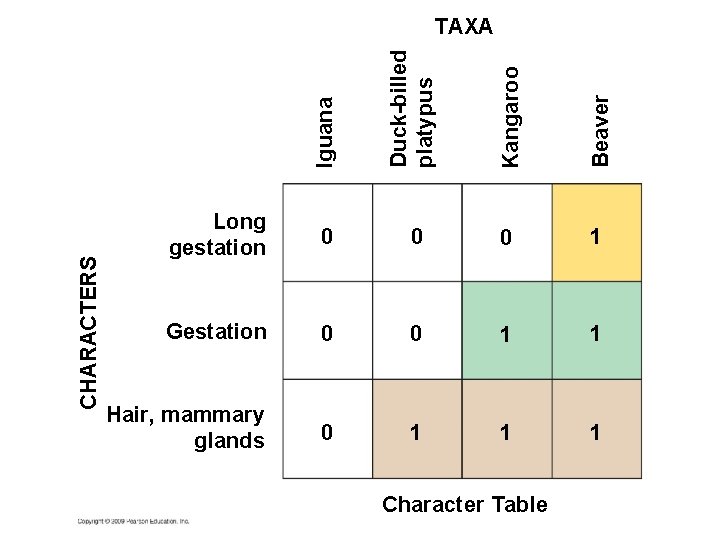
Iguana Duck-billed platypus Kangaroo Beaver CHARACTERS TAXA Long gestation 0 0 0 1 Gestation 0 0 1 1 Hair, mammary glands 0 1 1 1 Character Table
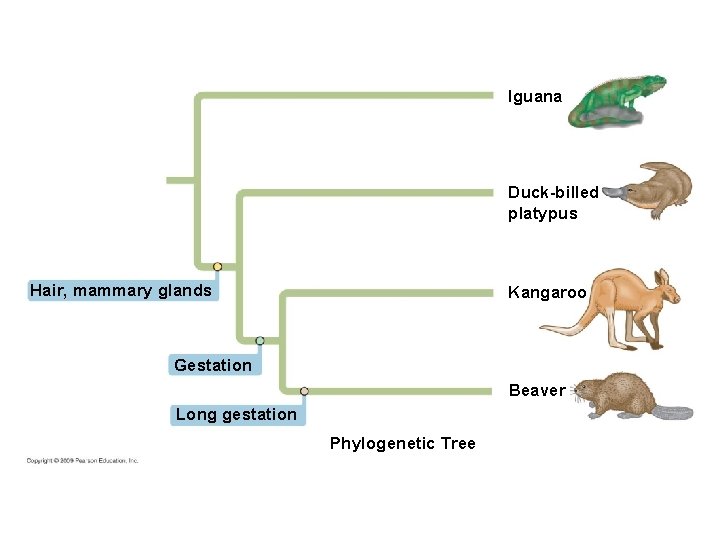
Iguana Duck-billed platypus Hair, mammary glands Kangaroo Gestation Beaver Long gestation Phylogenetic Tree
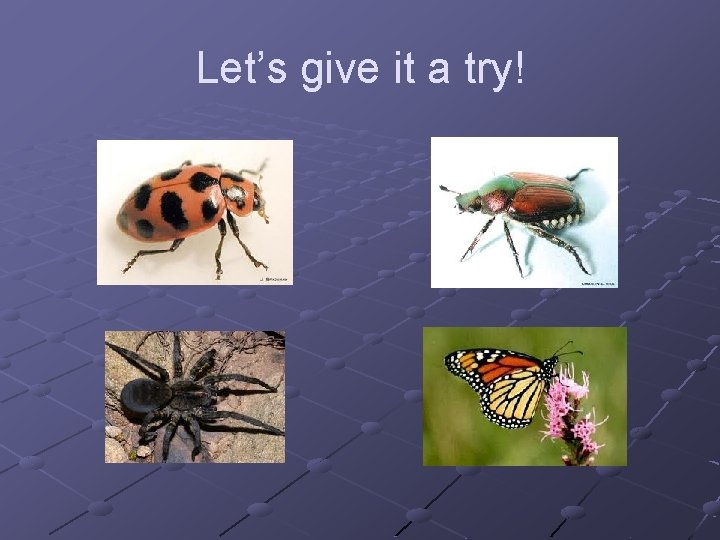
Let’s give it a try!
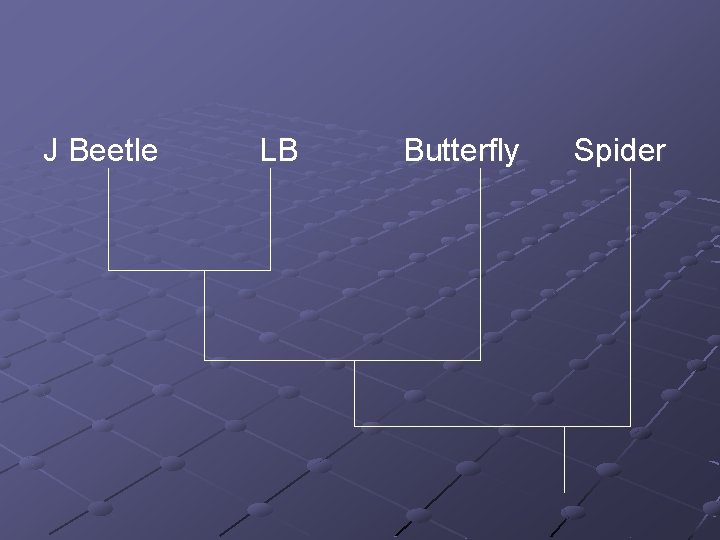
J Beetle LB Butterfly Spider
Create a family tree that shows the relationships between the following species: Human, Chimpanzee, Homo neanderthalensis, Australopithecus afarensis
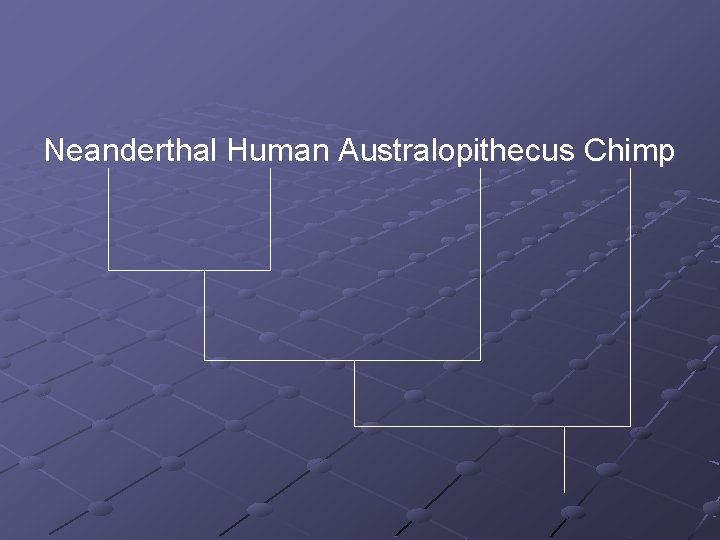
Neanderthal Human Australopithecus Chimp
Your Task Organize the organisms you have Determine the Outgroup Determine the shared derived character of the remaining organisms Create a phylogenetic tree Include hatchmarks Pose 3 questions regarding relatedness

- Slides: 34