
1010 Descending the Design Funnel Chapter 1 4
- Slides: 27
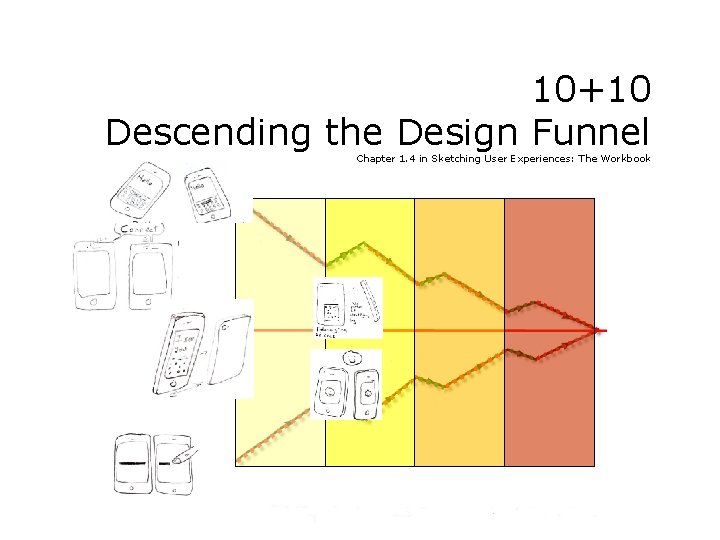
10+10 Descending the Design Funnel Chapter 1. 4 in Sketching User Experiences: The Workbook
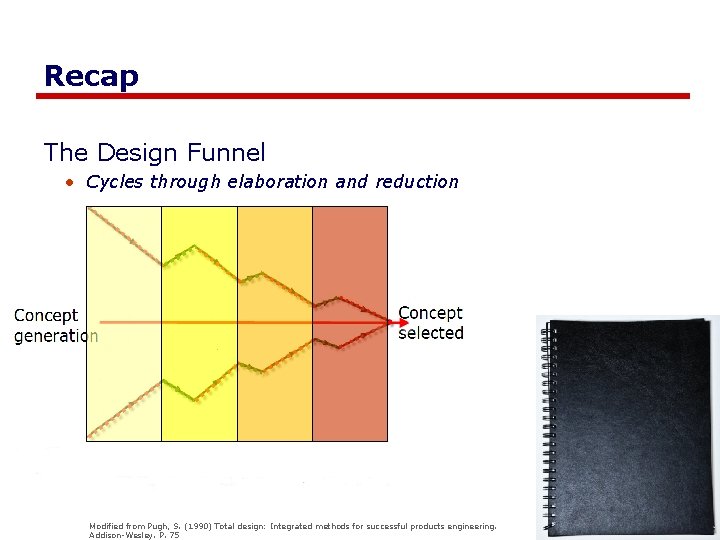
Recap The Design Funnel • Cycles through elaboration and reduction Modified from Pugh, S. (1990) Total design: Integrated methods for successful products engineering. Addison-Wesley. P. 75
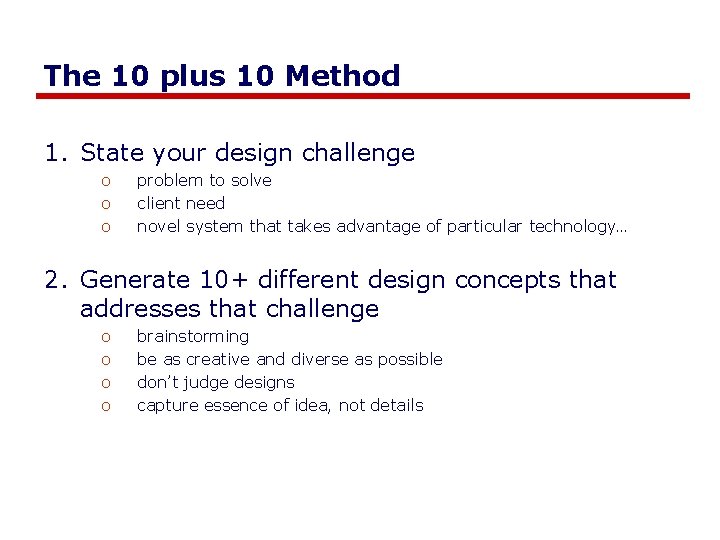
The 10 plus 10 Method 1. State your design challenge o o o problem to solve client need novel system that takes advantage of particular technology… 2. Generate 10+ different design concepts that addresses that challenge o o brainstorming be as creative and diverse as possible don’t judge designs capture essence of idea, not details
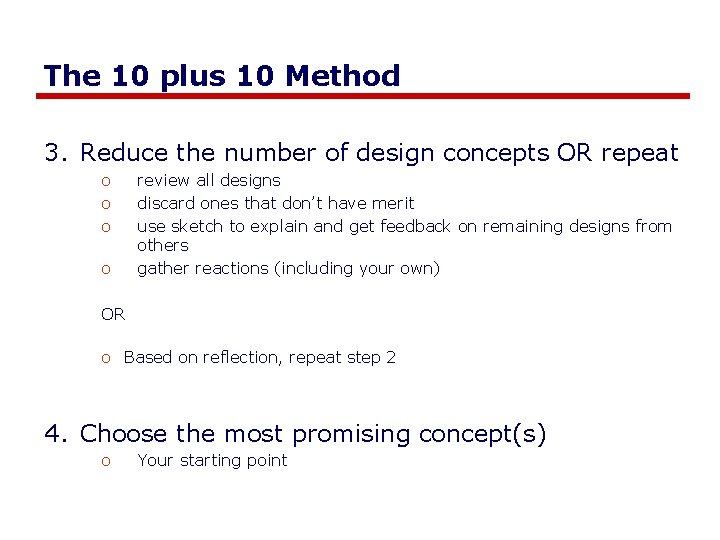
The 10 plus 10 Method 3. Reduce the number of design concepts OR repeat o o review all designs discard ones that don’t have merit use sketch to explain and get feedback on remaining designs from others gather reactions (including your own) OR o Based on reflection, repeat step 2 4. Choose the most promising concept(s) o Your starting point
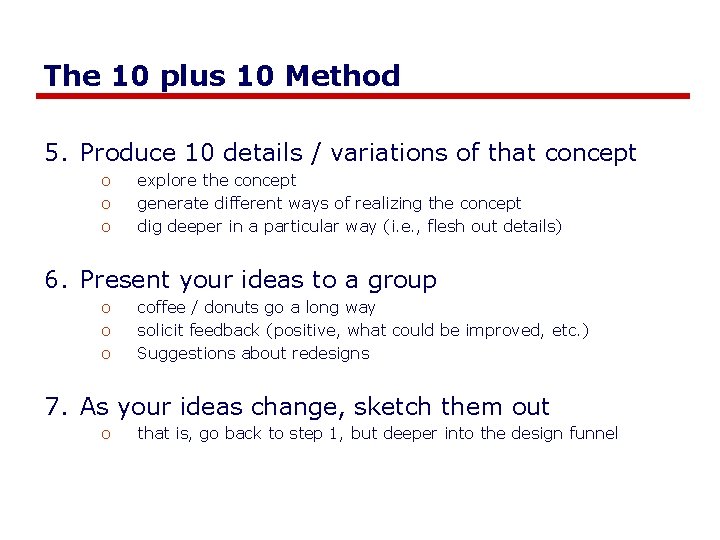
The 10 plus 10 Method 5. Produce 10 details / variations of that concept o o o explore the concept generate different ways of realizing the concept dig deeper in a particular way (i. e. , flesh out details) 6. Present your ideas to a group o o o coffee / donuts go a long way solicit feedback (positive, what could be improved, etc. ) Suggestions about redesigns 7. As your ideas change, sketch them out o that is, go back to step 1, but deeper into the design funnel
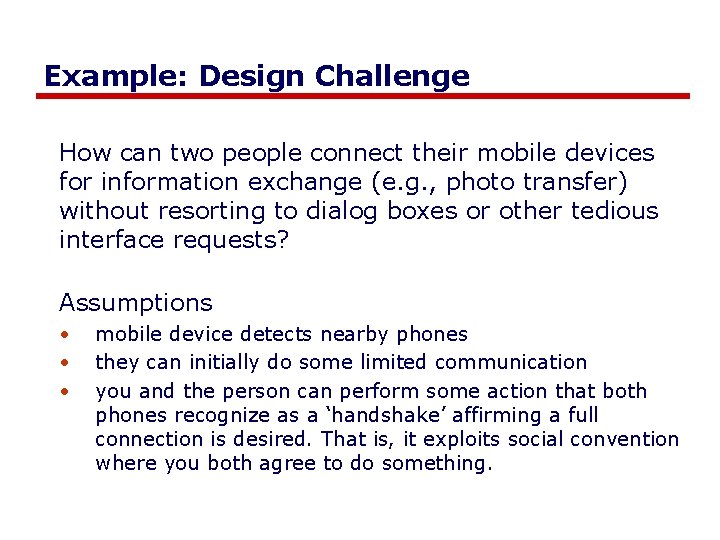
Example: Design Challenge How can two people connect their mobile devices for information exchange (e. g. , photo transfer) without resorting to dialog boxes or other tedious interface requests? Assumptions • • • mobile device detects nearby phones they can initially do some limited communication you and the person can perform some action that both phones recognize as a ‘handshake’ affirming a full connection is desired. That is, it exploits social convention where you both agree to do something.
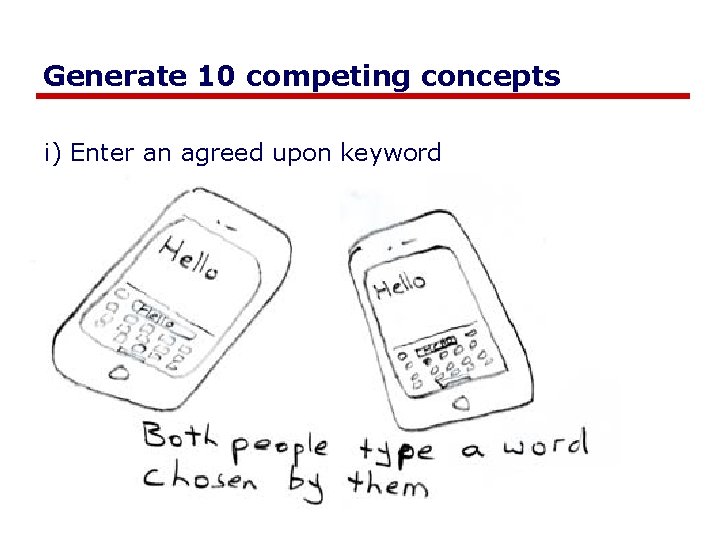
Generate 10 competing concepts i) Enter an agreed upon keyword
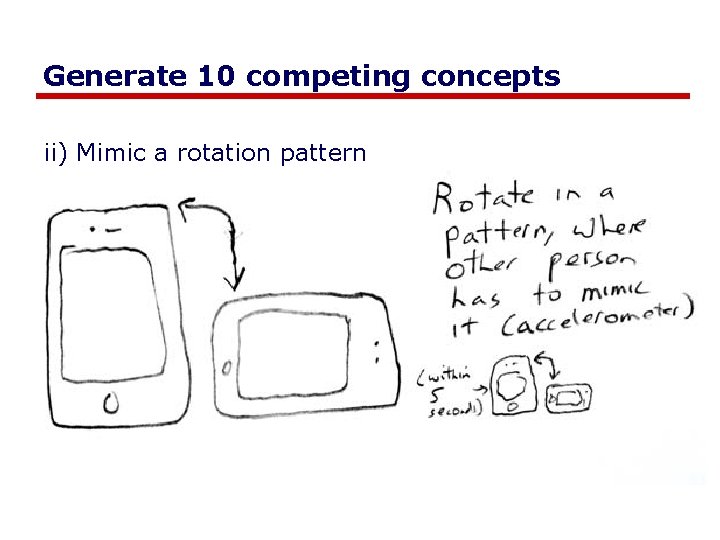
Generate 10 competing concepts ii) Mimic a rotation pattern
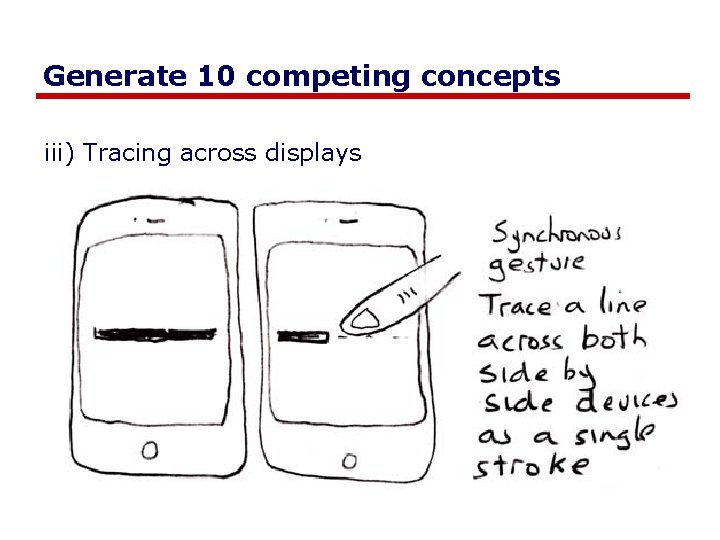
Generate 10 competing concepts iii) Tracing across displays
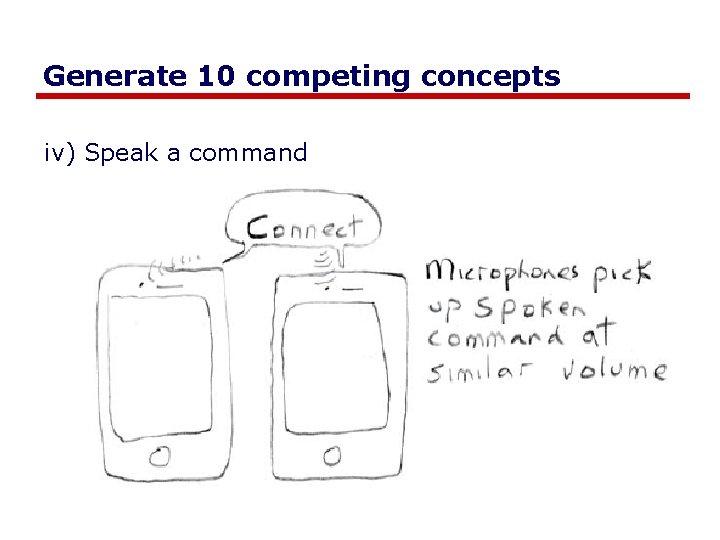
Generate 10 competing concepts iv) Speak a command
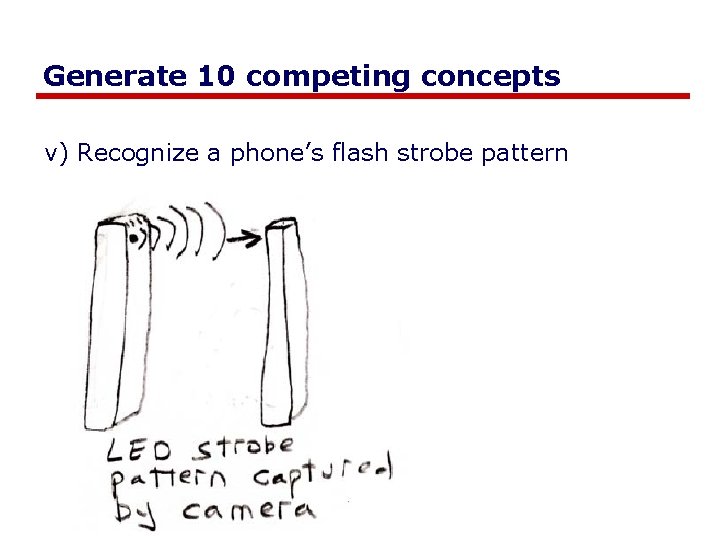
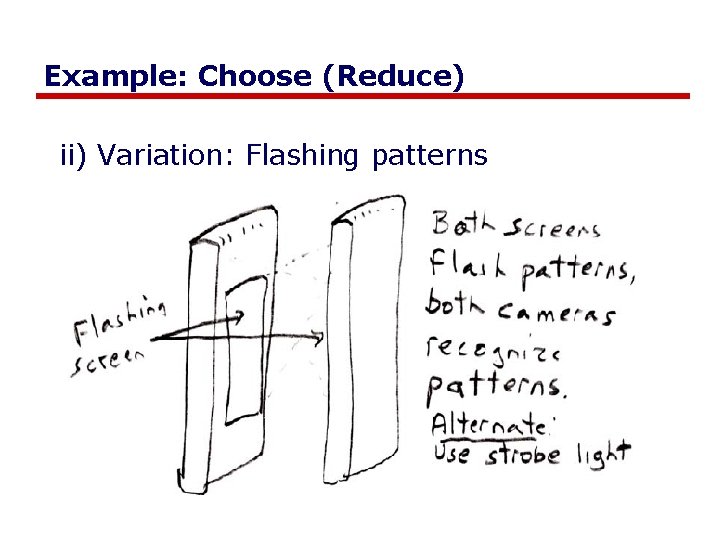
Generate 10 competing concepts v) Recognize a phone’s flash strobe pattern
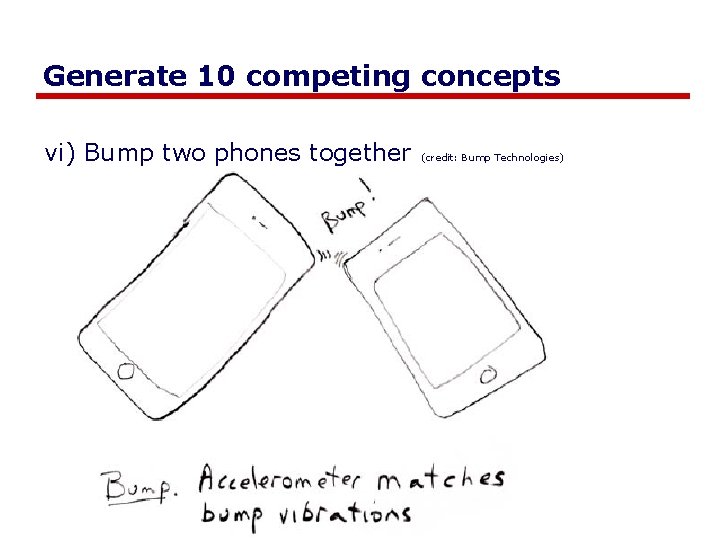
Generate 10 competing concepts vi) Bump two phones together (credit: Bump Technologies)
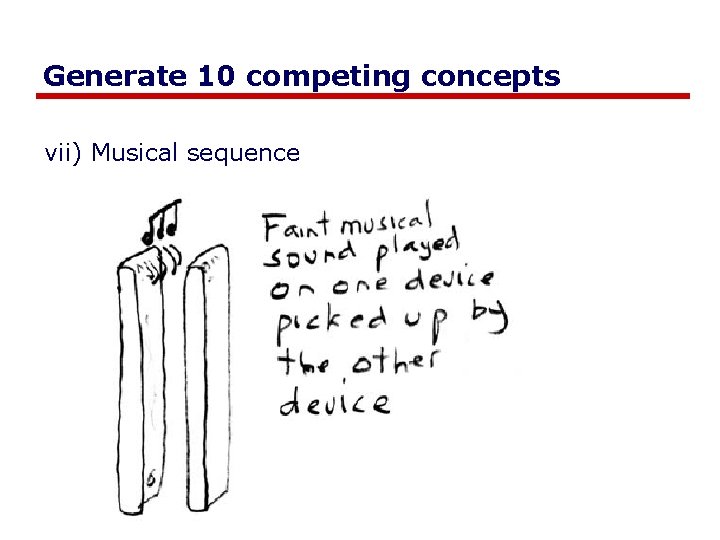
Generate 10 competing concepts vii) Musical sequence
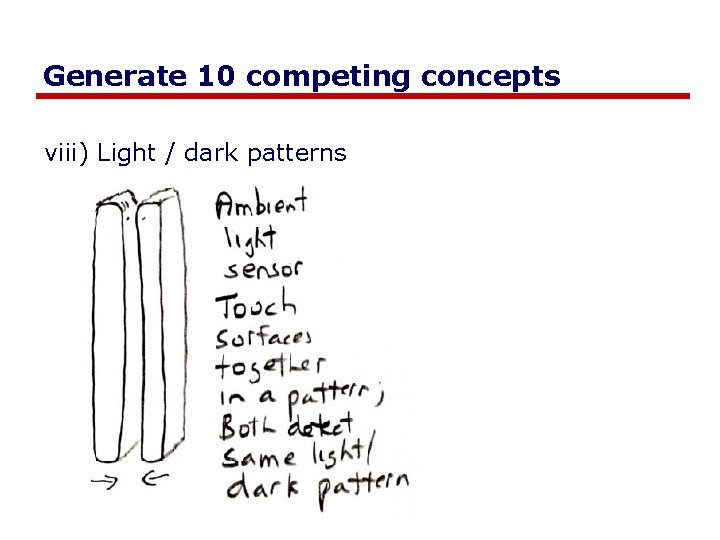
Generate 10 competing concepts viii) Light / dark patterns
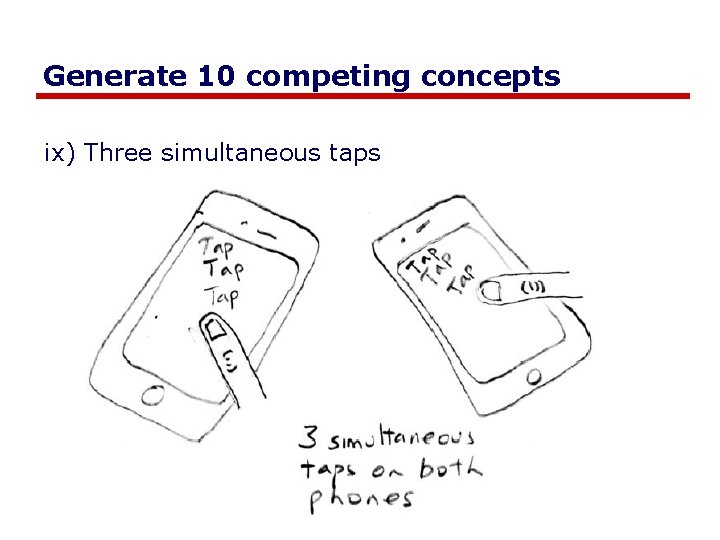
Generate 10 competing concepts ix) Three simultaneous taps
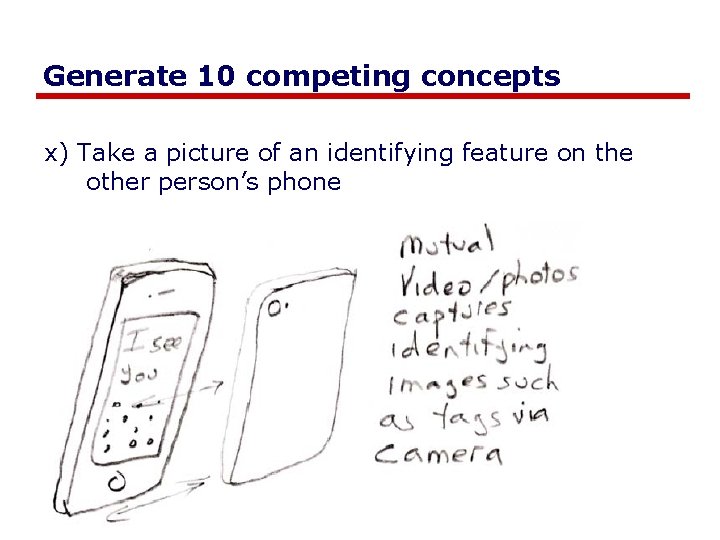
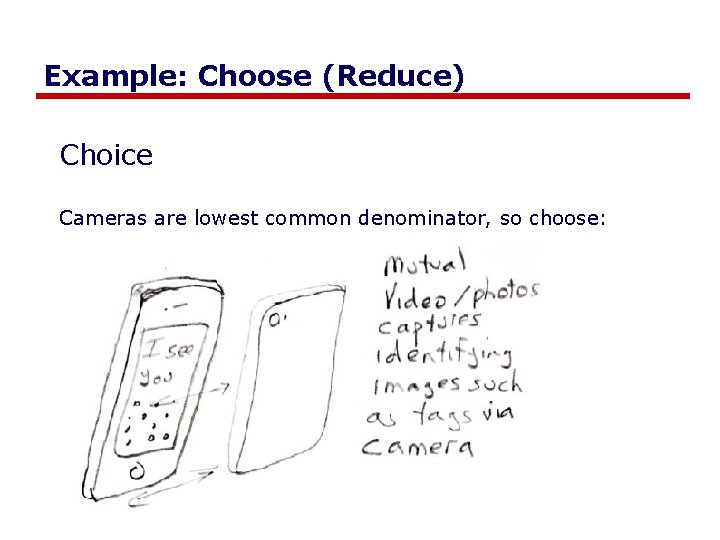
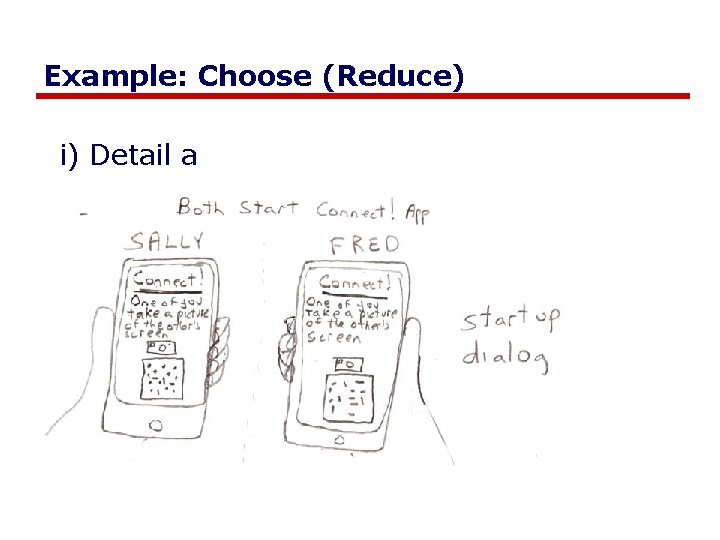
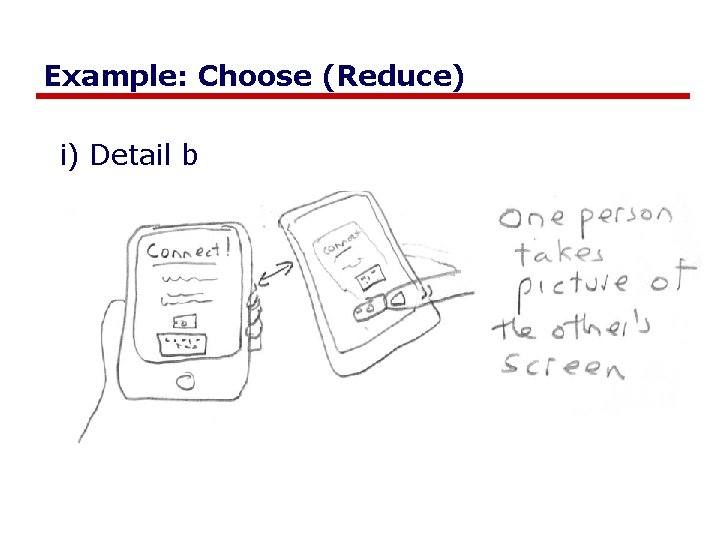
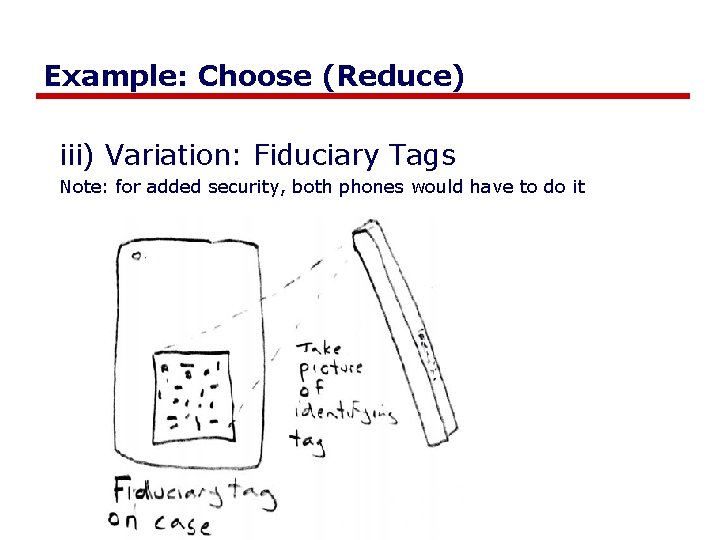
Generate 10 competing concepts x) Take a picture of an identifying feature on the other person’s phone
Example: Reduce and / or repeat Theme: you and the person perform some action that both phones recognize as a ‘handshake’ affirming a full connection is desired. That is, it exploits social convention where you both agree to do something. Repeat ? other variations based on this notion or other themes?
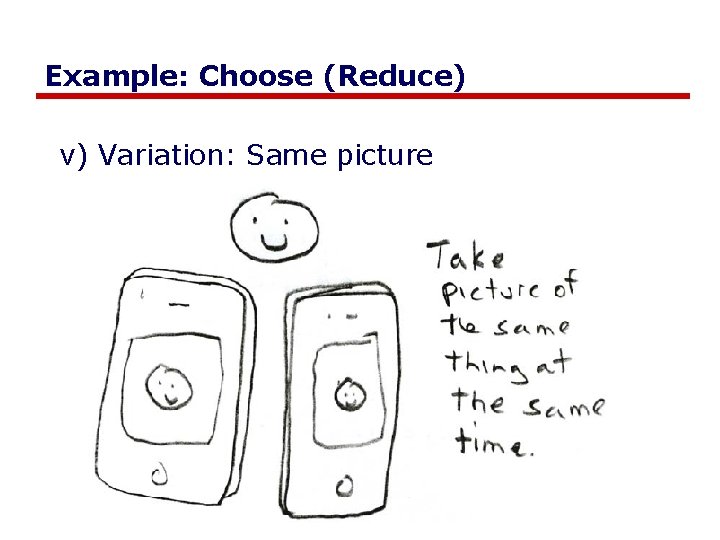
Example: Choose (Reduce) Choice Cameras are lowest common denominator, so choose:
Example: Choose (Reduce) i) Detail a
Example: Choose (Reduce) i) Detail b
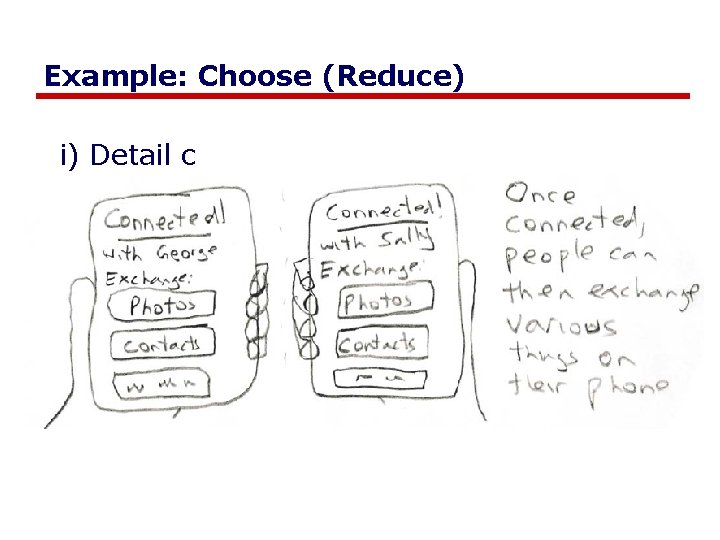
Example: Choose (Reduce) i) Detail c
Example: Choose (Reduce) ii) Variation: Flashing patterns
Example: Choose (Reduce) iii) Variation: Fiduciary Tags Note: for added security, both phones would have to do it
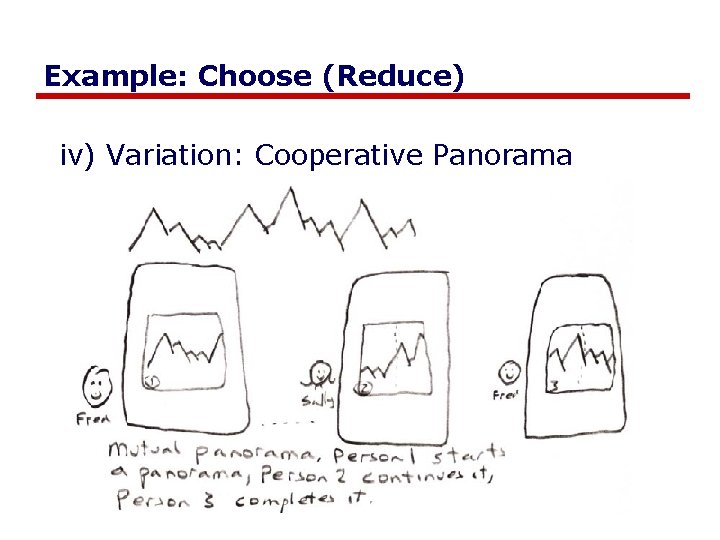
Example: Choose (Reduce) iv) Variation: Cooperative Panorama
Example: Choose (Reduce) v) Variation: Same picture
You now know 10 + 10 • method to descend the design funnel o first 10: elaboration o choosing: refinement o second 10: elaboration on refinement • a cycle with no hard boundaries
Permissions You are free: • to Share — to copy, distribute and transmit the work • to Remix — to adapt the work Under the following conditions: • Attribution — You must attribute the work in the manner specified by the author (but not in any way that suggests that they endorse you or your use of the work ) by citing: “from presentations accompanying the book ‘Sketching User Experiences, the Workbook’, by S. Greenberg, S. Carpendale, N. Marquardt and B. Buxton” • Noncommercial — You may not use this work for commercial purposes, except to assist one’s own teaching and training within commercial organizations. • Share Alike — If you alter, transform, or build upon this work, you may distribute the resulting work only under the same or similar license to this one. With the understanding that: • Not all material have transferable rights — materials from other sources which are included here are cited • Waiver — Any of the above conditions can be waived if you get permission from the copyright holder. • Public Domain — Where the work or any of its elements is in the public domain under applicable law, that status is in no way affected by the license. • Other Rights — In no way are any of the following rights affected by the license: • Your fair dealing or fair use rights, or other applicable copyright exceptions and limitations; • The author's moral rights; • Rights other persons may have either in the work itself or in how the work is used, such as publicity or privacy rights. Notice — For any reuse or distribution, you must make clear to others the license terms of this work. The best way to do this is with a link to this web page.