
101 years of superconductivity Kazimierz Conder Laboratory for
101 years of superconductivity Kazimierz Conder Laboratory for Developments and Methods, Paul Scherrer Institute, 5232 Villigen PSI, Switzerland kazimierz. conder@psi. ch
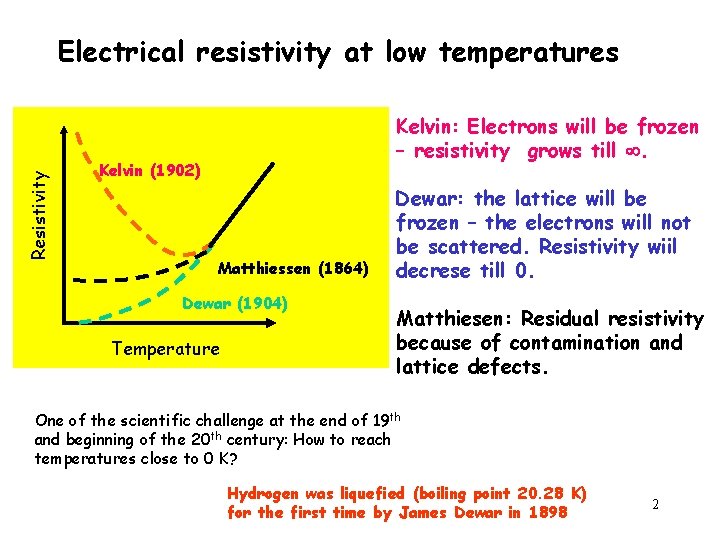
Resistivity Electrical resistivity at low temperatures Kelvin: Electrons will be frozen – resistivity grows till . Kelvin (1902) Matthiessen (1864) Dewar (1904) Temperature Dewar: the lattice will be frozen – the electrons will not be scattered. Resistivity wiil decrese till 0. Matthiesen: Residual resistivity because of contamination and lattice defects. One of the scientific challenge at the end of 19 th and beginning of the 20 th century: How to reach temperatures close to 0 K? Hydrogen was liquefied (boiling point 20. 28 K) for the first time by James Dewar in 1898 2
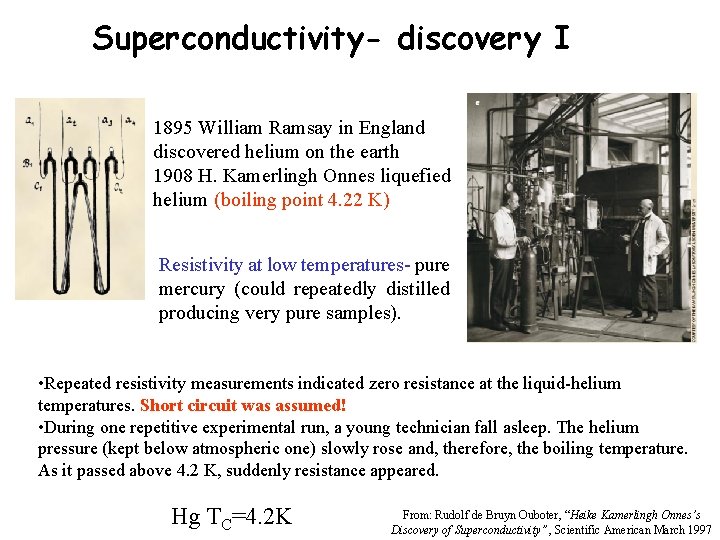
Superconductivity- discovery I 1895 William Ramsay in England discovered helium on the earth 1908 H. Kamerlingh Onnes liquefied helium (boiling point 4. 22 K) Resistivity at low temperatures- pure mercury (could repeatedly distilled producing very pure samples). • Repeated resistivity measurements indicated zero resistance at the liquid-helium temperatures. Short circuit was assumed! • During one repetitive experimental run, a young technician fall asleep. The helium pressure (kept below atmospheric one) slowly rose and, therefore, the boiling temperature. As it passed above 4. 2 K, suddenly resistance appeared. Hg TC=4. 2 K From: Rudolf de Bruyn Ouboter, “Heike Kamerlingh Onnes’s Discovery of Superconductivity”, Scientific American March 1997
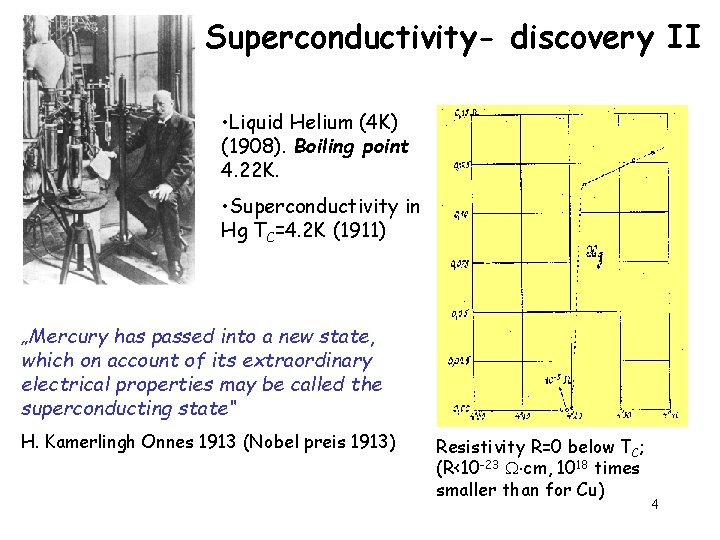
Superconductivity- discovery II • Liquid Helium (4 K) (1908). Boiling point 4. 22 K. • Superconductivity in Hg TC=4. 2 K (1911) „Mercury has passed into a new state, which on account of its extraordinary electrical properties may be called the superconducting state“ H. Kamerlingh Onnes 1913 (Nobel preis 1913) Resistivity R=0 below TC; (R<10 -23 cm, 1018 times smaller than for Cu) 4
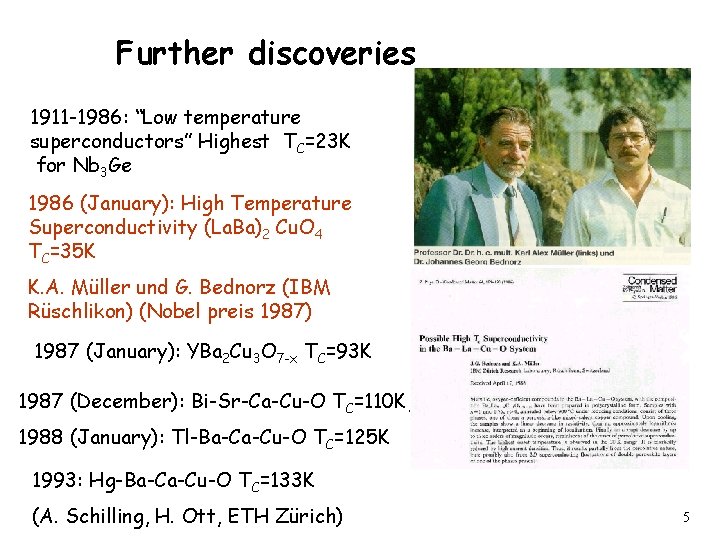
Further discoveries 1911 -1986: “Low temperature superconductors” Highest TC=23 K for Nb 3 Ge 1986 (January): High Temperature Superconductivity (La. Ba)2 Cu. O 4 TC=35 K K. A. Müller und G. Bednorz (IBM Rüschlikon) (Nobel preis 1987) 1987 (January): YBa 2 Cu 3 O 7 -x TC=93 K 1987 (December): Bi-Sr-Ca-Cu-O TC=110 K, 1988 (January): Tl-Ba-Ca-Cu-O TC=125 K 1993: Hg-Ba-Ca-Cu-O TC=133 K (A. Schilling, H. Ott, ETH Zürich) 5

6
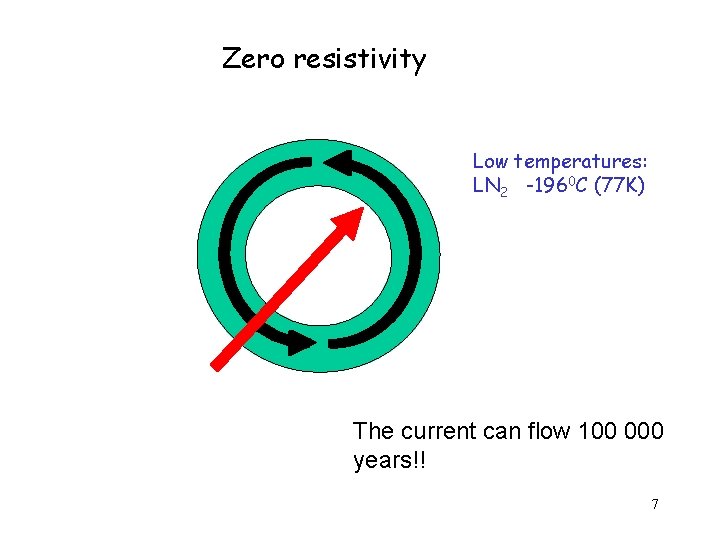
Zero resistivity Low temperatures: LN 2 -1960 C (77 K) The current can flow 100 000 years!! 7
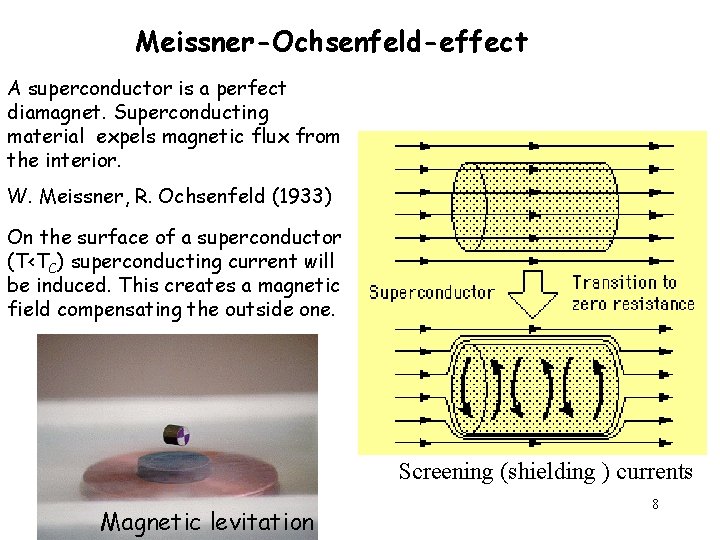
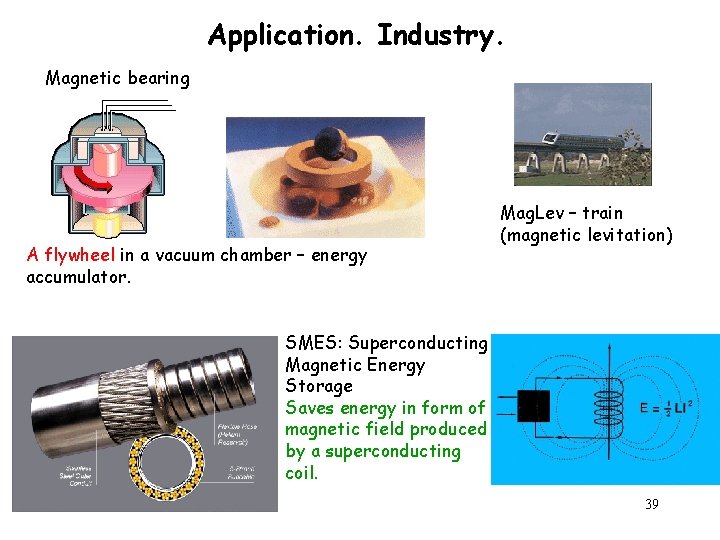
Meissner-Ochsenfeld-effect A superconductor is a perfect diamagnet. Superconducting material expels magnetic flux from the interior. W. Meissner, R. Ochsenfeld (1933) On the surface of a superconductor (T<TC) superconducting current will be induced. This creates a magnetic field compensating the outside one. Screening (shielding ) currents Magnetic levitation 8
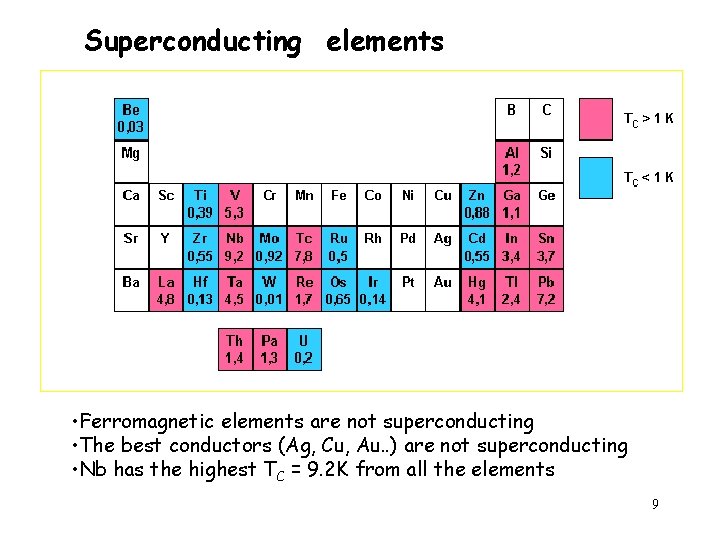
Superconducting elements • Ferromagnetic elements are not superconducting • The best conductors (Ag, Cu, Au. . ) are not superconducting • Nb has the highest TC = 9. 2 K from all the elements 9
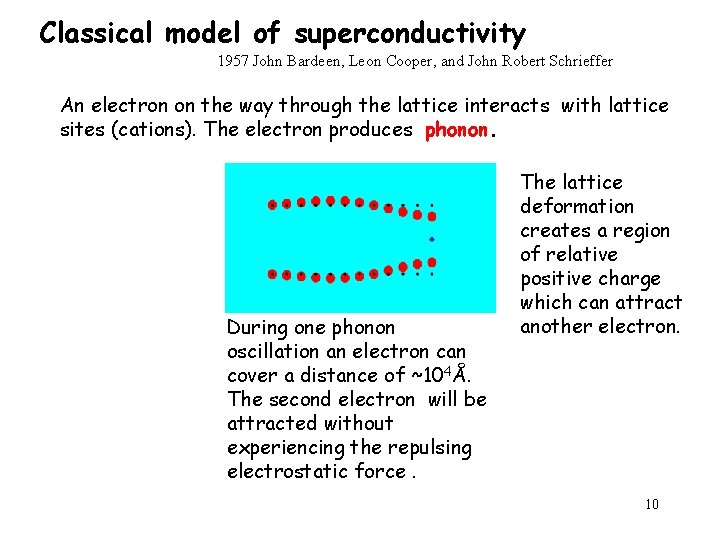
Classical model of superconductivity 1957 John Bardeen, Leon Cooper, and John Robert Schrieffer An electron on the way through the lattice interacts with lattice sites (cations). The electron produces phonon. During one phonon oscillation an electron can cover a distance of ~104Å. The second electron will be attracted without experiencing the repulsing electrostatic force. The lattice deformation creates a region of relative positive charge which can attract another electron. 10
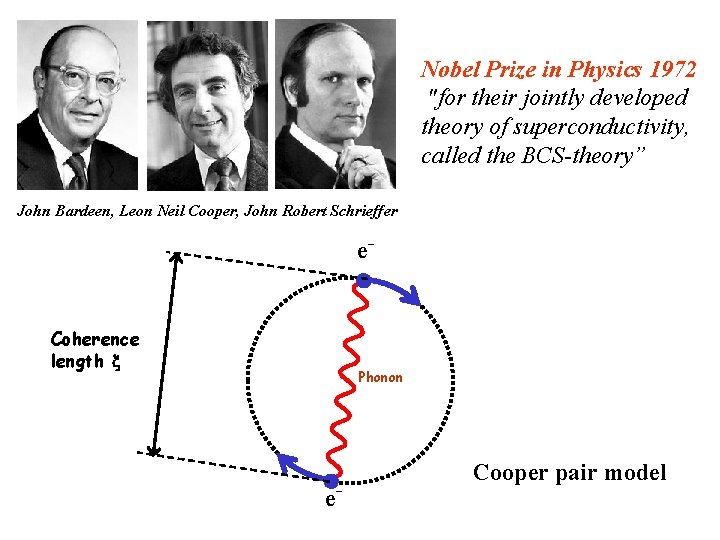
Nobel Prize in Physics 1972 "for their jointly developed theory of superconductivity, called the BCS-theory” John Bardeen, Leon Neil Cooper, John Robert Schrieffer e- Coherence length Phonon e- Cooper pair model
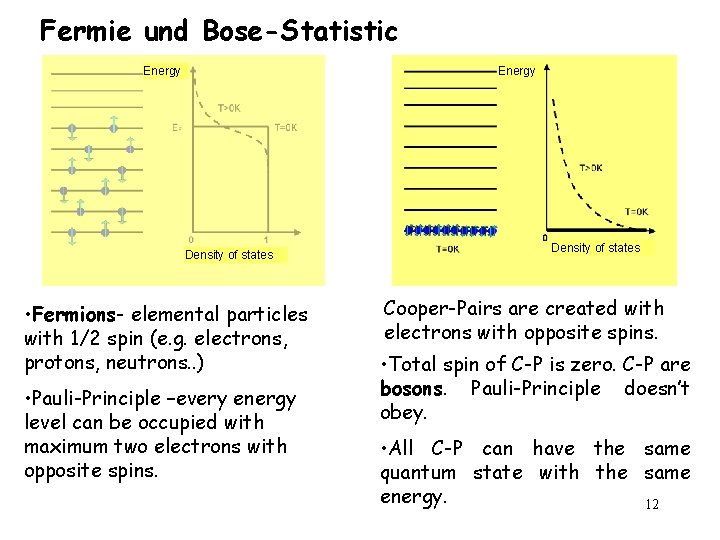
Fermie und Bose-Statistic Energy Density of states • Fermions- elemental particles with 1/2 spin (e. g. electrons, protons, neutrons. . ) • Pauli-Principle –every energy level can be occupied with maximum two electrons with opposite spins. Density of states Cooper-Pairs are created with electrons with opposite spins. • Total spin of C-P is zero. C-P are bosons. Pauli-Principle doesn’t obey. • All C-P can have the same quantum state with the same energy. 12
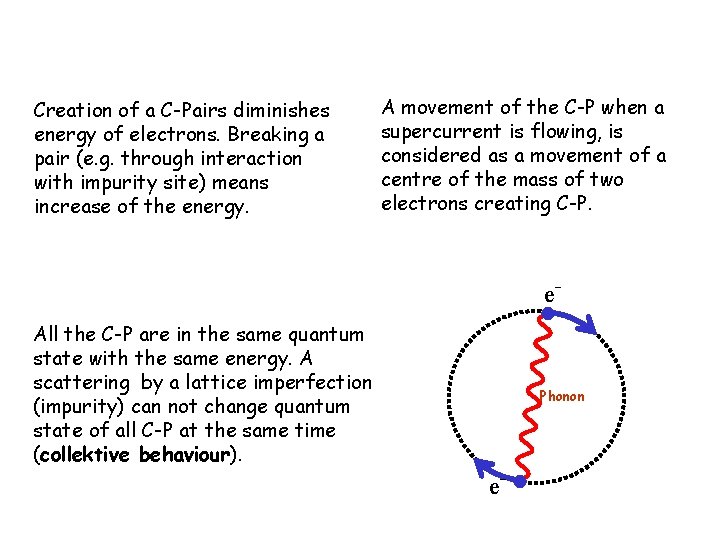
Creation of a C-Pairs diminishes energy of electrons. Breaking a pair (e. g. through interaction with impurity site) means increase of the energy. A movement of the C-P when a supercurrent is flowing, is considered as a movement of a centre of the mass of two electrons creating C-P. e. All the C-P are in the same quantum state with the same energy. A scattering by a lattice imperfection (impurity) can not change quantum state of all C-P at the same time (collektive behaviour). Phonon e-
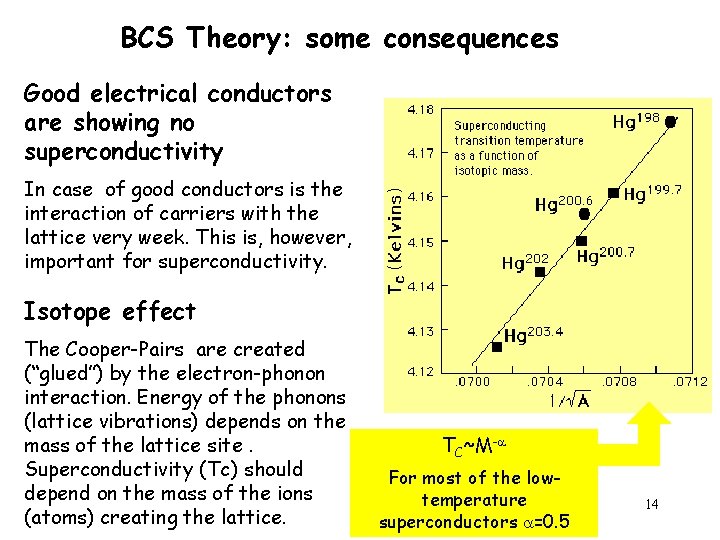
BCS Theory: some consequences Good electrical conductors are showing no superconductivity In case of good conductors is the interaction of carriers with the lattice very week. This is, however, important for superconductivity. Isotope effect The Cooper-Pairs are created (“glued”) by the electron-phonon interaction. Energy of the phonons (lattice vibrations) depends on the mass of the lattice site. Superconductivity (Tc) should depend on the mass of the ions (atoms) creating the lattice. TC~M- For most of the lowtemperature superconductors =0. 5 14
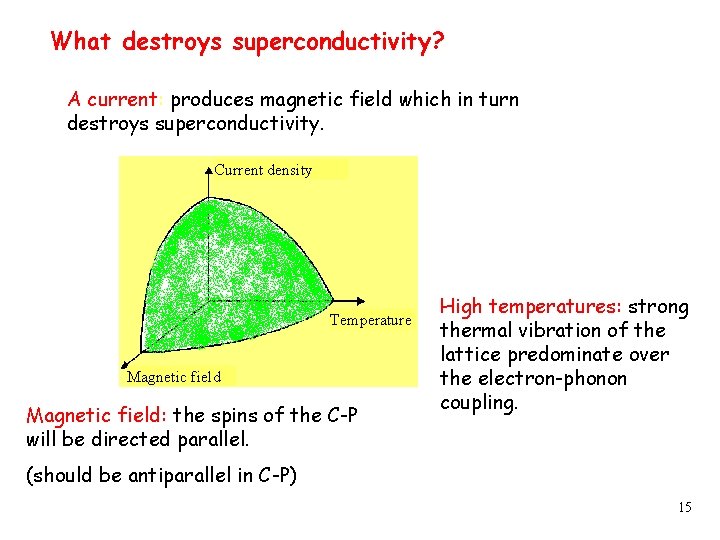
What destroys superconductivity? A current: produces magnetic field which in turn destroys superconductivity. Current density Temperature Magnetic field: the spins of the C-P will be directed parallel. High temperatures: strong thermal vibration of the lattice predominate over the electron-phonon coupling. (should be antiparallel in C-P) 15
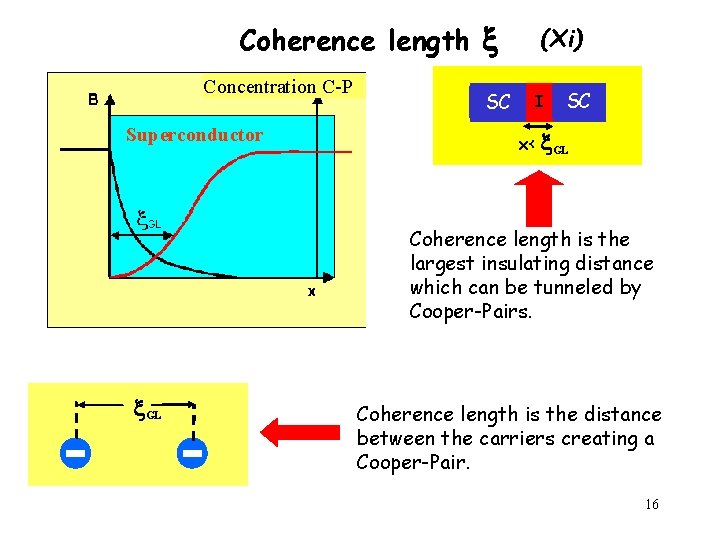
Coherence length Concentration C-P Superconductor SL SC (Xi) I SC SL x< GL Coherence length is the largest insulating distance which can be tunneled by Cooper-Pairs. GL Coherence length is the distance between the carriers creating a Cooper-Pair. 16
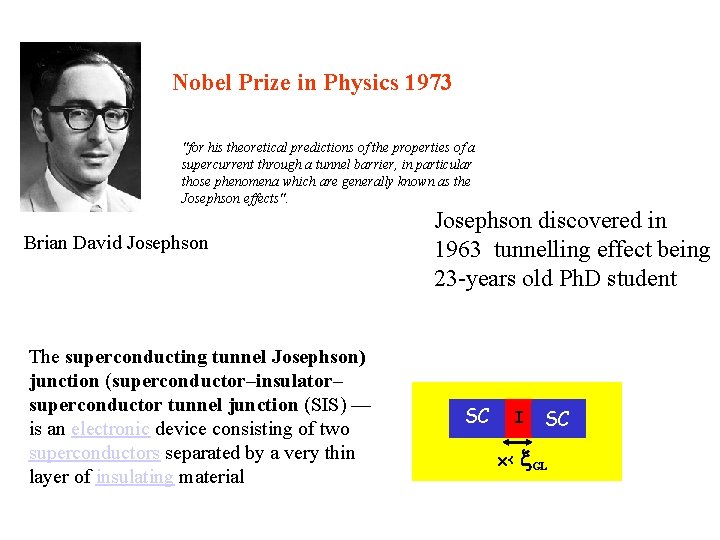
Nobel Prize in Physics 1973 "for his theoretical predictions of the properties of a supercurrent through a tunnel barrier, in particular those phenomena which are generally known as the Josephson effects". Brian David Josephson The superconducting tunnel Josephson) junction (superconductor–insulator– superconductor tunnel junction (SIS) — is an electronic device consisting of two superconductors separated by a very thin layer of insulating material Josephson discovered in 1963 tunnelling effect being 23 -years old Ph. D student SL SC I SL SC x< GL
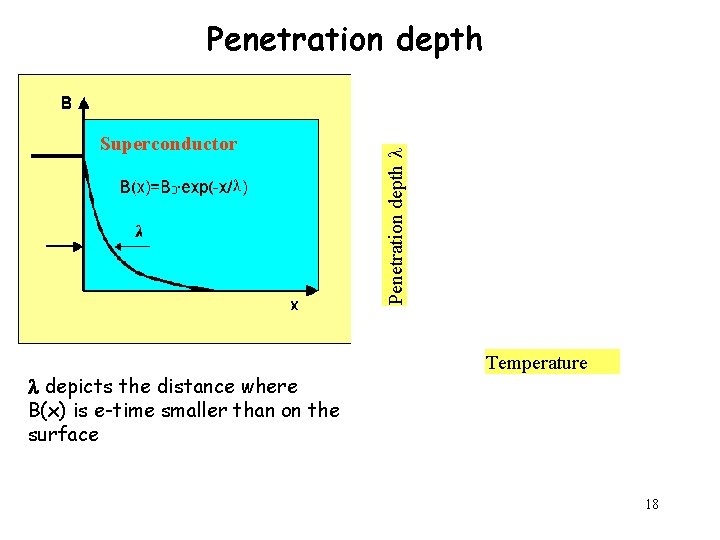
Superconductor depicts the distance where B(x) is e-time smaller than on the surface Penetration depth Temperature 18
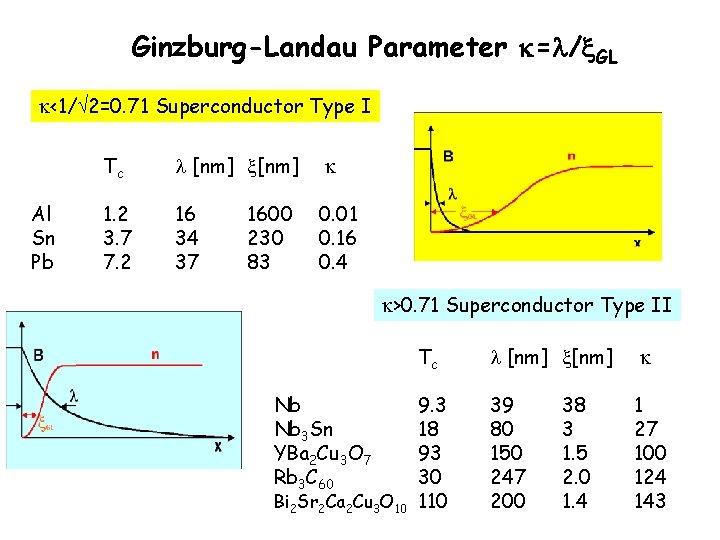
Ginzburg-Landau Parameter = / GL <1/ 2=0. 71 Superconductor Type I Al Sn Pb Tc [nm] 1. 2 3. 7 7. 2 16 34 37 0. 01 0. 16 0. 4 1600 230 83 >0. 71 Superconductor Type II Nb Nb 3 Sn YBa 2 Cu 3 O 7 Rb 3 C 60 Bi 2 Sr 2 Ca 2 Cu 3 O 10 Tc [nm] 9. 3 18 93 30 110 39 80 150 247 200 1 27 100 124 143 19 38 3 1. 5 2. 0 1. 4
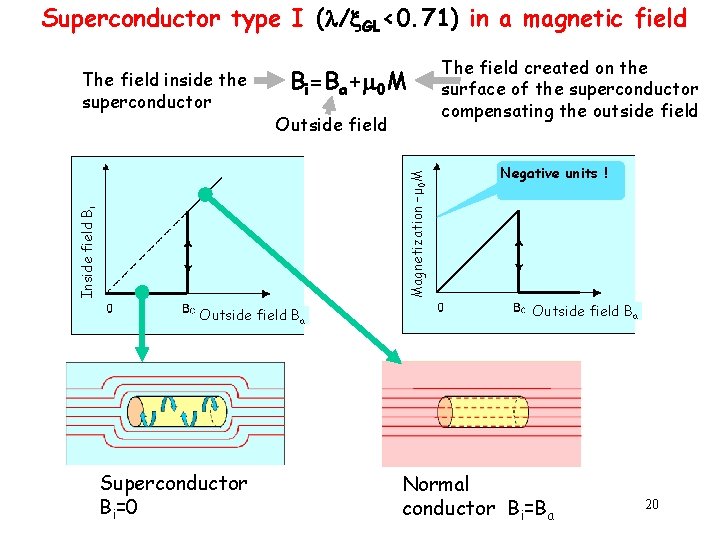
Superconductor type I ( / GL<0. 71) in a magnetic field Bi=Ba+ 0 M Outside field Inside field Bi Magnetization –μ 0 M The field inside the superconductor Outside field Ba Superconductor Bi=0 The field created on the surface of the superconductor compensating the outside field Negative units ! Outside field Ba Normal conductor Bi=Ba 20
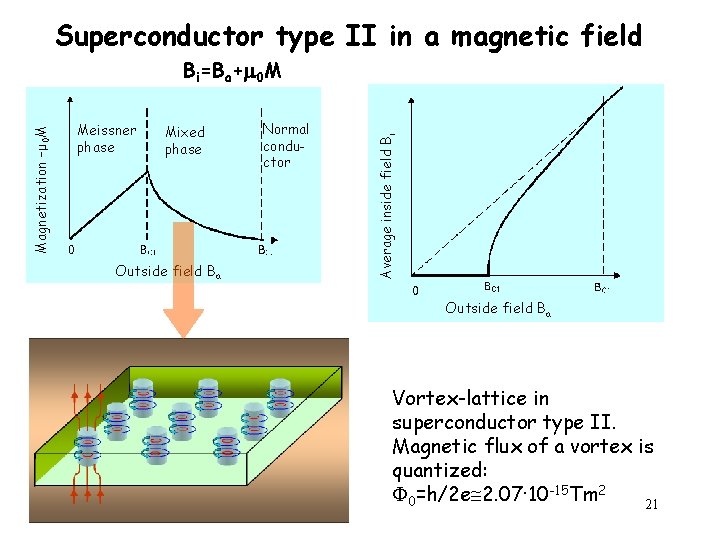
Superconductor type II in a magnetic field Meissner phase Mixed phase Outside field Ba Normal conductor Average inside field Bi Magnetization –μ 0 M Bi=Ba+ 0 M Outside field Ba Vortex-lattice in superconductor type II. Magnetic flux of a vortex is quantized: 0=h/2 e 2. 07· 10 -15 Tm 2 21
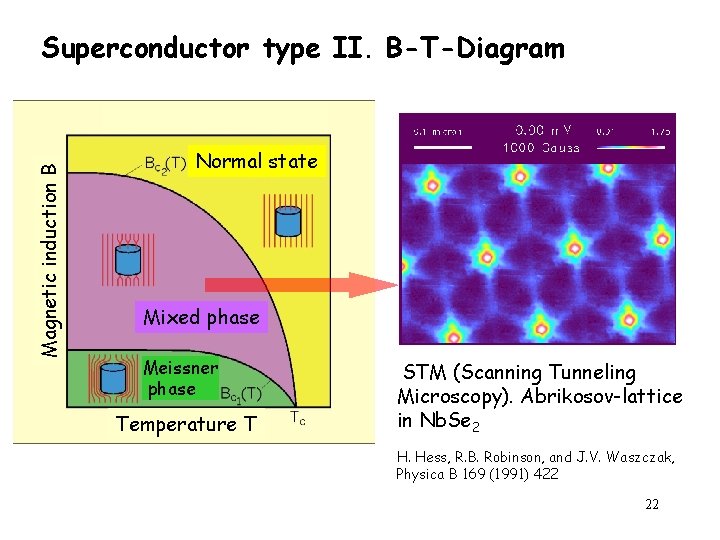
Magnetic induction B Superconductor type II. B-T-Diagram Normal state Mixed phase Meissner phase Temperature T STM (Scanning Tunneling Microscopy). Abrikosov-lattice in Nb. Se 2 H. Hess, R. B. Robinson, and J. V. Waszczak, Physica B 169 (1991) 422 22
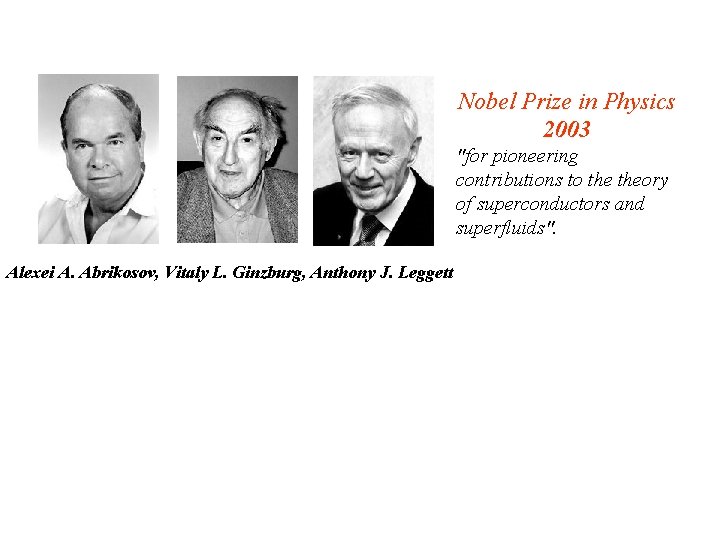
Nobel Prize in Physics 2003 "for pioneering contributions to theory of superconductors and superfluids". Alexei A. Abrikosov, Vitaly L. Ginzburg, Anthony J. Leggett
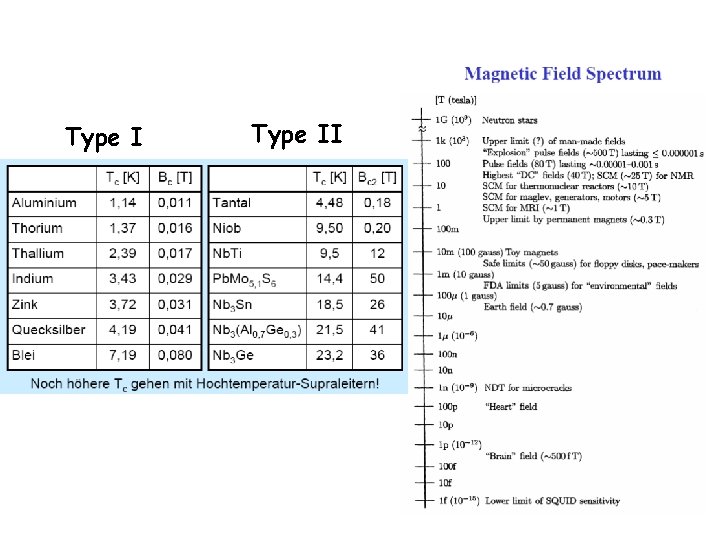
Type II 24
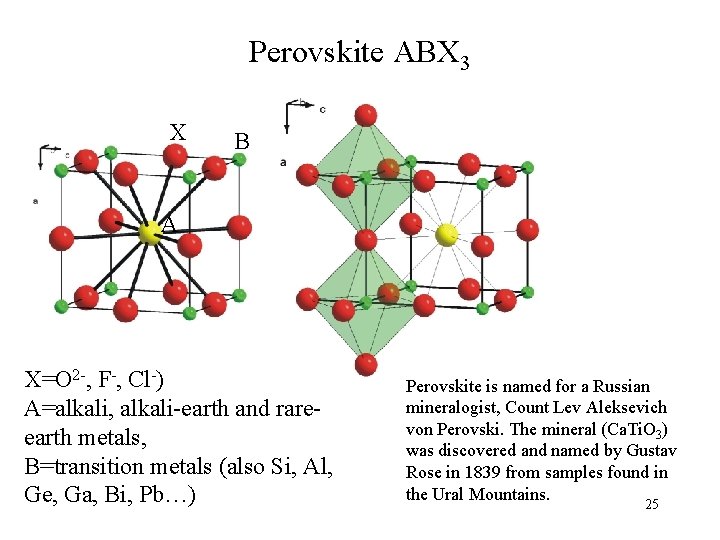
Perovskite ABX 3 X B A X=O 2 -, F-, Cl-) A=alkali, alkali-earth and rareearth metals, B=transition metals (also Si, Al, Ge, Ga, Bi, Pb…) Perovskite is named for a Russian mineralogist, Count Lev Aleksevich von Perovski. The mineral (Ca. Ti. O 3) was discovered and named by Gustav Rose in 1839 from samples found in the Ural Mountains. 25
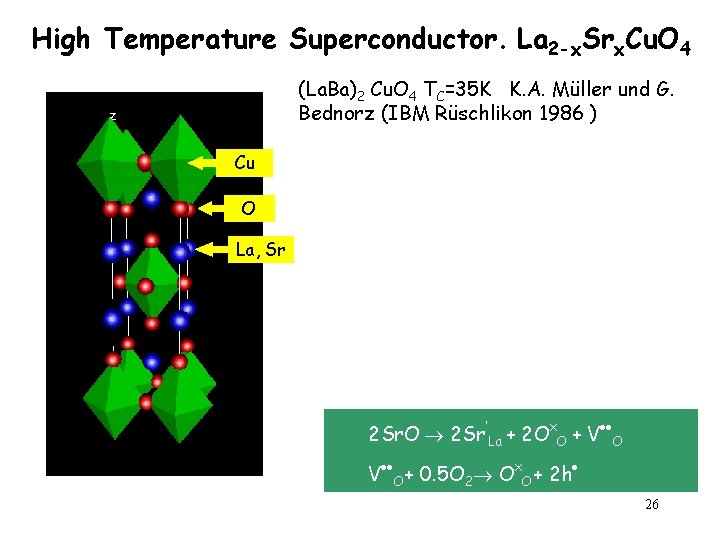
High Temperature Superconductor. La 2 -x. Srx. Cu. O 4 (La. Ba)2 Cu. O 4 TC=35 K K. A. Müller und G. Bednorz (IBM Rüschlikon 1986 ) Cu O La, Sr 2 Sr. O 2 Sr‘La + 2 Ox. O + V O+ 0. 5 O 2 Ox. O+ 2 h 26
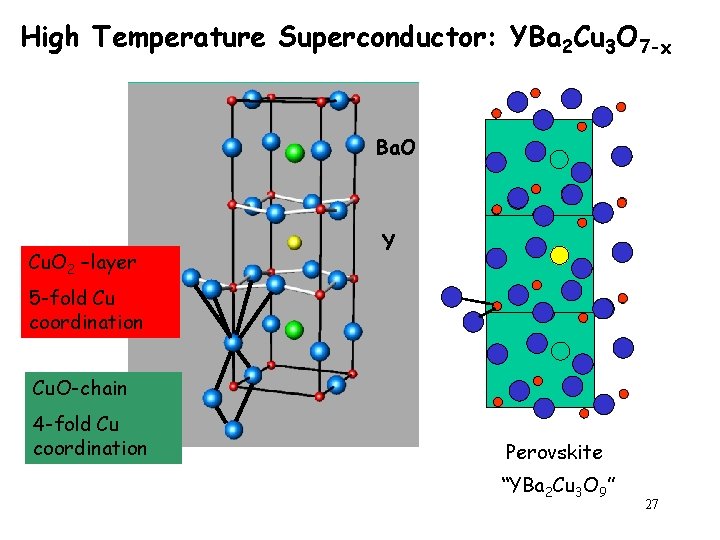
High Temperature Superconductor: YBa 2 Cu 3 O 7 -x Ba. O Cu. O 2 –layer Y 5 -fold Cu coordination Cu. O-chain 4 -fold Cu coordination Perovskite “YBa 2 Cu 3 O 9” 27
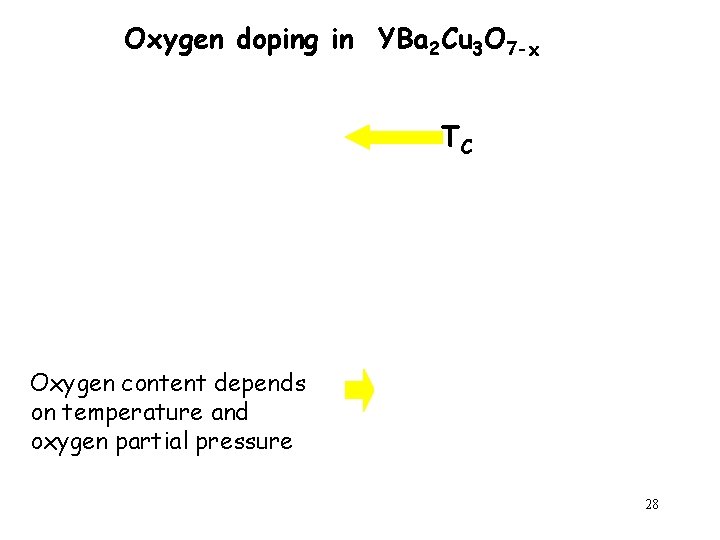
Oxygen doping in YBa 2 Cu 3 O 7 -x TC Oxygen content depends on temperature and oxygen partial pressure 28
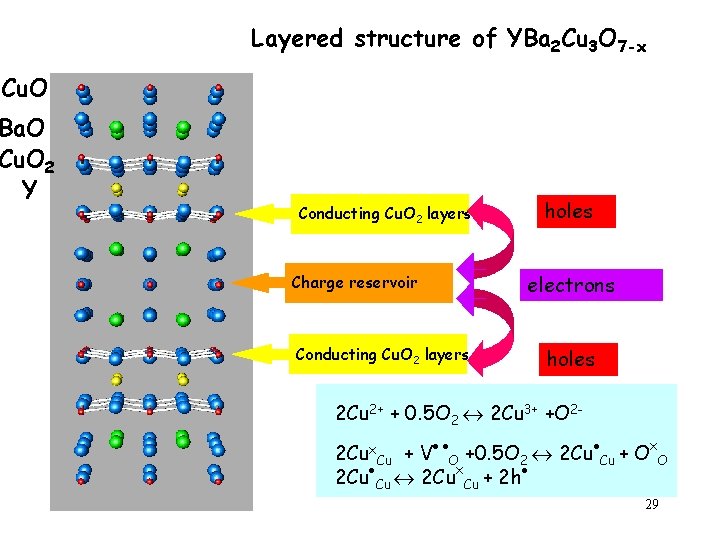
Layered structure of YBa 2 Cu 3 O 7 -x Cu. O Ba. O Cu. O 2 Y Conducting Cu. O 2 layers Charge reservoir Conducting Cu. O 2 layers holes electrons holes 2 Cu 2+ + 0. 5 O 2 2 Cu 3+ +O 22 Cux. Cu + V O +0. 5 O 2 2 Cu Cu + Ox. O 2 Cu Cu 2 Cux. Cu + 2 h 29
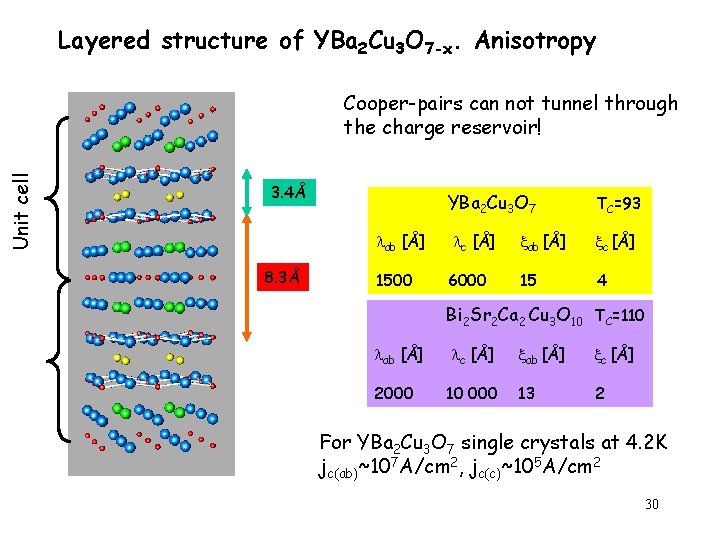
Layered structure of YBa 2 Cu 3 O 7 -x. Anisotropy Unit cell Cooper-pairs can not tunnel through the charge reservoir! 3. 4Å 8. 3Å YBa 2 Cu 3 O 7 TC=93 ab [Å] c [Å] 1500 6000 15 4 Bi 2 Sr 2 Ca 2 Cu 3 O 10 TC=110 ab [Å] c [Å] 2000 10 000 13 2 For YBa 2 Cu 3 O 7 single crystals at 4. 2 K jc(ab)~107 A/cm 2, jc(c)~105 A/cm 2 30
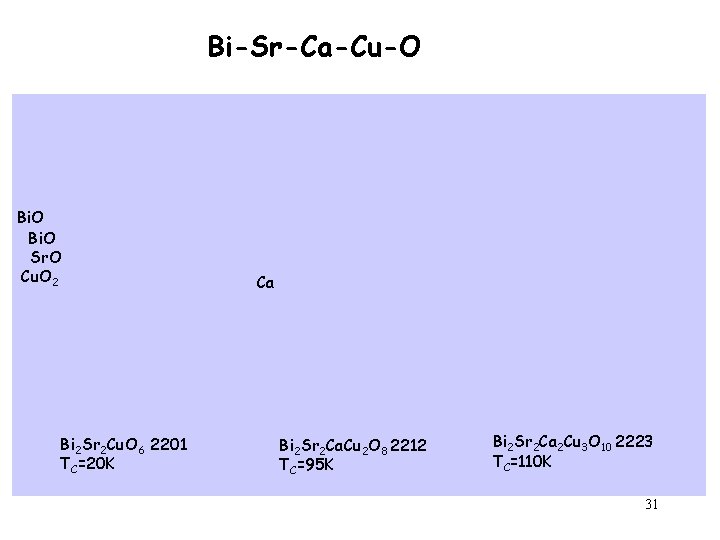
Bi-Sr-Ca-Cu-O Bi. O Sr. O Cu. O 2 Bi 2 Sr 2 Cu. O 6 2201 TC=20 K Ca Bi 2 Sr 2 Ca. Cu 2 O 8 2212 TC=95 K Bi 2 Sr 2 Ca 2 Cu 3 O 10 2223 TC=110 K 31
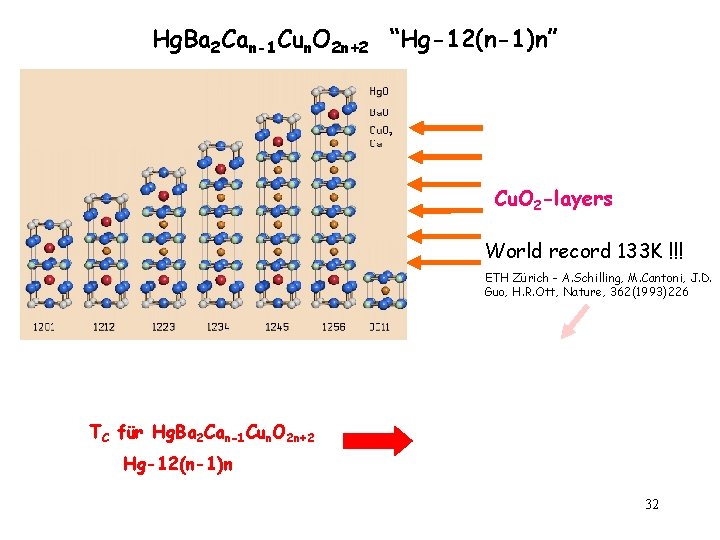
Hg. Ba 2 Can-1 Cun. O 2 n+2 “Hg-12(n-1)n” Cu. O 2 -layers World record 133 K !!! ETH Zürich - A. Schilling, M. Cantoni, J. D. Guo, H. R. Ott, Nature, 362(1993)226 TC für Hg. Ba 2 Can-1 Cun. O 2 n+2 Hg-12(n-1)n 32
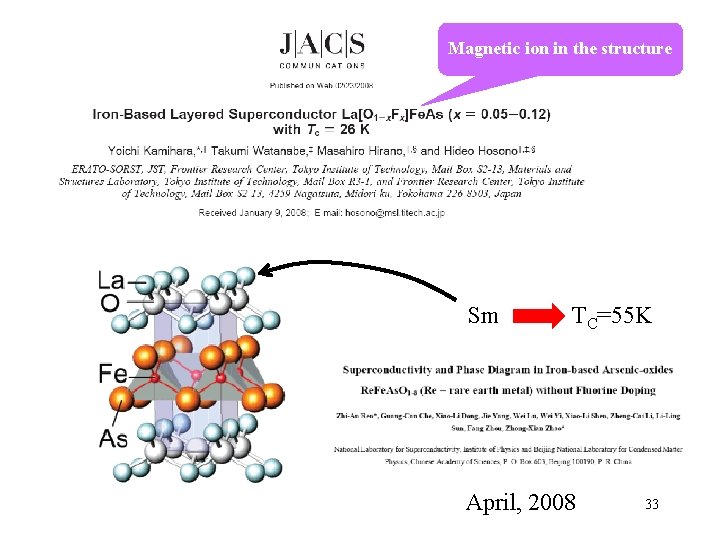
Magnetic ion in the structure Sm TC=55 K April, 2008 33
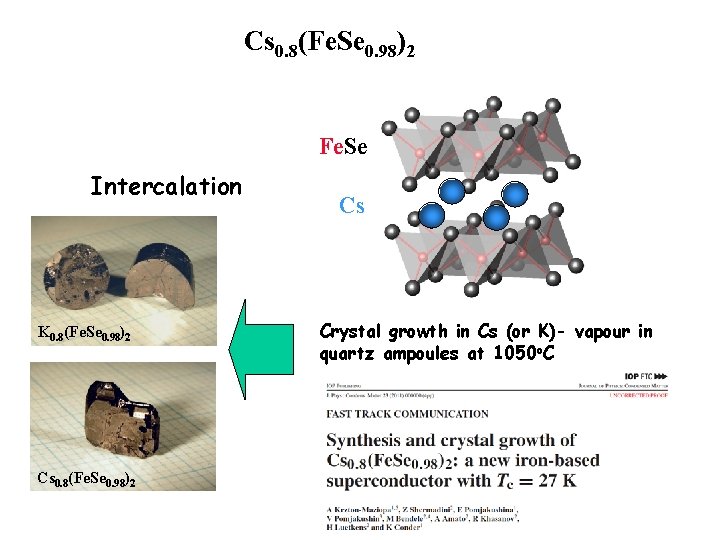
Cs 0. 8(Fe. Se 0. 98)2 Fe. Se Intercalation K 0. 8(Fe. Se 0. 98)2 Cs Crystal growth in Cs (or K)- vapour in quartz ampoules at 1050 o. C
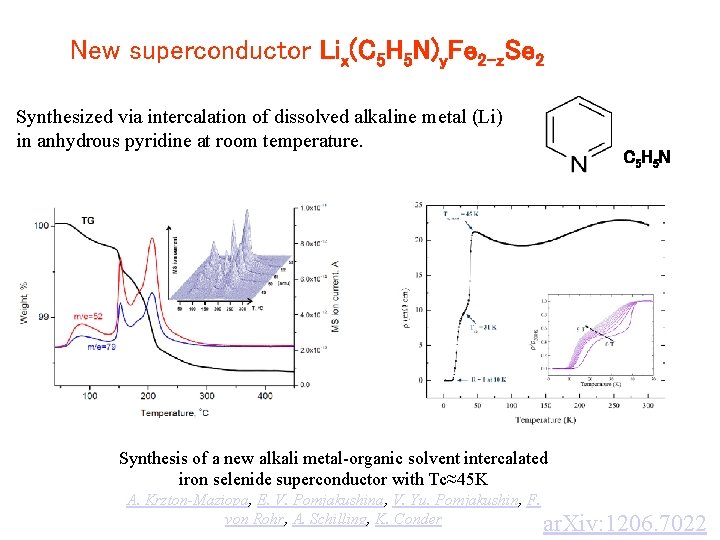
New superconductor Lix(C 5 H 5 N)y. Fe 2 -z. Se 2 Synthesized via intercalation of dissolved alkaline metal (Li) in anhydrous pyridine at room temperature. C 5 H 5 N Synthesis of a new alkali metal-organic solvent intercalated iron selenide superconductor with Tc≈45 K A. Krzton-Maziopa, E. V. Pomjakushina, V. Yu. Pomjakushin, F. von Rohr, A. Schilling, K. Conder ar. Xiv: 1206. 7022
USO Unidentified Superconducting Object 36
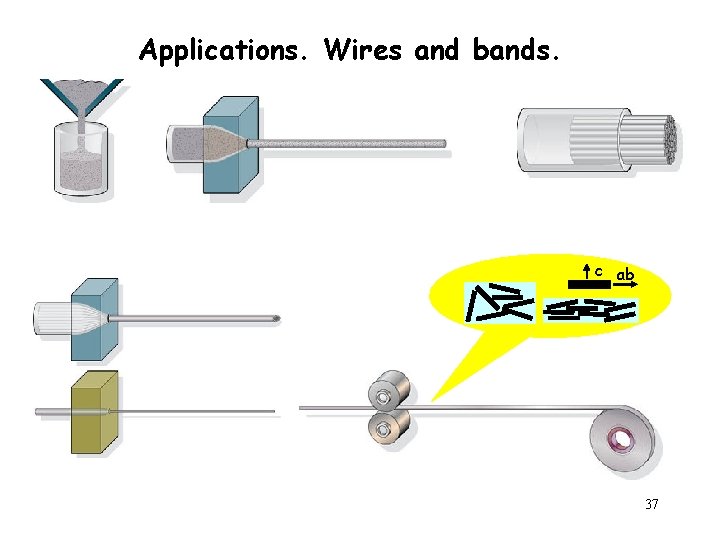
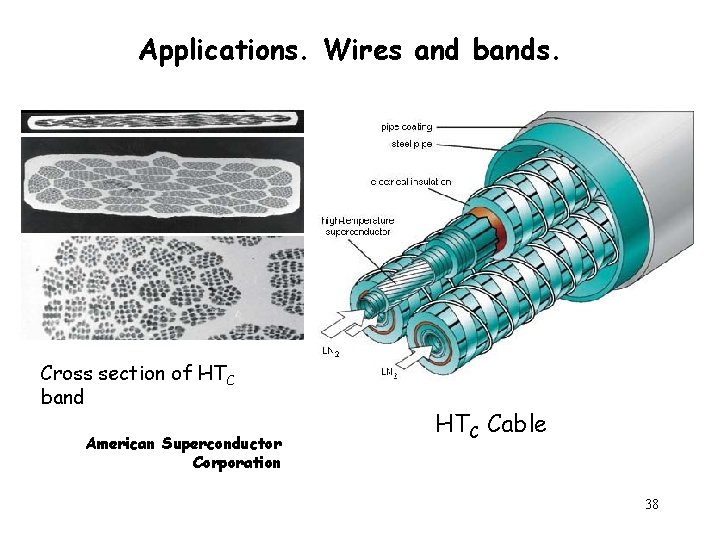
Applications. Wires and bands. Abfüllen in Silberröhrchen und Schweissen Extrusion c ab Walzen und Erhitzen bei 800 -900 o. C 37 American Superconductor
Applications. Wires and bands. Cross section of HTC band American Superconductor Corporation HTC Cable 38
Application. Industry. Magnetic bearing A flywheel in a vacuum chamber – energy accumulator. Mag. Lev – train (magnetic levitation) SMES: Superconducting Magnetic Energy Storage Saves energy in form of magnetic field produced by a superconducting coil. 39
Summary • History of discovery and farther development • How it works (still open problem for HTc) • What are the materials • Potential applications
A spin of a Cooper pair is: 1 1/2 2 0 Most of the HTc superconductors are: Cuprates Nickelates Cobaltates Manganates Superconductors type II in comparison to type I: have shorter coherence length and longer penetration depth have shorter coherence length and shorter penetration depth are cuprates (all other superconductors are type I) have longer coherence length and shorter penetration depth
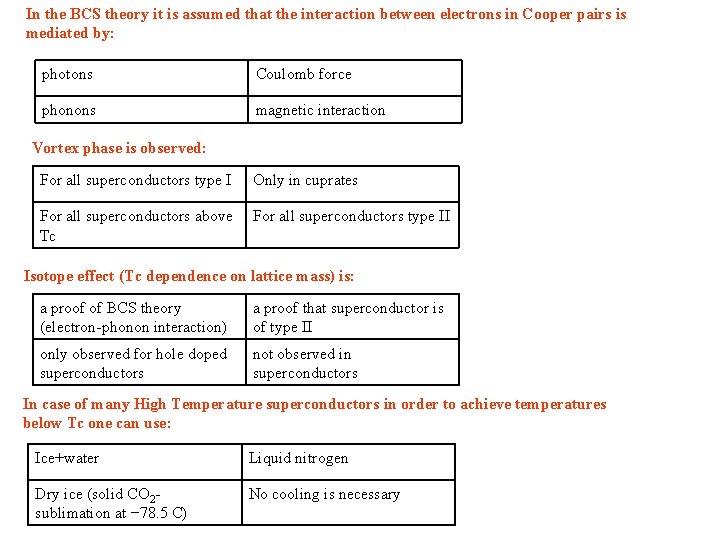
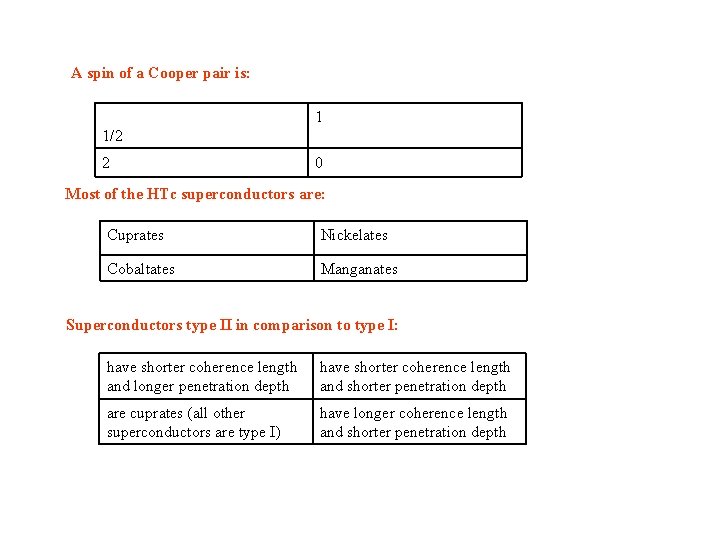
In the BCS theory it is assumed that the interaction between electrons in Cooper pairs is mediated by: photons Coulomb force phonons magnetic interaction Vortex phase is observed: For all superconductors type I Only in cuprates For all superconductors above Tc For all superconductors type II Isotope effect (Tc dependence on lattice mass) is: a proof of BCS theory (electron-phonon interaction) a proof that superconductor is of type II only observed for hole doped superconductors not observed in superconductors In case of many High Temperature superconductors in order to achieve temperatures below Tc one can use: Ice+water Liquid nitrogen Dry ice (solid CO 2 sublimation at − 78. 5 C) No cooling is necessary
- Slides: 42