
10 years of recovery research Mike Slade Professor

- Slides: 41
10 years of recovery research Mike Slade Professor of Mental Health Recovery and Social Inclusion University of Nottingham 10 May 2019
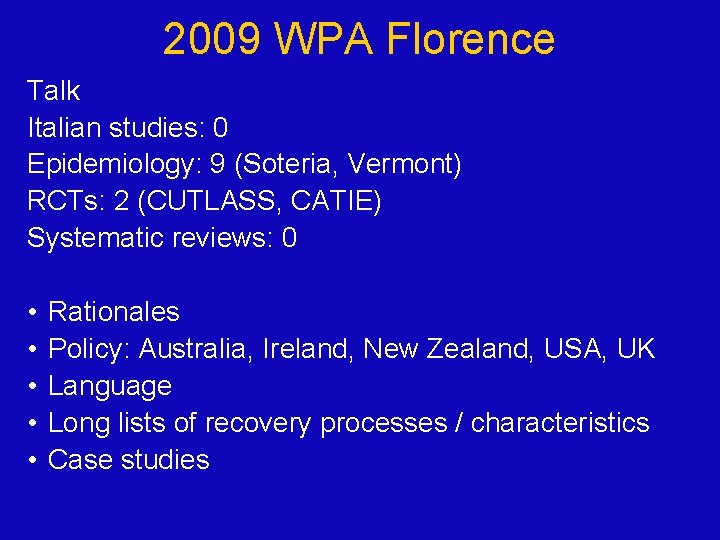
2009 WPA Florence Talk Italian studies: 0 Epidemiology: 9 (Soteria, Vermont) RCTs: 2 (CUTLASS, CATIE) Systematic reviews: 0 • • • Rationales Policy: Australia, Ireland, New Zealand, USA, UK Language Long lists of recovery processes / characteristics Case studies
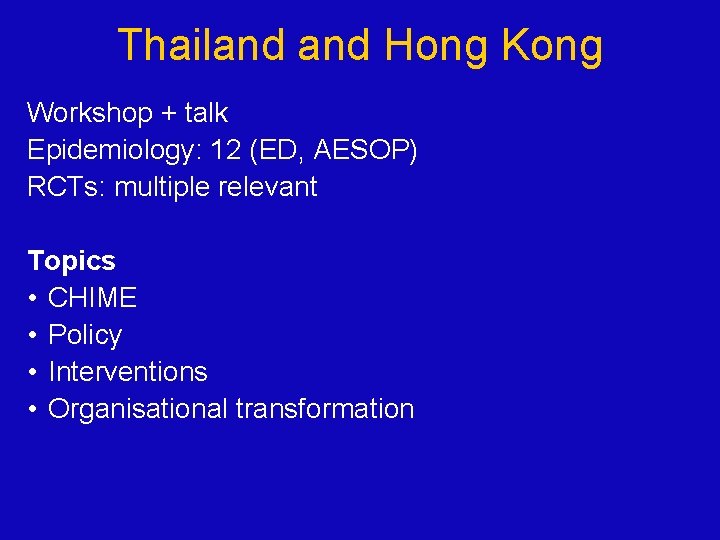
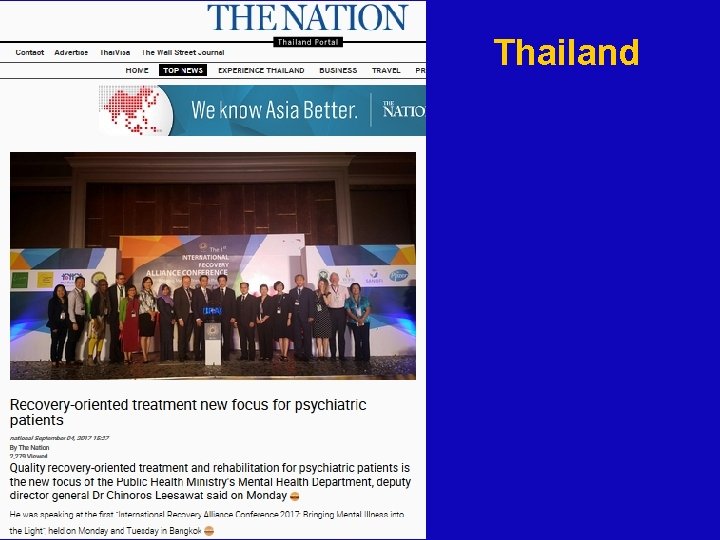
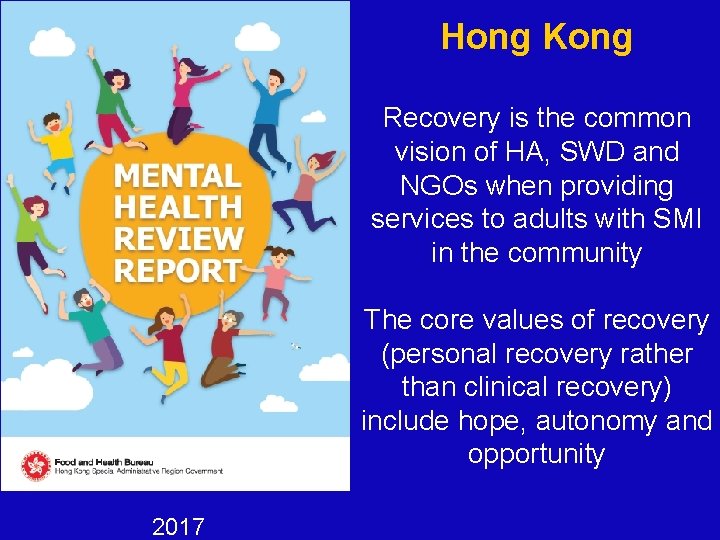
Thailand Hong Kong Workshop + talk Epidemiology: 12 (ED, AESOP) RCTs: multiple relevant Topics • CHIME • Policy • Interventions • Organisational transformation
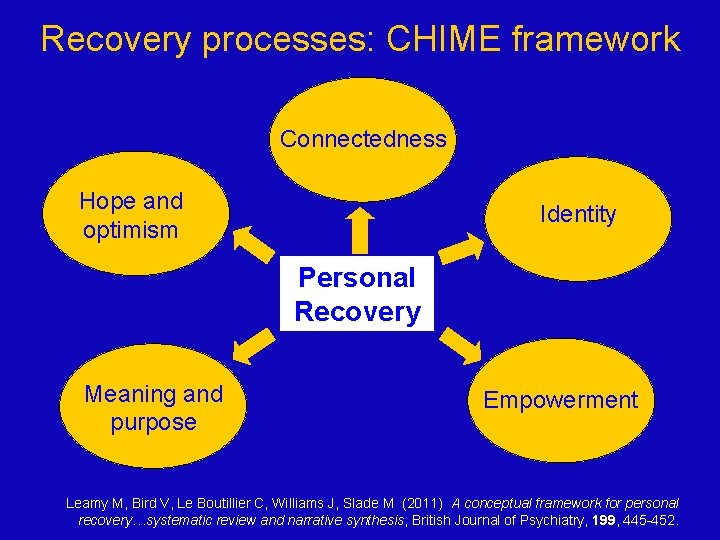
Recovery processes: CHIME framework Connectedness Hope and optimism Identity Personal Recovery Meaning and purpose Empowerment Leamy M, Bird V, Le Boutillier C, Williams J, Slade M (2011) A conceptual framework for personal recovery…systematic review and narrative synthesis, British Journal of Psychiatry, 199, 445 -452.
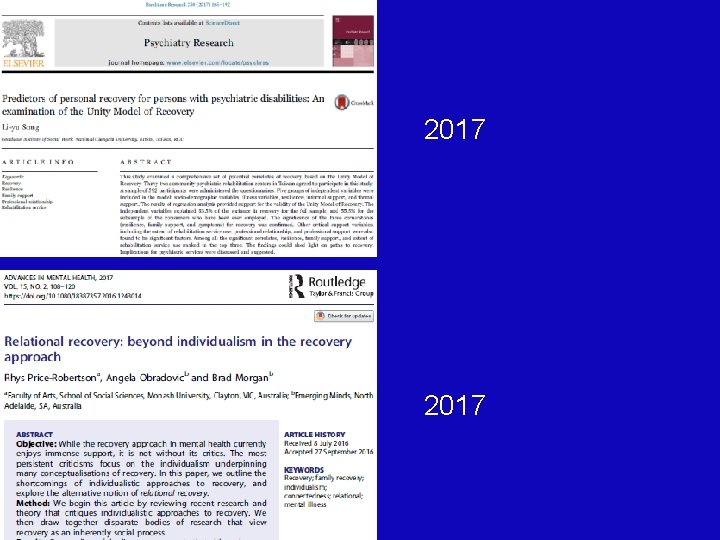
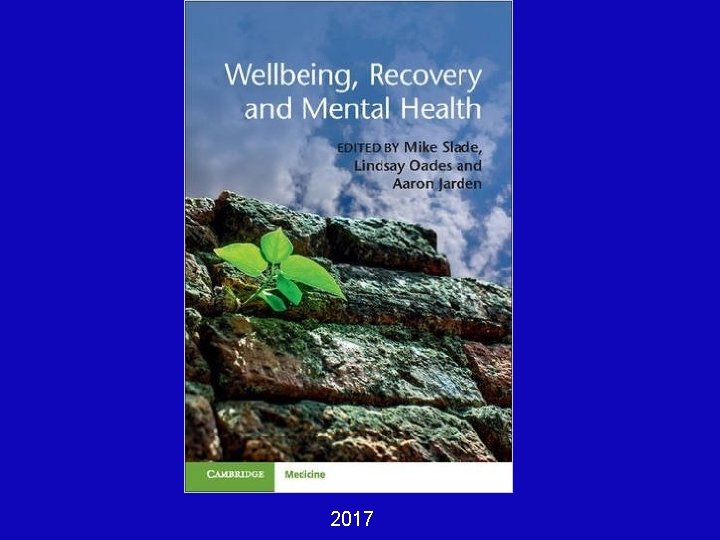
2017
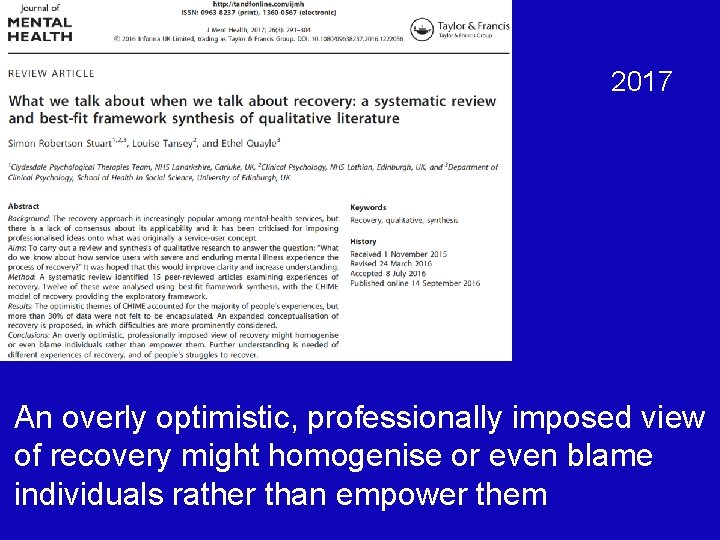
2017 An overly optimistic, professionally imposed view of recovery might homogenise or even blame individuals rather than empower them
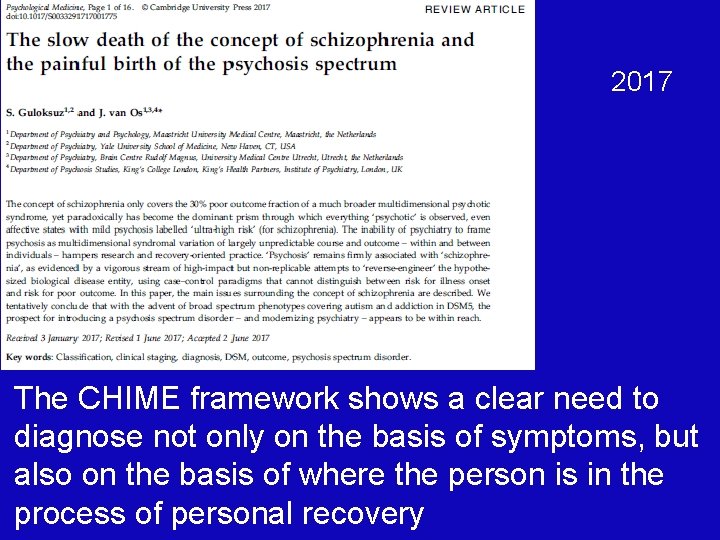
2017 The CHIME framework shows a clear need to diagnose not only on the basis of symptoms, but also on the basis of where the person is in the process of personal recovery
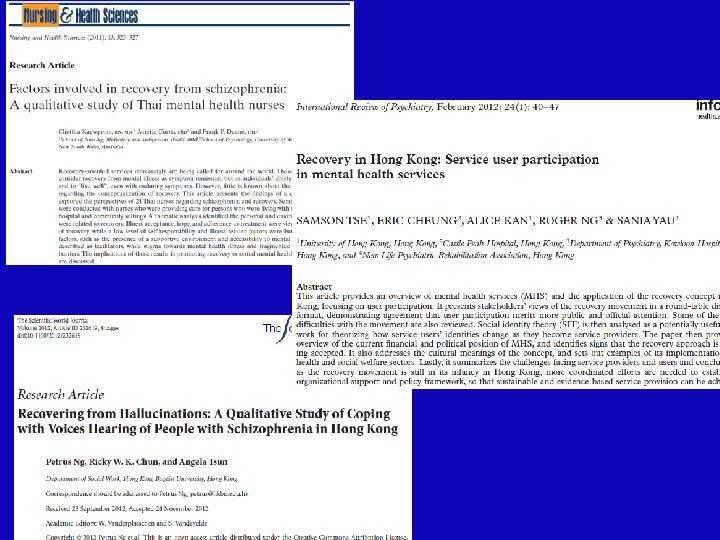
Thailand
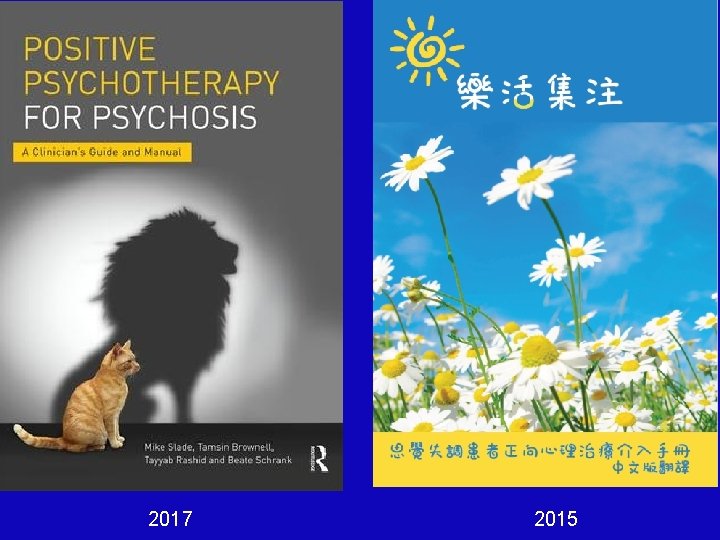
Hong Kong Recovery is the common vision of HA, SWD and NGOs when providing services to adults with SMI in the community The core values of recovery (personal recovery rather than clinical recovery) include hope, autonomy and opportunity 2017
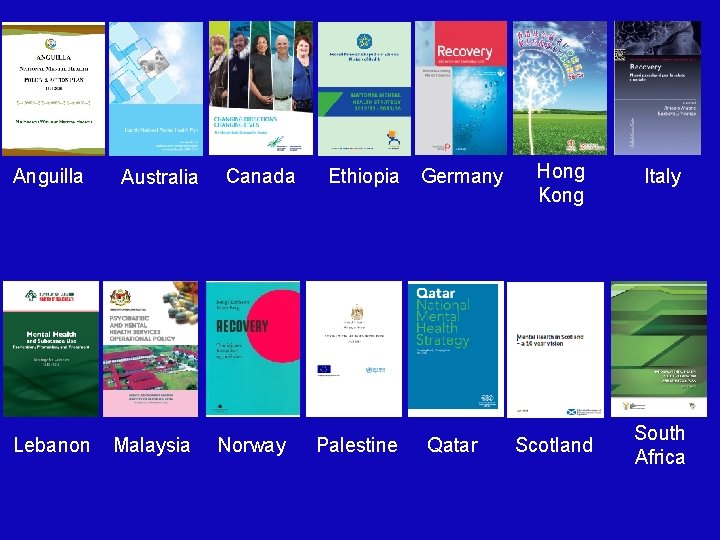
Anguilla Lebanon Australia Malaysia Canada Norway Ethiopia Palestine Germany Qatar Hong Kong Scotland Italy South Africa
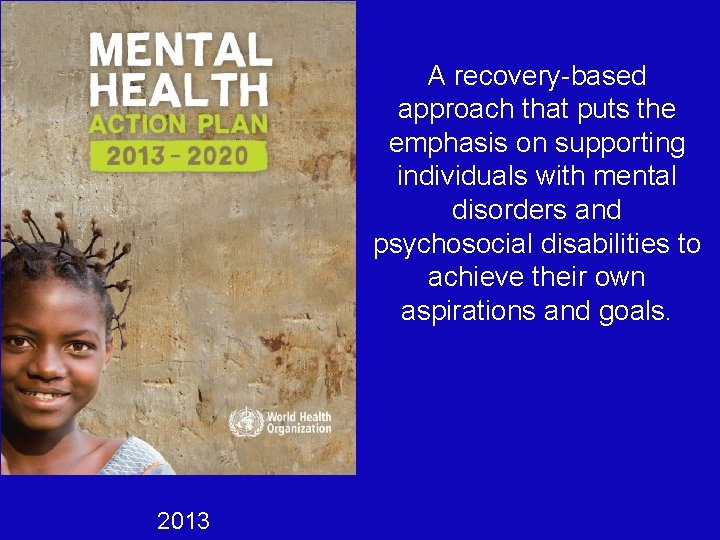
A recovery-based approach that puts the emphasis on supporting individuals with mental disorders and psychosocial disabilities to achieve their own aspirations and goals. 2013
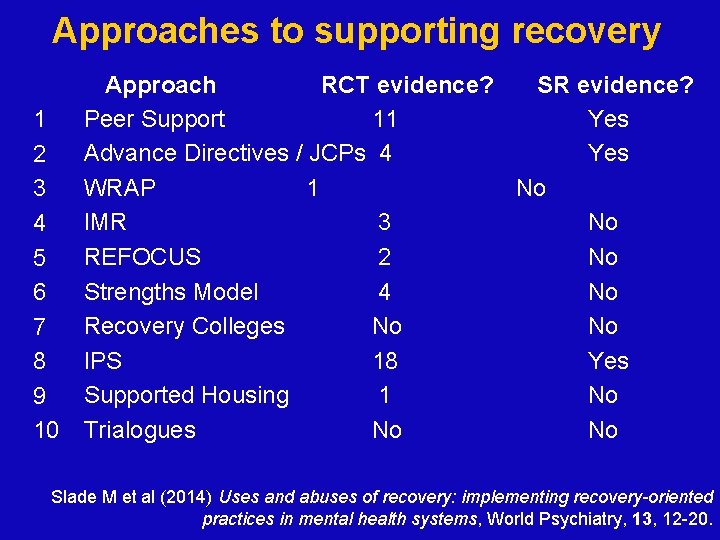
Approaches to supporting recovery 1 2 3 4 5 6 7 8 9 10 Approach RCT evidence? SR evidence? Peer Support 11 Yes Advance Directives / JCPs 4 Yes WRAP 1 No IMR 3 No REFOCUS 2 No Strengths Model 4 No Recovery Colleges No No IPS 18 Yes Supported Housing 1 No Trialogues No No Slade M et al (2014) Uses and abuses of recovery: implementing recovery-oriented practices in mental health systems, World Psychiatry, 13, 12 -20.
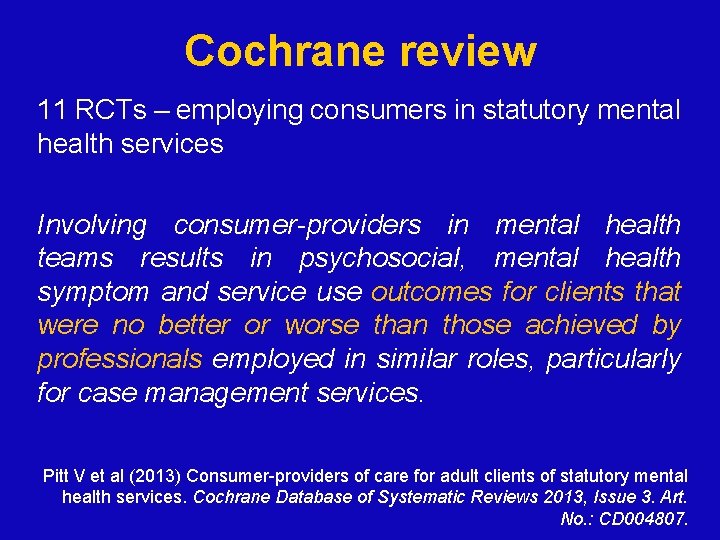
Cochrane review 11 RCTs – employing consumers in statutory mental health services Involving consumer-providers in mental health teams results in psychosocial, mental health symptom and service use outcomes for clients that were no better or worse than those achieved by professionals employed in similar roles, particularly for case management services. Pitt V et al (2013) Consumer-providers of care for adult clients of statutory mental health services. Cochrane Database of Systematic Reviews 2013, Issue 3. Art. No. : CD 004807.
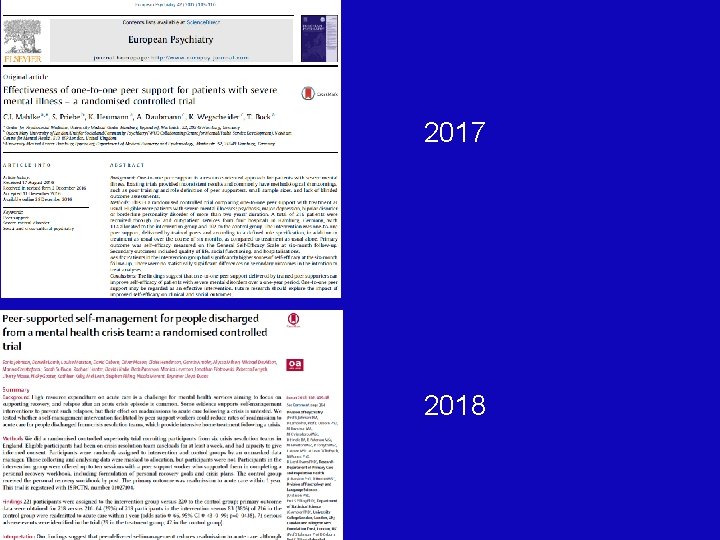
2017 2018
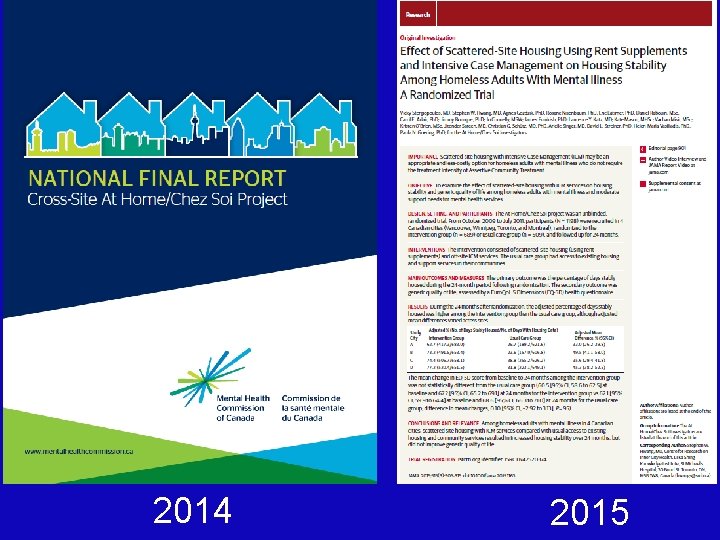
2014 2015
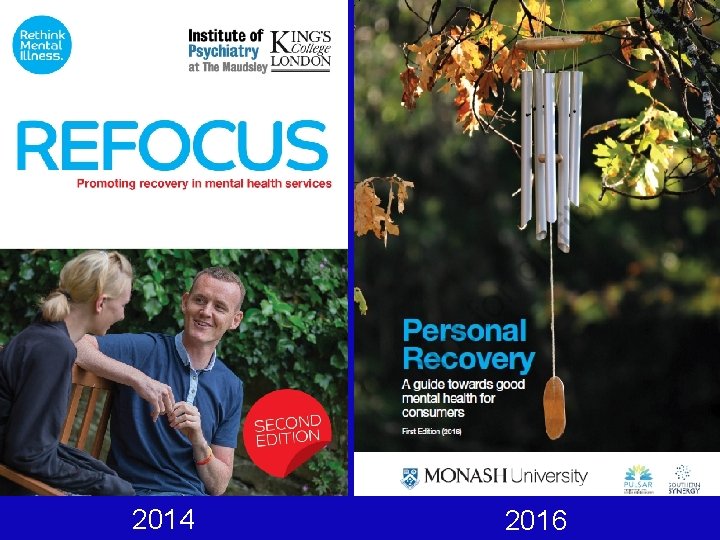
2014 2016
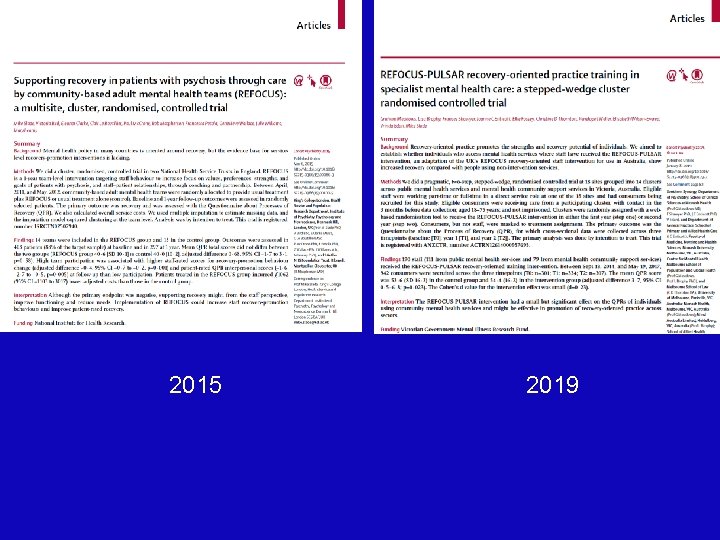
2015 2019
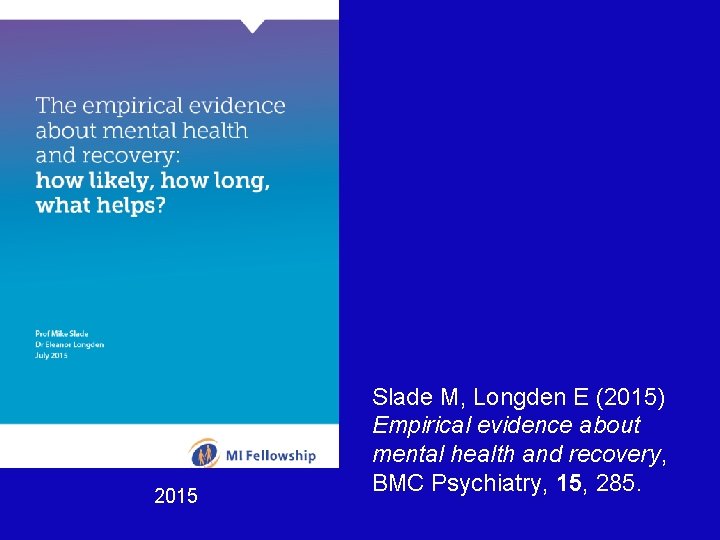
2015 Slade M, Longden E (2015) Empirical evidence about mental health and recovery, BMC Psychiatry, 15, 285.
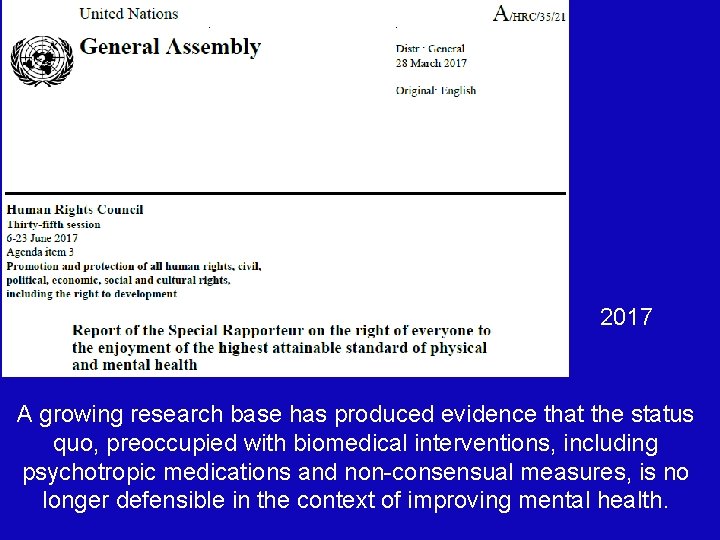
2017 A growing research base has produced evidence that the status quo, preoccupied with biomedical interventions, including psychotropic medications and non-consensual measures, is no longer defensible in the context of improving mental health.
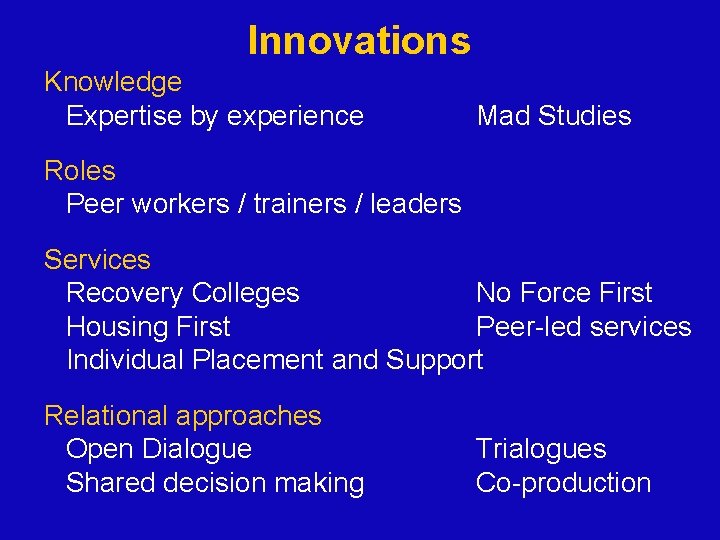
Innovations Knowledge Expertise by experience Mad Studies Roles Peer workers / trainers / leaders Services Recovery Colleges No Force First Housing First Peer-led services Individual Placement and Support Relational approaches Open Dialogue Shared decision making Trialogues Co-production
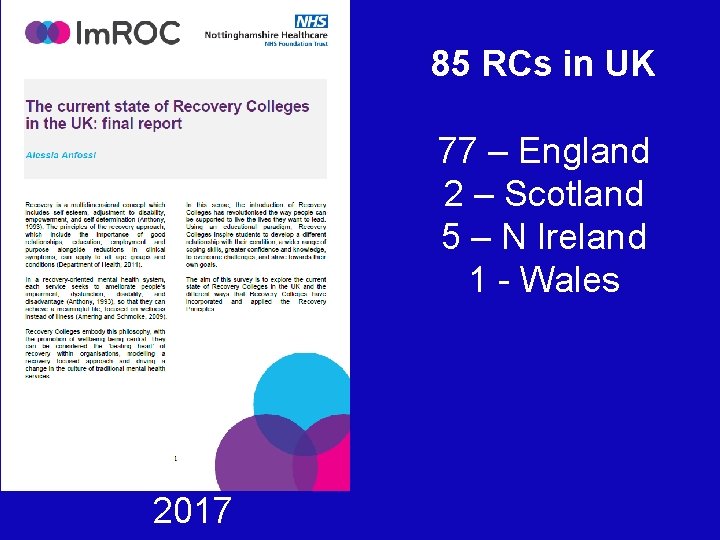
85 RCs in UK 77 – England 2 – Scotland 5 – N Ireland 1 - Wales 2017
2016
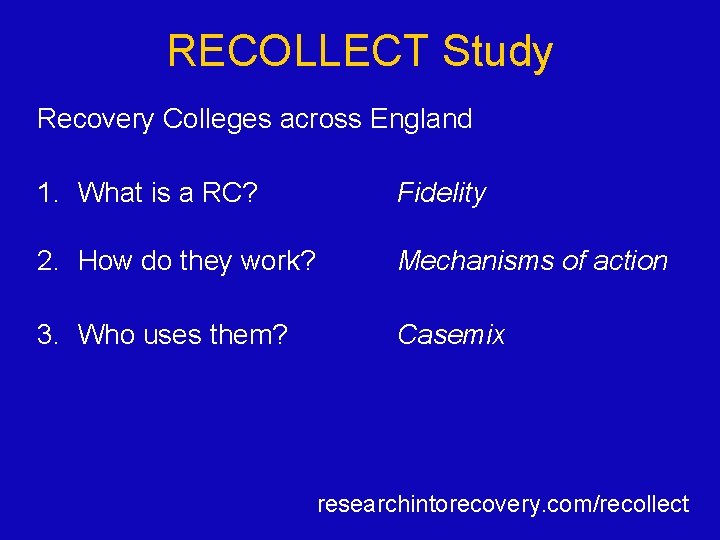
RECOLLECT Study Recovery Colleges across England 1. What is a RC? Fidelity 2. How do they work? Mechanisms of action 3. Who uses them? Casemix researchintorecovery. com/recollect
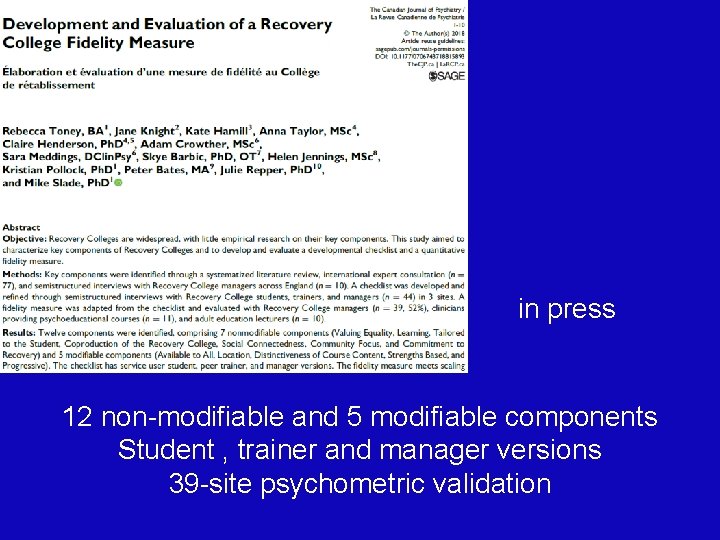
in press 12 non-modifiable and 5 modifiable components Student , trainer and manager versions 39 -site psychometric validation
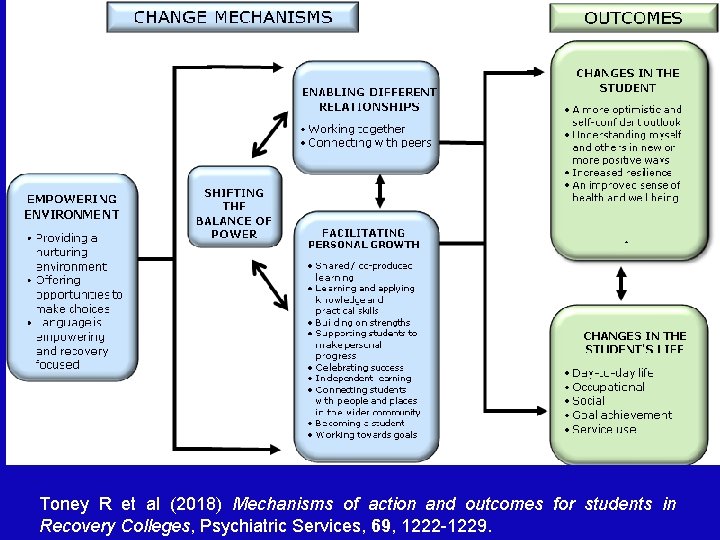
Toney R et al (2018) Mechanisms of action and outcomes for students in Recovery Colleges, Psychiatric Services, 69, 1222 -1229.
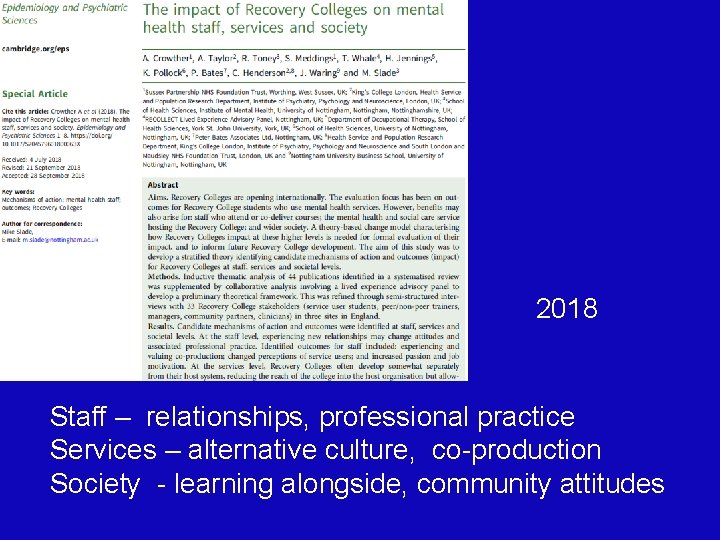
2018 Staff – relationships, professional practice Services – alternative culture, co-production Society - learning alongside, community attitudes
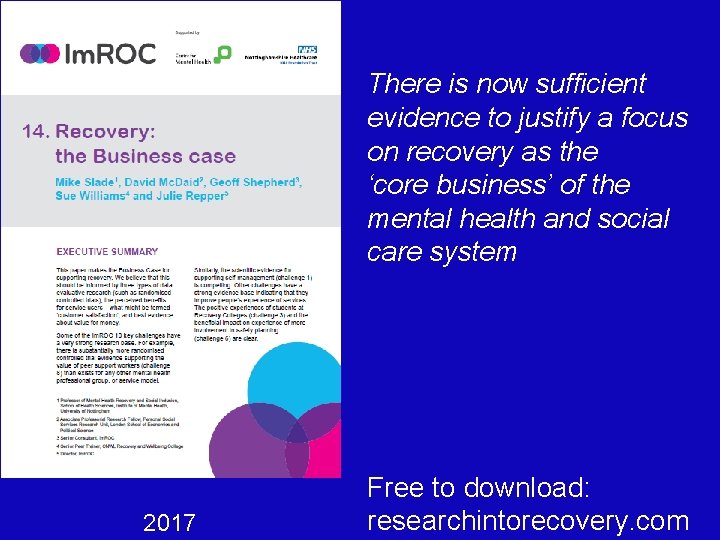
There is now sufficient evidence to justify a focus on recovery as the ‘core business’ of the mental health and social care system 2017 Free to download: researchintorecovery. com
What’s over the horizon?
Lived experience as a resource for others NEON Study researchintorecovery. com/neon
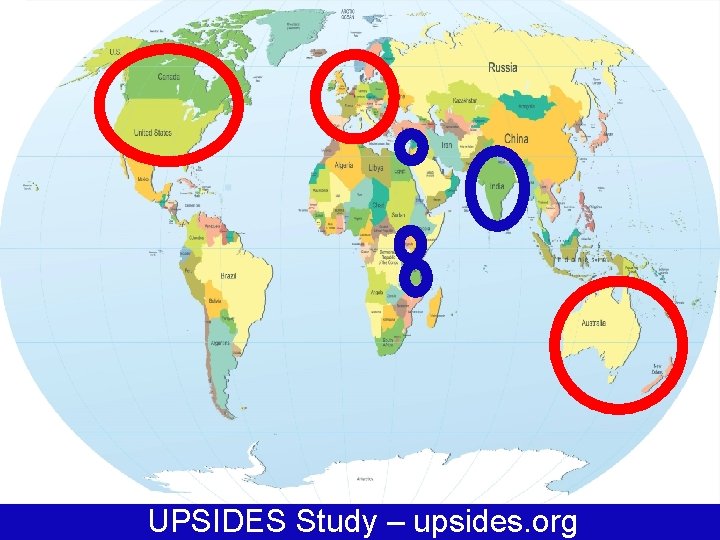
UPSIDES Study – upsides. org
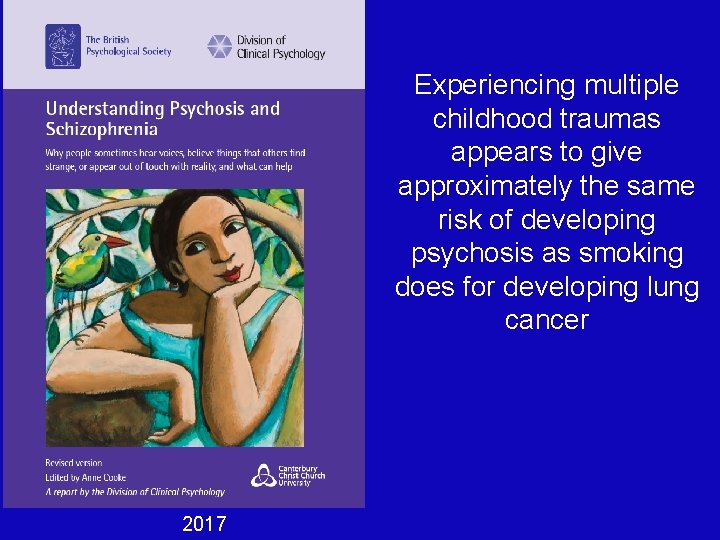
Experiencing multiple childhood traumas appears to give approximately the same risk of developing psychosis as smoking does for developing lung cancer 2017
2017
2017 2015
2009 2015
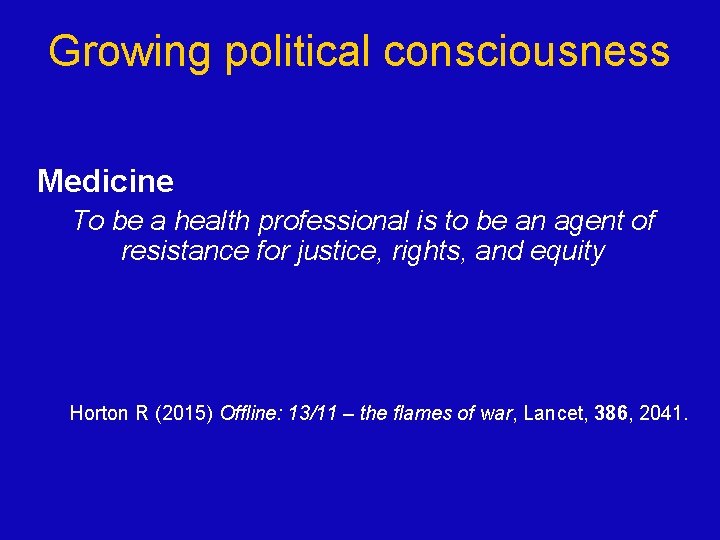
Growing political consciousness Medicine To be a health professional is to be an agent of resistance for justice, rights, and equity Horton R (2015) Offline: 13/11 – the flames of war, Lancet, 386, 2041.
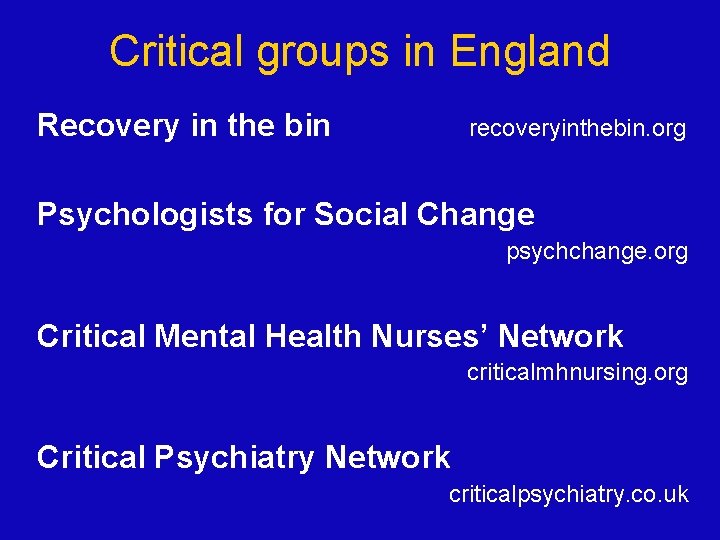
Critical groups in England Recovery in the bin recoveryinthebin. org Psychologists for Social Change psychchange. org Critical Mental Health Nurses’ Network criticalmhnursing. org Critical Psychiatry Network criticalpsychiatry. co. uk
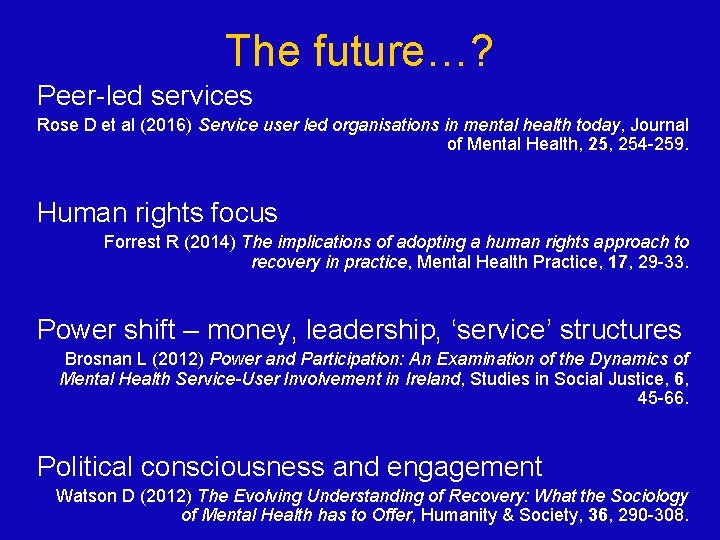
The future…? Peer-led services Rose D et al (2016) Service user led organisations in mental health today, Journal of Mental Health, 254 -259. Human rights focus Forrest R (2014) The implications of adopting a human rights approach to recovery in practice, Mental Health Practice, 17, 29 -33. Power shift – money, leadership, ‘service’ structures Brosnan L (2012) Power and Participation: An Examination of the Dynamics of Mental Health Service-User Involvement in Ireland, Studies in Social Justice, 6, 45 -66. Political consciousness and engagement Watson D (2012) The Evolving Understanding of Recovery: What the Sociology of Mental Health has to Offer, Humanity & Society, 36, 290 -308.
Thank you More information researchintorecovery. com Email m. slade@nottingham. ac. uk