
10 Ways to More Effectively Assert Yourself in
- Slides: 43
10 Ways to More Effectively Assert Yourself in the Workplace With Andrew Sanderbeck
Let’s Talk About… The difference between passive, assertive and aggressive behaviors and when it’s appropriate to use each of them
Let’s Talk About… The difference between passive, assertive and aggressive behaviors and when it’s appropriate to use each of them 10 techniques to use to speak more assertively, including your non-verbal language
Let’s Talk About… The difference between passive, assertive and aggressive behaviors and when it’s appropriate to use each of them 10 techniques to use to speak more assertively, including your non-verbal language How to stand up for yourself without being viewed as selfish, demanding or even hostile
Let’s Talk About… The difference between passive, assertive and aggressive behaviors and when it’s appropriate to use each of them 10 techniques to use to speak more assertively, including your non-verbal language How to stand up for yourself without being viewed as selfish, demanding or even hostile How to be more confident in yourself, your beliefs and abilities
Why Be More Assertive? There is one skill that can help you effectively stand up to the bossy co-worker, an overbearing manager or a difficult patron. It can also help your self-esteem and positively impact both personal happiness and workplace achievement. It is assertiveness.
The four ways to respond to a challenging person or situation • submissiveness/passivity • passive aggression • assertiveness
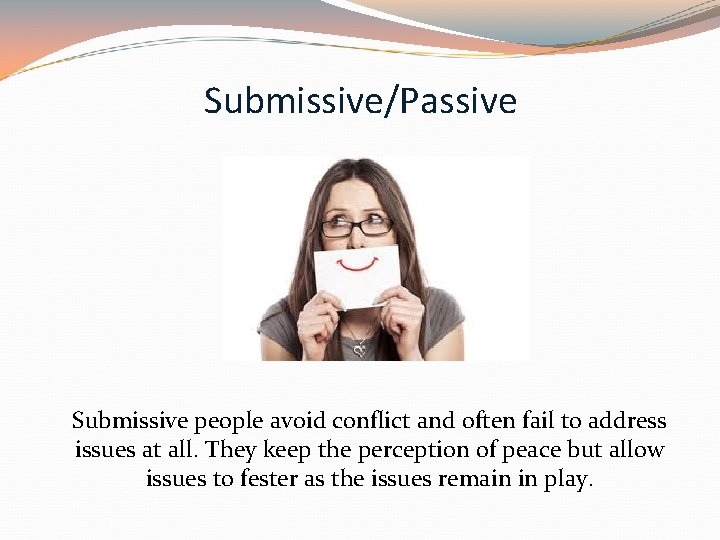
Submissive/Passive Submissive people avoid conflict and often fail to address issues at all. They keep the perception of peace but allow issues to fester as the issues remain in play.
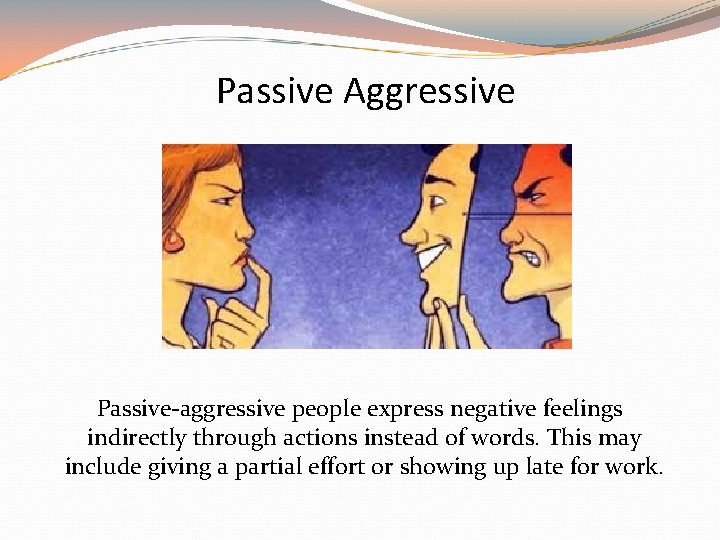
Passive Aggressive Passive-aggressive people express negative feelings indirectly through actions instead of words. This may include giving a partial effort or showing up late for work.
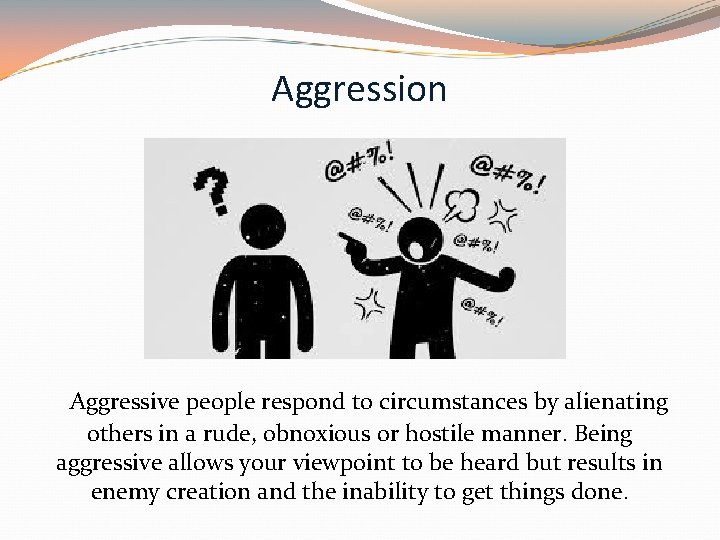
Aggression Aggressive people respond to circumstances by alienating others in a rude, obnoxious or hostile manner. Being aggressive allows your viewpoint to be heard but results in enemy creation and the inability to get things done.
Assertiveness Appropriately assertive individuals thrive, especially in ambiguous situations. Assertive people stand up for themselves in a respectful manner that does not purposely or intentionally escalate situations. They foster honest and clear communication and generate results by positively controlling their environment.
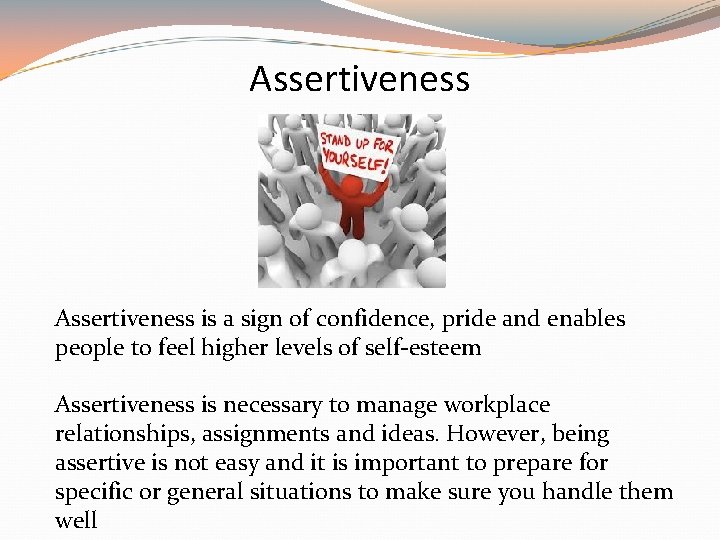
Assertiveness is a sign of confidence, pride and enables people to feel higher levels of self-esteem Assertiveness is necessary to manage workplace relationships, assignments and ideas. However, being assertive is not easy and it is important to prepare for specific or general situations to make sure you handle them well
Situation #1: Getting the Team Behind Your Plan Your team is in charge of launching a new sales campaign, and you have a great idea. The team meets to discuss how to get started, and you’re excited to propose your approach.
Passive Approach: You wait for your boss to make the first suggestion, then take the path of least resistance by agreeing, rather than putting your idea on the table or even suggesting ways to improve upon her strategy.
Passive Approach: You wait for your boss to make the first suggestion, then take the path of least resistance by agreeing, rather than putting your idea on the table or even suggesting ways to improve upon her strategy. Aggressive Approach: You immediately present your “perfect” idea as the one the team needs to adopt and, without taking a breath, begin assigning tasks. If anyone tries to suggest an alternative, you shake your head and say “That won’t work. ” All the while, you’re pretending not to notice the eye-rolls happening around the table.
Aggressive Approach: You immediately present your “perfect” idea as the one the team needs to adopt and, without taking a breath, begin assigning tasks. If anyone tries to suggest an alternative, you shake your head and say “That won’t work. ” All the while, you’re pretending not to notice the eye-rolls happening around the table. Assertive Approach: As you listen to the various suggestions your colleagues are floating, you both acknowledge their strong points and assume a role in solving potential challenges. You might say, for example, “It’s a great idea to track prospective client interactions. What if we did it over six months instead of three? That would allow us to collect more data and make better decisions for the next fiscal year. ”
Situation #2: It’s Time for a Raise, but Your Boss Isn’t Making Any Moves After asking for a raise during a check-in with your boss, she says that you will have to wait at least another six months. The organization is just not able to give raises right now, but she assures your performance is such that you’ll be considered for a salary bump—when the time is right.
Write a passive response to the boss in the question box
Write a passive response to the boss in the question box Write an aggressive response to the boss in the question box
Write a passive response to the boss in the question box Write an aggressive response to the boss in the question box Write an assertive response to the boss in the question box
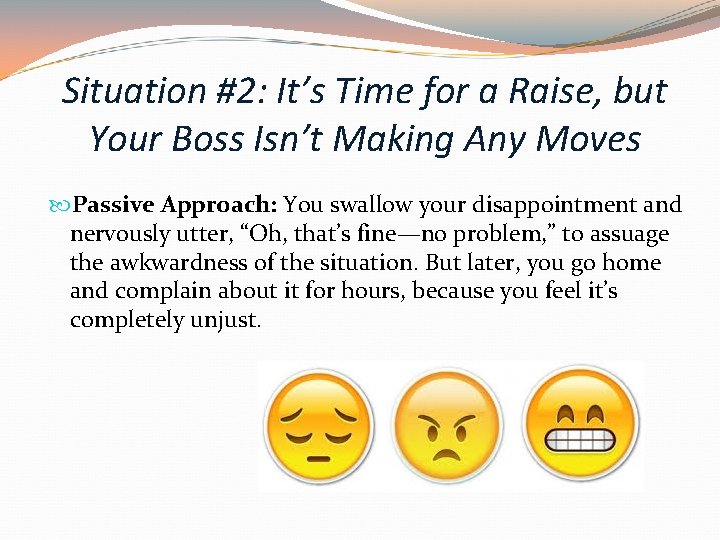
Situation #2: It’s Time for a Raise, but Your Boss Isn’t Making Any Moves Passive Approach: You swallow your disappointment and nervously utter, “Oh, that’s fine—no problem, ” to assuage the awkwardness of the situation. But later, you go home and complain about it for hours, because you feel it’s completely unjust.
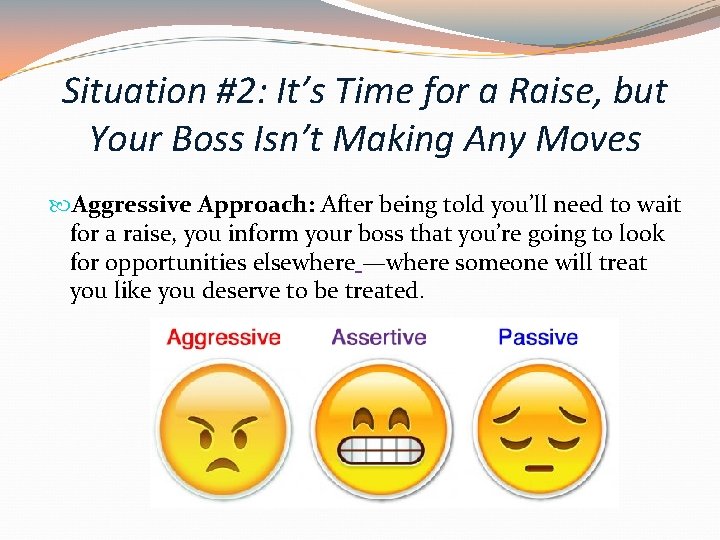
Situation #2: It’s Time for a Raise, but Your Boss Isn’t Making Any Moves Aggressive Approach: After being told you’ll need to wait for a raise, you inform your boss that you’re going to look for opportunities elsewhere —where someone will treat you like you deserve to be treated.
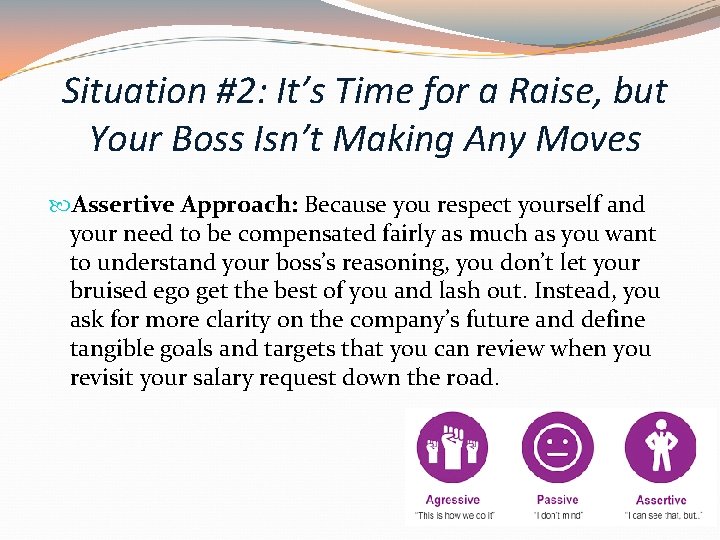
Situation #2: It’s Time for a Raise, but Your Boss Isn’t Making Any Moves Assertive Approach: Because you respect yourself and your need to be compensated fairly as much as you want to understand your boss’s reasoning, you don’t let your bruised ego get the best of you and lash out. Instead, you ask for more clarity on the company’s future and define tangible goals and targets that you can review when you revisit your salary request down the road.
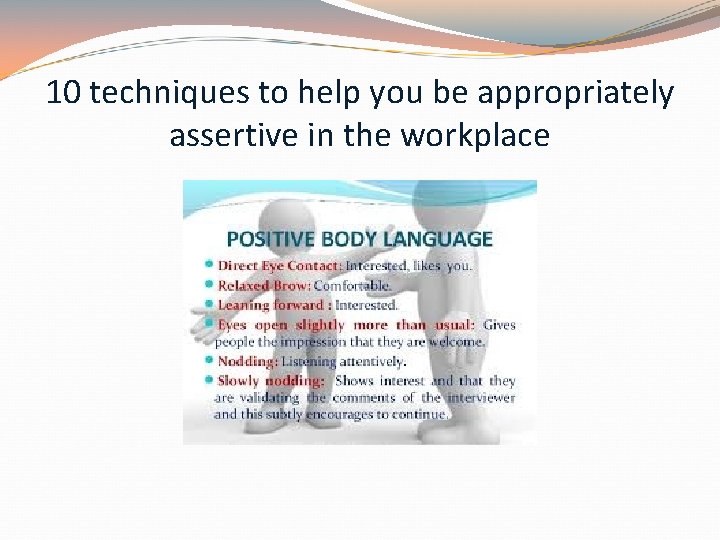
10 techniques to help you be appropriately assertive in the workplace
10 techniques to help you be appropriately assertive in the workplace
10 techniques to help you be appropriately assertive in the workplace
10 techniques to help you be appropriately assertive in the workplace
10 techniques to help you be appropriately assertive in the workplace
10 techniques to help you be appropriately assertive in the workplace
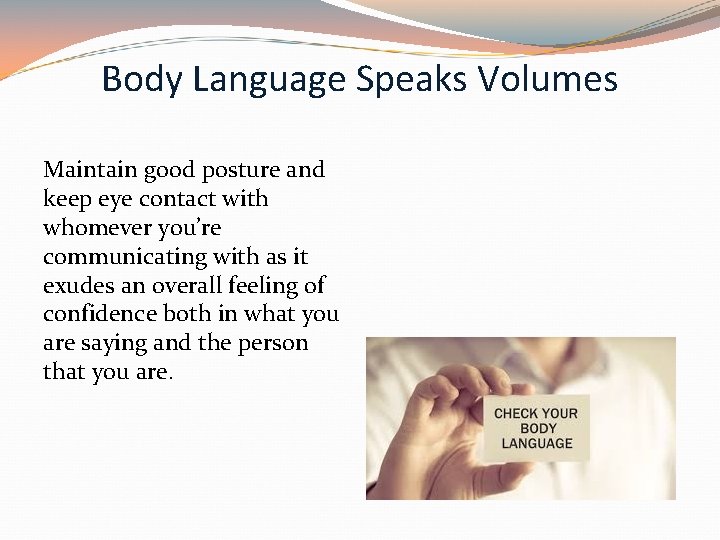
Body Language Speaks Volumes Maintain good posture and keep eye contact with whomever you’re communicating with as it exudes an overall feeling of confidence both in what you are saying and the person that you are.
10 techniques to help you be appropriately assertive in the workplace
Speak in Headlines When sharing an idea or expressing your thoughts, try to think of the headline you want to communicate in advance and stick to that when relaying your message. This little trick will help you to share your thoughts concisely and clearly, without rambling. It also helps you to make your point with more assertion. Be careful not to end a statement with a questioning tone, as that comes across as you having doubt in what you’re communicating.
10 techniques to help you be appropriately assertive in the workplace
10 techniques to help you be appropriately assertive in the workplace
10 techniques to help you be appropriately assertive in the workplace
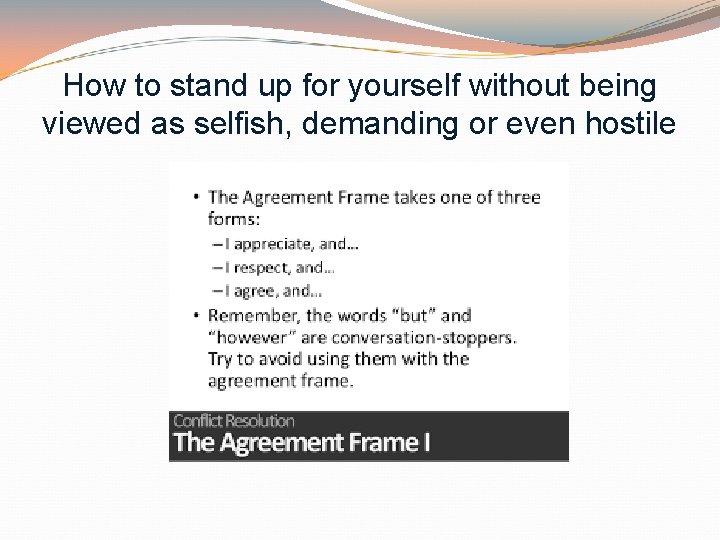
How to stand up for yourself without being viewed as selfish, demanding or even hostile
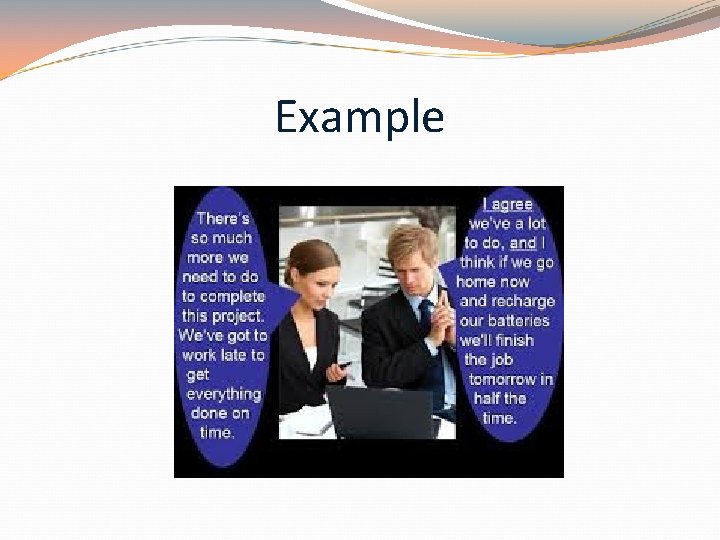
Example
Purpose Frames The purpose frame is a linguistic tool which we can use to satisfy the purpose of a person's request without necessarily giving them what they actually ask for. While that may sound manipulative or akin to some form of trickery, it really isn't. The purpose frame is elegantly designed to produce win-win outcomes.
Purpose Frames The form of the purpose frame is very simple and to illustrate it we'll use two imaginary individuals - Billy and Johnny. For our purposes Johnny will be using the purpose frame to address a request made by Billy makes a request (X) of Johnny responds - (X), for what purpose? Billy responds - (X) for the purpose of (Y). Johnny may choose to offer an alternative to (X) that satisfies Johnny's purpose of (Y).
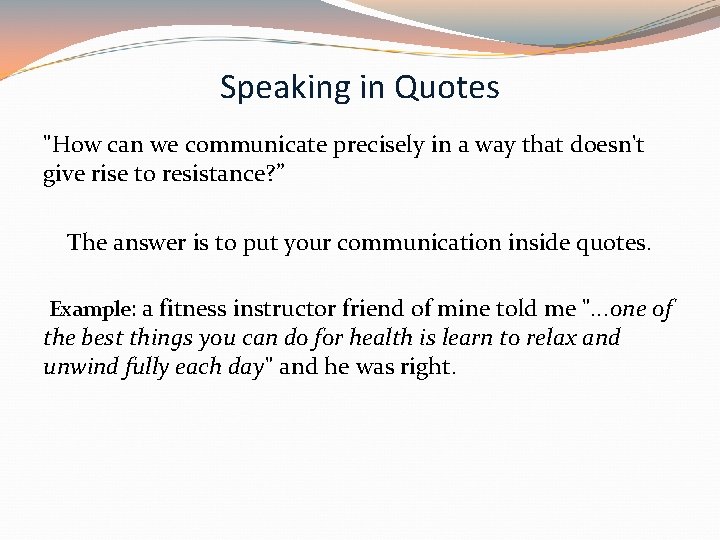
Speaking in Quotes Speaking in quotes is a very powerful way to verbally convey a direct message or instruction in an indirect way. Quotes allow you to get your message across and neatly bypass any resistance that may arise from the person you are communicating with.
Speaking in Quotes "How can we communicate precisely in a way that doesn't give rise to resistance? ” The answer is to put your communication inside quotes. Example: a fitness instructor friend of mine told me ". . . one of the best things you can do for health is learn to relax and unwind fully each day" and he was right.
Thank You For Attending This Program! Contact Andrew Sanderbeck 727 -409 -2239 Andrew@peopleconnectinstitute. com