
10 Ways to Go from Good to Great





- Slides: 97
10 Ways to Go from Good to Great Scrum Master
Benjamin Day • Brookline, MA • Consultant, Coach, & Trainer • Microsoft MVP for Visual Studio ALM • Team Foundation Server, Software Testing, Scrum, Software Architecture • Scrum. org Classes • Professional Scrum Foundations (PSF) • Professional Scrum Master (PSM) • Professional Scrum Developer (PSD) • www. benday. com, benday@benday. com, @benday
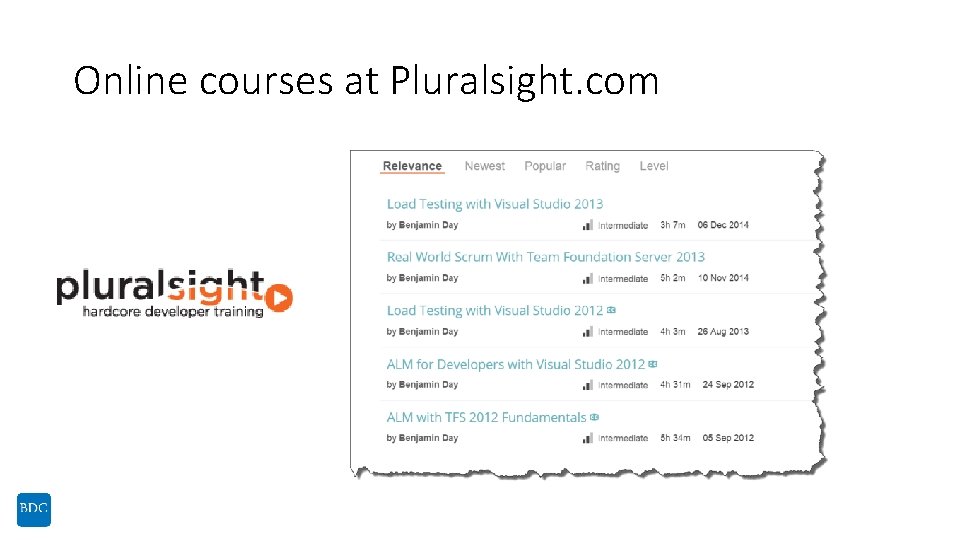
Online courses at Pluralsight. com
Warning: Shameless Plug
Professional Scrum Master (PSM) training on May 20 & 21 in Brookline, MA http: //bendayscrum. eventbrite. com
On with the show.
Assumptions • You’re technical. I’m technical. • For today, we’re talking about a fairly technical Scrum Master • (Don’t forget the needs of the business though. ) • This talk = Scrum Mastering + “Getting your project started right”
Top 10 Ways: Things to Think About • What can you do to help your team? • What can you do to help your product owner? • What can you do to help yourself? • What can you do to help your organization? • Change your Daily Scrum
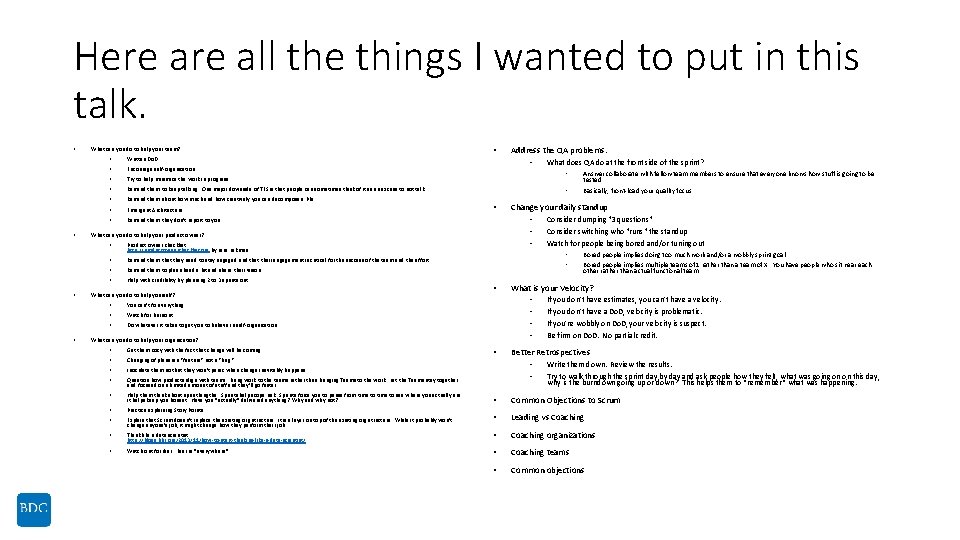
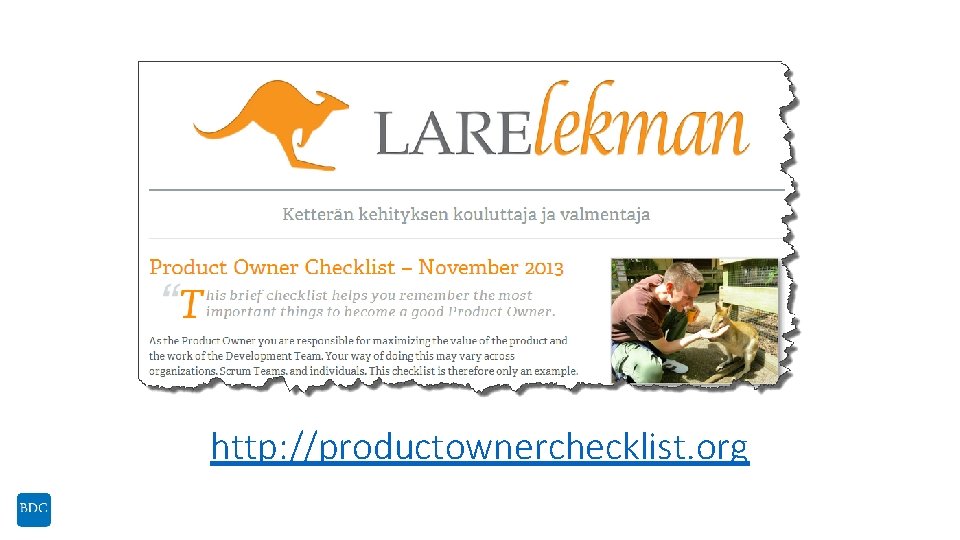
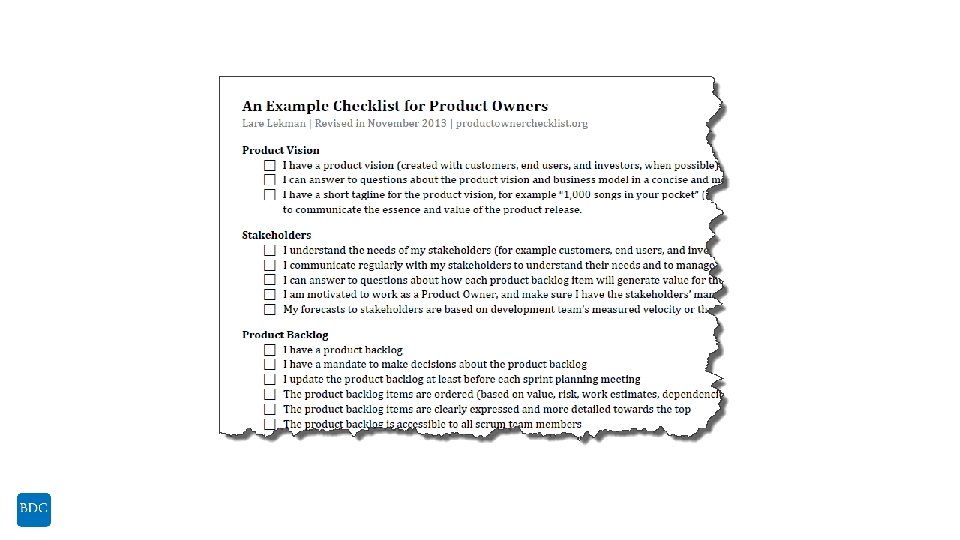
Here all the things I wanted to put in this talk. • • What can you do to help your team? • Written Do. D • Encourage self-organization • Try to help minimize the work in progress. • Remind them to keep talking. One major downside of TFS is that people can sometimes think of it as an excuse to not talk. • Remind them about how much and how creatively you can decompose a PBI • Emergent Architecture. • Remind them they don't report to you • • • Product owner checklist http: //productownerchecklist. org by Lare Lekman • Remind them that they need to stay engaged and that their engagement is critical for the success of the team and the effort. • Remind them to plan ahead a bit and share their vision • Help with credibility by planning 2 to 3 sprints out What can you do to help yourself? • You can't fix everything. • Watch for burnout. • Do whatever it takes to get you to believe in self-organization Get them cozy with the fact that change will be coming. • Changing of plans is a "feature" not a "bug. " • Inoculate them so that they won't panic when change inevitably happens. • Question how products align with teams. Bring work to the teams rather than bringing Teams to the work. Let the Teams stay together and focused on a limited amount of stuff and they'll go faster. • Help them think about sprint lengths. Sprints help scope risk. Sprints force you to pause from time to see where you actually are. It helps keep you honest. Have you *actually* delivered anything? Why and why not? • Practice explaining Story Points. • Explain that Scrum doesn't replace the existing org structure. It is a layer on top of the existing org structure. While it probably won't change anyone's job, it might change how they perform their job. • • • Answer collaborate with fellow team members to ensure that everyone knows how stuff is going to be tested. • Basically, front-load your quality focus. Consider dumping "3 questions" Consider switching who "runs" the standup Watch for people being bored and/or tuning out • • Bored people implies doing too much work and/or a wobbly sprint goal Bored people implies multiple teams of 1 rather than a team of X. You have people who sit near each other rather than actual functional team. What is your Velocity? • • What can you do to help your organization? • What does QA do at the front side of the sprint? Change your daily standup • • • What can you do to help your product owner? • Address the QA problems. If you don't have estimates, you can't have a velocity. If you don't have a Do. D, velocity is problematic. If you're wobbly on Do. D, your velocity is suspect. Be firm on Do. D. No partial credit. Better Retrospectives • • Write them down. Review the results. Try to walk through the sprint day by day and ask people how they felt, what was going on on this day, why is the burndown going up or down? This helps them to *remember* what was happening. • Common Objections to Scrum • Leading vs Coaching Think like a data scientist. http: //blogs. hbr. org/2013/11/how-to-start-thinking-like-a-data-scientist/ • Coaching organizations Watch out for fear. Fear is *everywhere*. • Coaching teams • Common objections
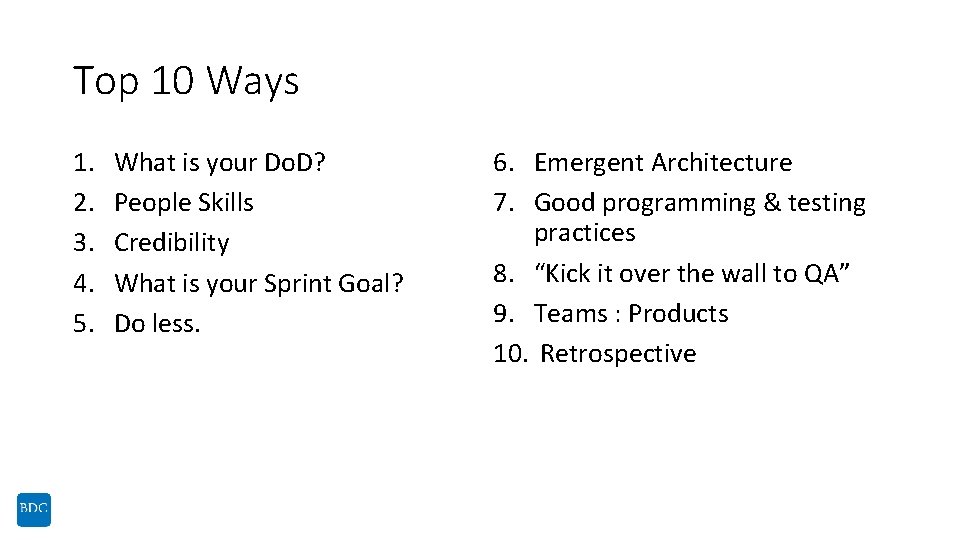
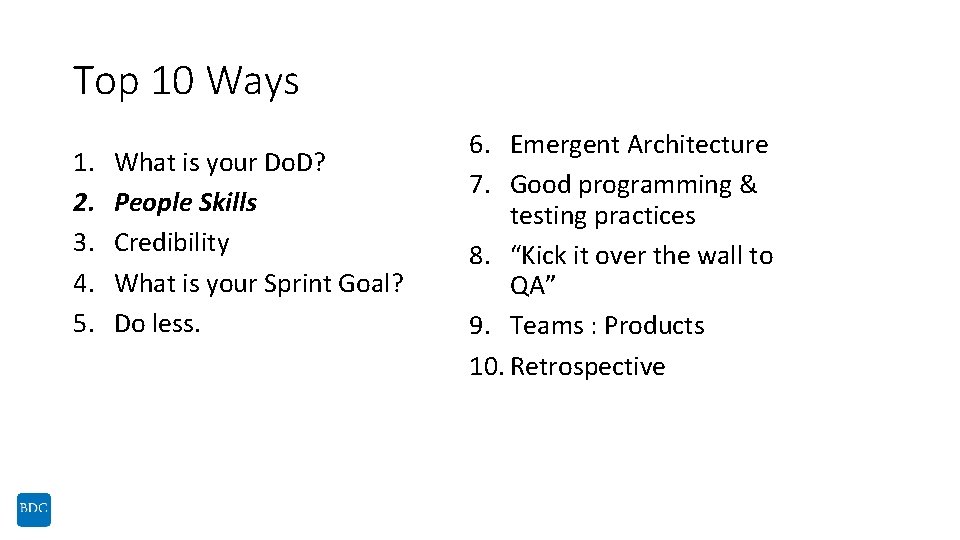
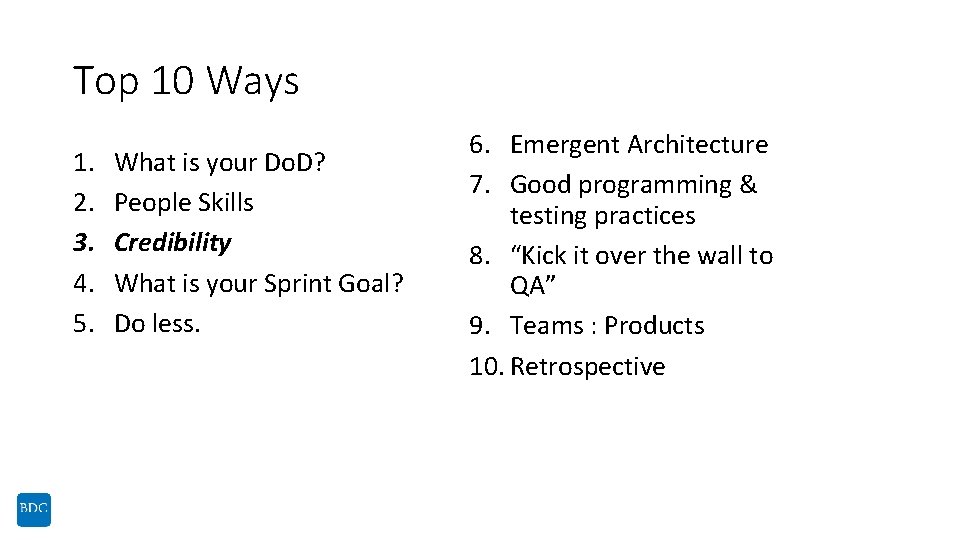
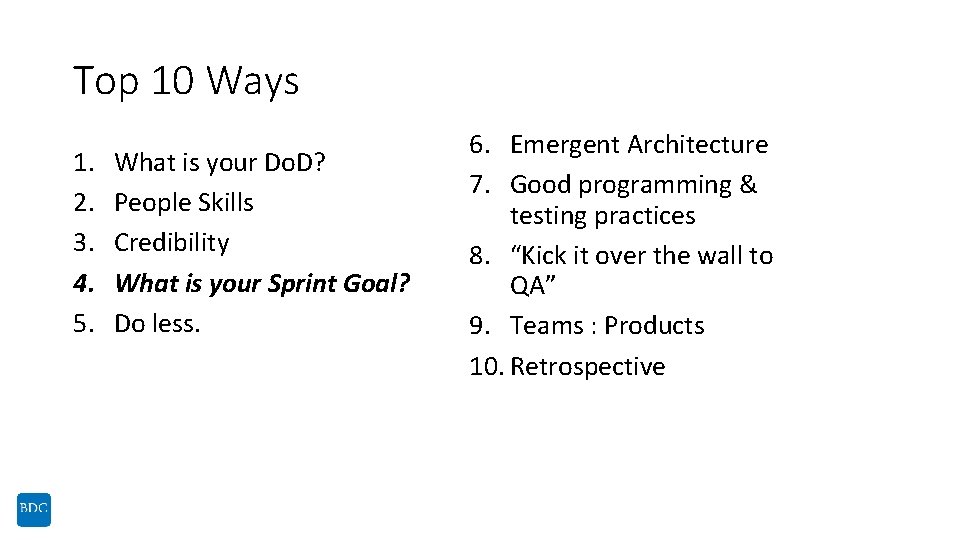
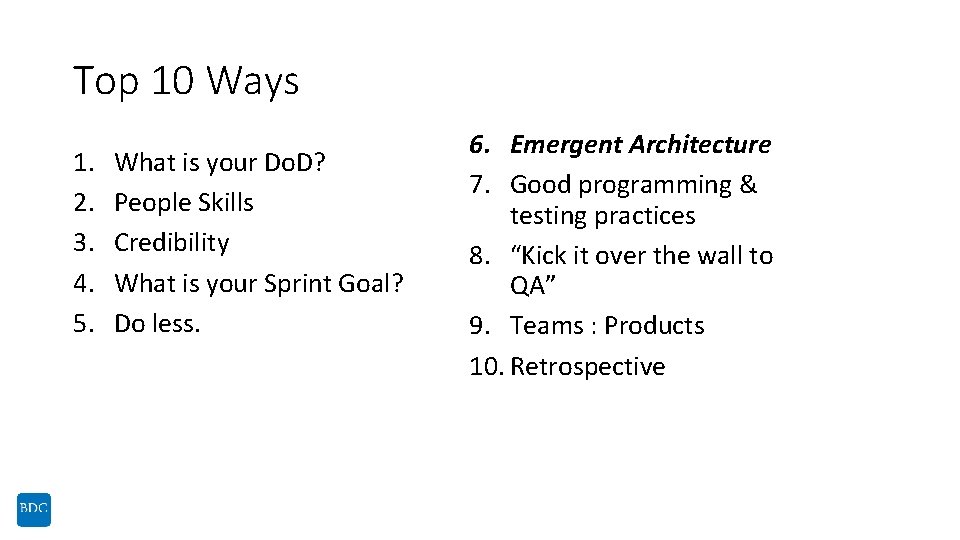
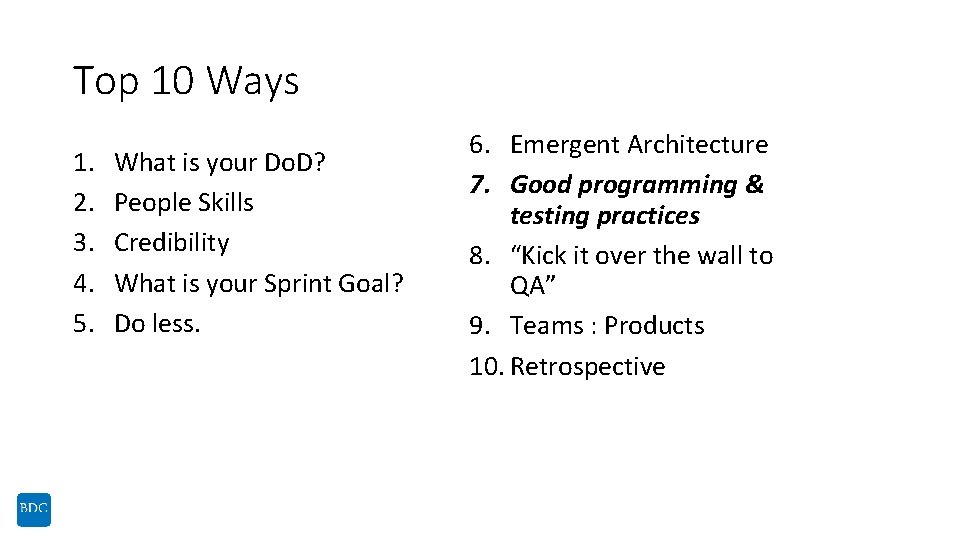
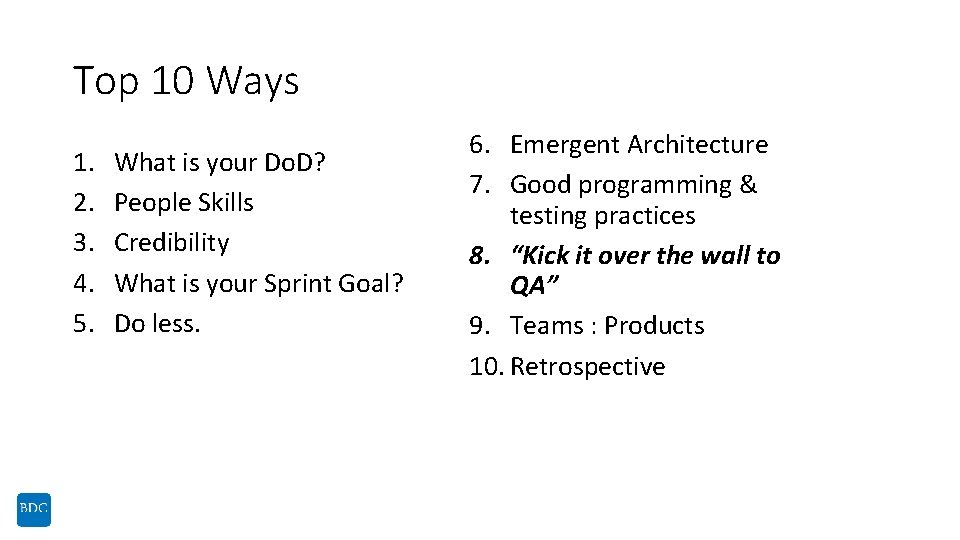
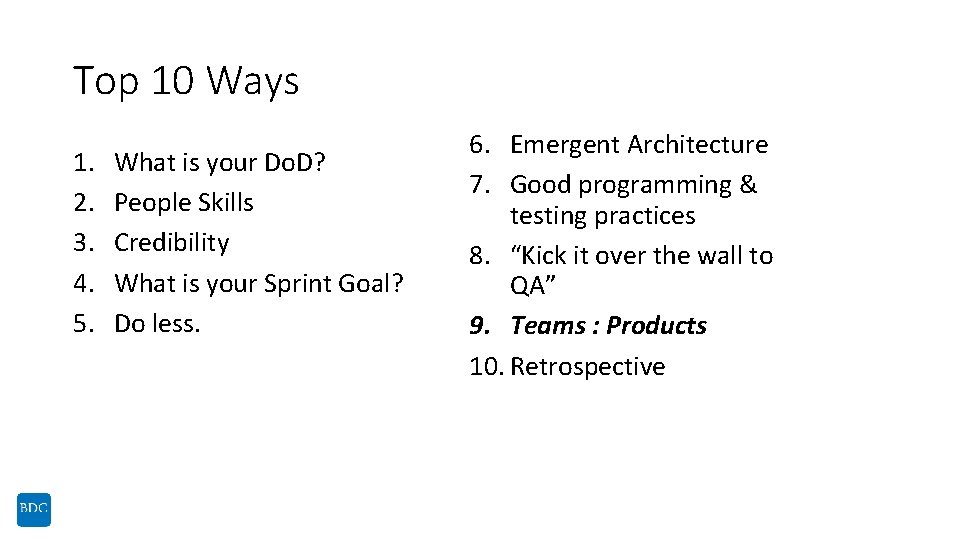
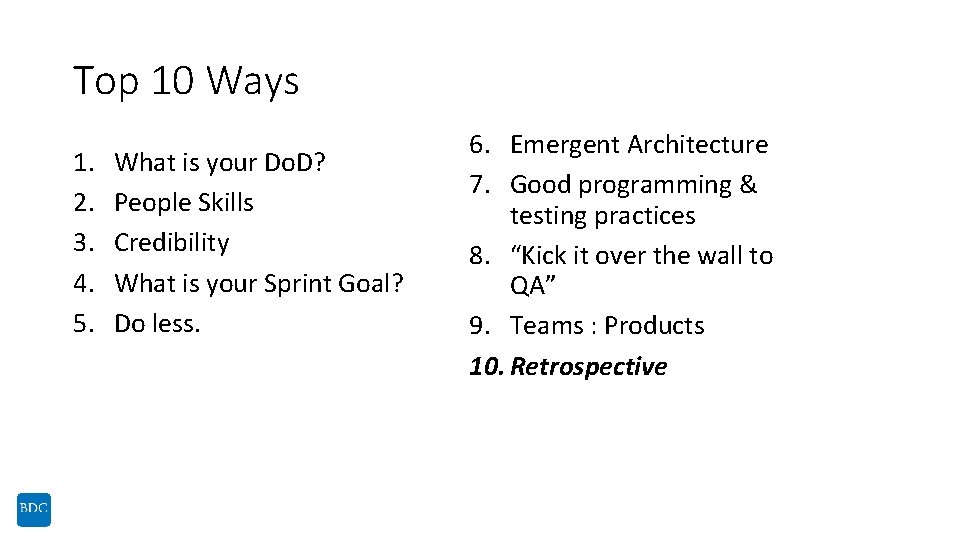
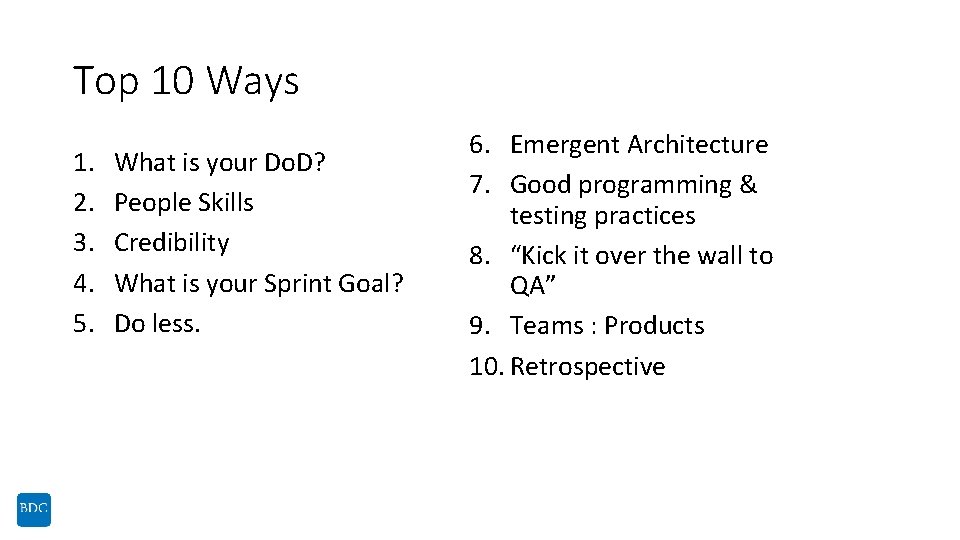
Top 10 Ways 1. 2. 3. 4. 5. What is your Do. D? People Skills Credibility What is your Sprint Goal? Do less. 6. Emergent Architecture 7. Good programming & testing practices 8. “Kick it over the wall to QA” 9. Teams : Products 10. Retrospective
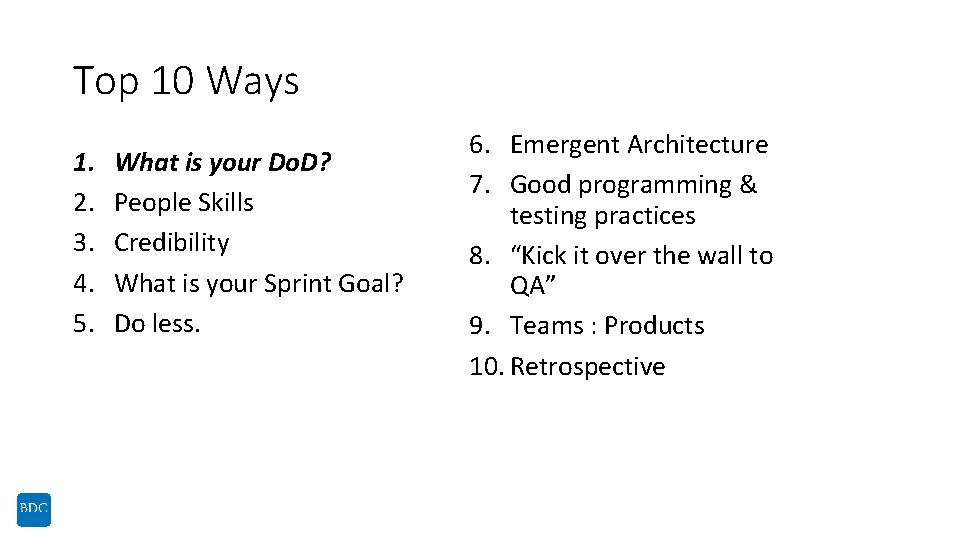
Top 10 Ways 1. 2. 3. 4. 5. What is your Do. D? People Skills Credibility What is your Sprint Goal? Do less. 6. Emergent Architecture 7. Good programming & testing practices 8. “Kick it over the wall to QA” 9. Teams : Products 10. Retrospective
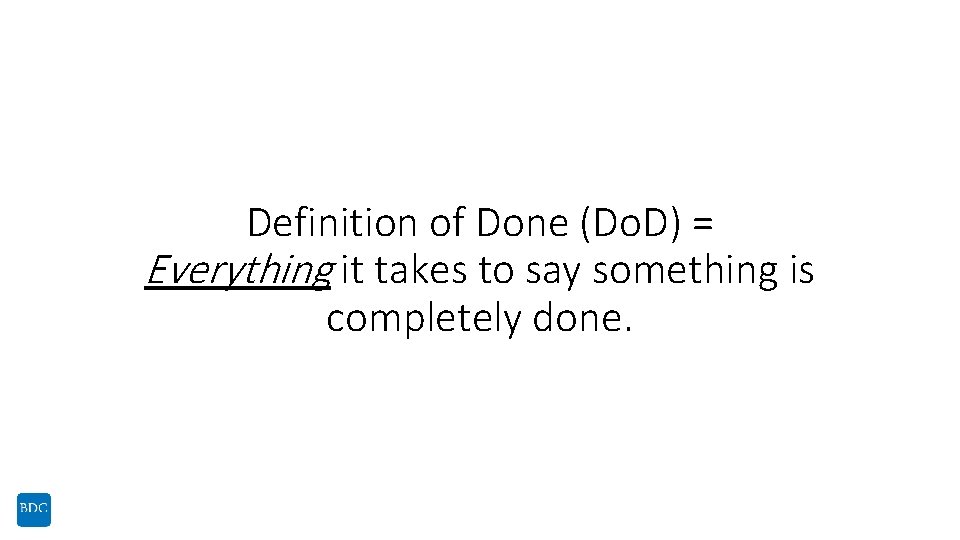
Definition of Done (Do. D) = Everything it takes to say something is completely done.
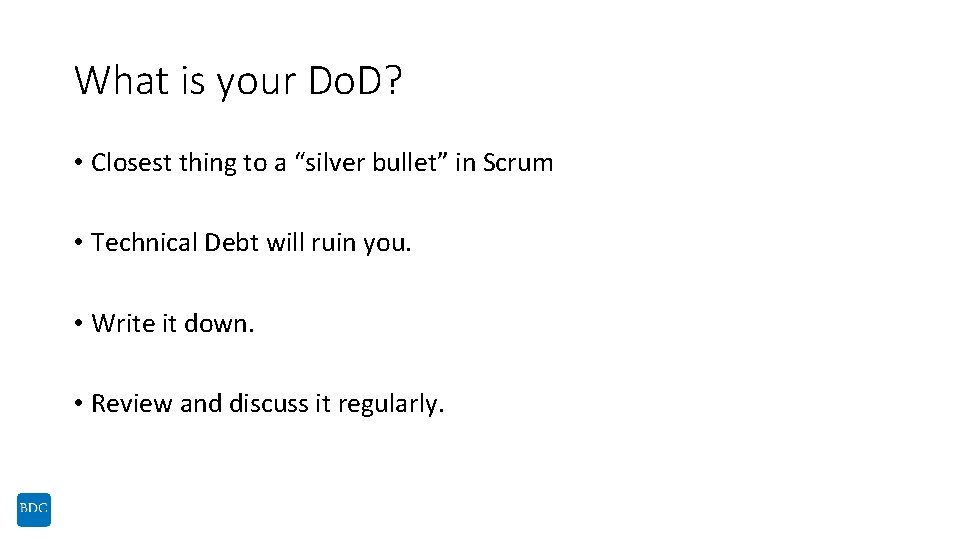
What is your Do. D? • Closest thing to a “silver bullet” in Scrum • Technical Debt will ruin you. • Write it down. • Review and discuss it regularly.
“Done vs. Done”
Do not relax your Do. D.
No partial credit…ever.
Partial credit usually means Technical Debt.
Partial Credit & Technical Debt “Wobbly” Velocity
Top 10 Ways 1. 2. 3. 4. 5. What is your Do. D? People Skills Credibility What is your Sprint Goal? Do less. 6. Emergent Architecture 7. Good programming & testing practices 8. “Kick it over the wall to QA” 9. Teams : Products 10. Retrospective
99% of the time, it’s a people problem.
Watch for interpersonal problems.
Here’s a trick: “Trust your gut. ”
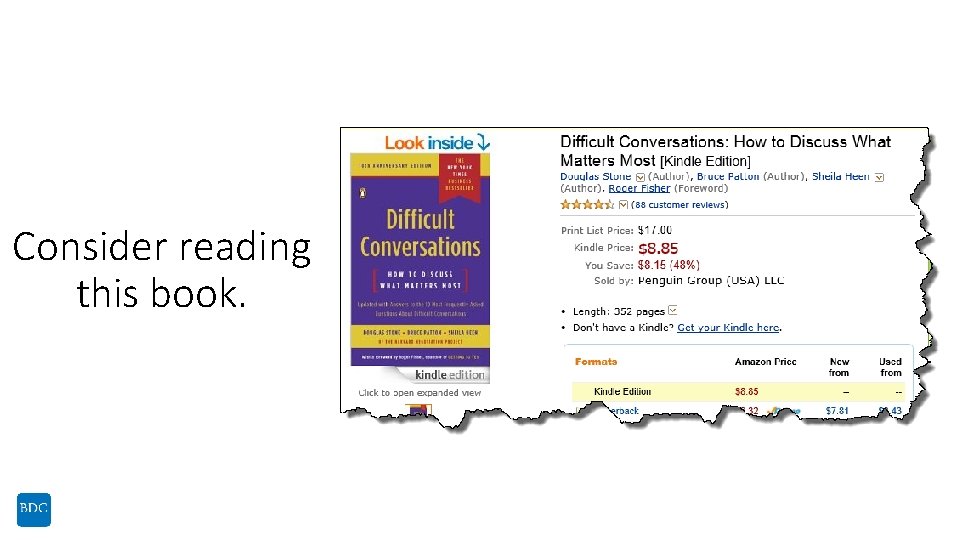
Consider reading this book.
Want to be a super hero? Go see a therapist. (I’m not kidding. )
Top 10 Ways 1. 2. 3. 4. 5. What is your Do. D? People Skills Credibility What is your Sprint Goal? Do less. 6. Emergent Architecture 7. Good programming & testing practices 8. “Kick it over the wall to QA” 9. Teams : Products 10. Retrospective
2 to 3 Sprints of Product Backlog • Helps give the PO “room” • Helps everyone to know what’s going on. • Be ready to answer where a PBI (aka. “feature”) is on the backlog. • How many sprints out? • Discuss your *written* Do. D with the PO, executives, and stakeholders • Why is it in their best interest?
Fit for purpose. • Remember that not everything is, needs to be, or should be a work of art. • Balance “Time to Market” with “Long-term Maintenance” • Communicate with the business in terms they understand • (Hint: this is probably money and resources. )
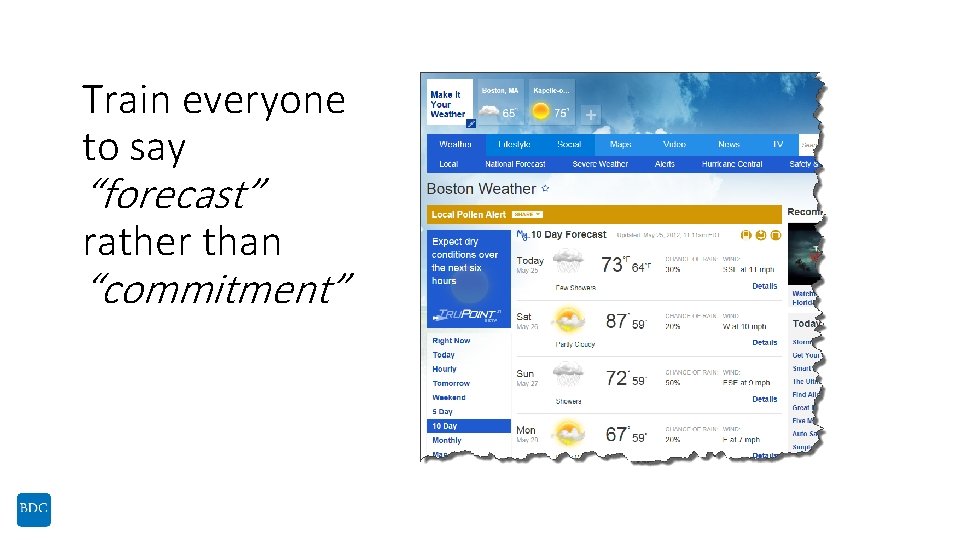
Train everyone to say “forecast” rather than “commitment”
Top 10 Ways 1. 2. 3. 4. 5. What is your Do. D? People Skills Credibility What is your Sprint Goal? Do less. 6. Emergent Architecture 7. Good programming & testing practices 8. “Kick it over the wall to QA” 9. Teams : Products 10. Retrospective
Do you have a Sprint Goal?
Is it easily understood and stated?
Hint: Your sprint goal should not be select * from Sprint. Backlog
Review your Sprint Goal in the Daily Scrum.
And while we’re talking about the Daily Scrum…
…consider dumping the “ 3 questions” format.
Remind your team that they don’t report to you.
Consider switching up who “leads” that meeting.
Watch for people being bored and/or tuning out.
Bored implies a lack of focus.
Bored implies that people aren’t on the same team.
Top 10 Ways 1. 2. 3. 4. 5. What is your Do. D? People Skills Credibility What is your Sprint Goal? Do less. 6. Emergent Architecture 7. Good programming & testing practices 8. “Kick it over the wall to QA” 9. Teams : Products 10. Retrospective
Minimize work in progress.
Put another way… don’t try to do everything at once.
If everyone on your team is working on separate PBIs, is the team really a team?
Finish one thing. Then do the next thing. • Try to craft the work so that multiple people are working on related things • Complete that thing. Move on to the next thing. • Try to drive stuff to Do. D early. • This ensures that you’re delivering something in the sprint.
Anti-pattern: 2 days from the end of the sprint and nothing’s Do. D yet.
Top 10 Ways 1. 2. 3. 4. 5. What is your Do. D? People Skills Credibility What is your Sprint Goal? Do less. 6. Emergent Architecture 7. Good programming & testing practices 8. “Kick it over the wall to QA” 9. Teams : Products 10. Retrospective
Avoid BDUF. (Big design up-front. )
YAGNI. (You ain’t gunna need it. )
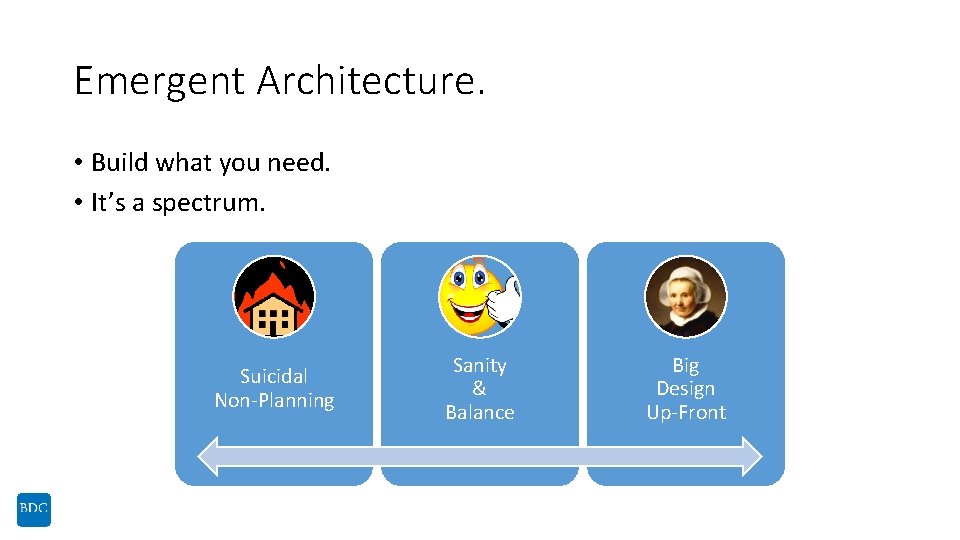
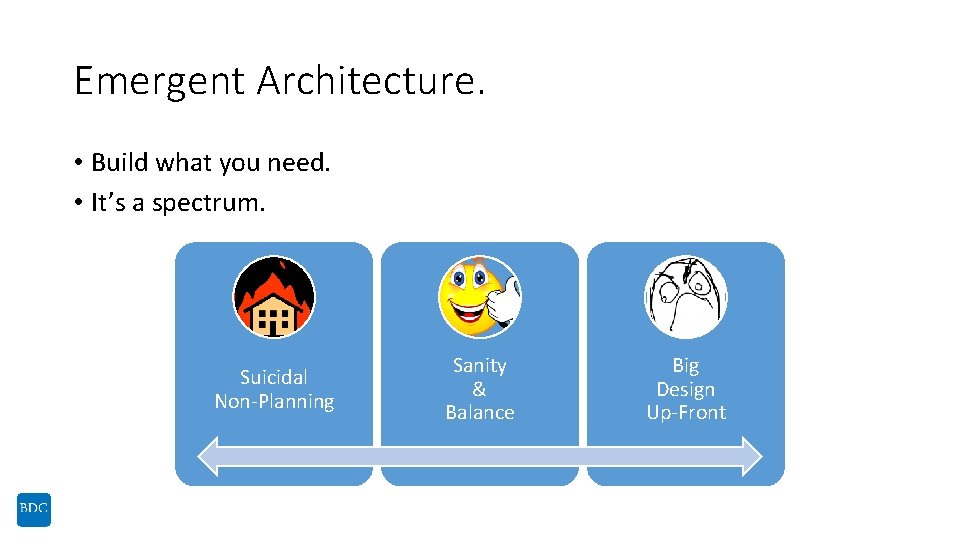
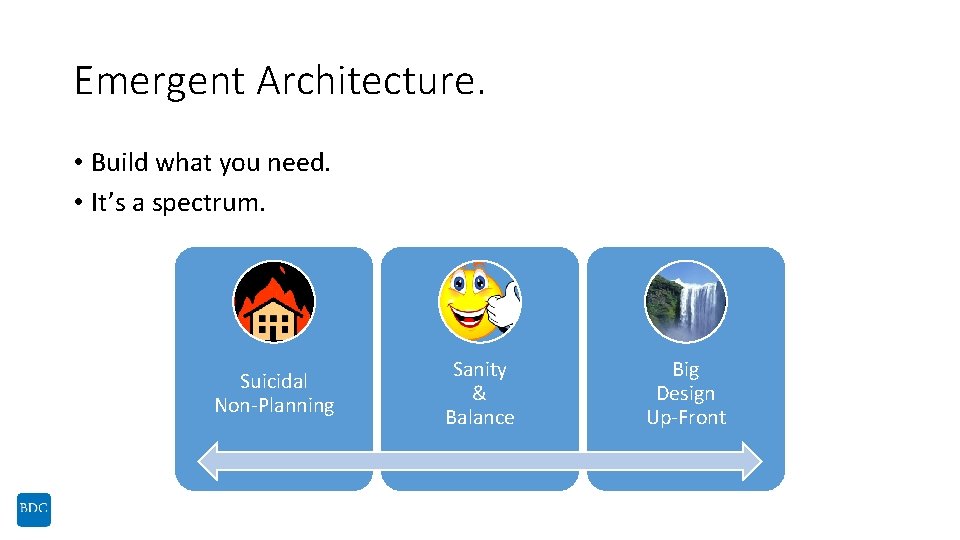
Emergent Architecture. • Build what you need. • It’s a spectrum. Suicidal Non-Planning Sanity & Balance Big Design Up-Front
Emergent Architecture. • Build what you need. • It’s a spectrum. Suicidal Non-Planning Sanity & Balance Big Design Up-Front
Emergent Architecture. • Build what you need. • It’s a spectrum. Suicidal Non-Planning Sanity & Balance Big Design Up-Front
Top 10 Ways 1. 2. 3. 4. 5. What is your Do. D? People Skills Credibility What is your Sprint Goal? Do less. 6. Emergent Architecture 7. Good programming & testing practices 8. “Kick it over the wall to QA” 9. Teams : Products 10. Retrospective
It’s a metaphysical *certainty* that you’ll have to change stuff.
You *won’t* get your “requirements” right.
Your customers *will* change their minds.
Accept that you’ll have to change.
The Goal: Make refactoring painless.
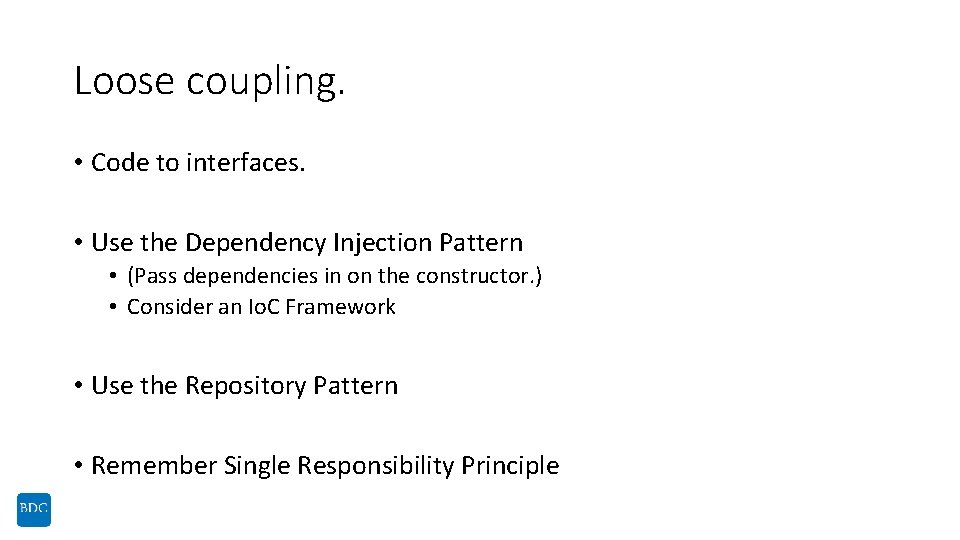
Loose coupling. • Code to interfaces. • Use the Dependency Injection Pattern • (Pass dependencies in on the constructor. ) • Consider an Io. C Framework • Use the Repository Pattern • Remember Single Responsibility Principle
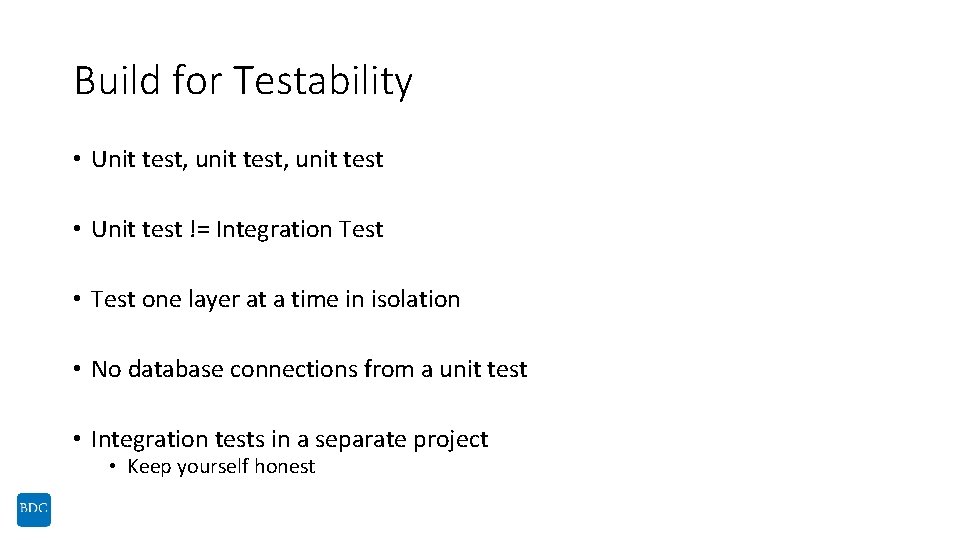
Build for Testability • Unit test, unit test • Unit test != Integration Test • Test one layer at a time in isolation • No database connections from a unit test • Integration tests in a separate project • Keep yourself honest
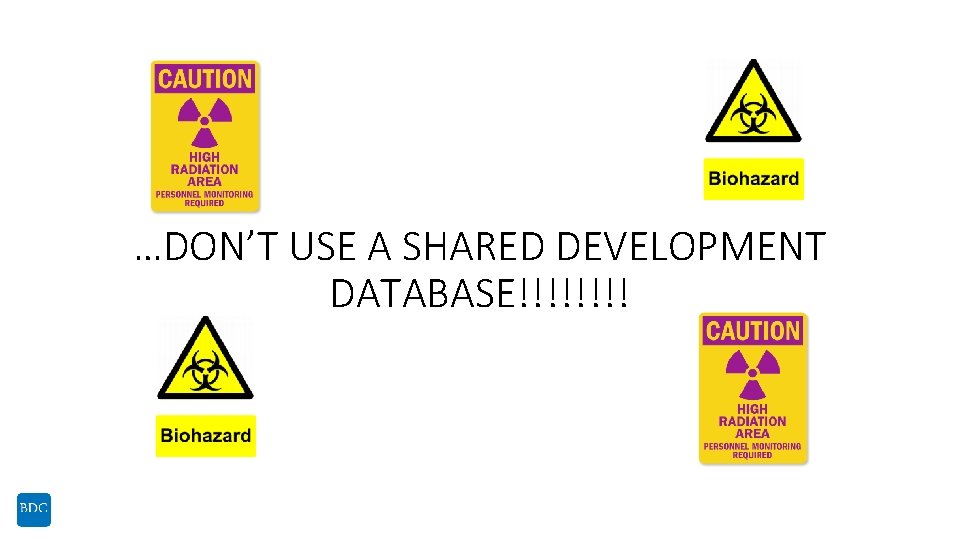
For the love of all things precious & beautiful…
…DON’T USE A SHARED DEVELOPMENT DATABASE!!!!
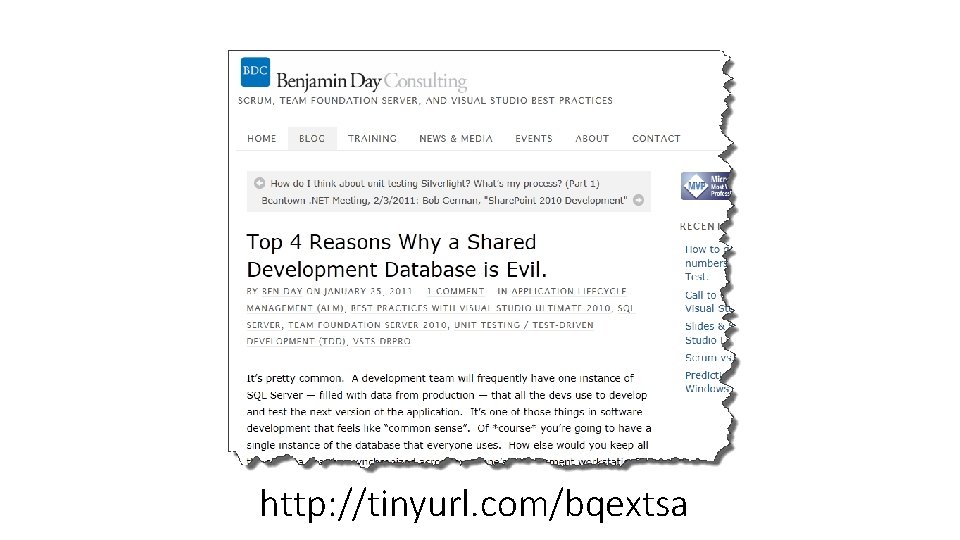
http: //tinyurl. com/bqextsa
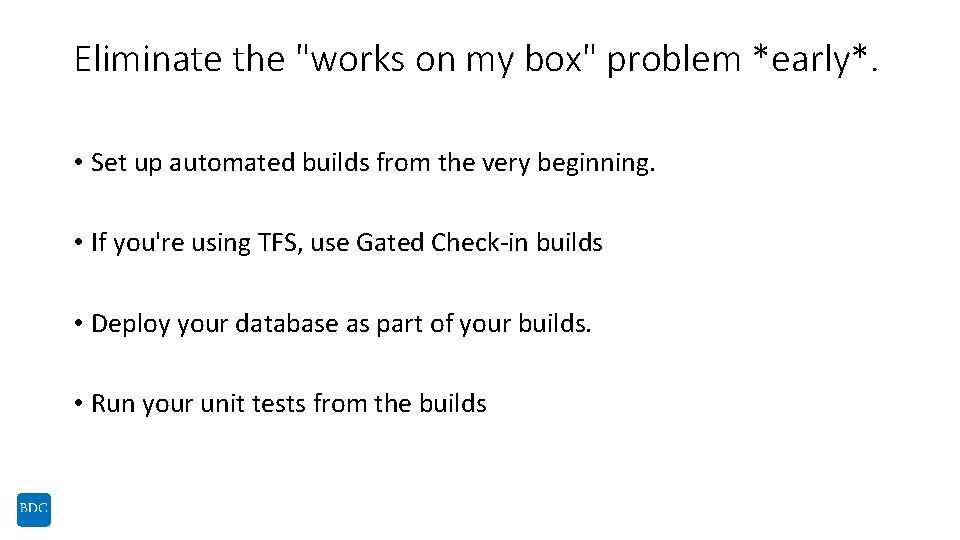
Eliminate the "works on my box" problem *early*. • Set up automated builds from the very beginning. • If you're using TFS, use Gated Check-in builds • Deploy your database as part of your builds. • Run your unit tests from the builds
Top 10 Ways 1. 2. 3. 4. 5. What is your Do. D? People Skills Credibility What is your Sprint Goal? Do less. 6. Emergent Architecture 7. Good programming & testing practices 8. “Kick it over the wall to QA” 9. Teams : Products 10. Retrospective
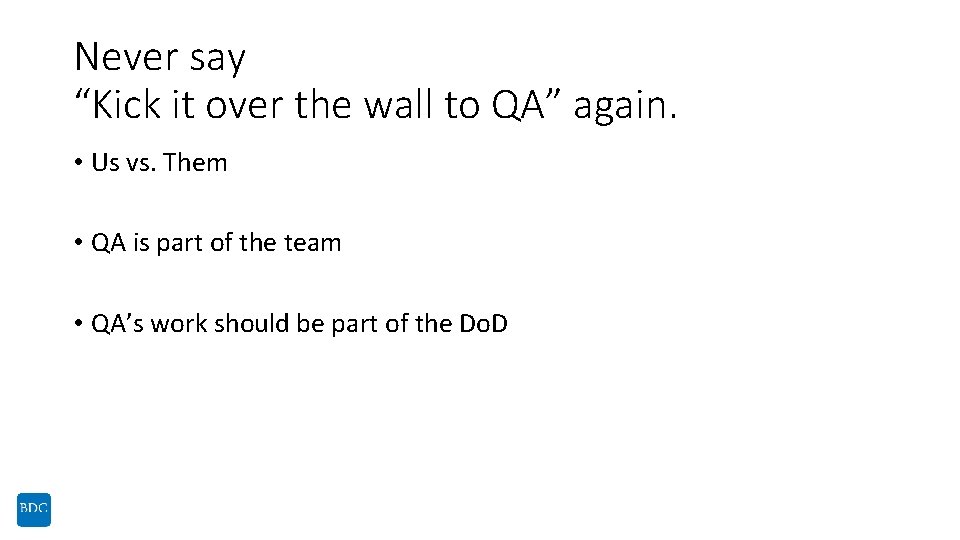
Never say “Kick it over the wall to QA” again. • Us vs. Them • QA is part of the team • QA’s work should be part of the Do. D
What does QA do at the start of a sprint?
Top 10 Ways 1. 2. 3. 4. 5. What is your Do. D? People Skills Credibility What is your Sprint Goal? Do less. 6. Emergent Architecture 7. Good programming & testing practices 8. “Kick it over the wall to QA” 9. Teams : Products 10. Retrospective
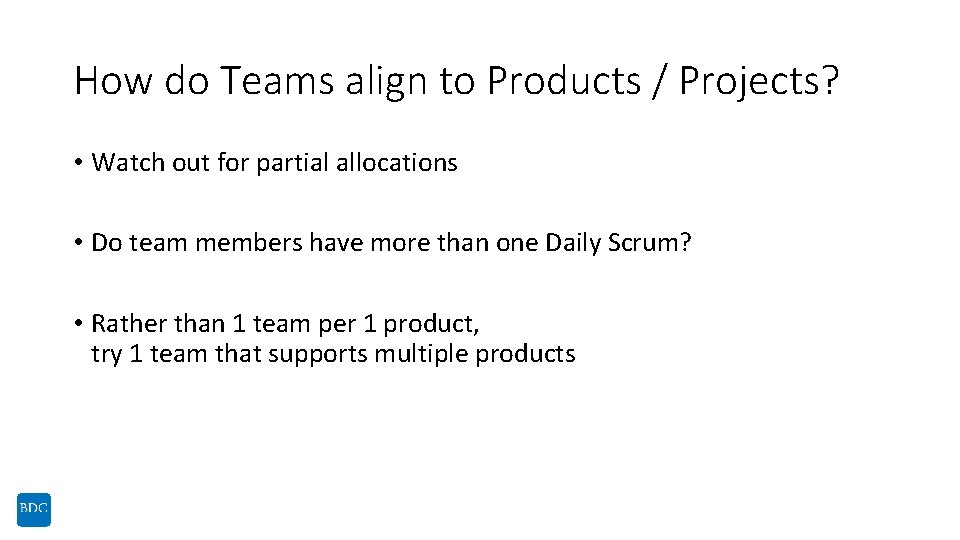
How do Teams align to Products / Projects? • Watch out for partial allocations • Do team members have more than one Daily Scrum? • Rather than 1 team per 1 product, try 1 team that supports multiple products
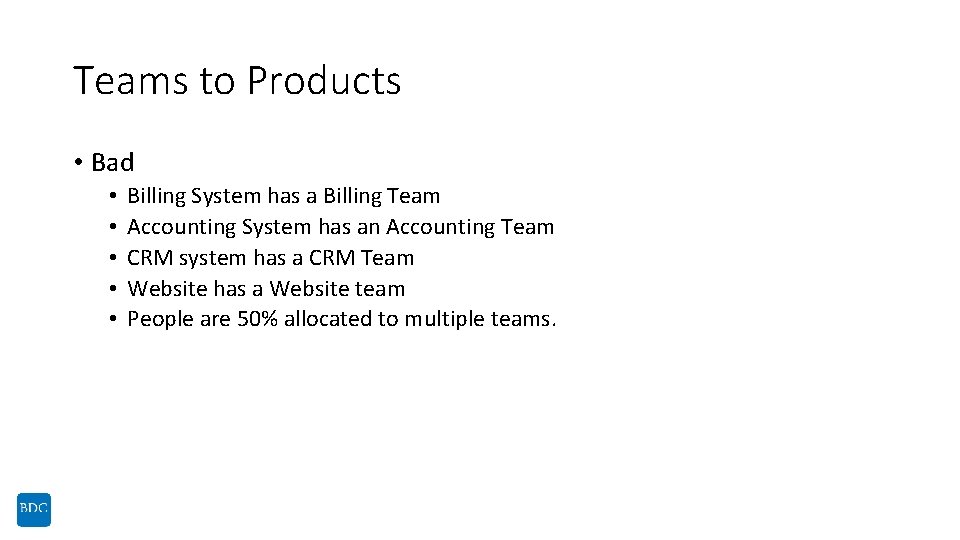
Teams to Products • Bad • • • Billing System has a Billing Team Accounting System has an Accounting Team CRM system has a CRM Team Website has a Website team People are 50% allocated to multiple teams.
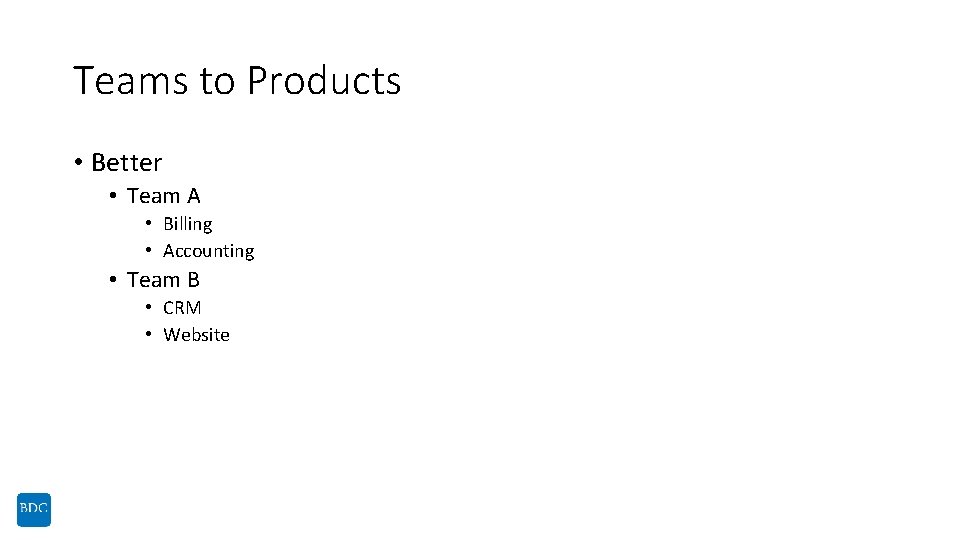
Teams to Products • Better • Team A • Billing • Accounting • Team B • CRM • Website
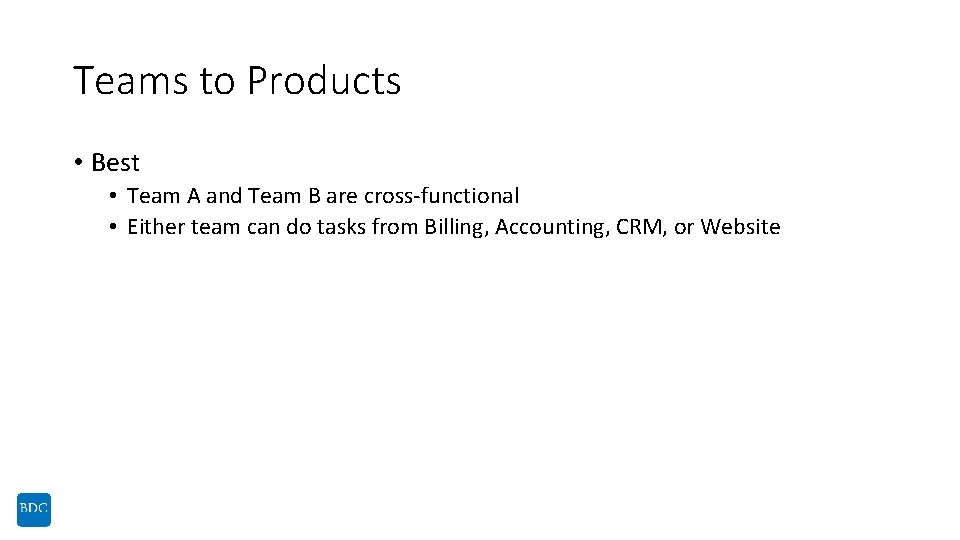
Teams to Products • Best • Team A and Team B are cross-functional • Either team can do tasks from Billing, Accounting, CRM, or Website
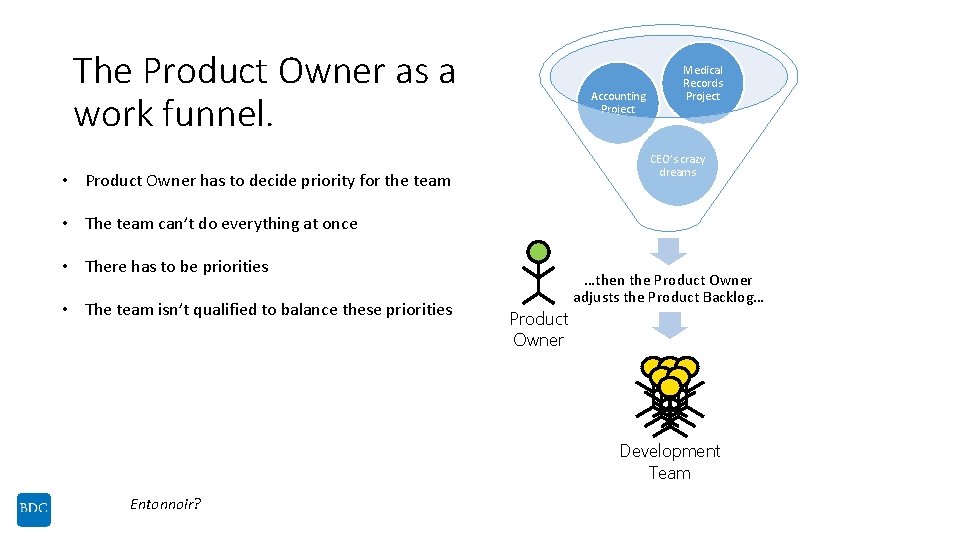
The Product Owner as a work funnel. Accounting Project Medical Records Project CEO’s crazy dreams • Product Owner has to decide priority for the team • The team can’t do everything at once • There has to be priorities • The team isn’t qualified to balance these priorities Product Owner …then the Product Owner adjusts the Product Backlog… Development Team Entonnoir?
Top 10 Ways 1. 2. 3. 4. 5. What is your Do. D? People Skills Credibility What is your Sprint Goal? Do less. 6. Emergent Architecture 7. Good programming & testing practices 8. “Kick it over the wall to QA” 9. Teams : Products 10. Retrospective
Retrospectives are the curer of all ills.
Retrospectives help keep problems contained to (hopefully) a single Sprint.
Tip: Watch for unscheduled work.
Tip: Get people REALLY thinking by trying to recreate what happened day by day.
Tip: If it gets heated, learn to say “Ok…and what else? ”
Tip: Record the findings from the Retrospective
Tip: Review the notes from previous Retrospectives.
Top 10 Ways 1. 2. 3. 4. 5. What is your Do. D? People Skills Credibility What is your Sprint Goal? Do less. 6. Emergent Architecture 7. Good programming & testing practices 8. “Kick it over the wall to QA” 9. Teams : Products 10. Retrospective
What can you do to help yourself?
Watch for burnout.
You can’t fix everything.
Do whatever it takes to get yourself to believe in self-organization.
But don’t let your team walk all over you.
Some teams will use self-organization against you.
“…but let’s remember here. This isn’t a *&^%$# democracy. ” -David Starr
How do you help the Product Owner?
Remind them of how important they are to the success of the project.
Remind them that they need to stay engaged.
http: //productownerchecklist. org
Any last questions?
Thanks. benday@benday. com | www. benday. com