
10 Unit Earth Science COMPOSITION OF THE ATMOSPHERE
- Slides: 20
#10
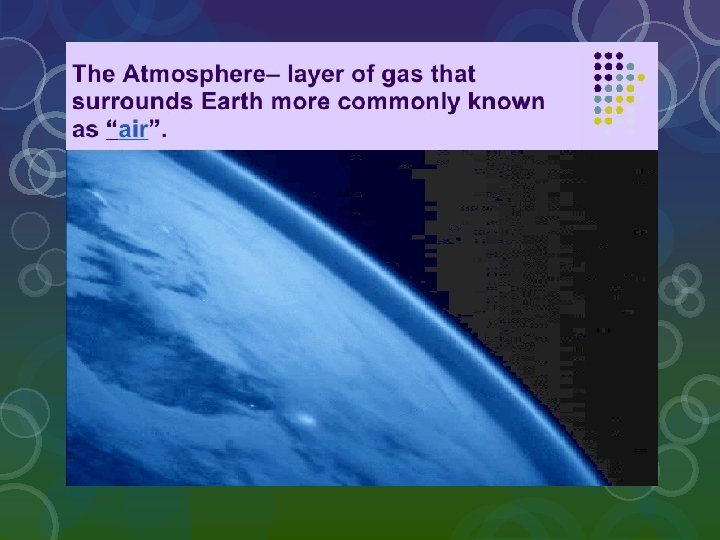
Unit: Earth Science COMPOSITION OF THE ATMOSPHERE NC Essential Standard: Compare the composition, properties and structure of Earth’s atmosphere to include: mixtures of gases and differences in temperature and pressure within layers.
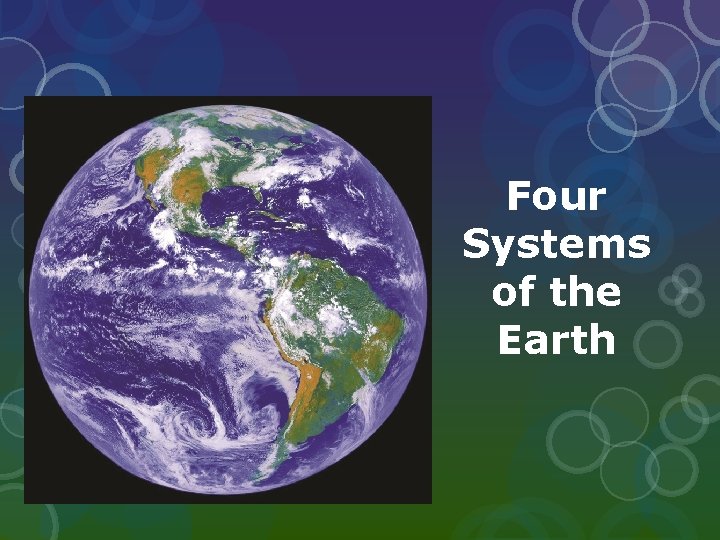
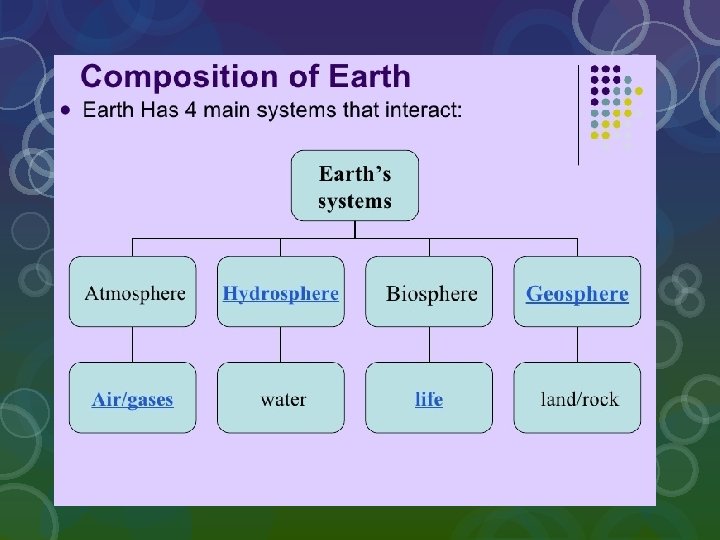
Four Systems of the Earth
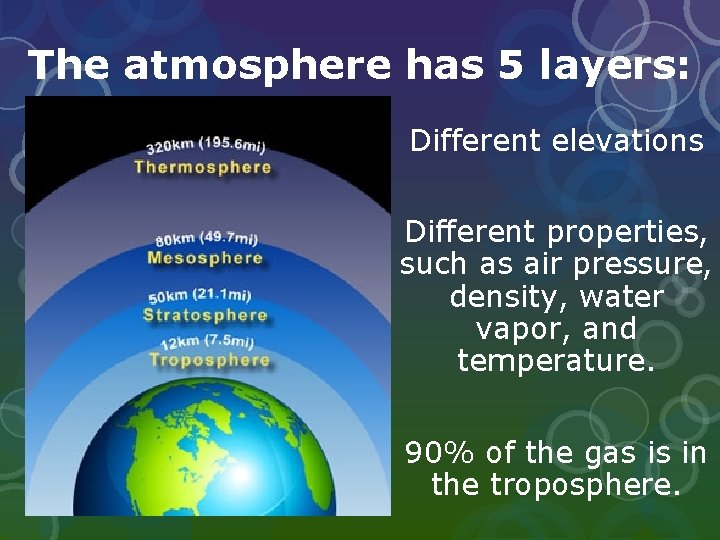
The atmosphere has 5 layers: Different elevations Different properties, such as air pressure, density, water vapor, and temperature. 90% of the gas is in the troposphere.
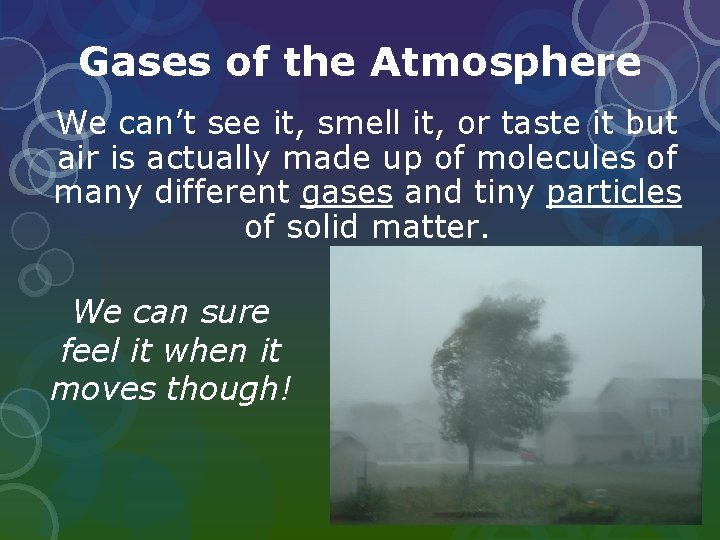
Gases of the Atmosphere We can’t see it, smell it, or taste it but air is actually made up of molecules of many different gases and tiny particles of solid matter. We can sure feel it when it moves though!
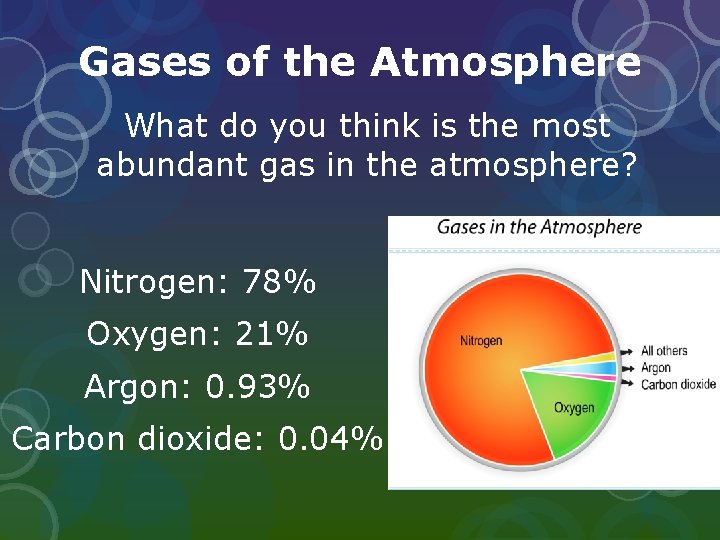
Gases of the Atmosphere What do you think is the most abundant gas in the atmosphere? Nitrogen: 78% Oxygen: 21% Argon: 0. 93% Carbon dioxide: 0. 04%
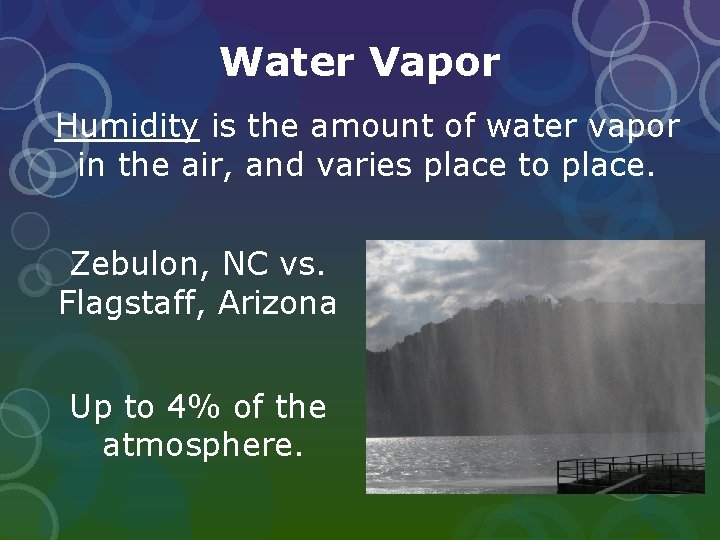
Water Vapor Humidity is the amount of water vapor in the air, and varies place to place. Zebulon, NC vs. Flagstaff, Arizona Up to 4% of the atmosphere.
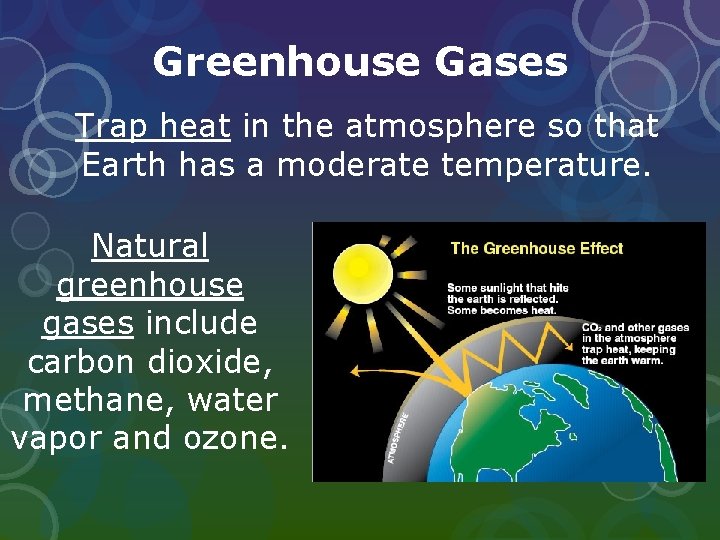
Greenhouse Gases Trap heat in the atmosphere so that Earth has a moderate temperature. Natural greenhouse gases include carbon dioxide, methane, water vapor and ozone.
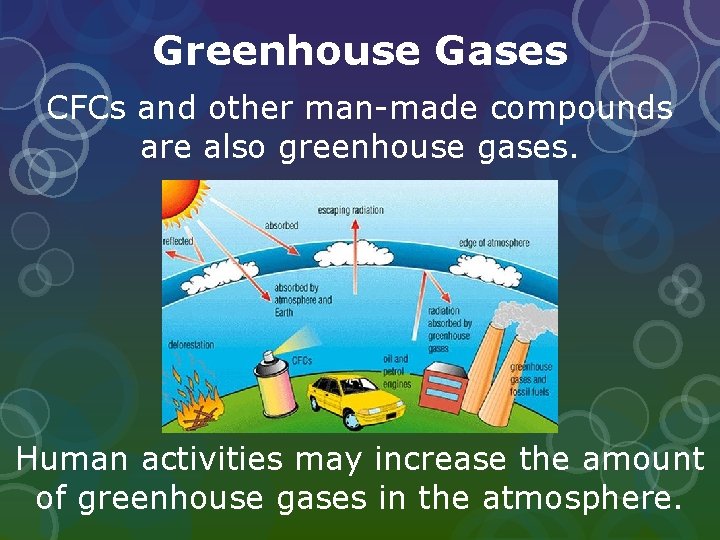
Greenhouse Gases CFCs and other man-made compounds are also greenhouse gases. Human activities may increase the amount of greenhouse gases in the atmosphere.
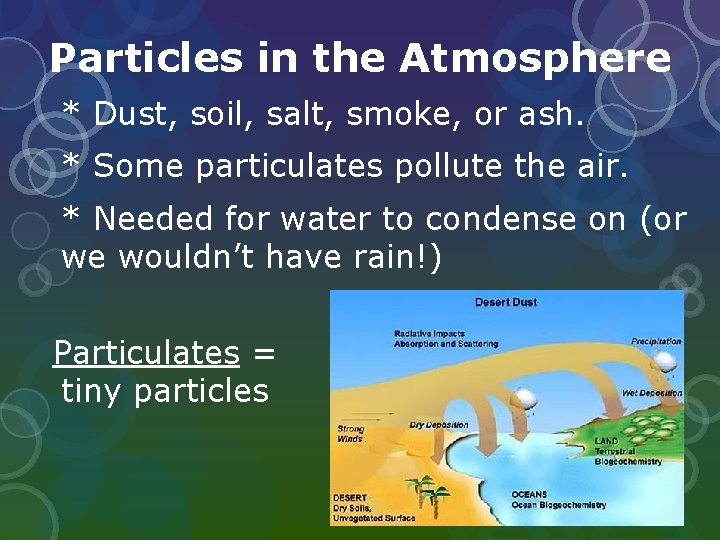
Particles in the Atmosphere * Dust, soil, salt, smoke, or ash. * Some particulates pollute the air. * Needed for water to condense on (or we wouldn’t have rain!) Particulates = tiny particles
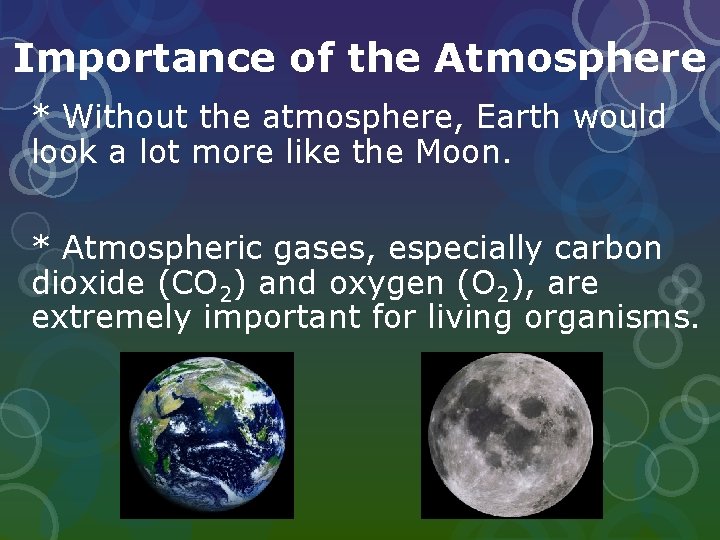
Importance of the Atmosphere * Without the atmosphere, Earth would look a lot more like the Moon. * Atmospheric gases, especially carbon dioxide (CO 2) and oxygen (O 2), are extremely important for living organisms.
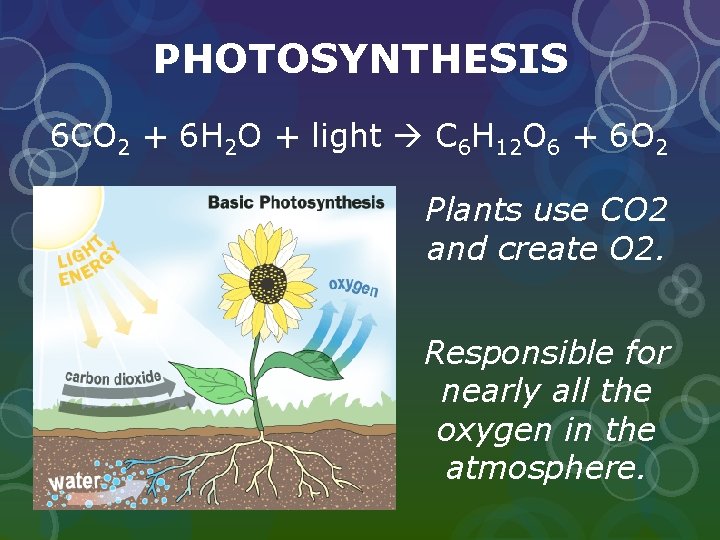
PHOTOSYNTHESIS 6 CO 2 + 6 H 2 O + light C 6 H 12 O 6 + 6 O 2 Plants use CO 2 and create O 2. Responsible for nearly all the oxygen in the atmosphere.
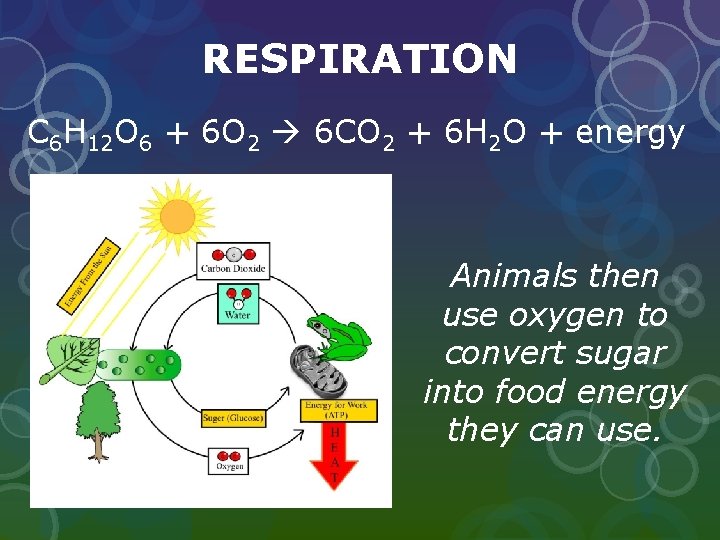
RESPIRATION C 6 H 12 O 6 + 6 O 2 6 CO 2 + 6 H 2 O + energy Animals then use oxygen to convert sugar into food energy they can use.
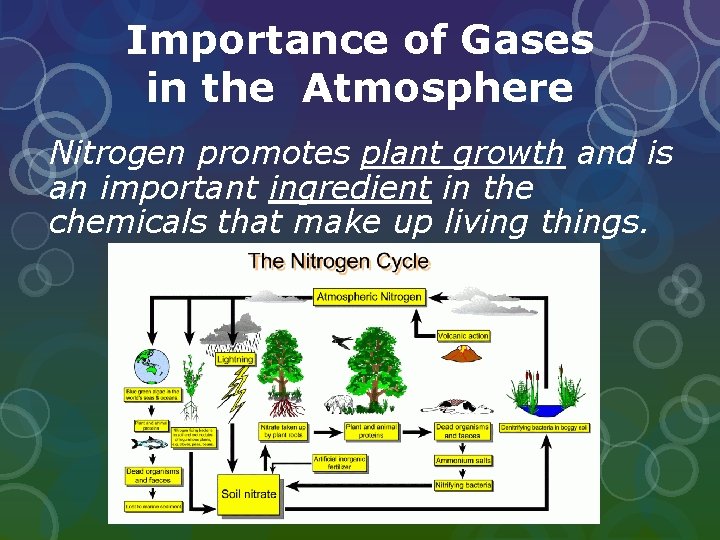
Importance of Gases in the Atmosphere Nitrogen promotes plant growth and is an important ingredient in the chemicals that make up living things.
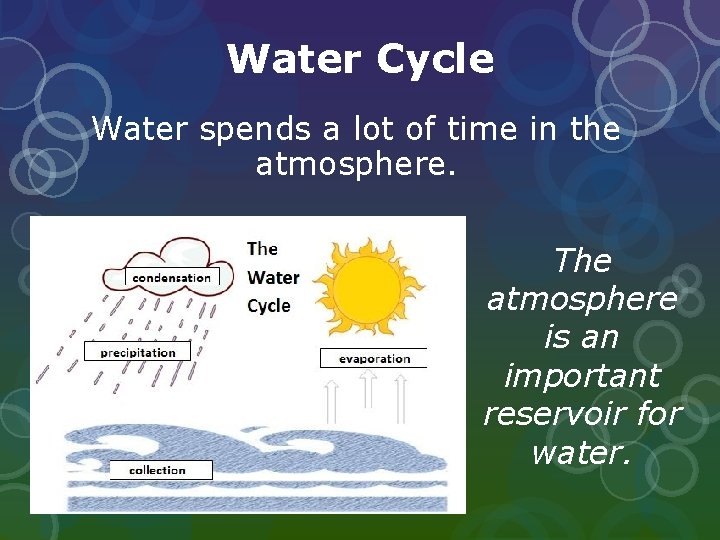
Water Cycle Water spends a lot of time in the atmosphere. The atmosphere is an important reservoir for water.
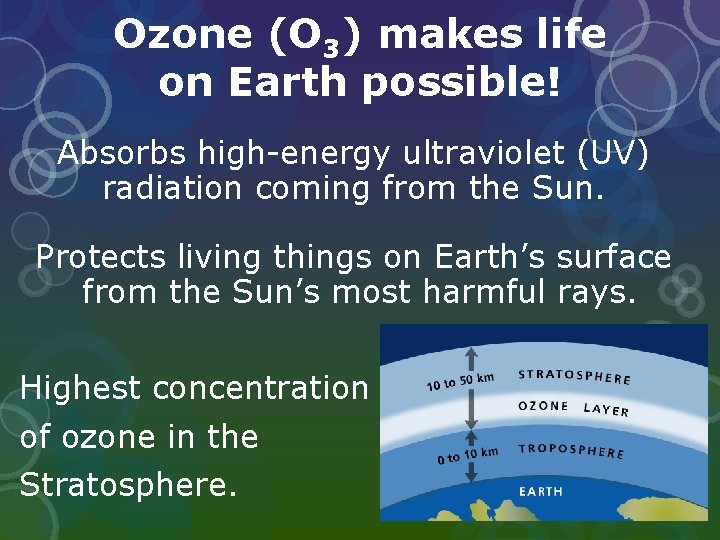
Ozone (O 3) makes life on Earth possible! Absorbs high-energy ultraviolet (UV) radiation coming from the Sun. Protects living things on Earth’s surface from the Sun’s most harmful rays. Highest concentration of ozone in the Stratosphere.
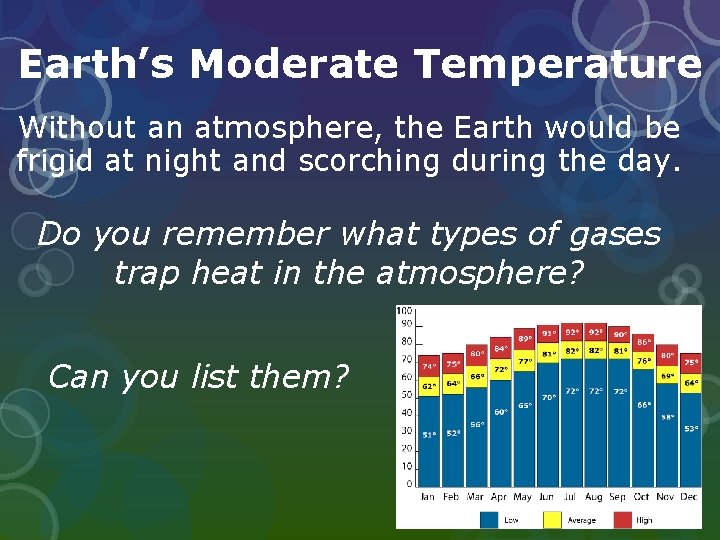
Earth’s Moderate Temperature Without an atmosphere, the Earth would be frigid at night and scorching during the day. Do you remember what types of gases trap heat in the atmosphere? Can you list them?
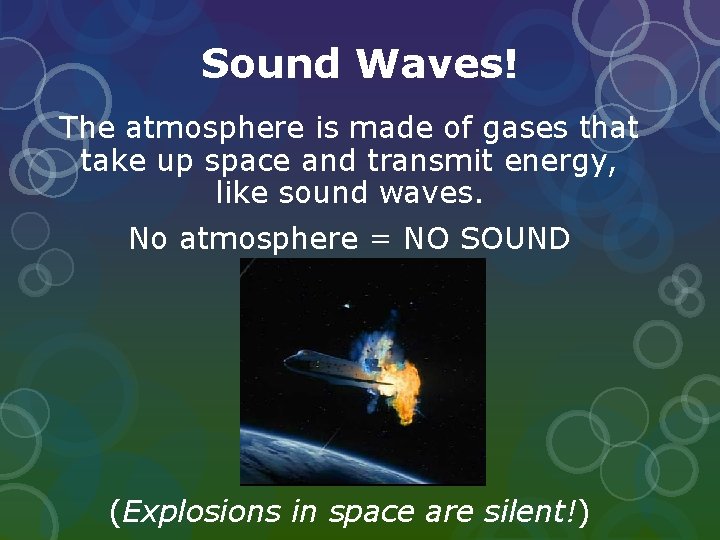
Sound Waves! The atmosphere is made of gases that take up space and transmit energy, like sound waves. No atmosphere = NO SOUND (Explosions in space are silent!)