
10 The Respiratory System Section 10 1 Anatomy

- Slides: 70
10 The Respiratory System
Section 10. 1: Anatomy of the Respiratory System • Identify the main structures of the upper respiratory tract. • Describe the anatomy of the lower respiratory tract. Copyright Goodheart-Willcox Co. , Inc. May not be posted to a publicly accessible website.
Respiratory System Purpose • Gas exchange • Supplies oxygen • Eliminates carbon dioxide • Cardiopulmonary system—respiratory system works cooperatively with cardiovascular system Copyright Goodheart-Willcox Co. , Inc. May not be posted to a publicly accessible website.
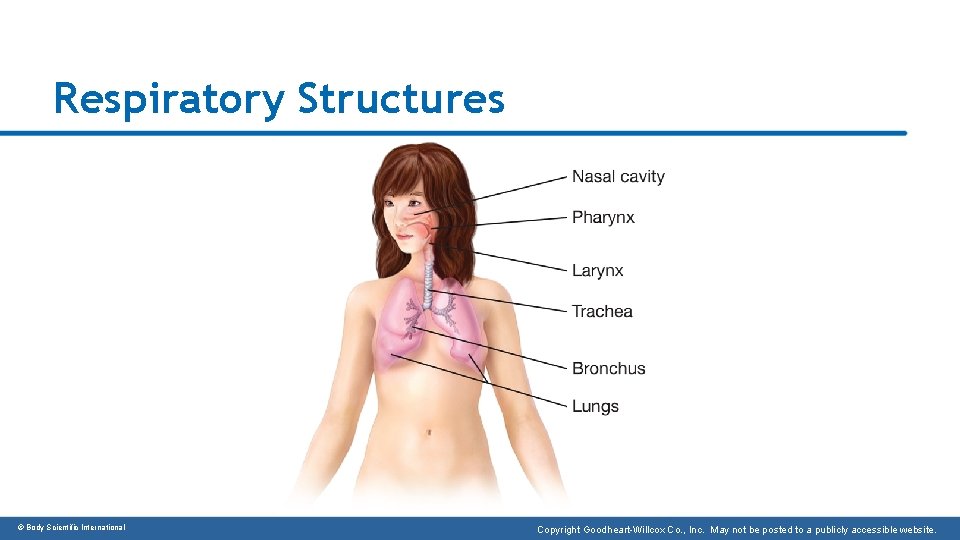
Respiratory Structures © Body Scientific International Copyright Goodheart-Willcox Co. , Inc. May not be posted to a publicly accessible website.
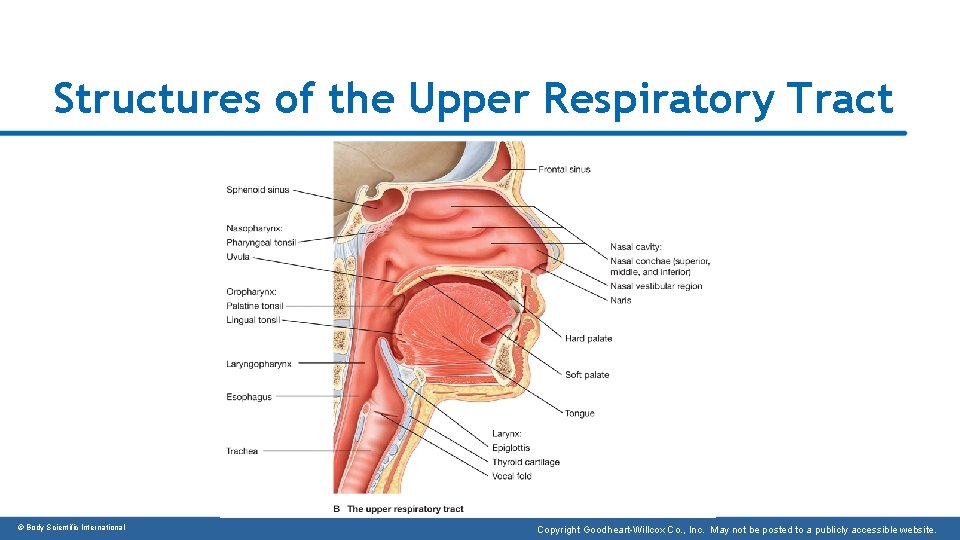
Structures of the Upper Respiratory Tract © Body Scientific International Copyright Goodheart-Willcox Co. , Inc. May not be posted to a publicly accessible website.
Nose and Nasal Cavity • Nose • Air enters through nares • Nasal cavity • Right and left chambers • Vestibular region—cilia • Olfactory region—olfactory receptors • Respiratory cavity Copyright Goodheart-Willcox Co. , Inc. May not be posted to a publicly accessible website.
Conchae and Palate • Conchae • Three nasal conchae bones • Increase turbulence of airflow • Palate • Hard palate • Soft palate • Uvula Copyright Goodheart-Willcox Co. , Inc. May not be posted to a publicly accessible website.
Sinuses • Air-filled cavities • Functions • Reduce weight of head • Warm and moisten inspired air • Amplify tone of voice Copyright Goodheart-Willcox Co. , Inc. May not be posted to a publicly accessible website.
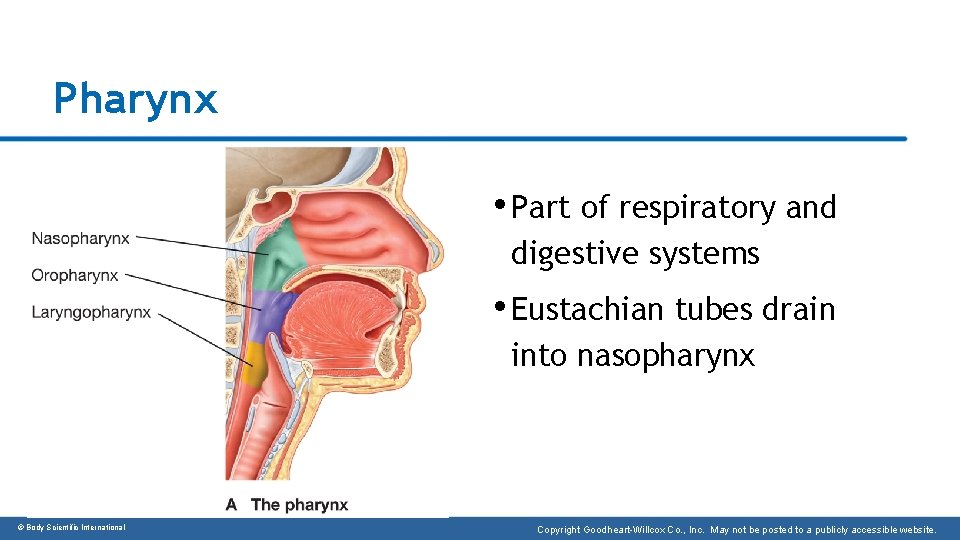
Pharynx • Part of respiratory and digestive systems • Eustachian tubes drain into nasopharynx © Body Scientific International Copyright Goodheart-Willcox Co. , Inc. May not be posted to a publicly accessible website.
Tonsils and Larynx • Tonsils • Clusters of lymphatic tissue • First line of defense against infection • Larynx • Eight cartilaginous plates • Thyroid cartilage—Adam’s apple • Epiglottis • Vocal cords • Glottis Copyright Goodheart-Willcox Co. , Inc. May not be posted to a publicly accessible website.
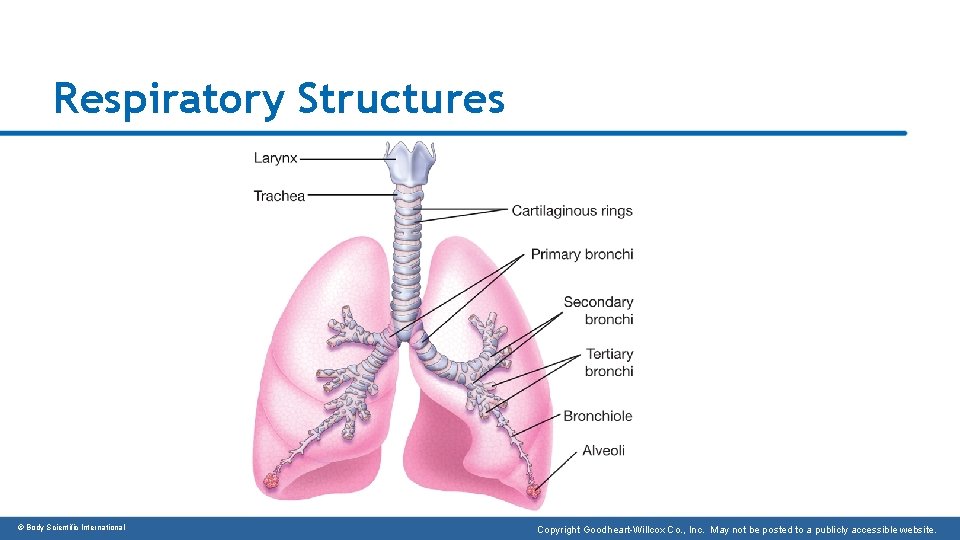
Respiratory Structures © Body Scientific International Copyright Goodheart-Willcox Co. , Inc. May not be posted to a publicly accessible website.
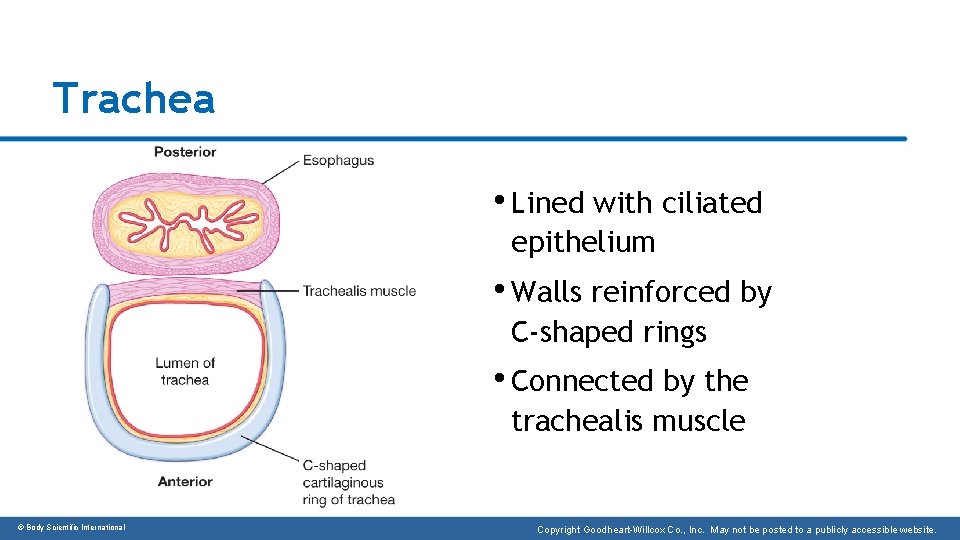
Trachea • Lined with ciliated epithelium • Walls reinforced by C-shaped rings • Connected by the trachealis muscle © Body Scientific International Copyright Goodheart-Willcox Co. , Inc. May not be posted to a publicly accessible website.
Bronchi • Primary bronchi—conduct air to the right and left lungs • Structural differences • Bronchus on the right is wider, shorter, lies more vertically than left • Inhaled substances more likely to become lodged in right bronchus Copyright Goodheart-Willcox Co. , Inc. May not be posted to a publicly accessible website.
Bronchioles • Smallest conducting passageways • Not reinforced by cartilaginous rings • Some gas exchange occurs Copyright Goodheart-Willcox Co. , Inc. May not be posted to a publicly accessible website.
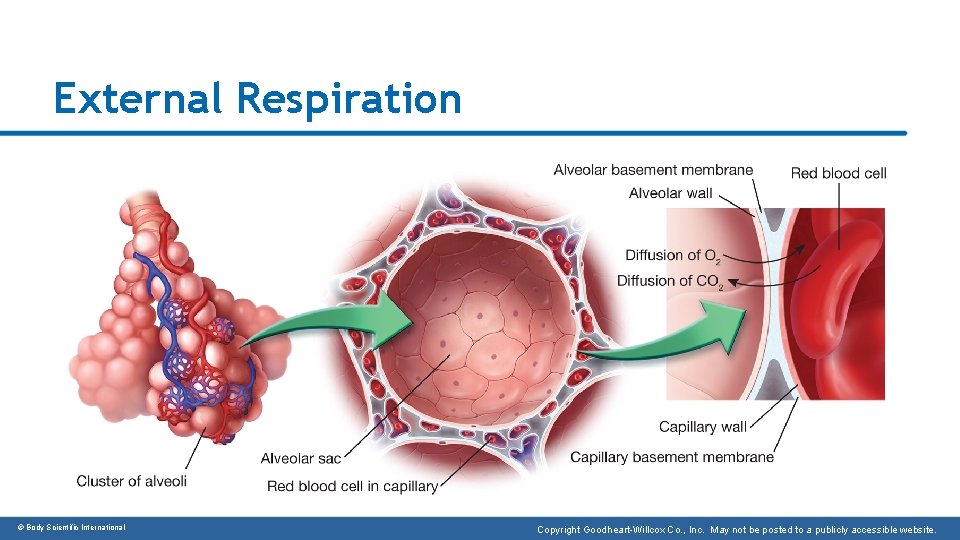
Alveoli • Air-filled sacs • Main site of gas exchange in lungs • Thin walls of squamous epithelial cells • Interior coated with surfactant • Internal environment kept clean by macrophages • Gases and macrophages travel between alveoli via pores of Kohn Copyright Goodheart-Willcox Co. , Inc. May not be posted to a publicly accessible website.
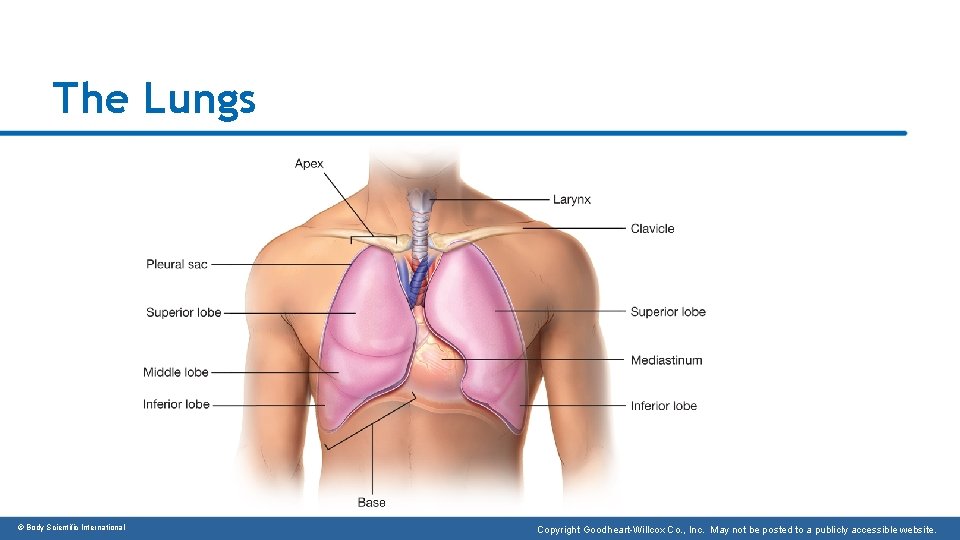
The Lungs © Body Scientific International Copyright Goodheart-Willcox Co. , Inc. May not be posted to a publicly accessible website.
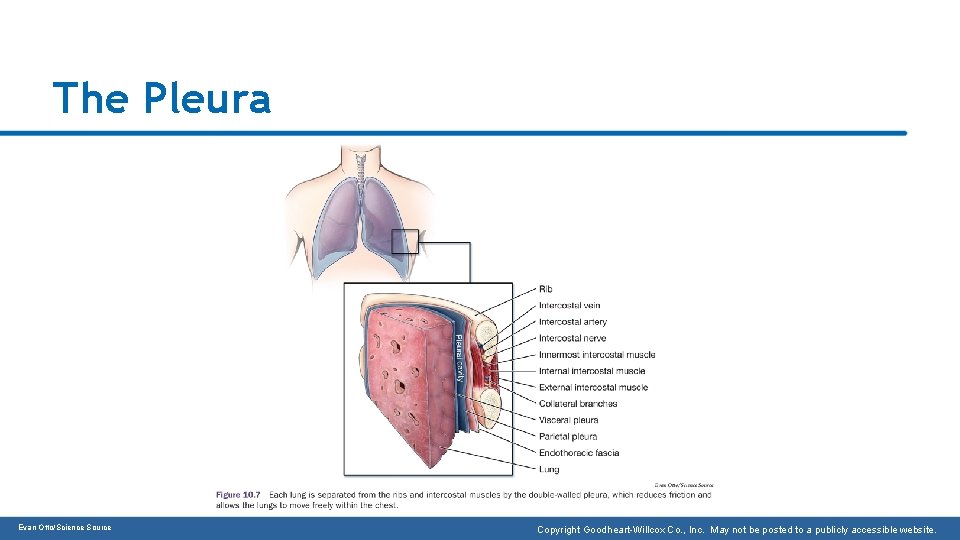
The Pleura Evan Otto/Science Source Copyright Goodheart-Willcox Co. , Inc. May not be posted to a publicly accessible website.
Section 10. 2: Physiology of the Respiratory System • Understand the mechanics of respiration. • Describe the nonrespiratory causes of air movement in the body. • Explain how breathing is affected by neural, chemical, and emotional factors, as well as by conscious control. • Identify different methods of measuring lung volume, and explain how each method works. Copyright Goodheart-Willcox Co. , Inc. May not be posted to a publicly accessible website.
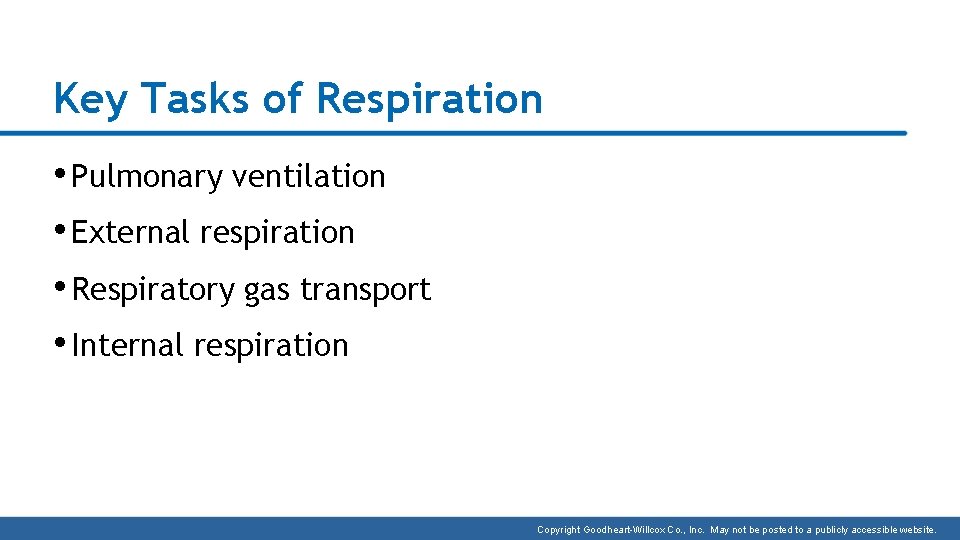
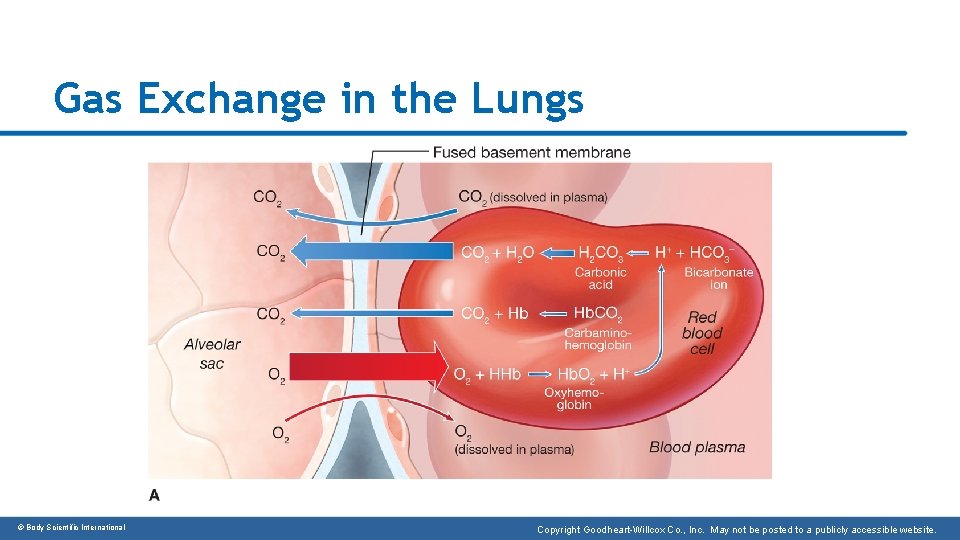
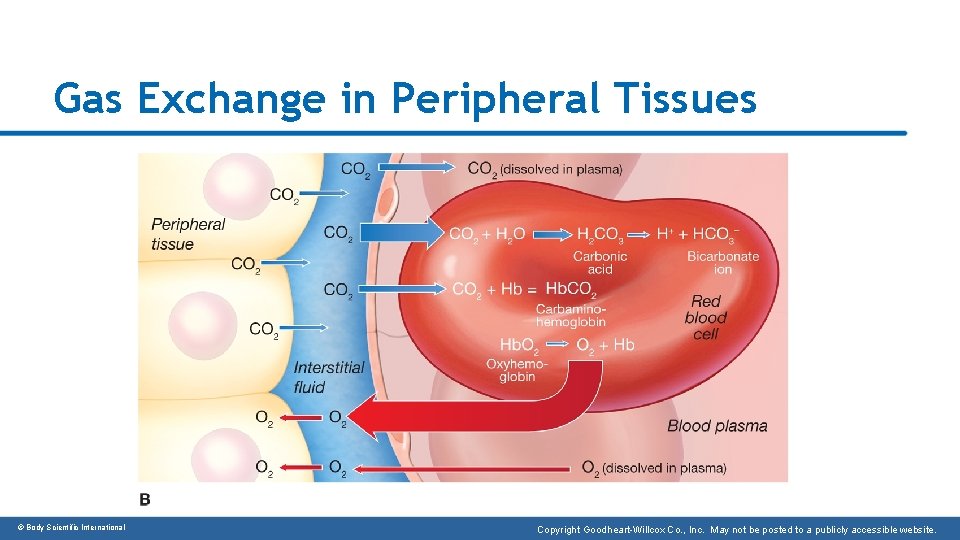
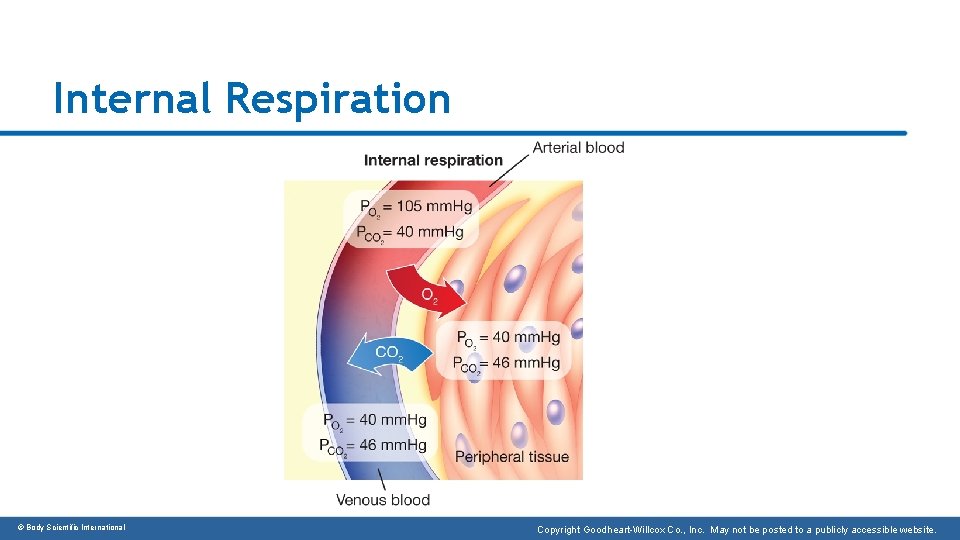
Key Tasks of Respiration • Pulmonary ventilation • External respiration • Respiratory gas transport • Internal respiration Copyright Goodheart-Willcox Co. , Inc. May not be posted to a publicly accessible website.
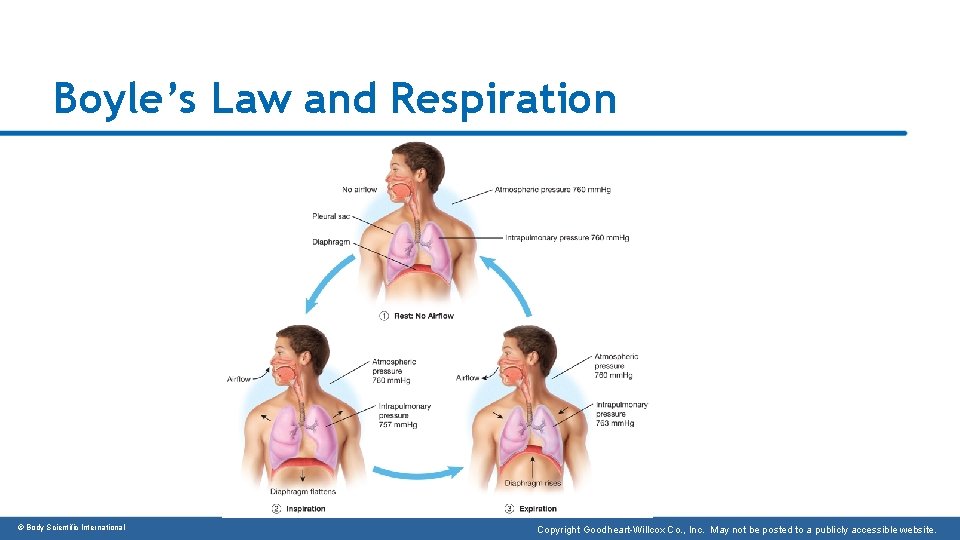
Boyle’s Law and Respiration © Body Scientific International Copyright Goodheart-Willcox Co. , Inc. May not be posted to a publicly accessible website.
Pulmonary Ventilation • Inspiration • Inhalation • Air flows into the lungs • Expiration • Exhalation • Air is expelled from the lungs Copyright Goodheart-Willcox Co. , Inc. May not be posted to a publicly accessible website.
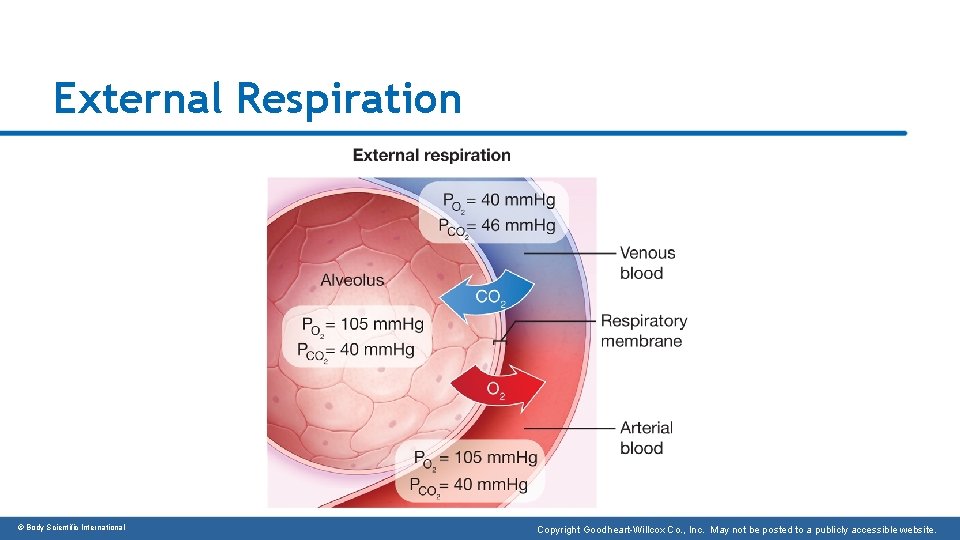
External Respiration © Body Scientific International Copyright Goodheart-Willcox Co. , Inc. May not be posted to a publicly accessible website.
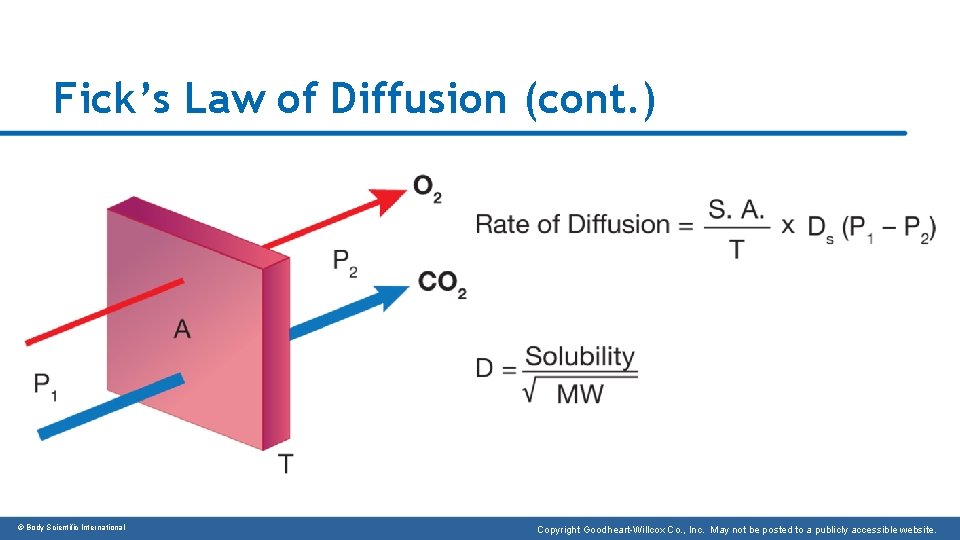
Fick’s Law of Diffusion • Surface area—vast number of available sites allows gas exchange to occur rapidly • Diffusion of constant gases—proportional to its solubility but inversely related to the square root of its molecular weight • Partial pressure—gases flow from areas of high concentration to areas of low concentration • Tissue thickness—affects how easily gases can diffuse from one area to another Copyright Goodheart-Willcox Co. , Inc. May not be posted to a publicly accessible website.
Fick’s Law of Diffusion (cont. ) © Body Scientific International Copyright Goodheart-Willcox Co. , Inc. May not be posted to a publicly accessible website.
Gas Exchange in the Lungs © Body Scientific International Copyright Goodheart-Willcox Co. , Inc. May not be posted to a publicly accessible website.
Gas Exchange in Peripheral Tissues © Body Scientific International Copyright Goodheart-Willcox Co. , Inc. May not be posted to a publicly accessible website.
External Respiration © Body Scientific International Copyright Goodheart-Willcox Co. , Inc. May not be posted to a publicly accessible website.
Internal Respiration © Body Scientific International Copyright Goodheart-Willcox Co. , Inc. May not be posted to a publicly accessible website.
Nonrespiratory Air Maneuvers • Coughing • Sneezing • Hiccup • Yawn Copyright Goodheart-Willcox Co. , Inc. May not be posted to a publicly accessible website.
Controlling Respiration • Respiratory rate varies based on biological and physical factors • Gender • Age • Postural position Copyright Goodheart-Willcox Co. , Inc. May not be posted to a publicly accessible website.
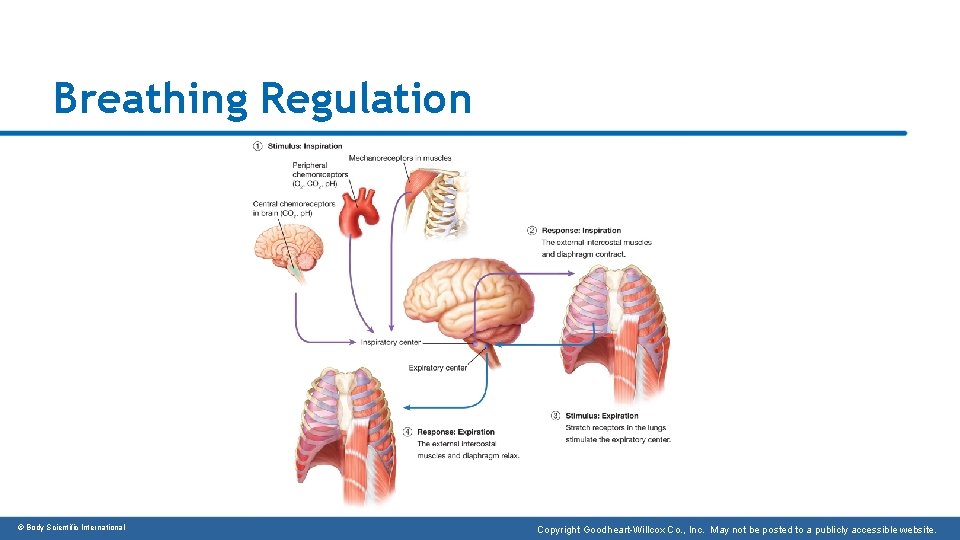
Breathing Regulation © Body Scientific International Copyright Goodheart-Willcox Co. , Inc. May not be posted to a publicly accessible website.
Neural Factors • Medulla oblongata stimulates diaphragm and external intercostal muscles • Stretch receptors trigger Hering-Breuer reflex • Nerve impulses sent via vagus nerve • Medulla stops inspiration and starts exhalation • Pons ensures smooth transition Copyright Goodheart-Willcox Co. , Inc. May not be posted to a publicly accessible website.
Chemoreceptors • Sensory cells that respond to chemical stimuli • Central • Located in medulla oblongata • Monitor changes in PCO 2 and p. H of CSF • Peripheral • Located in aortic arch and carotid arteries • Monitor changes PO 2 , PCO 2 , and p. H of blood Copyright Goodheart-Willcox Co. , Inc. May not be posted to a publicly accessible website.
Mechanoreceptors • Regulate respiration • Located in muscles and joints • Detect muscle contraction and force generation during exercise Copyright Goodheart-Willcox Co. , Inc. May not be posted to a publicly accessible website.
Lung Volume • Total capacity—about six liters • Varies according to age, height, weight, gender, and race • Abnormal capacities indicate disease or disorder • Types of lung volume • Static • Dynamic Copyright Goodheart-Willcox Co. , Inc. May not be posted to a publicly accessible website.
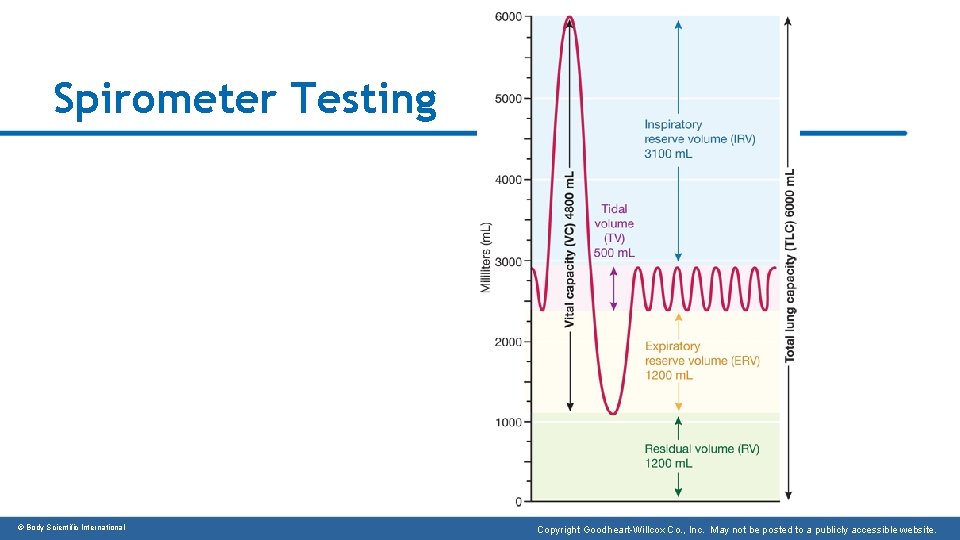
Static Lung Volume • Measure of volume at one instant only • Measurements obtained with spirometer • Tidal volume • Vital capacity • Residual volume • Inspiratory reserve volume • Expiratory reserve volume • Total lung capacity • Functional residual capacity requires more sophisticated equipment Copyright Goodheart-Willcox Co. , Inc. May not be posted to a publicly accessible website.
Spirometer Testing © Body Scientific International Copyright Goodheart-Willcox Co. , Inc. May not be posted to a publicly accessible website.
Dynamic Lung Volume • Measure of lung volume over time • Flow-volume meter or peak flow meter • Forced expiratory volume in one second (FEV 1) • Forced expiratory volume in one second/forced vital capacity (FEV 1 /FVC) Copyright Goodheart-Willcox Co. , Inc. May not be posted to a publicly accessible website.
Section 10. 3: Respiratory Disorders and Diseases • Identify common illnesses of the upper respiratory tract. • Describe common illnesses of the lower respiratory tract. • Identify the forms of chronic obstructive pulmonary disease and describe strategies for management of their symptoms. Copyright Goodheart-Willcox Co. , Inc. May not be posted to a publicly accessible website.
Section 10. 3: Respiratory Disorders and Diseases (cont. ) • Explain the physiology of asthma and describe common treatments. • Understand the causes and symptoms of lung cancer, as well as available treatment options. Copyright Goodheart-Willcox Co. , Inc. May not be posted to a publicly accessible website.
Upper Respiratory Tract Illnesses • Most common acute respiratory illnesses • Pharyngitis • Sinusitis • Laryngitis • Tonsillitis • Symptoms often overlap Copyright Goodheart-Willcox Co. , Inc. May not be posted to a publicly accessible website.
Pharyngitis and Nasopharyngitis • Symptoms • Sore, scratchy throat • Fever • Headache • Swollen lymph nodes • Treatment depends on source Copyright Goodheart-Willcox Co. , Inc. May not be posted to a publicly accessible website.
Sinusitis • Caused by bacteria, viruses, or fungi • Treatment depends on cause • Symptoms • Sinus pain • Nasal stuffiness and discharge • Headache • Fever • Sore throat • Postnasal drip • Fatigue Copyright Goodheart-Willcox Co. , Inc. May not be posted to a publicly accessible website.
Laryngitis • Causes • Viral or bacterial infections • Allergies • Inhaled irritants • Symptoms • Treatment includes resting the voice, using a humidifier, and taking decongestants and pain relievers • Sore throat • Hoarseness or loss of voice • Fever Copyright Goodheart-Willcox Co. , Inc. May not be posted to a publicly accessible website.
Tonsillitis • Caused by viral or bacterial infection, including group A streptococcus • Symptoms • Red, swollen tonsils • White or yellow patches on tonsils • Difficult, painful swallowing • Bad breath • Swollen neck glands Copyright Goodheart-Willcox Co. , Inc. May not be posted to a publicly accessible website.
Tonsillitis (cont. ) • Treatment similar to that for other types of throat inflammation • Surgery for severe cases Copyright Goodheart-Willcox Co. , Inc. May not be posted to a publicly accessible website.
Influenza • Viral infection that strikes quickly • Epidemic proportions November–March each year • Prevalent strains differ from year to year • Best protection: influenza vaccine each year Copyright Goodheart-Willcox Co. , Inc. May not be posted to a publicly accessible website.
Avoiding Upper Respiratory Illnesses • Transmission • Direct hand-to-hand contact • Handling contaminated objects • Airborne droplets Copyright Goodheart-Willcox Co. , Inc. May not be posted to a publicly accessible website.
Avoiding Upper Respiratory Illnesses (cont. ) • Prevention • Cover mouth and nose • Wash hands often • Avoid touching own eyes, nose, or mouth with hands • Avoid touching or shaking hands Copyright Goodheart-Willcox Co. , Inc. May not be posted to a publicly accessible website.
Acute Bronchitis • Inflammation of mucous membranes in airways • Cough that may or may not produce mucus • Result of ongoing viral infection • Treatment varies based on symptoms Copyright Goodheart-Willcox Co. , Inc. May not be posted to a publicly accessible website.
Pneumonia • Infection of the lungs • Caused by virus, bacterium, fungus, or parasite • Diagnosed through chest x-rays and cell cultures • Treatment • Antibiotics • Supplemental oxygen Copyright Goodheart-Willcox Co. , Inc. May not be posted to a publicly accessible website.
Tuberculosis • Lower respiratory tract illness • Highly contagious • Mycobacterium tuberculosis attacks the lungs, and can spread to other organs • Contracted by breathing in air droplets • Some new forms are drug resistant • Quarantine or hospitalization for 2 -4 weeks Copyright Goodheart-Willcox Co. , Inc. May not be posted to a publicly accessible website.
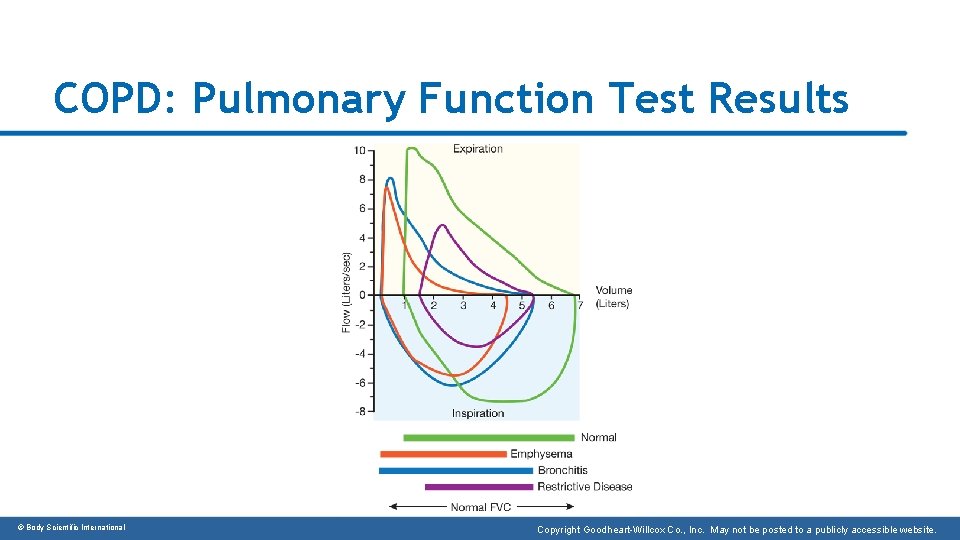
Chronic Obstructive Pulmonary Disease (COPD) • Any lung disorder characterized by long-term airway obstruction that makes it difficult to breathe • Third leading cause of death in the United States and major cause of long-term disability • Frequent respiratory infections • Dyspnea—progressively worsens Copyright Goodheart-Willcox Co. , Inc. May not be posted to a publicly accessible website.
Emphysema • Form of COPD that leads to chronic lung inflammation • Smoking most common cause • Damages air passages and alveolar capillary membrane • Decreases surface area of lungs and ruptures alveolar sacs • Triggers hyperventilation Copyright Goodheart-Willcox Co. , Inc. May not be posted to a publicly accessible website.
Chronic Bronchitis • Form of COPD—inflammation of bronchi and excessive mucus production that leads to obstructed airway • Limits respiration and gas exchange • Increases risk of infection • Hypoxemia Copyright Goodheart-Willcox Co. , Inc. May not be posted to a publicly accessible website.
COPD: Causes and Treatment • No cure for COPD • Goals of treatment: manage symptoms, improve quality of life, slow progression, treated related infections • Methods to alleviate symptoms • Smoking cessation • Pharmacological therapies help expand airways Copyright Goodheart-Willcox Co. , Inc. May not be posted to a publicly accessible website.
COPD: Pulmonary Function Test Results © Body Scientific International Copyright Goodheart-Willcox Co. , Inc. May not be posted to a publicly accessible website.
Focus On: Electronic Cigarettes and Hookahs • Electronic cigarettes • Deliver varying levels of nicotine • Negative impact on fetal and adolescent brain development • Cancer-causing carcinogens • Hookahs • Nicotine delivery far more than smoking cigarettes • Cancer-causing carcinogens Copyright Goodheart-Willcox Co. , Inc. May not be posted to a publicly accessible website.
Clinical Application: Effects of Smoking • Causes 1 in 5 deaths annually • Nicotine—more addictive than cocaine • Nicotine gum or patches • Increase likelihood of quitting • Can be addictive Copyright Goodheart-Willcox Co. , Inc. May not be posted to a publicly accessible website.
Asthma • Asthma attacks • Airways constricted by bronchospasms • Lining of airways produces mucus • Triggered by variety of substances and activities • Family history of allergies increases risk • Proper diagnosis is important—can be fatal • Treatments: limit exposure to irritants, prescription medications Copyright Goodheart-Willcox Co. , Inc. May not be posted to a publicly accessible website.
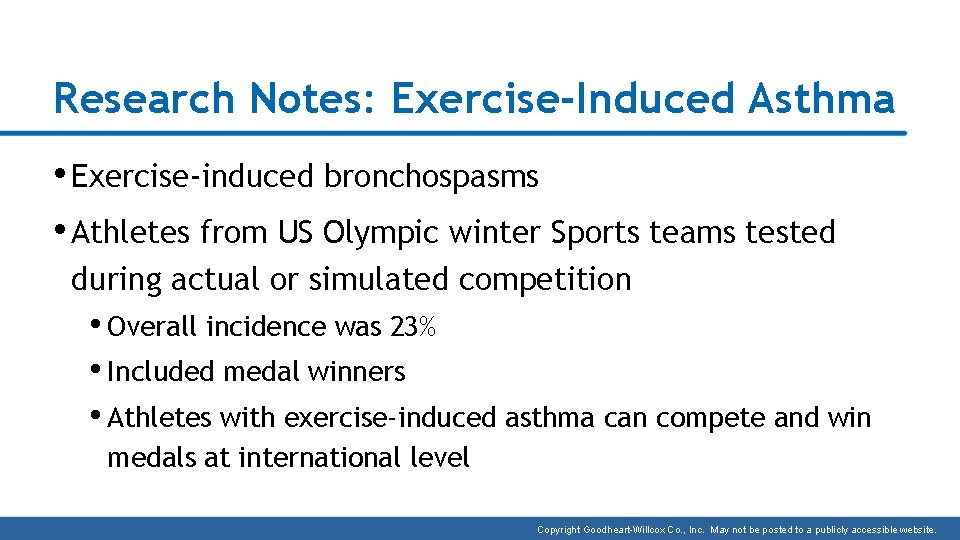
Research Notes: Exercise-Induced Asthma • Exercise-induced bronchospasms • Athletes from US Olympic winter Sports teams tested during actual or simulated competition • Overall incidence was 23% • Included medal winners • Athletes with exercise-induced asthma can compete and win medals at international level Copyright Goodheart-Willcox Co. , Inc. May not be posted to a publicly accessible website.
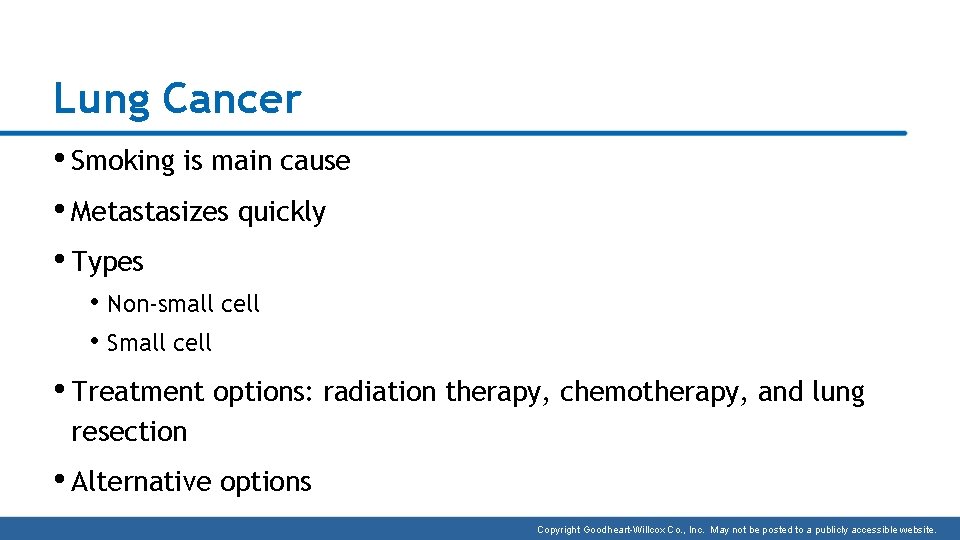
Lung Cancer • Smoking is main cause • Metastasizes quickly • Types • Non-small cell • Small cell • Treatment options: radiation therapy, chemotherapy, and lung resection • Alternative options Copyright Goodheart-Willcox Co. , Inc. May not be posted to a publicly accessible website.
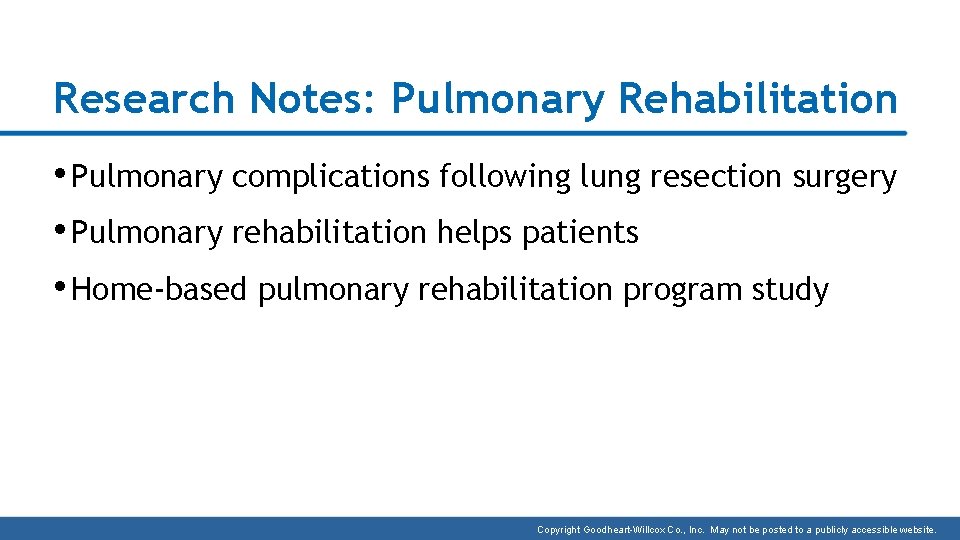
Research Notes: Pulmonary Rehabilitation • Pulmonary complications following lung resection surgery • Pulmonary rehabilitation helps patients • Home-based pulmonary rehabilitation program study Copyright Goodheart-Willcox Co. , Inc. May not be posted to a publicly accessible website.
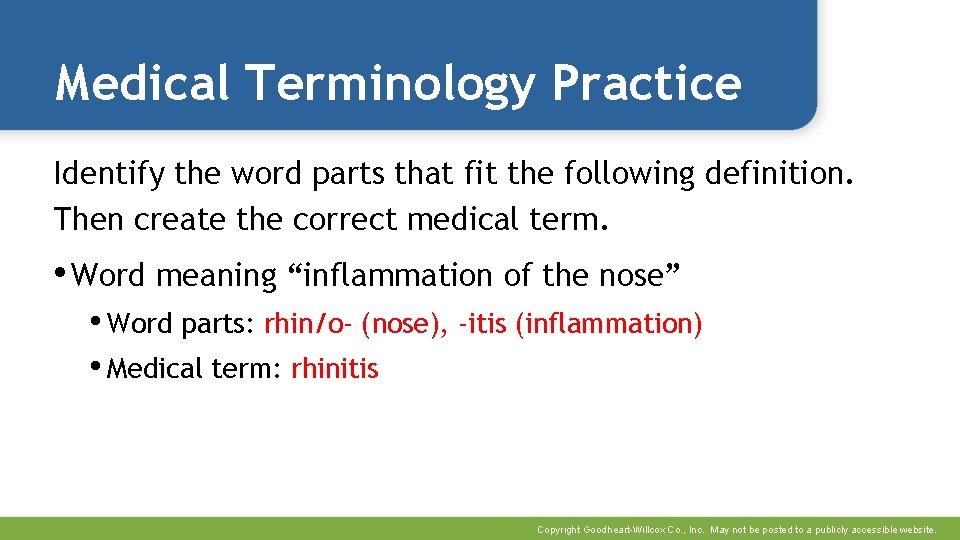
Medical Terminology Practice Identify the word parts that fit the following definition. Then create the correct medical term. • Word meaning “inflammation of the nose” • Word parts: rhin/o- (nose), -itis (inflammation) • Medical term: rhinitis Copyright Goodheart-Willcox Co. , Inc. May not be posted to a publicly accessible website.
Medical Terminology Practice (cont. ) • Word meaning “receptor site that responds to chemical stimuli” • Word parts: chem/o (chemical), receptor (receiver) • Medical term: chemoreceptor • Word meaning “surgery to remove the tonsils” • Word parts: tonsil/o (tonsil), -ectomy (removal) • Medical term: tonsillectomy Copyright Goodheart-Willcox Co. , Inc. May not be posted to a publicly accessible website.
Review Why do inner ear infections often cause upper respiratory infections? The Eustachian tubes of the middle ear drain into the nasopharynx. Why are the tonsils the respiratory system’s first line of defense? The tonsils trap bacteria and pathogens that enter the throat. What is the main site of gas exchange in the lungs? alveoli Copyright Goodheart-Willcox Co. , Inc. May not be posted to a publicly accessible website.
Review (cont. ) How many lobes are in each lung? three in the right lung; two in the left lung What is the main function of the respiratory system? gas exchange How is oxygen transported in the bloodstream? by hemoglobin and by dissolving in the plasma Copyright Goodheart-Willcox Co. , Inc. May not be posted to a publicly accessible website.
Review (cont. ) What three types of factors control breathing? neural, chemical, and mechanical What is vital capacity? the total amount of air that can be forcibly expired after a maximal inspiration What are the two most effective techniques for preventing upper respiratory infections? proper respiratory etiquette and hygiene Copyright Goodheart-Willcox Co. , Inc. May not be posted to a publicly accessible website.
Review (cont. ) What are three diseases most commonly associated with the lower respiratory tract? Bronchitis, pneumonia, and tuberculosis Which type of lung cancer spreads more slowly? non-small cell lung cancer Copyright Goodheart-Willcox Co. , Inc. May not be posted to a publicly accessible website.