
10 th HKG Advanced Firstaid Skills Thermal disorders
- Slides: 31
10 th HKG 港島第十旅 Advanced First-aid Skills - Thermal disorders and pneumothorax By: Lee Yat Sing (SI)
Learning Objectives • Appreciate thermal regulatory system in human • Know how the body maintains a constant body temperature despite changes in ambient temperature • Learn the mechanisms to different thermal disorders • Understand how 3 types of rib cage injuries can contribute to pneumothorax (氣胸)
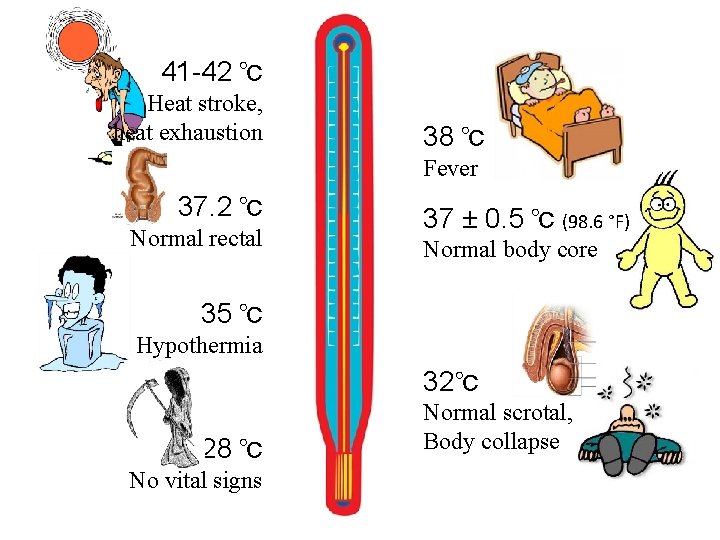
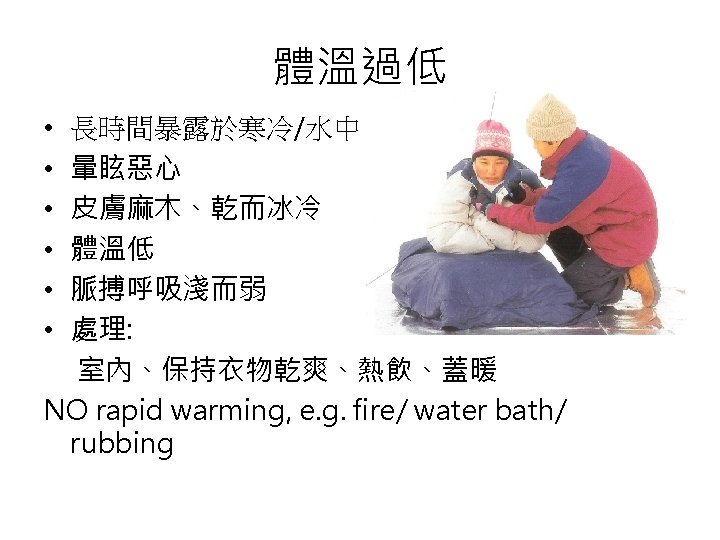
41 -42 ℃ Heat stroke, heat exhaustion 38 ℃ Fever 37. 2 ℃ Normal rectal 37 ± 0. 5 ℃ (98. 6 °F) Normal body core 35 ℃ Hypothermia 32℃ 28 ℃ No vital signs Normal scrotal, Body collapse
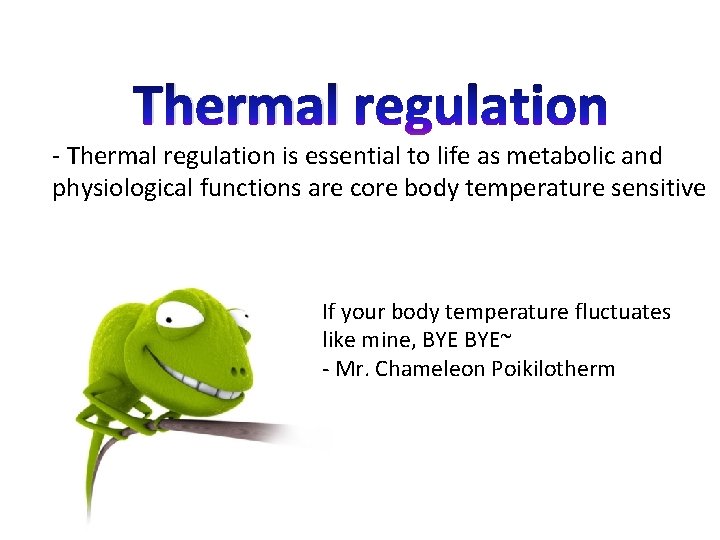
Thermal - Thermal regulation is essential to life as metabolic and physiological functions are core body temperature sensitive If your body temperature fluctuates like mine, BYE~ - Mr. Chameleon Poikilotherm
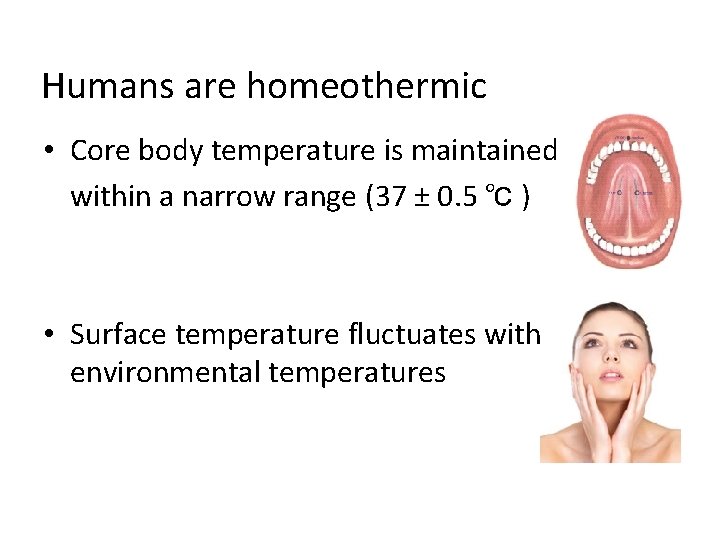
Humans are homeothermic • Core body temperature is maintained within a narrow range (37 ± 0. 5 ℃ ) • Surface temperature fluctuates with environmental temperatures
Heat Gain 1. Basal metabolic rate 2. Muscle activity, e. g. exercise, shivering 3. Hormones, e. g. thyroxine (long-term), adrenaline (short-term) 4. Stimulation by nerves 5. Heat gain from surroundings
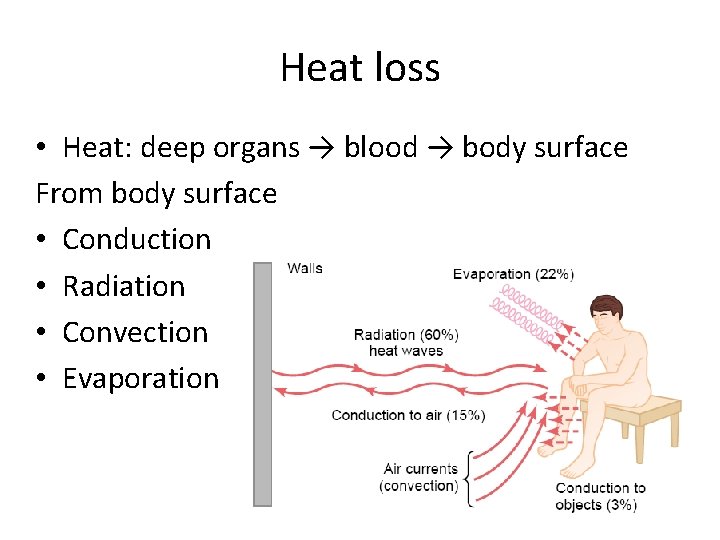
Heat loss • Heat: deep organs → blood → body surface From body surface • Conduction • Radiation • Convection • Evaporation
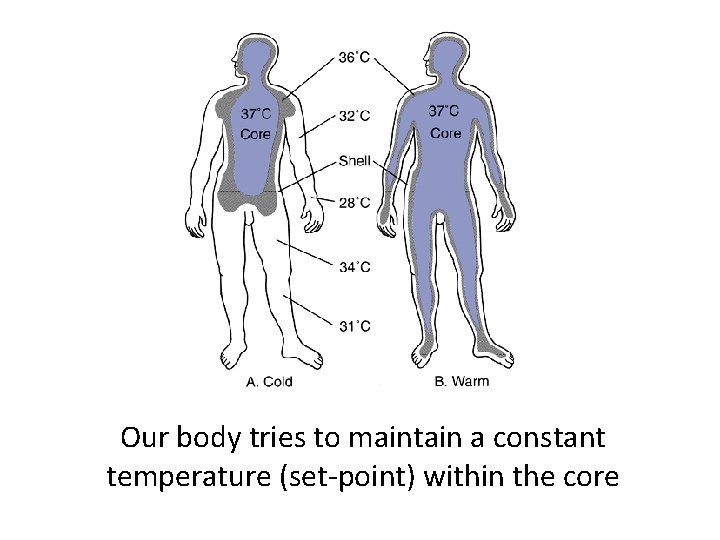
Our body tries to maintain a constant temperature (set-point) within the core
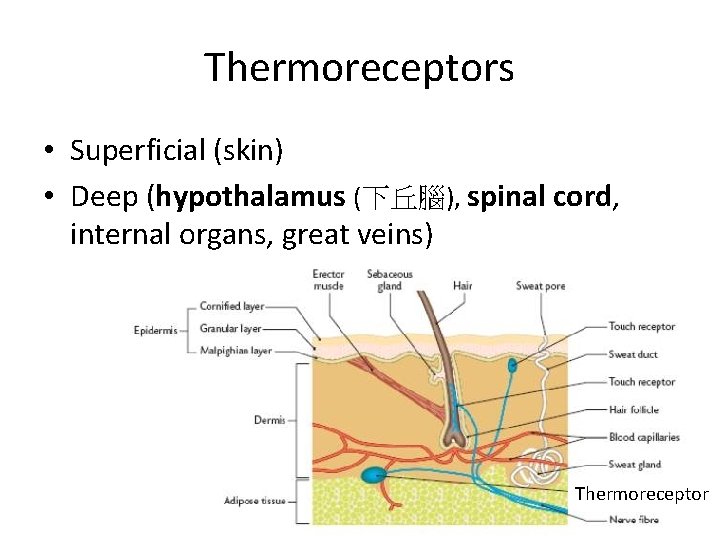
Thermoreceptors • Superficial (skin) • Deep (hypothalamus (下丘腦), spinal cord, internal organs, great veins) Thermoreceptor
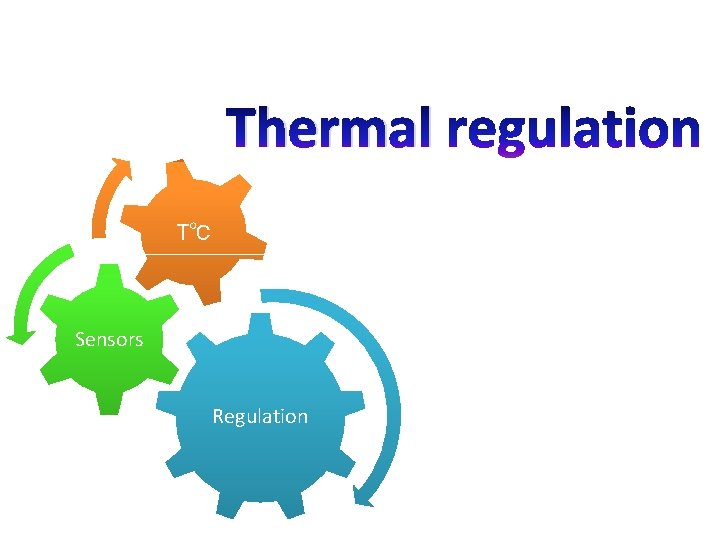
Thermal T℃ Sensors Regulation
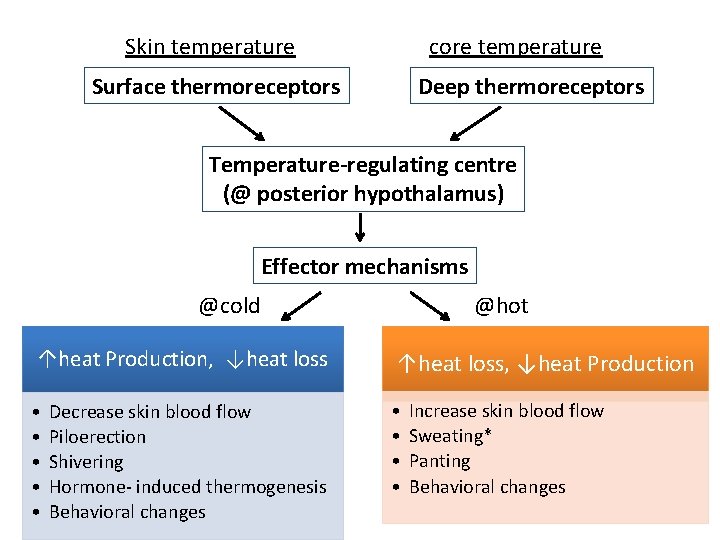
Skin temperature core temperature Surface thermoreceptors Deep thermoreceptors Temperature-regulating centre (@ posterior hypothalamus) Effector mechanisms @cold ↑heat Production, ↓heat loss • • • Decrease skin blood flow Piloerection Shivering Hormone- induced thermogenesis Behavioral changes @hot ↑heat loss, ↓heat Production • • Increase skin blood flow Sweating* Panting Behavioral changes
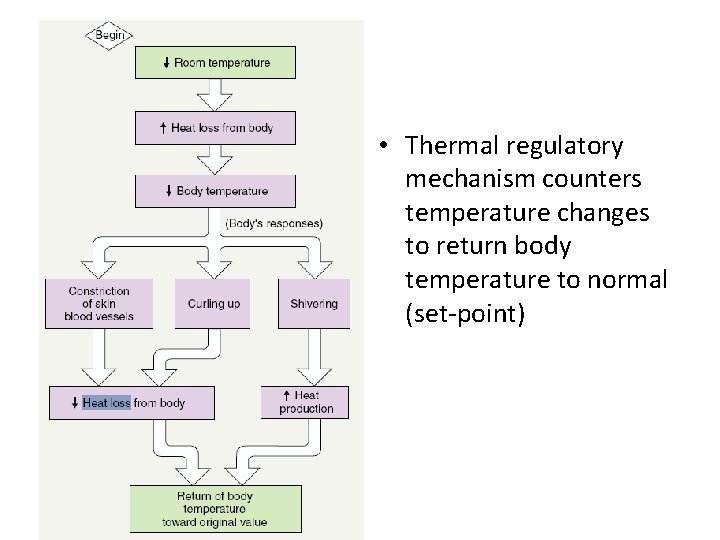
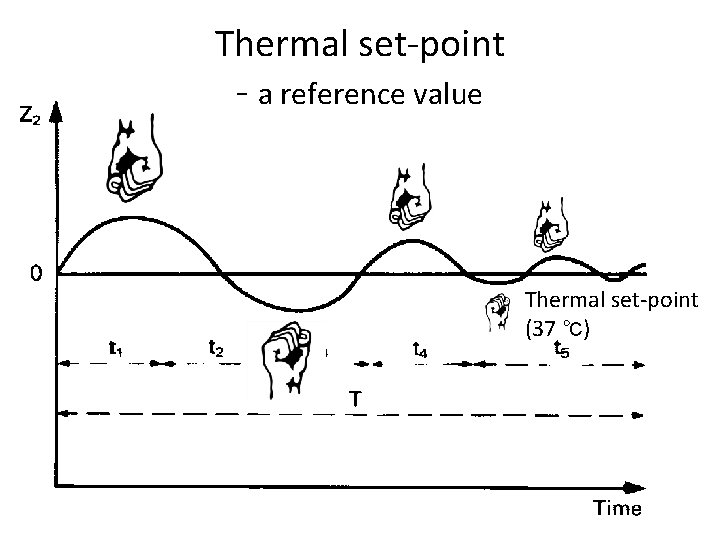
• Thermal regulatory mechanism counters temperature changes to return body temperature to normal (set-point)
Thermal set-point - a reference value Thermal set-point (37 ℃)
Thermal Something’s wrong with my “Hypo”. - Mr. Thermally Wrong
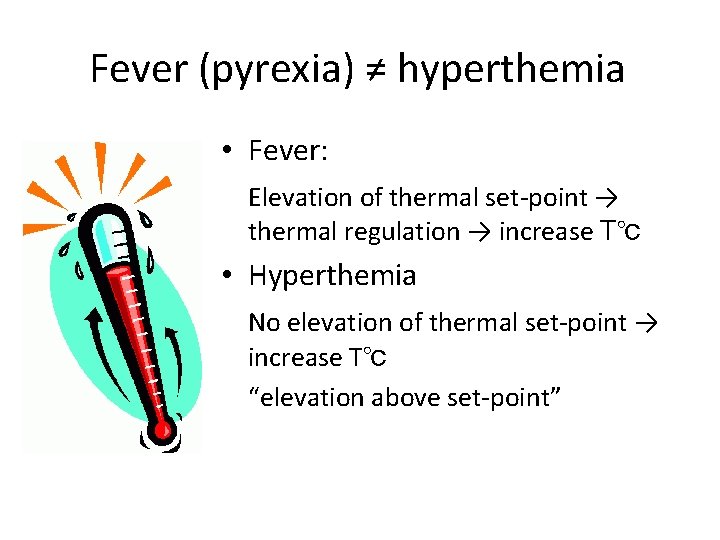
Fever (pyrexia) ≠ hyperthemia • Fever: Elevation of thermal set-point → thermal regulation → increase T℃ • Hyperthemia No elevation of thermal set-point → increase T℃ “elevation above set-point”
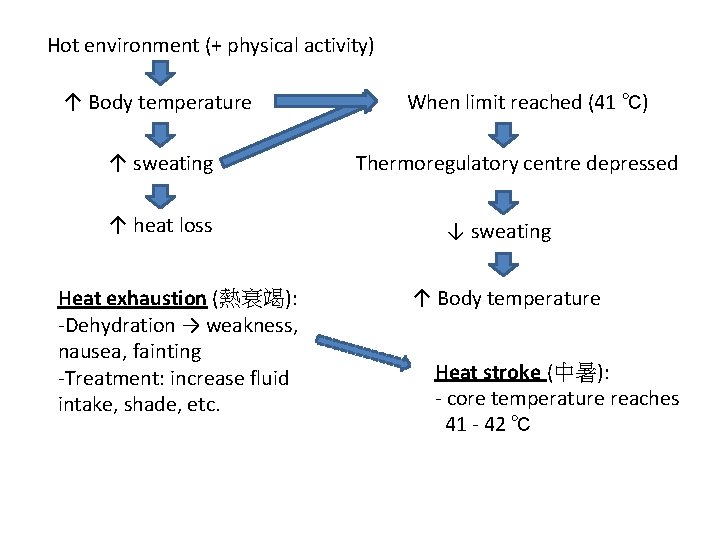
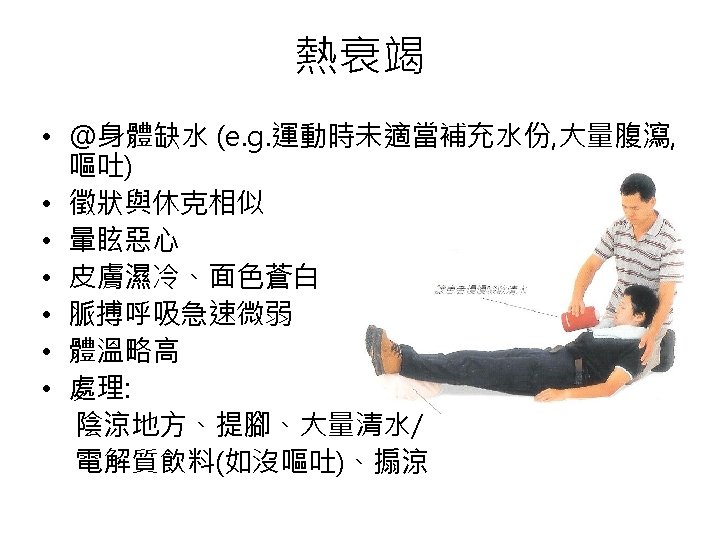
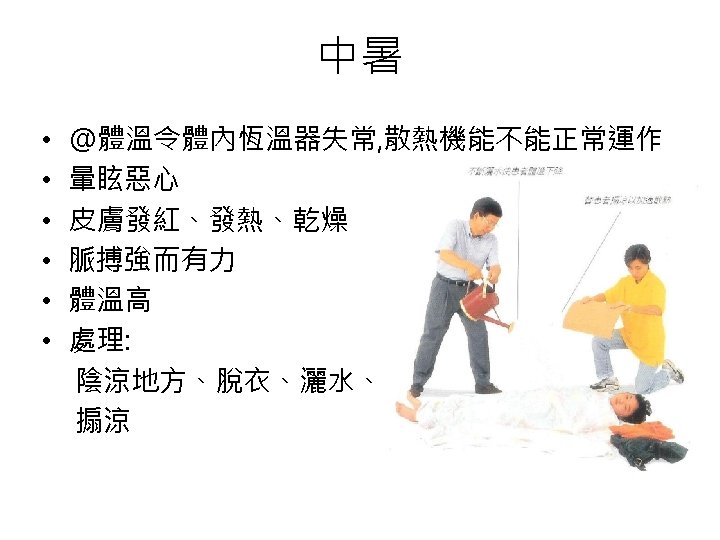
Hot environment (+ physical activity) ↑ Body temperature ↑ sweating ↑ heat loss Heat exhaustion (熱衰竭): -Dehydration → weakness, nausea, fainting -Treatment: increase fluid intake, shade, etc. When limit reached (41 ℃) Thermoregulatory centre depressed ↓ sweating ↑ Body temperature Heat stroke (中暑): - core temperature reaches 41 - 42 ℃
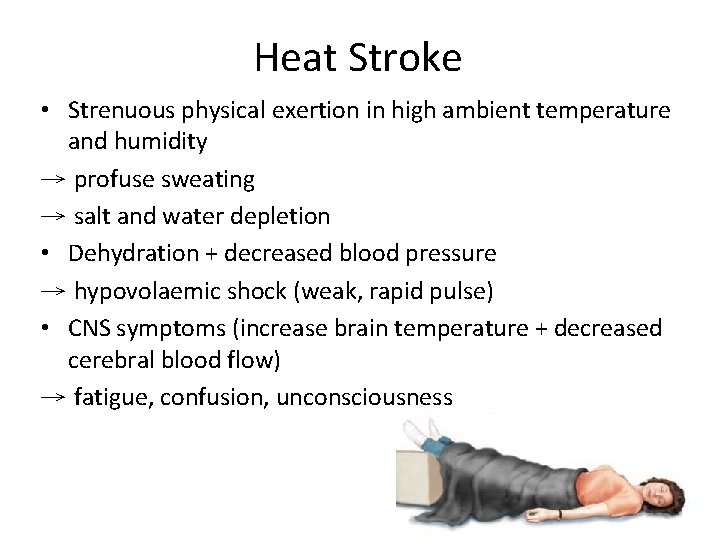
Heat Stroke • Strenuous physical exertion in high ambient temperature and humidity → profuse sweating → salt and water depletion • Dehydration + decreased blood pressure → hypovolaemic shock (weak, rapid pulse) • CNS symptoms (increase brain temperature + decreased cerebral blood flow) → fatigue, confusion, unconsciousness
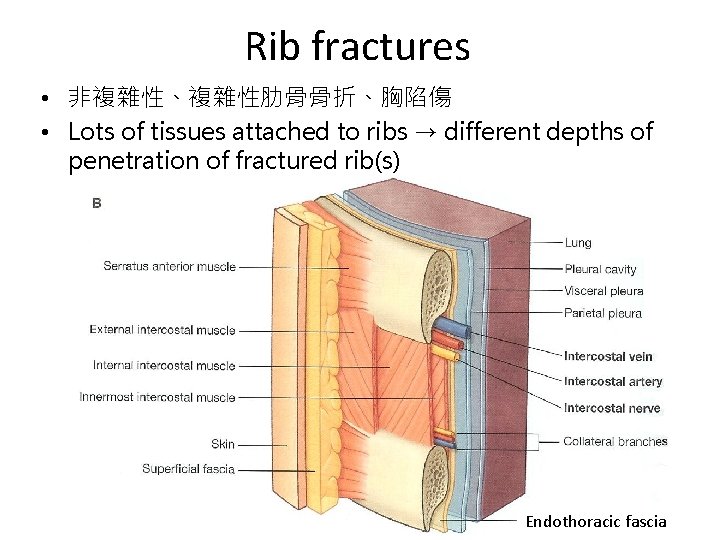
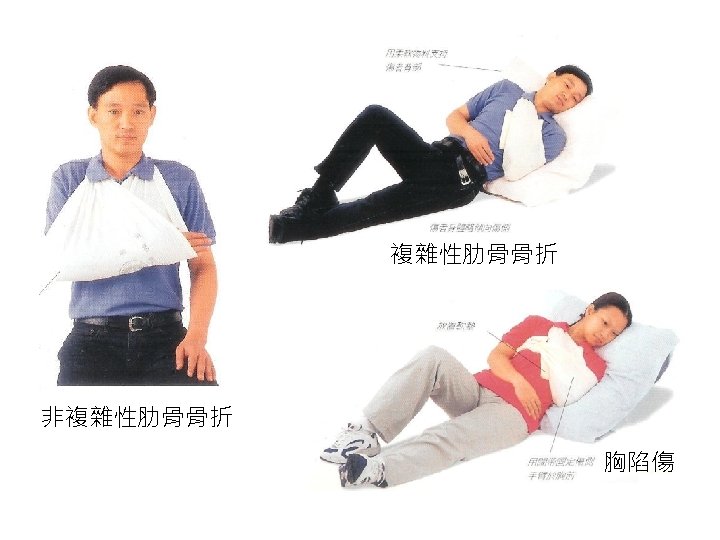
Rib fractures • 非複雜性、複雜性肋骨骨折、胸陷傷 • Lots of tissues attached to ribs → different depths of penetration of fractured rib(s) Endothoracic fascia
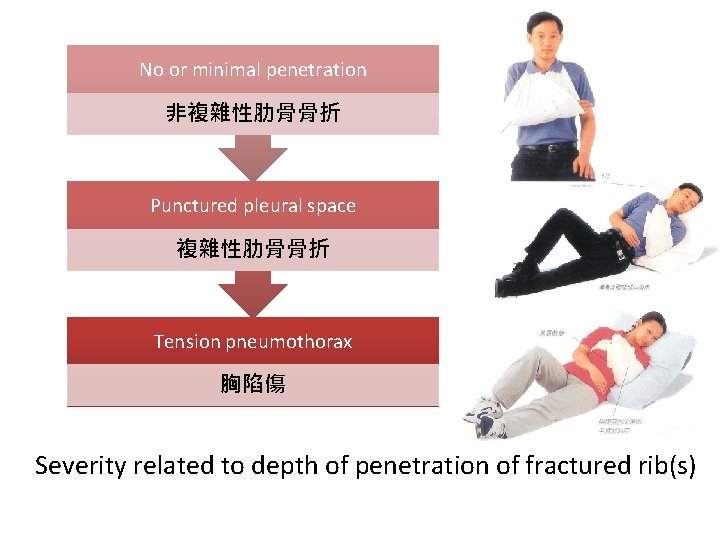
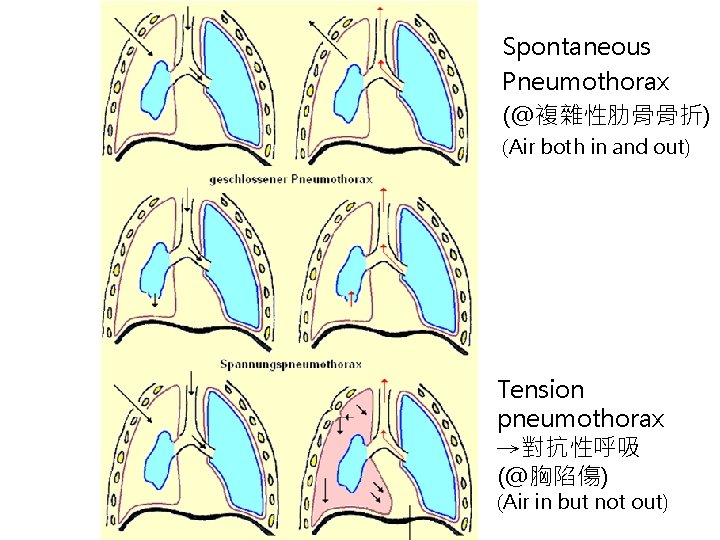
No or minimal penetration 非複雜性肋骨骨折 Punctured pleural space 複雜性肋骨骨折 Tension pneumothorax 胸陷傷 Severity related to depth of penetration of fractured rib(s)
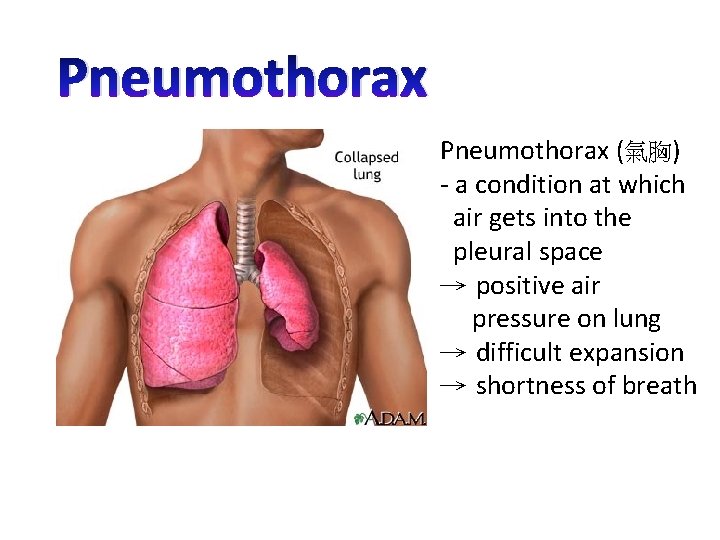
Pneumothorax (氣胸) - a condition at which air gets into the pleural space → positive air pressure on lung → difficult expansion → shortness of breath
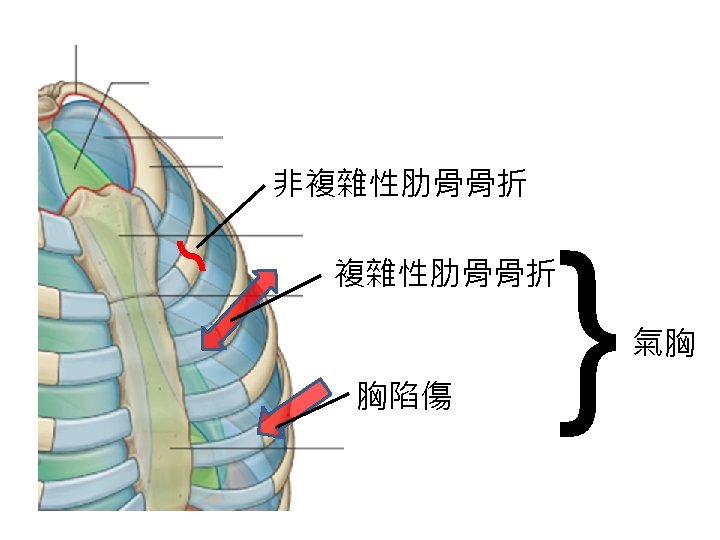
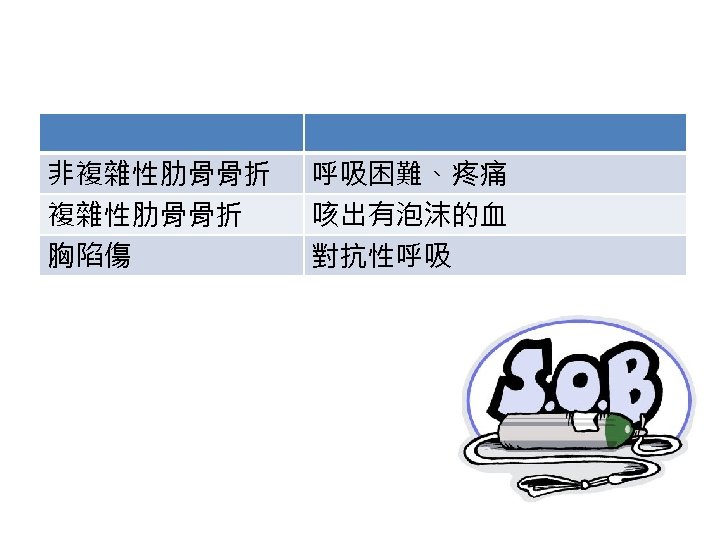
Spontaneous Pneumothorax (@複雜性肋骨骨折) (Air both in and out) Tension pneumothorax →對抗性呼吸 (@胸陷傷) (Air in but not out)
Treatments of pneumothorax Question: At rib fractures, we apply pressure on the injured site, by bandaging and having the patient lying to his injured side, why? Wouldn’t that worsens the fracture?
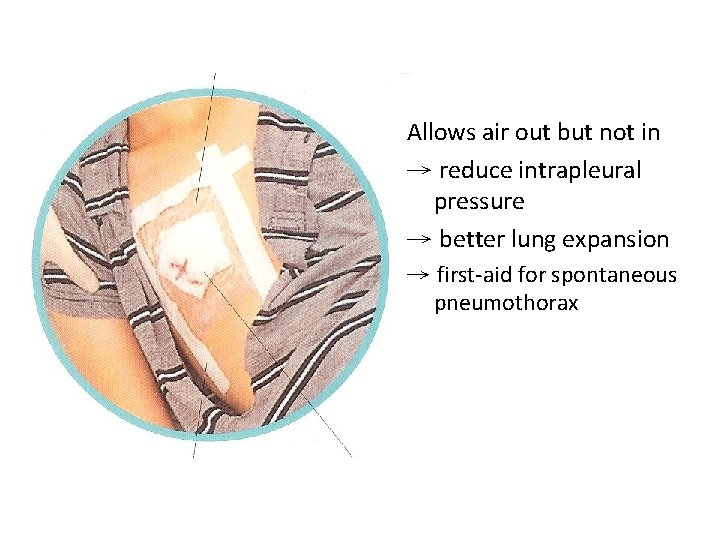
Treatments of pneumothorax Aims: • Decrease air into pleural space • Increase air out of pleural space
Allows air out but not in → reduce intrapleural pressure → better lung expansion → first-aid for spontaneous pneumothorax
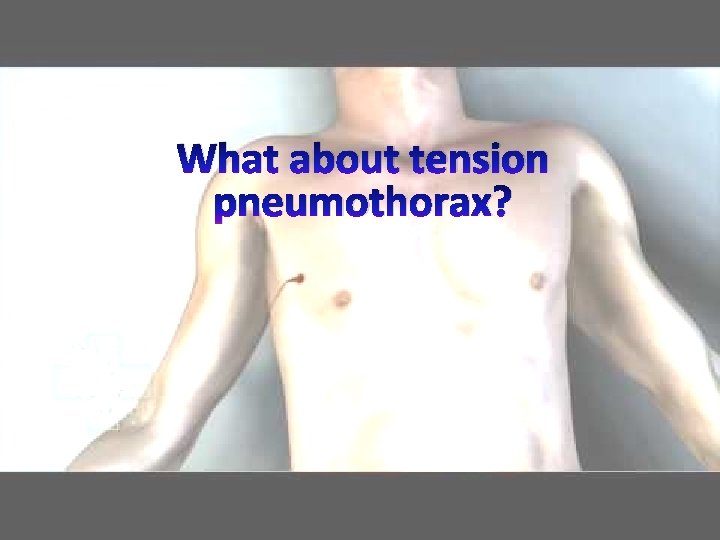
What about tension pneumothorax?